Geek Punditry #152: Blake’s Five Favorite Unorthodox Christmas Specials

With Thanksgiving behind us (save for a refrigerator stuffed with leftovers) I for one am ready to dive headfirst into the Christmas season. I’m ready for decorations, lights, radio stations that play holiday classics 24/7 and, of course, Christmas movies and TV shows. But today, I want to focus on wonderful little subset of entertainment we know as the Christmas special. It’s not a regular episode of a TV show, it’s not long enough to count as a movie, but somehow it’s just not Christmas without them. We all know the Rankin and Bass all-stars, of course, and we’re well-versed in the antics of the Peanuts gang and the wiles of the Grinch. Those of us who are particularly sophisticated even indulge annually in Garfield’s Christmas shenanigans. But in the decades that Christmas specials have existed, there are many that have come and gone without leaving the mark that these other, better-known specials have… and some of them are outright BIZARRE. This week, to help you kick off the season, I’m going to give a spotlight to five lesser-known, sometimes baffling Christmas specials that you may have forgotten – heck, that you may never have heard of at all.

Twelve Hundred Ghosts

We’ve all seen A Christmas Carol, of course. In fact, we have no doubt seen it dozens of times, maybe even HUNDREDS of times, and we can do that without ever watching the same version twice. The story is a perennial that we’re all familiar with: On the night before Christmas Ebenezer Scrooge, professional miser, is visited by three spirits who show him visions of the past, present, and future in an attempt to get him to change his ways. Charles Dickens’ book was originally published in 1843 and became not only a classic, but in many ways helped reinvigorate the popularity of Christmas itself in a world where it had been waning. It is well-known and well-loved and this, combined with the fact that it’s in the public domain, means that it has been adapted perhaps more than any other story in history. Just think about how many different movies there have been based on the story, how many TV shows have borrowed its plot for Christmas episodes, how many times it’s been produced on stage, spoofed in commercials, adapted into comic books, and basically translated into every storytelling medium imaginable.

Heath Waterman imagined perhaps a bit TOO much, and in 2017 his imagination gave birth to Twelve Hundred Ghosts: A Christmas Carol in Supercut. Waterman spent a year and a half assembling clips from virtually every iteration of the story he could find – TV shows, movies, parodies, and plenty of others. Using only these clips, he assembled a retelling of the story that is surprisingly cohesive. Despite the fact that we can roll from a clip with Patrick Stewart to Mr. Magoo to Basil Rathbone in the blink of an eye, it’s amazing how well the narrative holds together. Even someone who has only a passing familiarity with the story could easily follow along with the tale as assembled by Waterman, and by the time its 53 minute running time is over, you’ve got a more complete telling of the story than many of the different versions tell you on their own.

Being a supercut made of copyrighted works, Waterman can’t market or sell his creation, and you won’t find it on Netflix or on DVD. But the whole thing is available on YouTube, and it’s worth the time to watch if you’re even remotely curious about how it works. 

The Great Santa Claus Switch

Before The Muppet Show, Jim Henson’s Muppets appeared in a variety of different forms – in commercials, as performers in sketch comedy programs, and of course, on that new kids’ show Sesame Street. In 1970, Henson and his team produced The Great Santa Claus Switch as a special episode of The Ed Sullivan Show. In this hour-long special, an evil villain named Cosmo Sam (played by the great Art Carney) has decided he wants to take over Christmas for himself. To carry out his nefarious scheme, he’s going to kidnap Santa’s elves one at a time and replace them with his own minions, furry creatures called Frackles. 

As you can tell from the description, Henson was never one to shy away from reusing certain resources. “Frackle,” for example, sounds an awful lot like the name of another pretty popular Henson production. He recycled actors as well – Art Carney wasn’t just Cosmo Sam, but also Santa Claus himself. (Carney, of course, would go on to star in another of the greatest Christmas movies of all time – The Star Wars Holiday Special.) And then there are the Frackle PUPPETS. Several of them were reused and repurposed into background characters a few years later when The Muppet Show premiered. You’d see them dancing in the background during sketches or hanging around in crowd shots…well, all except for one. One particular Frackle, a blue and purple weirdo with a hooked nose named “Snarl,” was given a new set of clothes and a new personality for The Muppet Show, not to mention a new name. You may have heard of him – these days he goes by Gonzo the Great.

This is a rare Muppet production that, as best I can tell, has never had an official media release. However, like 1200 Ghosts, the curious among you can watch it all right now on YouTube. It’s a decent enough special, and it’s really interesting as a piece of Muppet history that you may not have known about. 

Beebo Saves Christmas

The “Arrowverse” era of DC Comics television was a fun one. Beginning with Arrow, the line went on to encompass shows like The Flash, Black Lightning, Batwoman, Supergirl, and most pertinently, Legends of Tomorrow. That last one featured a team of superheroes on a time-travelling ship, with a cast that rotated with surprising frequency over the years. After a couple of seasons the show got stranger and stranger and eventually, they just embraced it. At one point, for reasons that are far too complicated to explain, the heroes wound up summoning a giant version of a blue, furry doll called Beebo to help fight demons. I swear, it makes sense in context. The show was utterly bonkers and once it accepted that fact, it transcended to the level of genius.

In 2021, they took it one step further and made an actual Christmas special, Beebo Saves Christmas. This was ostensibly an animated special that existed in the world of the show, a tie-in to the Beebo toys, kind of like how Pixar told us that Lightyear was the movie that Andy’s favorite Toy Story character was based on, except that the Beebo special was actually entertaining. In the special, an elf named Sprinkles (Chris Kattan) becomes obsessed with efficiency and convinces himself that he can handle the demands of the Christmas season better than Santa Claus (Ernie Hudson). So it’s up to our fluffy pal Beebo (Ben Diskin) to gather his friends and…well, you read the title. 

The astonishing thing about this special is how genuine and earnest it feels. It has all the hallmarks of a TV special that’s meant to shill toys but, at the same time, has a sort of warmth and heart to it. The people who made this weren’t just phoning it in to sell merch, because there WAS no merch. They were making a show to PRETEND they were selling merch, and they clearly had fun with it.

“So Blake,” you may be asking, “Where can we watch this holiday masterpiece?” Well, that’s the bad news. The main Legends of Tomorrow series is currently streaming on Netflix. (Why not on HBO Max? Because – and I cannot stress this enough – Warner Bros doesn’t know what the hell it’s doing.) But the Beebo special, which was not technically an episode of the series and was never presented as such, does not appear to be streaming anywhere. And I think we can all agree that this is a true disgrace. 

Teenage Mutant Ninja Turtles: We Wish You a Turtle Christmas

Remember in the 90s, at the height of Turtlemania, when the Teenage Mutant Ninja Turtles somehow transcended the pages of comic books, fought free of the television screen, broke out of the movies, and became a real-life rock band? How they actually toured and you could see them live? And somehow, in 1994, they got a live-action half-hour musical Christmas special? How could you possibly FORGET, right? 

There’s not even an attempt at a plot for this one. It’s a series of short music videos, some of them original songs, some of them turtle-ized twists on Christmas classics, and all of them absolutely terrible. These are some of the worst Christmas songs you’ll ever hear in your life. The music is lousy, the voices are awful, and the attempts at humor fall flat and cause ear-splitting, heart-rending agony in anybody unfortunate enough to have to hear them. It is perhaps the single worst Christmas special ever made.

Here’s a link to see it on YouTube. Watch it twice

Christmas Comes to Pac-Land

Speaking of trendy pop-culture characters that got overexposed, isn’t it wild that Pac-Man had a hit cartoon show? The game is just a circle running through a maze eating dots and occasionally ghosts. Somehow, Hanna-Barbera turned that into a Saturday morning TV series that built out the world and the mythology of “Pac-Land” and Pac-Man’s family crafting an entire world where everything is round and bulbous and susceptible to the kind of puns that I am absolutely DYING to make except that I try to keep these columns as PG as possible. And in 1982, that popularity spilled over into a half-hour special.

In Christmas Comes to Pac-Land, on Christmas Eve Pac-Man and his family munch the ghosts, as they do, and the ghosts’s eyes float away, as they do. But on this Christmas Eve, the eyes happen to spook Santa’s reindeer, causing a crash in Pac-Land. But the Pacs, as it turns out, have never heard of Christmas before, and Santa has to explain it to them, then enlist their help to find the toys that got spilled across the countryside before Christmas is ruined.

I’m never sure what to make of this special. Are we to understand that Pac-Land is a place in our own world, a place that Santa Claus glides over in his sleigh every year, but has never visited before? That we’ve never spotted? And if that is the case, what does the existence of ghosts imply? The theological implications of this special cannot be understated, and conflicting Biblical scholars have been debating the results of its teachings for over four decades now. Frankly, it was highly irresponsible of Hanna-Barbera to release this at all, and they now bear the responsibility for causing the greatest religious schism since the Protestant reformation. Merry Christmas!

Blake M. Petit is a writer, teacher, and dad from Ama, Louisiana. His most recent writing project is the superhero adventure series Other People’s Heroes: Little Stars, volume one of which is now available on Amazon. You can subscribe to his newsletter by clicking right here. He’s also started putting his LitReel videos on TikTok. He may have gotten a little carried away on the Disney Universe thing, but he has no regrets. 

Geek Punditry #49: Playing Favorites With Christmas Part One

Ah, Christmas. My favorite time of year. The time of lights and tinsel, candy canes and egg nog, and most relevant to this blog, movies and stories. I love Christmas in general, but perhaps my favorite thing about it is the surfeit of wonderful stories set around the season, which I indulge in almost to the exclusion of everything else between Thanksgiving and the 25th of December. The thing is, most of my favorite movies and books are evergreen. I can watch Back to the Future in June, I can read Ender’s Game on St. Patrick’s Day, and nothing feels wrong about it. But a great Christmas story just doesn’t feel right unless I’m consuming it sometime after Santa rides in the Macy’s parade and some time before that ball drops in Times Square on New Year’s Eve. So in this window, I have to take in a LOT of stuff.

This week I’m Playing Favorites with Christmas. I asked my friends on social media to suggest different categories relating to Christmas movies, books, TV shows, etc., and like I did with horror movies at Halloween, this week I’m going to examine these categories and talk about some of my favorites in each one. And if you’ve got suggestions for more categories – drop ‘em in the comments! There’s still a few movie nights left before Christmas!

“They said this one is about the Donnor Party. I hope it’s good, I love reindeer.”

Christmas Comedies

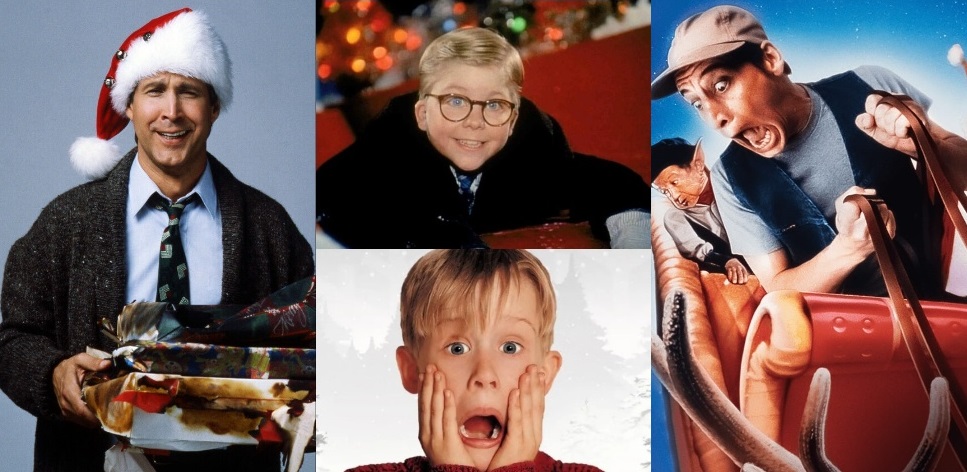
Lew Beitz is going to kick us off this week by asking for some of my favorite Christmas comedies. A lot of great Christmas movies have funny parts, of course, and I think the trifecta that most people will turn to when asked this question are – in order of release – A Christmas Story (1983), National Lampoon’s Christmas Vacation (1989), and Home Alone (1990). 

In A Christmas Story, Bob Clark blended together several semi-autobiographical short stories by Jean Shepherd (who narrates the story) and turned out a timeless movie that captures the essence of childhood at Christmas while still being unceasingly funny. There can be no doubting the iconic status of a movie that has turned a plastic lamp shaped like a woman’s leg in fishnet stockings into a traditional Christmas decoration. 

Christmas Vacation is the third and greatest of the Vacation films, about a dad (played by Chevy Chase) who desperately tries to recreate the magic of his youth for his own family, but struggles against a more cynical age. This is not only the best Vacation film, but the best movie Chevy Chase ever made. It was SO good that afterwards a federal judge ruled he was legally prohibited from being funny for the next 20 years. The ban was lifted in 2009, and Chase joined the cast of the show Community

Home Alone has Joe Pesci and Daniel Stern getting hit in the face with paint cans.

So those, I think, are the big three. But I don’t just want to leave you with the obvious answers, so I’m giving an honorable mention to another beloved Christmas comedy, the 1988 epic Ernest Saves Christmas. I am an unabashed fan of Jim Varney and his Ernest P. Worrell character (go ahead, try to abash me, I dare ya), and this is possibly the purest expression of what Ernest was. Sure, at this point he had already gone to camp, but in that film he was sort of a sweet-hearted, simple agent of chaos in a relatively realistic world. This is the movie where the Ernestverse really started to spiral into screwball comedy. In this film, Ernest is a cab driver that falls in with a guy who tells him he’s Santa Claus. He’s about to retire and needs to find the man who’s been chosen to take his place, an actor on a kids’ TV show, before it’s time for his Christmas Eve run. There’s some wacky stuff with a pair of elves and reindeer caught up in a shipping mishap, but that’s not the real draw of this movie. Seeing the golden, childlike heart of Ernest as he does his best to help Santa is one of the best reasons to love this character, even as he presents us with his funniest film. Choosing a favorite Ernest movie, frankly, is like trying to select a single rose petal as the most beautiful, but there you are.

And if you prefer your Christmas movies with a religious connotation, you’ve got the father, the sons, and the holy ghost right here.

Christmas Songs From Movies

Rachel Ricks has asked me for some of my favorite songs written specifically for a Christmas movie, differentiating them (I assume) from those pre-existing songs that are incorporated into holiday classics, like “Rudolph the Red-Nosed Reindeer,” “Frosty the Snowman,” and “Human Centipede.” 

Again, I’ll mention the most iconic example first, then talk about some others. The most famous – and arguably the best – Christmas song ever written for a movie is probably “White Christmas,” written for the 1942 film Holiday Inn and then used as the title and centerpiece number for the semi-remake of the movie as White Christmas in 1954. It’s a lovely song that I’m sure many people today don’t even realize was from a movie, and those that do know its cinematic origin probably misattribute it to the later, more famous film.

It’s not my personal favorite, though. Two other songs edge it out. For pure fun, you can’t beat “The Snow Miser Song/The Heat Miser Song” from 1974’s The Year Without a Santa Claus. In this Rankin and Bass classic, as you know, Mrs. Claus has to entreat these two thermally-opposed brothers to cooperate with one another in a convoluted plot to save Christmas. They both eventually agree, but not before performing this absolute banger of a musical number about how awesome they each are compared to their brother and how much better it is when Christmas is cold or hot, depending on which one of them is singing at the time. (The Snow Miser happens to be correct, by the way.) Even though neither song is particularly Christmasy (except for the lines where the brothers proclaim themselves Mr. White Christmas or Mr. Green Christmas, respectively), it’s so catchy and so much fun to sing along to that it’s become a staple on my Christmas playlist.

If you’re Team Heat Miser, you’re just wrong.

But my absolute favorite Christmas song originally written for a movie is “Silver Bells.” This song made its debut in 1951 in the Bob Hope movie The Lemon Drop Kid, about a silver-tongued con artist (Hope, naturally) who winds up owing a massive gambling debt to a gangster and has to come up with a contrived scheme to pay it back by Christmas Eve. The movie is charming and deserves a place with the other great films of its era, but never seems to be mentioned alongside the likes of White Christmas, It’s a Wonderful Life, or Miracle on 34th Street.

“Children laughing, people passing, something something joke, about the shape of my nose…”

As far as WHY I love that song so much…odd as it may sound, I love it because it feels to me like a love letter to New York. The song mentions “city sidewalks” without ever specifying the city, but New York is where much of the film is set and it’s where Hope is wandering when he sings the song. I’ve never really been to New York. (Spent a night in a hotel there once when a flight was canceled, but all I saw was the airport, the hotel, and the shuttle in-between so I don’t count that.) Despite that, though, decades of cultural osmosis has indelibly given me a vision of New York in December as being the most Christmasy city in the world. God knows the city has its problems, but the movies have done a truly magical job of painting it as the place to be for the holidays. It’s the setting for Miracle on 34th Street, Home Alone 2, Elf, and plenty of other classics. From the Macy’s Parade on Thanksgiving to the tree lighting in Rockefeller Center to the Times Square ball drop on New Year’s Eve, there is an intangible yuletide magic associated with New York City that this song captures perfectly. Frankly, if I ever DO go to New York, I hope it’s NOT at Christmas, because I’m pretty sure that the reality would fall very short of the snowglobe fantasy I’ve built up in my mind, in which “Silver Bells” is the background music.

Christmas IPs

Adam Santino asked about my favorite Christmas movies based on a pre-existing intellectual property, such as National Lampoon’s Christmas Vacation or He-Man and She-Ra: A Christmas Special. To clarify, for the sake of anyone unfamiliar with the term, Adam is basically asking for my favorite films based on an established brand that happened to have a Christmas-themed special or installment. Christmas Vacation, as I’ve already mentioned, is the gold standard, but there are a lot of possibilities to choose from here, and I think the correct answer is obvious.

Project ALF.

That’s right, the running gag didn’t end on Halloween.

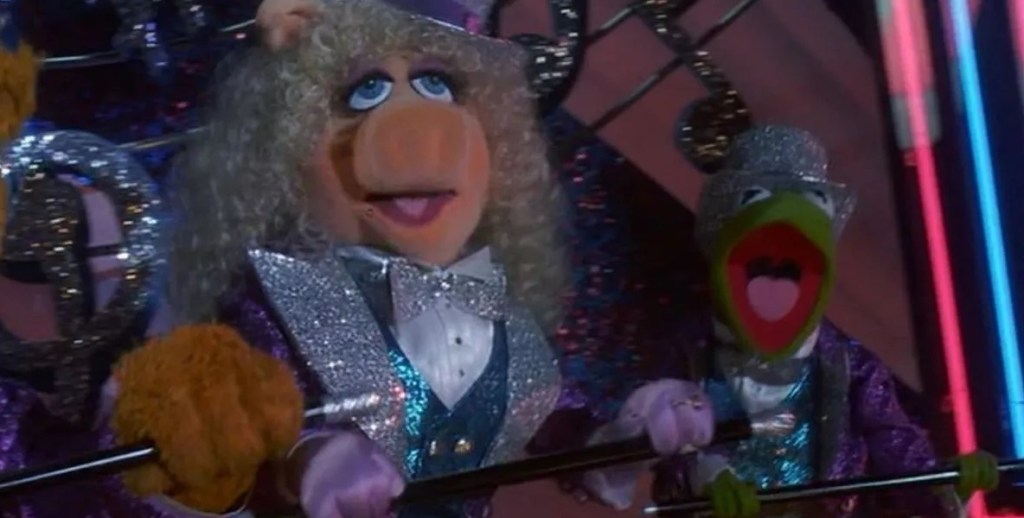
No, but seriously, it will not surprise anyone to find out I’m a devotee of the classics: A Charlie Brown Christmas, Disney shorts like Pluto’s Christmas Tree, and the epic Star Wars Holiday Special. But there are two productions that immediately spring to mind, and they’re both courtesy of the Jim Henson people. The Muppets and their cousins at Sesame Street have each shared the joy of Christmas with us many, many times, but for my money there’s nothing finer than 1992’s A Muppet Christmas Carol. The first major Muppet production after the death of Jim Henson was something of a risk for the studio. Nobody was really sure if the magic would still be there without the man who gave his soul to Kermit the Frog. But the results were remarkable: by casting Michael Caine as Scrooge (as perhaps my favorite Ebenezer Scrooge of all time) and having Gonzo the Great stand in as Charles Dickens to serve as the narrator, they managed to make a film that is not only one of the most textually-faithful adaptations of Charles Dickens’s novel out there, but is still full of the humor, music, and heart that make the Muppets so special. It’s such a shame that Disney has lost the plot on these characters, because one need look no farther than this movie to see just how much potential the Muppets have, how much the Muppets matter, and how perfect they can be.

The other film that comes to mind is from 1978: Christmas Eve on Sesame Street. In this special, Big Bird is horrified when Oscar the Grouch tells him there’s no way Santa can fit down the little chimneys in the apartments on Sesame Street, and Big Bird sets out on a quest to figure out how Santa can do his job. There are a few subplots as well, with Cookie Monster struggling to write a letter to Santa and Bert and Ernie doing their own charming twist on The Gift of the Magi, but it’s the main plot that sets this special apart. 

It is said that, when Sesame Street was being developed, the idea was that Big Bird would play the part of the naive younger sibling, while Oscar would be the grumpy older sibling with a bit of an attitude. (Not relevant to this story, but Grover was intended to be the neglected middle child, and DANG does that make things make sense.) The dynamic between Big Bird and Oscar is wonderfully authentic, a fact made even more impressive when you remember that the late Caroll Spinney was the performer for both characters. Near the end, when Big Bird has gone missing due to his Santaquest, Maria (played by Sonia Manzano) lays into Oscar in a way that’s less like the mother figure she would eventually become and more like a big sister angry at someone picking on her little brother. It’s her performance in this special that I think explains why she was the first crush for a hell of a lot of viewers (and, if we’re being honest here, of Oscar himself). Finally, the special features Sesame Street’s lovely holiday anthem “Keep Christmas With You” performed by Bob McGrath, a scene that has even more resonance since his passing last year. 

The magic of Christmas is best expressed through the power of felt.

Christmas Horror

We’re gonna wrap up Part One of the yuletide “Playing Favorites” column with a suggestion from my wife Erin, who (staying 100 percent on brand) wants to know about my favorite Christmas horror movies. I know that a lot of traditionalists don’t care for scary movies at Christmas, but I think that’s a bit short sighted. The truth is, there is a long tradition of horror taking place at Christmastime, a tradition that goes back much, much farther than even the era of cinema. Before Halloween really took off, weaving creepy yarns next to the fire at Christmas was a longstanding tradition. It’s the reason the song “It’s the Most Wonderful Time of the Year” includes the line “There’ll be scary ghost stories and tales of the glories of Christmases long, long ago.” And lest we forget, the most famous Christmas novel of all time is about a miserable bastard who is tormented by ghosts until he accepts the fact that he is, in fact, a miserable bastard and swears to get his act together.

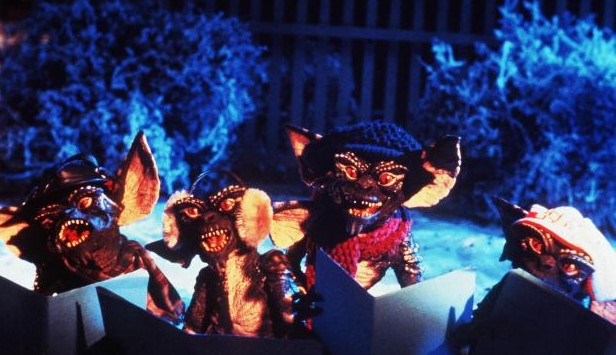
All that said, I love a good scary story at Christmas – but I do have my limits. I like ghost stories. I like monsters. But I’m not as big a fan of human monsters at Christmas, and what I’m getting at here is that I’m not really fond of Christmas slasher movies. They’re a whole subgenre that I respect for its place in the canon, but the likes of Silent Night, Deadly Night or Black Christmas aren’t really my cup of tea. I like my Christmas stories with a shot of hope and redemption, and you don’t really get that with the bleaker kinds of horror movies. No, my Christmas horror movies have to offer at least a chance at a happy ending, which is why the greatest of them all is obviously Gremlins. Supposedly Chris Columbus’s original script for the 1984 classic was much darker and more violent than what was put on screen, and while I think that darker version of the story may be interesting, I’m really quite glad they changed focus before the cameras rolled. The movie nicely balances the adorable (Gizmo) with the abominable (all of his Gremlin offspring) in a way that has plenty of jumpscares and just a teeny dash of gore, but at the same time, isn’t so terrifying that I couldn’t show it to my 13-year-old niece. It’s also really funny, which is never a bad thing.

Maybe I spoke too soon about my favorite Christmas song.

The other horror movie that comes to mind this time of year is more recent, 2015’s Krampus. Directed by Michael Dougherty, who also co-wrote it, the film features a family very much at odds with one another: an obnoxious brother-in-law, a pair of bully cousins, a judgmental and overbearing aunt, until finally young Max (played by Emjay Anthony) loses his Christmas spirit and wishes them all away. That night a horrible blizzard cuts the power and traps the family in the house…and then the fun begins. 

Dougherty is also the writer and director of the phenomenal Halloween anthology Trick ‘r Treat, which is implied to take place in the same cinematic universe as Krampus, and he brings the same sensibility to the project. Just like Trick ‘r Treat, the evil forces come after characters who have violated the spirit of the holiday and are – in one way or another – due some sort of karmic punishment. Unlike the Halloween film, though (and far more in keeping with Christmas) even the worst characters in Krampus have moments where they show that maybe they’re not irredeemable after all. The ending is a bit of a mind screw and there’s some debate as to what it actually means, although an official graphic novel tie-in Dougherty contributes to gives a bit of information that seems to support the slightly optimistic interpretation of the movie’s finale.

Pictured: optimism.

Whew, that’s plenty of Christmas goodness for you guys to seek out, and we’re just getting started! I’ve got several other suggestions that I just don’t have room for this week, so come back next Friday and look for some more of your categories in Playing Favorites With Christmas Part Two! And if you’ve got a suggestion of your own, there’s still time! Drop it in the comments right here, or on whatever social media post you followed to get here!

Blake M. Petit is a writer, teacher, and dad from Ama, Louisiana. His current writing project is the superhero adventure series Other People’s Heroes: Little Stars, a new episode of which is available every Wednesday on Amazon’s Kindle Vella platform. He is desperately awaiting the suggestion that allows him to discuss 1982’s Christmas Comes to Pac-Land, so we’re begging you, don’t give him that chance.

Geek Punditry #32: We All Need a Little Mayhem

If you’re at all surprised to learn that I’m a fan of the Muppets, I can only assume that you haven’t paid the slightest attention to anything I’ve ever written or said or performed or eaten in the entire expanse of the universe, because the Muppets are straight-up delightful. They’re a magical creation. Jim Henson and company willed into existence a troupe of actors of such wild, chaotic, and lovely clashing personalities that virtually any kind of story can and has been told with them over the years. All of that makes it even more sad how, since the Muppets were purchased by the Walt Disney Corporation and Shadow Government and Tire Emporium back in 2004, they have consistently shown an inability to use these characters properly. 

🎶”Look for us! Where’d we go? Disney did us wrong…”🎶

That’s not to say there haven’t been high points. In 2011 we got The Muppets, a new film in which Kermit and the crew were brought back together after an unspecified time apart to save their home, the Muppet Theater. The movie was funny, clever, and full of fantastic music, which is pretty much all you want from the Muppets. It was a great film, and it felt like Kermit the Frog and Company were back on track.

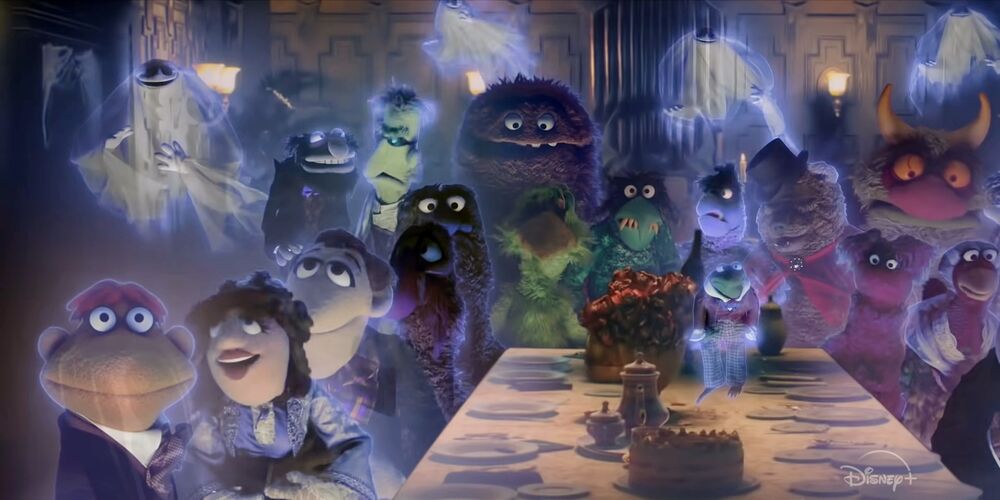
But the train derailed quickly. In 2014 we got Muppets Most Wanted, a sequel that failed to capture the magic of the previous film. The next year the gang returned to television in a new series (also just called The Muppets) which was an Office-style mockumentary series starring our favorite felt-covered friends. The show was weak at first, and although it improved quite a bit over the course of its season, it was too little too late, and the second season was never ordered. Since then appearances of the Muppets have been sparse: a few web shorts, some appearances in commercials, and a Disney+ Halloween special, Muppets Haunted Mansion, which wasn’t bad. But it wasn’t great either. What was going on? Why was it so damned hard for Disney to figure out what to do with these characters?

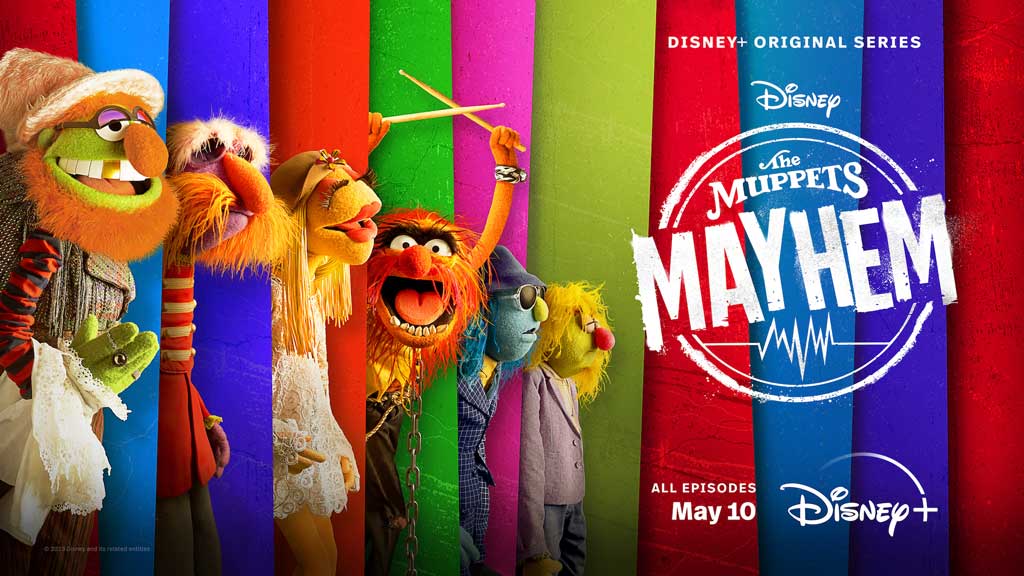
The Muppets are an incredibly versatile troupe. They’re musical comedians, sure, but that’s not all they are. Each of the main Muppets has spent decades being refined and shaped, given a life and a personality that belies their existence as scraps of cloth and foam rubber. They have become iconic figures, as well-known and recognizable in pop culture as Mickey Mouse and Bugs Bunny, but nobody was doing anything worthwhile with the characters…until earlier this year, that is. A few months ago, Disney+ dropped Muppets Mayhem, a brilliant miniseries that gave the Muppets a showcase they’ve been sorely lacking for years and, moreso, it gives us a blueprint for what Disney should do with these characters moving forward.

The greatest rockumentary ever made.

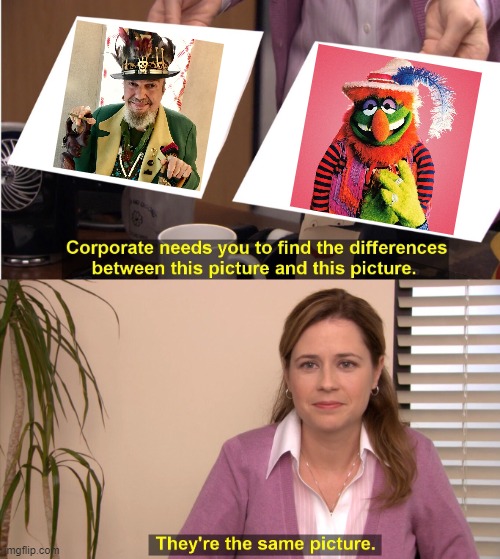
Muppets Mayhem is the first Muppets production in which the spotlight is shined not on Kermit, Piggy, Fozzie, or Gonzo, but on the Muppet Show’s house band, Dr. Teeth and the Electric Mayhem. Although those characters have been around just as long as the rest of the crew, they’ve never really been developed much beyond some stereotypes: Dr. Teeth was a parody of Louisiana musical legend Dr. John, Janice was a cliched hippie chick, Zoot was that zoned-out musician who probably got his hands on a few too many family unfriendly-substances back in the day, Lips was the guy who mumbles, Floyd Pepper was the closest thing this group had to a straight man, and Animal was…well…Animal. Muppets Mayhem starts here, but it goes so much further than that. 

In this show, an aspiring record executive (played by Lilly Singh) finds out that the Mayhem owes her struggling company an album and sets out to spur them to get in the recording studio and make good on their contract. This kicks off a ten-episode quest of discovery for both Lilly’s Nora character and each member of the band itself. Over the course of the series every one of the Mayhem gets a chance to shine, is given unexpected backstory, and is developed into a character as rich and meaningful as the A-list Muppets we’ve been following for years.

So why, after being hit and miss for so long, did Disney knock it out of the park with Muppets Mayhem? For the answer to that, I think we need to look back at their last solid success, The Muppets. That film was written by Jason Segal and Nichollas Stoller, who spent years pitching on it and working on the script, even pulling in help from the Pixar storytelling brain trust (which, in these halcyon days before The Good Dinosaur, had never failed at making a successful film). The story these two conceived took the Muppets back to their roots, to the Muppet Theater, where they had to band together and put on a smash hit show to raise the money to save their home. It’s such an overdone premise, but it’s absolutely perfect for the Muppets, because of who and what the Muppets actually are.

No, not that. Well, not JUST that.

Jim Henson created and recreated his characters over and over again over a span of over twenty years before the characters gelled into their final form in 1976 with The Muppet Show. The premise, if you’re one of the two people on the planet who’ve never seen it, was that Kermit and his friends were old-fashioned Vaudeville-style performers, putting on a nightly show with the help of some celebrity guest stars. Although earnest and sincere, most of the Muppets brought chaos in their wake, and it was up to Kermit to try to keep it all together. Most of the great Muppet productions since then have run with that premise in one of two ways. Either it’s a story about the Muppets and their performing troupe (such as The Muppet Movie and The Muppets Take Manhattan), or it is a story being told by the “actors” in the Muppet troupe (which explains the meta-humor in The Great Muppet Caper and in most of their adaptations of other stories, such as The Muppet Christmas Carol and The Muppets’ Wizard of Oz). The further we get from that formula, the weaker the Muppets get. 

Segal and Stoller understood that. What’s more, they showed a true reverence for the characters that was clear in every word of dialogue and every note of music. After nailing it with one film, though, Segal stepped aside for Muppets Most Wanted…which promptly fell apart since it was about Kermit’s evil twin and a crime caper. It’s not that a crime caper doesn’t work with the Muppets (see the aforementioned Great Muppet Caper), it’s that the attitude behind the movie was essentially, “Well, we don’t quite know what to do next, so let’s try to do The Great Muppet Caper again.”

Muppets Most Wanted is my favorite Muppet movie!”
“Why’s that?”
“Because it’s the LAST one!”
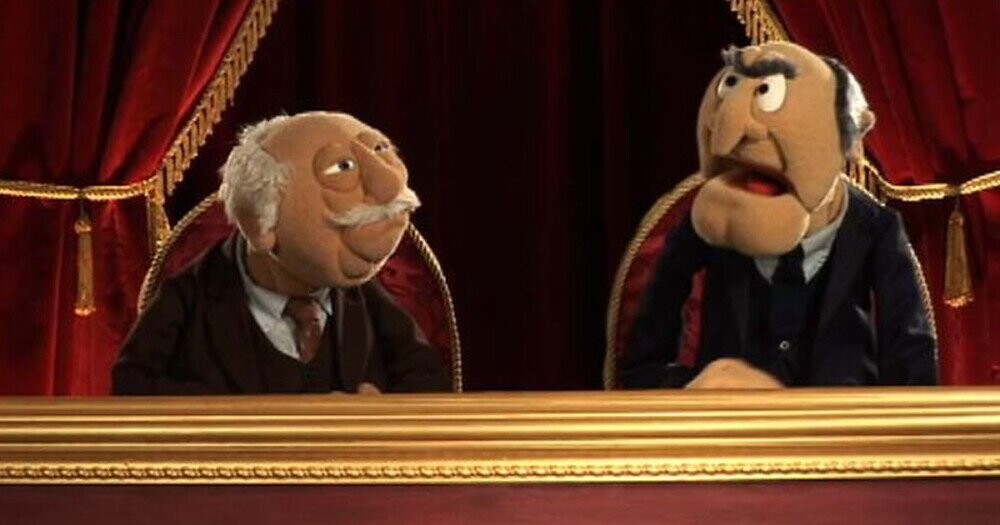
(Old man laughing)

The Muppets floundered again until Muppets Mayhem, which was co-created and produced by Adam F. Goldberg. Goldberg is probably best known as the creator of the sitcom based on his own family and upbringing in the 1980s, The Goldbergs, a show which at its best took a loving and reverential eye to the pop culture of Goldberg’s childhood and used it to tell stories of an often dysfunctional but ultimately loving family, and if that isn’t exactly the primary qualification for anybody trying to tell a story about the Muppets I don’t know what is. Goldberg, like Segal, lived his formative years at a time when the Muppets were at their peak, and brought the obvious love for the characters into what he did in Muppets Mayhem by expanding on their world, not denigrating it.

This is the secret, Disney, and any other company out there sitting on a classic IP and trying to figure out what to do with it. Admittedly, it can be difficult to decide what to do with older characters when the goal is to introduce them to a new audience. A lot of kids these days would reject anything that their parents pushed on them as a reflex action. And sure, times have changed – a modern child who watches The Muppet Show will have no context for the vaudevillian background of the characters.

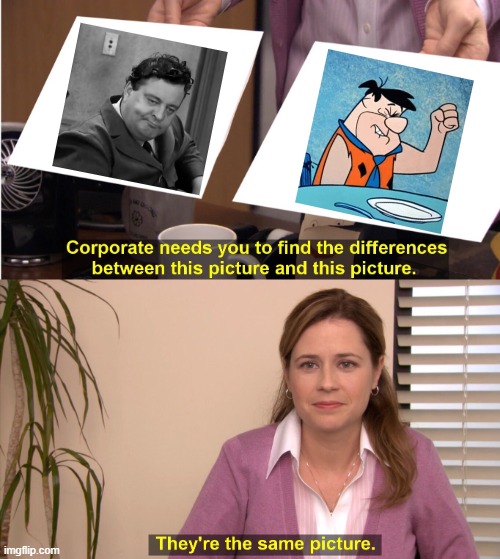
But the thing is, neither did we. Those of us who grew up with the Muppets in that first go-around (Goldberg, Segal, myself – you know, the first three names you would think of) didn’t have any exposure to Vaudeville. We didn’t care. It was as irrelevant to us at the time as the fact that Bugs Bunny was doing impressions of Clark Gable and Peter Lorre. We didn’t know and we didn’t care. We didn’t know that Fred Flintstone was a total knock-off of Ralph Kramden, and guess what? We didn’t care. Because these classic characters are still entertaining even divorced from their original context.

So throwing out the context argument, what we’re left with is figuring out what it is people love about the characters even with the context gone. With the Muppets, there are two essential elements: the performing element and the family element. Every great Muppet production has served one or the other. Most of them have served both, but most Disney Muppet projects have lacked that. A Muppets Christmas: Letters to Santa and Muppets Haunted Mansion both told stories with the performing bit in the background at best. Letters to Santa showed a team of Muppets banding together, but it was in service of a new character that we’d never seen before (or since) and only were supposed to care about because Gonzo cares about her. Not that that’s a bad reason, but in a one-hour special, it’s not really enough. Haunted Mansion, on the other hand, showcases Gonzo and Rizzo invited to a “fear challenge” at the – well hell, I don’t have to explain where it happened. The closest thing to a family storyline here is when we discover Gonzo’s greatest fear is losing his friends, which again is perplexing, since there’s nothing in decades of Muppets lore that would indicate this is a sticking point for him.

Sure, it’s filled with the restless spirits of the dead, but they DO give out full-size candy bars.

Too many studios try to reboot a classic franchise by stripping it down to the name only and making it “edgy” or “controversial.” The prevailing attitude seems to be that they can’t win the kids, so instead they’ll go for the crowd who enjoys things “ironically” by mocking fans who had the audacity to care about the characters in the first place. (The thesis of Geek Punditry is to explore those things we love, so I won’t get too much into the shows and movies that have committed this sort of cinematic crime, but I will say that the most recent offender was Very Egregiously Lascivious and Mostly Abhorrent.) I simply don’t understand the mindset that says the way to make an old concept profitable is to attack the people who loved it in the first place, and yet we see that happen again and again.

That’s why Muppets Mayhem was so delightful, so charming, and so wonderfully surprising. It was a story about a group of performers who are, in fact, family. It was about bringing new people into that family. It didn’t just have great music, it was about great music. It made us take a look at characters we already loved and, in the process, come to love them even more. And when it went meta – and boy, did it go meta – it never did so at the expense of the people who have watched and loved them for nearly 50 years. 

Shockingly, they were good just because they were…GOOD.

There has not been any announcement about a second season of Mayhem either way – neither confirming it or saying that it won’t be moving forward. Streaming services like Disney+ are notoriously secretive with their numbers, but the show hasn’t been yanked off as a tax write-off yet, so it can’t be doing that badly. If there is no more, well, the ten-episode run is perfectly self-contained and ends in a very satisfying way. But I hope it doesn’t. I hope we see more of the Mayhem, more of Nora and Moog, and more unexpected and hilarious celebrity guest stars in a second season. Even if we don’t, though, I’m happy that we got what we did, and when Disney sits down once again to decide where to go with the characters in the Muppet studio, I hope they take a look at what they just did and realize that we all need a little mayhem once in a while.

Blake M. Petit is a writer, teacher, and dad from Ama, Louisiana. His current writing project is the superhero adventure series Other People’s Heroes: Little Stars, a new episode of which is available every Wednesday on Amazon’s Kindle Vella platform. “Which Muppet are you?” was the question long before Sex and the City fans tried to co-opt the concept, you know. Which Muppet are you? Blake is usually a Fozzie.