Geek Punditry #104: The 2024 Pundy Awards

It’s the final Friday of the year, and that means it’s time once again to sit back and talk about all of my favorite things from this year. It’s time for the 2024 Pundy Awards!

Yes, just like I did in 2023, I’m going to wrap up the second year of my little column by talking about some of my favorite pieces of pop culture to come down the pipe this year. There is no rhyme or reason to this, the categories will be decided purely based on what I feel like talking about as I write this. I’m going to tell you my favorites in movies, TV, and comics from the past twelve months, and I’m gonna tell you why I dig them and why you should check them out if you haven’t already. Also in order to avoid repeating myself, I’m going to skip over shows and comic book series that I “awarded” last year. Please be aware that I’m still a fan of Abbott Elementary, Batman/Superman: World’s Finest, Fantastic Four, Skybound’s Energon Universe, and ESPECIALLY the final season of Star Trek: Lower Decks, and they’re all worth your time.

But today, I want to talk about things I haven’t talked about before. At least…stuff that I haven’t talked about as much. Let’s get on with it!

Not the only movie this year that made me feel seen.

Blake’s Favorite Animated Movie: Inside Out 2. 

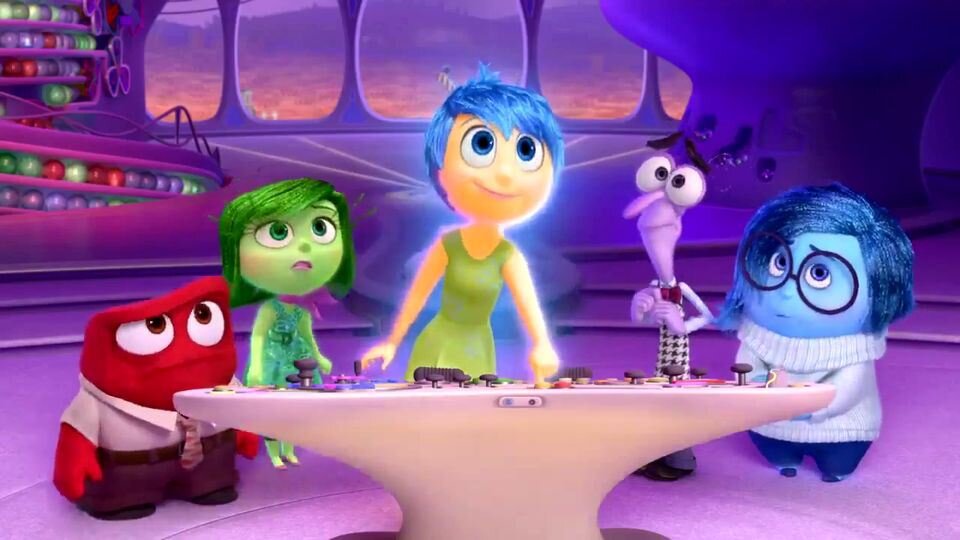
Back in June, I wrote a piece about how the shine had fallen off the once-immaculate reputation of Pixar Animation studio. After a series of duds, I wondered if the sequel to Pixar’s Inside Out was going to have what it took to bring back some of the studio’s former glory. I was so, so happy to see that it did. The first Inside Out was a great look at how the mind of a child develops and learns to process emotions, anthropomorphizing the process but doing so in a way that was both entertaining and easy to understand. Inside Out 2 continued this trend, with the character of Riley getting a bit older and the emotions she experiences becoming more complicated. Adding in the likes of Envy, Ennui, Embarrassment, and especially Anxiety into the mix has changed the game, making for a movie that perfectly encapsulates the personal journey a person goes through when they grow up. The finale of the movie was absolutely remarkable, with a scene that so perfectly demonstrates the experience of an anxiety attack that I nearly broke down in the movie theater. My son, Eddie, has since declared Inside Out 2 his favorite movie, and I’m not about to argue with him.
“Another movie about hanging around outside a convenience store, Kev?”
“Nah, this time it’s a movie theater.”

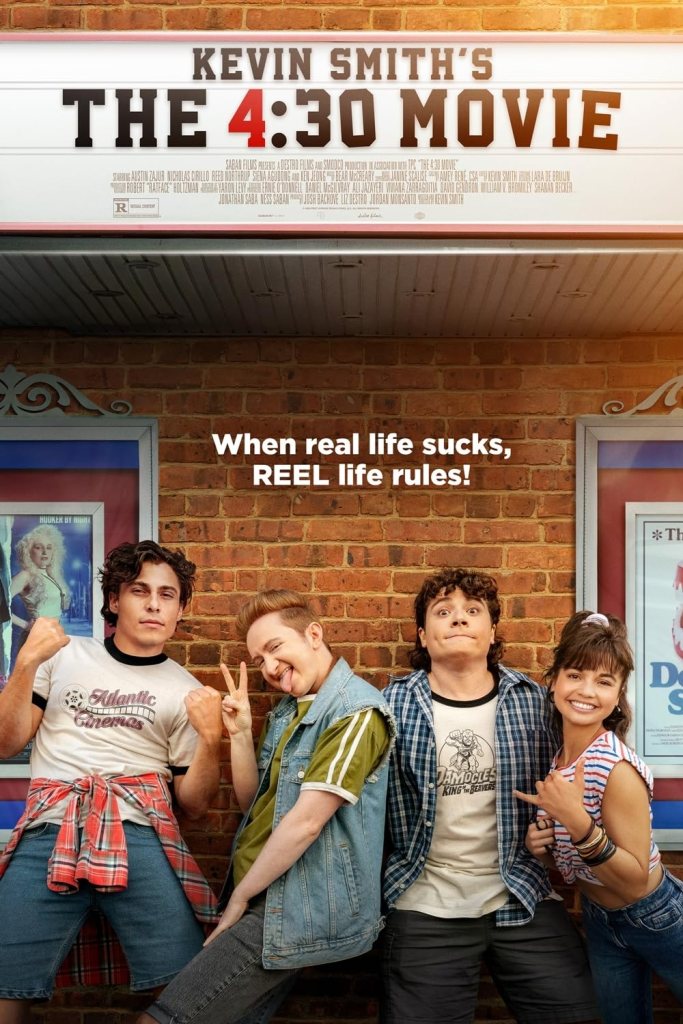
Blake’s Favorite Comedy: The 4:30 Movie.

I’ve been a fan of Kevin Smith for a very long time, and I’ve found it fascinating how his films have changed over the years. His early movies like Clerks and Mallrats were a reflection of the aimless feeling of being a young adult and trying to figure out what life is actually supposed to be. His more recent films, particularly Jay and Silent Bob Reboot and Clerks III, demonstrate a growing maturity and a sense of grappling with a life that didn’t turn out to be what you expected. Although he hasn’t let go of the filthy humor and goofy characters that made his name, he’s a subtler, more sophisticated storyteller than he used to be, and I appreciate that. The 4:30 Movie doesn’t connect to his “View Askewniverse” at all, instead telling the story of a young man in the 80s trying to find the guts to make a play for the girl he’s in love with, all set around a day going to the movies. Are there dirty jokes? Absolutely. But the film is wonderfully heartfelt, and even though neither Kevin Smith nor his alter-ego Silent Bob make an appearance on screen, you can tell that this movie was intensely personal. The final scene hammers that in especially, giving you a feeling that Kevin Smith has, in a way, told his own origin story. It’s a great movie.

Tagline: “You will believe a grown man can cry.”

Blake’s Favorite Documentary: Super/Man: The Christopher Reeve Story. 

This should not be a surprise to anybody, but the documentary about the actor who brought Superman to life for my generation was incredibly moving. Everybody knows the basics of Christopher Reeve’s story – how he played Superman, how a horseback riding accident left him paralyzed from the neck down, and how he became a crusader for the disabled in the years before his untimely death. This movie delves into his history in a deeper way, told mostly through the reflections of his now-adult children, as well as further commentary and anecdotes from other family and friends. The movie bounces back and forth between his life story prior to his accident and the way his life changed afterwards. Having his children tell the story, I think, is one of the things that really helps sell the tale. The film feels so much more intimate and personal, coming from the point of view of the people who knew and loved him the best. One thing I didn’t expect, though, was the heavy focus on Reeve’s friendship with the late Robin Williams. Again, this is something fans of the actor knew about, but the way they intertwined the tragedy of Williams’s own life with that of Christopher Reeve just made it all the more powerful. Have your tissues ready when you watch this one.

Okay, if I’m gonna be honest here, Super-Man is not the only thing in this list that made me cry.

Blake’s Favorite Family TV Series: Bluey

I know, this is another one of those “no duh” moments. I have written extensively about my love for Bluey before, in particular this spring’s season finale episode, “The Sign.” But there was simply no other TV show this year that had as deep and profound an impact on me. In the final episode of this season, we saw the Heelers preparing both for a family wedding and a move to another city, two life-changing events that the titular Bluey was having a tough time dealing with. Bandit, the dad that every father on the planet is striving to become, is trying to do the best thing for his family, even as it becomes increasingly clear to the viewer that the rest of the family doesn’t actually want to leave. It’s a beautiful story and still amazingly funny, and the final song (by cast member Meg Washington) is absolutely sublime. It comes across as a meditation on being a parent and having a child, and it’s the kind of thing that absolutely overwhelms your heart if you’ve got children of your own. I couldn’t be happier with the news that the long-talked about Bluey movie has been officially announced, and I only wish we weren’t going to have to wait until 2027 for it to hit theaters. 
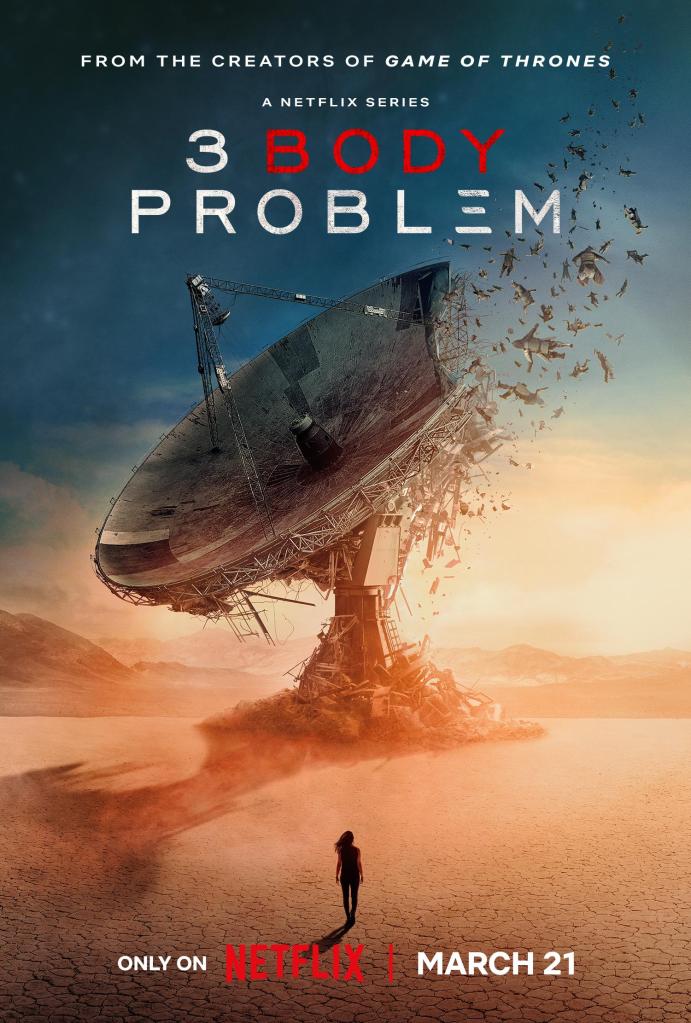
Remember when science fiction was SMART? It’s finally back.

Blake’s Favorite Science Fiction Series (That Isn’t Star Trek: Lower Decks): The Three-Body Problem

This Netflix series, based on the globally popular trilogy by Cixin Liu, launched this year and grabbed me immediately. Like the novel, the first season of this show focuses on several groups of people around the world trying to uncover a mystery. The show follows scientists, police, and people from other walks of life as they slowly uncover evidence of an impending alien invasion. The novels are amazing – an incredible portrait of this sort of singular event and how it would completely reshape the entire world. So far, the first season of the show is doing the same thing, but in different ways than the book. The novels, by a Chinese author, have a cast that is mostly Chinese as well, while the TV series is more international. Characters are omitted, others are combined with one another, new characters are added – the TV show uses the framework of the novel, but takes the story in different directions to reflect the difference in cast and the different cultures of the characters. As a result, while fans of the book can still enjoy it, there’s still room to be surprised. I loved the novels, and I loved the show too, but for different reasons and in different ways. That’s one of the best things you can hope for in an adaptation.
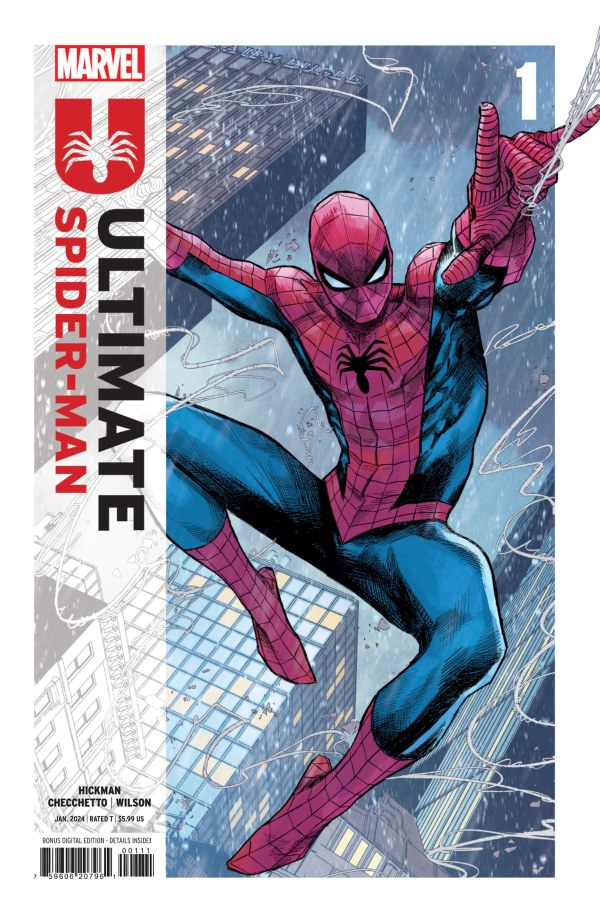
This is the best an ongoing Spider-Man comic has been in 20 years, and it’s not even close.

Blake’s Favorite Ongoing Marvel Comic (That Isn’t Fantastic Four): Ultimate Spider-Man

Last year, Marvel announced a relaunch of its once-prominent “Ultimate” brand, which reimagined the Marvel heroes as new characters in the modern day. That version of the Ultimate Universe eventually gave birth to Miles Morales, but other than him, the rest of the line has been mostly jettisoned. The only other survivor is the Maker, an evil version of the Fantastic Four’s Reed Richards, who has created a NEW Ultimate Universe, and it’s the flagship book of THAT line that has captured my heart this year. In the new Ultimate Universe, the Maker deliberately prevented most of the world’s superheroes from having their respective origin incidents, until their Tony Stark uncovered the truth and decided to put things right. (This is a HIGHLY condensed version of the Ultimate Invasion miniseries, by the way, which is also worth reading.) In the new Ultimate Spider-Man, we open with an adult Peter Parker who is powerless, married to Mary Jane Watson, and the father of two children when he is approached with the news that he’s supposed to be one of the world’s greatest heroes, and there’s a way to make it happen. For years, Marvel Comics has turned the mainstream Peter Parker into a punching bag, submitting him to one mindless torture and humiliation after another, to the point where stretches of his comics are unbearably depressing. Ultimate Spider-Man is the antidote to that, proving that you can tell stories about a married couple, about parents, that are entertaining and emotionally engaging without sacrificing the superheroes. This Ultimate Universe is even further removed from the main Marvel U than the original Ultimate Universe was, but this comic has been fantastic so far.

“So EVERYBODY is in the Justice League now? Ghost-Maker? Robotman? Clownhunter?”
“Okay, let’s not get carried away.”

Blake’s Favorite Ongoing DC Comic: Justice League Unlimited.

This may be a tiny bit of a cheat, as there’s only been one issue of JSU so far, but it was preceded by the excellent Absolute Power miniseries, which set the story up and was by the same magnificent writer/artist team of Mark Waid and Dan Mora, so I’m counting that towards the series. After an absence of the Justice League from the DCU for a few years, it’s time for a most triumphant return in a way that has never been done in comics before. Rather than a team of seven to ten heroes protecting the whole dang world, Waid is embracing the “Unlimited” part of the title. The Justice League – as in the classic animated series of the same name – is now a massive force, with virtually every hero on the planet Earth recruited as a member. Everyone who has ever been in the League, every Titan, everyone who wears the S-shield, Bat-symbol, or bracelets of an Amazon, is now part of the League. Waid kicks things off with a first issue showing a longtime – but fairly obscure – hero called Air Wave being taken up to the Watchtower and joining in on his first mission as a member of the Justice League. The story was great, with an engaging and entertaining point of view that is set to save Air Wave from the ranks of the D-listers, and a twist that promises great things for the series. What’s more – I’m gonna sound like a broken record here – Dan Mora is probably the best superhero artist working in American comic books right now. His characters are bold, powerful, but still wonderfully human. This book hit every box for me in the first issue and I can’t wait to see where it goes next.

“What if we replace the spinach with boba?”
“No.”

Surprise of the Year: Eye Lie Popeye

It’s been a good year for reboots of old-school characters, including Dick Tracy, Flash Gordon, Thundercats, and the Universal Monsters. But the one that surprised me the most, in a delightful way, is Massive Publishing’s new series Eye Lie Popeye, by writer/artist Marcus Williams. When the series was announced, I didn’t think it would be my thing – a new version of Popeye is fine, but the artwork showed a distinct Manga flavor to it. I’ve got no issue with people who enjoy Manga, it’s just not usually the sort of thing I’m interested in, and I planned to pass on the series. Then came Free Comic Book Day, and they released a preview of the first issue. Guys, this is why Free Comic Book Day works, because it did exactly what it is intended to do: show me a glimpse of something that I hadn’t planned on reading, but that I found incredibly entertaining. Williams shows a deep knowledge of Popeye and his enormous cast of characters, and while the book DOES have that Manga influence, I was startled by just how well all of it managed to fit together. The style works for the characters, the storyline feels like the kind of thing that used to be done in the classic comic strips (which are quite different from the seven-minute slugfests that people who only know Popeye from his animated shorts might expect). Overall, I never would have thought it, but this was one of my favorite comic book finds of the year.

And that’s it for this year, friends – some, but not all, of my favorite movies, TV shows, and comics of 2024. Feel free to share your own favorites in the comments, and here’s to coming back here in a short 52 weeks to do it all over again!

Blake M. Petit is a writer, teacher, and dad from Ama, Louisiana. His most recent writing project is the superhero adventure series Other People’s Heroes: Little Stars, volume one of which is now available on Amazon. You can subscribe to his newsletter by clicking right here. He’s also started putting his LitReel videos on TikTok. And yeah, he barely mentioned it, but Lower Decks was amazing. Go read it. Go read it now. 
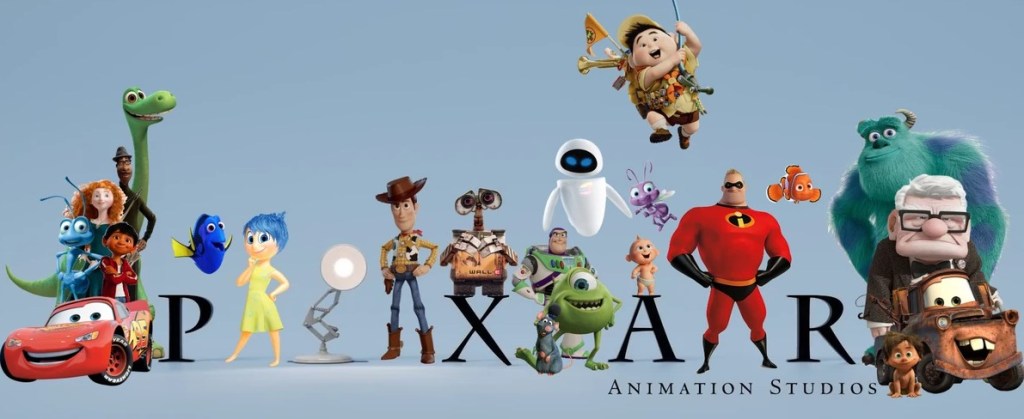
Geek Punditry #75: The Pixar Moment

It isn’t that long ago that Pixar was perhaps the single most reliable name in family entertainment. One movie after another was not only a box office smash, but the recipient of nearly universal critical acclaim. The Toy Story films, The Incredibles, Wall-E, Up…there hasn’t been a track record of animated success like this one since the Disney Renaissance days. But over the last few years, these fortunes faltered and the one-time juggernaut has become almost a bit player in the House of Mouse. With Inside Out 2 coming out next week, the sequel to one of Pixar’s last truly great movies, there’s a chance to course correct. I have no idea if they’ll pull it off, but this seems like a good time to look back at the Golden age of Pixar in the hopes that they can find it again.

“Okay, guys, he’s talking about us, everybody line u– oh for…WHO LET THE DINOSAUR IN HERE?”

The best Pixar movies have always been allegories, presenting universal experiences in a way that kids can understand. The Toy Story movies, for instance, form a magnificent triptych about growing up using a cowboy toy as a surrogate for the audience. In the first movie, Cowboy Woody (Tom Hanks) is upset when his owner Andy gets a new, flashy Buzz Lightyear action figure (Tim Allen). Woody is forced to confront the fact that he’s no longer the center of Andy’s universe, a lesson that every child has to learn at some point or another. In Toy Story 2 Woody is shown evidence of his former glory, and ultimately must choose between chasing this sort of false promise of fame and the family he has worked so hard to cultivate. It may not be as universal a situation as the original, but it’s still a good message. The third is an outright masterpiece: Andy is all grown up and about to leave for college, and our old friends are mistakenly tossed into a donation bin. The movie is a beautiful story about growing up and letting go, but done in a way that doesn’t make it frightening for children, not to mention remarkably powerful for the grown-ups who went through it all with Andy in real time.

It’s rare that the third movie in a series is the best one. Pretty much just this and Police Academy, I guess.

Which is why Toy Story 4 was such a damned disappointment. After a crystalline metaphor for childhood, the fourth film loses all of that, having Woody abandon the rest of the toys largely because Bonnie – the child Andy bequeathed him to – doesn’t love him the way Andy did. There’s no true core here, nothing to connect the movie to that extended storyline about life that the first three made up. One could argue that it’s about letting go, except that part 3 already used that as its message, and was infinitely more effective.

Up is perhaps my favorite Pixar film. After the tragic loss of his wife, Carl Fredricksen (Ed Asner) becomes a recluse, holing up in the house he shared with her and refusing to budge. When told he has no choice but to vacate his home by a land developer, he instead hooks up the house to a buttload of helium balloons and takes it with him. The premise is ludicrous, but the movie is sublime: a fable that is ultimately about the need to move forward after a loss. It is a reminder that we will all experience tragedy in our times, but we can’t allow that to stop us from living our lives. Lots of Pixar movies can make you cry at the end. Up is the only movie I’ve ever seen that moves me to tears in the FIRST ten minutes. 

The reason behind it may be tragic, but haven’t we all wished we could do this at some point or another?

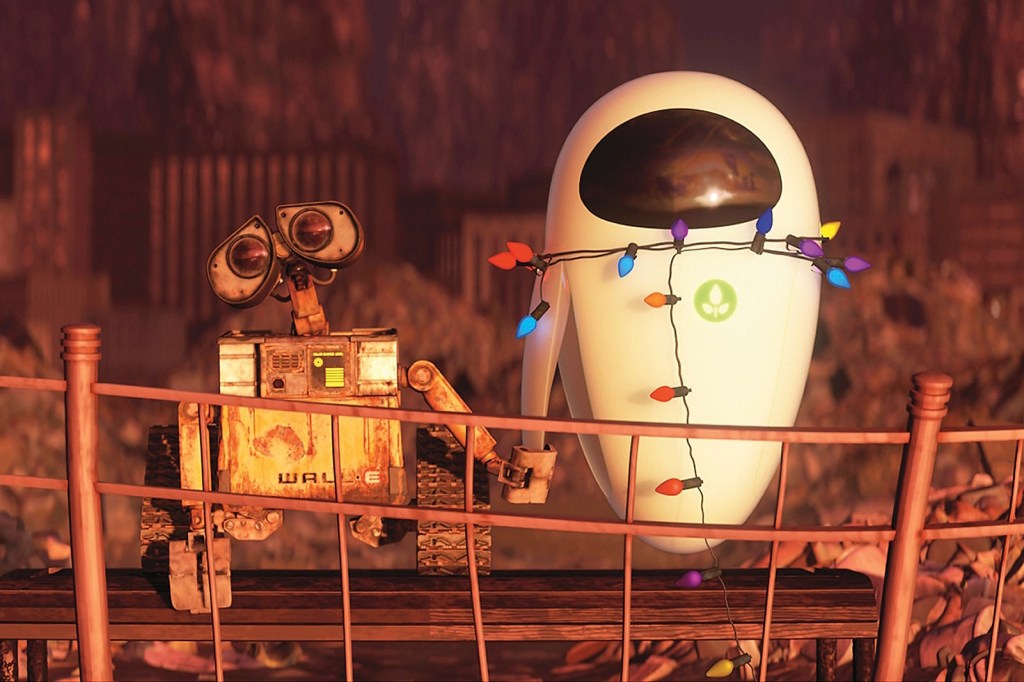
If Up is my favorite Pixar movie, then Wall-E is a very close second. A pure science fiction film, the movie is set in a future in which the Earth became so uninhabitable that humanity was forced to flee into outer space. Over the centuries, one little robot who was tasked with cleaning up the garbage left behind has kept up with his assigned task, even though it seems an exercise in futility until a probe droid from one of the human ships returns to Earth to seek signs of life. Then the remarkable happens: Wall-E falls in love.

A better love story than Twilight, and it’s not even close.

The movie is unbearably sweet, but never in a sickening or saccharine way. When you watch the interaction between Wall-E and EVE (the robot from the human ship Axiom) there is never even a second when you doubt the utter sincerity of emotion put on display. Wall-E is in love. EVE falls in love with him as well. With all the debate surrounding AI at the moment, I find it pretty incredible that 16 years ago Pixar showed us an AI with an actual soul, which is what all of the AI “art” and “writing” being churned out by the likes of ChatGPT completely lacks. Pixar made us believe in Wall-E by making him – a tiny robot with almost no dialogue and a design that (let’s be honest here) was totally ripped off of Johnny 5 from the Short Circuit movies – into a hero that displayed the best parts of humanity. Wall-E is kind, curious, and utterly devoted, not just to EVE but also to his assigned task.

Let’s talk about that task, though, because that’s where the allegory in this film comes to light. Wall-E has spent centuries gathering up garbage, compressing it into cubes, and stacking up those cubes into increasingly elaborate structures. And yet the volume of garbage barely seems to have been dented and the reason for his task (to make the world livable for humans) is long gone, seemingly forever. Why is he doing it? What’s the point? This question is echoed later when we actually arrive on the human ship, the Axiom. On this ship, the surviving humans have their every need catered to by machines, and have turned into fat, sedentary blobs who can barely even walk, let alone show the ability to make a decision on their own. But this is their life, this is all they have ever known, and thus they keep going.

And then there’s the ship itself, controlled by a computer voiced by Sigourney Weaver and cleverly designed to evoke the treacherous HAL 9000 from 2001: A Space Odyssey. (There’s a unit in my 12th grade English class where I show clips of 2001, and I’m always impressed when a student picks up on the fact that Pixar was doing a shout-out here). The Axiom hides the evidence that Earth may again be capable of sustaining life and tries to keep her charges in outer space. Why? Because it doesn’t seem possible. Because her task is to keep the humans alive, and bringing them to Earth poses too great a risk. While the Axiom computer is ostensibly the movie’s villain she, like HAL 9000, isn’t strictly evil in the way that you think of a villain being evil. She is doing what she believes is best, and her actions are only viewed as villainous because we – as the audience – have personally seen the evidence that she is wrong. 

“If you’re gonna steal, steal from the best.” –Pixar’s official motto.

The point is, Wall-E, the Axiom, and the humans on board have all spent their existence in a state of unbroken trajectory, doing the same thing over and over again for no real purpose. Purpose is not found until they all collide and discover that there is a greater potential in the universe than what they have been experiencing. Again, this is the brilliant message of the film: don’t just keep doing something useless because it’s the way that it’s always been done. Find something better. 

And it actually makes you care about a cockroach. Come on, that’s a damned magic trick.

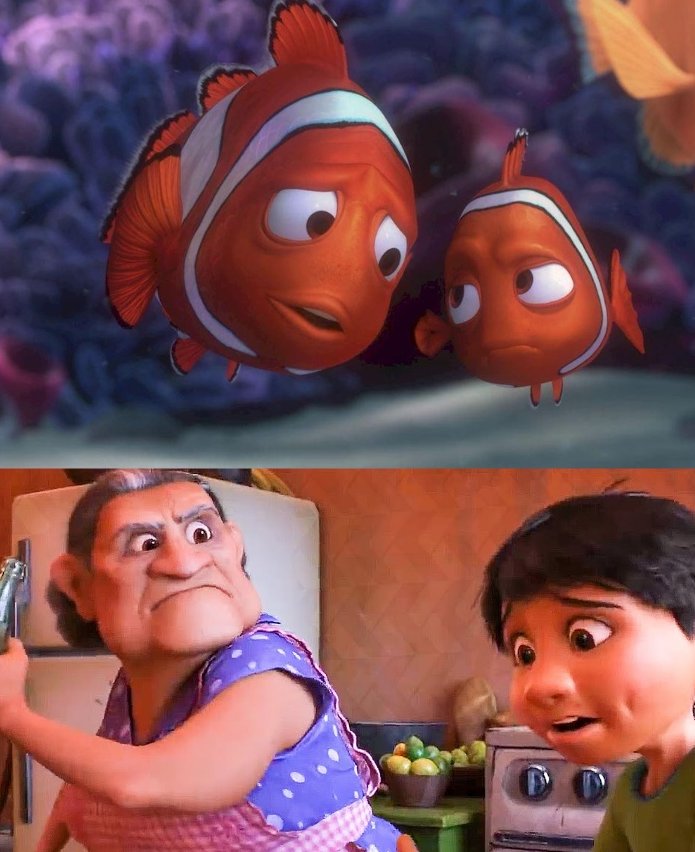
Finding Nemo is probably my son’s favorite Pixar movie, or at least the one he talks about the most, even pointing out fish at the aquarium we took him to last week and indicating which ones were Nemo and Dory. This movie (directed, like Wall-E, by Andrew Stanton) is about a young fish who is taken away from his overprotective father, captured by a scuba diver and brought to a tank in a dentist’s office. The dad, Marlin (Albert Brooks) teams up with a fish who suffers short-term memory loss (Ellen Degeneres) in a desperate chase across the ocean to bring his boy home. Here’s the remarkable thing about this movie: from the description, it sounds like it would be the story of a child learning to obey his parent and not venture out into dangerous territory. If anything, though, it’s the opposite. Nemo is the title character, but the character arc belongs to his father, Marlin, who has been so protective of Nemo since the catastrophe that took his wife and other children that he has not allowed the child to grow. It’s MARLIN who has to learn the lesson in this movie, that a parent has to be willing to let their child swim on their own eventually. (Like so many movies about parents and children, this hits me totally differently today than it did when it was first released in 2003.)

Then there’s Coco from 2017, a movie I will defend as being the last truly great Pixar film (hopefully just “so far”). Coco is about a young man who dreams of being a musician, but is part of a family that hates music because of how his great-grandfather abandoned the family to chase a musical dream. The boy, Miguel (Anthony Gonzales), winds up trapped in the Land of the Dead, and must gain the blessing of his own ancestors to return home…but they want him to give up music. Like many of Pixar’s best films (especially Toy Story 3), Coco features a brilliant twist that turns the movie on its ear, but ultimately, this story is about the toxicity of anger and how holding on to resentment hurts not only you, but everyone you love. And like Nemo, the idea of letting your children find their own way is very present in the film. Was Pixar even TRYING to make these movies for kids?

The two horsemen of “You gotta let your kids make their own choices.”

I’m not saying that everything Pixar has done since 2017 is awful. Onward was pretty good, and had a good message about family, but it wasn’t groundbreaking the way earlier Pixar films have been. Luca was okay…but when you’re the studio that gave us Wall-E, a movie that’s just “okay” is a huge step backwards. I liked both Soul and Elemental much more than Luca, but again, it felt like Pixar was covering a lot of the same ground that they’ve covered in the past. Then there’s stuff like the Toy Story spinoff Lightyear, ostensibly the movie that Toy Story’s Andy loved so much that he needed the action figure. This movie has pretty much NO emotional framework, being a sci-fi movie about alternate timelines and the military. There’s nothing wrong with any of the elements individually, but not only do they never come together, the conceit that this was the favorite film of an 8-year-old boy is patently absurd. 

But let’s get back to Inside Out, since that’s the film that sent me down this train of thought in the first place. Inside Out is about a young girl named Riley whose family moves from Minnesota to San Francisco, and all the accompanying emotional baggage that comes along with that sort of move. However, the majority of the film is actually set inside of Riley’s head, with those emotions themselves – or rather, anthropomorphic personifications of the emotions – being the stars of the film. Joy (Amy Poehler) has been the de facto leader of Riley’s emotions since birth, but when the trauma of the move hits her, Joy and Sadness (Phillis Smith) get jaunted out of their control room on an odyssey across Riley’s mindscape in an attempt to re-establish her core emotions. 

It’s not a coincidence that the face of Toxic Positivity has the voice of Leslie Knope.

It’s a cute film with cute characters. The animation – like even the worst of Pixar’s movies – is fantastic. But what really elevates this film is the way it so perfectly creates a framework for the struggles of a child dealing with a life-changing event. On her first day at a new school Riley seizes up and the “islands” that represent the parts of her personality begin to break down because she doesn’t know how to deal with the way she feels. Memories that previously had been only associated with Joy begin to be touched by Sadness – memories of friends and places that she had to leave behind, once a source of happiness, are now cause for sorrow as she realizes those places and people are lost. 

The incursion of Sadness into Joy’s memories is, at first, treated as a tragic (almost hostile) act, and Joy is willing to do whatever she has to do to make Riley go back to the way she was. The need for growth in this movie, then, is not ONLY something that Riley has to do, but a vital task for Joy herself. In the climax of the film, when Riley is planning to run away in a quest to return to Minnesota (a task that any terrified parent in the audience will recognize as being both hopeless and life-threateningly dangerous), it is not Joy who saves the day, but Sadness. Allowing for sadness to creep into the older emotions is NECESSARY for Riley to really process what has happened to her, something that Joy has to come to accept. In the end, the message of the film is that it’s impossible to be happy all the time, and that true mental health isn’t possible if you ignore your sadness, but only if you learn how to cope with it.

 Hell of a thesis for a “kids’ movie,” right?

How good is this movie? Real mental health professionals have taken to using it to help younger patients learn how to deal with their emotions. And how many times have you used the term “core memory?” Right? It’s part of the lexicon. But it wasn’t before 2015, because as far as anyone can tell, this is the movie that coined what has become a VERY common term. It’s a film that works PERFECTLY because it takes a process that every human being has to go through at some point in their lives and turns it into a fantasy that we can all understand. 

And yet despite all of that, it’s STILL really funny.

Early Pixar understood that great storytelling is great storytelling whether it’s the parents or the kids watching it. Modern Pixar has sort of lost that thread. I’m hoping that Inside Out 2 will help bring it back. The conceit this time is that Riley is getting older and, as such, her emotions are getting more complex, with the likes of Anxiety, Embarrassment, and Ennui showing up in headquarters for Joy and company to deal with. As someone with his own anxiety struggles, I would be THRILLED if there’s a Pixar movie that can help me figure out how to sort them out.

Pixar: Meet Anxiety!
Me: Thanks, but we’ve been living together since 1987.

But I am, I must admit, nervous. Pete Docter, the co-writer and director of the first film, isn’t involved this time around. Kelsey Mann directs this one, making his feature film debut. What’s more, the only member of the original writing team that’s back is Meg LeFauve, whose only non-Inside Out writing credit for Pixar is The Good Dinosaur, which you may recall as the first Pixar movie to actually flop. I am hoping very sincerely that we get Inside Out LeFauve. 

I am bolstered somewhat by the knowledge that, although Pixar’s feature film division has struggled in recent years, the magic HAS still been there in the form of their shorts. People forget about short film and what a difficult type of storytelling that actually is. I mean, it’s never easy to tell a truly great story, but it’s arguably even harder to do it in five minutes rather than an hour and a half. Go to your Disney+ account and look at some of the recent Pixar shorts like Burrow, Bao, or my personal favorite, Float. They’ve got that old Pixar magic. Last year even gave us the delightful Carl’s Date, a short about the grouchy old man from Up trying to enter a new stage of life. It was wonderful and bite-sized enough not to undercut the original film.

The magic is still there. Pixar just has to figure out how to bring it back to the big screen. I hope with all my heart that Inside Out 2 is the movie that pulls it off.

But if it isn’t, here’s hoping that the spark of Joy riding around in my own head is able to take it in stride.

Blake M. Petit is a writer, teacher, and dad from Ama, Louisiana. His most recent writing project is the superhero adventure series Other People’s Heroes: Little Stars, volume one of which is now available on Amazon. You can subscribe to his newsletter by clicking right here. He didn’t even get around to talking about how The Incredibles is actually the best Fantastic Four movie ever made. Ah well, maybe next time.