Year of Superman Week 31: Superman’s Strangest Team-Ups

After taking last week relatively easy, and after the kind of floperoo that Parody Week turned out to be, I decided I wanted to do something a little more fun this week. So I looked through my list of potential topics and decided it was time for SUPERMAN’S STRANGEST TEAM-UPS. You’re not gonna see him partnering with Batman or the Justice League here, guys. I’m not even counting inter-company crossovers like when he met the Fantastic Four or the Savage Dragon. No, this week we’re going to focus on a few team-ups Superman has had with characters (and sometimes real people, as you’ll see) that an outside observer would think is totally bizarre. And the fun part is, they would be right to think so. 

And as always, you can check out earlier blogs in the Year of Superman Archive!

Wed., July 30

Comics: The Adventures of Jerry Lewis #105

Shame he didn’t team up with SuperGIRL. I can see it now: “Hey, nice Kryptonian LAAAA-DYYYY!”

Notes: I’ll kick this off with a comic I bought on eBay a few months ago specifically to use for this week, a book I’ve wanted an excuse to get for years: The Adventures of Jerry Lewis #105. Believe it or not kids, there was a time when being a famous comedian could get you your own comic book, and sometimes those books would last for YEARS. Bob Hope had one, as did Jackie Gleason, Abbott and Costello, and sitcoms like I Love Lucy had long-running comics through publishers like Dell and Charlton. This series specifically began in 1952 as The Adventures of Dean Martin and Jerry Lewis, but dropped Deano from the book in 1957 after the comedy duo broke up. Jerry held solo reign over the title for over a decade before it finally ended in 1971.

Anyway, in this issue Jerry is watching TV with his nephew Renfrew and their friend Witch Kraft (it was the 60s, I dunno) where they see a report of Superman fighting a giant space monster – a fight that has been dragging on for THREE DAYS. Superman finally defeats the beast, which turns out to be a robot. What he doesn’t know is that the robot was built by his old pal Lex Luthor, and when it was destroyed, it saturated Superman’s costume with a low level of Kryptonite dust that immediately begins to neutralize his powers. Back at the Daily Planet, Clark gets a new assignment – a feature on the danger of certain young people, and he’s sent to investigate one Renfrew Lewis. At the Lewis house, Clark gets progressively weaker, succumbing to various pranks of Renfrew that would normally be no problem. Finally, he gets soaked with water, prompting him to borrow an ill-fitting outfit from Jerry while his own clothes dry off. Luthor, meanwhile, tracks his Kryptonite to Jerry’s house, where Jerry has just discovered Clark’s Superman costume in the laundry and puts it on because…well, I guess because that’s what happens on the cover.

The story is completely absurd, of course. Jerry Lewis was a comedy legend, but he had a very specific persona. Especially in the early part of his career, he would always play a naive young man whose good nature couldn’t overcome his dimwittedness, spiraling him into one ridiculous situation after another. His comic book persona clearly borrowed that characterization, as that’s exactly what happens to him not only in this issue, but in probably every issue of this title that lasted, in its two incarnations, nearly twenty years. And honestly the fact that Jerry (the character) is both dim and nice is probably the only reason that Superman’s secret identity is maintained in this absurd comic. Although none of that explains why Luthor – who would certainly proclaim himself to be Earth’s smartest man – isn’t smart enough to put two and two together when he encounters Clark Kent and Jerry Lewis, the latter of whom is wearing Superman’s ill-fitting costume – only minutes before the real Superman shows up to put him away.

As silly as this story is, I really did enjoy it. It’s got the same sort of bizarre brand of comedy as certain strains of Archie Comics, or some of DC’s own Silver Age titles like Stanley and His Monster. I haven’t got the slightest idea who owns the rights to books like this anymore (is it the Jerry Lewis estate? The copyright information in the indicia only indicates National Periodical Publications), but I would love it if they could put together some collections of comics like this or their Bob Hope series, or even make them available digitally. I’d love to read more without having to pay eBay prices to track them down one at a time. 

Thur., July 31

Comics: Captain Carrot and His Amazing Zoo Crew #1, DC X Sonic the Hedgehog #5

If I hadn’t included him in Super-Sponsor week, the Kwik Bunny would have followed this issue.

Notes: I’m not gonna lie, half the reason I decided to do this particular theme week was to have an easy excuse to sneak this comic book in. Captain Carrot and His Amazing Zoo Crew is one of my favorite DC Comics of all time, a comedic (but not silly) comic about superhero animals set in a world that feels like it fell out of a cartoon. At this time, DC had a “bonus book” program, where once a month a random title would include a 16-page comic in the center, often used to launch new series. Such was the case with New Teen Titans #16, which featured the first appearance of Captain Carrot. In that bonus book, by Zoo Crew co-creators Roy Thomas and Scott Shaw! (that exclamation point is part of his name, friends), Superman ran across several residents of Metropolis behaving like their primate ancestors. He tracked the disturbance to a strange meteor out near Pluto, but when he tried to stop it, both he and the meteor were punted into a different universe, designated Earth-C, in which the Earth was populated by “funny animals.” Chunks of the meteor fell to Earth, giving powers to several different animals. One of them irradiated a batch of carrots growing in a garden box belonging to cartoonist Roger Rabbit (he later began going by his middle name, Rodney, perhaps due to confusion with a certain OTHER lupine character), who gained incredible power upon munching on the carrot. 

The first issue of Captain Carrot and His Amazing Zoo Crew picks up right where the bonus book left off, with Superman and the newly-minted Captain Carrot seeking out the meteor fragments and trying to find a way to Pluto to check it out through some sort of cosmic barrier. As they do so, just as happened back in Metropolis, various people begin reverting to a primitive state, acting not like the civilized animals they are but instead like their beastly ancestors. When Superman is captured, Captain Carrot picks up other animals who were altered by the meteors: the powerful Pig-Iron, mistress of magic Alley-Kat-Abra, turtle speedster Fastback, pliable poultry Rubberduck, and the star-spangled Yankee Poodle. Together they seek out Superman, bound by Kryptonite on Pluto, in the clutches of Starro the Conqueror. Eventually, of course, Starro is conquered and the Zoo Crew decides to stay together to fight the forces of evil on Earth-C.

After striking a somewhat familiar pose.

Superman’s appearance here is almost incidental. The Zoo Crew does most of the heavy lifting, and replacing Superman with Wonder Woman, Captain Marvel, or any number of other heroes would have had negligible impact on the plot. But it’s fitting, in a way, that Superman was the first contact between the two worlds. He was still DC’s flagship character at the time (although Batman would soon overtake him, and Batman just wouldn’t have worked in this setting), and Captain Carrot was clearly his universe’s version of Superman. This would be codified years later during one of DC’s many crisis events (Final Crisis, I think) where it was revealed that EVERY world had an “official” Superman analogue, and in this world it was Captain Carrot.

I’ve written many times before about Roy Thomas and his love for comic book history, with his work on titles such as All-Star Squadron, Young All-Stars, Secret Origins, and the Elseworlds comic Superman: War of the Worlds. This one is a little off the beaten path for him, but even here, he couldn’t resist bringing in some DC lore. The first Zoo Crew recruit, Pig-Iron, is secretly Peter Porkchops, once the star of a series of DC’s funny animal comics from the 40s and 50s. Thomas and Shaw would go on to establish that Earth-C was actually the location of all of DC’s old funny animal comics, bringing in characters like the Dodo and the Frog, the Three Mousekteers, and their superhero turtle the Terrific Whatzit from the Golden Age, who turned out to be Fastback’s uncle.

The series lasted for 20 issues, with a three-issue miniseries in which the Zoo Crew travelled to Oz and Wonderland, then they went into limbo for a few decades. They’re back now, appearing periodically, and Captain Carrot specifically is a member of the multiversal Justice League Incarnate. But I’ll never stop pushing for a full-on revival of this delightfully offbeat comic.

“In yo’ heeeeead! In Darkseid’s heeeee-eee-eeaaaad!”

Speaking of strange team-ups, this week also brings us the last issue of DC X Sonic the Hedgehog. With the two teams reunited on the DC Earth, they’ve got to assemble to chaos emeralds to take the fight to Darkseid. I’m not going to claim there’s anything truly shocking in this issue. The story plays out pretty much exactly as one would expect, right up to the last page sequel hook which may or may not ever be picked up on, probably based on how well this miniseries sells. But it was still a fun little excursion. It was genuinely hopeful and upbeat, without any of the usual nonsense of the heroes of two worlds fighting each other just because that’s what’s supposed to happen in crossover events. (As much as I’m looking forward to Deadpool/Batman in a couple of months, you know that’s exactly what’s going to happen.) This was just…fun.

And it’s okay to just be fun sometimes. 

Fri., Aug. 1

TV Episode: I Love Lucy Season 6, Episode 13, “Lucy and Superman”

“Lucy, you REALLY got some ‘splainin’ to do!”

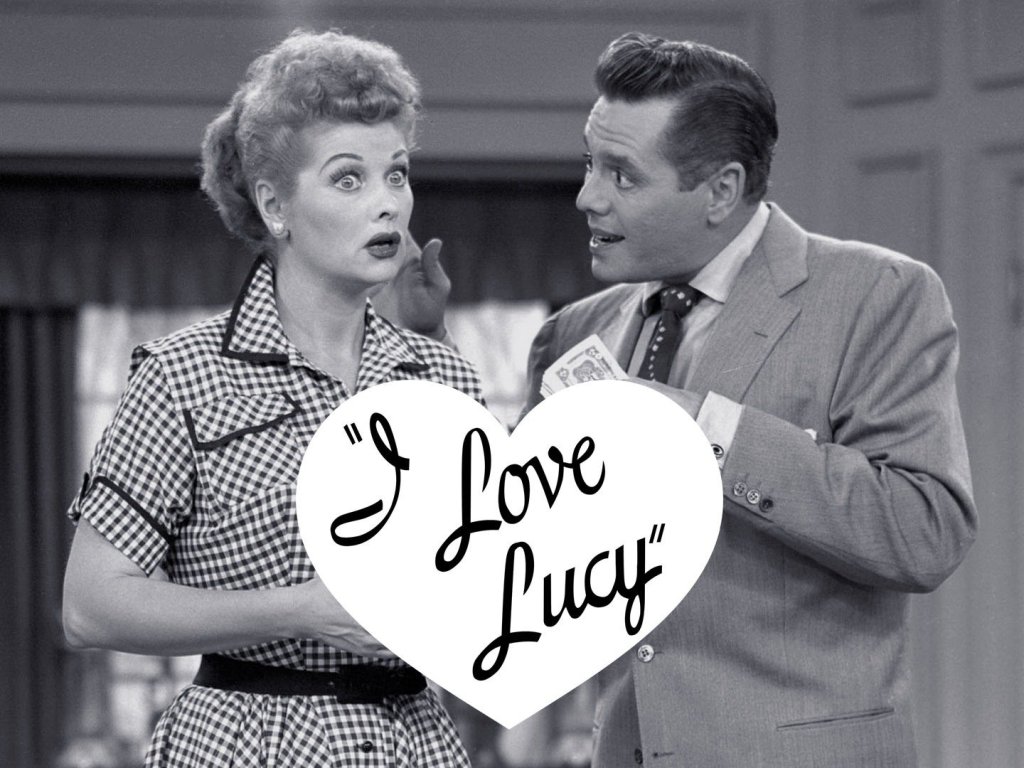
Notes: Regular readers of my blog know about my deep, abiding love for I Love Lucy. I think it’s one of the greatest sitcoms in the history of the medium and that Lucille Ball was a comedy genius the likes of which we have not seen since. And if you know I Love Lucy, then it’s probably no surprise that one of my favorite episodes was the sixth season episode in which Lucy meets Superman.

The episode begins with Lucy’s husband Ricky and their son, Little Ricky, watching The Adventures of Superman on TV. Little Ricky, with the innocence of a child who doesn’t actually have to pay for anything, asks if Superman can come to his birthday party that Saturday. Although Lucy lets him down easily, when they find out later that their frenemies the Applebys are planning to have their son’s party on the same day, the parents enter a cold war over throwing a party that will lure the childrens’ shared friend group to one party over the other. Lucy plies Ricky to try to get Superman – who he met in Hollywood – to come to Ricky’s party after all, quickly luring away all of the children, even little Stevie Appleby. As usually happens with Lucy’s schemes, though, things go awry. Ricky tells him Superman can’t make it, leading to Lucy donning a Superman costume and trying to get into the apartment from the ledge, only to get stuck outside in the rain when Superman shows up after all.

The Lucy writers played a neat little trick in this episode. Although the show frequently had celebrity guest stars appearing as themselves (everyone from John Wayne to Harpo Marx), they never ONCE refer to Superman as “George Reeves.” He’s just Superman. Although from an adult perspective, it seems a little odd that they never say his real name, even when the kids aren’t in the room, from a meta point of view it’s obvious that the entire episode is constructed in such a way to preserve the mystique of Superman for any children who happen to be watching. Reeves never appears as “himself,” only on TV as Superman and then again in the last scene in-costume, where he does his trademark leap through the window (in this case, the one that separates the Ricardos’ kitchen and living room) to make his glorious entrance. When Lucy gets stuck on the ledge, Superman is the one who climbs out to rescue her. Even the classic last line of the episode has the same sort of wit and charm that Reeves always brought to his performance: when out on the ledge, Ricky comments on the 15 years of crazy stunts Lucy has pulled. Reeves says, “You mean to say that you’ve been married to her for 15 years?” When Ricky replies in the affirmative, Reeves shoots back, “And they call me Superman!”

It’s a wonderful, charming episode of a charming show, and one that can be enjoyed on two levels. If you want, then you can consider this just your average episode of I Love Lucy with a famous guest. But if you’d prefer, you can accept the episode on face value and decide that Lucy takes place in the same universe as The Adventures of Superman TV show, and it wasn’t Reeves at all, but the real Man of Steel.

That doesn’t quite explain why he’s got his own TV show in-universe, but do I have to figure out everything myself? 

Sat. Aug. 2

Comic Books: Multiversus: Collision Detected #1-6

“Jinkies!”

Notes: While not a Superman starring vehicle like most of my other choices this week, he played a big part in this fun six-issue miniseries based on the short-lived video game, which combined characters from dozens of Warner Bros IPs including the DC Universe, Looney Tunes, Hanna-Barbera cartoons, Cartoon Network, The Matrix, The Wizard of Oz, Game of Thrones, The Neverending Story, and probably others I’m forgetting. I don’t play video games, friends. It’s not a judgment thing, I’m not trying to claim some sort of moral high ground or anything, I’d just rather spend my time with a movie, TV show, or book. I do, however, enjoy a good crossover, so when the miniseries based on the game was announced I knew I was going to read it, despite knowing absolutely nothing about the game. 

The story begins with Superman, Batman, and Wonder Woman each having dreams that culminate in the vision of strange hieroglyphs: a rabbit, a witch, and a child bearing a star. Their investigation leads them to Avia Free, daughter of Mr. Miracle and Big Barda. When they arrive, though, the find that Avia already has another visitor: Bugs Bunny. After a particularly hilarious sequence of Batman trying – and failing – to interrogate Bugs, Avia shows them a video game system she modified to investigate some strange readings from behind the Source Wall just as a portal appears, spilling inhabitants of other dimensions into our own. The Flash, for instance, encounters Scooby-Doo and Shaggy having thwarted Condiment King’s effort to rob a Big Belly Burger and taking their reward in a mountain of food. Wonder Woman is attacked by an army of Winged Gorillas under the control of Grodd who, himself, has fallen under control of the Wicked Witch of the West. Superman finds Steven Universe and Garnet fighting Livewire and the Parasite in Metropolis, just as a Skullship appears in the sky – not a Brainiac ship, but one in the spitting image of Rick Sanchez, loaded with robotic simulacrum of Finn the Human, Jake, and Tom and Jerry. 

As the Justice League begins containing the incursions from other universes – hero and villain alike – Batman manages to track down the truth. An entity called the Devoid, under duress from an even more powerful force called the Nothing, is forcing the multiversal travellers to fight in a tournament to protect their respective home universes. (I assume this is, in broad strokes, the story behind the video game.) Batman hatches a plan to return the fight to the Devoid, saving all of the endangered universes simultaneously, but there’s a little problem. To do this, he needs to find the final lost fighter – the Reindog – who is currently being coddled by Harley Quinn and targeted by her nasty ex, the Joker. They collect him from Gotham City, but Steven is wounded in battle. When Reindog heals him, it sends out a signal that leads the Devoid to Earth, where it takes over Avia and attacks. In exchange for freeing Avia, the assembled heroes agree to allow Devoid to take them to fight in the tournament. After they are swept away, though, the heroes reappear, revealing that Steven invented a device that would pluck tiny pieces of each of the heroes from throughout the multiverse and assemble them into a new version to join the tournament.

I love stories like this. It reminds me of being a kid, when you would throw all your different toys together in one box and act out some epic battle despite the fact that these characters don’t really have any business being together. I also like the way Bryan Q. Miller handles the Super-characters. It’s not his first go-round: he’s written, among other things, the Smallville sequel comics, and he has a nice handle on Lois and Clark. There’s a nice bit towards the beginning where she casually teases him for doing things the hard way when the age of technology should make it a little harder to track down the glyph from his dreams. And bonus points go to artist Jon Sommariva and colorist Matt Herms for dressing her in her signature outfit from Superman: The Animated Series, even though this isn’t “that” Lois. Miller also uses the differences in the respective universes to his advantage. For example, there’s a funny bit where Bugs, Scooby, Shaggy, and Steven Universe are shocked by the foul mouth (censored as it is) of the Rick-infected Brainiac. 

It’s interesting, by the way, that although it is very obviously Rick Sanchez who’s riding in Brainiac’s skull, he is never mentioned by name in the story, and only appears in his “true” form in a few shots on Brainiac’s monitors. I assume that was a limitation imposed by the fact that Oni Press, not DC Comics, has the rights to the Rick and Morty comics, but it’s still kind of funny.

The story ends, as comics like this one often do, with a bit of a sequel hook, but considering that the game flopped and has been discontinued, it seems unlikely that we’ll ever get to see what happens next. I content myself in the knowledge that the comic is essentially a prequel to the game and that, if you beat the Devoid and the Nothing in the game itself, you can consider it the canonical ending of the story. And I hope that we see Miller writing more comics like this. He’s got a flair for it. 

Sun. Aug. 3

Comic Book: Action Comics #421

“I yam what I yam…a legally-distinct creation that is not subject to a copyright infringement suit by King Features Syndicate!”

Notes: Today we’re going to take a look at one of my favorite lesser-known Superman team-ups, the time he met Popeye.

Kinda.

In Action Comics #421, Superman’s pal Billy Anders (a semi-recurring character from the period) tells him about his recent encounter with Captain Horatio Strong. Strong is a salty sailor who has found a mysterious seaweed that, upon consumption, gives him incredible strength. When Billy tells Superman that Strong is one of his biggest fans, he agrees to arrange a meet-up. Meanwhile, A food corporation tries to buy the rights to Strong’s seaweed, “Sauncha,” but he refuses. He willingly gives a sample over to his idol, Superman, when Billy arranges a visit, but quickly realizes his visitor is a disguised spy for the food corporation wearing one of those remarkably lifelike rubber masks that were so ubiquitous in comics at the time. Superman and Captain Strong wind up duking it out when Strong vows to destroy the crooked company that tried to cheat him, and when he runs out of Sauncha, Superman tracks him to a spot in the ocean where he harvests it. When the Sauncha power runs out, Strong is nearly killed, but Superman whisks him to the hospital. As he recovers, he is ashamed of his actions, but Superman kindly tells him that it wasn’t his fault – he was under the influence of the plant, which Superman has identified as an alien species that must have fallen to Earth. Captain Strong promises to stick to good old Earth food from now on.

I first read this story in Best of DC Digest #48, in an issue that reprinted assorted Superman team-ups, and it’s long been a favorite of mine. Even as a kid, I immediately picked up on the fact that they were trying to emulate Popeye, and when Strong’s wife and best friend (obvious dopplegangers for Olive Oyl and Wimpy) showed up in later issues, it was like confirmation. What I didn’t realize as a kid was that Cary Bates had whipped up a Popeye expy to tell a story that was a metaphor for drug addiction. I guess it did the trick – I’ve never done any drugs, nor had any desire to. So Cary Bates and Captain Strong, thanks for teaching me the important lesson that using illicit substances will cause me to throw telephone booths and people and start fights with those I admire the most.

Seriously, I always thought Captain Strong was a fun character, and it’s a shame that he made only a handful of appearances over the next decade before fading into obscurity. He came back in 2015, gently being mocked (as was everything else) in Jimmy Palmiotti and Amanda Conner’s Harley Quinn series. I guess I understand – there’s not much call in modern comics for a character whose only reason to exist is to poke a little fun at Popeye. But I still have a warm place in my heart for Captain Horatio Strong. And although the similarities are superficial, I’ve always wondered if Strong was used as a bit of inspiration for one of my favorite characters of the Triangle Era, loveable lout “Bibbo” Bibbowski.

Mon. Aug. 4

Comic Books: Superman and Bugs Bunny #1-4

“What’s up, Clark?”

Notes: When I started this little project, I didn’t expect the Looney Tunes to turn up quite as often as they have, but between this and parody week, I’ve actually seen quite a bit of them lately. But let’s look at the 2000 miniseries by Mark Evanier, Joe Staton, Tom Palmer, and Mike DeCarlo. Even though Superman’s name is in the title of this one, like Multiversus, it’s more of an ensemble piece, featuring the entire Justice League. The chaos begins when Superman gets a visit from his old pal Mr. Mxyzptlk and, as usual, has to trick him into saying his name backward to send him home. At the same time, in another world, Bugs Bunny and Elmer Fudd encounter the Do-Do, an early and mostly forgotten Looney Tunes character from another world called Wackyland. Bugs deliberately borrows a trick from the pages of his favorite comic book publisher and tricks the Do-Do into saying Od-Od, banishing him at the same time that Myxyzptlk vanishes from Earth. The two cosmic tricksters collide in the place between worlds and decide to join forces and cause a little chaos by sending the Looney Tunes to Earth.

On the moon, Green Lantern finds Marvin the Martian planning to destroy the Earth (again). Flash races Speedy Gonzales through the desert, Plastic Man disguises himself as a cat only to fall afoul of the affection of Pepe LePew, and in Gotham City, Batman finds a very different Penguin than the one he expected. Myzptylk amps up the chaos by giving Elmer Fudd Superman’s powers (and costume), and poor Green Arrow is stuck with a singing, dancing Michigan J. Frog that doesn’t seem to want to perform for anybody else. 

Mxy and the Do-Do find their relationship strained, the machine they’re using to toy with the heroes destroyed and forcing them all together. The Tunes are made honorary member of the Justice League (because why not?) just as the Do-Do turns on his partner, bringing about a – ya gotta say it – “Cwisis on Infinite Earths!” 

Mark Evanier was absolutely the best choice to write this bizarre little crossover. As a writer in both comic books (perhaps best known as co-writer of Sergio Aragones’ Groo the Wanderer) and in animation (such as the original and excellent Garfield and Friends cartoon), he had the right sensibility to bring these two worlds together. It’s interesting that he chose to have both the Justice League and the Looney Tunes be fictional characters in the others’ universe. Bugs and Foghorn Leghorn read Action Comics, and every member of the League recognizes their cartoon co-stars the second they see them. It nicely sidesteps the usual introductions, although if the Leaguers have all watched the Looney Tunes (as well they should have) it should kind of make you question their judgment when they include the likes of Yosemite Sam and Elmer Fudd into the ranks of the honorary Leaguers. 

I also give Evanier credit for diving into the archives of the Looney Tunes for this. He didn’t just bring out the A-listers like Bugs and Daffy – we get appearances by everyone from Pete Puma to the Goofy Gophers Mac and Tosh, and he keeps them all in character. He’s not quite as adept with the Justice League, writing them more like they would have been in the Silver Age than when this book was published in 2000. Things like Green Arrow’s panic over nobody believing his story about a singing frog don’t quite fit (especially since, as it should be noted, this was the less-emotive Connor Hawke version of Green Arrow rather than Oliver Queen). But you can accept these things are being part of the overlap with the land of the Looney.

Joe Staton’s layouts keep everything consistent, and using finishing team of Tom Palmer (handling the DC Universe and characters) and Mike DeCarlo (on the Looney Tunes) makes it all look nice, clean, and like these characters fit in a world together.

I’ve always liked this miniseries. It’s not a masterpiece, but it’s fun. And it helped inspire a series of DC one-shots a few years ago in which they met Looney Tunes and Hanna-Barbera characters, although those were part of a line that reimagined the cartoon characters in a more “serious” vein. Some of those specials worked better than others. I particularly liked seeing the Super-Sons meet Blue Falcon and Dynomut, and having Booster Gold encounter the Flintstones was a treat. Pretty much everyone agrees that the gem of those books was the Batman/Elmer Fudd special. But the shocking thing? No books featuring Superman.

What a waste of potential. At least we’ve got the OG. 

Tues., Aug. 5

Comic Books: All-New Collectors’ Edition #56 (aka Superman Vs. Muhammed Ali)

Float like a Kryptonian, sting like heat vision!

Notes: The year was 1978. Jimmy Carter was elected president, Christopher Reeve was wearing the Superman costume, and we were still 26 years from the birth of America’s sweetheart Justin Bieber. And this was the year that brought us one of Superman’s most legendary and unexpected crossover events: a giant-sized special that saw him face off against “the Greatest,” Muhammad Ali.

Lois, Clark, and Jimmy are walking through Metropolis when they happen to stumble upon Muhammad Ali playing pick-up basketball with a group of school kids. As Lois approaches him for an interview, they are interrupted by the sudden appearance of an alien (you know, like you do) who summarily shoves Lois aside. Ali leaps to her defense as Clark ducks off to change his clothes, then follows the alien’s trail to an orbiting armada of spacecraft that…frankly…even in 1978 it’s kind of hard to believe nobody noticed them before. The alien identifies his race as the Scrubb, a warlike society who has come to Earth to pit our greatest champion against their own. Amusingly, Superman and Ali each presume the alien is talking about himself, and after a demonstration of their power, the Scrubb declares that the role of Earth’s champion will be decided in a match between the two of them, with Superman’s powers removed to make it fair – and if they refuse, the Scrubb promise to destroy the Earth itself.

Superman takes Ali to his Fortress of Solitude, where he creates a special ring to train: a time disruptor that can stretch their 24 hours to about two months, and a red sun lamp to remove Superman’s powers, giving the Greatest of All Time the time he needs to teach Superman how to box. The Scrubb catch wise, though, and disrupt the training after only two relative weeks, taking Superman and Ali into space where their bout will be broadcast across the universe. The fight is brutal, and Superman’s unfinished training makes him no match for his opponent…but still, the Man of Steel may be beaten and bloody, but refuses to fall down until the judges call the fight for Ali. As he is returned to Earth so the yellow sun may heal him, Ali prepares for his battle against the Scrubb’s champion, a gigantic brute called Hun’ya. To everyone’s shock (maybe even the writer, it’s so random) an angelic being appears in the ring demanding to act as moderator of the contest. The being appears differently to each species – to the humans she is the Greek Goddess of Wisdom, Pallas Athene. As the match begins, Ali’s cornerman Bundini Brown infiltrates the Scrubb command center, revealing himself as Superman in disguise. Impersonating the Scrubb Emperor, Superman orders the armada away from Earth, then catches a ride back to the yellow sun system to take it out as Ali defeats Hun’ya. The Emperor plans to turn back to destroy Earth anyway, but Hun’ya himself – disgusted by his lack of honor – defeats the Emperor. 

The epic team of Dennis O’Neil and Neal Adams are the ones who put this special together, and honestly, nobody else could have done it. Adams did a note-perfect version of Ali in this book, creating a character who is immediately recognizable as the boxer while, at the same time, still looking like he belongs in this DC Universe. It helps that Adams’ natural style lends itself to more realistic visuals than a lot of other artists of the era, making the combinations seamless. The story is kind of wild, and really over the top, but what else would you want? There are some odd moments, of course – the deity that calls itself Athene lends absolutely nothing to the plot, and the book ends with Ali revealing to Superman that he’s figured out he’s really Clark Kent due to a slip of the tongue Superman had made much earlier in the story. Is there any particular reason for that? Absolutely not. But it also doesn’t hurt the story, and it feels like the kind of thing that Muhammad Ali would have insisted upon, so I can deal with it.

The funny thing about this one, I think, is that the story itself (wild as it may be) probably isn’t as well known as Adams’ incredible cover. It’s one of those covers that has become a classic, frequently targeted for swipes by other artists, and you can’t blame them. It’s so rich and detailed as to defy belief, with dozens of DC characters and real-world figures alike appearing in the audience to watch the Superman Vs. Ali fight. It’s so in-depth that the deluxe edition of the book includes a guide to help you identify everybody who appears on the cover. It’s the kind of attention to detail that the likes of Alex Ross grew up on and decided to emulate in his own career.

This is, frankly, an insane book. And it’s a classic for a reason. 

Blake M. Petit is a writer, teacher, and dad from Ama, Louisiana. His most recent writing project is the superhero adventure series Other People’s Heroes: Little Stars, volume one of which is now available on Amazon. You can subscribe to his newsletter by clicking right here. You can join in the Kryptonian Konversation every day in the Year of Superman Facebook Group!

Geek Punditry #102: Making a Merrython

When the holidays roll around, one thing you can be certain of is that I’ll be queuing up all of the great Christmas movies and specials. And I don’t just mean the obvious ones like It’s a Wonderful Life, National Lampoon’s Christmas Vacation, the Rankin/Bass catalogue, or the legendary yuletide adventures of Garfield and Charlie Brown. I also have a great affection for Christmas episodes of old TV shows. As I’ve written before, there was a time when I would get home from school and watch reruns of old sitcoms for hours on end, allowing me to have a far greater memory of the contents of said television programs than I ever will less pertinent information, such as my wife’s telephone number. 

In this age of streaming, it seems like it would be simplicity itself to cultivate a massive playlist of holiday-themed episodes to start your own Christmas marathon…but alas, that does not seem to be the case. Although most streaming services have a “holiday” category, none of them seem to have what I really want, namely an option to just create my own playlist of episodes and set it to run on shuffle. I want an easily-curated selection of shows for a Yuletide Marathon – a Merrython, if you will. 

But if Netflix, Hulu, and Paramount Plus won’t let me do it, damn them, I’ll do it myself. Plex is a great system, an app that I can use to arrange and watch all of the movies and TV shows I’ve got saved on my own server, complete with my own cultivated playlists and a shuffle option. Now the catch here is that you actually have to provide the video yourself, which obviously limits things a little bit…but I started collecting DVDs almost a quarter of a century ago. I’ve got a LOT of TV shows on disc, and I’ve got lots of compilation DVDs of Christmas episodes from assorted TV series that I can throw into the mix as well.

While I certainly encourage everybody to create their own playlists, today I’m going to share with you a part of MINE. Here are just a few of my favorite Christmas-themed episodes of my favorite sitcoms, many of them episodes that are sitting in my Plex queue waiting to be watched. On Plex I set the playlist to shuffle, so I never know what’s coming up next…but for you guys, I’ll put them in chronological order.

The Honeymooners: “Twas the Night Before Christmas.” Season 1, episode 13, original air date Dec. 24, 1955.

My love for The Honeymooners knows no bounds. The only sitcom duo better than the pairing of Jackie Gleason and Art Carney is the pairing of Jackie Gleason and Audrey Meadows. Ralph Kramden’s antics with both his best friend and his wife are legendary, and have become part of the DNA of television comedy. While I can’t be certain that the Kramdens are the FIRST example of a sitcom schlub married to a woman who’s way out of his league, it’s definitely the trope codifier.

This legendary episode sees Ralph struggling to get a present for his wife, Alice, on the day before Christmas. Ralph is berating himself for having previously squandered money that he could have used to get her something nice on a bowling ball for himself (and before anybody says “Simpsons did it!” I must remind you that this show was some three decades before the adventures of Homer and Marge). As is always the case, Ralph ropes his sidekick Ed Norton into a variety of short-lived schemes to try to get the money or get a present for Alice, each of which is thwarted in a delightfully goofy fashion. In the end, the story works out to a sort of one-sided but utterly heartfelt variation of “The Gift of the Magi,” one that I never get tired of watching this time of year. Audrey Meadows was an absolute treasure, and this episode shows that as well as any.

I Love Lucy: “The I Love Lucy Christmas Show.” Season 6, episode 27, original air date Dec. 24, 1956

In this episode, the Ricardos and Mertzes are spending Christmas Eve together, struggling with decorating the tree and talking about how wonderful it was to have a child – Little Ricky – with whom to celebrate the holidays. I’ve mentioned before what an innovative show I Love Lucy was, on top of just being one of the funniest shows in television history, but this episode in particular has some historical significance. When Lucille Ball was pregnant in real life, they incorporated her pregnancy into the show. Those episodes proved to be overwhelmingly popular, and they wanted to milk a little of that juice again, so they used this episode to showcase the characters remembering the adventures they had surrounding Little Ricky’s birth. You see, not only did Lucy and Desi invent the rerun, but this Christmas episode marks the first clip show in television history.

These days, a lot of people consider clip shows tedious and wasteful, a cheap way to squeeze out an extra episode without spending a lot of money actually filming it, and in this day of shorter seasons the practice is almost extinct. But seventy years ago it was a chance for people to re-watch segments they loved, because there was no other option.

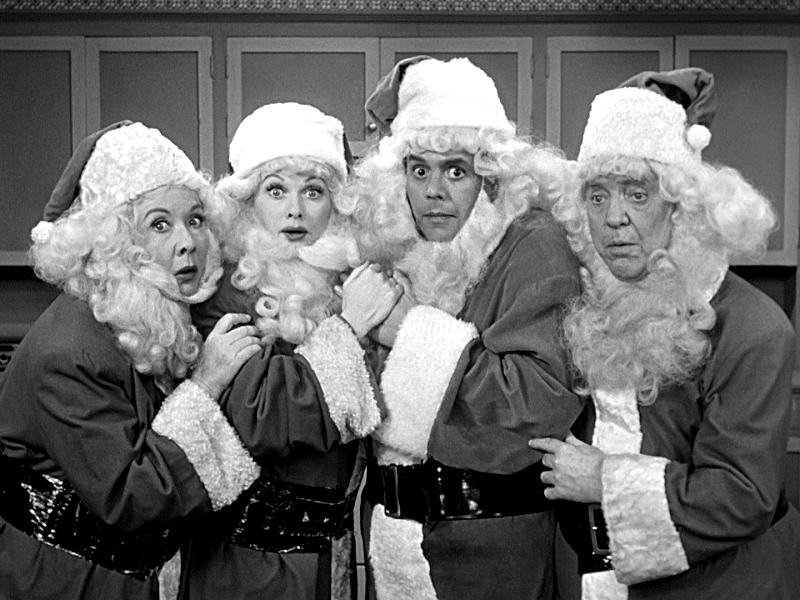
The show didn’t only recycle the clips, though, but also a gag at the end when all four adults (Lucy, Ricky, Fred, and Ethel) each independently decide to dress as Santa Claus to surprise Little Ricky. They wind up getting into a slapstick chase in the living room, during which a fifth Santa appears. As they remove each other’s beards trying to determine who is who, the superfluous St. Nick grins and vanishes before their eyes. They had first used this gag at the end of a season one episode, “Drafted,” in a tag that had nothing to do with the episode itself, and had shown it again in subsequent Christmases. This “remake” made a lot more sense, given the episode it was used to conclude. 

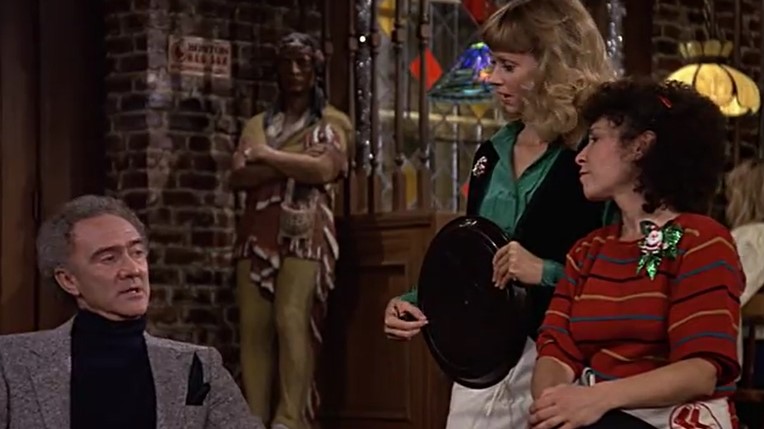
Cheers: “The Spy Who Came in For a Cold One.” Season 1, Episode 12, original air date Dec. 16, 1982.

Cheers did a few Christmas episodes over its 11-year run, but none of them cling to my mind better than this one from the first season. This was, of course, a period where the show was still kind of trying to find its identity. It was still predominantly a romantic comedy, focusing on Sam and Diane’s relationship, but even at this point the ensemble piece it would eventually become was starting to shine through.

In this episode, a stranger shows up for a drink at the bar around Christmas and “accidentally” lets it slip to the patrons that he is – drumroll please – a spy. Diane, ever the pragmatist, meets his claim with the expected skepticism, but most of the rest of the gang plays along with it, plying the stranger for stories of his exciting lifestyle. When Diane finds a way to trap the spy in his own web, everything blows up in her face.

Aside from the date and the decorations, this isn’t an especially Christmasy story. We don’t get the usual “very valuable lesson” that so many of these episodes come with, nor is there a heartwarming moment at the end where everybody gets together for a group hug and reminds one another that friends are the real family. But I like the way it hammers down the dynamics of the group, how Diane gets a somewhat needed comeuppance about being too smart for her own good, and how it deftly establishes some of the tone and tropes that would follow the series further down the line, even after Shelley Long left the show. 

The Golden Girls: “Twas the Nightmare Before Christmas.” Season 2, episode 11, original air date Dec. 20, 1986.

It’s Christmas in Miami, and the girls are all making plans to jet off to visit their respective families in other parts of the country. Things get derailed, however, when a man dressed as Santa Claus shows up at Rose’s grief counseling center and starts taking hostages.

Hopefully, by this point, nobody needs me to tell them what a brilliant show Golden Girls was. You had a cast of four outrageously talented comedic actresses and a team of writers who were willing to push the envelope in ways that few other shows in the 1980s took a chance doing, and it has legitimately become recognized as one of the greatest TV comedies ever made. The amazing thing about this particular episode is the way it breaks down the story into three segments, any of which would have been an entire episode of a lesser sitcom. It starts with a funny scene showing the gift exchange between the girls before they leave for the holidays, which itself is ripe with comedic potential. Then we crash into the hostage situation, which seems like it would be the whole episode on its own until Sophia casually takes the gun away from the hostage-taker and berates Dorothy for not being able to tell the difference between a real gun and a fake. The final act shows the girls – now stranded in Miami and unable to make their flights – having a Christmas Eve dinner in a diner where they slowly come to the realization that they haven’t missed out on a Christmas with family after all.

This episode wraps up with some of the schmaltz that the Cheers episode was missing, and it’s just lovely. It was only the second season of the show, and while the bond between the characters was evident, this was the episode that kind of cemented how deeply the four of them all cared about one another, which (despite any friction on the set in real-life) was truly the core of the show. And of course, typical of the Golden Girls, the drippy, gooey sentiment at the end is nicely undercut by a joke from Sophia, who is one of the greatest characters in television history.  

ALF: “ALF’s Special Christmas.” Season 2, episodes 12 & 13 (two-part episode), original air date Dec. 14, 1987

Ah, is there anything that says “TV in the 80s” better than the adventures of a Muppet-esque alien living with a typical American family to the delight of audiences everywhere and – apparently – to the eternal disdain of the cast that had to work with him? From all accounts, the set of ALF was not a pleasant place to be, but this show was a favorite of mine as a kid, and I’m still on a quest to complete my run of the Marvel ALF comic books (50 regular issues, three annuals, two Christmas specials, a “spring” special, and two digests). It’s an oddly formative part of my personality.

In this two-part episode, the family leaves the Tanner home for a trip into the woods for Christmas. Willie rents a cabin for the family to stay in where ALF will be free from prying eyes, but as tends to happen, the little furball gets lost, winding up in a hospital where he’s mistaken for a doll and given to a child with a serious illness. He befriends the girl and eventually leaves, but the memory of her clings to him. Meanwhile, the Tanners find out that the man they’re renting the cabin from is giving it to them – two weeks after the death of his wife, he seems to be divesting himself of a lot of things…

This is honestly a pretty dark episode, even for a show like ALF, which frequently mixed a little darkness into its humor. (Cat buffet, anybody?) The two plotlines are about a child with a terminal illness and an old man contemplating suicide – fun for the whole family, right? But the whole thing is done with the typical ALF touch. There’s some goofy humor in it, and a dose of heart that makes the darkness a bit more bearable…and honestly, I think that’s kind of the point. The show doesn’t turn a blind eye to the bad things in the world, but does its best to show how to cope with them. That’s something I’ve always appreciated about it.

Frasier: “Frasier Grinch.” Season 3, episode 9, original air date Dec. 19, 1995

Let’s wing our way back to the Cheers Universe for this third-season episode of its successful spinoff show. The original Frasier was a brilliant series and arguably the most successful comedy spinoff of all time, but there was one thing about the adventures of Frasier Crane in Seattle that always kinda bugged me: the distance from his son. When the producers decided to give Kesley Grammar a spinoff they shipped him off to the other side of the country to do their best to resist the urge to have cameos from his former co-stars every other week, but the side effect here was that Frasier often came off as a very absentee father…ironic, as one of the best parts of this show was watching as Frasier rekindled his relationship with his own father, Martin. In this episode, Fraiser’s son Freddy is coming to Seattle to spend the holidays with his dad, and Frasier decides to shower the boy with the very thing every kid wants for Christmas: educational toys! It’s not long before Frasier realizes the enormity of his error and has to venture out to find the gifts Freddy REALLY wants for Christmas.

Like Diane in the parent show, the intelligentsia in the Crane family occasionally needed a reminder that they were not always the smartest ones in the room. This episode does a lot to help Frasier seem like a well-meaning father willing to go to great lengths to give his child a Merry Christmas (the least he could do, as he only sees the kid in one or two episodes a season). It also has some really great stuff with Martin, nailing the dynamic between Kelsey Grammar and John Mahoney. Frasier did many more Christmas episodes than Cheers, but this is my favorite.

Community: “Abed’s Uncontrollable Christmas.” Season 2, episode 11, original air date Dec. 9, 2010.

By the second season of Community, the show had firmly embraced its role of commenting on and parodying the various tropes of sitcoms, and in this episode they went one step further by parodying classic Christmas specials. The entire episode is done in stop motion animation, mimicking the old Rankin/Bass “Animagic” style, as Abed is somehow stuck seeing the world as a holiday special. With the help of Professor Duncan, Abed’s study group tries to get to the bottom of his delusion and help him see the world the way that it really is.

This is not the first sitcom to try an animated special for the holidays – Home Improvement had a memorable episode that had a segment in stop motion animation, for example. But what elevates Community is that the episode does not ONLY parody Christmas specials, but also makes a real commentary on the characters. Despite his delusions, we learn things in this episode about Abed and his family that leave deep fingerprints on the character and make him a little more understandable than he may have been in the past. The episode has one of the most bizarre explanations for “the meaning of Christmas” that I’ve ever heard, but damned if it isn’t just perfect for this show. 

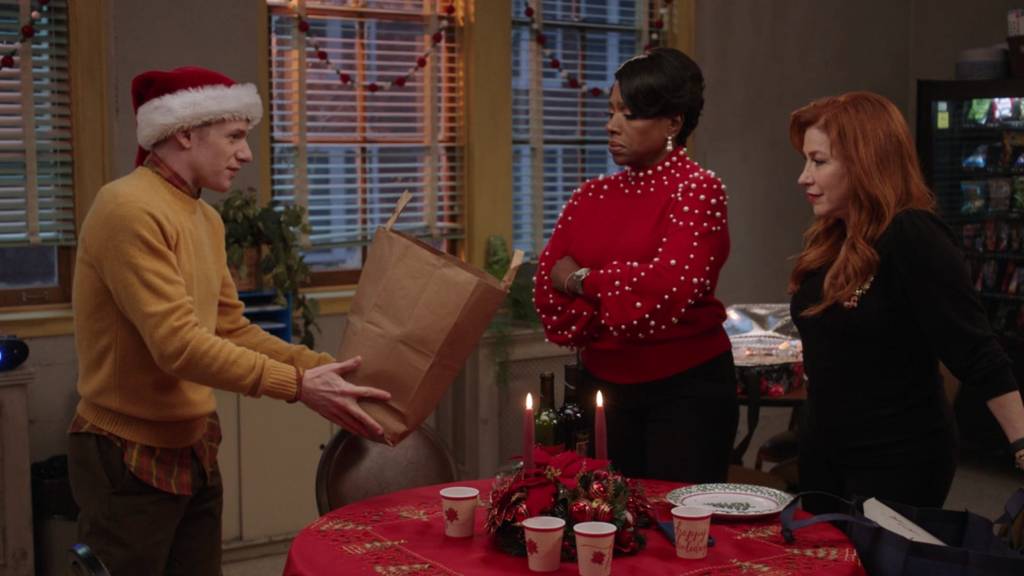
Abbott Elementary: “Holiday Hookah.” Season 2, episode 10, original air date Dec. 7, 2022.

The newest entry on my Christmas playlist comes from what I maintain is the best live-action comedy currently on television, ABC’s Abbott Elementary. After the last day of school before the winter break, young teachers Janine and Gregory (who have had your classic “will they/won’t they” thing happening for some time now) happen to run into each other at a hookah bar, each with a group of friends. Even if you’ve never seen an episode of this particular series, if you’ve watched other shows that use the same trope (see about a billion other shows) you’ll see the trajectory that this plotline is taking. There’s awkwardness, obvious attraction, confusion, and a reluctance to hook up with somebody you work with. It’s all done well, but is kind of standard stuff.

What I really like about this episode is actually the B-plot. Two of the older veteran teachers, Barbara and Melissa, have a tradition of having a Christmas dinner together after the end of the fall term each year. This year Jacob – a young teacher who fancies himself to be far cooler than he actually is – finds out about their celebration and winds up crashing their “Christmas Lounge.” The interaction between these three is wildly funny, and the relationship between Barbara (Sheryl Lee Ralph) and Melissa (Lisa Ann Walter) has become a core pillar of the show at this point. Although the two are almost diametrically opposites of one another, personality-wise, their shared experience and long relationship has them stand out as the best of friends. It’s one of the sweeter, most realistic elements of the show (I can name several pairs of teachers I know in real life that remind me very much of these two), and I think this episode showcases that extremely well.

We also get your usual “somebody has to learn a lesson” moments that frequently accompany any Christmas episode, and as befits this series, they come from unlikely sources. Ava – the crazy principal who often seems wholly unsuited for her job – comes to Janine’s rescue, while Jacob gets his head screwed on straight thanks to the timely intervention of conspiracy nut custodian Mr. Johnson. All of it together makes for a fine Christmas viewing. 

There you have it, friends, some sitcom classics to get you in the Christmas mood this year. This is, of course, not to be considered a comprehensive list. There are hundreds of shows that have done Christmas episodes, and creating a truly complete list is probably beyond my abilities as a humble Geek Pundit. Which is why I invite you to share some of your favorites here in the comments, or on whatever social media you followed to get here! What are some of the all-time great Christmas episodes that have made it to YOUR Merrython playlist?

Blake M. Petit is a writer, teacher, and dad from Ama, Louisiana. His most recent writing project is the superhero adventure series Other People’s Heroes: Little Stars, volume one of which is now available on Amazon. You can subscribe to his newsletter by clicking right here. He didn’t even get to Laverne and Shirley, The Simpsons, Bob’s Burgers, The Beverly Hillbillies, Friends, Family Ties, Night Court, Family Matters, Perfect Strangers, Mama’s Family, Seinfeld, The Office, or The Big Bang Theory. Maybe there needs to be a sequel to this column next year. 

Geek Punditry #26: Bargain Bin Gold

Last weekend I got to do one of my favorite things, and something I rarely get to indulge in anymore: comic book bargain bin diving. I’m a comic nerd, of course, and like any nerd I’ve got my favorites, both when it comes to modern comics and to the classics. I’m trying to fill a run of DC’s Star Trek comics (try to act surprised) and I’ll never turn up my nose at a Disney Duck comic or anything from Archie, pre-2010 or so. But in addition to those special things I’m searching for, I also like…weird stuff. I mean obscure comics, books that most people have probably never heard of before, things that remind me of my childhood, things that have a crazy title, movie adaptations for movies that you wouldn’t believe had ever been adapted, or even just anything that’s got a bizarre cover. If I can find it for under a buck, I’ll throw it into the cart.

This kind of bargain bin excavation is something I love, but it’s not something I get to do all the time, with a five-year-old son for whom “patience” is a foreign concept and a wife with a busy work schedule. But last weekend, with Erin’s blessing, I headed to a small local show in Slidell, Louisiana, where I spent a couple of hours bouncing from vendor to vendor, most of that time sifting through the dollar bins for some of this unexpected, bizarre gold. This week, I’ve decided to share with you some of the crazier finds that I made in this most recent hunt.

“But Freeeeed, I wanna be in the shooooooow!”

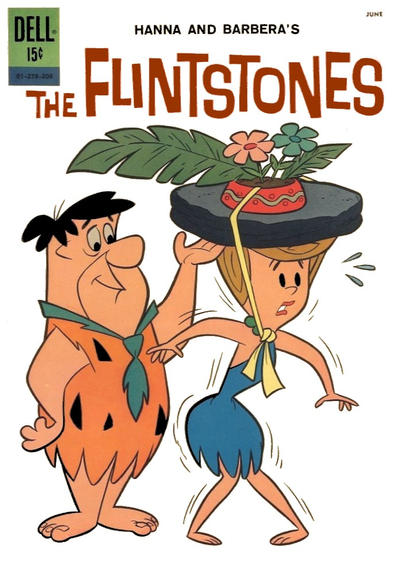
First off I’d like to turn your attention to Flintstones #5, published by Dell Comics way back in 1962. Comics based on cartoons are one of my go-to grabs in these bargain bin digs. I’ve always been a fan of the Flintstones, and these Dell comics were great – five full stories and a couple of one-pagers for twelve cents? Sign me up. Story #3 in this issue introduced me to “Perry Gunnite,” an old-fashioned detective comic strip set in the world of Bedrock. Perry appeared in a single episode of the cartoon but, evidently, spun off into his own series in the comics. That find enough would have made this book worth buying, but it was what I found in the fourth story that made this a comic I’ll never forget. 

In “The Champ Chowhound” we are introduced to Wilma Flintstone’s cousin Muncher, visiting from out of town and eating Fred and Wilma out of house and home. They want to get rid of him, but he can’t afford to go home and will not accept Fred’s “charity” offer to buy him a bus ticket. So the Flintstones embark upon a set of increasingly elaborate ruses to send him packing. First, Fred claims to have “found” a bus ticket back to Muncher’s home town, but rather than hopping on the bus Muncher sets out to find its rightful owner, turning it over to the first person to claim it. Next they try to guilt him into leaving, pretending that Fred has lost his job and they can’t afford to feed him, but Muncher’s general good nature won’t allow him to abandon them in their time of need. Finally, Muncher signs up for a hog-calling contest in the hopes of winning the money to get Fred back on his car-stopping feet and getting himself the cash to go home.

On the surface, admittedly, this doesn’t seem to be a particularly mind-blowing story…and it’s not. Except for one thing. Regular readers of Geek Punditry will recall a couple of months ago when I mentioned that my wife and I have been binging I Love Lucy on Pluto TV. Pluto shows the entire series in order over and over again, and with 180 half-hour episodes that means if you watch it a lot, there’s a good chance you’ll catch the same episodes every four days or so. Were it not for the fact that I’ve seen these episodes repeatedly and recently, this Flintstones comic would not stand out for me. But it does. Because I recognized that whoever wrote this comic completely ripped off a season three episode of I Love Lucy almost BEAT FOR BEAT. In the previous episode, “Tennessee” Ernie Ford came to visit the Ricardos. As this episode began, he was still crashing on their couch and tearing at their every last nerve. 

And from there, it is exactly the same story as the Flintstones comic. Ernie won’t take a bus ticket, so Ricky pretends to find one, but Ernie returns it to the “rightful” owner. Ricky pretends to be out of work, even going so far as to have the Mertzes pretend to be evicting them. (It’s a wonder that the writer of the comic book resisted the urge to have Barney and Betty fill this role, but as the comic was only five pages long I guess they couldn’t squeeze it in.) The biggest deviation is that, rather than have a contest to end the story, Ernie arranges for the crew to appear on the TV show Millikan’s Chicken-Mash Hour doing a hootenanny to get them out of the red. 

The Lucy episode is credited to the series’ prolific writing team of Bob Carroll Jr., Madelyn Pugh, and Jess Oppenheimer. Most Dell comics at the time had no credits given, although the Grand Comic Book Database credits the artwork to Kay Wright. The writer may have been lost to history, but I wish I knew the name of the person who had the audacity to steal a plot wholesale from an 8-year-old TV show for a comic book based on a cartoon, which makes me wonder if anybody overseeing the current IDW My Little Pony comics has double-checked to make sure nobody is knocking off the final season of Parks and Recreation. 

My favorite part is the end, where Moses shows up to talk to him about the Testament Initiative.

The next bizarre book I pulled from a bargain bin last weekend was an oddity called Jesus, the Man With the Miracle Touch. I’d never heard of this book before, nor its publisher (“Cosmics”), although a little time on Google indicated this publisher released just four comics, all religious-themed one-shots in the late 80s. The story is a fairly straightforward retelling of the Biblical life of Jesus, albeit highly condensed into 32 comic book pages. The book also doesn’t have any credits, which is a shame, because I really quite like the art style. Whoever did this book easily could have been working on Harvey or Archie Comics, or maybe something from Marvel’s Star line of young readers comics at the time. (More about that later.) Mostly, though, I bring this up because when I was at the convention and handed the stack of books to the guy at the booth, as he counted them, he looked over at his co-worker and yelled, “Hey! Somebody is buying the Jesus book!”

“Thanks, Blue Robin!”
“I’m not Robin.”
“How’s Alfred?”
“I’m not–fine. He’s fine.”

At one time, especially when I was a kid in the 80s, “public service announcement” comics were a fairly big thing. There’s an infamous Marvel comic where Spider-Man and Power Pack taught you about the dangers of child abuse and another where Spidey teamed up with Storm and Luke Cage because that’s the natural trio to warn you about ill effects of smoking. I, of course, have both of these in my collection. Meanwhile, DC farmed out the Teen Titans for three anti-drug specials. This weekend I picked up the second of the three, in which the Teen Titans and their pal “Protector” try to help Protector’s cousin, who has moved to Blue Valley, developed a crush on a friend of Wally West, and (gasp!) has fallen into the world of drugs. The Titans, of course, have to help get him out of it.

When I was a kid, I remember getting what turned out to be the third of the Teen Titans specials (although I didn’t know it at the time, as these books didn’t have traditional comic book numbering or anything), and I remember being baffled by it. I knew who the Teen Titans were, of course, but who was this guy in the blue costume and cape with no powers? He was…kinda like Robin, but he wasn’t. That same “Protector” is in this book, although here we find out he’s got an actual secret identity, Jason Hart…so my fifth-grade headcanon of Dick Grayson wearing a brown wig and using a different name for…reasons…I suppose has turned out to be inaccurate. Looking back as an adult, I wonder if Dick Grayson was tied up in some sort of licensing rights surrounding the Batman due to the movies or something. It might not be the case – after all, the first of these comics came out in 1983 and the first Tim Burton Batman movie wasn’t until 1989. Then again, some of these things have a long timeline. If there’s anyone with more information on this, I would be very anxious to hear it. 

(UPDATE: Reader Trey Ball has informed me that the licensing deal that prevented Robin being from used in the comics was actually due to the Superfriends, TV show, which for 1983 definitely makes more sense than the Batman movie. The anti-drug comic was produced in association with Keebler, but Nabisco had a licensing agreement with the Superfriends characters. Thanks, Trey!)

The last book I’m going to discuss today comes from Marvel Comics, specifically their Star Comics line from the 80s. (Have you ever noticed how many weird comic books have their roots in the 80s? Something in the air back then, I swear.) Star Comics was Marvel’s attempt to crack into comics specifically for young readers. The most famous alumnus of the line these days is Peter Porker, the Spectacular Spider-Ham, star of big screen movies, animated shorts, and my heart. But the line also included lots of licensed comics such as Heathcliff, Care Bears, Madballs, and ALF, as well as several original characters that were created and produced by writers and artists Marvel poached away from the likes of Harvey and Archie Comics. Royal Roy was a kind of Richie Rich knock-off, Top Dog was about a kid who found a talking dog who also happened to be a spy, and Planet Terry was an elementary school Flash Gordon with a clever pun in the title that I didn’t catch until some 20 years later. 

I love finding obscure, weird comics, and bargain bins are my favorite place to do it. This week I'm here to share some recent finds as Geek Punditry presents "Bargain Bin Gold!"
This is what happens when you pee swimming in the ocean one too many times.

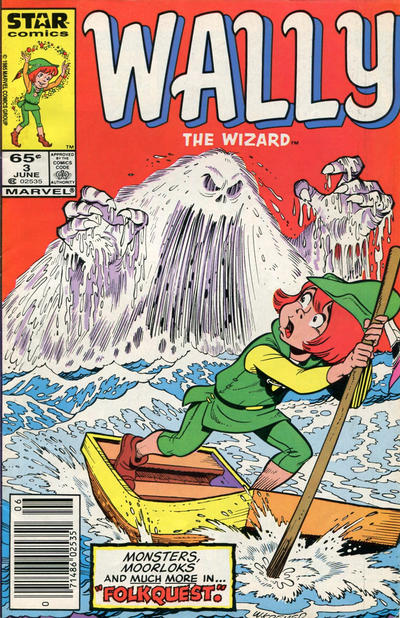
But the book I got this week was Wally the Wizard #3, written and drawn by Archie Comics superstar Bob Bolling. In this issue Wally, apprentice to the Wizard Marlin (Merlin had the power to know the future and thus trademarked his name in the 8th century specifically to avoid being portrayed in Star Comics), discovers that his parents are in the company of a pack of Vikings. He rounds up his buddy, the Viking orphan Vikk, and sets out to find them. Bolling did countless wonderful comics for Archie, especially lots of the Little Archie series, which is no doubt what Marvel had in mind when they picked him up to work on the Star line. This issue, though, makes it seem like he needed a nap. 

The truth is, none of the Star-original comics were all that great, although I do have a fondness for Top Dog. None of them lasted more than a couple of years, but some of the licensed books (Heathcliff and ALF, specifically) had long runs. But you know, that’s okay. In this day and age, when comic book publishers seem to think the solution to a dwindling readership is to publish 75 different covers of the same book to sell to the same readers they’ve had for decades, it’s nice to remember that there was at least a time when one of the major publishers was trying something to get kids reading comics again.

Some comic collectors are in it for investments. They spend all their time looking for flawless copies to slab and flip, speculating that a book is going to go up in price because someone announced a movie deal, treating it like a business. I do not understand these people. But I know I’m never going to encounter them sifting through a dollar bin, because the books in those boxes aren’t for them. They’re for people like me – people who see comics as fun, as a little escapist entertainment. And especially, people who like to uncover stuff that others have probably forgotten about. I may not get there often anymore, but the next time I get around to a convention or a used bookstore or anywhere I can sift for cheap, weird comics, I’ll come back with another installment of Bargain Bin Gold.

Blake M. Petit is a writer, teacher, and dad from Ama, Louisiana. His current writing project is the superhero adventure series Other People’s Heroes: Little Stars, a new episode of which is available every Wednesday on Amazon’s Kindle Vella platform. To date, the greatest thing he’s ever pulled from a bargain bin was the four issue run of Roy Thomas’s Alter Ego, a great comic from the 80s (of course) that you should totally hunt down if you can. 

Geek Punditry #15: How Lucy Gave Us the Arc

A few weeks ago I wrote about how, for a lot of people, familiar TV shows, books, and movies, act as a kind of pop culture comfort food, something that calms, soothes, and entertains you almost as much as a visit with an old friend. We rewatch these shows because the familiarity does us good and makes us happy, and that’s what makes Pluto TV the best app around, in my opinion. Pluto TV gives you (free) access to hundreds of channels that provide you with this sort of entertainment. There are channels dedicated to old sitcoms, channels dedicated to old gameshows, an entire channel that shows reruns of The Carol Burnett Show, another that gives you a steady stream of Mystery Science Theater 3000, one that’s all RiffTrax, and two separate channels dedicated to repeats of the various Star Trek series. My son specifically asks to watch “Nick Jr. on Pluto TV” as opposed to asking for a particular show, and as that has weaned him away from YouTube I’m not complaining in the slightest. There are also channels for news, sports, music, movies, cartoons, and (for my wife) true crime shows and documentaries. It’s honestly an app that has something for everyone. 

I swear they’re not paying me to say this. I just really like it.

But most pertinently to this week’s Geek Punditry, there’s a channel that only shows episodes of I Love Lucy, the timeless sitcom about the love between Lucy and Ricky Ricardo and the barely-disguised loathing of their best friends, Fred and Ethel Mertz. To my surprise, once we added the Lucy channel to our regular Pluto TV rotation, I learned that my wife had not watched this show growing up, so for her, it’s all new. It’s given me a good excuse to voraciously rewatch the show and, since Pluto shows the entire series in order, it’s also allowed me to notice something that hadn’t occurred to me before.  I don’t need to remind anyone what a groundbreaking, legendary series this was, about how it literally invented the rerun, how it pioneered the three-camera setup used by many sitcoms ever since, or about how Lucille Ball was simply one of the funniest human beings ever to walk the Earth. But what I didn’t realize until recently is that Lucy and Desi also apparently invented – or at least codified – one of the primary elements of television that exists today: the story arc.

“Luuuuuucy…are you breaking new ground in televised entertainment AGAIN?”

These days, of course, arcs are commonplace, and no longer the purview of only soap operas. Babylon 5 is largely responsible for bringing the technique to science fiction, blazing a trail that shows like Star Trek: Deep Space Nine began to follow a few years later. Then Lost premiered in 2004, probably the first mega-hit to run with an ongoing storyline, and since then almost any drama that isn’t a police procedural (and many that are) has followed suit. 

Comedies were a different breed, though. A “sitcom” is literally a “situation comedy,” and changing up the situation was a big no-no. In the past TV comedies existed in a state of permanent status quo, where anything that changed in the story had to be changed back by the end of the episode. If it was a show about a nuclear family, that family stayed nuclear. If it was a show about a workplace, the people employed at that workplace stayed constant. Nobody ever moved away without moving right home again, nobody in the main cast ever got married or divorced, and if somebody lost their job, they had to regain it in 30 minutes or less. There’s a single episode of The Honeymooners where Ralph is laid off but they forgot to put him back behind the wheel of the bus before the episode ended. They simply ignored it the next week and moved on as if nothing had happened, but it was so shocking that it became a punchline in an episode of Family Guy decades later.

“When I catch the guy who forgot to gimme my job back, BANG! ZOOM!”

Now I could be wrong. I’m not a TV historian, and I know that things like radio dramas and soap operas had arc-based stories for some time, but when it comes to primetime shows, especially comedies, I feel like this is another area where Lucy broke new ground. Over the six seasons of the show, I count no less than six storylines that can legitimately be described as “arcs” (which, for ease of discussion, I will hereby define as a story thread or change to the status quo that carries through multiple episodes before resolution). The first was a matter of necessity: when Lucille Ball was pregnant during the second season of the show, they decided to incorporate it into the story rather than disguise it like so many shows have done before and since. (It was not, however, the first TV show to depict a pregnancy, as is often erroneously reported. A mostly-forgotten show called Mary Kay and Johnny actually beat them to the punch by a full four years, and they did it for the same reason that Lucy did.) Lucy’s pregnancy was announced in season 2, episode 10 and the baby was born in episode 16, with the five episodes in-between pretty much all dealing with the pregnancy as that episode’s major plot point.

Before and, for a time, after the birth of Little Ricky, I Love Lucy was mostly content with the one-off stories that were sitcom staples. In season 4, however, things changed with an absolutely massive arc in which the cast uprooted and went to Hollywood. It started in season 4, episode 6, when Ricky had a screen test with a movie producer. The next couple of episodes dealt with him waiting to hear back about the test, getting an offer to do a movie, planning a trip to Hollywood with the Mertzes for some reason, and several episodes of buying a car, fixing up the car, and driving from New York to California before finally arriving in Hollywood in episode 17. The cast stayed in California for the remainder of the 30-episode season, not returning home to New York until episode 6 of season 5. The arc was in many ways an excuse to bring in a bunch of celebrity guest stars like John Wayne and Harpo Marx, but it was still an unprecedented change to a series of this nature.

“Do you really think they’ll watch five episodes of us driving?”
“Of course they will, Nintendo hasn’t been invented yet.”

They didn’t stay home very long, though. In episode 10 of season 5, Ricky’s band is given an opportunity to tour Europe, and after a few episodes of getting a passport and (again) planning a trip with the Mertzes, they set off on a cruise ship in episode 13 and then continued traveling the continent for the remainder of the season’s 26 episodes. 

Season 6, the final season of the show in its original form, brought with it two more arcs. The first one, once again, was based on travel, with episodes 6-9 centered around a vacation to Miami and to Cuba to meet Ricky’s relatives (with the Mertzes). The final arc is a little harder to define, but it’s there. In episode 15, Lucy decides she’s tired of city life and wants to move to the country. Cue several episodes about buying a house, moving, and settling down in their new home, along with the Mertzes, proving that Bert and Ernie’s was not television’s first codependent relationship. Episode 20 is about the Ricardos and Mertzes trying (hilariously) to start up an egg farm, and that’s where I declare the “arc” over, as the remainder of the season’s (and series’) 27 episodes didn’t really deal with the move anymore, but the fact that they were new in town did still turn up as a plot point more than once.

No other show at the time had ever done so many extended storylines, especially nothing as long as the Hollywood arc, and it was a long time before such things were handled the same way. While changes in the status quo began to be allowed, they still often took the form of a single episode where a change was made and a new status quo took over: the move of the Laverne and Shirley characters to California, Richie joining the Army and leaving Happy Days, and of course, the infamous introduction of Cousin Oliver on The Brady Bunch are good examples of this. Changes were happening, but they were done so quickly that it was almost like a whole new show took over after an episode rather than the sort of slow burn that Lucy and Desi pulled off.

No matter how mad you are about what happened on your favorite show, remember, it could be worse.

Comedies now embrace arcs as well. The Office, for example, started off with the unrequited love between Jim and Pam, which was the sort of thing that sitcoms had always done, but then they did something shocking in season three and (gasp) REQUITED it. So they needed new arcs. They had the “Michael Scott Paper Company” storyline, the Sabre arc, the Dwight/Angela/Andy love triangle, and assorted other storylines of varying length and quality. Most other successful sitcoms these days bring in arcs after a while, if not built in to the DNA of the series from the very beginning. But as I sit there with Pluto TV showing me Lucy spending two episodes ruining and then trying to fix John Wayne’s footprints in wet cement in the middle of their year-long brush with Hollywood, I am in awe of the people who blazed the trail for everyone else.

Blake M. Petit is a writer, teacher, and dad from Ama, Louisiana. His current writing project is the superhero adventure series Other People’s Heroes: Little Stars, a new episode of which is available every Wednesday on Amazon’s Kindle Vella platform. He didn’t even touch on the Pluto channels for Doctor Who, Top Gear, or The Price is Right, because how much awesome can you realistically handle in one column? 

Geek Punditry #6: Seeking Sitcoms

The show that is indirectly responsible for everyone you know that can quote an episode of Rick and Morty verbatim.

It’s Desi Arnaz’s fault. As the story goes, when Lucille Ball got pregnant during the run of their legendary sitcom I Love Lucy, it was Desi who suggested to the network that they run some older episodes again to fill in the weeks when she would be out of work. The idea was bizarre. Run episodes again? Re-run them? Who would want to watch an episode of a TV comedy that they had already seen?

The answer, as it turned out, was everyone. There’s a comfort in returning to something that made you happy the first time you watched it, like finding an old friend or reminiscing about the good old days. It’s something that we all need at some time or another. 

The rerun became a standard television feature and changed the landscape of entertainment. Not only could they run the same show for an entire year without having to make quite as many episodes or skipping a week, but this eventually led to the concept of syndicating reruns of old episodes to show outside of their original timeslot. And it is syndication, I believe, that has allowed TV shows to become iconic parts of our culture. Think about it: were it not for syndication, if the shows were not still available after their initial airing, would anyone today still know the theme to The Brady Bunch, or be able to tell you how many castaways were stranded on Gilligan’s Island? Who would remember the man named Jed, a poor mountaineer who barely kept his family fed? Could a gentle whistle  conjure up the image of Andy Griffith and Little Ronnie Howard carrying their fishin’ poles down to the fishin’ hole?

And although it isn’t a sitcom let’s not forget that Star Trek (arguably the font from which all modern fandom springs) is only remembered today because people kept watching the reruns after the series was canceled. It was in syndication that the show’s popularity truly boomed, syndication that led to things like Star Trek conventions, merchandise, novelizations, comic books, and fanfiction…and it was those things that fueled the fire and ultimately led to the revival of the franchise. That’s huge even if you’re not a Trekker, because the fandom of virtually every major franchise since then has followed that template.

I’m not saying it’s the greatest sitcom ever made, but I won’t argue if YOU say it.

When I was younger, I would get home from school and gorge myself on a diet of sitcom reruns. Shows like Cheers, Night Court, or Mama’s Family were staples for me. The 90s came and Home Improvement, Seinfeld, and Friends joined my education. And no matter how many times I watched any given episode, I faithfully watched them again, to the point where I can remember minute details of ancient TV shows better than I remember things like the current whereabouts of my social security card. Because of syndication, I can throw out an obscure joke or comment about virtually any topic, then watch my wife roll her eyes at me when I tell her it’s a classic Simpsons reference.

The streaming revolution has changed things, of course. Once, these reruns were a way to fill time on the air before new series start. Today, fewer and fewer people are using “air time” in their television viewing at all. With the exception of sports, weather, and Svengoolie on Saturday nights, I virtually never watch any live television anymore.

This does not mean the end of reruns, of course, it just means that you have to seek them out instead of turning on whatever Channel 26 was showing at 5 p.m. In fact, for many people seeking out these older shows has become a lifestyle choice. Whereas once someone would have to content themselves with the seventeen or eighteen episodes of The Big Bang Theory that TBS shows on any given weekday, now the option exists to literally watch it 24 hours a day on HBO Max, and you can choose any episode you wish. If you go to a Bob’s Burgers group on Facebook and ask what shows the fans watch when they aren’t watching Bob on Hulu, you will be greeted by several quizzical faces that fail to comprehend such a time could exist. There are people who watch The Office on constant repeat, people who never turn off Family Guy, and folks who will spend their entire lives immersed in Pawnee, Indiana with Parks and Recreation.

There are a few too many people who don’t understand this character was meant to be a cautionary example.

I’m not entirely sure this is a good thing. Oh sure, it’s great to be able to go back and revisit your favorite shows, but I think it’s making it more difficult to find new shows, especially comedies. There’s plenty of talk about “prestige” television, but most of the time this refers to genre shows like Stranger Things or dramas like Yellowstone. The conversation doesn’t really center on blockbuster comedies the way it used to. Would it even be possible, in the current TV climate, for a show with the level of cultural penetration as Friends or Seinfeld to come into being?

As much as I love the sitcoms of my youth, I’m also the sort of person who is constantly on the lookout for new characters, new stories, and new worlds to explore. Even now, I sometimes feel a strange guilt if I watch something I’ve already seen, faced with the knowledge that I could be using this time on new entertainment. I get over it, though, and since streaming really took off in force there are many classic comedies and shows of my youth that I’ve gone back and watched in their entirety: Cheers, Frasier, Wings, The Office, Head of the Class…part of it is because I like to watch new shows with my wife (hi, Erin), and I used to go back to older shows as something to watch while she’s at work. That didn’t quite work out, though, as she would get home while I was in the middle of an episode of Everybody Loves Raymond, she would get into it, and I then I had to wait to watch the old shows with her too. Now I just make her tell me explicitly which shows I am and am not allowed to watch without her to avoid confusion.

How legendary is Ted Danson? His picture is in this column twice.

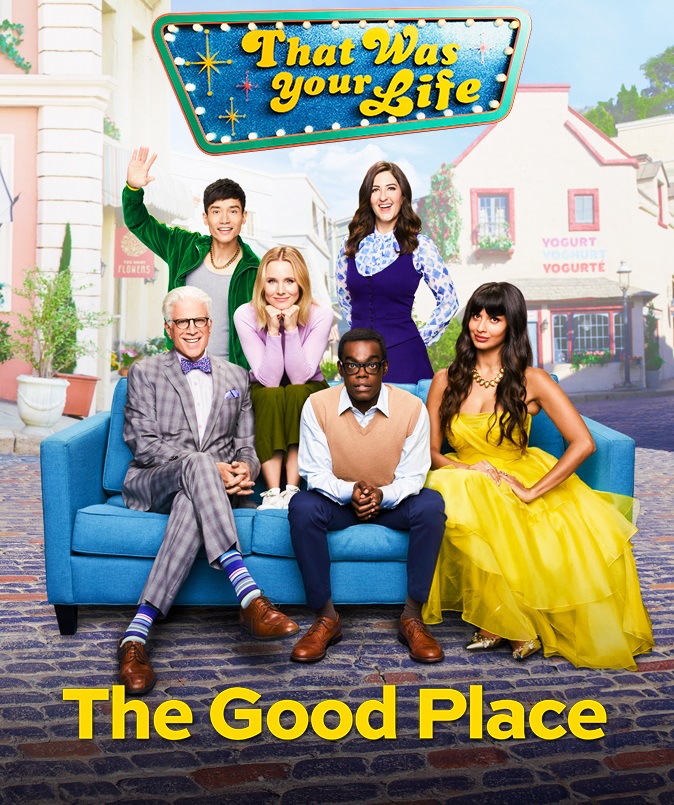
Anyway few years ago, I realized it had been quite some time since I found a new comedy that I really got into, and I made it a point to start seeking them out. I began with The Good Place, which was both a wonderful choice and also completely antithetical to what I was trying to do. If you’ve never seen it, The Good Place is about a kind of scuzzy woman (played perfectly and adorably by Kristen Bell) who dies and, through a sort of cosmic clerical error, winds up in Heaven, which turns out to be run by Ted Danson.

I refuse to say any more about the story because to do so would rob new viewers of one of the most sublime television series ever made, but I will say that I never thought I would see a show that could blend together philosophy, spirituality, religion, and deep, complex contemplations on the meaning of life and the nature of existence itself with a fart joke and make it all seem utterly perfect. It is both hilarious and one of the most profoundly thoughtful and emotionally-compelling TV shows I’ve ever seen. And it’s for that reason that it’s not a show I can re-watch too often, because there are only so many times you can cry on a random Tuesday afternoon.

So The Good Place is an excellent show and I urge everyone to watch it immediately…but it wasn’t the sort of thing that made me want to put it on constant repeat the way I could Frasier. The search would continue.

The most scientifically accurate television program since SeaQuest DSV.

The next comedy that really got my attention was Abbott Elementary. Upon the suggestion of friends of mine from work (I am, in case you didn’t know, a high school English teacher), I checked out the first few episodes of the show, then I stopped and made my wife sit down and watch them with me, because it’s so good. On the surface, it feels like one of dozens of Office clones – a faux documentary set in an American workplace, this time an elementary school. There’s a wacky boss! There’s a new guy in the first episode to act as the audience surrogate! There’s a will they/won’t they couple that the audience is clearly supposed to root for! All the fingerprints are there!

What sets Abbott apart for me, at least, is the authenticity. There have been a number of TV comedies set in schools, but the majority of them have focused on the students (Saved By the Bell), or on the class of one influential teacher (Welcome Back Kotter, Head of the Class). This is the first show I’ve ever seen where the faculty are the stars of the program. What’s more, it’s the most realistic show set in a school I’ve ever seen. You’ve got the young teacher (played by show creator Quinta Brunson), eager to please and determined to be the best that she can be. You’ve got the grizzled veteran teacher (Lisa Ann Walter) who does what she wants and doesn’t care what anyone thinks of her. The awkward teacher (Chris Perfetti) who is determined to be thought of as cool despite the fact that he clearly is not. The teacher who has been at that school forever (Sheryl Lee Ralph), is perfect in everything she does, and is both intimidating and nurturing to everyone around her. I’ve taught with every one of these people. I have been many of them at some point or another.

It also shows the repercussions of events in a school in a way that most shows don’t. Budget cuts, classroom size, getting adequate parental support – all of these are issues that have turned up on the show in a realistic way. Well…semi-realistic. It is still a TV show, after all. Count the number of times in Saved By the Bell students are left in a classroom with no adult supervision, and know that every one of those offenses could (and depending on the severity of that episode’s hijinks, should) have resulted in somebody getting fired. Abbott actually shows consequences to even well-intentioned mistakes, (the Egg Drop episode is a wonderful example of this) and does so with relatable, enjoyable characters. Best of all, it doesn’t reduce every teacher to a useless buffoon. In fact, unlike most shows in a school setting, every faculty character — even Janelle James’s seemingly-useless principal — has moments where they show their worth as a teacher, as a friend, or as a mentor. It is the first school-focused TV show I’ve ever watched that didn’t make me ask if anyone involved had ever set foot in an American school in their lives. It’s really lovely.

It’s not perfect. The teachers do seem to have absurdly long lunch periods and planning times where their students are in someone else’s care, but I accept that as a necessity when you’re telling stories about the adults and not the kids. Those minor problems are easy for me to get past when I go back and put the show on repeat…which is where I stumble, since we’re only in the second season, and with modern TV the first season had a measly 13 episodes. While I eagerly await each new episode, there’s not enough Abbott for a good binge…not yet.

So I keep looking for more comedy.

There are two shows about dead people on this list, and I don’t know if that says more about me or about society.

The most recent show to get my attention, like Abbott, is only in its second season, but it has a few more episodes and I haven’t quite gotten through them all yet. I started watching CBS’s Ghosts on the advice of my brother (which I mention mainly because if he should happen to read this he will immediately jump in the comments and demand credit for it), and I’m enjoying it a lot. Ghosts, a remake of a British show of the same name, is about a young couple (Samantha and Jay, played by Rose McIver and Utkarsh Ambudkar, respectively) who inherit an old mansion from a distant relative, unaware that the ghosts of numerous people who have died on the property are trapped there. In the first episode, Sam has a near-death experience and wakes up with the ability to see and hear the ghosts, and the sudden connection between the ghosts and the “livings” changes things for all of them. 

It doesn’t sound like the premise of a wacky sitcom, but it’s really great. The ghosts cover a wide range of character types, from someone who died 1000 years ago (a Viking exploring the Americas played by Devan Chandler Long) to a dudebro businessman who died in the early 2000s without any pants on (Asher Grodman). The premise allows for characters with a variety of perspectives from different time periods, which makes for a fun blend of types: the former mistress of the house (Rebecca Wisocky) has attitudes about women’s roles stuck in the 1800s, while the hippie who got killed trying to hug a bear in the 1960s (Sheila Carrasco) tries to help her break out of them. The scout leader who was killed in an archery mishap in the 1980s (Richie Moriarity) wants to be best friends with Sam’s husband Jay, but it’s tough to be pals with someone who can’t see or hear you. 

The first season of the show is a fun one that sets up the premise very well, but the second season is even better as it starts to explore the world more fully. Sam encounters more ghosts beyond her own property, we get more information about the lives of the deceased, and an ongoing plotline begins to build around the 20s songstress Alberta (Danielle Pinnock), who always claimed she was murdered. Her insistence that she had an exciting demise was considered just a symptom of her hubris until evidence starts to accumulate that suggests she may be right. There’s even a great meta joke in the second season where the ghosts learn they cannot pass through the walls of a vault in the house and Jay quips that he appreciates the expansion of the mythology.

The only problem with Ghosts is, like Abbott, there’s just not enough of it yet. I’ve only got four more episodes until I’m caught up, and then what?

Time to watch the British original, I suppose.

The point is, I’m still on the lookout. The great sitcoms of the past aren’t going anywhere, and thank goodness for that. I know I can turn on Cheers or Everybody Loves Raymond or Night Court any time I want, and I frequently do. (In fact, I haven’t started watching the Night Court reboot yet because Erin and I have to finish our binge of the original series first.) But I still crave new entertainment. So I’m open for suggestions, friends. What are the current comedies that are worth watching? 

Blake M. Petit is a writer, teacher, and dad from Ama, Louisiana. His current writing project is the superhero adventure series Other People’s Heroes: Little Stars, a new episode of which is available every Wednesday on Amazon’s Kindle Vella platform. He’s also a big fan of Star Trek: Lower Decks, but he doesn’t consider that a sitcom so much as a way of life.