Geek Punditry #136: Under Suspension

A few weeks ago, San Diego Comic-Con happened once again and…well, once again, I wasn’t there. It’s kind of a little tradition of mine. Comic-Con happens and I stay at home. Like many storied, time-honored traditions, it kinda sucks. So I instead spent that weekend waiting for the news to trickle out online. There wasn’t anything major this year, nothing that knocked my socks off, no “Robert Downey Jr. is Doctor Doom” moments. There were, however, trailers. I  love a good trailer, those little short films that give us a taste of an upcoming movie or TV show. They’re becoming a dying art, really, with so many trailers either failing to give you any excitement or – much worse – giving away half the thrill and excitement of the movie itself too early. If you haven’t seen the trailer for Project Hail Mary, for example, then I beg you in the name of all that is good and holy DON’T watch it. It gives away one of the best reveals in the book.

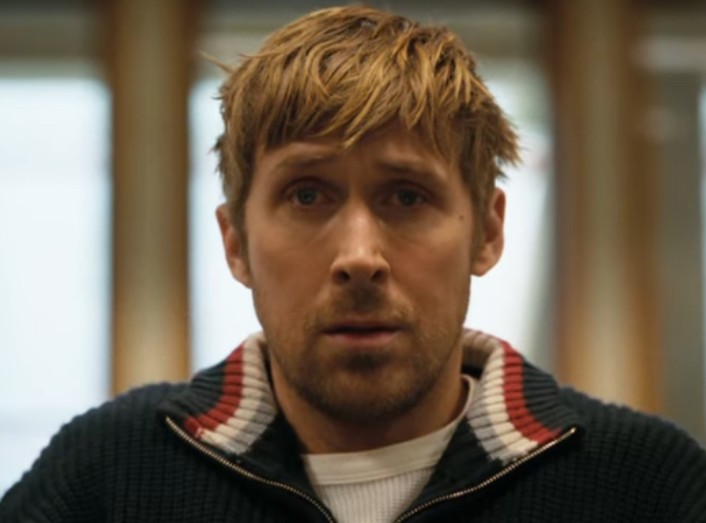
Specifically, the fact that Ryan Gosling copies Guy Gardner’s haircut.

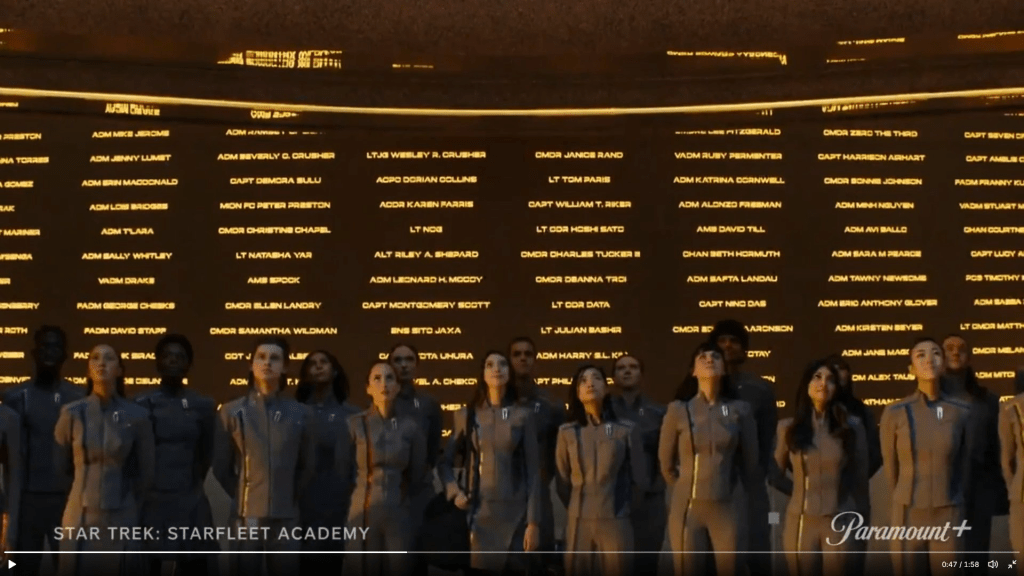
But the trailer that I’ve seen the most online chatter about had nothing to do with plot reveals, special effects, or the performances of the actors involved. No, the most talked-about trailer this year seems to have been the teaser for the upcoming Star Trek: Starfleet Academy series on Paramount+. Here’s all you need to know: Starfleet Academy takes place further along in the timeline than most of the Trek shows and movies that we’ve grown to love over the past six decades. In this time period, the Federation almost collapsed due to certain catastrophic events and it’s now in a rebuilding stage. This series is about the rebirth of the Academy, and the scene that has everybody talking is one in which we catch a glimpse of what appears to be some sort of Wall of Honor, adorned with the names of legendary Starfleet personnel. Ambassador Spock. Admiral Jean-Luc Picard. Lieutenant Nog. There are names on this wall from virtually every iteration of Star Trek to date. This one scene has had people freeze-framing it more than any single scene since Fast Times at Ridgemont High, trying to read all the names on the board to see who amongst our favorite Star Trek characters made the cut. I seriously doubt that this wall will have any great significance to the plot of the series, but it’s a fun Easter Egg for those of us who have loved Trek for so many years.

Barclay better be on that wall or we riot.

In one of the (many) online discussions I’ve seen about this scene, though, there was one dissenting voice that I found perplexing. This person, whom I am paraphrasing, basically expressed irritation that all of the characters that we’ve watched over the years turned out to be so remarkable. Statistically, they seem to think, not EVERY character should turn out to be some kind of legendary figure.

This person has got it completely backwards.

My reply was simply this: “It’s not that every character we watch has turned out to be remarkable. It’s that we are only watching them in the first place BECAUSE they are remarkable.”

This is one of those times where I engage in a discussion online over something that I always thought was blindingly obvious, only to learn that not everybody sees it my way (also known as the correct way). There are hundreds, maybe thousands of ships in Starfleet. Of course not EVERY ship and EVERY crew is going to turn out to be the one that makes it into the history books. But doesn’t it stand to reason that those boring, mundane crews are simply not the ones that we get to hear the stories about? In other words, the histories of the Enterprises, Voyager, or station Deep Space Nine aren’t remarkable because those are the crews we follow. We follow them because they ARE the remarkable crews.

This is the case with fiction across the board. We aren’t tuning in to a movie or a TV show to watch the adventures of some average, everyday schlub. There are exceptions, of course – “slice of life” dramas and comedies do just this, and sometimes they do it very well. But in the case of an adventure series like Star Trek, you’re following the exploits of the characters that make history. They even tried to subvert this expectation with the animated series Star Trek: Lower Decks. The idea behind it was that we were going to FINALLY follow the adventures of an unimportant crew on an unimportant ship. And what happened? It turned out that they weren’t all that unimportant after all, and if anything, Lower Decks winds up reading as the origin story for the next one of these legendary crews. 

Suspension of disbelief is an important aspect of enjoying fiction. There has to be a willingness, as a member of the audience, to accept certain things that you are aware may defy reality. In the case of speculative fiction – sci-fi, fantasy, and certain types of horror – that means that you have to maybe ignore certain laws of physics. Yeah, Einstein said that we can’t go faster than light, but if we didn’t find a way to do it then there would be no Star Trek, so I’m gonna let that one slide. Quantum mechanics says that the way time travel works in Back to the Future is utterly impossible, but until quantum mechanics can give me something as awesome as Alan Silvestri’s score, quantum mechanics can bite me. Is there really such a thing as a creature that can hide inside your dreams and attack you? Probably not, but A Nightmare on Elm Street wouldn’t be nearly as scary without him. 

Those are the big things, though, and when it comes to suspension of disbelief, people are oddly MORE accepting of the big things. What about the little things? There’s an old saying that in real life we expect the unexpected, but in fiction we don’t stand for it. Major, life-changing events have to be the REASON for a story, not something that simply happens IN the story. Think of it this way: if a character in a movie wins the lottery, that usually happens at the beginning of the movie, and the rest of the story is about what happens to them as a result. But if a character in a movie is in some sort of desperate situation – maybe he’s spent half the movie running from the mob because he owes them a fortune and they’re gonna break his kneecaps – and THEN he wins the lottery, the audience considers it a cheat. The suspension of disbelief breaks down here, even though the odds of a person winning the lottery are – mathematically speaking – exactly the same at the beginning of a story as they would be at any other point. I’ll accept a lottery win as the inciting incident, but if a random lottery win is what saves the day, that’s a modern deus ex machina, the “god in the machine.” It comes from those times in Greek drama where a character would be rescued by – literally – one of the gods intervening to get them out of a jam, and even back then it pissed off the ancient Greeks so much that they invented machinery just so they would have a term to use to complain about it.

It doesn’t have to just be good things either – tragedy can break your suspension of disbelief too. There are a lot of tearjerkers about somebody battling an incurable disease, and we’re okay with that, because that’s what the story is about. On the other hand, if somebody spontaneously develops such a disease in the middle of a story without any prior warning, audiences will consider it cop-out. Why? In real life, people can get sick at any time, so why NOT when it’s convenient for the plot?

Because “convenient” is enough to break the reality of the fiction.

Pictured: Convenience

The rule is basically this: major life-changing events (either good or bad) either have to happen at the beginning of the story or be the consequences of the actions in the story, but they cannot happen randomly in the middle or end of the story or the audience won’t stand for it.

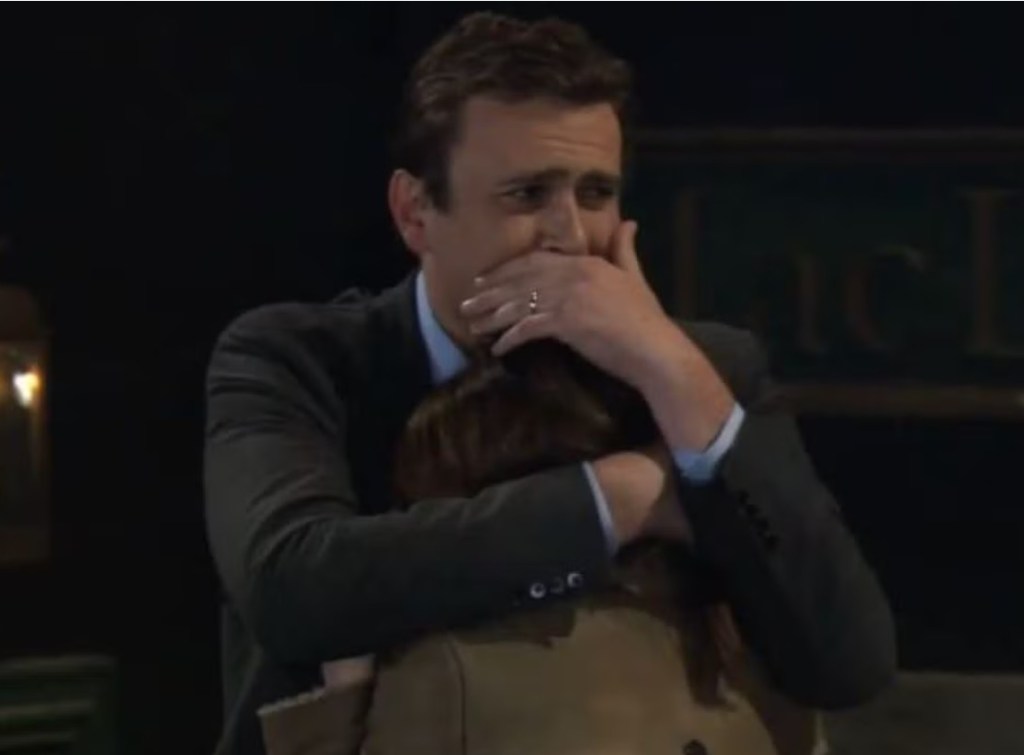
The one exception here – and even this one is iffy sometimes – is when you’ve got a long-running serialized story like a television or comic book series. When you’re following characters for years at a time, eventually a random event will occur, and the audience will be a bit more accepting of it. For example, the death of Marshall’s father in the series How I Met Your Mother came out of nowhere, but that episode is considered one of the most powerful, emotionally-resonant moments of the entire series. It’s something that hits the audience hard, forcing us to process the grief and pain of the character along with him. (The story goes that actor Jason Siegel didn’t know what the end of that episode was going to be until they filmed it, so when Allyson Hannigan delivers her line, telling him that his father died, his response is entirely genuine and his final line was a perfect ad-lib: “I’m not ready for this.)

People cried just as hard for the finale, but for…different reasons.

In a comedy, suspension of disbelief is allowed to go even farther. In a farce like The Naked Gun, for example, things routinely happen that make it feel more like you’re watching a cartoon than a live-action film, and the audience is perfectly satisfied. Nobody complained in the end of Mel Brooks’s Blazing Saddles when Hedley Lamarr bought a ticket to a movie theater showing…Blazing Saddles. And Mystery Science Theater 3000 even wove the concept of Suspension of Disbelief into its THEME SONG: “If you’re wondering how he eats and breathes and other science facts, just repeat to yourself, ‘It’s just a show, I should really just relax’.”

Lalala

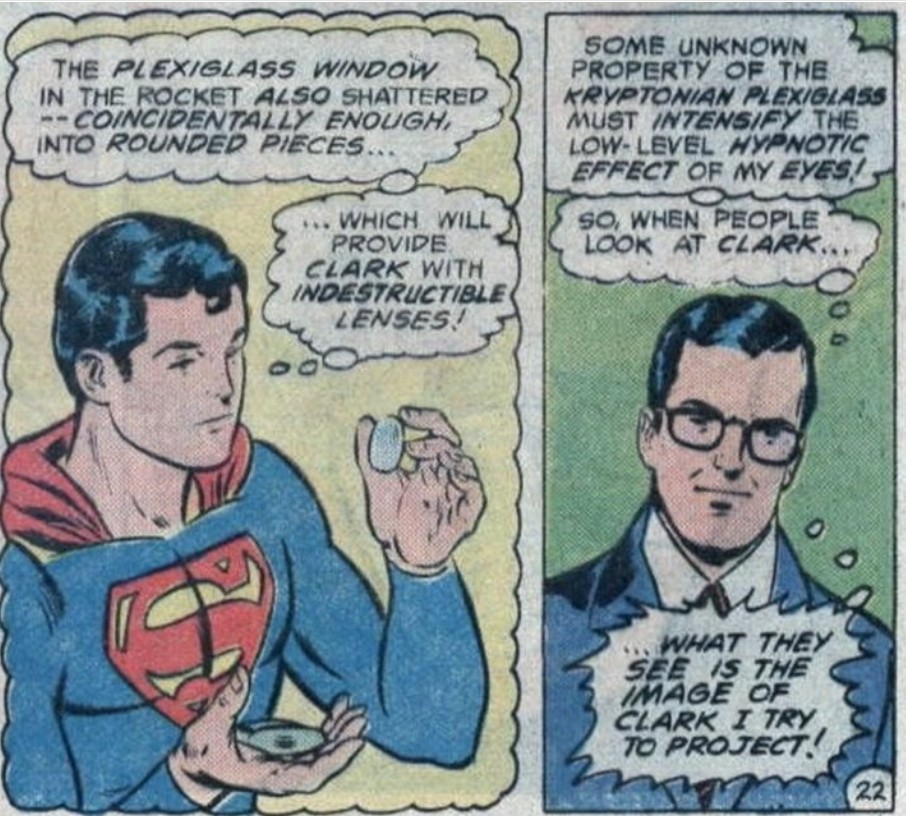
On the other hand, if that disbelief is suspended too long, there’s a temptation to try to work things into the story to justify the extraordinary. For instance, for decades there was a running commentary about how Clark Kent’s glasses wouldn’t fool anybody and that everyone would quickly realize he’s Superman. Eventually, the writers felt that it needed to be addressed to maintain the suspension of disbelief. Some writers said that he slouches as “Clark,” or changes his voice and mannerisms. Sometimes they actually have him attend acting classes specifically to learn how to do this. Sometimes the lenses are made out of special glass (usually from the ship that brought him from Krypton) that either changes the color of his eyes or – in the most extreme case – has a hypnotic effect on the people who look at him, making them see a different face. James Gunn even alluded to that in his movie, although a lot of people thought it was just a typical Gunnian joke, not realizing it was a legitimate piece of comic book lore. 

I love it when intergalactic spacecraft crashes to Earth and the shattered remains of the windshield have two pieces that perfectly correspond to my frames.

We don’t read or watch fiction – for the most part – looking for ordinary things. We want to follow the adventures of extraordinary people or, at the very least, ordinary people in extraordinary situations. Stephen King fans (this is me raising my hand in the back of the room) will tell you that’s his great strength: the ability to create a realistic character and then show how they respond to circumstances that no realistic character could possibly have prepared themself for. And to be fair, a certain amount of analysis and nit-picking is acceptable when you’re discussing great works of fiction (or even awful works of fiction). 

But eventually, when somebody online says something like, “Why don’t people in Gotham City ever realize that Bruce Wayne is the only one with the money to be Batman?” The proper response is simply, “Because the story wouldn’t work otherwise, so just get over it.”

Blake M. Petit is a writer, teacher, and dad from Ama, Louisiana. His most recent writing project is the superhero adventure series Other People’s Heroes: Little Stars, volume one of which is now available on Amazon. You can subscribe to his newsletter by clicking right here. He’s also started putting his LitReel videos on TikTok. He, too, would like to wear hypno-glasses, but in his case he would just use it to make his students see him as Yoda. 

Geek Punditry #70: How to Use Your Noodle

Paramount clearly has no idea what they’re doing with Star Trek right now. They’ve announced the cancellation of Lower Decks, which scientific researchers at Harvard University have conclusively proven to be the best Trek series in the past 25 years. They still haven’t announced any plans for what to do with the crew of the Enterprise-G, as established in the fan favorite final season of Star Trek: Picard. They killed Star Trek: Prodigy only to surrender it to Netflix. They’ve announced a new movie set in the Kelvin timeline, only it’s a prequel, which doesn’t make a damn bit of sense since the timelines are supposed to be identical up until the day Jim Kirk is born. And they’ve gone ahead with a Starfleet Academy series that nobody seems to be interested in, except for those of us who were happy when it was announced that Lower Decks star Tawny Newsome was joining the writing staff. As you may expect, this irrational and erratic behavior has led to a lot of debate and hand-wringing on the internet, because that is exactly what the internet is for. People have launched dozens of (sadly competing) Save Lower Decks campaigns, people are begging for the further adventures of Captain Seven of Nine…all the things you would expect.

Today, my friends, we are all Boimler.

Until one guy on Facebook, in one of the trillion Star Trek groups I am a member of, loudly demanded a movie be made starring Worf and explaining the fate of the Enterprise-E. This ship, the main one used in the films Star Trek: First Contact, Star Trek: Insurrection, and Star Trek: Nemesis, was briefly alluded to in the final season of Picard when it someone made a comment that they obviously couldn’t use the Enterprise-E, then everybody turned to look at Worf, who gruffly proclaimed, “That was not my fault!” It was a hilarious moment in one of the most satisfying seasons of Trek in history, but what my fellow fan doesn’t seem to understand is that the thing that MAKES that moment satisfying is that we don’t know what happened. 

TV Tropes calls this sort of thing a “Noodle Incident.” This is an event from the past that the characters make a reference to without ever actually explaining it, forcing the audience to wonder. The term comes from Bill Watterson’s legendary comic strip Calvin and Hobbes, in which there was a running gag where Calvin furiously denies that anything happened with the noodles at school or, alternately, doesn’t deny that it happened but claims it wasn’t his fault. The question that lingers with the readers, of course, is: what could have POSSIBLY happened with the noodles that would be THAT BIG A DEAL? And the answer is: we never know. When asked about it once, Watterson said he decided against explaining what the Noodle Incident was because he knew there was nothing he could put on the page that would be as satisfying or entertaining as what the readers were imagining in their heads. And Bill Watterson was absolutely right.

…and they never did.

Since that episode of Picard dropped, there has been a LOT of furious speculation about what could have happened to the Enterprise-E and why, specifically, Worf would have been blamed. Was it lost in battle? Fell into a wormhole? Destroyed in a freak transporter accident? Did it get “Tuvixed” with the ol’ Excelsior? Did Worf lose it in a poker game with a Ferengi? There are a million theories, each wackier than the last, and while I have no doubt that some day someone will write either a novel or a comic book series about the tragic end of this ship, I personally hope that the story of its demise is never officially canonized, because I think it’s more satisfying that way.

Noodle Incidents are a staple of comedy. On Home Improvement there would be allusions to disasters caused by Tim Taylor with the implication that they somehow even surpassed the ones put on screen. How I Met Your Mother had an episode where Ted wakes up to find a pineapple in his bedroom with no idea how it got there, and it’s one of the few minor details left unexplained at the end of the series. The Golden Girls milked this trope like an over productive cow. Rose’s half-told St. Olaf stories and Sophia’s vague yarns in which one is to “Picture it: Sicily” would often leave out details that forced the viewer to close in the gaps with their mind…and in every case these episodes were all the funnier without filling in the blanks. It’s almost like watching Rick and Morty on Adult Swim, where all of the swear words are bleeped out, versus watching it on MAX, where the profanity is allowed. The truth is, it’s actually funnier when you don’t hear the curse words, even if the word being hidden is obvious.

Turns out, the unedited St. Olaf stories are way, way filthier than anything on Rick and Morty.

Noodle Incidents aren’t only good for comedy, though. They work well in more serious work, too. In Casablanca, the reason Rick can’t return to the United States is never explained, nor are all of the details of his previous relationship with Ilsa. In The Dark Knight, the Joker loves to tell conflicting stories about how he got his scars, but we never find out the truth. And it’s pretty common in action movies – especially those with ongoing characters – to make a reference to a prior incident without giving us details. We don’t know what happened to Indiana Jones in Honduras, we don’t know the truth about the “Rome affair” that James Bond was mixed up in, and we’re never gonna know what happened to Hawkeye and the Black Widow in Budapest. 

And that’s probably a good thing.

It works on the same principle as hiding the monster in a horror movie. One of the things that makes Jaws so great is that you don’t actually get a good look at the shark until the very end. In this case, it was a practical consideration: they couldn’t get the mechanical shark to work properly. But the effect was solid. Similarly, in Alien, none of the original posters or marketing revealed the look of the creature, nor did it appear in full until the end of the movie. It made for one of the best haunted house movies of all time, set in outer space. By the time the sequel rolled around the appearance of the Xenomorph had become iconic and director James Cameron knew he couldn’t possibly duplicate the suspense, so he decided instead to make the second film less of a horror movie and more of an action film – and it worked very well.

“But Blake, doesn’t that suggest you may get more mileage out of the characters if you explored these blank spaces in their history?” No, no it doesn’t, because those reveals were always planned and were done for thematic effect, not plot reasons. Fans claim they want Noodle Incidents explored, but when they are, the result is invariably disappointing. I’m going to give you the most famous example in history:

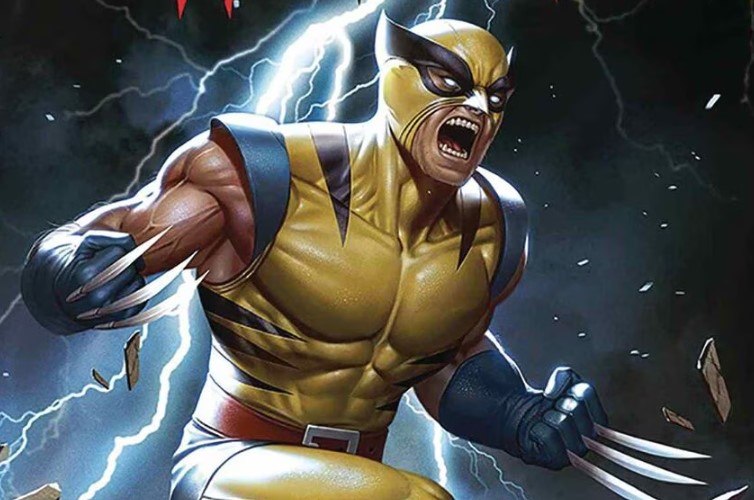
Wolverine.

Turns out those things are actually made of pasta. Rotini, specifically.

When Wolverine first appeared in the comic books in 1974, he was an agent of the Canadian government sent to take on the Hulk. We found out later that he was a mutant, what his powers were, and that those claws of his were actually embedded in his hands as opposed to attached to his gloves (which was what the original creators had intended). But we didn’t know his past. As it turned out, Wolverine didn’t know his past either. He had been the subject of an experiment that bonded the indestructible metal Adamantium to his skeleton, but the process had essentially destroyed his memory. Every so often we would get vague flashes, such as an encounter with Captain America back in World War II, that seemed to indicate Wolverine was much older than he appeared, but we knew nothing specific.

And it was great. I would argue that the mystery is one of the things that made Wolverine such a popular character throughout the 80s and 90s. Then, in 2001, Marvel’s then Editor-In-Chief Joe Quesada decided it was finally time for the story to be told in Origin. Quesada, Marvel vice president Bill Jemas, and scripter Paul Jenkins collaborated on a story that revealed Wolverine – who had always thought his name was “Logan” – was once James Howlett, a sickly child born to a wealthy plantation owner in 19th century Canada. The story shows James’s powers developing, including the first time painful time he extended his claws. It explored the backstory he shares with his arch-enemy Sabretooth. It even seems to offer a Freudian explanation for his obsession with redheads. And Origin was…well, it was okay.

Also the source of Wolverine’s legendary catch phrase: “OH MY GOD, THIS HURTS SO BADLY! AUGH! AAAAAAUGH! THIS IS SO MUCH MORE PAINFUL THAN YOU CAN POSSIBLY IMAGINE! AAUGH! CUT OFF MY HANDS! PLEASE!”

But here’s the thing, folks: if you’re going to take away a Noodle Incident, the resulting story should be a hell of a lot more than just “okay.” There have been a lot of Wolverine stories told in the 23 years since his origin was revealed, but I can’t say that there have been ANY that were better stories BECAUSE I know his origin now. And if it doesn’t make the stories better, then what was the point?

Noodle Incidents, these holes in the past, are a fun bit of writing. (Those are NOT “plot holes,” however. That’s an entirely different thing that people on the internet don’t actually understand. We’ll talk about those some other time.) You can dump all kinds of weird stuff in there, and leaving them open invites the readers to do the same thing. It’s a narrative device that allows the writers to seem more clever than they actually are and in a way makes the reader or viewer a participant in the backstory of their favorite characters. Once you’ve thought about an unrevealed piece of backstory for a while, you’re never going to have a revelation that’s going to live up to what’s going on in your head. It’s best that we all remember it.

Just like I had to do that time in Kansas City with the ocelot and the caprese salad. It was a wild night.

SPECIAL REMINDER:

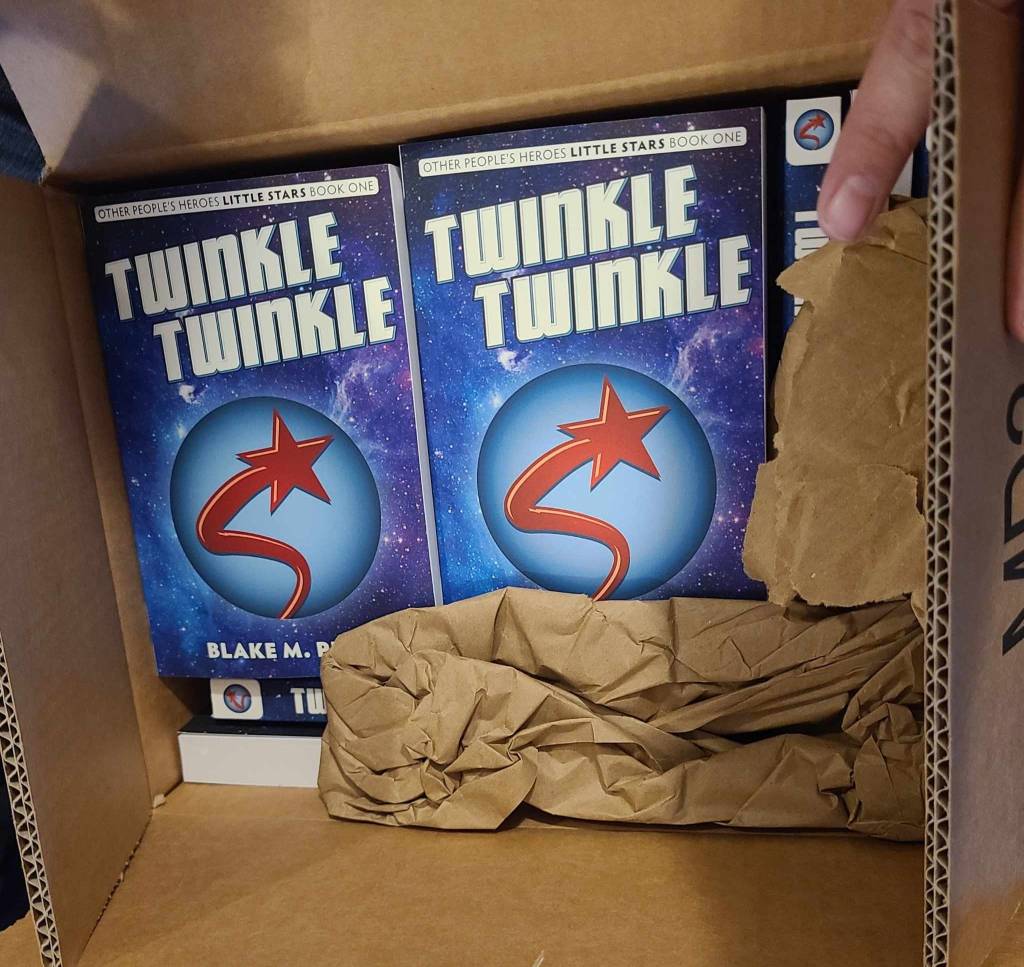
As I’m sure you heard on the social media, the news, billboards, that Goodyear Blimp campaign, and in the hidden track on Taylor Swift’s new album, I’ve got a new book out! Twinkle Twinkle, the first volume of the Little Stars trilogy, is now available in print or eBook, and you can get your copy by going over to Amazon and giving them a designated amount of dollars, a percentage of which will then be given to me.

Not an enormous percentage, mind you, but a percentage.

But – BUT – if you happen to be in the New Orleans area tomorrow, May 4th, you’ve got a chance to get a SIGNED copy from yours truly. Tomorrow is Free Comic Book Day and I’ll be at BSI Comics in Metairie, Louisiana selling copies of the new book (plus all of the old ones). Come on down, say hello, meet the other great writers and artists who will be sharing a space with me, and get some free goodies as well. 

Blake M. Petit is a writer, teacher, and dad from Ama, Louisiana. His most recent writing project is the superhero adventure series Other People’s Heroes: Little Stars, volume one of which is now available on Amazon. You can subscribe to his newsletter by clicking right here. He thinks there’s a certain irony in using 1700 words to explain the benefit of something that is best left unexplained, but he’ll leave the rest of that joke to your own imagination.