It’s the final Geek Punditry of 2025, and you know what that means. Everybody gets a slinky!
Here you go.
Well, that or…It’s time for the 2025 Pundy Awards, the ONLY awards show that is voted on by the exclusive governing body of Me, in which the best in pop culture for the year is given the accolades it deserves. But this year’s Pundies will be a little different. 2025 was a hectic year for me, for many reasons. One of those reasons is that I immersed myself in the Year of Superman project (which you no doubt have been following here on the blog with slavish devotion). As a result, I haven’t consumed as much new media this year as I usually do. Oh, there’s always a mountain of movies that I haven’t gotten around to yet, but I’ve fallen seriously behind in my TV viewing as well. I haven’t seen the new seasons of Stranger Things, Star Trek: Strange New Worlds, Abbott Elementary, or Bob’s Burgers, and as far as watching NEW shows – it just hasn’t happened. I’ve only even seen the first two episodes of Welcome to Derry.
The point is, I don’t have as big a pool of influence to draw from as I usually do. Even amongst the new stuff, you’ll probably notice a substantial slant towards stuff related to Superman or DC Comics in general. So this year’s Pundies aren’t really going to be all that structured. I’m going to talk a little bit more freeform about the stuff that I’ve enjoyed this year.
For example, I could tell you that my favorite new movie that I saw this year was Superman. You will not be surprised. I thought James Gunn’s reinvention of the DC Universe started off beautifully, that David Corenswet, Rachel Brosnahan, and Nicholas Hoult were flawless in their respective roles, and that the future of the DCU looks very bright indeed. But if you want me to wax poetic about that, you can go back and read the review I wrote in July.
“When a cold wind blows it chills you, chills you to the bone…”
So besides Superman, what were my favorites out of the (relatively) few movies I watched this year? Let’s start with Guillermo Del Toro’s new version of Frankenstein for Netflix. I’ve loved almost everything I’ve ever seen from Del Toro, so I wasn’t surprised that I enjoyed this movie quite a bit. I was surprised at just how far it deviates from the original novel. Shifting Elizabeth’s role to the wife of Victor Frankenstein’s brother, rather than making her his own love interest, gives the story a different flavor entirely, one that I didn’t see coming and I’m not 100 percent sure if it’s an improvement. On the other hand, I loved the element of Christoph Waltz’s character funding Frankenstein’s experiments because he wants a “perfect” body for himself. Most surprisingly, though, was how he rewrote the ending of the story. In Mary Shelley’s novel, and in most adaptations, they play up the idea of Victor as a neglectful “father” for his creature, making the tragedies of the story indirectly his fault. The end of the film changes this narrative, being one of the few versions of the story in which we see him recognize his faults and show remorse for them. The only other version I can think of that does this, interestingly, is Mel Brooks’s Young Frankenstein.
The real sinners are the friends we made along the way.
Speaking of classic monsters, a lot of people have sung the praises of Ryan Coogler’s vampire movie Sinners this year. Some are even calling it a best picture candidate. I wouldn’t put it QUITE that high, but it IS an excellent movie. Michael B. Jordan plays a pair of twin brothers who return home to escape some of the sins of their past, but their attempt to become honest businessmen is broken immediately when the tavern they open is assaulted by…well…vampires. It’s not just another vampire movie, though. This film is deep, powerfully emotional, and at times even sadly beautiful. There’s a ton of killer music (excuse the pun), and Hailee Steinfeld’s performance adds to an already incredible performance by Jordan as two very different characters. It’s a horror movie, technically, but like we get from Del Toro, it’s a horror movie that appeals to people beyond the genre.
Evidence that comedy still exists.
Perhaps the most delightful surprise at the cinema this year, though, was Akiva Schaffer’s reboot of The Naked Gunwith Liam Neeson and Pamela Anderson. The idea of “spoof” movies has taken a nasty hit in the past few years, with many of them being reduced to painful reference-fests bereft of actual humor like we get from the Friedberg/Seltzer team, so I honestly didn’t have high hopes for this one. To my shock, I got the funniest movie I’ve seen in years. The humor is spot-on, feeling like the classic Leslie Nielsen films brought back to life. What’s more, Neeson plays the son of Nielsen’s character, making this a legacy sequel rather than a remake, which I always prefer anyway. But the biggest surprise – and here’s a sentence I never thought I would be writing on January 1st – was Pamela Anderson. Pamela Anderson is a FANTASTIC comedic actress. She’s got perfect timing and flawless delivery, and she and Neeson have legitimate chemistry, which apparently is due to the fact that they actually fell in love on the set of this film. The Naked Gun is proof that the movie industry CAN still make good comedies. The hard part is getting people in the theater to WATCH them.
Moving on from movies, let’s talk television. As I said, I didn’t get to watch very much new TV this year, and once I catch up I may have totally different picks for my favorites. But of the new TV I DID watch in 2025, here are the three shows I enjoyed the most.
Do you really wanna — do you REALLY wanna taste it?
First of all – and I know that we’ve already talked about James Gunn – I loved the second season of Peacemaker. The John Cena-starring show is the one definite holdover from the previous DC Universe, and Gunn spends a bare minimum amount of effort in the first episode retooling it to fit the new DCU he’s created, then he plops it right into the time immediately post-Superman. John Cena’s Peacemaker is suffering from severe trauma following the events of the first season (which is still in-continuity in broad strokes) and finds a way to an alternate dimension where his father and brother are still alive and he’s celebrated as the hero he wants to be. It seems perfect…at first. Just like the first season, the show is funny and full of action, but this season really amplifies the drama. There’s a deep storyline between Cena’s Christopher Smith and Jennifer Holland’s Emilia Harcourt that drives the season in a very real way. Danielle Brooks meanwhile, puts in an award-worthy performance as Leota Adebayo, the best original character from a DC TV series since Harley Quinn was created in Batman: The Animated Series. The ending is bittersweet, in that it sets up a new storyline but, at the moment, there’s no season three planned. The setup here is for the future of the DC Universe, and I can only hope that when it IS picked up, wherever that happens to be, it’s not only Peacemaker that makes his triumphant return, but the entire group of 11th Street Kids that we’ve come to love.
Like Kermit the Frog crossed with Loki.
This was also, as I mentioned several months back, the year I discovered Dropout TV, specifically its signature show Game Changer. If you missed that previous column, Game Changer is a game show where the contestants are usually improv comedians and the game itself changes in every episode – they never know exactly what the game will be or what the rules are until they start playing. This year’s seventh season started off with “One Year Later,” an episode in which the three contestants were given a series of wild tasks and then a solid year in which to accomplish them. The comedy comes from the creative ways that they do things like bringing a cardboard cutout of Sam Reich (the host) to the most “remote” location they can or recording the best outgoing voicemail message. Later we get the “You-Lympics,” where they have to complete a series of stunts unaware of the fact that they’re going to have to do the same ones again, competing not against each other, but against their own prior scores. “Crowd Control” brings in stand-up comedians with skill at working the crowd and makes them face an audience full of highly unusual quirks and personal history to work with, an episode that was so successful it spun off into its own series.
Spin that wheel!
But my favorite of the season, the one that I would show a newcomer to Dropout to convince them to watch Game Changer, was “Ruelette.” The players spin a giant Price is Right-style wheel which lands on different rules that they have to abide by for the rest of the game, like wearing an oversized cowboy hat or having to say everything in a singsong voice. The rules stack and twists are thrown in, and the game quickly flies completely off the rails into one of the most unhinged episodes of television I’ve ever seen. It’s glorious.
Summer belongs to them — AGAIN!
Finally, let’s talk about the revival of Disney’s Phineas and Ferb, which dropped this year. Picking up the summer after the first four seasons of the show, season five begins with the last day of school at the beginning of a new, glorious summer of games, stunts, ridiculous inventions, and Buford’s endless quest for a hot tub made out of a giant bread bowl. The hiatus since the show’s previous cancellation hasn’t dulled it in the slightest – it’s still as charming, funny, and toe-tapping as it ever was. I cannot wait for the second half of the season to drop on Disney+ next month.
As if fairy tales weren’t creepy enough.
I read a lot of books this year, I’m proud to say, but I’ve actually read relatively few NEW books. Of the dozens of books that crossed my to-read pile in 2025, only three of them were actually PUBLISHED in 2025. One of them is not worth mentioning in this column. Another was the Stephen King/Maurice Sendak collaboration on a new version of Hansel and Gretel. King takes the classic fairy tale and adds a few touches that are distinctly his, and even links to his larger universe (specifically the Dark Tower books). Sendak’s illustrations, as expected, are whimsical and ghastly at the same time, and I loved it.
And y’know what? It IS my favorite scary movie.
The other new book from this year was a nonfiction history of my favorite horror movie franchise, Your Favorite Scary Movie: How the Scream Films Rewrote the Rules of Horror by Ashley Cullins. As a fan of the Scream films (I’ve mentioned it here once or twice, I think), I sincerely enjoyed this book. Although much of the history is stuff that fans probably already knew, Cullins did in-depth interviews with dozens of the actors, writers, and other creators involved in the series over the decades, fleshing out a familiar story. She gives insight to the things we already knew, and adds a lot of stuff that we didn’t. The centerpiece of the book is a very loving, respectful tribute to the late Wes Craven, something that fans of the franchise in general or Craven specifically will find touching and even tearjerking. The book is also extremely thorough, tracking the history of the franchise from the one-act play Kevin Williamson wrote in college that provided the germ of the idea for the first film right up to the eve of filming for the seventh movie, which isn’t even coming out until 2026. I’ve read a lot of stuff about Scream, and this is probably the best book on the series I’ve come across.
Wait — Superman? Since when does this blog talk about SUPERMAN?
Finally, I want to move into the world of comic books, and again, you’re gonna hear me talk about Superman. DC declared it the “Summer of Superman,” which makes the man behind the Year of Superman laugh kind of derisively, but they absolutely stepped up. The addition of a new series this year, Superman Unlimited, gave the Man of Steel four different ongoing titles, as it joined the ongoing Superman, Action Comics, and the title he shares with his best pal from Gotham, Batman and Superman: World’s Finest. All four of the books are great right now. Superman has been part of an ongoing storyline tying into the larger DC Universe, Unlimited has focused on a story about an enormous Kryptonite meteor landing on Earth and changing the game for everybody, Action Comics is telling new stories of Clark’s early career as Superboy, and Batman and Superman is full of stories of the characters several years ago as well. (Both of the books set in the past, I should note, are written by Mark Waid, while Joshua Williamson and Dan Slott are behind Superman and Unlimited, respectfully.)
She hasn’t had it this good since Helen Slater.
That’s not all, though. With her own movie coming out next year, Supergirl got a new series written and (usually) illustrated by Sophie Campbell. In the new Supergirl comic, Campbell has Supergirl moving back to her hometown of Midvale only to find a second Supergirl getting in her way. The series is eight issues in so far, and it’s become an absolutely lovely story about found family, with Supergirl building up a team of unexpected friends around her. Campbell’s art is great as well – a bit more cartoonish than your traditional superhero comic book, but perfectly suited for the series.
A boy and his dog indeed.
Not only that, but the Superman titles gave us two of the best miniseries of the year. Krypto: The Last Dog of Krypton by Ryan North and Mike Norton, is the story of the breakout star from this summer’s hit movie. For the first time, we see Krypto’s point of view of the destruction of Krypton, his journey to Earth, and the path that eventually led him back to Kal-El in Smallville. There’s something about that dog that pulls on the heartstrings, and in the course of the five issues I cried no less than six times. Of course, I’m kind of a softie.
Kryptonite! Now in all the Kolors of the rainbow!
Finally, and I promise this is the end of me plugging Superman, I absolutely loved Superman: The Kryptonite Spectrum by W. Maxwell Prince and Martin Morazzo. Prince and Morazzo have had a hit series through Image Comics for the past several years with Ice Cream Man, an existential horror series that takes some of our most human fears and anxieties and materializes them in stories that would feel suitable in The Twilight Zone. In The Kryptonite Spectrum, Superman encounters Kryptonite meteors in colors he’s never seen before and begins experimenting to determine what they do. What’s astonishing is that, although this is by no means a horror story, Price and Morazzo still manage to tackle some of the stranger, more esoteric kinds of stories that they’ve become so well known for. The stories deal with things like the nature of time and identity, and while they may not be frightening, they’re very atypical for Superman…and they’re great.
Step aside, boys, Sue’s got this one covered.
Okay, let’s forget Superman and talk about a few other great comic books. Once again, Ryan North’s Fantastic Four is the best title Marvel Comics is publishing. Relaunching this year with art by Humberto Ramos, Fantastic Four continues to be an exploration of Marvel’s first family with time-travel adventures, an alien pet, and a focus on characters that the series has historically neglected. In the early days of the series, Susan Storm – then the Invisible Girl – was written almost as an afterthought, and frequently as a damsel in distress. A lot of writers have improved her over the years, but North has gone a step further, showing how smart, brave, and capable the Invisible Woman can be. She’s taken a leadership role and is using her powers in ways that no writer has ever done before. North’s love for the FF shows in every panel. It was recently announced that he’s taking over DC’s The Flash with artist Gavin Guidry next year, and I absolutely cannot wait.
Stuff like this is the reason people don’t want to go to the movies anymore.
Finally, I want to talk about how great Geoff Johns and Ivan Reis’s horror comic Hyde Street was this year. Published through the Ghost Machine studio by Image Comics, Hyde Street is a series about a mysterious town populated by people who are under the thumb of an unseen Gamemaker. Each of them is a person of vice or cruelty that has been trapped on Hyde Street and given the task of corrupting a certain number of souls before they can leave. Some of them are desperate for release. Others, like the demonic boy scout “Pranky,” are far past their limit of souls but are having too much fun to leave. The format leaves the series open to tell an endless number of horror stories, while still having its own backstory and mythology that’s turning out to be a lot of fun to explore.
There’s been some great storytelling in 2025, and I’m hoping to get even more in 2026. If I missed one of your favorites – well, like I said, there’s a LOT of stuff I missed this year. Let me know what I need to add to my list for next year.
Blake M. Petit is a writer, teacher, and dad from Ama, Louisiana. His most recent writing project is the superhero adventure series Other People’s Heroes: Little Stars, volume one of which is now available on Amazon. You can subscribe to his newsletter by clicking right here. He’s also started putting his LitReel videos on TikTok. Also, for the 23rd consecutive year, the best food find of the year was the return of the McRib.
Our descent into darkness continues. Last week, we spent some time in the earliest days of some of Superman’s most dastardly foes, and also the Prankster. This week we’re shifting the focus to Superman himself, looking at Superman’s darkest hours. These are going to be some of the hardest, toughest, most heartbreaking moments the Man of Steel ever went through. Not surprisingly, there aren’t really a lot of early stories here. In the Golden and Silver Ages, the formula of the stories didn’t really allow for the kind of darkness I’m examining. The formula insisted that the heroes always won and the villains got their comeuppance. And to be fair, even in the stories we’re about to talk about, the world didn’t end. Well, except for the one time that it did.
These are all in-continuity stories, by the way. I’m not doing Elseworlds or alternate realities, because that’s a little too easy. There are MUCH darker stories in some of those worlds, because writers sometimes see that Elseworlds label as a license to blow everything up. But I don’t feel bad about excluding them either, because for the most part, I find those ultra-bleak Elseworlds fairly forgettable. And the ones that AREN’T forgettable…well, I’ve either already covered them or I have plans for them somewhere else before the year is out.
Comics: “The Supergirl Saga,” Superman Vol. 2 #21, Adventures of Superman #444, Superman Vol. 2 #22
Notes: We all know that, after the death of Supergirl in Crisis on Infinite Earths and John Byrne’s Man of Steel reboot, the edict from DC Comics was that there were to be no other Kryptonians – Superman was the only one. They even had to do a whole story with the Legion of Super-Heroes involving a pocket universe to explain how Superboy had been a member of the team when, in the main comics, we were told that Superboy never existed. As he was preparing his departure from the Superman titles in 1988, John Byrne gave us a story that played with these ideas and reverberated with the title – and the character – for a very long time.
In Superman #21, Superman finds himself being trailed in the air by a mysterious pursuer. After some midair showmanship, he manages to catch the person who’s been chasing him, shocked to find a woman wearing a variation of his costume. The girl changes her face and turns into Lana Lang, who tells her her powers are different from his, and that they were given to her by Lex Luthor. When he tells her that Luthor is a criminal, Super-Lana gets confused and attacks him with a telekinetic blast. The battle takes them to Lana’s farm in Smallville, where Superman finds the REAL Lana and his parents tied up in the basement. Superman pieces together that this is the Lana from the pocket dimension he once visited with the Legion, and shows her his Metropolis and its version of Lex Luthor to help clear her mind. Slowly she remembers where she came from, and tells Superman that it’s been ten years since he visited her world, even though for him it’s only been a few months. She brings him back to her universe where he meets their greatest hero, the redheaded super-scientist Lex Luthor, who needs Superman’s help to prevent the end of the world.
Shocking stuff in here for the time, although it’s hard to divorce the story from what we now know about the Matrix Supergirl and what happens in this universe. She – and the reader – truly believe she’s that world’s Lana Lang, which makes the story all the sadder in the telling. This issue is also interesting to me personally, in how it ties in to other comics I’ve read recently. Considering the brutal way Lana was treated in Superman #2, her appearance is a real shock before the truth is revealed. And in a subplot, Jimmy Olsen is keen to go to Ireland to continue investigating the mystery of the Silver Banshee, whom we read about just last week. I like these little unplanned moments of synchronicity in my reading, it helps me feel like the whole life of Superman is more of a rich tapestry rather than a hodgepodge of random pieces being thrown together.
The story continues in Adventures of Superman #444, which is neat because this is technically BEFORE the “Triangle Era” in which all three (and later four, and even five) Superman titles were tied together into a neat little serial, although that concept would come soon and really began here. This issue he’s joined by penciler and co-plotter Jerry Ordway for a story that begins with Lex, Pete Ross, and Super-Lana showing him the graves of the Kents of the parallel reality. That’s only the beginning of how bad things are, though, as we soon learn that in this universe Smallville is encased in a force-field, protecting it from the devastation that has destroyed the rest of Earth.
We get a more detailed retelling of how the Time Trapper created the Pocket Universe here, all as part of his trap for the Legion, and clipping out every planet that had intelligent life except for the two he needed: Earth and Krypton. This means that there were no extraterrestrial heroes – no Green Lanterns, no Hawkman, and so forth – nor did the Trapper allow for the origins that created the rest of Earth’s protectors. In this world, the late Superboy was the ONLY superhero. Lex came to Smallville believing he’d found a cure for Kryptonite poisoning, only to learn that Superboy was gone. Pete and Lana took Lex to Superboy’s lab, where he discovered a device that allowed him to communicate with a trio of Kryptonians trapped in what one of them calls the “Survival Zone.” Believing he’s found heroes to replace Superboy, Luthor frees them only to learn that General Zod, Quex-Ul, and Zaora were no heroes at all. Zod declared himself King of the World and, for the next ten years, the Kryptonians brought death and devastation to anyone who opposed them.
Luthor built a resistance base in Smallville and found a way to give Lana powers, but despite that, it wasn’t enough. Hope seemed lost until he found a way to our dimension and our Superman, sending Lana to him for help. At the same time, though, the Kryptonians tired of individual battles and bored straight to the core of the Earth, blasting the atmosphere off the planet. The only life left is the Kryptonians themselves and those under Luthor’s Smallville dome. At the end of the issue, Superman stands with the battered resistance, ready to do anything to stop the terror of Zod.
This is, in essence, an issue-long infodump. It works, it tells us everything we need to know, and it gives us a bit more of this world (including a trio of would-be freedom fighters named Bruce Wayne, Hal Jordan, and Oliver Queen). The plot doesn’t really advance much, though, which makes this feel like kind of an anomaly in this quick three-part story. This is definitely the kind of story that, were it being told today, would take up at least a six-issue miniseries and a dozen spin-off one-shots showing what the other denizens of Earth-Pocket were up to during the Great Zod War. These little time capsules fascinate me.
John Byrne’s Superman run ends with issue #22 and one of the most shocking covers you could hope to see: Superman wearing an executioner’s mask and opening up a box of Kryptonite. The story starts after a time skip, where Superman is standing in the ruins of Smallville on a planet with almost life. A flashback shows us the final, pitched battle between the resistance and the Kryptonians, who made quick work of most of them and destroy Smallville station. They roast Supergirl into a blob of protomatter, and Lex sends Superman on a desperate quest to the ruins of Superboy’s lab in Smallville. Quex-Ul attacks and Superman is reminded that the Trapper made these other Kryptonians more powerful than he is. But he finds his goal in the rubble – a canister of Gold Kryptonite that takes away Quex-Ul’s powers, then he does the same to Zod and Zaora. He finds Luthor dying in the rubble, where he explains that Supergirl isn’t really Lana Lang, but a protoplasmic Matrix that he programmed in the hopes of luring her to this universe. He dies expressing his regret that he didn’t use the Kryptonite sooner.
Then we get one of the most controversial scenes in Superman history. He returns to the powerless villains, but Zod is still defiant, boasting that he will find a way to restore their powers and make their way to Superman’s world and repeat their holocaust. And so, to prevent such a thing, Superman opens a canister of Green Kryptonite and kills them. He finds the burned Matrix being in the rubble and brings her to his universe, to his Smallville, hoping that once again his parents can save the last survivor of a dead world.
This book was shocking as hell when it was published, and it’s a hot button topic even now. Superman killed three people, and not in self-defense. I am firmly, steadfastly in the camp of believing that Superman does not kill. However, I also believe that this story is exactly WHY he should not kill. He doesn’t do it out of anger or malice, but because he sees no other option. And doing so tortures him. Byrne draws so much pain in a panel with a single tear, and at the end of the issue you’re left with the feeling that Superman would never be the same. In fact, he wasn’t for some time. The trauma of what he experienced would lead him to develop a split personality and eventually exile himself from Earth for a time, in one of the first truly protracted storylines of the proto-Triangle Era.
What’s more, and I KNOW I’m gonna piss off some people when I say this, I think this issue justifies the Man of Steel movie. In that film (in case you hadn’t heard) Superman kills Zod in combat. A lot of people were upset about that, and rightly so. But just because a story choice upsets you doesn’t make it the wrong choice. Superman is not a killer, but I think that by doing it ONCE, you SOLIDIFY the fact that it’s wrong for him. It is a pain that nearly destroyed him in the comics, and a pain he can never bring himself to repeat. The films tried to play it the same way. While there are other things about the Snyder movies that I’m willing to debate, I never had an objection to that particular story choice. And the REASON I never objected to that moment of darkness is because I already knew about the darkness from “The Supergirl Saga.”
Thur., Oct. 9
Comic: Adventures of Superman #474, Jon Kent: This Internship is My Kryptonite #14, Batman: Gotham By Gaslight-A League For Justice #3 (Team Member)
Notes: Our tour through the most painful parts of Superman’s past continues with Adventures of Superman #474, a Dan Jurgens story called “Face to Face With Yesterday.” It’s a story that shows us one of the worst moments of Clark Kent’s young life and, paradoxically, it’s also one of my favorite Superman stories of them all.
The story begins on a snow-blanketed New Year’s Eve as Superman returns to Smallville, not to visit his parents, but so that Clark Kent can be at Lowell County Hospital for a bleak, tragic evening. Clark is there to visit a patient named Scott Brubaker, but the head nurse at the desk isn’t happy to see him at all. In fact, as she tells a younger colleague, Clark Kent is one of the people who was involved with the tragedy that caused Scott’s condition in the first place. He enters the hospital room where Scott’s parents are keeping a lonely vigil. They’re upset at first, believing that Clark is there for a story, but Clark assures them that he’s only there to say goodbye.
In flashback, we see ten years in the past, when Clark and Scott – both members of the Smallville High football team – begin to forge a friendship that was bridging the divide between the kids who live in town and farm kids like Clark and Pete Ross. Scott join Clark, Pete, and Lana Lang for a New Year’s Eve party where alcohol is flowing freely. Although reluctant to do so, Clark and his friends join in the drinking. At the end of the night, Scott volunteers to drive the farm kids home, despite having more booze in him than anyone else. The inevitable happens – Scott veers in front of an 18-wheeler and his car smashes into a tree. Clark, naturally unhurt, pulls Lana and Pete from the wreckage, but Scott is too far gone, and has been in a coma ever since.
Back in the present, Scott’s parents have convinced the courts to allow them to pull the plug on their son, having spent a decade in a vegetative state. Clark tells Scott’s parents that he blames himself, that he should have taken the wheel instead, and the Brubakers try to assuage his guilt. After all, Scott’s dad says, Clark had been drinking that night too.
This is what we call dramatic irony, folks. You see, even though Clark’s powers hadn’t kicked in yet, the reader knows fully well that even at 18 he was immune to the effects of alcohol and he was stone-cold sober. And Clark knows it too. As he talks to Scott’s parents, he realizes just how profound that night was on the rest of his life, setting him on a course to always – ALWAYS – do the right thing. He says goodbye and leaves. On the way out of the hospital, he overhears a couple planning to get into their car, a wine bottle in their hands, clearly drunk. But before they can drive away, they realize that somehow, in the midst of a blizzard, their tires have melted into the pavement.
On TV, a story like this would be what they call a “very special episode.” It’s when a character – usually, but not exclusively teenager – is faced with a moral dilemma and the viewer is supposed to infer the correct behavior. And these stories are often pretty schmaltzy. But this comic never felt that way to me. It wasn’t preachy, it wasn’t like some sort of stale Public Service Announcement, despite its very clear statement about drunk driving. Instead, it felt like it was giving us a missing piece of Superman’s life.
Allow me to explain. Unlike most superheroes – Batman, Spider-Man, the Punisher – Superman has no tragic inciting incident in his past. Oh sure, there’s the whole “my planet exploded” thing, but that happened in his infancy. It’s not an event that he remembers, not the thing that compels him to do good. Even in continuities where the Kents are dead before he becomes Superman, those deaths are almost always natural and don’t have a direct relationship to the moral core of the Man of Steel. (Their parenting sure does, but not their deaths.) And to be fair, Superman doesn’t exactly need a tragic backstory either. It is enough – certainly SHOULD be enough – to have a hero who does the right thing simply because it’s the right thing to do.
That said, while I don’t think this story is necessary, and it hasn’t become an ingrained part of the character’s backstory like the deaths of the Waynes or Ben Parker, it does help very much to humanize Clark Kent. He’s Superman, yeah, but before that he was a kid. Before that he made a stupid decision that thousands of other kids have made, and like far too many of them, a price was paid for that decision.
I dunno, maybe part of the reason I still think this story is so profound is because I’m a high school teacher. I spend my entire day around other people the same age that Clark Kent was in this story, and I have known more than one in my years who was the victim of a stupid choice like the ones Clark and Scott made. So it’s important to me. It matters to me. And in an odd way, it also does something for the character that we saw in the “Supergirl Saga.” It shows us the consequences of a choice, and how it indelibly etches into the soul of a man determined to never let it happen again.
Fri., Oct. 10
Comic: Superman Vol. 2 #84, 85
Notes: During Villain Debut Week I wrote about the Toyman, and how he was always a relatively minor villain – annoying, but not particularly violent or dangerous. That changed in Superman #84 from 1993, in what was one of the darkest Superman stories I’d ever read. The Toyman has established a lair beneath the streets of Metropolis and he’s begun kidnapping children whose parents he believes are “bad.” His mind has completely snapped, and he believes that by imprisoning these children in his subterranean dungeon he is somehow protecting them from a harsh, cruel world. At the same time Clark – still fresh from his recent resurrection in the “Reign of the Supermen,” – is enjoying life by taking Lois off to Paris for an evening. As the two of them are in Europe, Cat Grant takes her son Adam to a Halloween party where he’s lured away by a promise of a room full of video games. The Toyman brings Adam to his lair, “rescuing” him from his “sick, embarrassing lush of a mother.” But Adam proves to be more willful and defiant than his other captives, and when tries to free the other children, the Toyman decides that he can’t risk Adam telling people about his lair. When Lois and Clark return the next morning, they are horrified at the news that Adam’s body has been identified.
The next three weekly issues of the Superman titles were a short storyline called “Spilled Blood,” in which Superman battled a new version of Bloodsport, among others. Although the Adam story remained an undercurrent, it wasn’t resolved until Superman #85 the following month. Cat approaches Superman in the street, outraged that he hasn’t caught the Toyman yet (the whole “Spilled Blood” thing kept him busy), and he begs her to find help for herself while he seeks the killer. More bodies have been found, and Superman manages to trace the Toyman to the harbor. The once-whimsical villain has gone completely off the deep end, wallowing in an oversized crib and having conversations with his invisible “Mommy,” Norman Bates-style. Superman bursts into the lair in anger, but when he sees how pathetic the Toyman has become, he takes pity on him, capturing him even as the Toyman destroys his own lair.
The story of his capture is told in flashback, though, cutting back to the present, where we see Cat sneaking a gun into the police station where Toyman is being held. Throughout the story, Cat’s running narration shows us the pain, grief, and rage she’s caged up, ready to unleash on her son’s murderer. As the Toyman rebukes Cat, calling her a bad mother and saying she raised a bad boy, she pulls her gun on him. He is defiant at first, until “Mommy” tells him that she really means it, and he’s reduced to pathetic groveling. When Cat pulls the trigger, though, a flag with the word “bang” on it pops out. Superman shows up, telling her she could be in a lot of trouble if he were to tell the police what she did, but Cat walks off, trying to find a way to live her life alone.
Even in 1993, when this story came out, I recognized it as being one of the darkest, bleakest Superman stories I’d ever read. I’m not sure who had the idea of turning the Toyman into a child-murderer or what the hopes of editorial were…was it an attempt to make a “darker,” “grittier” villain out of somebody who had long been a joke? Was it done in the hopes of giving Superman a more grounded, realistic foe than the likes of Doomsday or Brainiac? Or was it just Dan Jurgens feeling a compulsion to show a story where Superman’s power wasn’t enough? Regardless of the impetus behind it, the story that disturbed me when I was young absolutely slices through my guts when I read it now as a parent, with my own son about the same age as Adam Grant. I don’t want to, but I can’t help but think about how I would feel in Cat’s position, what I would do…and the truth is I don’t know. I don’t WANT to know. It’s a nightmare the likes of which I can’t even imagine.
Compared to THIS Toyman…give me Doomsday. Give me the Cyborg. Give me Darkseid. But don’t ever give me what happened to Cat Grant.
Notes: By 2005, the DC Universe was gearing up for a change. A lot of storylines that had been running in assorted titles turned out to be setting pieces in place for the upcoming Infinite Crisis event: the Rock of Eternity was destroyed, sending magic into disarray; Batman’s paranoia led him to create a satellite monitoring system called Brother Eye; and Maxwell Lord had been revealed as the leader of Checkmate, a spy agency that he’d turned into an anti-metahuman organization. His machinations when Ted Kord, the Blue Beetle, discovered that Max had stolen Brother Eye, so Max killed him. In the Superman titles, things had been growing appreciably darker for some time, and the four-part “Sacrifice” storyline was the point that led him into the crossover event.
The graphic novel picks up before the events of the crossover proper, with Superman #218. Superman’s old foe Blackrock is murdered by a new villain who wants to steal the rock that gives him his power. Blackrock 2.0 turns out to be more dangerous, laying waste to a large section of Metropolis before Superman is able to take him out with a heavy application of heat vision. The public sentiment, however, has been turning against superheroes for some time, and the sheer display of power necessary for Superman to take Blackrock down leaves people terrified of him, fleeing from what they perceive as his ferocity.
It gets worse in Part 1 of “Sacrifice” proper, from Superman #219. Following the destruction of the Fortress of Solitude (which happened back in “For Tomorrow”) Superman built a new Fortress in South America. “Sacrifice” begins with him waking up in the new Fortress with blood on his hands. In flashback, he remembers Brainiac in the Daily Planet office with Lois. Clark barges in, but the alien is gone. He tracks down Brainiac, but finds that he’s captured Perry, Lana, Jimmy, and Lois. Superman is forced to watch as Brainiac murders those closest to him and, in a rage, he decides to break his most sacred vow and kill his foe. The flashback ends as he looks at the blood on his hands and realizes it’s human – it can’t be Brainiac’s.
And that’s when the Justice League arrives, demanding answers.
In Action #829, J’onn J’onzz visits Lois – who is very much not dead – to ask for her help, given Superman’s recent “erratic” behavior. At the Fortress, meanwhile, the Flash, Green Lantern, and Black Canary are seeking answers. Superman again remembers the encounter at the Planet office, but this time it isn’t Brainiac with Lois – it’s Darkseid. Again, his enemy has Lois captive, and he forces Superman into personal combat…combat that ends with Lois’s death. Back in the Fortress, Black Canary tells Superman to examine the blood on his hands to see who it REALLY belongs to. In horror, they go to the Justice League Watchtower to see his true victim – Batman, who has been beaten within an inch of his life.
In Adventures #642, as Batman fights for his life, the League shows Superman surveillance footage of how he nearly killed Batman, stopped only at the last second by Wonder Woman. Superman’s memories have changed again – he remembers the fight, but this time it was Ruin he battled. J’onn theorizes that someone has planted some sort of psychotic episode into Superman’s mind. Bringing Wonder Woman with him, the two of them delve into Superman’s psyche and find evidence that Superman is being manipulated by Maxwell Lord. Max has damaged Superman’s mind, using the very mental barriers Superman placed in his own mind after he killed the Phantom Zone criminals. As they plan how to contain him, Max’s conditioning kicks in again: Superman suddenly turns paranoid and attacks the League, fighting through them while believing he’s searching for Max. Diana goes after him, finding Max in his hideaway and learning that his control over Superman appears to be complete.
“Sacrifice” ends in Wonder Woman #219, one of the most controversial comics of the era. Max uses his mind control powers to make Superman believe he’s watching Doomsday kill Lois, revealing he’s spent years subtly manipulating Superman, implanting tendrils of paranoia and terror. He has Superman attack Diana, believing her to be Doomsday. The battle is fierce and global, but she manages to distract him and get back to Max, tying him in her lasso and forcing him to release Superman. Max taunts her, saying that she can’t keep him in her lasso forever, and eventually he’ll set Superman loose again. Diana tells Max – under the power of the Lasso of Truth – to tell her how to free Superman from his control. Max’s answer is simple: “Kill me.”
And she does.
Although that was the end of the issues branded “Sacrifice,” the story wasn’t over. It continues a second later in Wonder Woman #220. Superman is horrified when he realizes what Diana has done, but before he can say anything a pair of disasters in different parts of the world call the two of them apart. As if that weren’t bad enough, when she goes to see Batman and he discovers what she’s done, he tells her to “Get out.” The fallout continued in Adventures of Superman #643 – we see the two issues of Wonder Woman from Clark’s perspective: his imagined fight with Doomsday, watching him kill Lois and countless others, then waking up from a nightmare just in time to watch Diana, his best friend, snap Max’s neck without a hint of remorse. Like Diana, he’s called away, and like Diana, he checks on Bruce. And while he doesn’t tell Superman to go away, his reception is almost as cold. Superman returns to Lois, broken, unsure what to do.
The graphic novel wraps up with Superman #220, in which Superman and Superboy team up to take on the Eradicator, but that issue really has very little to do with the rest of the story and I suspect it was only included because they weren’t sure where else to put it in the assorted paperbacks collecting the stories running up to Infinite Crisis. That’s what this is really about, after all. The conceit behind Infinite Crisis would eventually turn out to be that Alex Luthor of Earth-3, Superman of Earth-2, and Superboy of Earth-Prime had been watching the prime DC Universe ever since the end of the original Crisis on Infinite Earths, and seeing how dark the world had become, Luthor decided to rewrite it. As such the stories before that were intended to amplify that darkness. Batman’s creation of a global spy satellite was enough to put him on everyone’s naughty list, but “Sacrifice” served to shove a wedge between all three members of DC’s Trinity, with Diana’s actions being condemned by both Bruce and Clark, Clark refusing to trust Bruce because of the aforementioned Brother Eye, and Bruce deciding that neither of the other two had gone far enough. Taken in and of themselves, these stories are all hard and bleak. As part of the larger tapestry, though, it really works well. I liked Infinite Crisis at the time and I still enjoy it. And I agreed with the main thesis – the DC universe HAD gotten too dark, and I was happy that the story ended with rays of hope, a promise that the universe would grow better again. The sad thing is that the DC creators themselves seemed to forget that. After a promising start, the stories again took a turn for the darker, and brightness didn’t really start to return until DC Rebirth in 2016. Even then it’s had its ups and downs since then. I’m glad to say that, at the moment, it feels like we’re in an upswing.
Sun., Oct. 12
Comics: Superman: The Man of Steel #16, Superman Vol. 2 #72
Notes: I’ve got a quickie today, the two-part “Crisis at Hand” from 1992 (which may well be the shortest “Crisis” DC ever published). This story hearkens back to some of Superman’s earliest Golden Age stories when Clark’s superhearing picks up the sounds of a man beating a woman. He’s shocked to realize that the assault is happening in his own apartment building – his neighbors Gary and Andrea Johnson. He bursts into the apartment and stops Gary from whipping his wife with a belt, but when the police arrive, Andrea defends her husband and asks the police to throw Superman out. The next morning Clark relates to Lois a story from early in his career, a nice recreation of the infamous “wife-beater” scene from Action Comics #1, when he stopped a similar crime. Louise Simonson and Jon Bogdanove extend the scene, though, showing Clark talking to his father later and questioning if he did the right thing. With the police unable to intervene unless Andrea is willing to press charges, part one of the story ends with Clark clutching his hands over his ears, helpless as he listens to Gary battering his wife yet again.
Part two came in Superman #72 by Dan Jurgens and Brad Vancata. Clark turns to Jonathan for counsel once again, then Lois, telling her the story of how the “wife-beater” episode ENDED all those years ago. Not long after Superman stopped the man from hitting his wife, Clark Kent got sent to cover his first murder case for the Planet only to find that the victim was the woman he’d just saved. When an enraged Superman tracked down the husband, he blamed Superman for not killing him when he stopped him the first time. The absurdity of the situation has resonated with Clark ever since, and he knows that this isn’t a situation Superman can solve. When he and Lois get back to his apartment, though, they hear crashes in the Johnson apartment. Although Clark tries to stay out of it, Lois refuses to do so. They burst in and Andrea tells Gary to leave. Lois stays with Andrea, giving her the number of a woman’s shelter and urging her to seek help (which she does), while Superman winds up finding Gary on a bridge and talks him out of committing suicide, taking him to get the help HE needs as well.
Like “Face to Face With Yesterday,” this story has the earmarks of the “very special episode,” although here it has the added element of it being a story about Superman having to face the fact that there are some problems he can’t solve. In the end, though, it’s a very human story, and as harsh as it is (especially the scene at the murder victim’s funeral, when the killer’s mother begs Superman to spare her son) it ends with an element of hope. As the best Superman stories always should.
Notes: The Geoff Johns/Gary Frank era of Action Comics wasn’t a particularly bleak one, although it did bring us to a heartbreaking conclusion at the end of the five-part Brainiac story, which begins with a flashback to Krypton. Before the destruction of the planet, we see General Zod and his army battling against an invading Skull-shaped spacecraft that seals the city of Kandor in a bottle and miniaturizes it. From there, we shift to the present day Daily Planet, where a few familiar faces are returning to the fold: boorish sports editor Steve Lombard and Cat Grant, who seems to have got down a rabbit hole of reinventing herself for the worse since the death of her son (even reaching the point of throwing herself at the now-married Clark Kent as she used to in the days before he and Lois got together). The conversation is interrupted by the incursion of a Brainiac drone into Metropolis. Superman fights it off with relative ease, but a message is sent to the Skullship in space, where we learn that Brainiac is seeking Kryptonians.
In part two, Johns does a little bit of continuity welding. Y’see, over the years Brainiac had taken on a LOT of forms – alien invader, human possessed by an outside force, robot, etc. Supergirl (who remembers pre-destruction Krypton) tells us that all of these versions are different “probes” created by the REAL Brainiac, and that no one has ever encountered his true form before. On Krypton Brainiac basically became a planetwide boogeyman after Kandor’s abduction, terrifying everyone. After a conversation with the world’s greatest dad, Clark takes a ship into space, planning to bring the fight to Brainiac for once. He finds him attacking yet another world, but is unable to stop him from destroying the sun of an inhabited planet, killing everyone there, and taking Superman captive.
Superman wakes up in Part Three, in the midst of the Skullship surrounded by other aliens in suspended animation, as well as shrunken cities…including Kandor. That’s when Brainiac attacks, of course. And he’s set his sights on Earth. Supergirl shows up at the Planet office, looking for Clark, and is with Lois when the shadow of Brainiac’s ship appears in the sky over Metropolis. In Part Four, Supergirl tries to fight the drones on Earth as Superman battles Brainiac in his ship. Superman manages to make contact with Kandor, including Supergirl’s parents, Zor-El and Allura, but Brainiac has the upper hand. He manages to reduce Metropolis to one of his bottle cities and fires a probe into the sky. On Earth, Jonathan and Martha Kent watch as the probe arcs towards the sun, ready to destroy it just like Brainiac did to the sun of Krypton.
In the final chapter, Superman faces Brainiac as Supergirl races through space to stop the probe. The battle falls to Earth, where Superman manages to disable Brainiac. But as he sets out to restore Kandor to full size, Brainiac sends a probe to strike at Superman’s heart: Smallville. The probe attacks the Kent farm, and Jonathan just barely manages to pull Martha away before the barn is destroyed. Their joy is short-lived, though, as the exertion triggers a heart attack. Superman hears his mother screaming from the other side of the world and races to Smallville just as Jonathan Kent dies.
Generally speaking, I prefer the continuities in which Jonathan and Martha Kent are alive for our adult Superman. There are too few positive portrayals of parents in superhero fiction (or fiction in general, for that matter), and having arguably the two greatest parents in history alive and available gave an added dimension to Superman. It’s probably my favorite single element that John Byrne brought to the table in 1986, and I was elated when Doomsday Clock finally made it clear that, in the DC Rebirth continuity, both Kent parents were alive again (they were both dead in the New 52 era).
All that said, none of those personal feelings of mine take away from the gut punch that Johns delivers at the end of this storyline. The death of a parent is one of the most horrible and most inevitable parts of life (I speak from experience here, friends), and it’s something we’d never really watched Clark Kent deal with before. In Action Comics #1, the Kents were already dead before Clark went to Metropolis, his mourning done away with in a single panel. Although they were considerably fleshed out in the years following via the Superboy comics, there’d never really been a story where we saw Clark Kent grapple with the loss. I also appreciate how Johns accomplished it. Having Jonathan’s death be natural – a heart attack, in most of the continuities where his death is explicitly portrayed – is a good reminder for the character that for all his power, there are some things that even a Superman cannot fight. On the other hand, having that heart attack brought on by an act of heroism is beautifully fitting for the man who raised Superman, and makes his loss all the more tragic.
Up until those last few pages, this story wouldn’t have made the cut for “Superman’s Darkest Hours” week. Most of it is good, but standard for the time. In fact, there are even several bits of light – a lot of humor surrounding Cat Grant and Steve Lombard, Johns and Gary Frank really hammering home their love and inspiration from the Christopher Reeve films, and a particularly inspiring bit with Supergirl where her cousin tells her that it’s okay to be afraid, and that reminder giving her the courage to overcome that same fear and save her adopted world. But no matter how great the victory, how incredible the triumph, the loss at the end makes for a moment that deserves a place in the worst moments of anybody’s life.
Tues., Oct. 14
Comics: Superman/Batman #26
Notes: The last stop on our tour of Superman’s darkest hours comics not from the dark moment itself, but more from its aftermath. Every comic book fan knows that a crisis-level event will, of course, include casualties. And we also know that these casualties, more often than not, turn out to be temporary. Still, if written well, even a comic book death can have an emotional impact. Such was the case with the death of Conner Kent, Superboy, in Infinite Crisis. But that’s not the moment I want to look at today – I want to delve into the aftermath, from Superman/Batman #26. This, frankly, is a comic book with a backstory even more heartbreaking than what’s on the page. Jeph Loeb, who had been the writer of this title since its inception, lost his son Sam to cancer. This book was made in his honor, packaging a plot that Sam himself had written with pages scripted and drawn by 26 of the biggest names in comics – Geoff Johns, Jim Lee, Tim Sale, Brad Meltzer, Mike Kunkel, and several others. It’s an all-star lineup that came together for the sake of a young man who left the world entirely too soon.
The story is packaged as Robin (Tim Drake) telling a story of one grand adventure he had with his best friend, who has recently died. Superboy and Robin are tasked with finding the missing Toyman – not Winslow Schott, but the 13-year-old whiz kid named Hiro Okumura who had straddled the line between villain and hero and, at this time, was making gadgets and vehicles for Batman. Superman and Batman know that Hiro is on the edge, and they hope the influence of Robin and Superboy will help keep him on the side of the angels. They arrive at his lair, which seems to have been broken into, and are immediately confronted by the original Toyman, claiming he’s taken care of the pretender. Robin quickly figures out, though, that the Winslow they’re talking to is a robot. The pair battle their way through a series of environments with robot duplicates of their friends and foes, the whole thing feeling like a real-life video game, until they finally find Hiro himself at the heart of it, manipulating the whole thing. When confronted about why he would do such a thing, Robin proves his detective prowess by intuiting that Hiro, simply, is lonely, and he wanted to have fun with some friends. The two of them invite Hiro to hang out with them sometime.
It’s a simple story, really. In any other context, it would be a one-off throwaway – fun, but not particularly memorable. But the circumstances behind its creation and framing story of Robin, in tears, remembering his friend make the entire thing heart-wrenching.
Jeph Loeb takes things one step further, though, with a back-up in which he reteams with his Superman For All Seasons partner Tim Sale to tell “Sam’s Story.” This one, narrated by Jonathan Kent, takes us back to Clark Kent’s school days in Smallville, hanging out with his friends Lana and Pete. But the focus is on neither of them, but on a heretofore unmentioned classmate of Clark’s called – of course – Sam. Sam was the the kid who could make Clark Kent laugh, made him happy in a way that was enough to sometimes even make him forget just how different he was from everybody else. But when Sam starts showing up to school sick – on crutches, losing his hair – and joking it off, Clark’s X-Ray vision immediately spots the culprit: a horrific dark spot in Sam’s bones. When Clark asks Sam what he can do, Sam’s reply is “Be my pal.”
On the day that Sam dies, Clark runs. He runs halfway through the night, finally coming home at 3 am and sitting on the porch with his father, asking “Why?” The story ends with a note written by Sam (Loeb) that feels like the kind of creed a Superman should live by.
When I read this story now, I imagine myself in Jonathan’s role, holding my own son and trying to help him work through his own grief. It hasn’t happened yet, thankfully, but it’s one of those inevitabilities of life. We all know it happens eventually. The one thing I can’t image, though, is being in the place of Jeph Loeb, writing this story as a eulogy for his own son. I can’t imagine it, but I admire him, for taking what must have been his worst nightmare and turning it into something sad and sweet and lovely.
Whoo. Despite the theme I went with this week, I didn’t really expect to finish off the blog with tears in my eyes, but that just goes to show you how powerful this issue actually was. Next week, paradoxically, will be a little less sad, although probably even darker. For the last few years there’s been a real push in the media to tell stories of a “bad” Superman, whether that’s in an Elseworlds-type story featuring Clark Kent or in other universes with a character that the writer is using as a Superman stand-in. Next week we’re gonna look at some of THOSE, examining their characters and what makes them so dark, and compare them to the real Man of Steel. See you in seven days for “Superman Gone Wrong!”
If you ask Joe Public what team Superman is a member of, pretty much everyone will bring up the Justice League. And they’re not wrong – Superman is a vital member of the League, and honestly, it doesn’t really feel like the JLA without the trinity of Superman, Batman, and Wonder Woman. (I love the Giffen/DeMatteis run, don’t get me wrong, but that’s the JLI.) But the thing is, the Justice League isn’t the FIRST team Clark Kent was a member of. And in truth, as far as his development as a character, I don’t think it’s even the most important. This week we’re going to look at the young people he inspired and who, in turn, helped shape him into the hero he is. Superman would still be Superman if he’d never joined the Justice League…but he’s not really the hero he is without the Legion of Super-Heroes.
And the same goes for Superboy. And Supergirl. And Jonathan Kent, too. Because of reboot after reboot, there have been a lot of versions of the Legion over the years, and Clark, Conner, Kara, and Jon have each had their own incarnation. This week I’ll try to peek at each of them, talk about why the Legion matters so much to Superman, and discuss the best (and worst) of the 31st Century’s greatest heroes.
The Legion is kind of complicated these days, thanks to DC’s constant rebooting of their timeline. If you aren’t already familiar with them and you’re looking for a little clarification, I wrote about their convoluted history in this Geek Punditry blog a couple of months ago. Please, go check it out.
Comics:Adventure Comics #247, Action Comics #276, Absolute Superman #8, Justice League Vs. Godzilla Vs. Kong 2 #1
The same thing happened to me when I tried to join the Webelos.
Notes: The Legion made its first appearance in Adventure Comics #247, during the period in which the headline character of that anthology series was Superboy. In this issue, beneath a Curt Swan cover that has become one of those legendary covers that gets “Homaged” again and again, Clark Kent is on the streets of Smallville when he is addressed as Superboy by a mysterious teenager he’s never met before. He switches to his other identity and zooms off, only to be met by another teenager calling him Clark, then a third. Horrified at first that his identity has been revealed, he is relieved when the teens tell him their secret: they are time-travelers. In their future, they are members of a club for superheroes inspired by the legendary exploits of Superboy, and they have come back in time to invite him to join. They bring him to the future, where he sees that Smallville has become a bustling…well…metropolis – but only by the standards of HIS time. In their time, it’s still considered a tiny community. The teens (Cosmic Boy, Saturn Girl, and Lightning Boy) put Superboy through a series of initiation tests, but each time he is distracted by a disaster that requires his attention. At first, he thinks he’s failed, but the heroes reveal that the disasters he stopped were of their own doing, and it was just an initiation stunt. Superboy joins the team and goes home, but joining them in the future soon becomes a recurring part of his adventures.
Like so many of the other characters I’ve looked at this year, this early version of the Legion feels terribly incomplete. Heck, it’s not even called the Legion of Super-Heroes yet, just the “Super-Hero Club.” The three founders are all there, but Lightning Boy would soon change his name to Lightning Lad, and all three would quickly adopt new uniforms that didn’t sport their full names across the chest like a Ben Cooper Halloween costume. The exact time period from which they hail vacillated over the next several stories before it finally, firmly, was set at 1,000 years in the future. And although only the three founders take active part in this first issue, we see other generic teens that I assume are intended to be other Legionnaires, including one that – in the digital version on DC Universe Infinite – appears to be re-colored to suggest that it’s Brainiac 5. But that’s kind of pointless, since we’ll see his first appearance shortly.
There isn’t a ton of meat in this first appearance, but I guess the idea of Superboy having actual peers was too good, so they not only brought them back, but soon added Supergirl to the mix, even though she and Superboy were separated by about 20 years of time. But hey, it’s time travel, that’s not really an issue. The first time she encountered the Legion, she was rejected because she was suffering from Red Kryptonite exposure, which seems pretty mean when you consider they darn well should have known that Red K only lasts for 24 hours. But in Action Comics #276, she got her next chance.
This issue begins similar to Clark’s first encounter with the Legion. Linda Lee is walking around Midvale, lamenting the fact that she’s got no super-powered friends to hang out with. (I feel compelled to point out that this was 1961, and even the most embryonic form of the Teen Titans wouldn’t first appear until 1964, but isn’t it weird that they never had Supergirl join until the Matrix version in the 90s?) To her surprise, she’s soon approached by three girls with powers: one wearing a mask, one that can move through solid objects, and another who can split into three bodies. The girl with the mask removes it to reveal that she’s Saturn Girl, one of the members of the Legion Supergirl met before. If you need an explanation for why she bothered with the mask, the only answer I have is that in the Silver Age nobody was ever straightforward about ANYTHING. The girls – Saturn Girl, Phantom Girl, and Triplicate Girl – take her to the future for a second shot at joining the Legion, this time alongside fellow prospective members Sun Boy, Bouncing Boy, and Brainiac 5. She is shocked at first to find that a descendant of one of her cousin’s greatest enemies is trying to be a hero, but is won over by his tender affection towards her. Supergirl is given a time-traveling membership like the one Superboy had, while Brainiac becomes a permanent member. Then, for absolutely no reason, she has a brief encounter in Atlantis, which only serves to lead up to a final panel where Linda remarks on the fact that she may not have a boyfriend in Midvale, but there’s an alien 1,000 years in the future AND a merman in Atlantis crushing on her, so it ain’t so bad.
Abysmal epilogue sequence aside, this is an interesting issue. It introduces not one, but FIVE significant Legionnaires (both Bouncing Boy and Sun Boy joined the team by the next time they turned up), and gives Supergirl a peer group like her cousin – in fact, the SAME one as her cousin. And just in case you’re worried about any timey-wimey problems arising from the fact that Superboy and Supergirl were members of the same team, they found ways to play with it. They established, for instance, that Saturn Girl placed a telepathic block on each of them, so that when they returned to their respective time periods, they would lose any memories they’d gained that would be relevant to their own future. Practically, this meant that Superboy only remembered that one day his superpowered cousin would come to Earth when he was actually in the future. They also usually avoided having both of them appear in a Legion story at the same time, so it didn’t come up too often.
Over the years, they would each bond with the Legion, and this is where I really think this group becomes important. The JLA is Superman’s team, sure, and he is close to several of them. Superman, Batman, and Wonder Woman in particular are called the DC “Trinity,” and their friendship is important, the stuff of legend.
But those are the friends he has as an adult. The Legion are his childhood friends, and that’s important. That’s special. As we learned from stories such as Stand By Me and The Sandlot, the friends we have when we’re young are a fundamental part of shaping who we are as adults. And there’s been more than one story that demonstrates just how important the Legion of Super-Heroes is to making Superboy become the Superman of legend.
At least, until Man of Steel in 1986 upended everything by that declaring that Clark Kent had never had a career as Superboy. That change in the timeline would have catastrophic consequences for the Legion of Super-Heroes.
But I’ll read about that tomorrow. For now, why not join me in a look at the two Superman-related comics that hit the shops this week?
Someone’s gonna pay for that window.
Absolute Superman #8 begins the second story arc of the series. Visiting Martha Kent in Smallville, Kal-El is approached by Lois Lane…unfortunately, she’s followed by the rest of Lazarus, the Peacemakers, the Omega Men, and – oh yeah – a sniper with Kryptonite bullets. Jason Aaron keeps mixing up the DC Universe here, taking familiar pieces and putting them in unfamiliar positions, like plucking a Lego brick from a castle set and using it to build a spaceship. It’s a fun exercise, though, and I keep enjoying the stuff they’re doing.
We also get the first issue of Justice League Vs. Godzilla Vs. Kong 2. Picking up a few years after the end of the previous miniseries, it’s Barry Allen’s wedding day! Unfortunately, he still hasn’t told Iris his secret identity. As the League tries to coax him into doing so, Amanda Waller reactivates Task Force X to deal with a resurgence of Titans (not the Teen ones – that’s what they call Kaiju in the Legendary Monsterverse). I love these crossovers, and I think it’s very interesting that, for the next few months at least, Godzilla is going to feature in comics from no less than THREE American publishers: the Monsterverse version here, the Toho version fighting the Marvel Universe over there, and all the wild iterations in the regular Godzilla comics from IDW Publishing.
Thur., June 5
Comics: Legion of Super-Heroes Vol. 3 #37, Superman Vol. 2 #8, Action Comics #591, Legion of Super-Heroes Vol. 3 #48, Secret Six Vol. 5 #3 (Super Son)
Who says you can’t go home and have a fight with another iteration of yourself from a parallel pocket dimension again?
Notes: I’ve written at length about John Byrne’s Man of Steel in 1986 and how that reboot changed the Superman mythos. But one aspect I haven’t talked about that much is the Legion. As a team who not only had Superboy and Supergirl as members, but whose entire existence was INSPIRED by Superboy, after DC changed their continuity to declare that Superboy and Supergirl never existed, how could they explain the Legion? The solution came in this four-part story from 1987, beginning in Legionof Super-Heroes Vol. 3 #37.
Cosmic Boy, having recently returned from a visit to the 20th century (in his own self-titled miniseries) reports that the past has been altered, and the Legion has to investigate. A time storm hurls them to the past, to a Smallville populated by Superboy – a time that Cosmic Boy has reported no longer exists. Arriving in Smallville, the team splits in half – one group making contact with Superboy, the others staying with the time bubble. Superboy ambushes the team, though, trapping them in a stasis-beam. When Pete Ross (an honorary Legionnaire) warns the others what Superboy has done, they attempt to flee. And in the distant future, the Legion’s old enemy the Time Trapper revels in the chaos he is sewing. Part two comes in Superman #8, set in the “present day” of 1987, where we begin with John Byrne’s Clark Kent using his powers to help Lana fix up the farm she is returning to after years away. His super-senses detect a time bubble with four super-powered teenagers appearing across Smallville, and they get into one of those required “heroes fight heroes over a misunderstanding” situations before Brainiac 5 calls an end to hostilities. Brainy tells Superman about their history with Superboy, a history he has no memory of, and as they prepare to seek answers, Superboy appears and captures the five of them in his stasis ray.
Action Comics #591 gives us part three of the story: Superboy is being forced to attack his friends by the Time Trapper, who reveals that Superboy’s entire existence is part of a trap laid for the Legion. Over the centuries, stories of Superman’s legend had been changed, making the Legion believe in a “Superboy” era that never existed. When they first decided to time travel and meet Superboy (back in Adventures #247), the Trapper created an entire pocket universe that matched their skewed legends of Clark Kent. It was THIS Superboy that the Legion befriended, who joined them, and who they visited every time they traveled to the past. But unable to betray his friends, Superboy altered the stasis beam so Superman would escape and chase them, ultimately landing in the pocket universe. Superboy and the Legion reconcile and go to the future, returning Superman to his own universe – but this wouldn’t be his last encounter with the Pocket Universe.
We’ll get to that some other week.
The story ends tragically in Legion #38. As Superboy and the Legion confront the Time Trapper, he reveals that one of his machines has protected the Pocket Universe from the multiversal devastation that happened in Crisis on Infinite Earths. In the skies above Smallville, Superboy sacrifices his life to save his universe from destruction. The Legion brings his body back to the 30th century to mourn…with an eye towards revenge against the Time Trapper once and for all.
Paul Levitz, longtime Legion writer, had a tough task here. Remove Superboy from the board, recognize that the “real” Superman was never Superboy and never a member of the Legion, but do so in a way that was still respectful to the Legion’s history. I think he did as good a job as anybody possibly could. The “Pocket Universe” conceit manages to keep every story where Superboy, Supergirl, or the Super-Pets encountered the Legion canonical, even if they’re only canon to the Legion and not the rest of the DC Universe. Furthermore, even though Superboy may never have been “real” in the first place, Levitz gave him a sendoff worthy of the Man of Steel that he would never grow up to be — sacrificing himself to save his world is the kind of thing members of the House of El do. Kara did it in the Crisis, The Post-Crisis Superman would do it on the streets of Metropolis a few years later. Self-sacrifice is hardwired in the DNA of the Superman family, and this story demonstrated that nicely.
Which makes it a little frustrating that six years later, Zero Hour would throw it all out the window.
Fri., June 6
Comics: “Future Tense” storyline:Superboy Vol. 3 #21, Legion of Super-Heroes Vol. 4 #74, Legionnaires #31; The Legion #25-33, Legion Secret Files 3003, Teen Titans Vol. 3 #16, Teen Titans/Legion Special
Be honest, are you Team Leather Jacket or Team T-Shirt?
Notes: The Crisis was intended to streamline the DC Multiverse, and while it was largely successful, there were loose ends that just…dangled. It caused problems for a while, and in 1993 Dan Jurgens tried to close off those issues in Zero Hour: A Crisis in Time. It was a good story, and one of the changes it wrought was a reboot of the Legion of Super-Heroes. As Man of Steel did for Superman, the Legion reboot started the characters over from page one – they were teens again, the names and costumes were made a little less “Silver Age-y” (Lightning Lad, for instance, became Live Wire, Triplicate Girl became Triad, and so forth), and in this continuity, the Legion was inspired generally by the heroes of the past, and not Superboy or Superman specifically. Our new Superboy, the one we met in “Reign of the Supermen,” had his own title by now, and first encountered the Legion in a three-part story called “Future Tense” from 1995.
The Legion travels back in time to rescue Valor, a rebooted version of their own Mon-El (it’s a long story) that Superboy had encountered a few issues ago in his title. After the requisite “fight over a misunderstanding” happens, Superboy tells the Legion how Valor had nearly died from lead poisoning until he entered a “zone where time stands still,” because there was NO way they would be allowed to call it the “Phantom Zone.” Brainiac 5 tries to reopen the zone until, frustrated by the technology of the time, he warps all of them – Superboy included – back to their home in the 30th century. Things get more complicated when Superboy accidentally lets it slip that Valor – who, in the past millennia, has become a religious figure – is returning, causing a massive upheaval among the millions of Valorites across the galaxy. The Legion makes it look as though their attempt to rescue Valor fails, getting his devotees to back off, then rescue him for real in private before sending Superboy home.
This story was pretty emblematic of both the Legion and Superboy of the time. They’re young and they’re highly emotional. In this version, for instance, Triad’s three different bodies each have different parts of her personality, and one of her immediately gets the hots for Superboy. Superboy, meanwhile, was in his hotheaded stage, and certain members of the Legion took severe umbrage to that, specifically Leviathan (this incarnation’s version of Colossal Boy) and Brainiac 5 himself. Still, he does manage to prove his worth, and at the end of the three issues Cosmic Boy (whose name did NOT get updated) makes him an honorary member of the Legion. The kid and the team would encounter each other occasionally over the next few years, through assorted time travel shenanigans, but we wouldn’t see Superboy as a full member until 2003.
At this point, both the Legion and Superboy had gone through some dark times, the former having its series restarted as just The Legion, and the latter having his series cancelled and being jutted over into Teen Titans. So it was surprising to see him show up on the cover to The Legion #25, wearing a classic Superman costume rather than his own uniform, no less. The story was a bit different – after an issue largely spent recapping their recent tragedies and stacking the new status quo, they found Superboy drifting inexplicably through space. This kicks off the six-part “Foundations” storyline, in which Superboy and the Legion face off against Darkseid and wind up meeting a time-tossed Clark Kent, still a teenager, before he ever put on a superhero costume. It’s a great story, really, although it is HEAVILY mired in the stuff that had happened in the Legion in the last few years, and it would probably be unadvisable to read on its own – I feel like it would be really confusing to anyone who wasn’t familiar with “Legion of the Damned” or the stories that followed it.
The important thing is that it showed Superboy maturing, becoming a better person and a better hero, and that’s all to the good. Superboy stuck around with the team for the rest of the run, which was all well and good…except that he was also appearing concurrently in Teen Titans with no explanation. After Legion ended with issue #38, we got a two-part story wrapping everything up. In Teen Titans #16, Conner is having lunch with Cassie (Wonder Girl) when he’s plucked up by the Stargate that sent him to the 31st Century. He reappears a moment later, now wearing his Legion uniform, telling Cassie that he needs the Titans to help save the future. So his entire tenure in the Legion, presumably, takes place between those two panels: pencil that in, continuity nerds. Anyway, they’re attacked by the Persuader, and Superboy brings the Titans to the 31st Century, where the Fatal Five have created a Legion of their own to attack Earth: an army of Fatal Fives from throughout the multiverse. Fortunately, Brainiac 5 has a plan, but it requires the work of TWO speedsters: the Legion’s XS and her cousin, Bart Allen, aka Kid Flash. They manage to defeat the Five, but the Legion is lost in the timestream, all except for Shikkari, who finds herself in another world, where the Legion is…different.
Yep. Time for another reboot.
This iteration of the Legion lasted 10 years, and it’s the first one I ever read as a regular reader. As such, I have great affection for it. The stories were solid, with a classic flavor that still felt modern, and the art was wonderful. I was really sorry to see it end, but I’m glad that when it went, at least there was a member of the House of El standing with them in what looked – at the time – like their final moments. But we would see this Legion again.
Just not yet.
Sat., June 7
Graphic Novel: Supergirl and the Legion of Super-Heroes: Strange Visitor From Another Century (Collects Legion of Super-Heroes Vol. 5 #14, Supergirl and the Legion of Super-Heroes #16-19)
“Don’t ask ME, I thought she was DEAD.”
Notes: The “Threeboot” Legion that followed the Titans/Legion special was an interesting beast. Written by Mark Waid, with art by Barry Kitson, this newest iteration gave us a Legion inspired by stories of the heroes of the past that much of the population believed to be mere legends – nobody really BELIEVED that the likes of Superman, Batman, or Wonder Woman had ever existed. Society had grown increasingly distant and oppressive – people stayed home, alone, communicating electronically but rarely seeing one another in person. What’s more, the youth of the galaxy were particularly downtrodden, with free thinking suppressed to make sure everyone conformed. In this universe, the Legion were a group of super-powered teens who rejected this system. They adopted costumes and code-names inspired by the heroes of the past and started a movement, with other young people from across the galaxy joining them.
The volume I read today picks up after their first few adventures, where they’ve proven their worth and the United Planets has reluctantly deputized them as a peacekeeping force. As the Legion licks their wounds from a recent loss, things are tossed into upheaval when a young woman professing to be the legendary Supergirl appears. Much of the galaxy believes that she’s a hoax, because they think Supergirl is a fictional character. As for Supergirl herself, this is the Kara Zor-El who climbed out of a rocket in Gotham Harbor only a few months ago (by her reckoning, but not much longer in real time). Between her adventures with her cousin, Batman, and Wonder Woman, the devastation of the Crisis, and now finding herself 1000 years in the future, the trauma has begun to affect her mind and she believes that everything that has happened to her – including her existence in the Legion’s time – is a dream, and that any minute she’s going to wake up back on Krypton.
Waid had already created a world for the Legion dissimilar from the previous two, and this was a Supergirl that was different from any other Superman family member who’d ever joined the Legion. Despite that, though, it all worked. While the WORLD was different, the Legionnaires were staunchly themselves: Cosmic Boy was the consummate leader, Lightning Lad was impulsive, Brainiac 5 an arrogant jerk who was mainly tolerated because he actually WAS the smartest one in the room as opposed to just somebody who thought he was. There were some revisions, of course – previous iterations of Shrinking Violet had often been quiet and timid, but Waid reimagined her as the ass-kicking master of espionage that somebody with her power set would logically have the ability to be.
Meanwhile, we’ve got this traumatized Supergirl floating around with this crew, somebody who doesn’t believe that anything happening around her is actually real. Which makes it all the more impressive, I think, that she continues to act every inch the hero. She saves lives, stops disasters, fights villains, even though she believes that it’s all a dream and that nothing around her will have any consequences. Perhaps it’s the level of her consciousness that knows it’s NOT a delusion, perhaps it’s just that Kara Zor-El can’t help but help people no matter the circumstances. Whatever it is, it made for a unique dynamic. Supergirl stayed with the book for a couple of years, going home in issue #36, and the series itself ended at issue #50.
But even before this version of the Legion went away, we got glimpses of what was next.
Sun., June 8
Graphic Novel: Superman and the Legion of Super-Heroes, collects Action Comics #858-863
Now THIS is going home again.
Notes: I don’t mind telling you that Geoff Johns is one of my favorite comic book writers. His strengths, as I think he proved with his tenures on Flash and Green Lantern, come when he takes the framework of the past and expands upon them. He’s the writer, for instance, who used the existence of Sinestro’s yellow ring to extrapolate an entire Sinestro Corps, and from there, a different corps of Lanterns for each color of the spectrum. His runs on Superman have been short, but what he did with the six issues of “Superman and the Legion of Super-Heroes” from 2007 and 2008 is one of my favorite examples of his work. Although it was running concurrently with the Supergirl and the Legion series, in this storyline Johns brought back something that had been lost from Superman’s past, much as earlier writers had brought back Krypto, the Phantom Zone, and Supergirl: he was restoring Superman’s history with the Legion.
Johns and artist Gary Frank, who would reunite in 2009 for Superman: Secret Origin, kick things off with a bang. Superman is contacted by a probe from the future sent by Brainiac 5 reactivate suppressed memories of his past with the Legion. Suddenly, Superman remembers meeting the Legion founders, being invited to join the team, and losing contact with them after the Crisis. (I know there have been a LOT of Crises in the DCU – typically they’re referring to the original Crisis on Infinite Earths when they use the definite article, i.e. THE Crisis.) The probe brings him to the future where things have gone horribly wrong: Something has turned the sun red, diminishing Superman’s powers. Earth is being run by a xenophobic “Justice League” led by a fascist calling himself Earth-Man that has made the Legion, with its many alien members, outlaws. Oh yes – and Brainiac 5, the Legionnaire who brought Superman to the future, is missing. Earth-Man, as it turns out, is a Legion reject who can absorb powers from others. He built a following claiming that Superman was a human, not an alien, and in fact was staunchly opposed to the presence of aliens on Earth. He’s been capturing the non-human Legionnaires and stealing their powers in his quest for conquest.
Superman and the few remaining Legionnaires manage to escape Earth and track Brainiac 5 to his homeworld of Colu, the only planet in the galaxy more xenophobic than Earth. They gather Brainy and a few others, including the Legion of Substitute Heroes, and together launch an assault on the Justice League on Earth, where they learn that Earth-Man has been using the captive Sun Boy to make our sun red, weakening Superman. In the climactic battle, a powerless Superman faces an Earth-Man with the power of the entire Legion flowing through him…but there’s one thing that Superman has that Earth-Man never will.
His friends.
I cannot express enough how much I love this story. There are plenty of stories of Superboy with the Legion, and those are great, but this is one of the few stories of the Legion fighting with an adult Superman, and that’s a dynamic I want to see more of. (Recent hints in the current Superman comic books are giving me hopes that we’ll see more of that soon, but I digress.) Like I said earlier this week, Superman with the Legion is a group of friends. The tone feels more like the Titans than the Justice League, a found family standing together rather than a group of disparate heroes united for a common cause. That “found family” trope is always something that resonates with me, and I love seeing Superman as a part of it.
It’s also good to see a story that makes its points without preaching or turning into a polemic. There’s a definite message here, with Earth-Man’s hatred of anyone not from Earth, but that message is secondary to the story. Not that Johns and Frank were subtle about it – Earth-Man’s costume is as close to a Nazi uniform as you can get without actually applying swastikas, and his real name is the egregiously German Kirt Niedrigh, juuuuuuuuuust in case we didn’t get what they were going for. But parallels to World War II aside, the story also has a point to make about being an outsider. Bringing the Subs in makes it even better, having them act as a foil for Earth-Man – they were rejected from the Legion just as he was, but rather than turning into monsters, they used their disappointment as fuel to become something good.
There are plenty of questions raised by this story, of course. First of all, which Legion is this, exactly? It’s an older Legion: despite still having words like “Boy,” “Lad,” Kid,” and “Girl” in their code-names, they all appear to be roughly the same age as Superman. But the costumes and past they share with Clark seem to indicate this is a continuity that continued the characters from some point prior to the controversial “Five Years Later” era (which was the final era of the original Legion before the reboot in 1993, beginning between their second and third encounters with the time-traveling Superman in Time and Time Again). If that’s them, how are they coexisting with Supergirl’s Legion, which I remind you, was being published in their own series at this point? Who, or what, was the “real” Legion of Super-Heroes?
To answer that question, DC again turned to Geoff Johns, in what is my single favorite Legion story of all time.
Mon., June 9
Comics: Final Crisis: Legion of 3 Worlds #1-5
Get ready for the most egregiously misnamed Crisis of them all!
Notes: In 2008, Geoff Johns and George Perez teamed up for this five-issue miniseries. While ostensibly a spin-off of Grant Morrison’s Final Crisis event, it really has nothing to do with the larger storyline of that series and can be read independently of it. I still may get to the main Final Crisis story at some point, since the conclusion is pretty Superman-centric, but for today I’m just going to focus on this Legion story.
Superboy-Prime, insane survivor of Earth-Prime (see Crisis on Infinite Earths and Infinite Crisis for the full backstory if you don’t already know it) is plucked by the Time Trapper and hurled to the Legion’s time period. Finding the Superman Museum in Smallville, Prime is horrified to discover that he’s only a footnote in Superman’s Hall of Villains, and even worse, is pushed further over the edge by the veneration of Conner Kent, the Superboy that Prime murdered in Infinite Crisis. In Metropolis, meanwhile, the United Planets is turning against the Legion, whose members are in disarray. Brainiac 5 has been stripped of his Brainiac title by his home planet, Mon-El is suffering from the lead poisoning that plagues all Daxamites, and Sun Boy’s powers haven’t returned since his torture at the hands of Earth-Man. Things get progressively worse as Prime springs all of the Legion’s enemies from prison, creating an entire Legion of Super-Villains. The real Legion brings Superman back to their time to aid them, and Brainiac 5 reveals his plan: fight a Legion with a TRUE Legion – by summoning the Legions of two other worlds in the multiverse.
Brainy uses the Crystal Ball that the Justice League and Justice Society used for their very first team-up in the Silver Age to summon the other two Legions – the Reboot Legion that Conner had been a member of, and the Threeboot Legion that had welcomed Kara. Superman and the assembled Legions battle Prime’s army as Brainy enacts Stage Two of his plan: assembling all the electrical-powered Legionnaires to charge up XS and use her to pull her cousin, the presumed-dead Bart Allen, from the Speed Force to rejoin them as Kid Flash. Finally, the Brainiacs use Time Travel to implement Phase Three of their plan: a version of Starman in the 21st century robs a certain grave and transports its inhabitant to the Antarctic. A thousand years later, the Brainiacs unearth the body, which has been slowly healing and rebuilding for a millennia in the same Kryptonian device that brought Superman back after his battle with Doomsday. The final piece to restore him is a hair from one of his genetic donors – Lex Luthor (taken, naturally, from a point in the past BEFORE he went bald). After a thousand years, Conner Kent lives again.
The battle rages on two fronts – Superboy, Kid Flash and the Legions versus Prime in the Arctic, Superman and the original founders versus the Time Trapper in deep space. It turns out the two battles are really one: this iteration of the Trapper is a future version of Superboy-Prime himself. But for all his power, all his anger, in the final battle, the Legion lives.
Ever since Man of Steel, the Legion’s continuity had become a mess, with two reboots failing to make things simpler, since their interactions with the heroes of the present kept contradicting each other. Legion of 3 Worlds finally solved the problem by establishing that each of the three Legions was from a different world of the Multiverse. The original Legion, the one that Clark had been a member of in his youth, was from the future of DC’s main universe. The Reboot Legion, Conner’s Legion, was from Earth-247, a world that had been destroyed in a Crisis, but not one of the ones that was restored when the Multiverse was brought back. And Kara’s Threeboot Legion, amazingly, was from the future of Earth-Prime, the world where all of the DC Comics heroes exist as fictional characters. All those times in Waid’s run when people had insisted to the Legion that the ancient stories about Superman and the Justice League weren’t real? In their universe, they were right.
So not only was the Legion clarified in a way that made sense, but Johns used it to bring back two of the Teen Titans he’d written in an immensely satisfying way, and even used this miniseries as a springboard for the return of the Green Lantern Corps in the 31st century. The Legion was finally clear, established in a way that made sense, and ready for action. And it was done in a way that made all three Legions legitimate and viable, and set each of them up so that they could be used in different ways across the tales of the DC Multiverse. He even managed to codify the importance of the Legion in Superman’s history, explicitly stating (via R.J. Brande) that it was his interactions with Cosmic Boy, Saturn Girl, and Lightning Lad that taught young Clark Kent what it meant to be a hero, and that he would in turn become the inspiration for heroes for the next 1,000 years. It was the perfect fix and the perfect fit.
Why, DC? WHY THE HELL DID YOU DECIDE TO REBOOT THEM YET AGAIN???
Tue., June 10
Comics: Superman Vol. 5 #14, 15
If you people ever doubt that I love you, remember that I read this comic again so I could write about it.
Notes: A few years post-Final Crisis, as we all know, DC rebooted their entire universe in the New 52 relaunch, including both Superman and the Legion. Once again, Superman was divorced from the roots of the Legion, but other than that, the Legion was one of the properties that was relatively unchanged. But it didn’t set sales on fire, either, and the New 52 version was quietly cancelled after two years. After that, their appearances became sporadic for a while until 2018, when Marvel superstar Brian Michael Bendis was hired by DC to take over the Superman comics.
I’m going to be blunt, guys, I’m not typically a fan of Bendis’s work. I don’t want to spend all day explaining the reasons why, but I don’t think I’ll need to, as my Legion-specific criticisms will make it clear. The biggest issue I had with his run was his treatment of Jon Kent. Lois and Clark’s son had been around in comics for a few years, and was about 10 years old. The stories of Clark raising his son were magnificent. They were fresh, they were original, they were something that we rarely saw in comics: an adult superhero teaching his child what it means to BE a hero is a dynamic that, somehow, had gone almost ignored in the 80 years that the superhero genre had been around. So when Bendis took over, of course, the first thing he did was have Jon fall into a spacehole with his grandfather and come out as a teenager.
It’s more complicated than that, but the gist of it was that sweet and joyful Jon was now an angst-filled teenage superhero, of which we have thousands, and like most teenage superheroes his stories quickly began to drift towards “adults screw everything up, but kids MY age know better.” It’s a tired, stale trope that we’ve seen a billion times. But there is one good thing I can say about Bendis’s Superman comics: compared to his work on Legion of Super-Heroes, his Superman looks like Watchmen.
It started in issue #14 of his Superman run, the tail end of a story arc about Superman, Supergirl, and Superboy teaming up with General Zod to capture an alien who has responsible for the destruction of Krypton. At the end of the story, the Kryptonians are brought before a coalition of alien races who were caught up in their battle, and Jon says something along the lines of, “On Earth, we have a thing called the United Nations…” Then, after his dad gives a brief speech about working together, a time portal opens. And the new, re-re-rebooted Legion of Super-Heroes spills out of it and offers Jon membership because he just invented the United Planets by saying ten words that point out something that already exists, and thus he’s the most important historical figure of the past 1,000 years.
I’m getting a headache.
In issue #15 of Superman, the word of Jon’s AMAAAAAZING insight starts to spread. Adam Strange even says “I can’t believe I’ve been out here this entire time and I didn’t think of it.” (Neither can anyone else, Adam – didn’t you ever watch Star Trek? For that matter, are we really supposed to believe that NOBODY had ever thought of this idea before in the ENTIRE GALAXY?) Then the Legion offers to take Jon to the future with them, because he’s so smart and awesome and cool and they wanna be friends with them. He winds up going and joins them for Bendis’s 12-issue Legion series which…I should read it again today. In the interest of fairness, I should read it again for this blog, but I just can’t bring myself to do it. It…it just wasn’t the Legion.
Yeah, the character names were mostly the same. So were the powers. And they were in the 31st century. But everything that makes the Legion entertaining was entirely absent. The characterizations were…I can’t even say they were WRONG, they were GONE. The members of this team had no life, no personality, other than being ASTONISHED that the GREAT JONATHAN KENT WAS THERE. It was like reading about Jon and the Legion of Sycophants. That’s another Bendisian trait, by the way – he introduces a younger version of the hero, then all of the other characters walk around and talk about how much better the new version is than the old one. (If you think I’m exaggerating, I offer the following as evidence: Miles Morales, Ironheart, and the teenage X-Men who were brought forward in time because Beast thought their adult versions sucked.) It was in full force here, with the Legion telling us how Jon – not Clark – would be remembered as THE Superman, as THE character who saved the galaxy. And I’m sorry, if you’re going to make a claim like that, you gotta convince me of it.
There were also a ton of arbitrary changes that drove me crazy, such as making Mon-El a Kryptonian descendant of Superman rather than a Daxamite like he’s been for his entire existence. And as usual, Bendis included his own characters (which is fair) like a new version of Dr. Fate (oooookay) and a Gold Lantern whose powers and history were ill-defined and didn’t really seem to add anything to the story. I made it through the 12 issues of his run, but when he closed it off with a six-issue Justice League Vs. the Legion of Super-Heroes miniseries I couldn’t even bring myself to buy the comics, reading it instead when it came to DC Universe Infinite and still feeling as though I’d overpaid.
Since that miniseries ended, again, the Legion has returned to sporadic appearances. Some of them have reflected the Bendis Legion, but others evoke Legions of the past. Mark Waid himself went on the record recently to tell us that DC has plans for the Legion that he thinks will make everyone happy, and we’ve already seen glimpses of that in the DC All In Special and (appropriately) the Superman titles. We’ve been promised that Superman #29 (coming out in August) will feature Superman and a “mysterious ally” searching for the lost Legion of Super-Heroes. I’m anxious and I’m optimistic. For the most part, DC’s “All In” titles have been very satisfying, and if the new Legion (whatever it is) has Mark Waid’s stamp of approval, that gives me reason to hope. Because the Legion, at its best, is not JUST a team of heroes from the future. It’s about hope for the future, just as much as Superman is. And it’s a fundamental part of who and what Superman is. It’s one of the greatest concepts in comics, and it deserves to be treated as such.
So here’s hoping that, whatever begins in August, it ends with a story that leaves us all ready to slip on our flight rings, thrust our fists into the air, and join with a battle cry that will echo back ten centuries:
Even Brainiac 5 is irritated by Brainiac 5.
But you know, I can’t end it here. I can’t conclude my look at one of my favorite pieces of the entire Superman mythology with a discussion of their worst version. So how about a little bonus? Let’s join hands, hop in Brainiac 5’s Time Bubble, and zip back to 2006 so we can watch the first episode of the Legion of Super-Heroes animated series together, shall we?
TV Episode: Legion of Super-Heroes Season 1, Episode 1: “Man of Tomorrow”
It ain’t the Diniverse, but it’s still pretty dang good.
Notes: Young Clark Kent is about to leave home. He’s packing up and heading away from Smallville to go to Metropolis, where he’s got a job as a copy boy at the Daily Planet. On the night before he’s supposed to head to the big city, though, he’s approached by a group of super-powered teenagers from the future, teens who know about the powers he’s kept hidden his entire life. He won’t miss a thing, they promise, they can return him to the moment he left – and tantalized by the idea of not having to hide himself, he goes with them. Arriving in the future, he discovers that they need his help combatting their foes, the Fatal Five. In the end, Clark takes the costume he learns he’ll have someday and, as Superman, joins the Legion.
I love this cartoon. It’s the purest expression of my favorite thing about the Legion, namely that it helps shape Clark Kent into Superman while, at the same time, being inspired BY Superman. It’s a bit more literal in this version than others – the Clark that joins this Legion hasn’t ever really been in a fight and hasn’t learned how to use all of his powers yet. The Legion has plenty to teach him, and over the first season of the show, we see him grow and blossom. The second season takes place after a time skip, returning to the future after a few years away. It was an interesting retool, but ultimately the show only lasted for those two seasons. If you love the Legion like I do, though, it’s well worth seeking them out and watching them.
After all, we Legionnaires need SOMETHING to keep us occupied between now and August.
It’s a big week for Superman fans – DC’s “Summer of Superman” initiative is kicking off this week with the Summer of Superman Special. Not only that, but April 18th is the anniversary of the release of Action Comics #1 back in 1938, and therefore DC has declared it “Superman Day.” It also happens to be the first day of my spring break, so I’m intending to put my son in his Superman t-shirt (matching my own) and going down to BSI Comics that day to celebrate.
And since this week marks the Man of Steel’s anniversary, it feels like a good time for another one of those themes that I had marked off at the beginning of the year: it’s gonna be Origins Week. Superman’s origin has been told many, many times over the years, and in many different continuities. Last week, for instance, I read the first Earth One graphic novel, which was such a take on Superman’s origin. But I’m going to focus on the ways his origin has been told in-continuity. DC’s continuity has been retold and rebooted a ridiculous number of times over the years, of course, but this week I’m going to plant my flag on stories that were considered the definitive origin of the “Prime Universe” Superman at the time of publication. And even then, I’ve got plenty to choose from.
Wed., April 16
Comics:Superman #53, Superman #146, Challengers of the Unknown Vol. 5 #4 (Guest Appearance)
Notes: I read Action Comics #1 back on January 1st, so I’m not going to include it again in Origins Week. Besides, there wasn’t a lot of detail in that first iteration of the origin anyway – so many of the details, including the name of his home planet, weren’t filled in until later. The origin presented in Superman #1 wasn’t much better, expanding to a whopping two pages before jumping into the issue’s first story. So I’m going to look instead at a couple of later issues that filled out the story, beginning with Superman #53 from 1948, a special “tenth anniversary” story. To be honest, I’m not 100 percent sure that this is the first time the origin was told in full, but the text on the first page DOES say “Now, at last, you’ll know all the answers,” so at the very least not all of this stuff was yet common knowledge.
Don’t you love how quaint the old blurbs were? “World Greatest Adventure Character!” The Fantastic Four was just waiting to jump in on the hyperbole bandwagon.
The story begins on Krypton, with Jor-El warning that the planet’s uranium core is breaking down, transforming the planet into an enormous atomic bomb. The planet’s rulers, of course, don’t believe his warnings, and Jor-El makes it home just as the final cataclysm begins. He has room in his prototype rocket for his wife and child, but Lara insists her place is with her husband, and thus they send their baby to Earth alone. His rocket lands in the American heartland, where he is found by an elderly couple who bring him to an orphanage. The super baby causes chaos in the orphanage, and when the older couple returns hoping to adopt the child, the orphanage rushes through the paperwork to get rid of him quickly. Bringing them home, he is named Clark Kent. He grows up, gradually discovering more and more powers, until as a young adult his foster mother dies, followed by his father, who urges Clark on his deathbed to use his powers for good.
As you can see, the basic framework of Superman’s origin is all here, the skeleton which has provided the structure of his story for the past 87 years. But the story cuts off before he goes to Metropolis, joins the Daily Planet, first encounters Lois…in other words, a lot of the stuff that really helps make Superman who he is. There are also an awful lot of details that haven’t been filled in yet. Jor-El and Lara are both named, but their baby is not specifically called Kal-El in this story. The Kents’ first names aren’t mentioned until the scene where Clark stands by his graves, and then the names inscribed as “John” and “Mary,” before they were codified as Jonathan and Martha. And even though he clearly grows up in a small town, the location is not specified as Kansas, and the name “Smallville” is never mentioned.
You could honestly do this same experiment with any of the Golden Age heroes who have stood the test of time – go back and read their earliest stories and see which elements were missing, which pieces of their mythology that seem so critical to us now were in fact later additions. And “mythology” really is the appropriate word – you could do this same task with the stories of Thor, of Odysseus, of any character from classical mythology. Stories grow and build and evolve over time, and our modern stories are no different. It’s a process that honestly fascinates me, which is one of the reasons I’m approaching this week the way that I am.
And they didn’t even put the kid into a five-point harness? Kypton deserved what it got.
We got a more complete version of the origin in Superman #146 from 1961. In “The Story of Superman’s Life,” a lot of those little details that hadn’t solidified yet in ‘48 had come into focus. Once again we see Jor-El warning the people of Krypton of the planet’s impending doom, but only his brother, Zor-El, believes him. In this version, he first uses Krypto as a test subject, sending him into space first before the final cataclysm that causes him and Lara to send Kal-El (now named) to the stars. This version also covers how the nuclear reaction transformed the fragments of the planet into Kryptonite, then shows Kal-El’s rocket landing in Smallville, where he is found by Jonathan and Martha Kent. This time, the Kents leave the baby on the orphanage doorstep, coming back to adopt him after a few days of superbaby hijinks. He grows up, gaining power as he does, and the Kents eventually discover that the blankets he was wrapped in when they found him are just as invulnerable as their son.
As Clark gets older, Martha unravels the threads of the blankets (because they can’t be cut) and re-weaves them into his first Superboy costume. Clark adopts his glasses – made from glass from his rocket ship which is impervious to his head vision – to help protect his secret identity from the likes of his nosy next-door neighbor Lana Lang. In fact, he even builds his first robot duplicate in order to trick Lana. We get his reunion with Krypto and how he uses the information he learns to determine his true origin, coming from Krypton, and how the Earth’s yellow sun and lower gravity give him his powers. His first interaction with Kryptonite is rather benign – Jonathan brings home a rock for his son’s mineral collection that instead makes him sick. The next stage of his life comes when his foster parents again die, with his father again urging him to use his powers for good before he’s gone, and Superboy decides to leave Smallville to come to Metropolis.
Clearly, this is much more detailed than the previous version, including a lot of the bits and pieces that had become standard by then. However, because of this, the comic book doesn’t read so much as a story as a checklist ” here are the things that we know about Superman, so let’s make sure that we mark them off along the way. There are even a few elements that are covered in footnotes – such as how Zor-El (who would become Supergirl’s father) escaped Krypton’s destruction and how a pack of green Kryptonite meteors were transformed into red Kryptonite. And even though this story ends with Clark Kent working for the Planet, we don’t actually get the story of HOW that happened.
It’s more detailed, but honestly, I like the story from issue #53 better.
That said, this story pretty much laid out the important details, and it would be 25 years before there was any serious revision again. That would be John Byrne’s Man of Steel, and that’s what I’ll tackle next.
Thur., April 18
Comics: Man of Steel #1-6, Detective Comics #1095 (Guest Appearance), Justice League of America #21
TWO! TWO! TWO covers in one!
Notes: If I were to take a guess as to which Superman comic I’ve read more than any other…well, it would be impossible to say for sure, but I would wager that Man of Steel #1 is a close contender. I don’t remember exactly when I got this first issue or how, but I know that it was in my collection even before I became an adamant Superman reader a couple of years later. I read that issue many times, I liked that first issue quite a bit, and I know that I’ve returned to it over and over again in the years since. Man of Steel was DC (via writer/artist John Byrne) attempting to update Superman for the 80s, and on that note, it succeeded beyond all measure. Superman was reinvigorated, given new life. It made Clark Kent the character’s heart and Superman the mask, as opposed to the reverse dynamic which most older stories had employed. It crumbled up and threw away the lovelorn man-chasing Lois Lane once and for all, replacing her with a fearless reporter who was every bit the equal of the Man of Steel – a portrayal more than a little inspired by Margot Kidder’s performance. And perhaps the greatest change, at least in my opinion, was that unlike every version of Superman that had come before, in this version Jonathan and Martha Kent were still alive, still able to be family and confidants to the adult Superman, giving him something he had never had before.
This isn’t to say that I love everything about his version of Superman. My biggest beef is the enforced notion that Kal-El be the ONLY survivor of Krypton, which did away with such things as Krypto, Supergirl, the bottled city of Kandor, and so forth. These elements would drip back in over the years, fortunately. But for the most part, this is the origin of Superman that is most firmly etched in my brain, and when I think of the architecture of Krypton or the clothing that Jor-El and Lara wore, this is still the version that comes to mind most fervently.
Let’s break it down, shall we?
Man of Steel #1 begins on a Krypton that is dying. Millions are succumbing to a plague they are calling the “green death,” but only Jor-El has been able to uncover the truth. A chain reaction in the core of the planet is transmuting the entire world into a new, radioactive metal that is killing them all, and what’s worse, that same reaction is soon going to destroy the planet. Jor-El takes the gestation matrix carrying his unborn son and outfits it with a hyperdrive to send it to another world, which he does so mere moments before Krypton’s death. With his final breath, he expresses his love to Lara, something that on this Krypton – a cold world devoid of emotion and feeling – is strictly forbidden.
Byrne skips ahead now to Clark Kent’s senior year of high school, where he wins the final football game of the season virtually singlehandedly. Slightly disappointed, Jonathan Kent reveals to his son that he is not their natural born child, but rather that he was found in a spacecraft 18 years prior. Clark decides to leave Smallville and begin using his gifts to help other people. Another time skip sends us ahead seven years, where Martha Kent has compiled a scrapbook of newspaper clippings of all manner of disasters that were averted – a puzzle solved when the newest headline reads “Mysterious Superman Saves Space Plane.” Clark comes home and tells his parents how he was forced to use his powers openly for the first time, preventing the crash of an experimental spacecraft that happened to include among its crew a reporter for the Daily Planet – one Lois Lane. Together, the Kents decide that in order to operate freely, Clark needs a new identity. They craft a costume, design a symbol, and Superman is born.
A few other things of note in this first issue: besides the dramatic change to Krypton, Byrne also canonizes the idea that Superman’s first public appearance is saving Lois Lane from an air disaster – in essence a much more dramatic version of the helicopter rescue from the first Richard Donner/Christopher Reeve movie – as well as that it is Lois who dubs him “Superman” in the press. There have been lots of revamps to Superman’s origin over the years, lots of versions that have bled into other media, but I always like it when they keep these two particular elements. It just feels right. It doesn’t quite work in versions where he was SuperBOY before he grew up, of course, but I’m willing to pick my battles.
This issue also set the tone for the rest of the five-issue miniseries that preceded Byrne’s runs on Superman and Action Comics. DC wanted a new Superman, but they didn’t want to have to tell an ongoing story where he’s still brand new and unknown to the world. So like this first issue, the rest of the miniseries skips ahead to high points in Superman’s career, important first encounters, that sort of thing, before finally catching up to a “modern day” at the end of issue six. This was, I think, probably the best way to handle it, and it left room for Byrne and future writers to fill in some blanks, which of course they did.
I’ve never thought about it before, but it must be hell for Lois Lane to get an insurance quote.
Issue two probably has the briefest time skip of the series, picking up shortly after Superman has gone public. As he makes his first appearances in uniform, Lois finds herself determined to get the story of this remarkable newcomer to Metropolis. She spends days following him from one encounter to another, always showing up just after he’s finished saving someone or thwarting a crime, but never getting close enough to talk to him. Lois decides to get his attention by driving her car off the pier, prompting him to swoop in and save her for the second time, and she manages to pressure him into an interview, although he isn’t too forthcoming. As he takes off, he casually asks her if she always drives around with an aqualung under the front seat of her car. Lois, clearly smitten, rushes the story of Superman, bringing it in to Perry White’s office, only to have all the wind blown out of her sails when Perry reveals that the Planet has already gotten the same story from their newest reporter: Clark Kent.
This issue nails the Lois Lane that I love – unflinching, brave, willing to do anything for her story. It also sets the gait for their relationship: Superman knowing full well that she was never in any danger but playing along anyway is just the perfect dynamic for the two of them. If anyone asks me who Lois Lane is, I can’t think of a better way to answer that question than to just show them this issue.
Man of Steel #3 reintroduces another of Superman’s most important relationships: that with Batman. But this isn’t the best friend he had in the Silver Age, or even the slightly strained friendship they enjoyed in the early 80s. Superman comes to Gotham City to round up the vigilante who has been making the news, only to be told by Batman that he’s rigged a device that will set off an explosion somewhere in Gotham City, killing an innocent person, if Superman touches him. With Superman temporarily helpless, Batman explains that Gotham requires a different approach – for example, he’s tracking down a thief and murderer called Magpie who has been terrorizing the city. Superman reluctantly goes along and helps capture Magpie, only to learn at the end that Batman’s “bomb” was in his utility belt the entire time – the “innocent” person in danger was himself. The two leave not as friends, but at least with a truce and the understanding that their different worlds require different methods.
This issue illustrates the other thing from this era of Superman that bothers me – the antagonistic relationship he had with Batman. Frank Miller loves to take credit for destroying their friendship (via The Dark Knight Returns), and DC ran with that dynamic for far too long. That’s not to say that this isn’t a good issue – Byrne does a fine job – but it set Superman and Batman at odds with one another for quite some time before the relationship finally began to soften, becoming allies again, and eventually the friends that they should be.
Issue four brings Superman, for the first time, in conflict with his greatest enemy. Byrne’s revamp of Lex Luthor transformed him from the evil mad scientist of the old days into a ruthless, brilliant, corrupt businessman. Rather than operating out of a secret lair, he’s got a huge building shaped like his own initials, and he controls Metropolis fairly openly – until Superman shows up. He hires thugs to fake a terrorist attack on his cruise ship, horrifying Lois and seemingly “killing” Clark Kent. (Spoiler alert: Clark isn’t really dead.) Superman rounds up Lex and arrests him for the first time, setting the tone for their relationship from then on. LexCorp (sometimes “LuthorCorp”) would become a permanent addition to the Superman mythology, and the current iteration of Lex is somewhere between this one and the old version – still a ruthless businessman, but ALSO with the incredible scientific mind that Superman mourns whenever he uses it for evil. One other element added here is Lex’s pursuit of Lois Lane. This is a bit that’s come and gone over the years, but for this version of Lex, it works just fine. This was the perfect Lex for the time, but I think the gestalt version we have these days is probably the ultimate form of Lex Luthor.
I hate it when my imperfect duplicate shows up and punches me in the face.
The fifth issue gives us another time skip, and this time, the creation of a new Bizarro. This time around, an effort by Lex to clone Superman results in a duplicate that is slowly deteriorating. Meanwhile, Lois’s sister Lucy is dire straits, contemplating the futility of her life as the result of a terrorist attack that left her blind. This is a really odd way to reintroduce Lucy Lane into continuity, although I suppose it does somewhat continue the trend of Lucy being treated like the universe’s punching bag. This is perhaps the oddest of the six issues. The others all have a specific point or person in Superman’s life that they focus on: his origin, Lois Lane, Batman, Lex Luthor, and in the final issue we’ll see him learn about his heritage. The creation of a new Bizarro – particularly one that doesn’t even survive the issue – is an odd choice. It does show a bit more just how crafty Lex can be, but issue four already established that pretty handily. There’s nothing wrong with it, of course, but it’s always felt a bit out of place among the other five chapters.
In the final issue of this miniseries, Superman returns to Smallville to visit his parents and comes face-to-face with Lana Lang. Lana had only been mentioned briefly back in issue one, so this is a pretty big deal – we learn that before Clark left Smallville, he told Lana about his powers. To him, he was confiding in a friend, but Lana – who had always harbored dreams of a future as Mrs. Clark Kent – saw it as the end of the future she had always imagined. This was a totally new dynamic for Clark and Lana, and it lasted for some years as Lana slowly evolved as a character. I like this as a chapter in her past, but I’m glad it’s behind her and she’s taken her place as one of Clark’s closest friends. In fact, she’s even – you know what? I’ll wait until tomorrow to talk more about what Lana is up to these days.
The other big thing about Clark’s return to Smallville is his interaction with the matrix that brought him to Earth. A hologram of Jor-El downloads the history of Krypton into Clark’s brain, telling him the truth of his origin for the first time. He knows the history of Krypton, can speak its languages, knows of its great literature…but in the end, decides that it isn’t important. He may be the last son of Krypton, but it is Earth that made him who he was.
Little bit louder for Quentin Tarantino and Max Landis.
Yeah, that’s pretty much my thesis on Superman too. Thanks for confirming, Mr. Byrne.
Fri. April 18
Feature Film: Superman III (1983)
The recasting of Lois Lane was controversial at the time.
Notes: I decided to pause “Origin Week” just for today, Superman Day, so that I could celebrate it properly. I put a little video on TikTok explaining what’s so darn great about Superman. I put my son in his Superman T-shirt and I put on mine. (Well, I put on ONE of mine. I have…several.) We went out to our local comic shop, BSI Comics in Metairie, Louisiana, and we came home to watch a Superman movie. It may not be the most obvious choice for this most glorious of occasions, but I’ve already rewatched the first two Christopher Reeve Superman movies for this blog experiment, so I decided to continue on with the infamous Superman III. In this one, a man named Gus Gorman (Richard Pryor) struggling to keep employment suddenly finds a talent for computer programming . His skills – and the use of those skills to defraud the company – brings him to the attention of his boss (Robert Vaughn) who, rather than throwing Gus in jail, decides to use his skills for the benefit of them both. Meanwhile, Clark Kent returns to Smallville for a high school reunion, bringing him back into the orbit of Lana Lang (Annette O’Toole), the girl he left behind.
I hate to admit it, but I do have something of a soft spot for this movie. It’s not great, of course. Lois Lane is reduced to a cameo, the villain quite clearly SHOULD have been Brainiac – but for some reason, wasn’t – and the attempts to make it into a comedy so as to justify Richard Pryor’s presence are…well…strained.
But despite that, there are things about this movie I enjoy. Richard Pryor was funny. Even when the material he was working with wasn’t great, he had a talent to elevate it and make it more entertaining, and it’s fun to watch him on screen. Then there’s Annette O’Toole, an absolutely radiant Lana Lang. She’s sweet and gentle, the polar opposite of everything Margot Kidder’s Lois Lane is, and while everyone knows that Lois and Clark is the endgame, watching O’Toole as Lana for a few minutes is enough to make you believe he could be reconsidering it.
But the best thing about this movie comes after Gus hits Superman with a chunk of synthetic Kryptonite that slowly turns him bad. In what is honestly one of the best scenes in the entire Reeve Superman series, he splits into two people – an Evil Superman vs. a Good Clark Kent. The scene – a battle in a junkyard where Christopher Reeve battles himself – is well shot and has impressive effects, but it also really works thematically. Even in an era where “Clark” being the real guy and “Superman” the mask was perhaps a minority opinion, this movie kind of puts forth that thesis, and I love that about it.
Comics: Superman Day 2025: Jimmy Olsen’s Supercyclopedia Special Edition #1,DC X Sonic the Hedgehog #2, Batman/Superman: World’s Finest #38, Action Comics #1085, Summer of Superman Special #1
Notes: I also sat down this afternoon to read the last couple of weeks of Superman comics, so let’s run through those together, shall we?
I love the high holidays.
There were several free Superman comics available today, but I already had most of them (All-Star Superman #1, Superman For All Seasons #1, and so forth), so I passed on those in the hopes that they would pass into the hands of people who haven’t read them a dozen times before. I did, however, get the preview edition of Gabe Soria and Sand Jarrell’s graphic novel Jimmy Olsen’s Supercyclopedia. The hook of this graphic novel, it seems, is that Jimmy Olsen is getting a little tired of living in Superman’s shadow. Not that he blames the big guy, but it’s easy to get lost when the world only thinks of you as “Superman’s pal.” Then someone shows up who seems interested in Jimmy himself, and that changes things. It’s an interesting concept, but I have to admit, it didn’t totally grab me. Although I could see myself reading the rest of the book via DC Universe Infinite, I don’t know that I’d buy it.
DC X Sonic the Hedgehog #2: The crossover event of the century continues with Sonic and the Flash chasing after Darkseid to try to wrest the Chaos Emerald from him. When he manages to escape, the Justice League and Team Sonic manage to chase him down to the Ragna Rock for a fateful confrontation – with a shocking ending. I don’t have a lot more to say about this book other than what I said about the first issue – it’s so much fun to see these characters together, and really refreshing to have a crossover that bypasses the requisite “heroes fighting heroes” tropes and just gets to the fun stuff. Once this series is over, the collected edition is going to be a perfect book to get for my son and my nephew.
Batman/Superman: World’s Finest #38 begins the “We Are Yesterday” crossover in earnest. Clark Kent is covering the test flight of a Wayne Aeronautics jet plane – piloted by one Hal “Highball” Jordan – when the plane is destroyed and Jordan abducted by Gorilla Grodd. Superman, Batman, and the Flash take off to rescue Hal from the superintelligent simian, whose sights are higher than ever. This is the beginning of the time travel story Mark Waid is weaving between this series and Justice League Unlimited, with the modern-day Grodd interacting with his past self. It’s a great start to the story, full of superheroics, great artwork, and lots of monkeys. These are all good things.
Action Comics #1085 is the beginning of the two-part “Solitude” arc by G. Willow Wilson and Gavin Guidry (who previously did a great stint on the Superman ‘78 comic, and I’m happy to see him here). Clark is sent to the arctic to cover an experiment at a research station. Shortly after his arrival, though, the local wildlife takes undue interest in the station – they’re attacked by cyborg polar bears! And lemme tell ya, that sentence is as much fun to write as it is to read about. Anyway, it’s a good first half of the story, plus Guidry gets to design a new white and blue “polar” costume for Superman. It’s odd that Superman has so comparatively few variants, as opposed to Batman, but I have no doubt that we’ll be seeing this outfit in action figure or Funko Pop form sometime soon.
Yet there’s no scene where anybody says, “Cool suit, Superman!” What a waste.
And of course, the big release this week was Summer of Superman Special #1, a one-shot that sets the stage for the next several months of Superman comics. The book is co-written by Joshua Williamson (regular writer on Superman), Mark Waid (who’s about to take over as the regular Action Comics writer), and Dan Slott (who will launch a third ongoing Superman title, Superman Unlimited, soon). “The Past, the Present, the Future,” begins in…well…the past. Validus, one of the foes of the Legion of Super-Heroes, is attacking Smallville, and Clark – as Superboy – and Krypto have to leap into action to stop him. There’s a really interesting bit here about how the Legion has placed a mental block to prevent Superboy from remembering things about his own future (this was well established in dozens of classic Legion stories, that’s not the clever bit), but nevertheless, he glimpses something that gives him a lingering memory that will change his entire life.
Summer, huh? (Glances at the title of the blog) Amateurs.
The story then jumps to the present day, and it’s a joyous day – it’s the wedding of Lana Lang and John Henry Irons. Lana is worried about some sort of super-chicanery messing things up, but that’s silly, right? RIGHT? Oh, no, Validus is back. This time, though, there’s a whole Superman family to take him on. The whole issue is great, and it’s highly successful at setting a tone for the upcoming storylines – especially the epilogue, which ties in to a story that started last year in the DC All-In Special and that we’ve been left dangling on for months now. The end of the issue also gives us the lowdown on several new books coming – not just Slott’s new title, but new books for Supergirl and Krypto, a treasury-sized one-shot by Dan Jurgens, and more.
The summer of 2025 is already shaping up to be a great time to be a Superman fan.
Sat., April 19
Comics: Superman: Birthright #1-12
When he flies in FRONT of Clark, you see, nobody suspects them of being the same dude.
Notes: By 2004, Superman had changed enough that DC decided it was time to revamp the origin again. That job went to the phenomenal writer Mark Waid, whom they paired off with a rising star named Leinil Francis Yu. The result, Superman: Birthright, is a solid Superman origin story that’s kind of been lost to time. A few years later, Geoff Johns would revamp the origin yet again (we’ll read his version in a couple of days), and then the New 52 hit and everything was upturned. But in these 12 issues, Waid did some really interesting things, a few of which have managed to stick.
The story begins – act surprised here – with the destruction of Krypton. This version is neither like the Silver Age version nor the cold, sterile world that John Byrne created. There’s a more modernistic sci-fi bent to it, and this time around it’s Lara who urges Jor-El to send their child to Earth when the latter begins to bend. Waid carries this theme forward after a time skip, when we see a Clark at age 25, covering news stories freelance in Africa and finding himself in a position to use his mysterious abilities to help people. Again, it’s Mom who turns out to be the impetus here – Martha pushes the creation of the Superman identity, while Jonathan is upset that Clark wants to hide his true name. Don’t worry, Jonathan comes around.
From there, from the point where Clark goes to Metropolis for the first time and saves Jimmy Olsen and Lois Lane from a helicopter disaster (NEVER get into an aircraft of any sort with Lois Lane, you’re just asking for trouble), the story takes a turn. While the elements of the Daily Planet staff are still there and still important, from here on out the story becomes largely about Superman vs. Lex Luthor. Waid brings back the Silver Age conceit of the character, in which Superboy and Lex had been friends, but he modernizes it. Since there never was a Superboy in this continuity, Lex was friends with Clark Kent (I feel like this was a deliberate effort to echo the popular Smallville TV show, which isn’t a bad thing). Waid puts a different light on the unique friendship – although Lex’s arrogance existed even then, both young men carried with them an air of alienation that made them bond. Lex, of course, didn’t know what exactly made Clark different from everybody else, but it was Lex’s intelligence that set HIM apart.
In the Silver Age, Lex had the worst supervillain motivation of all time – Superboy saved him from a failed experiment, but the fumes released made him lose his hair. So he decided to become a criminal mastermind. And that’s terrible. Waid brings back the basic idea of Lex’s villain turn coming from a disaster that involves Clark, but he does it in a much more believable way. The adult Lex in this story is the fusion of super scientist and super businessman that he still mostly is today, and he carries that brilliance and anger with him as he cracks the secret of Superman’s heritage – discovering that Superman is an alien from the distant planet Krypton, which even Clark doesn’t know yet. Lex decides to turn the world against its new hero by faking an invasion from Krypton to draw him out, culminating in a fantastic battle scene that includes, among other things, a fantastic moment where the S-shield becomes literally that.
“I dunno, Leinil, do you think anybody will get the symbolism here?”
Like I said, this origin has been largely pushed aside by DC, but there are a few elements that I think are worth mentioning, at least one of which has become a staunch part of canon. One is the explanation for Clark’s glasses. Waid clearly decided to address the old (tired) complaint that the glasses aren’t enough of a disguise by establishing that Clark’s eyes are a truly unearthly shade of blue, a color that no one not from Krypton would have seen before. Superman still has those eyes, but Clark’s glasses dull the color and make his eyes seem more mundane, helping with the disguise. I don’t know if that tidbit is still canon, but with Waid about to take over Action Comics, I hope he brings it back.
The other thing that we get here is – as far as I can tell – this is the story that first established the concept that the Superman symbol stands for hope. As Clark studies the holograms sent to Earth with him, he doesn’t understand the Kryptonian language, so he tries to unlock his past by watching the images and videos sent by his parents. The S-shield of the House of El is a persistent image, and it comes to represent hope to Clark, something he pushes forth when he adopts the symbol as Superman. The idea that it was literally the Kryptonian character for their word meaning “hope” isn’t there yet – that, I believe, came a few years later during DC’s 52 series (which Waid co-wrote), but I think that we’ve found the genesis of one of my favorite little details of Superman lore.
It’s a good story, and even if it isn’t canon anymore, it’s still an enjoyable read.
Sun., April 20
Comics: Secret Origins Vol. 3 #1
Superman HATES green cars.
Notes: It’s Easter Sunday here, and Easter is a big family day for us, so I knew I would need something quick for today’s Origins Week installment. How handy, then, that back in 1985 DC Comics relaunched their old Secret Origins series, re-presenting the genesis of heroes from the Golden Age to the Bronze, and kicking it off with an issue dedicated to the Golden Age Superman. The series was the brainchild of Roy Thomas, who also wrote this issue, and frankly there couldn’t have been a better candidate. I don’t think there’s a human being on the planet with a greater love for Golden Age comics than Roy Thomas, as evidenced by his All-Star Squadron from DC, Invaders from Marvel, the Alter Ego miniseries he wrote for First Comics and the subsequent comic book magazine he produces that carries the same title. Mark Waid is kind of a spiritual successor to him, in that both men are walking encyclopedias of comic book history, and it shows through in their work.
This issue is a pretty straightforward adaptation of the “origin” story I mentioned from Superman #53 grafted together with the story of Superman’s first adventure from Action Comics #1. Thomas, along with classic Superman penciler Wayne Boring and inks by Jerry Orway, re-tells the story that we’re all intimately familiar with, and does so almost beat-for-beat. Even panel compositions and little tidbits like a ticking clock in the corner of the panel to count down to an innocent man’s execution are carried over from the original Siegel and Shuster panels to the new ones. As such, it’s a retelling of the original story, but not really an update. The oddest thing, though, is the fact that Thomas makes reference several times to the fact that this Superman and – in fact – his entire universe no longer even existed, following the events of the recently-concluded Crisis on Infinite Earths. It’s an odd take, to build a series built on what, at that point, had essentially been relegated to “imaginary” stories. Still, if you’re looking for an old-school origin of Superman with a slightly more modern bent, this issue is worth reading. The whole series is, actually. I was always a fan of Secret Origins, and it’s a shame that anthology books like this one just don’t seem to have legs in a modern market.
Mon., April 21
Comics: Superman: Secret Origin #1-6
It’s like a Christmas card with an alien from another planet on it.
Notes: Six years after Birthright, and following another reset in Infinite Crisis, DC handed Geoff Johns the reigns to do his own take on Superman’s origin. Johns was one of DC’s top writers at the time, having taken both The Flash and Green Lantern and expanded their respective corners of the DC Universe exponentially, making them more exciting and (frankly) more significant than they had been in years, if not decades. Johns had also cut his teeth working as an assistant to Richard Donner, director of the first Christopher Reeve movie (and most of the second), and the two of them even wrote a run of Action Comics together. It’s not really a surprise, then, that Johns’ version of the origin borrows as much from the classic movie as it does from the classic comics, right down to artist Gary Frank drawing a Clark Kent that looks so much like Reeve you’d think he was doing a straight-up adaptation of the film. In the scene in issue #3 where he first arrives at the Daily Planet, it’s even more pronounced. Frank draws Clark with Reeve’s physical mannerisms and characteristics, the bumbling fake persona that he wore in his “disguise.” It’s so effective that every line you read goes through your head in Reeve’s own voice.
Johns merges a lot of elements from the various Superman eras and blends in some of his own. His version was, in fact, Superboy, and had been a member of the Legion of Super-Heroes. His costume was made from his Kryptonian blankets, and Clark’s glasses were made from glass taken from the spacecraft to help him control his heat vision. To help reconcile some of the elements that work better with Superman making his debut as an adult, Johns has Clark keep “Superboy” a secret, operating as privately as possible and being considered little more than an urban legend in Smallville. That way he maintains the big moment of his public introduction later in Metropolis where he…oh, look at that. He saves Lois Lane from a helicopter accident.
NEVER. GO. NEAR. AN. AIRCRAFT. WITH. LOIS. LANE.
Unique to this version, Lana Lang knows about Clark’s powers since childhood, having been saved by him from a wheat thresher (a scene quite reminiscent of Superman saving Lana’s son from a similar fate in Superman III). Lex, once again, is from Smallville, and a few years older than Clark, but still friend-ish with him. I particularly like Lex’s introduction, where he asks Clark if he’s smart, reasoning that wearing glasses either means you’re genetically inferior or you read a lot.
I’ve read this series more than once, but reading it all together creates some interesting juxtapositions. In issue #2, for instance, when Superboy first meets the Legion, I’m struck by how Johns writes Brainiac 5. His intelligence leads to incredible arrogance and condescension towards everyone around him…which seems pretty darn familiar if you flip back a few pages to a scene where Clark is talking to Lex in the school library. Johns writes Brainiac as Lex Luthor with a fundamentally good core – but “good” doesn’t necessarily mean “nice.” It’s pretty funny, and really spot-on in terms of characterization.
It’s not just the people whose characterization changes, though, it’s the whole city of Metropolis. When Clark first arrives it’s a cynical place, a place where nobody ever looks up, where everybody is out for themselves, where the Planet is on the brink of ruin, and where people line up for hours in the hopes of catching a few scraps from their oh-so-benevolent top citizen, Lex Luthor. The presence of Superman chances the whole town, making it a bolder, more optimistic place, a town where the potential for the future seems real and not just a pipe dream. Lex, naturally, hates it. I love it.
Lois is Lois as Lois should be – smart unflinching. When given a chance, she goes for Lex’s throat without a second of hesitation. But what I really love is how she sees through Clark’s bumbling facade almost instantly. The same day he comes to work at the Planet, she sizes him up and calls him out on the false humility and ill-fitting clothes, declaring quite correctly that he obviously wants people to underestimate him. That insight is perfect for her…which actually makes it even funnier when she encounters Superman and fails to put two and two together. She continues being impressed by Clark throughout the miniseries, but even at the end she hasn’t dovetailed into the whole “is Clark really Superman?” bit from the Silver Age, and I’m glad for that.
In addition to Luthor, Johns brings in the Parasite, Metallo, and even Sam Lane as secondary antagonists, but when you get right down to it, this is a story about four characters: Superman, Lois, Luthor, and Metropolis herself. And Johns serves all four of them very, very well.
Tues., April 22
Comics: Action Comics Vol. 2 #1-8
This is the one time where Superman and I could literally wear the same outfit.
Notes: I’m going to close off Origin Week with what I believe is the most recent revamp of Superman’s full origin, from the New 52 reboot of the entire DC Universe that happened in 2011. Ironically, despite being the most recent, it’s also one that was sponged from continuity most completely. Still, it’s written by Grant Morrison, and I’ve never read anything by Grant Morrison that didn’t have at least SOME reading value in it. Let’s see how the New 52 handled our boy Clark.
Morrison’s Action Comics begins six months after Superman’s public debut in Metropolis (thus robbing us of the opportunity to see him save Lois Lane from a helicopter crash), and the inspiration here is clearly the earliest Superman stories of Siegel and Shuster. He’s not as powerful as he would become, he’s not flying yet, and he shows bruises and abrasions from some of his tougher battles. He’s also doing the “fighting for the little guy” thing that we saw so much of in the earliest tales, going after corrupt businessmen and politicians…which has made him the target of corrupt businessmen the likes of Lex Luthor. He’s not even wearing a proper costume at this point, prancing around the city in trousers, a t-shirt, and a cape. It’s a wild look, and if Morrison’s intention was to show that this was a Superman starting from scratch, it worked.
The story sees Superman being captured by Luthor and Sam Lane, fighting against them, and rescuing Metropolis from Brainiac. Along the way, we discover that – although Couluan – Brainiac had a presence on Krypton and has one here on Earth. Clark also gets his hands on the Kryptonian armor that became the uniform of the New 52 Superman, and by the end of the story, he’s made enough of a name for himself to take a job at the Daily Planet.
What also works is John Henry Irons – in a world where the Doomsday fight never happened (although this would be reversed, like most of the New 52 changes) they made John one of the scientists working on the project that studied Superman with Luthor, then had him show his heroic side by turning on Luthor and Sam Lane, building his suit of armor in the process. If there’s no “Death of Superman” in the continuity to contend with, this is a decent enough way to get a Steel.
But the thing is, there isn’t much else that works for me here. I get that the idea here was a whole new Superman, a whole new universe, but as turned out to be the case with much of the New 52, they threw out the baby with the bathwater. This is an origin that doesn’t just update the classic elements that make Superman who he is, it throws out many of them. We see only glimpses of Krypton, and we get more of the Kents through some of the back-up stories written by Sholly Fisch than the main stories written by Morrison. We only get a few pages each with Lois Lane and Jimmy Olsen, and although the attitude Morrison crafts for Superman works for a young man trying to find himself, ultimately, it’s somewhat unsatisfying.
I hate to say this, because Morrison has done excellent work with the Man of Steel. I’ve always enjoyed DC One Million and the Final Crisis tie-in Superman Beyond, and let’s be honest here, All-Star Superman absolutely deserves a place on the Mount Rushmore of Greatest Superman Stories Ever Told. But the New 52 Action Comics origin just falls flat for me. It would be one thing if this were an alternate universe – an “Ultimate” or “Absolute” Superman – but as the origin for the Prime DC Universe Man of Steel, it just doesn’t click. Out of all the different iterations of Superman’s origins I’ve read this week, I’m afraid I saved my least favorite for last.
This all begs the question, of course, of what exactly Superman’s origin is today. Like I said, I doubt that many remnants of the New 52 version have stuck with us. The Superman we read about in 2025 is kiiiiinda the New 52 Superman mashed together with the Post-Crisis John Byrne Superman, but even that Superman has had no less than three different versions of his origins over the years. And since DC Rebirth gave us the current iteration of Superman beginning in 2016, they haven’t really done a retelling of the origin again. But maybe Mark Waid will tackle that in his upcoming New History of the DCU. If he does, I’ll be sure to share with you my thoughts on his newest take.
After the chaos of the last couple of weeks, I wanted to stabilize things a little bit, so it’s time for another theme week. He’s called the fastest man alive, but he’s often been forced to defend that title against the Man of Steel, so for the next seven days I’m going to put my attention on the competitions between Superman and the scarlet speedster himself. Yes, it’s Superman Vs. the Flash Week!
(Superman versus the) FLASH! (Bum bum bum bum bum) AAAH-AAAAAH!!!
Okay, I think I should make one thing clear here: in a straight-up foot race between Superman and the Flash, the Flash should win every time. Whether we’re talking about Barry Allen or Wally West, it doesn’t matter. The Flash’s entire job description is the fact that there’s nobody faster than him, and if you take that away it diminishes the character. Even Superman shouldn’t be allowed to do that.
That said, there have been many stories over the years that pit them against each other, and some of them are an awful lot of fun.
Wed., Feb. 12
Comics:Superman #199, Flash #175
Literally, the starting line for this whole thing.
Notes: The first-ever Superman/Flash race, at least as far as I can tell, is Superman #199 from 1967. The United Nations recruit Superman and Flash to race for one another to raise funds for charity, a basic enough premise that reasonably pits the two of them against each other without some sort of contrived misunderstanding, which I greatly appreciate. Unfortunately, a pair of major crime syndicates also bet a fortune on the outcome of the race, one on Superman and one on the Flash, and so they both hatch schemes to make sure their chosen hero is the winner. After uncovering the schemes and beating the gangsters, Superman and Flash conspire to end the race in a precise tie so that neither crime syndicate can cash in on their winnings and, conveniently, so that DC Comics doesn’t have to definitively answer the question of which of the two men is the faster.
What I find funny about this story is that, even though the story is contrived in such a way that the race ends in a tie, writer Jim Shooter almost seems to do so grudgingly. There are several times that we see the Flash doing things that seem to demonstrate that, as far as foot speed goes, he’s superior. As they race across the ocean, Flash is running on top of the water, whereas Superman has to swim at superspeed. Similarly, Supes has to burrow through sand dunes and climb over pyramids in the desert, while the Flash is simply vibrating right through them. At one point, Flash even employs a super-speed trick to rescue Superman from a random chunk of Kryptonite vomited up by a volcano without Superman even noticing. The only times Superman has an advantage is when his invulnerability or other non-speed powers give him an edge – in freezing cold, diving down a waterfall, or maintaining his balance across a frozen lake. Every task shows that the Flash’s super-speed tricks are superior, even if the story itself has to skirt the issue at the end. This would be a running theme through future competitions between Superman and Barry Allen.
It’s covers like this, Superman. Covers like this are why some people call you a jerk.
Only a few months later, they got together for a rematch in Flash #175. It starts when the two heroes wind up muscling in on each other’s territory, each of them getting an emergency alert from the other on their Justice League signal devices that their teammate denies sending out. When the JLA assembles, it turns out the signal was sent by a pair of aliens Superman and Batman have encountered before. The aliens had placed a wager on the first race and, as it ended in a tie, insist on a rematch. Instead of lapping the Earth this time, though, they’re going to force the heroes to race across the Milky Way. Oh, and just in case they need a little added incentive, they promise to annihilate Central City if the Flash loses and Metropolis if Superman is the loser. So as sports commissioners, they’re still slightly less evil than Roger Goodell.
The aliens throw lots of traps and obstacles in front of our heroes, each of whom independently finds evidence that the race isn’t all it’s cracked up to be. But it’s the Silver Age, so neither of them ever thinks to just TELL his teammate that the race is a fake, they make vague statements about things being “off” until they beat the aliens on the last two pages, with the race once again not having any definitive winner.
As snarky as I sound, I actually did enjoy this issue. It was a pretty decent follow-up to the first race, and it gets bonus points for the last panel, where Flash and Superman look directly at the reader and invite them to go back to the finish line on Page 21 and decide for themselves who they think won. You can’t get away with stuff like that these days.
Thur., Feb. 13
Comics: World’s Finest Comics #198-199
“Okay, we’re ACTUALLY gonna declare a winner this time, right? No more cop-outs?
Notes: Three years after the first two races, DC decided to try it again. Although World’s Finest has, historically, been the Superman/Batman team-up book, there was a period in which it was a Superman team-up title, with Superman as the anchor and different guest-stars for each issue, so it was here that they staged the next installment in this saga. And THIS time, the cover of issue #198 proclaims, “There MUST be a winner!”
Race #3 has the wildest conceit yet – the Guardians of the Universe (the little blue guys who sponsor the Green Lantern Corps) have detected an incursion of “Arachronids,” faster-than-light lifeforms that are disrupting space and time. The only way to save the universe is for two people to race in a path opposite that of the Arachronids, and the only ones speedy enough to do the job are Superman and the Flash. (This is in the days before the “Flash Family,” of course, there was only Barry and Wally West as Kid Flash. If this were to happen today there are roughly a dozen speedsters more qualified than Superman to handle this deal.) Anyway, the Guardians provide the Flash with an amulet that will allow him to race in space and he suggests – since we never actually settled the question of who’s faster – why not make this another race?
Things are going swimmingly until the Arachronids destroy a sun, knocking our heroes off-track on a planet where the sunlight keeps shifting from yellow to red, which negates Superman’s powers. Oh, and did I mention that the time-disruptions have chucked Jimmy Olsen back to ancient Rome, where he’s about to get executed by a firing squad of archers?
Part two of the story reveals the truth: the Arachronids were created by General Zod and a group of Phantom Zone escapees, and they’ve got Superman and the Flash captured on a planet that straddles the line between dimensions. They wind up on a world where the red sun is draining Superman’s powers and the Flash has his swiftness curtailed when the baddies steal the amulet given to him by the Guardians, leaving them to crawl towards the device that’s causing all the chaos. WHO WILL MAKE IT FIRST?
This is the first time I’ve read this particular two-parter and, I’ve gotta say, I really enjoyed it. It’s a different angle on the Superman/Flash race, one that’s apart from the usual “racing for charity” conceit or the other various contrivances that have pit them against one another. No, this time it’s a totally original contrivance, and I appreciate that. I also appreciate the fact that they TECHNICALLY declare a winner of the race this time (it’s the Flash, spoiler alert), but they do so on a world where both heroes are virtually powerless and are literally crawling towards their destination, so the question as to who’s really faster when they’re at normal power is still left up in the air. I’m sure that was the mandate at the time. I’m glad that they eventually got over that mandate, though, as some of the later stories we’re going to get around to reading will demonstrate.
Other Comics:Jenny Sparks #6 (Superman appearance), Black Lightning Vol. 4 #3 (Steel II appearance), The Question: All Along the Watchtower #3 (Superman Cameo), Superman’s Girl Friend, Lois Lane #10
Fri., Feb. 14
Comics: DC Comics Presents #1-2
“Barry? Clark. Hey, wanna be the first guest in my new team-up book? Noooo…not a race this time…I wouldn’t do that to you…”
Notes: Eventually, World’s Finest went back to being a Superman/Batman book, and while Batman had his own team-up series (The Brave and the Bold), Superman was given his own with DC Comics Presents. In the first two issues of this series, published in 1978, we got the next installment of the friendly rivalry between Superman and the Flash – and, in fact, I’m pretty sure this was the last such story before Barry’s death in Crisis on Infinite Earths. (If I’m wrong, by all means, correct me in the comments.)
This time around, our heroes are captured by a pair of warring alien races, one of whom has sent an agent forward in time to go through the “cosmic curtain” that separates the end of the timeline to the beginning. (Time, you see, is evidently a giant loop, but their time machines only go FORWARD, so they have to take the long way around, as if they were flying across Europe and Asia to get to California from Florida. Flat-timers hate this issue.) Since the Flash “won” the previous race, they send him to help their agent in the future, with the consequence for failure being the destruction of Earth. The other aliens, though, force Superman’s hand by telling him that if their enemy succeeds in changing time, Krypton will explode SOONER than it was supposed to, and Superman will never exist.
The major difference between this two-parter and the previous three races between Superman and the Flash is that the race is across time, rather than space, and it’s a significant enough change to really make this one stand out. Superman’s actions seem a bit out of character, of course – he’s risking the destruction of Earth to save his own life, a task even the VILLAINS are surprised to see him willingly take. Naturally, it turns out to all be part of the plan.
This one, unlike the other three races we’ve seen, doesn’t even really try to address the issue of who “wins.” Once Superman’s plan is unveiled, the heroes work together (as it should be) to thwart BOTH sects of warring aliens and fix all the timey-wimey chaos before anyone is killed, especially Jimmy Olsen. The conclusion, then, is satisfying, but leaves the central question essentially unanswered. In fact, the first time we get anything resembling a true answer, it would have to come from Barry’s protege, Wally West, another 12 years later.
Other Comics:Superman’s Pal, Jimmy Olsen #135, Justice League of America #16, Action Comics #372
Podcast: DC Studios Showcase Episode 1 (Discussion of documentary film Super/Man: The Christopher Reeve Story)
Valentine’s Day Stuff: Today is, in case you forgot, Valentine’s Day. (And if you DID forget, this isn’t going to be posted until February 19th, so you are SERIOUSLY out of luck.) But I couldn’t let the day pass without noting my darling wife, Erin, and how she indulged my quest for the Year of Superman today.
Pictured: Love. And personal hygiene products.
She got me the McFarlane Toys Super Powers Fleischer-style Superman, a figure I’ve been hunting for ever since I found out it existed, but have been resisting paying eBay prices. If I won the lottery, I would build an entire toy display room in my palatial mansion, and one full wall would be dedicated to a collection of Super Powers figures, Marvel Secret Wars figures, and figures from comparable toy lines like the Archie Mighty Crusaders and Defenders of the Earth series of my youth. She also got me a set of the new Superman-branded Old Spice body wash and deodorant, which I first saw in an ad a week or two ago where it was being promoted along with Batman-branded products, prompting me to ask her, “Who do you think smells better? Superman or Batman? I bet Batman sweats a lot.”
And yet, she’s been married to me for over 10 years now. Get you one who understands you like mine understands me, friends.
Sat., Feb. 15
Comic Books: Adventures of Superman #463, Flash Vol. 2 #53
“On your marks! Get se–wait a second, haven’t we done this before?”
Notes: The next time the Man of Steel and the Scarlet Speedster would face off against one another wouldn’t come until 1990, at which point both of them had experienced some drastic changes. Superman had gone through the post-Crisis John Byrne reboot, whereas Barry Allen had died in Crisis on Infinite Earths and been replaced by his protege, former Kid Flash Wally West. Like a lot of Superman history, it’s unclear if any of the previous races with Barry were canon to Superman at this time, but the story makes it quite clear that it’s the first time he’s faced off against Wally, at least, and it’s a distinction that Superman takes pretty seriously.
This story involves our old pal from the Fifth Dimension, Mr. Mxyzptlk, who shows up on Earth this time restructuring Mount Rushmore to include his own face. The Flash happens to get there first and, when Mxy finds out that he’s supposedly the “fastest man alive,” he decides to put that claim to a test. If Superman can beat the Flash in a race around the world, he says, he’ll pop out of our dimension for the usual 90 days. Superman notes, rather dismissively, that Wally hasn’t been the Flash that long and strongly implies that beating KID Flash won’t be too difficult, and Wally does his best impression of Michael Jordan in that meme. The race is on.
From here out, the story is actually pretty straightforward. Unlike most of the races we don’t have to deal with any shady stipulations, misdirects for the reader, or bad guys trying to fix the outcome of the race, except for your typical Mxy shenanigans. There is a nice little scene I’d forgotten about, where Mxyzptlk tries to offer Lex Luthor a hunk of red Kryptonite but Lex turns him down, which actually makes this story a stealth prequel to the Krisis of the Krimson Kryptonite story we read last month. But as far as the actual RACE goes, it’s pretty cut and dried, with both heroes putting the pedal to the metal until, in the final stretch, Wally reaches out and beats Superman by a nose.
Totally saving the day! As it turns out, Mxy had learned about deception from Lex in a previous visit and so he was trying it out. Although he SAID he was only going to leave Earth if Superman won, he had always REALLY planned to leave if the FLASH won. It never occurs to him to simply lie again, which is actually kind of a silly, charming hat to put on this dude in his silly, charming hat.
This was the first Superman/Flash race I ever read, and as such it’s always held a place of esteem in my personal pantheon of Superman stories, but I think it’s important to note which versions of the characters we’re looking at. Superman was only a few years post-Byrne, an era in which his power had been scaled down dramatically to make him less “godlike.” Over the years his powers would slowly creep up in strength again until today he’s more powerful than ever before, but as Supermen go, the one in this story was relatively slow. However, this was also early in Wally’s tenure as the Flash, a period during which he was much slower than Barry ever was. When Mark Waid took over Wally’s series a few years later he established that Wally had a subconscious fear of overshadowing his predecessor and had a self-imposed mental block limiting his speed. Once he got over that, he became the fastest Flash there ever was. The point is that if you took the current versions of either Superman OR the Flash and popped them into the race during this era, either of them could smoke the two characters we watched race today.
This time it’s a METAPHORICAL race! The greatest kind of race there is!
I also read issue #53 of Wally’s first solo title, a story which was NOT actually a race, despite what the cover promised. In this one, Jimmy Olsen has gotten himself captured by some South American warlord (because that’s what Jimmy Olsen DOES) and Superman decides to recruit the only person alive faster than him (as established in the previous race) to help find Jimmy before he’s unalived. This is a typical superhero team-up story: good, not special, but enjoyable. I think the most interesting thing about it, the thing that gives it a spot of interest in superhero history, is that this happens to be the issue in which Wally’s pal the Pied Piper (former villain, now reformed) comes out to him as gay. I don’t know if this is the FIRST openly gay character in mainstream comics, but he’s certainly ONE of the first, and while it’s no big deal in today’s comic book landscape, for 1991 it was a pretty surprising revelation. There ya go, ya learned something today.
Sun., Feb. 16
Comic Book:DC First: Superman/Flash #1
Big Good Vs. Big Good.
Notes: I’ve got a sick kid to take care of this afternoon and, as a parent, that has to take precedence over pretty much everything. But in-between far too frequent trips to the bathroom and a larger-than-average number of baths, I made it a point to squeeze in the next story in the Superman/Flash pantheon. This time we leap ahead to 2002 for DC First: Superman/Flash. This was a series of one-shots DC did that showed the first meetings between various characters – but as Superman’s first races between Barry Allen and Wally West were already pretty well documented, for this special they did something a little different and very cool: they showed Superman’s first race with Jay Garrick, the original Golden Age Flash.
This issue reads more as a special issue of the then-current Flash run. It’s written by Geoff Johns, who was writing that book at the time, and it deals with subplots involving Pied Piper and Jay’s wife, Joan, with Superman’s involvement coming in coincidentally. Wally and Jay head to Metropolis to a bookshop where they’ve sourced a rare book as a gift for Joan, only to run afoul of the old Flash rogue Abra Kadabra. The faux wizard of the 64th century casts a spell that begins causing Wally to age rapidly, then tells Superman and Jay they can save him if they can catch him in a race – with the caveat that whoever touches Wally first will take the curse upon themselves. What you’ve got, then, is perhaps the greatest conceit for a Superman/Flash race of them all. They aren’t racing for charity, they aren’t racing for ego, they aren’t even racing with the fate of the world at stake. They are literally racing one another for the RIGHT TO SACRIFICE THEMSELVES TO SAVE WALLY. There is no better motivation for these two heroes.
I know I read this book when it first came out. It’s in my collection, and I was an avid reader of both the Superman comics (duh) and Flash, so I am 100 percent certain I read it. But it came out 23 years ago, and I didn’t really remember the story at all until I sat down to read it this afternoon, and it honestly blew me away. Even though it’s more of a Flash story than a Superman story, it really exemplifies the values of Superman in a way that a lot of these other races failed to do. It may be my favorite read for this week to date.
Mon., Feb. 17
Comics: Flash: Rebirth #3, Superman #709
This issue, as far as I’m concerned, is the final word on the whole thing.
Notes: I actually struggled with whether to include this issue of Flash: Rebirth from 2009 in my Year of Superman reading. It’s the middle of a storyline, and Superman’s appearance is barely a cameo, but that one sequence in which he appears is significant enough that I felt it warranted inclusion. Barry Allen, having returned from the dead in the terribly inaccurately named Final Crisis event, is being transformed into a new Black Flash, essentially the spirit of death for speedsters such as himself. To protect Wally, his grandson Bart, and everyone else he loves, he decides he’s going to rush back into the Speed Force before the transformation can happen, and Superman takes off after him. At this point, the League had gone through its share of recent tragedies, and both Aquaman and the Martian Manhunter were dead (they got better), so Clark isn’t about to let Barry die again.
This leads to one of my favorite pages that Geoff Johns ever wrote, as the two of them are racing each other up the Daily Planet building and Superman says, “I’ve raced you before, Barry. I even won some of those races.”*
Barry simply says, “Those were for charity, Clark.”
And then he leaves him in the dust.
Like I keep saying, the Flash SHOULD be faster than Superman. This issue is the best evidence of that ever.
(*By the way, despite what he says, I don’t actually recall Superman ever winning one of those races. There were a few ties, but every time a victor was declared it was the guy in red. I’m going to assume, from the way Clark talks, that there may have been other charity races off-panel that we didn’t get to watch. And now that I’ve said it, it’s going to manifest in the universe as a seven-part time-travel crossover event, coming this fall.)
“You’re GROUNDED young man! That means no disrupting the time stream! Just do your homework and straight to bed!”
The final Superman/Flash face-off I could find in comics came in Superman #709 from 2011, part of J. Michael Straczynski’s “Grounded” storyline. In this arc, Superman decides he needs to reconnect with the ordinary people he is sworn to protect, so he commits himself to walk across the United States. It’s an interesting concept, to be certain, and Straczynski is an excellent writer, but the general consensus on this storyline is that it sort of fell flat. I think the problem is that it went on for far too long (who wants an entire year of Superman just…walking?) and even Straczynski himself seemed to lose interest in it, as evidenced by the fact that he bowed out before the story was over and it was completed by Chris Roberson.
The “race” part of this issue is over fairly quickly. While walking through Boulder, Colorado, the entire town is suddenly transformed into a Kryptonian city. Superman soon figures out that the transformation is the work of the Flash, who has been overtaken by a Kryptonian artifact and he needs Superman to set him free. After he does so, they have a cup of coffee and talk about legacy. This is what I mean, by the way, when I say that the “Grounded” story went on too long. The story of this issue is perfectly fine, in and of itself, but when you read it in the context of the entire year-long storyline, it was too much of the same thing over and over: Superman walking somewhere, doubting himself, having a significant encounter with various characters (both new and previously established) and coming to a peaceful resolution. That’s great ONCE, but do you really want to read it twelve issues in a row?
The most interesting thing to me about this issue is that it happens concurrently with that month’s issue of Superboy, in which the Kid of Steel races KID Flash for the first time, and which Clark and Barry catch a glimpse of on a diner television. I’ll take a look at that issue tomorrow when I look at the few races I could find between members of the Superman and Flash families other than the patriarchs.
TV Episode: Superman: The Animated Series, Season Two, Episode 4, “Speed Demons”
“Loved you on Wings, by the way.”
Notes: That’s all the comic book Superman/Flash races I could find, but there’s still this episode of Superman: The Animated Series, the first appearance of the Flash in the DC Animated Universe. In this episode he’s voiced by Charlie Schlatter, although Michael Rosenbaum would take over the character for the Justice League cartoons. (Tim Daly would be replaced as Superman by George Newburn too. I guess not everyone can be Kevin Conroy and Mark Hamill.) In this episode, Superman and the Flash are pitted against each other in, as per their first-ever encounter, a charity race. This time the rules are a bit more sensible for the two of them: the winner will be the first to complete 100 laps around the globe. Of course, just like many of their races in the comics, there’s a catch – the arm bands they’re wearing to track their progress are, in truth, using them to build up ionic energy to power a plot by the Weather Wizard. (Weather Wizard, by the way, was voiced by the late Miguel Ferrer in a delightfully dastardly way.)
This episode never makes it clear which Flash we’re watching, Barry or Wally. In terms of attitude and personality, it’s definitely influenced by the early days of Wally’s solo title. He’s slick, he’s cocky, and he relentlessly flirts with Lois Lane, none of which are things you could ever imagine Barry doing. It takes plenty of cues from the classic comics, though, such as the race itself being derailed halfway through when Superman and the Flash catch wind (rimshot) of the Weather Wizard’s plan and call it off to get around to some good ol’ fashioned thwartin’. It’s easy to forget that the Batman cartoon almost never had guest-stars from outside the Batman family, so this was one of the first times we really started to see an animated universe begin to form in the Paul Dini/Bruce Timm era. It was a real delight to revisit this episode again.
There is ONE other Superman/Flash race that I haven’t covered here, but for what I consider a good reason. It’s part of Tom King’s Superman: Up in the Sky series, which is a magnificent comic in its own right, and I intend to cover it in its entirety at some point this year. Plus, looking at the issue with the race on its own wouldn’t really make a ton of sense, absent of the context. I’m bringing it up here mainly so that nobody thinks I forgot about it.
Tues., Feb. 18
Comics:Superboy Vol. 4 #5, Supergirl: The Fastest Women Alive #1
“I don’t know why Barry and Clark always make such a big deal about this.”
Notes: I had one day left in “Superman Vs. The Flash Week,” but I had run out of actual Superman/Flash races, so I decided to close it out with a pair of comics featuring other members of the respective Super- and Flash-Families strapping on their jogging shoes to see who’s swiftest. First was Superboy Vol. 4 #5 from 2011, the first ever Superboy/Kid Flash race (this Kid Flash being Bart Allen, Barry’s grandson, who previously had gone by “Impulse” and since has retaken that name). In this era, Superboy was living in Smallville, and his presence had rocked the town with a few supervillain attacks that resulted in some pretty major damage. This time around, the race is scheduled to raise money to rebuild the town. As the two old friends zip across the globe, though, Bart can tell that Conner Kent’s mind is elsewhere.
This issue is part of Jeff Lemire’s run on the title, a tenure that was cut tragically short by the New 52 reboot later that year. Lemire was doing a great job at grounding Superboy in a way that this version of the character so rarely is, giving him a home and a family in Smallville to contend with, and making his adventures a mix of the cosmic and the mundane, something Lemire is exceptionally good at. (And if you don’t believe me, check out his series Black Hammer.) Despite the race being a backdrop, the mundane part is the focus of the issue, with nary a supervillain plot or alien invader to disrupt things. Instead, in the midst of a race across the globe, Conner just confides in his friend about his pain over his recent breakup with Wonder Girl.
The ending of the race is a cop-out, which we’ve all come to expect, but this may be the biggest one yet. (Spoiler: somehow, Krypto crosses the finish line first and everyone accepts it, even though it feels as legit as Harry Potter’s name being tossed in the Goblet of Fire.) Still, if you’re thinking of reading this book, the Lemire run is extremely worthy of your time – it’s just that this issue, by itself, may not be quite so satisfying without the context of the rest of the run.
Finally, we’ve got the bizarre little one-shot Supergirl: The Fastest Women Alive, a special comic from 2019 presented by Snickers. Very, very much by Snickers. There is Snickers branding on nearly every page, and even the captions that tell you where the racers are at the moment are branded in the Snickers logo font. The message, just in case you missed it, is: Snickers.
Did we mention it’s presented by Snickers?
For the first half of the issue, though, this is actually a decent enough race between Supergirl and Jesse Quick. It uses most of the tropes of the previous races, such as it being a charity race, Supergirl not being allowed to fly, and so forth. The turn comes halfway through, though, when the racers discover that the Parasite has attacked the arena where the race began and will end, and he’s already got Superman and the Flash on the ropes. The lightning ladies rush back to save the day, but how can they possibly get the energy they need to overload and defeat the energy-sucking Parasite?
HOW CAN THEY FIND THE NECESSARY ENERGY?
SNICKERS? GOT A SUGGESTION?
This story is a full-issue equivalent of the delightfully goofy old Hostess comic book ads, only way less subtle.
I kinda love it.
And thus, friends, concludes Superman Vs. The Flash week. My feelings haven’t really changed, I must say. In any contest of speed between a Super of any stripe and a Flash by any name, the Flashes should always be the ones to come out on top. Sorry, Superman, but it’s their whole entire deal. You can’t really compete.
But this week has proven it’s fun to watch you try anyway.


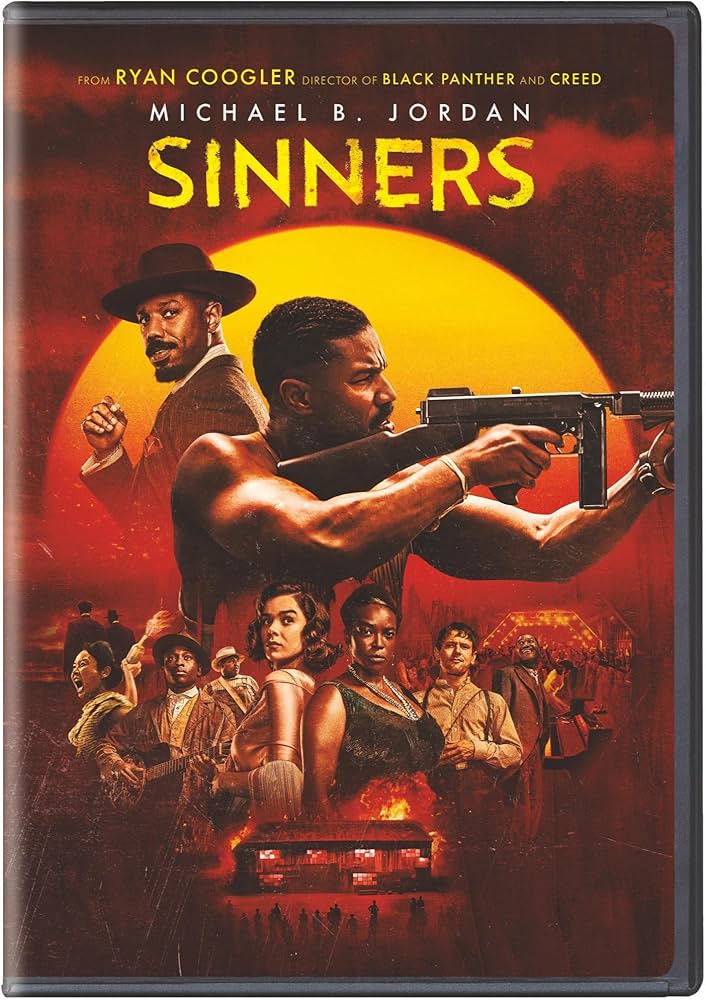

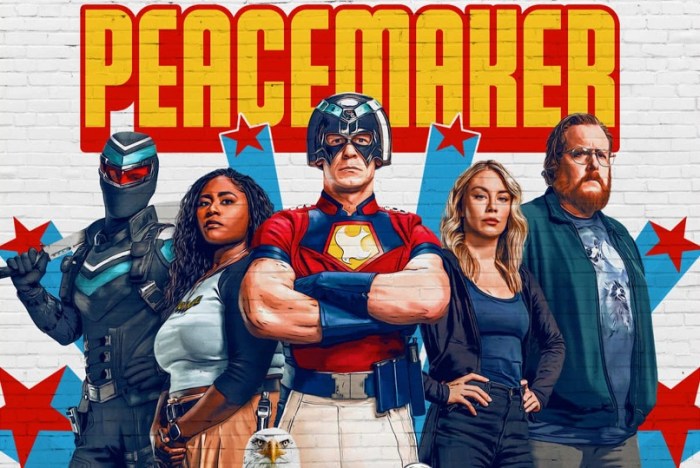
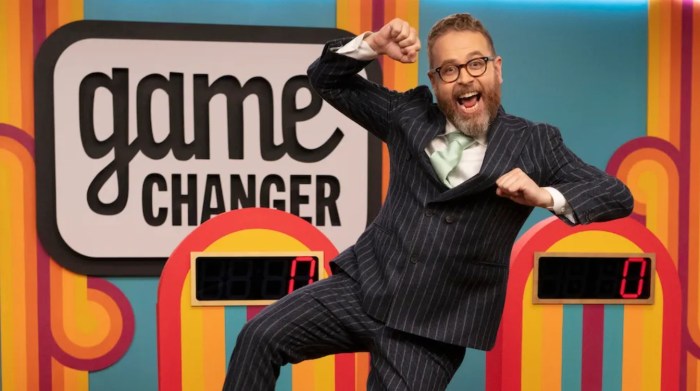
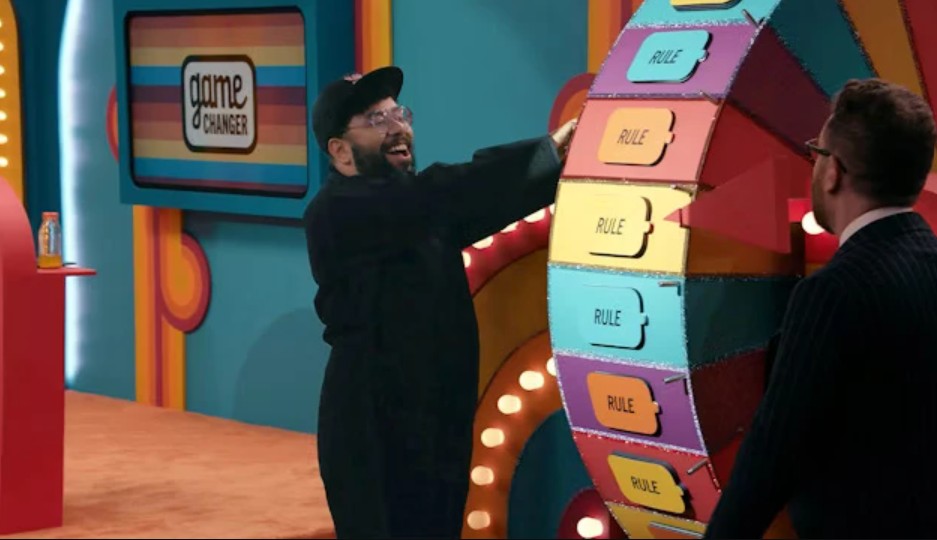
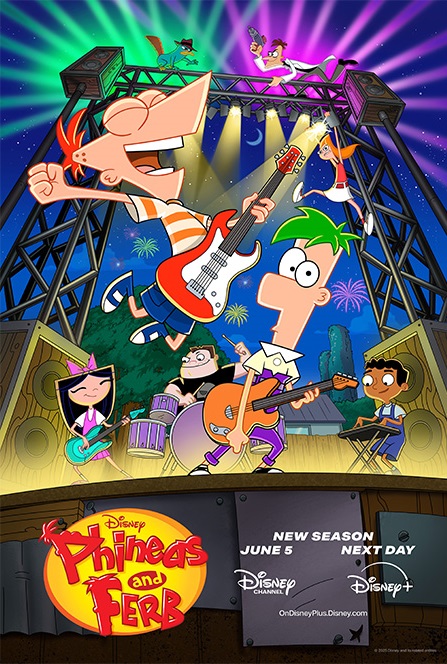
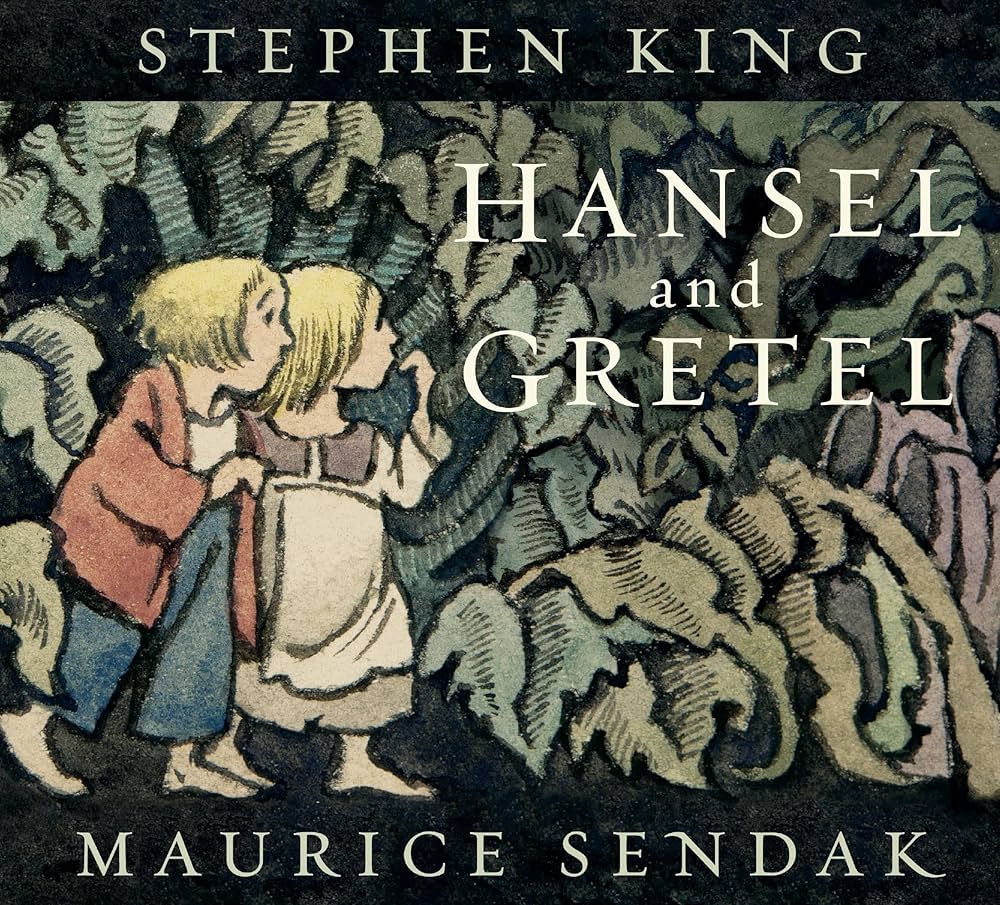

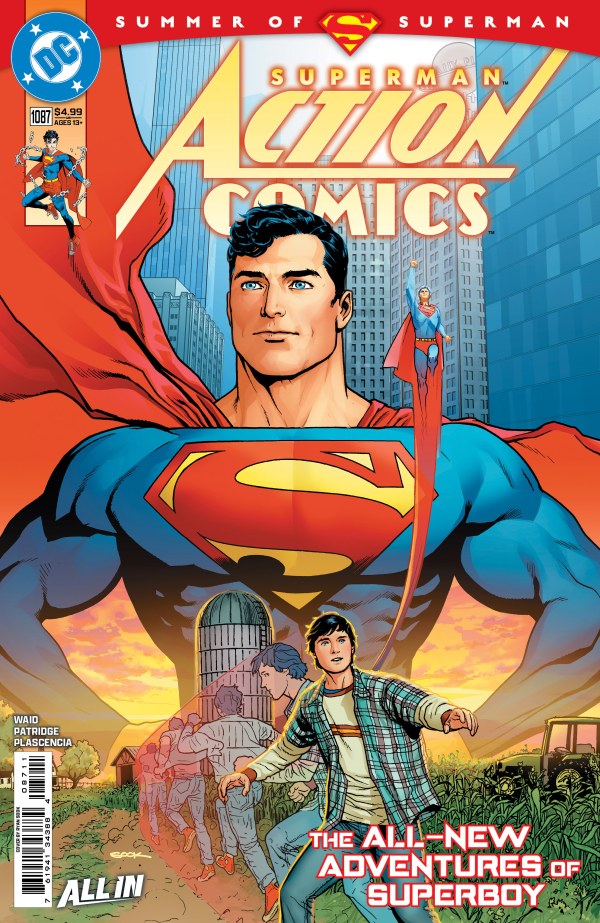
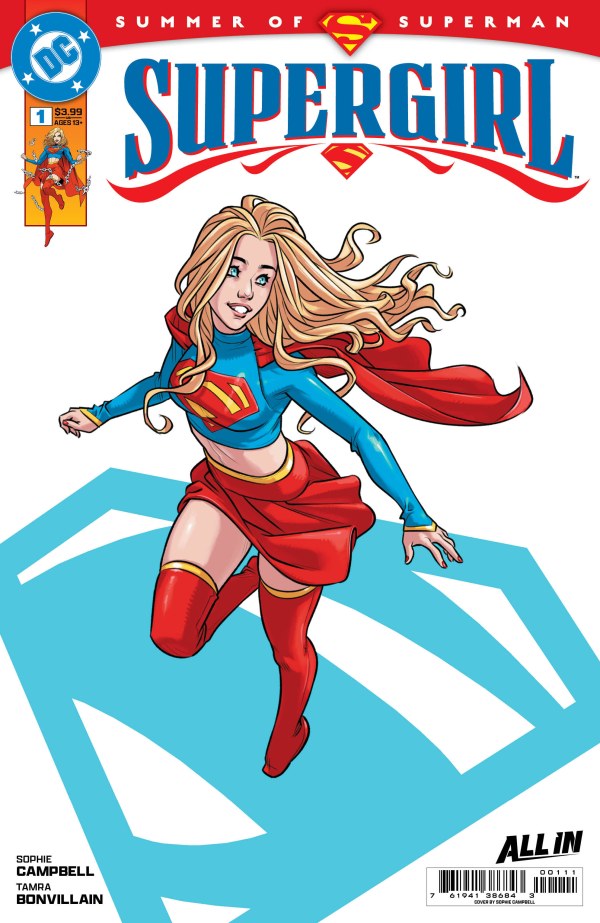

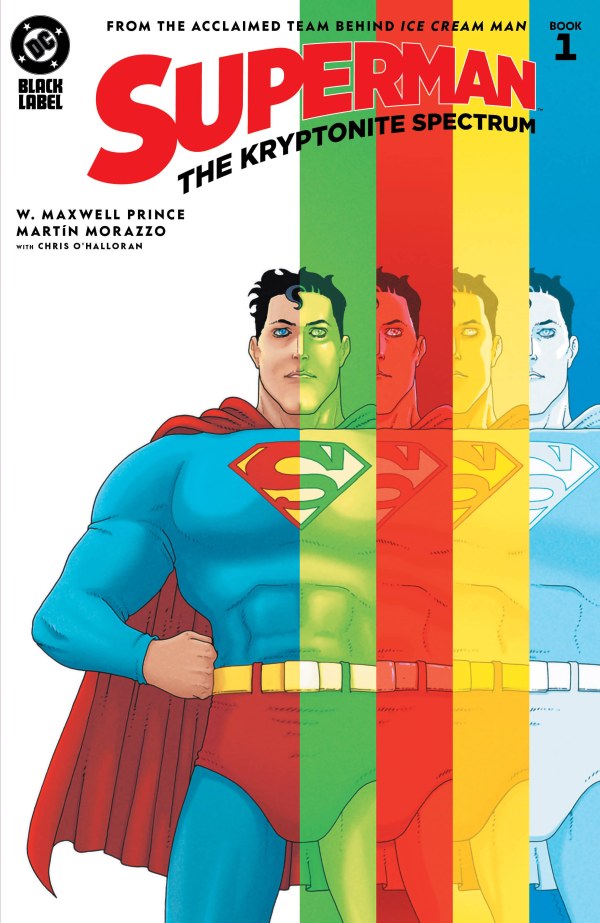
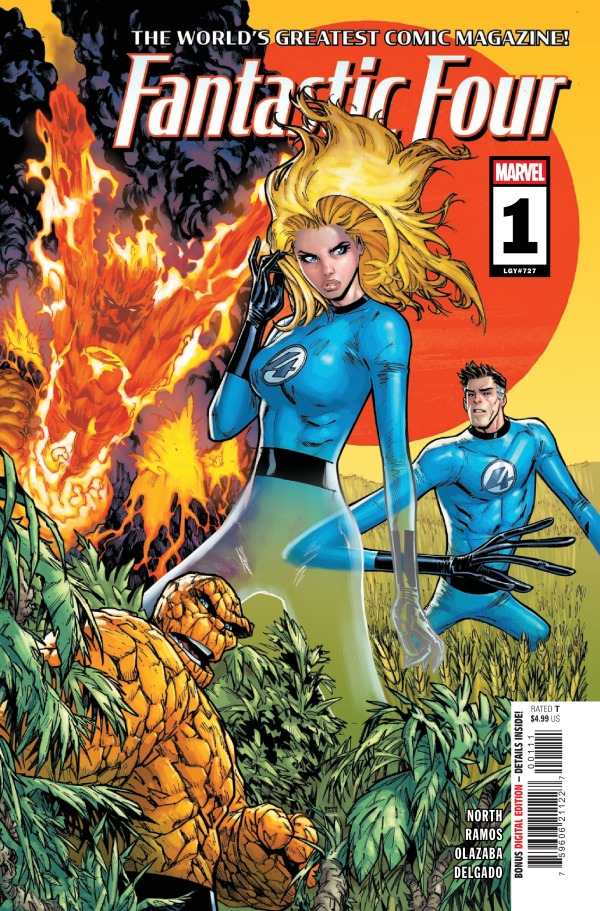
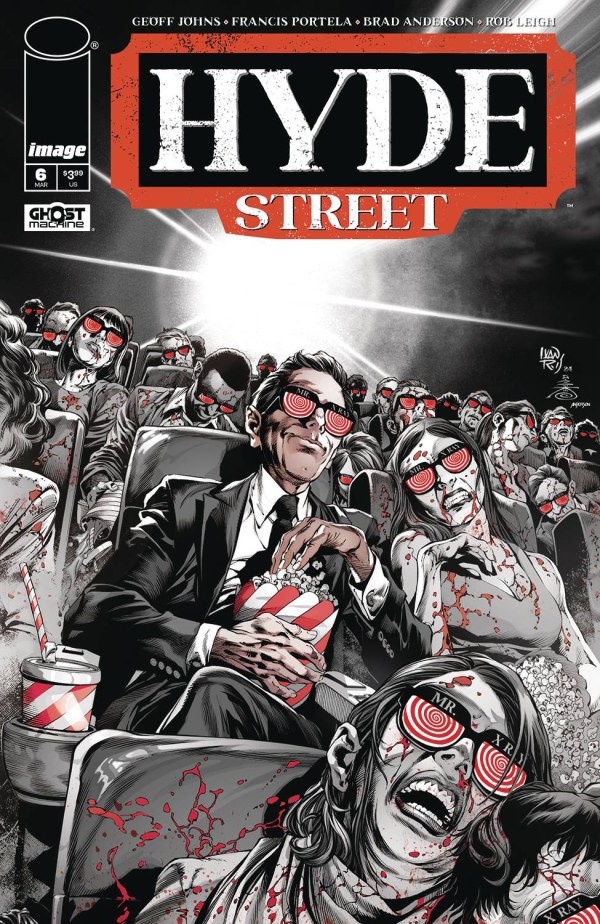

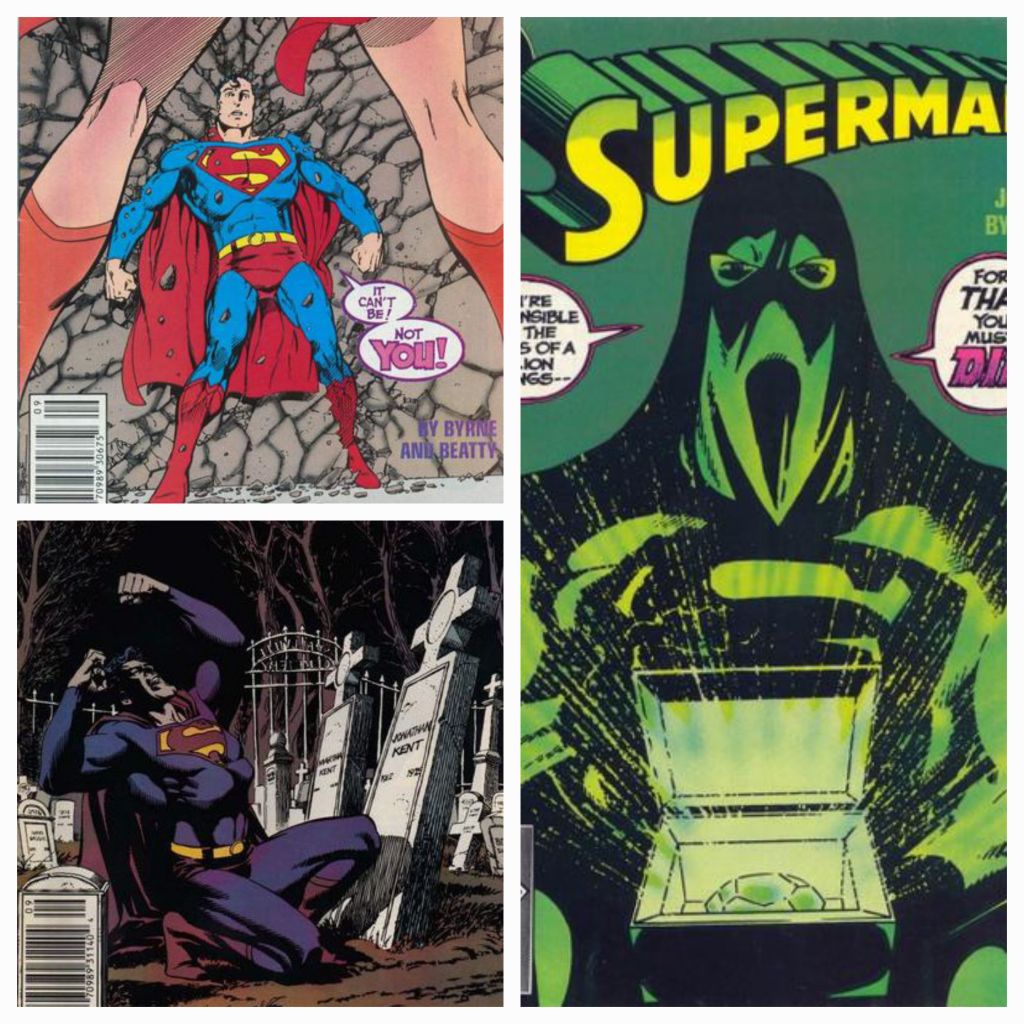

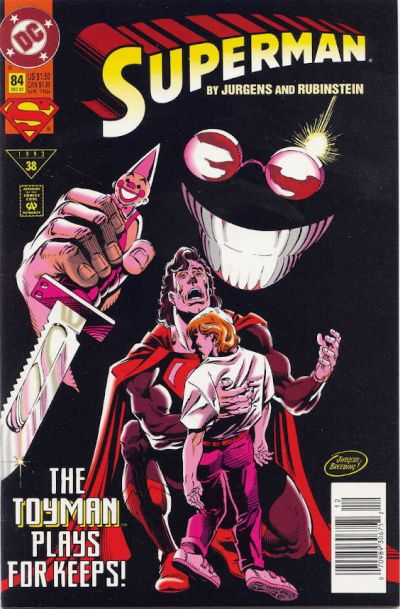

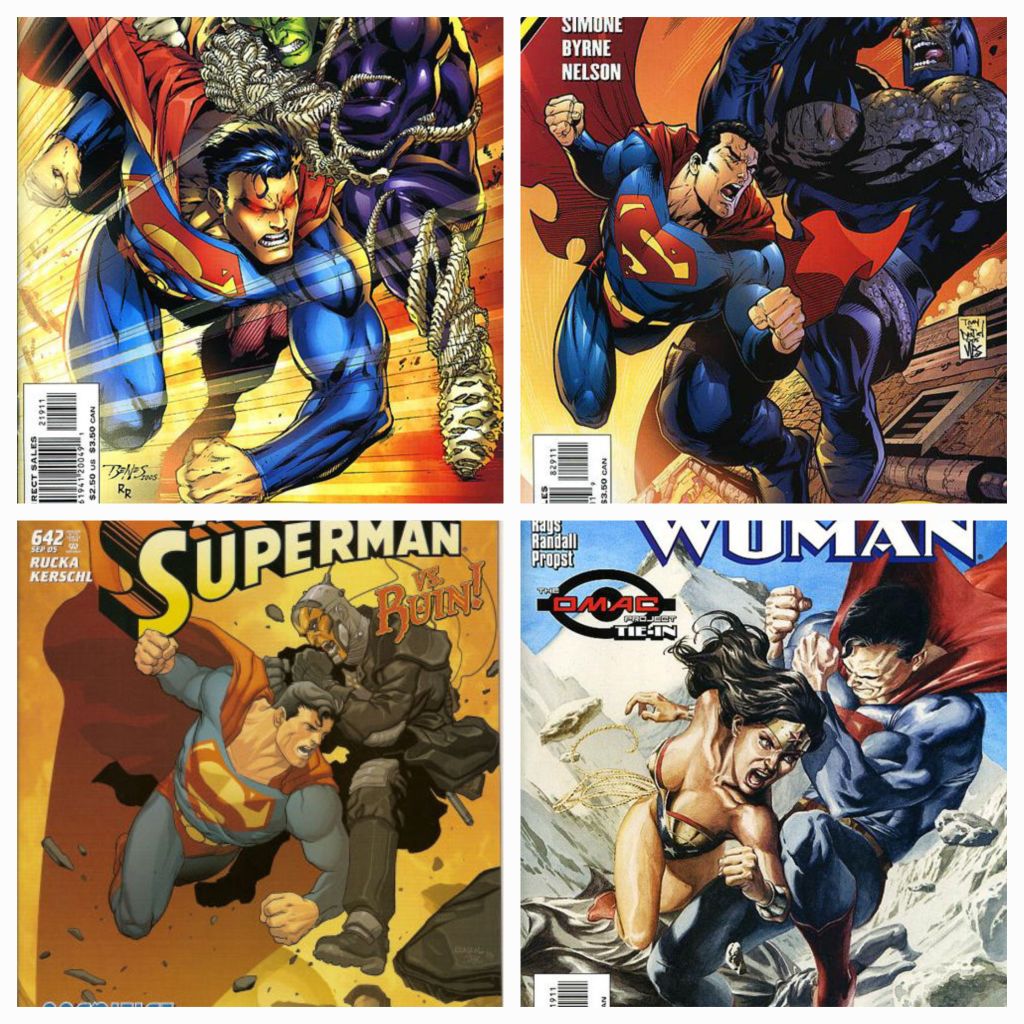
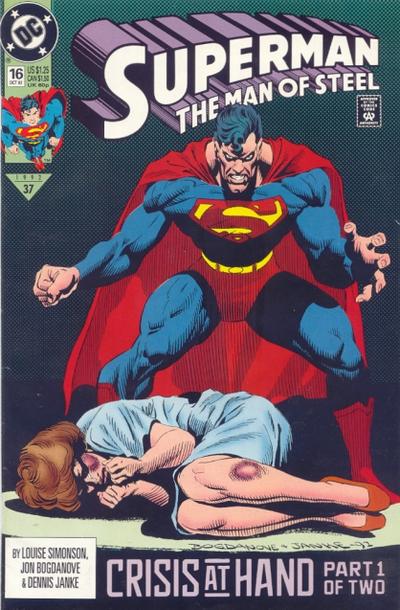


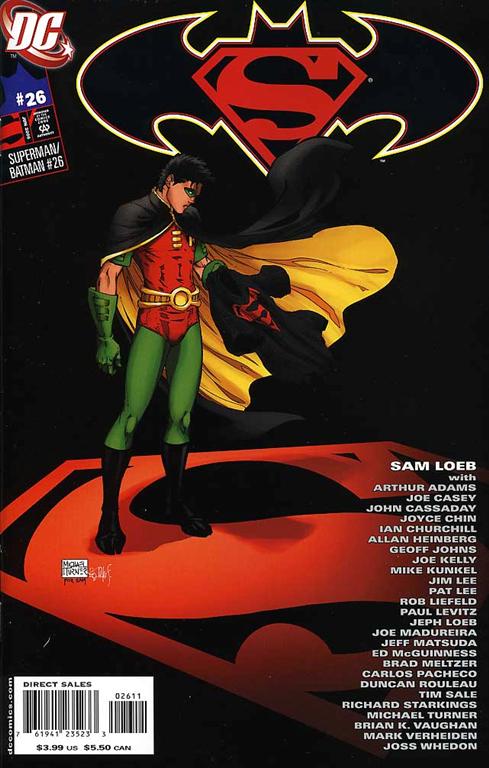
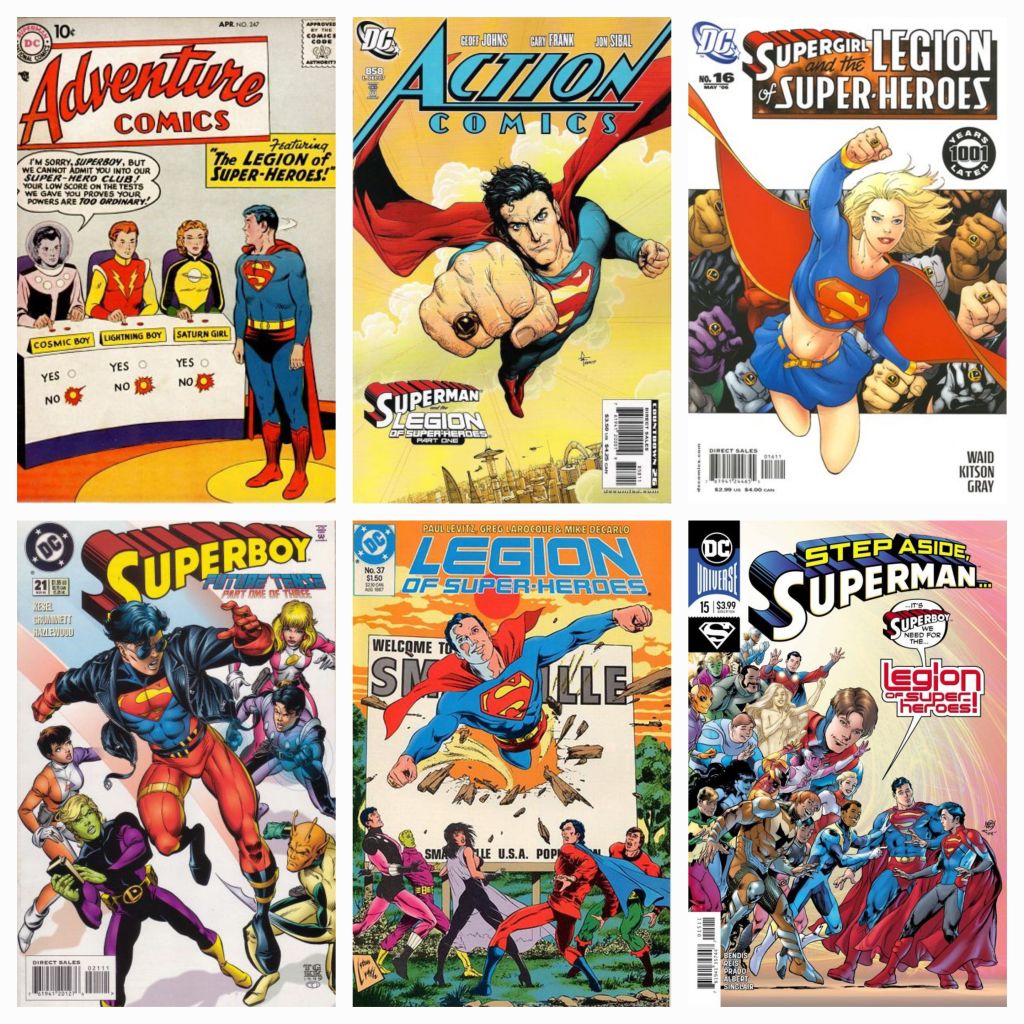
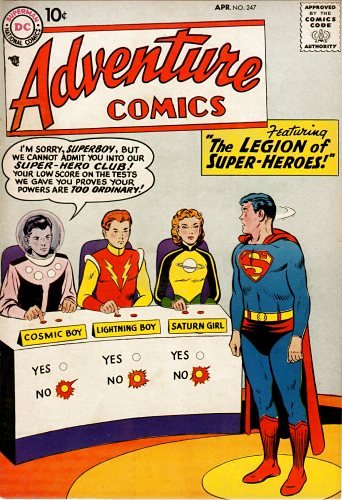
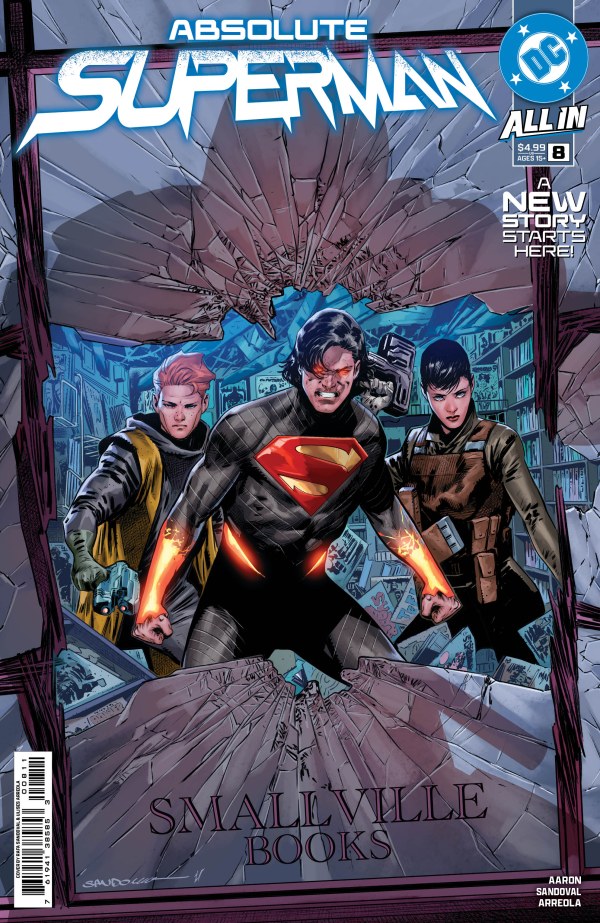


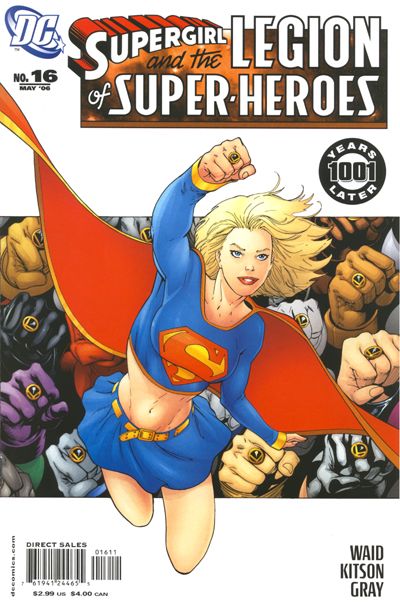


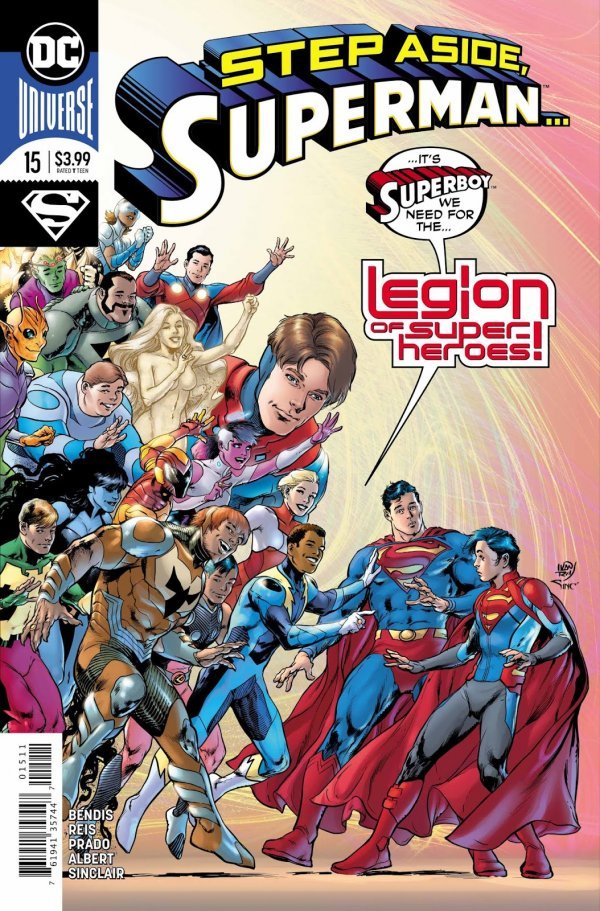


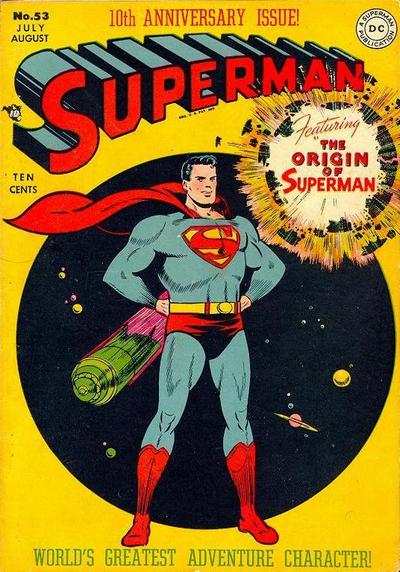
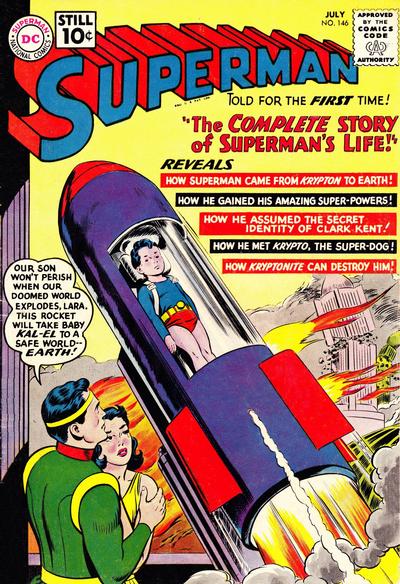
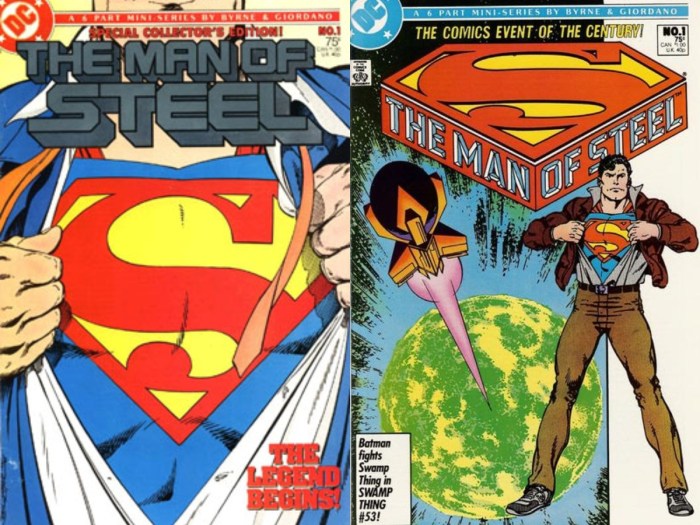


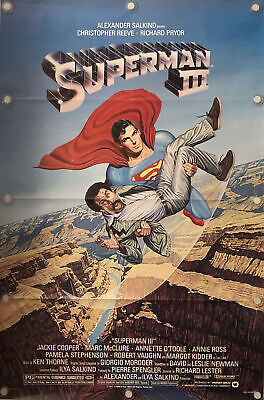

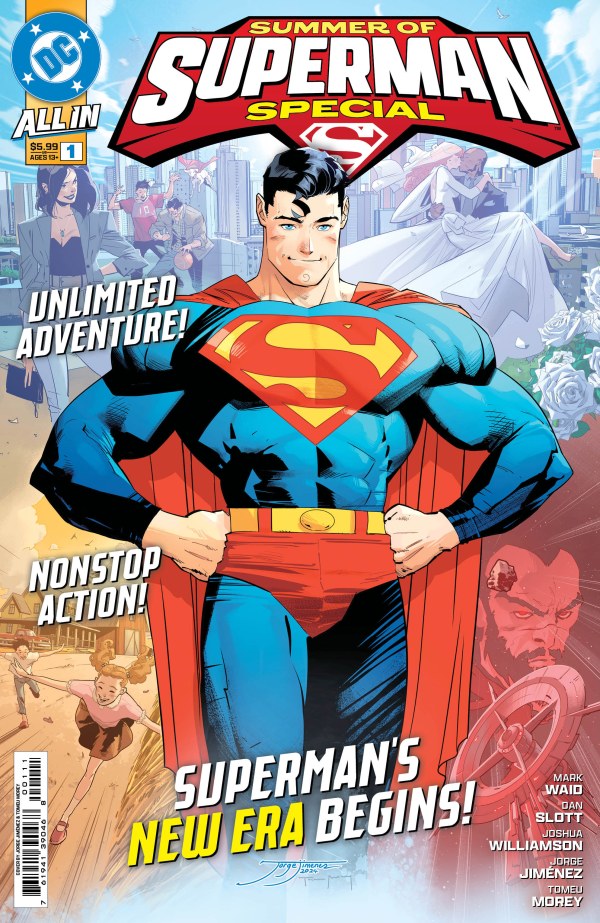


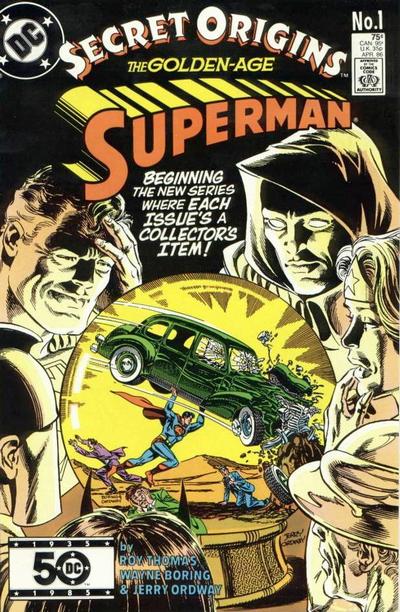

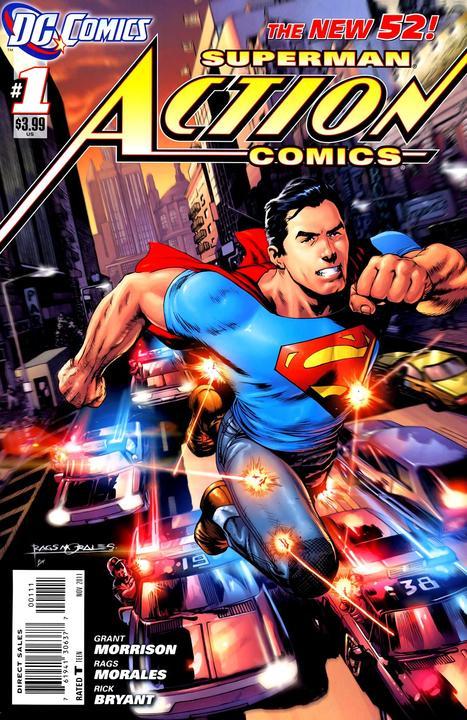
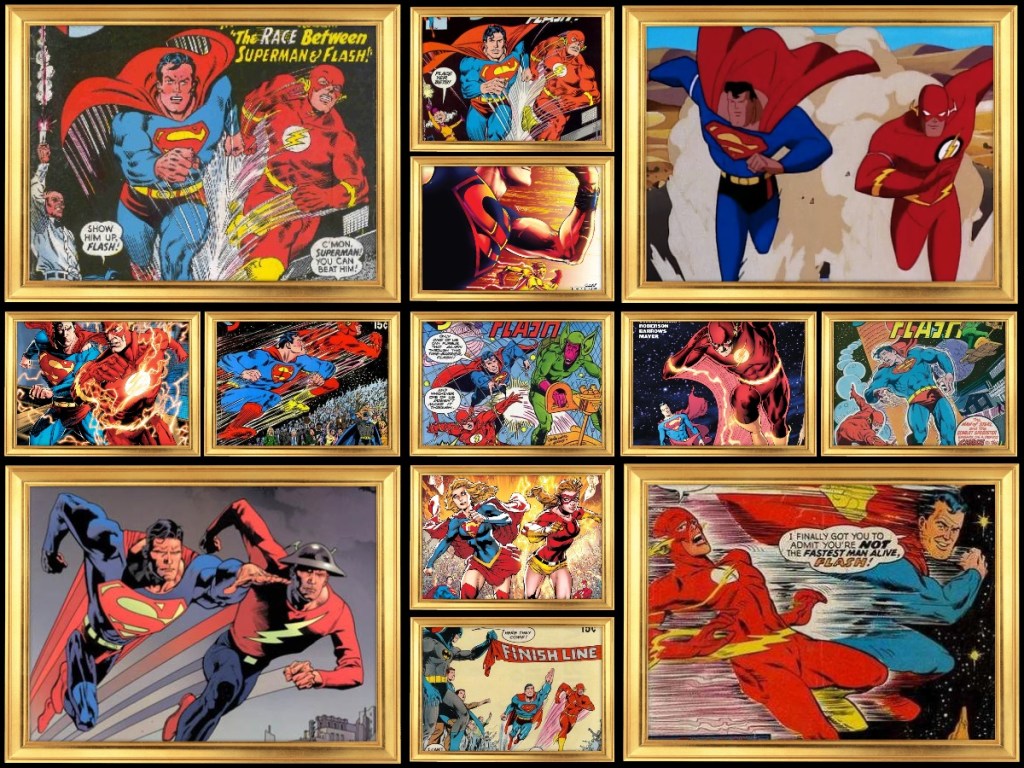

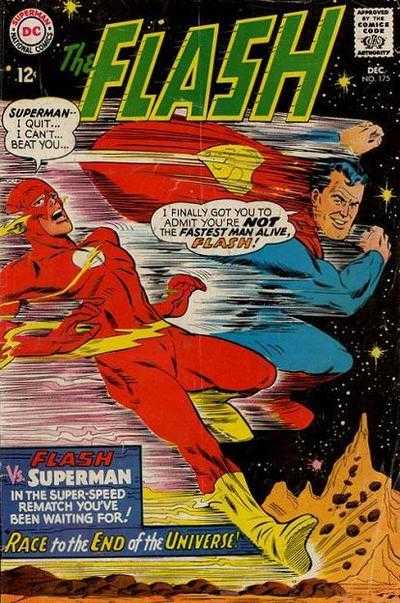


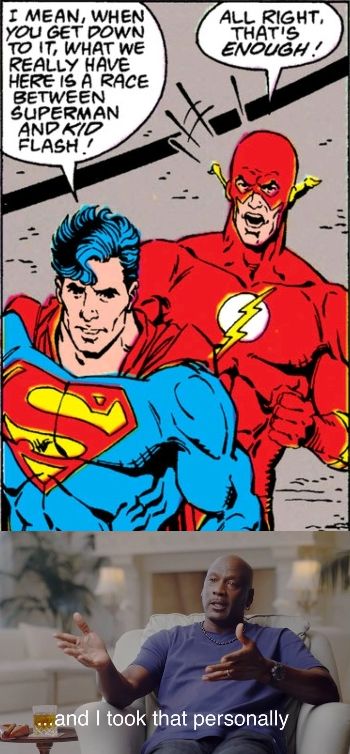

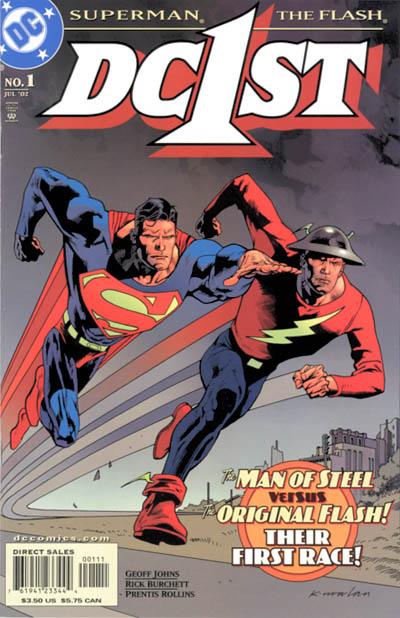

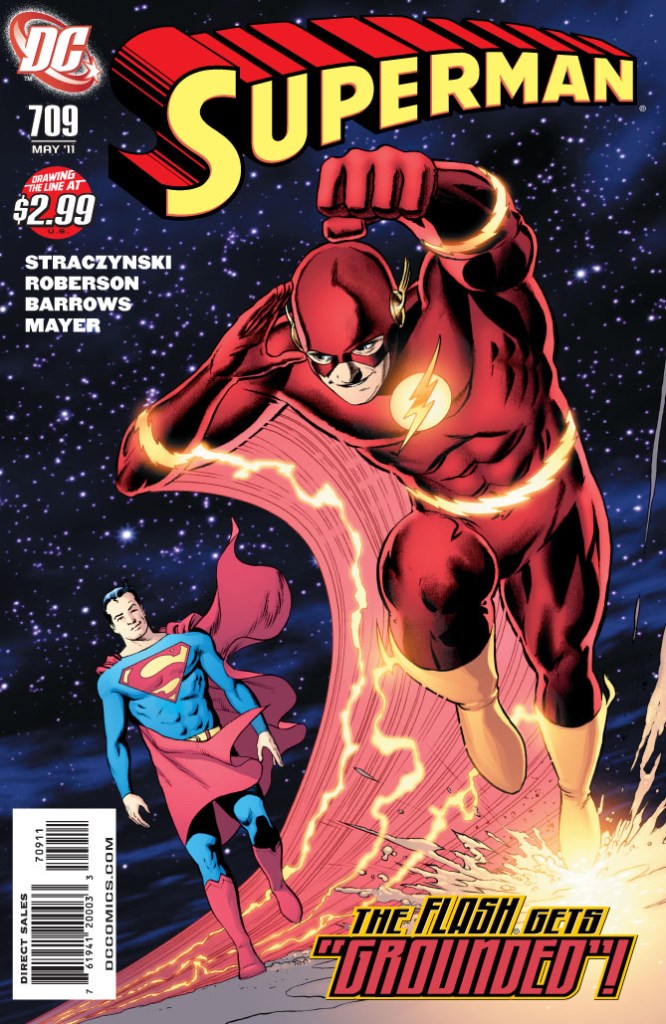


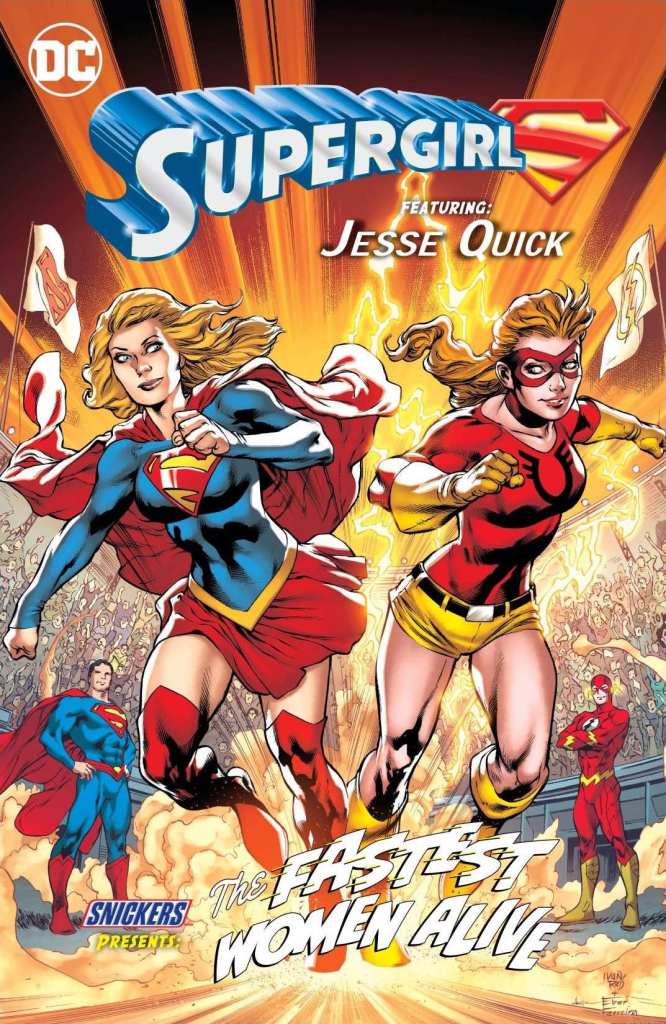
 Blake M. Petit