Geek Punditry #132: The Things We Love

I’m a teacher who is off for the summer, and although that does not (as many presume) mean that I have nothing to do, it DOES mean that my schedule is much less regimented. In other words, I enjoy the fact that for two months out of the year, I’m allowed to sleep past sunrise. Until this morning, of course, when my precious son Edward bounded upon his mother and me at 6:23 in the morning to make sure that we were going to be ready in time for the movie we’re watching at 11: 30. 

“Why are you looking at me like that?” I ask my wife, as Eddie scuttles away to inform our Google Home Mini that we’re going to see Superman today. 
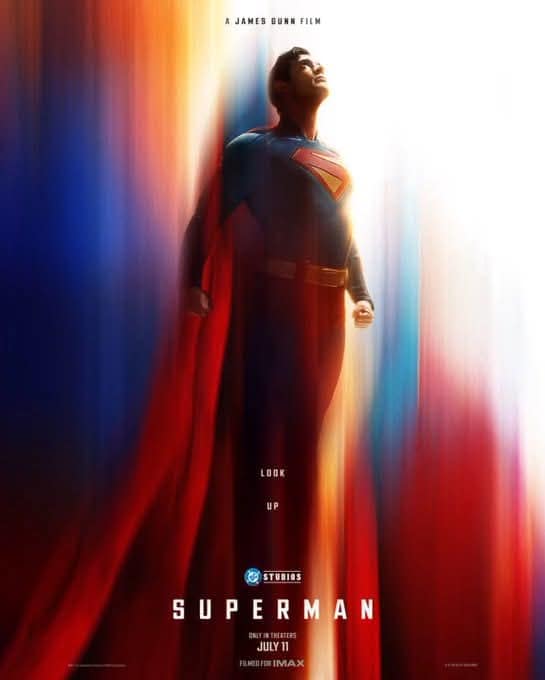
Shoot, was that TODAY? Totally slipped my mind.

I know why she looked at me that way, of course. This is probably my fault. Ever since the trailer dropped back in December, I’ve been working on the kid, showing him the clips online, watching the old movies and cartoons with him, getting him some of the new toys and t-shirts and a ridiculously cute pajama set with a cape. I have, in fact, gotten him excited. And moreso, for my little ADHD wonder, this may be the first time in his life he’s ever experienced anticipation that has lasted this long. I’m writing this before we’ve seen the movie, and I kind of feel the same. Eddie has been waiting for this movie since December. In a way, I’ve been waiting for it all my life.

Not because it’s a new Superman movie and not because it’s James Gunn doing Superman and not because I hated the Zack Snyder version. I’ve been waiting for this – and I didn’t even know it before 2017 – because I’m getting to take my SON to a Superman movie for the first time. And there’s nothing better than sharing what you love with the people you love.

Like this little nerd.

I know some people who have a bizarre relationship with their fandoms. When Star Wars became mainstream, for instance, they were disappointed. And not because of the content of any specific movie or TV show, they were disappointed because, in their minds, Star Wars was always this minor, niche thing that just belonged to THEM and not the normies out there. Star Trek doesn’t quite have the mainstream penetration of its Disney counterpart, but when New Trek adopted more polished special effects and started hiring big-name actors like Jason Isaac, I know Trekkies who had the same reaction. I don’t understand this point of view. I don’t get why anybody would be upset to learn that something they love is loved by other people.

Loving a movie, a TV show, a comic book series, a video game…this is not like having a relationship with another human being. Nobody is requiring that The Last of Us be in a monogamous relationship with you, Jamie. Stories are placed out into the world with the hope of gathering as many lovers as possible. Some of them make it, some of them fail, and some of them are successful beyond anybody’s wildest dreams, but they all have the same goal: to be shared.
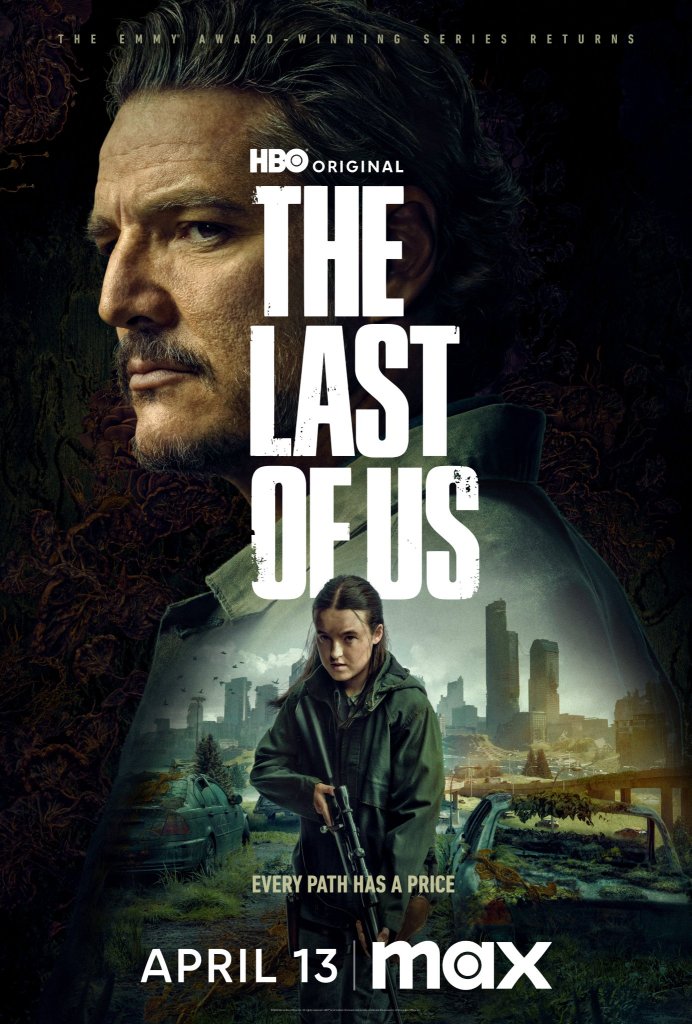
If you thought Pedro Pascal was all yours, I’ve got 17 different franchises with bad news for you.

The thesis of this column, from day one, has been to talk about the things that I love, and although that doesn’t mean I don’t occasionally lapse into criticism, I’ve done my best to abide by that. There is a percentage of any fandom – it’s a small percentage but, unfortunately, it’s usually the loudest – that exists only to fiercely express their hatred of whatever it is everyone around them is trying to enjoy. I can’t stand these people. It’s the same, to me, as listening to people talk about their significant others. When I hear a man gripe and pout and call his wife a harpy, a woman telling me how her husband is stupid and useless, I stare at them blankly, unable to relate. I actually love my wife, people, she’s my best friend. If you’re that miserable either go to counseling or end the relationship. Meanwhile, I’m gonna go sit at a table with Gomez Addams, Rick O’Connell, Bandit Heeler, and Clark Kent, and we’re all going to raise a glass and have a friendly but spirited debate over whose wife is the most awesome, all while vociferously agreeing with each other’s estimation of our respective partners.

Goals.

It’s the same with fandom. I don’t mean to say that Star Wars or anything else is beyond criticism, but how long can you listen to somebody complain about something before you come to the conclusion that they don’t actually love it, at least not anymore? And if you don’t love it anymore, that’s fine, but why don’t you just find something ELSE to talk about? I want to hear about the things you think are great and WHY you think they’re great, because love becomes better when it’s SHARED. I have seen every iteration of Star Trek and I’ve never watched a minute of, say, Outlander, but I’d rather listen to a three-hour symposium about what makes Outlander great than a 15-minute YouTube video whining about how they changed the shade of blue of the Andorians’ skin when they showed up on Strange New Worlds. 

Criticism should come from a place of optimism. The attitude should be “I want this to be  better,” not “I hate everything about this.” Even in the classic days of Siskel and Ebert, back when criticizing movies was something that could get you your own TV show if you were good enough at it, I doubt that Gene and Roger ever went into a movie theater thinking, “I hope this sucks.” Oh sure, there were plenty of times they EXPECTED a movie to suck — you watch enough of them and you start to develop a sixth sense for what’s going to be wrong just by watching the trailers – but they probably wished, somewhere in their hearts, to be proven wrong each and every time.

Oddly, also goals.

Some people revel in their hatred. They want to spread it like a virus. These are the people who harass a Star Wars actress until she has to quit social media, who shout obscenities at children on the street because they’re TOO good at playing a bad guy on Game of Thrones, who make plans to bomb a movie they haven’t seen with negative reviews because they’re bitter that the franchise was rebooted. This isn’t love, this is toxic. If you knew anyone in real life who treated their partner this way, you’d beg them to get out of that abusive relationship. And yet these False Fans just keep going and going, more emboldened than ever by the platform that social media has given everyone in the industrialized world. We’ve got a system that enables us to connect with more people than ever before and yet they choose to use it to gripe about the fact that Superman is friendly to children.

Fandom, like personal relationships, should be about love. And love should be shared. And while I wouldn’t ever try to force Eddie to like the things that I like, I expose  him to those things in the hopes that they’ll latch on and find purchase, because it makes me happy to share them with somebody I love so much. And – thank GOD – in the case of Superman, it has. So about four hours from the time I’m writing this, we’re going to sit down in that darkened theater, a bucket of popcorn between us and his Superman action figure on his lap (because Eddie has asked to bring him) and we’re going to watch the movie that so many people have already loved. And if I love it as they do (spoiler warning: I highly suspect that I will), I’m going to do my best to spread that love. 

That’s what being a fan really is. 

Blake M. Petit is a writer, teacher, and dad from Ama, Louisiana. His most recent writing project is the superhero adventure series Other People’s Heroes: Little Stars, volume one of which is now available on Amazon. You can subscribe to his newsletter by clicking right here. He’s also started putting his LitReel videos on TikTok. He does, in fact, believe a man can fly.

Geek Punditry #13: What IS Geek Punditry, Anyway?

In the first week of January, I challenged myself to carve out a little time, once a week, to write something in this new “Geek Punditry” space I created. I’ve been using the term for years, calling myself a “Geek Pundit” in various online bios because I thought it was a clever phrase that, to the best of my knowledge, nobody else was using. (But to be honest, I never really looked, either. I could be wrong.) But as we finish up the first quarter of 2023 (motto: No, it’s not getting any better), it occurred to me that I never quite explained what I mean by Geek Punditry. What is this space about? What qualifies something for this kind of discussion? And most importantly, why should you care?

Would you listen to this man?

I’ll answer the last question first: you shouldn’t. Not unless you want to, that is, and that’s what makes my task challenging. A pundit, by definition, is an expert on a given topic that is called upon to present opinions on the subject. So clearly, as a title, it’s ridiculous, and that’s why I like it. It’s a title that sounds slightly pretentious, but hopefully is silly enough to communicate the fact that I’m trying to mock pretention rather than indulge in it. I don’t consider myself an expert on anything, but I think a lot about everything, and putting those thoughts down helps me to declutter my horrifically unorganized mind. As for the second part, “called upon to present opinions”…what is there to say? I’m well aware of the fact that nobody is asking me what I think of anything. I’m the living embodiment of those memes that start with “Nobody: [Blank space]. Nobody at all: [Blank Space],” and then a picture of SpongeBob blurting out something about Squidward. And since nobody has any compelling reason to give a damn what I have to say, the burden falls upon me to make what I have to say interesting. If you’ve read this far, I flatter myself by assuming that I at least haven’t bored you silly yet.

So back to the first part of the question: what does “Geek Punditry” mean? In simple terms, it’s talking and opining about geeky things. It’s not a new concept, of course, but there’s another term that’s been used pretty much since the invention of art: critical analysis. It’s about the discussion and dissection of art of all kinds, and it’s an ancient art all its own. I have no doubt that the first time some caveman picked up a stick and drew a picture of a saber-toothed tiger in the dirt, some other guy scoffed at it and kicked it aside so as to indicate that his blind 32-year-old great grandmother could draw a better tiger than him. The first guy then began to wildly gesticulate, which the second guy took as him being angry over the analysis. The second guy then laughed and communicated, through grunts and hoots, “What, can’t you take a joke?” Then he laughed a little more and then the first guy took a swing at him, at which point, both of them were eaten by the tiger that the first guy was trying to warn the second guy about in the first place. Which brings me to one of the central rules of MY version of Geek Punditry: Being critical is one thing, but being mean about it is just stupid.

“Did you see what Ug calls a buffalo? I’m gonna discover fire so I can tell him to go die in one.”

That’s not to say one can’t have a negative opinion, of course. It’s almost impossible to have any kind of intelligent analysis without criticism of some kind. But there’s no reason to be a dick about it. If you have ever – to give a totally hypothetical example that could never, ever happen in real life – bullied an actress on social media to the point where she deletes her account, I don’t care how bad the movie may be, you’re the bad guy. If you’ve ever threatened violence against someone because they wrote something you didn’t like, you’re the bad guy. If you’ve ever harassed, threatened, or wished violence against somebody because they’re married to/the parent of/the child or/the dog groomer of a celebrity that you have some sort of personal grudge against – and I cannot believe I have to say this – you are the bad guy. If your posts include the words “cancer” or “kill yourself,” I don’t even want to know you.

But those are just the most obvious examples of people being awful human beings and attempting to shield themselves by calling it “criticism.” There are other forms that are less obvious and far more insidious, and most of these fall under the general category of “clickbait.” How many times have you seen some online “think piece” that explains in great detail why a movie or TV show that you enjoyed as a child is actually awful, terrible, and something you should be ashamed of yourself for ever indulging in? I saw three of them today before I even got dressed to go to work. What the hell is the point of that?

“Today on Buzzfeed: 12 Muppets who totally would have given Mengele asylum in Brazil.”

Well, the point is obvious, actually, it’s about getting clicks. Websites like that run off of advertising, and every time you click on a link their ads generate some fraction of a cent, so it’s in their best interest to write things that will make you click. And the sad truth , my friends, is many people are far more likely to click on something if they find it infuriating. Otherwise, there would be absolutely no point to publishing these things. This is not to say that everything we loved when we were younger was perfect. A lot of us look on the movies and TV shows of our youth through rose-colored glasses, and more than once I have gone back to something I used to watch over and over as a child only to realize, as an adult, that it ain’t that great. But most of it is also harmless, something that has been largely left in the past and gives people fond memories, so why dredge it up just to upset people about something that previously brought them joy? The advantage I have here, I suppose, is that I have absolutely no expectation of making money off this blog, so I have no incentive to piss people off solely in the name of getting them here. I’d rather talk about the things that I love with other people that love them too.

The sad state of modern criticism both depresses and fascinates me, because people have been making a living as critics for a very long time. In high school, we used to go to the library and use these massive encyclopedia-sized sets of books of literary criticism for use in research papers and annotated bibliographies. These volumes contained thousands of articles published in journals over a couple of hundred years of writers writing about writing that other writers had written. It was full of analysis of every significant writer from Chaucer to Faulker. There was stuff both about and by the likes of Edgar Allan Poe and Mark Twain. There were entire spinoff volumes devoted specifically to writers of science fiction. And one can only imagine how many such articles were left uncollected because either the critic or the object of their criticism had faded into obscurity. Doesn’t that sound amazing? If ever there was evidence that I was born in the wrong century, it’s the existence of these books. 

Then there are film critics, which is probably the form of criticism that most of us are more familiar with. Guys like Siskel and Ebert made their names not by trashing everything they didn’t like (although they were not above doing that from time to time) but by explaining their opinions in a concise, intelligent way. I loved their TV show back in the day, I looked forward to watching it almost as much as I looked forward to watching the movies themselves. It’s because of them, as much as anything else, that I try my damndest to explain what I like or dislike about something, and why I try not to offer an opinion on something I haven’t seen or read personally. As a policy, the majority of social media would find this position baffling. 

I included this bit mostly so I could draw your attention to the hilarious Newsradio joke about these guys.

And when it comes to critical analysis, let us not forget the man with the mutton chops, Isaac Asimov. The good professor wrote or contributed to over 500 books in his lifetime, or roughly two and a half Stephen Kings. Most people today know him as a science fiction writer who also wrote about science or a scientist who also wrote science fiction. But he also wrote mystery novels. He wrote a guide to the Bible. He wrote jokebooks in which he broke down and analyzed the jokes, breaking the cardinal rule of not explaining why something is funny, and yet doing so in an entertaining fashion. He wrote one of the most intriguing guides to Shakespeare I’ve ever read! My wife found Asimov’s Guide to Shakespeare on eBay for me years ago because she’s awesome (there’s some advice, young people – if you plan to get married, marry someone awesome) and it’s actually making me a better teacher. Asimov not only explains his personal feelings about the plays, but also provides some interesting and, in some cases, essential context that makes it a lot easier to understand the more perplexing moments in the bard’s work. For example, I could never adequately explain to my students why it was so easy for Claudius to take his brother’s throne even though Hamlet quite clearly was old enough to become king. It never quite made sense to me, either. Asimov explains: at the time in which the play was set, succession did not automatically go from father to son, but rather a new king was selected from the members of the royal family. Claudius (with a little help from Polonius) managed to convince the nobles that he was the best choice before Hamlet could get his Danish butt back in the country, no doubt furious that televised campaign ads wouldn’t be invented until the 20th century. Now I know, and it’s because of the greatest Geek Pundit of all time. If Western Civilization has ever produced a bigger Geek than Isaac Asimov, I don’t know who it is. And I say that with the utmost respect.

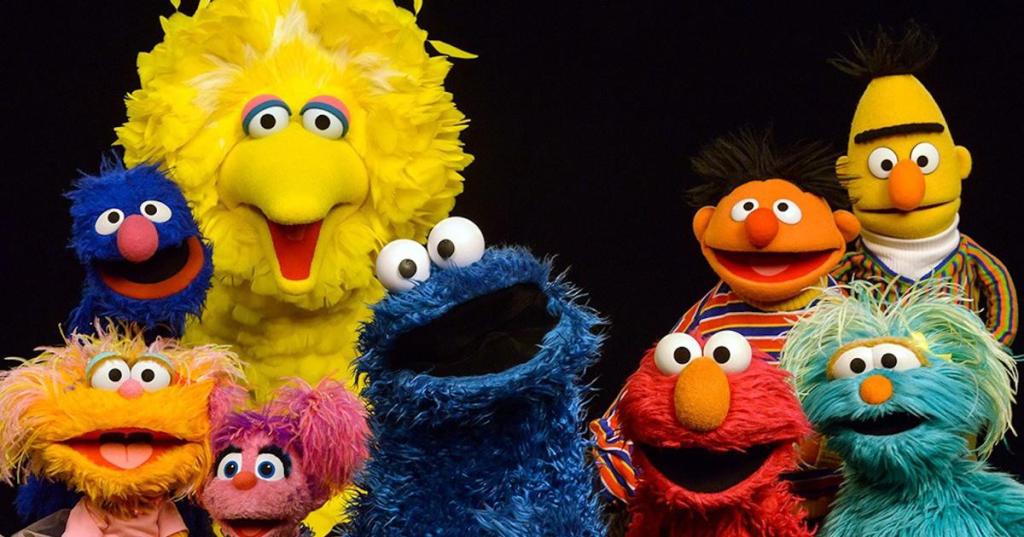
This is what I was going for in that first picture, actually.

As with so many things, though, the digital revolution has largely eroded the ability to actually make a living with criticism of any kind. The number of full-time film and book critics has dwindled dramatically as newspapers and magazines go out of business, and while any of them can easily make a home for themselves on the web, the internet isn’t paying out for that sort of thing in a substantial way. The advent of AI-generated content is only making it worse. If you’re the type of person who sees a website as a revenue generator first and a place for intelligent discourse second (and placing it second is being extremely generous for most of these sites), it doesn’t make sense to pay an intelligent critic for well-constructed criticism. Just whip up an algorithm that can turn out a 10-point listicle that attacks someone’s childhood and BAM! You’re rolling in microtransactions. You’re the Scrooge McDuck of awfulness.

What happens at the “Inside the Magic” website office every time you click on an article about 37 ways to get a venereal disease in the Disney parks.

Here’s why I do this, folks. I like things. And I like liking things. And I like discussing the things I like. That’s why I wrote for Comixtreme for years, that’s why I hosted a podcast until parenthood took away both my time and my ability to have a single room in the house quiet enough to record. And that’s why I’m here now. I’ve come to realize that discussing these things, analyzing these things…it makes me happy. It gives me a place to channel all those thoughts that otherwise barge into my skull at 2 a.m. It gives me somewhere to share all of my ideas about these things that I love without randomly having to turn to my wife in the middle of the grocery store and explain the entire history of Firestorm because something on a box of Rice Krispies made me think of the first time he fought Killer Frost. This column isn’t just me babbling narcissistically. This is my therapy.

Except for my wife and son, I don’t know if there’s anything I enjoy more than talking about things that I enjoy. It’s why I go to comic shops and conventions, why Free Comic Book Day is the best day of the year, why seeing a movie with friends is better than watching it on my phone. It’s why I’m here.

And if you enjoy that sort of thing too, you’re my kind of people. Pull up a chair, I’m happy to have you. It’s just a shame that, in the world we’ve got today, the table feels so empty sometimes. 

Blake M. Petit is a writer, teacher, and dad from Ama, Louisiana. His current writing project is the superhero adventure series Other People’s Heroes: Little Stars, a new episode of which is available every Wednesday on Amazon’s Kindle Vella platform. He apologizes in advance if any of the ads that WordPress places on this site fall under the categories of awfulness he mentioned in the column, and he strongly encourages you not to click on anything. Except for his aforementioned Amazon links.