Geek Punditry #149: Three Wishes Presents-The Mummy

Considering how many times it’s been shattered and reassembled by bombshell pop culture announcements, it’s kind of surprising that there’s any internet left to break. But lo and behold, that’s exactly what happened this week when news was announced that Brendan Fraser and Rachel Weisz would be returning for a new movie in The Mummy franchise. The two co-starred in the beloved Mummy remake in 1999, then again in 2001’s The Mummy Returns. Weiz declined to return for the third installment in 2008 and was recast, but the new movie will reportedly discard that installment and only treat the first two as canon.

The movie is gonna star these two and, I think, some kind of monster or something.

This is, not to oversell it, an announcement of the kind of cultural relevance that is usually only reserved for things like the election of a new Pope or the return of the McRib. Stephen Sommers’ The Mummy was not only a fantastic movie, but it cemented Brenden Fraser as a real movie star back when such a thing still meant anything. The way he’s had a career resurgence over the last couple of years has made people absolutely salivate at the prospect of him coming back and playing Rick O’Connell again, and the news that he’s not only doing it but bringing Rachel Weisz with him…well, as The Mummy: Tomb of the Dragon Emperor proved, even the McRib just isn’t the same without the special sauce. I should know better than to write these columns before lunch.

Anyway, I am obviously pleased at this news. It even made me think of a blog post I made a few years ago, when the possibility of this franchise coming back seemed like a pipe dream, about how I would have handled the return of The Mummy. But although it’s (relatively) certain that Universal Studios isn’t going to use my ideas, I’m going to float three wishes for the new movie, three things that I – and probably most other fans – hope that they DO bring to the table when the new Mummy movie hits theaters.

#1: Keep the Family Together 

If the movie starts by breaking this up, we riot.

Fraser and Weisz’s characters met and got together in the first Mummy film. By the sequel, they were married with a child. (By the third, that child was grown up, and that’s reportedly one of the reasons Weisz declined to return – she didn’t want to be seen as old enough to have an adult son, especially just nine years after the first movie came out.) The relationship between those two characters, even more than fighting ancient Egyptian forces of evil, is why people fell in love with this franchise. There’s more chemistry between those two than a high school science lab.

But think about how many movies end with a couple getting together only to see that they’ve broken up when the sequel rolls around. Is that EVER satisfying to the audience?  (Lookin’ at YOU, The Force Awakens.) I get why it happens – some filmmakers feel like there’s not enough drama to be wrung out of portraying a happy couple in a story. I would like to submit, however, that this notion is a pile of rabbit doots. Just because you have a couple that’s happy with each other doesn’t mean there isn’t room for conflict. Couples disagree. Parents disagree. Maybe they disagree over whether their kid should be allowed to play football. Maybe one of them has a drinking problem that the other one wants to help them through. Maybe your wife keeps forgetting to put the blueberries back in the fridge after she makes our son’s breakfast and I find them sitting on the stovetop almost every single day when I get home from work. You know. Hypotheticals like that. 

These are all just examples, of course. There are thousands of ways to tell an entertaining story with a happy, loving couple and still have a satisfying narrative, as proven consistently by the very existence of Gomez and Morticia Addams. I can’t think of anything that would turn the fans off faster than starting the new movie only to learn that Rick and Evie haven’t spoken in ten years.

And it’s just not a reunion without the disreputable uncle.

In the same vein, we want to see the WHOLE family together. John Hannah played Jonathan Carnahan, brother to Rachel Weisz’s Evelyn character, in the prior three movies (even the one without Rachel Weisz). While Fraser and Weisz get most of the love when people talk about this franchise – and deservedly so, they’re both excellent – I feel like Hannah deserves more credit than he gets. Fraser and Weisz are both talented actors, capable of action and comedy at the drop of a hat. But Hanna’s Jonathan is a nice sort of foil for the two of them – cowardly where the other two are fearless, and capable of being more self-centered and deceptive than the O’Connells, whose love for each other is evident in every frame. But somehow, he’s still charming and entertaining. The third film proved that this franchise without Rachel Weisz just isn’t the same. I think you COULD make another Mummy movie without John Hannah, but assuming he’s willing to come back, why would you want to?  

#2: Keep it Family-Friendly

Family friendly, y’know? Like this.

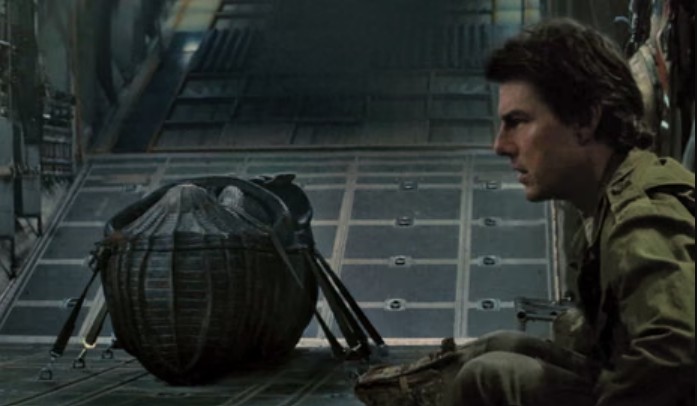
When the Universal Monsters went through their first cycle in the 30s and 40s, they were intended to be scary. Over time, though, they became so popular in our culture that it’s almost impossible to find them legitimately frightening anymore. Writer/director Stephen Sommers understood that, and when he was tasked with remaking the classic, he didn’t even try to bring the chills. Instead, the Fraser/Weisz Mummy movies are action-oriented monster movies that anybody can enjoy. When Universal tried to use a new Mummy with Tom Cruise to kick off their “Dark Universe” line in 2017, they leaned more in the other direction – less comedy and a darker tone. I’m not saying that’s the ONLY reason the Tom Cruise movie failed, but it’s undeniably ONE of the reasons.
We can probably come up with a few others.

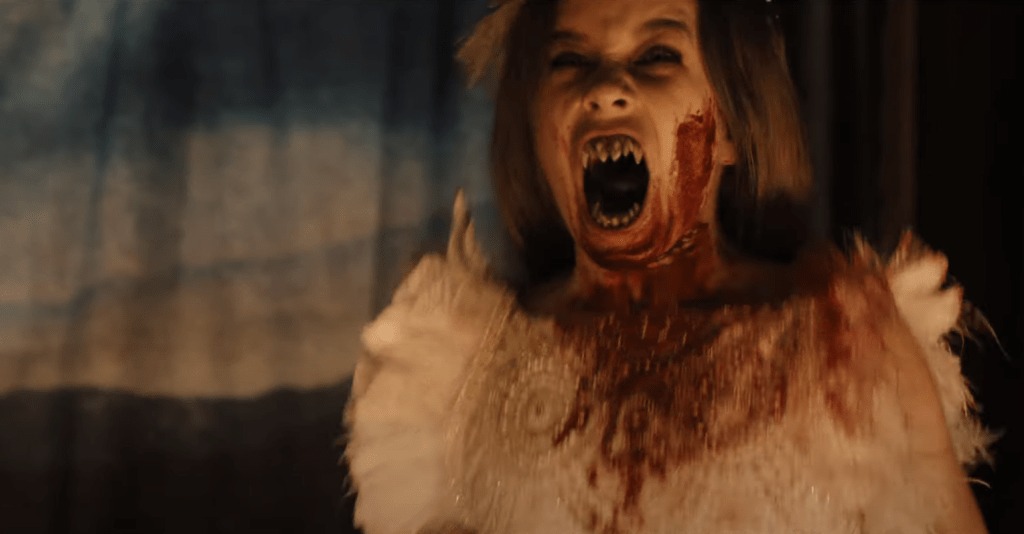
The new movie is being developed by the directing team of Tyler Gillett and Matt Bettinelli-Olpin, the duo collectively known as Radio Silence, and I think that’s a very good thing. I’ve seen four of their movies so far – the thriller Ready or Not, the two most recent Scream films, and the bloodthirsty ballerina flick Abigail – and I’ve enjoyed all of them. Each of those films straddles the line between horror and comedy, and they do it really well. Ready or Not is, as I said, more of a thriller, but there’s plenty of humor in it. The same goes for Abigail, which is unabashedly a monster movie, but also has strong, compelling characters and some really amusing segments. And of course, anybody who’s ever read my blog in October has heard me talk about my love for the Scream franchise, a franchise built ENTIRELY on using meta humor to deconstruct horror movies, and I feel like Radio Silence did that franchise right.

But The Mummy is different. When the new movie comes out, my son will probably be around ten years old (which sounds like a typographical error, but there you are), and I would LOVE to take him to see it. He hasn’t watched the previous films, but I feel like if I can ever get him to stop watching YouTube videos of somebody shredding things for ten minutes, he would enjoy them. As much as I liked the previous Radio Silence movies, though, none of them are the kind of thing I would watch with Eddie. 
“Whaddaya mean it’s not a kids’ movie? She’s a KID, ain’t she?”

That said, just because their previous films have all carried an R rating doesn’t mean that we should expect that here. First of all, I doubt that Universal would want to resurrect this franchise if they didn’t intend to try to please as many fans as possible. Second, it’s stupid to assume that just because you’ve only seen a storyteller do one kind of story that means it’s the only kind they’re capable of. Wes Craven directed four Scream movies and created Freddy Krueger, but he also directed Meryl Streep to an Oscar nomination for the biopic Music of the Heart. Actors like Robin Williams and Jim Carrey started their career known only as comedians, but both received acclaim for dramatic works like Dead Poet’s Society or Man on the Moon (respectively). John Cena, that wrestler you can’t see, has proven himself to be both a great comedic actor AND capable of a deeply emotional performance in Peacemaker. And although enough people have learned this fact that it isn’t quite as shocking as it once was, I always enjoy the look on the faces of the uninformed when I tell them that the uplifting prison drama The Shawshank Redemption is based on a story by Stephen King. Yeah, the clown in the sewer guy.

I think Radio Silence is well aware of their audience, and I think they’re smart enough filmmakers to understand that they are the stewards of this franchise, not its masters. Of my three wishes, this is the one I feel most confident will come true.

#3: A Portal to a New Universe

Well not THAT one. Okay, MAYBE that one.

The Brendan Fraserssance that has swept up Hollywood over the last few years is certainly a factor in this movie getting made at all, but I think another important element to consider is that Universal, for years, has desperately wanted to turn their classic monsters into a legitimate franchise again. After all, they may have been the first studio ever to even TRY the shared universe concept in movies back in the 1940s when Dracula, the Frankenstein Monster, and the Wolfman started showing up in each others’ films. The fact that everybody and their mother is doing a cinematic universe and they haven’t been able to get theirs off the ground must be incredibly frustrating.

And in fact, even the Tom Cruise movie wasn’t their first attempt. Four years before Marvel proved that it could work with the first Iron Man, Universal gave us Van Helsing – written and directed by Stephen Sommers, he who made the first two Fraser/Weisz Mummy films. Sommers reportedly intended Van Helsing to be set in the same universe as those movies, and it brought in the elements of the other Universal Monsters, but a planned sequel was never made. The film was only moderately popular at the box office and was lambasted by critics, but in the two decades since it was released people have started to appreciate some of the fun charm of the film. 

A shared “Monsterverse” (I’m sorry, Universal, but the name “Dark Universe” is stupid, no matter how successful that corner of your Epic Universe theme park may be) is a natural extension of this franchise. Sure, there’s gotta be a Mummy in there, because that’s what Rick and Evie are known for fighting. But that doesn’t mean that there isn’t room to plant the seeds for a vampire, a werewolf, a gillman, or any of the other classic monsters that made Universal Studios what it is. 

I’ve been saying for years now how much I love the Universal Monsters, and that I thought the best way to bring them back on a major scale was to tie them in to the ONE property that has been loved by everybody in the past few decades – the Brendan Fraser Mummy franchise.

Now there’s a chance to do that. 

I guess I’m really just wishing that they don’t blow it this time.

Blake M. Petit is a writer, teacher, and dad from Ama, Louisiana. His most recent writing project is the superhero adventure series Other People’s Heroes: Little Stars, volume one of which is now available on Amazon. You can subscribe to his newsletter by clicking right here. He’s also started putting his LitReel videos on TikTok. Bringing back Oded Fehr would be pretty sweet too. 

Geek Punditry #4: Reigniting the Oscars

“Can you remember who I went home with last year?”

Earlier this week the nominees were announced for the 95th Annual Academy Awards, and the world greeted them with…well, with a collective yawn. Oh sure, people are talking a little. Everybody is happy about Brendan Fraser’s nomination for The Whale, and a lot of people are glad about the hearty showing for Everything Everywhere All At Once, but for the most part, the chatter has died down pretty quickly. This isn’t really that surprising, as Oscar viewership has plummeted in recent years. At its peak in 1998 (55.3 million viewers), the Oscars were the second-highest rated telecast in America, following only the Super Bowl. But that was a long time ago, and since 2010  viewership has taken a nose-dive, with last year’s ceremony gathering a relatively meager 16.6 million viewers. That number was touted as a win by some after 2021’s disastrous 9.85 million, although that number was no doubt influenced by the pandemic crippling viewership for movies in general the year before.

In a way, I suppose I could call myself part of the problem. I used to be a devoted viewer of the Oscars, eagerly awaiting the nominees, making every attempt I could to watch as many of the nominated films as possible before the ceremony, and vociferously arguing with the winners when I felt the Academy made the wrong call. (Lookin’ at you, Shakespeare in Love over Saving Private Ryan.) But not only do I not really care about the Oscars anymore, I don’t even really care that I don’t care. It would be easy to go on a tirade about how the Oscars have changed and left me behind, but that’s not really true. The Oscars haven’t changed that much. I’ve changed. The way we view movies has changed. The world has changed. The Oscars haven’t kept up. 

Pictured: Every “Best Picture” nominee for this year I have seen, in alphabetical order.

Out of this year’s 54 nominated movies, I have seen five. I’ve only seen one of the Best Picture nominees, and I haven’t even heard of some of the others. This is nothing new, by the way. Right now, without looking it up, how many of you remember that King Richard took home the Best Picture award at last year’s ceremony? Go ahead, raise your hand, let everyone see you. Now everybody who just raised their hand can put it down in shame: I know you’re lying because I made that part up. The winner was Coda. But you didn’t remember that either, did you?

It’s okay, neither did I. I had to Google it.

I don’t object to the concept of an awards program. I’m fine with peers (in this case, people involved in the movie industry) declaring what they consider the superior examples of their craft. And I’m not even saying they should change what movies they give the awards to in order to make them more commercial – that would be intellectually dishonest, not to mention pandering. However, if the films that get the accolades are movies the mass audience has never heard of, they don’t get to complain when the mass audience isn’t interested anymore.

But it’s not just the movies that get nominated that are causing a problem. The way people watch movies has changed dramatically in the last few years. In-theater attendance has collapsed, while streaming numbers have picked up the slack. Personally, I’m not crazy about this. I always prefer to see a movie in theaters if the option is there, but I also have a five-year-old child and I know that seeing movies in theaters is frequently difficult, if not impossible, for many people. Once upon a time I would go to the movies nearly every weekend, sometimes seeing two or three films in a single day. In 2022, I made it to the movies a grand total of once. Similarly, watching long movies isn’t easy for me either. I’m not someone who whines if a film goes beyond 87 minutes, mind you. I like long movies. I can spend an entire weekend watching the extended cuts of the Lord of the Rings trilogy and still hunger for more. But when my kid is demanding things like YouTube videos or, y’know, food, it can be difficult to set aside the three hours necessary to watch All Quiet on the Western Front. Some people are happy to break up a movie in chunks and watch it over a few days. To me, the very thought of doing such a thing makes me want to cry.

So I’ve got a few suggestions to help the Oscars win back a little of the relevance – or at least the interest – that has eroded from what was once the biggest night in Hollywood.

If you read this title and don’t want to see this movie, you and I can’t be friends anymore.

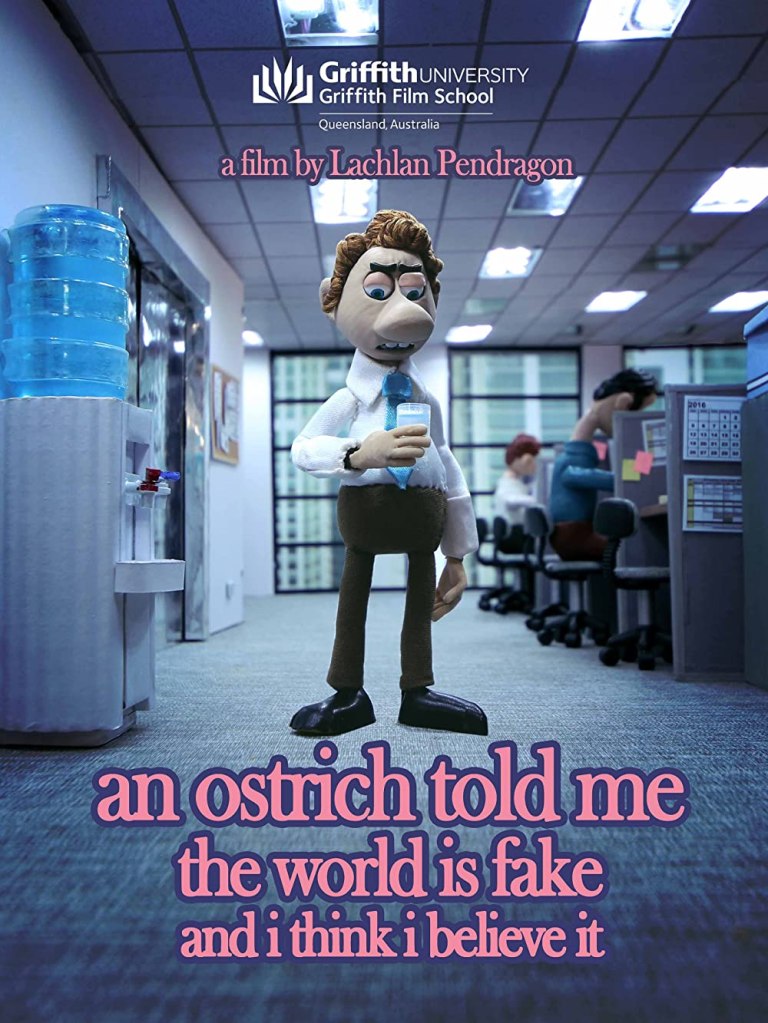
First of all, let’s address the availability issue. This is a bigger issue for categories like shorts, documentaries, and foreign films, but a lot of the lesser-known films in other categories suffer from it as well. It’s hard to make a potential awards viewer excited about nominees that they haven’t seen, but in this streaming world, why is it still a problem? Sure, if a movie is owned by Disney or Warner Bros., you know it’s going to be on a streaming service soon enough, but what about the deserving films that aren’t? One of the nominees for Best Animated Short this year is an Australian film called An Ostrich Told Me the World is Fake and I Think I Believe It. Now I’m ready to hand filmmaker Lachlan Pendragon the trophy based on the title alone, and I would love to watch this movie…but alas, it’s not available anywhere that I’ve checked.

Here’s a chance for the Academy to use some of that muscle they have for good. Cut some sort of a deal with a popular streaming service – Netflix, Hulu, HBO Max, take your dang pick – that would give nominees the option for a limited streaming window in the frame stretching from the nominations through the awards ceremony, or perhaps a few weeks or so after. Give people a chance to watch the movies, and they may start to care again. Hell, why not start their own service that exclusively carries Oscar-nominated films from the past 95 years? I know a lot of them already have their rights tied up with different companies and streaming services, but there must be plenty of orphans deserving of a chance to find an audience.

Next, let’s talk about the categories of the awards. I don’t have an issue with any of the current categories, but the films that are most popular aren’t usually the kind of things that will line up for Best Picture or the acting categories, unless they’re directed by James Cameron or have Black Panther in the title. Genre films have always been largely ignored by the Academy unless they become so immensely popular that they simply cannot pretend they don’t exist. We all remember the 2003 Oscar bloodbath when they gave Lord of the Rings: The Return of the King every award they could out of fear of the fans angry over the snubs for the first two installments marching on Hollywood and lighting New Line Cinema on fire. 

A few years ago the Oscars announced the addition of a “Best Popular Film” category in an attempt to address this problem. They quickly dropped the idea, however, when millions of angry fans on the internet pointed out that, for an organization worried about being perceived as snobbish and elitist, inventing an award specifically to placate “the little people” was probably not the best way to change that attitude. 

But there are two categories that could be added that would not only be gratefully accepted by genre fans, but also fill in two gaping voids in the production of motion pictures that are not currently addressed by the Oscars: stunt performance and performance in animation.

Stuntwork has existed since the earliest days of motion pictures, and despite the utter brilliance of people from Buster Keaton to Chad Stahelski, the Oscars have never seen fit to recognize that aspect of filmmaking. A stunt category would create more interest from fans of genre films (which would likely dominate the category for obvious reasons), as well as finally giving credit to people who literally risk their lives in the creation of our favorite motion pictures. And it should remain distinct from the “best visual effects” category. There should be a limit on how much of the film is CGI in order to qualify, so a movie where the action is 95 percent generated by a computer wouldn’t muscle out a film where there was an actual living human being strapped to a crane and they only used a computer to erase the wires. 

Look in those big, blue eyes and tell me he didn’t deserve some Oscar love.

Animated performance has also been ignored historically. I don’t know if voice performers are technically eligible in the standard acting categories, but I know that no one has ever been nominated for such a performance. And voice acting is performance. Whether it’s someone standing at a microphone, as in most animated films, or someone doing full motion capture and acting out the part, there is a unique performance element that is as impressive an art as any other. It still burns me that Andy Serkis was completely snubbed for his role as Gollum in Lord of the Rings, a performance that almost certainly would have gotten recognition if he had been wearing makeup, but was totally ignored because he was rendered digitally.

I don’t know if I would further subdivide this and make motion capture performances their own separate category from “traditional” voice acting, but having at least one category dedicated to this type of performance would be a big step. What’s more, this is not a solo award. It should be shared by the person who performs the voice and/or motion capture, as well the animator or animation team that completes the process of bringing the character to life. Guillermo Del Toro credited the people who made his Pinocchio film this way, and the Academy should do the same.

The only downside to this, of course, is that adding categories to the awards would make the show even longer, and this brings us to the final reason that people have lost interest in watching the Oscars: bloat. The show is long, tedious, and full of fluff that the average viewer couldn’t care less about, and that’s before we even get to the acceptance speeches. What’s even worse, they make room for this bloat by taking certain categories (usually the technical awards) and giving them out at an untelevised separate ceremony, essentially declaring which awards are less significant than some actor’s impassioned speech on behalf of the life cycle of the Bolivian Dung Beetle.

So the first thing that needs to be done is blow out the fluff. Get rid of the stupid sketches and weepy speeches that don’t relate directly to the awards being given out. There should be three components to the ceremony: musical performances of the nominated songs, the “In Memoriam” reel, and the awards themselves. In and of itself, this change would reduce the length of the ceremony by approximately 17 years. 

Then come the acceptance speeches, and this is the tough part. I believe 100 percent in freedom of speech, and I will never advocate curtailing a person’s right to exercise it. That said, if given a choice between seeing the award for best achievement in sound design given live or hearing an actor lecture me on politics – even when they happen to be politics I personally agree with – I will choose the award every single time, and I do not think I’m alone in this. The best solution I can think of is to impose a strict limit on the on-stage speech – 30 seconds, a minute, whatever, but enforce it, even if it means turning off the microphone. Then, allow the winner extended time backstage to make their full speeches, say whatever they want, and upload the unabridged and unedited video to the Oscar website, where people who want to will have the freedom to watch them in full. Some people would object to this policy, of course. “But people won’t get to see my speech!” they will cry. I would answer, “The ones who want to hear it can easily find it.” And they’ll say, “But what if they don’t WANT to?” And I will simply smile and shrug.

I advocate similar changes when it comes to political campaigning. 

It’s not a perfect system, I admit, but unlike several of the people who have accepted Academy Awards over the years, I’ve never tried to convince anyone I am perfect. But I do think these changes will make general audiences more receptive and more interested in watching the Oscars again.

Or at the very least, it’ll be better than the Golden Globes. 

Blake M. Petit is a writer, teacher, and dad from Ama, Louisiana. His current writing project is the superhero adventure series Other People’s Heroes: Little Stars, a new episode of which is available every Wednesday on Amazon’s Kindle Vella platform. He’s heard an awful lot of nice things about that Brendan Fraser fella, and he hopes he’s having a good time right now. 

How I would handle Universal’s “Dark Universe”

Universal doesn’t seem to know what it wants to do with its classic monsters. And while many would argue that we don’t really need a “Dark Universe” connecting them all, the monster rally movies did the shared universe before it was cool, and damn it, I want to see them do it again. So as often seems to happen, I’ve spent too much time thinking about how I would write stories for a property I do not own and could never officially write, and what the hell, I may as well share the ideas with you. 

First of all, you don’t start from scratch. You go back to what has already worked. And that means we gotta start with Brendan Fraser. Because everybody loves him and his Mummy movies are the best use of the Universal Monsters since the Creature From the Black Lagoon’s first splash. We canonize his films, as well as the Hugh Jackman Van Helsing, which had the same director and planned for them to be connected in the first place. 

So here’s what we do. It’s 1953. Rick O’Connell has long since retired. He and Evie are living a good life somewhere quiet, with a library for her to tend, their family to enjoy, and most importantly… no mummies.

Until the day a tour of artifacts from the Egyptian museum comes to town. 

Rick is reluctant, but Evie convinces him it would be fun to go and look at the artifacts for old times’ sake. As they do so, their young granddaughter Elsa happens across some hieroglyphics that have thus far evaded translation. The youngest O’Connell, however, has inherited both her grandmother’s brilliance and her grandfather’s recklessness, and quickly solves the inscription. As she does so, the mummy traveling as part of the exhibit awakens. The O’Connells flee, barely making it out alive and rushing back to Evie’s library to try to figure out exactly what little Elsa said. When they arrive, however, they find a young woman, packed to the gills with weapons and arcane artifacts, has broken into their home and is waiting for them.

Her name, she says, is Van Helsing. She is the latest in a long line of monster-slayers, and they’ve been keeping an eye on the O’Connells ever since that business with Imhotep. This new Mummy, like Imhotep, was a high priest. However, he found something far more powerful than anything Imhotep ever touched upon… the power of belief. The arcane and supernatural forces in the world are fueled by the belief that humans have in them – the more people who believe in them, the more powerful they grow. And the newest Mummy, awakened by Elsa’s careless words, has woken up to a world in which a new form of communication is in ascendance… television.

The Mummy visits a local carnival and manipulates the belief in the freakshow to bring two new acolytes to life: a wolfman and a gillman. Together, they take over a television station, preparing for that night’s big broadcast of the most popular television program of the age, I Love Lucy. The Mummy’s plan is to force someone at the network to break into the show with live footage of the monsters, showing millions of people the truth of their existence at once. The O’Connells and Van Helsing have to chase them down, having an adventure across the city fighting monsters of all types, trying to get to the broadcast headquarters before the truth of the monsters’ existence becomes so widespread that it will be impossible to get it back into the bottle. 

But they’re too late.

The broadcast goes out and, as people at home see the terrifying power of the Mummy and his minions, their power begins to grow. All over the world we see glimpses of creatures waking up – an enormous golem-like corpse in Eastern Europe begins moving, a malformed creature in France begins softly singing, the heir to the Griffin family finds traces of his ancestor’s legendary formula. All is lost.

Until Elsa commandeers the camera, reading off the cue cards to begin the planned live commercial for the evening. As she does so, people at home start to laugh at their own fear, realizing that they’ve just been watching a TV show, none of it is real. As they do so, the Mummy’s power fades, collapses, until the O’Connells and Van Helsing manage to slay the monsters in a triumphant finish. 

The world is safe again.

Until we see a tall, thin man watching the broadcast from somewhere else. He is as fiendishly handsome as he is evil-looking, and as he watches, he strokes his chin, pondering the possibilities of what he has witnessed. After planning all night, he notices that the sun is about to rise, and so he slips into his coffin, and closes the lid. 

Blake M. Petit is a writer, teacher, and dad from Ama, Louisiana. His current writing project is the superhero adventure series Other People’s Heroes: Little Stars, a new episode of which is available every Wednesday on Amazon’s Kindle Vella platform. If anyone reading this happens to be an executive for Universal Studios, you should know that he will work cheap.