At last, the time has come! After months of waiting, DC Comics blessed us this week with the first of the two crossover books featuring Superman and Spider-Man, and as promised, there’s a bounty of back-up stories as well. As with any anthology, some of the stories are better than others, so this time out I’m going to give you my thoughts on each of them.
DC/Marvel: Superman/Spider-Man #1 Main Cover: Jorge Jimenez, although it should be noted that there are – at current count – FORTY-ONE different covers to this book, and while I’m absolutely NOT gonna shell out $8 a copy for all of them, if DC and Marvel put out a special that collected all of the various covers from this book and the Marvel book coming out in a couple of months, I would 100 percent purchase it.
Title: Truth, Justice, and Great Responsibility Writer: Mark Waid Art: Jorge Jimenez
In our main story this issue, Dr. Octopus is messing around with an AI assistant that turns out to be Superman’s old foe Brainiac, which just goes to show you that using ChatGPT is just bad news. Clark Kent and Peter Parker, meanwhile, are working together on a story about the theft of some radioactive materials…including Kryptonite.
Mark Waid does something truly unique with this story. In the universe he’s created here, he presupposes that Superman and Spider-Man – and more specifically, Clark and Peter, have a history together. And I don’t just mean the previous crossovers between the two that have happened in the past (all of which are decades old). No, reading this book you get a clear feeling that this is an incarnation of DC and Marvel’s respective flagship characters that have had a great number of adventures together that we, the reader, have not been privy to. Most crossovers start with the characters meeting each other for the first time. If we’re lucky, they’re at least aware of the others’ existence, but they’ve never encountered each other before. This book instead implies a whole shared existence between the two that feels so fresh and so RIGHT, and makes me wish there were more stories coming beyond just the Marvel book.
Like seriously. DC. Marvel. Get Waid working on a 12-issue maxiseries showing the entire history of this Multiple World’s Finest duo, like YESTERDAY.
Jorge Jimenez on the art is the icing on the cake. He’s got a great take on each of our heroes and both of our villains. The story looks as good as it reads. The lead story is a home run.
Title: Lois & Mary Jane in “The World’s Finest” Writer: Tom King Pencils: Jim Lee Inks: Scott Williams
Tom King’s Lois and Mary Jane story is next, and this is an interesting one. As Superman and Spider-Man duke it out with a rogue Sentinel (is there any other kind?), Lois and MJ go about a sort of casual conversation amongst the chaos about what it means to be them, the women in the lives of two of the world’s greatest heroes. It’s a really interesting way to frame these two, using their unique shared perspective in a way that wouldn’t really work with any other two women in comics. Using the backdrop of the Sentinel fight instead of just having them meet for lunch or something (as they do on the Terry Dodson variant cover) gives it a different flavor that makes it feel more unique. I feel like this one is intended to be in continuity with Waid’s story, and if that means this shared universe is one where Pete and Mary Jane are still together, I want more stories set in this universe even MORE.
Title: Superboy-Prime and Spider-Man in “Pages” Writer: Christopher Priest Art: Daniel Sampere
I really wasn’t sure what to expect out of this pairing. We’ve often seen Superboy-Prime using his knowledge of DC Comics (coming from a universe where those are all fictional) to navigate his world on more than one occasion. Christopher Priest here supposes that if DC Comics are fictional to Prime, it stands to reason that Marvel is too. (And I suppose every other publisher, by extension, but let’s just stick to Marvel now.) Prime uses his ability to travel the Multiverse to move back in time to a point in Marvel’s history shortly after Peter Parker got rid of his symbiote costume, when he was wearing a black suit made out of traditional fabric, and the confrontation between the two of them seems to unlock something in the boy.
Prime has been on something of a redemption arc in the comics as of late. This story actually feels like it could be the beginning of that, as if it logically should take place prior to his appearance in recent issues of DC KO. I have to admit, for a kid who modeled himself on Superman and stumbled so badly, I kind of like the idea of an encounter with Spider-Man being the thing that sets him back on the right path.
Title: Superboy and Spider-Man 2099 in “Beyond the Cobwebs of Tomorrow” Writer & Artist: Sean Murphy
Miguel O’Hara, Spider-Man 2099, is on the run. I know, what else is new? But as he flees from the authorities, we realize that he’s not in the 2099 that we’re used to, not exactly, and that idea is driven home even harder by the sudden appearance of a time-tossed Superboy and a special guest star. As our heroes compare notes, they come to realize the real threat they face and…
…and that’s it. The story ends with the team-up forged and our heroes barrelling off to take care of business. But the problem is, that isn’t really a story. This is, if anything, the first CHAPTER of a story, and an incomplete chapter at that. I get that these backups have a pretty limited number of pages, but this whole sequence comes across as a tease of something that I really want to read. Teasers are only fun, though, if what’s being teased eventually reaches you to be read. Despite a fun team-up and some well-executed pages, this is the first story in the book that I feel is a little bit of a letdown.
Title: Jimmy Olsen and Carnage in “Jimmy Con Carnage” Writer: Matt Fraction Art: Steve Lieber
Fraction and Lieber, the creative team behind the Superman’s Pal Jimmy Olsen miniseries from a few years back, reunite for the wildest pairing in this book. Jimmy’s meandering has led him to leave Metropolis for New York and get a job as the newest photographer for the Daily Bugle. And like ALL Bugle photographers learn, J. Jonah Jameson has one edict: PICTURES OF SPIDER-MAN. The only problem is that new-to-town Jimmy doesn’t even know what Spider-Man looks like. Doesn’t even know about the hyphen.
I know these stories are out of continuity, but it’s crazy what they allow Fraction to get away with in this one. It’s crazy, for instance, that Jimmy somehow has never seen one of Peter Parker’s 17 million photographs of Spider-Man. It’s crazy that he thinks Carnage matches the description. It’s crazy the significance that a hyphen plays in this story. It’s hilarious and ridiculous in all the ways that Jimmy’s solo series was, although with a bit more finality.
Title: Jonathan Kent and Ben Parker in “The Bridge” Writer: Jeff Lemire Art: Rafa Sandoval
This story (another one that feels like it belongs in this combined world) is a quick snapshot, Jeff Lemire bringing us a sweet glimpse at the adoptive fathers of our two heroes. A chance meeting, many years ago, brings Ben Parker to Smallville, Kansas just as a massive rainstorm threatens people in town, and Lemire shows us the kind of steel that forged Clark and Peter into the men that they are. Nothing particularly surprising in this one, just a good, simple encounter that feels like a minor but welcome detail in this strange world that they’re building.
Title: Bias Writer: Greg Rucka Art: Nicola Scott
This one, too, feels like a little snapshot. Jack Ryder’s program has a pair of special guests, Lois Lane and Jonah Jameson, on the air debating the concept of media bias. Lois calls Jonah out on his anti-Spider-Man stance, and Jonah responds.
There’s not much else to say about this one, honestly. Like the Lemire story, it feels like a detail added in to populate the world. I appreciate how well Rucka casts each of these characters, up to and including Jonah’s defense for his position on our friendly neighborhood wall-crawler. But it’s again just a tidbit, a nugget of something more.
Title: Power Girl and the Punisher in “Blind Date” Writer: Gail Simone Art: Belen Ortega
Of all the pairings in the book, this one may seem the most random, until you remember that both of these characters were created by Gerry Conway, and it seems that Simone thought it would be fun to pay tribute to that. She was, of course, correct about that. In this story, Karen Starr is on her way to a blind date with – well – perhaps the most hated Marvel character of the past half-decade or so. It’s just her bad luck that the restaurant where she’s meeting him happens to be full of criminals that have been targeted by Frank Castle.
As unusual as the team-up is, Simone handles it with her usual humor and charm. Somehow she structures the story in a way that brings them together organically, while still dropping in plenty of meta-commentary about the characters and playing with who they are and just how deeply different they are, while at the same time, having more than a little in common. This may be the most unexpectedly fun story in the book.
Look, I’m not going to pretend that I’m a hard sell. This is a comic book focusing on two of my favorite characters and an all-star collection of creators. It’s a load of fun and it feels oddly as though it’s being used to build towards something larger. (I’m probably wrong about that. I hope I’m not.) At any rate, it was well worth the price, and I can’t wait for Marvel’s half to come in April.
Blake M. Petit is a writer, teacher, and dad from Ama, Louisiana. His most recent writing project is the superhero adventure series Other People’s Heroes: Little Stars, volume one of which is now available on Amazon. Don’t forget, you can check out earlier blogs in the Year of Superman/Superman Stuff Archive! Got a request for a future “Superman Stuff”? Drop it in the comments!
Our descent into darkness continues. Last week, we spent some time in the earliest days of some of Superman’s most dastardly foes, and also the Prankster. This week we’re shifting the focus to Superman himself, looking at Superman’s darkest hours. These are going to be some of the hardest, toughest, most heartbreaking moments the Man of Steel ever went through. Not surprisingly, there aren’t really a lot of early stories here. In the Golden and Silver Ages, the formula of the stories didn’t really allow for the kind of darkness I’m examining. The formula insisted that the heroes always won and the villains got their comeuppance. And to be fair, even in the stories we’re about to talk about, the world didn’t end. Well, except for the one time that it did.
These are all in-continuity stories, by the way. I’m not doing Elseworlds or alternate realities, because that’s a little too easy. There are MUCH darker stories in some of those worlds, because writers sometimes see that Elseworlds label as a license to blow everything up. But I don’t feel bad about excluding them either, because for the most part, I find those ultra-bleak Elseworlds fairly forgettable. And the ones that AREN’T forgettable…well, I’ve either already covered them or I have plans for them somewhere else before the year is out.
Comics: “The Supergirl Saga,” Superman Vol. 2 #21, Adventures of Superman #444, Superman Vol. 2 #22
Notes: We all know that, after the death of Supergirl in Crisis on Infinite Earths and John Byrne’s Man of Steel reboot, the edict from DC Comics was that there were to be no other Kryptonians – Superman was the only one. They even had to do a whole story with the Legion of Super-Heroes involving a pocket universe to explain how Superboy had been a member of the team when, in the main comics, we were told that Superboy never existed. As he was preparing his departure from the Superman titles in 1988, John Byrne gave us a story that played with these ideas and reverberated with the title – and the character – for a very long time.
In Superman #21, Superman finds himself being trailed in the air by a mysterious pursuer. After some midair showmanship, he manages to catch the person who’s been chasing him, shocked to find a woman wearing a variation of his costume. The girl changes her face and turns into Lana Lang, who tells her her powers are different from his, and that they were given to her by Lex Luthor. When he tells her that Luthor is a criminal, Super-Lana gets confused and attacks him with a telekinetic blast. The battle takes them to Lana’s farm in Smallville, where Superman finds the REAL Lana and his parents tied up in the basement. Superman pieces together that this is the Lana from the pocket dimension he once visited with the Legion, and shows her his Metropolis and its version of Lex Luthor to help clear her mind. Slowly she remembers where she came from, and tells Superman that it’s been ten years since he visited her world, even though for him it’s only been a few months. She brings him back to her universe where he meets their greatest hero, the redheaded super-scientist Lex Luthor, who needs Superman’s help to prevent the end of the world.
Shocking stuff in here for the time, although it’s hard to divorce the story from what we now know about the Matrix Supergirl and what happens in this universe. She – and the reader – truly believe she’s that world’s Lana Lang, which makes the story all the sadder in the telling. This issue is also interesting to me personally, in how it ties in to other comics I’ve read recently. Considering the brutal way Lana was treated in Superman #2, her appearance is a real shock before the truth is revealed. And in a subplot, Jimmy Olsen is keen to go to Ireland to continue investigating the mystery of the Silver Banshee, whom we read about just last week. I like these little unplanned moments of synchronicity in my reading, it helps me feel like the whole life of Superman is more of a rich tapestry rather than a hodgepodge of random pieces being thrown together.
The story continues in Adventures of Superman #444, which is neat because this is technically BEFORE the “Triangle Era” in which all three (and later four, and even five) Superman titles were tied together into a neat little serial, although that concept would come soon and really began here. This issue he’s joined by penciler and co-plotter Jerry Ordway for a story that begins with Lex, Pete Ross, and Super-Lana showing him the graves of the Kents of the parallel reality. That’s only the beginning of how bad things are, though, as we soon learn that in this universe Smallville is encased in a force-field, protecting it from the devastation that has destroyed the rest of Earth.
We get a more detailed retelling of how the Time Trapper created the Pocket Universe here, all as part of his trap for the Legion, and clipping out every planet that had intelligent life except for the two he needed: Earth and Krypton. This means that there were no extraterrestrial heroes – no Green Lanterns, no Hawkman, and so forth – nor did the Trapper allow for the origins that created the rest of Earth’s protectors. In this world, the late Superboy was the ONLY superhero. Lex came to Smallville believing he’d found a cure for Kryptonite poisoning, only to learn that Superboy was gone. Pete and Lana took Lex to Superboy’s lab, where he discovered a device that allowed him to communicate with a trio of Kryptonians trapped in what one of them calls the “Survival Zone.” Believing he’s found heroes to replace Superboy, Luthor frees them only to learn that General Zod, Quex-Ul, and Zaora were no heroes at all. Zod declared himself King of the World and, for the next ten years, the Kryptonians brought death and devastation to anyone who opposed them.
Luthor built a resistance base in Smallville and found a way to give Lana powers, but despite that, it wasn’t enough. Hope seemed lost until he found a way to our dimension and our Superman, sending Lana to him for help. At the same time, though, the Kryptonians tired of individual battles and bored straight to the core of the Earth, blasting the atmosphere off the planet. The only life left is the Kryptonians themselves and those under Luthor’s Smallville dome. At the end of the issue, Superman stands with the battered resistance, ready to do anything to stop the terror of Zod.
This is, in essence, an issue-long infodump. It works, it tells us everything we need to know, and it gives us a bit more of this world (including a trio of would-be freedom fighters named Bruce Wayne, Hal Jordan, and Oliver Queen). The plot doesn’t really advance much, though, which makes this feel like kind of an anomaly in this quick three-part story. This is definitely the kind of story that, were it being told today, would take up at least a six-issue miniseries and a dozen spin-off one-shots showing what the other denizens of Earth-Pocket were up to during the Great Zod War. These little time capsules fascinate me.
John Byrne’s Superman run ends with issue #22 and one of the most shocking covers you could hope to see: Superman wearing an executioner’s mask and opening up a box of Kryptonite. The story starts after a time skip, where Superman is standing in the ruins of Smallville on a planet with almost life. A flashback shows us the final, pitched battle between the resistance and the Kryptonians, who made quick work of most of them and destroy Smallville station. They roast Supergirl into a blob of protomatter, and Lex sends Superman on a desperate quest to the ruins of Superboy’s lab in Smallville. Quex-Ul attacks and Superman is reminded that the Trapper made these other Kryptonians more powerful than he is. But he finds his goal in the rubble – a canister of Gold Kryptonite that takes away Quex-Ul’s powers, then he does the same to Zod and Zaora. He finds Luthor dying in the rubble, where he explains that Supergirl isn’t really Lana Lang, but a protoplasmic Matrix that he programmed in the hopes of luring her to this universe. He dies expressing his regret that he didn’t use the Kryptonite sooner.
Then we get one of the most controversial scenes in Superman history. He returns to the powerless villains, but Zod is still defiant, boasting that he will find a way to restore their powers and make their way to Superman’s world and repeat their holocaust. And so, to prevent such a thing, Superman opens a canister of Green Kryptonite and kills them. He finds the burned Matrix being in the rubble and brings her to his universe, to his Smallville, hoping that once again his parents can save the last survivor of a dead world.
This book was shocking as hell when it was published, and it’s a hot button topic even now. Superman killed three people, and not in self-defense. I am firmly, steadfastly in the camp of believing that Superman does not kill. However, I also believe that this story is exactly WHY he should not kill. He doesn’t do it out of anger or malice, but because he sees no other option. And doing so tortures him. Byrne draws so much pain in a panel with a single tear, and at the end of the issue you’re left with the feeling that Superman would never be the same. In fact, he wasn’t for some time. The trauma of what he experienced would lead him to develop a split personality and eventually exile himself from Earth for a time, in one of the first truly protracted storylines of the proto-Triangle Era.
What’s more, and I KNOW I’m gonna piss off some people when I say this, I think this issue justifies the Man of Steel movie. In that film (in case you hadn’t heard) Superman kills Zod in combat. A lot of people were upset about that, and rightly so. But just because a story choice upsets you doesn’t make it the wrong choice. Superman is not a killer, but I think that by doing it ONCE, you SOLIDIFY the fact that it’s wrong for him. It is a pain that nearly destroyed him in the comics, and a pain he can never bring himself to repeat. The films tried to play it the same way. While there are other things about the Snyder movies that I’m willing to debate, I never had an objection to that particular story choice. And the REASON I never objected to that moment of darkness is because I already knew about the darkness from “The Supergirl Saga.”
Thur., Oct. 9
Comic: Adventures of Superman #474, Jon Kent: This Internship is My Kryptonite #14, Batman: Gotham By Gaslight-A League For Justice #3 (Team Member)
Notes: Our tour through the most painful parts of Superman’s past continues with Adventures of Superman #474, a Dan Jurgens story called “Face to Face With Yesterday.” It’s a story that shows us one of the worst moments of Clark Kent’s young life and, paradoxically, it’s also one of my favorite Superman stories of them all.
The story begins on a snow-blanketed New Year’s Eve as Superman returns to Smallville, not to visit his parents, but so that Clark Kent can be at Lowell County Hospital for a bleak, tragic evening. Clark is there to visit a patient named Scott Brubaker, but the head nurse at the desk isn’t happy to see him at all. In fact, as she tells a younger colleague, Clark Kent is one of the people who was involved with the tragedy that caused Scott’s condition in the first place. He enters the hospital room where Scott’s parents are keeping a lonely vigil. They’re upset at first, believing that Clark is there for a story, but Clark assures them that he’s only there to say goodbye.
In flashback, we see ten years in the past, when Clark and Scott – both members of the Smallville High football team – begin to forge a friendship that was bridging the divide between the kids who live in town and farm kids like Clark and Pete Ross. Scott join Clark, Pete, and Lana Lang for a New Year’s Eve party where alcohol is flowing freely. Although reluctant to do so, Clark and his friends join in the drinking. At the end of the night, Scott volunteers to drive the farm kids home, despite having more booze in him than anyone else. The inevitable happens – Scott veers in front of an 18-wheeler and his car smashes into a tree. Clark, naturally unhurt, pulls Lana and Pete from the wreckage, but Scott is too far gone, and has been in a coma ever since.
Back in the present, Scott’s parents have convinced the courts to allow them to pull the plug on their son, having spent a decade in a vegetative state. Clark tells Scott’s parents that he blames himself, that he should have taken the wheel instead, and the Brubakers try to assuage his guilt. After all, Scott’s dad says, Clark had been drinking that night too.
This is what we call dramatic irony, folks. You see, even though Clark’s powers hadn’t kicked in yet, the reader knows fully well that even at 18 he was immune to the effects of alcohol and he was stone-cold sober. And Clark knows it too. As he talks to Scott’s parents, he realizes just how profound that night was on the rest of his life, setting him on a course to always – ALWAYS – do the right thing. He says goodbye and leaves. On the way out of the hospital, he overhears a couple planning to get into their car, a wine bottle in their hands, clearly drunk. But before they can drive away, they realize that somehow, in the midst of a blizzard, their tires have melted into the pavement.
On TV, a story like this would be what they call a “very special episode.” It’s when a character – usually, but not exclusively teenager – is faced with a moral dilemma and the viewer is supposed to infer the correct behavior. And these stories are often pretty schmaltzy. But this comic never felt that way to me. It wasn’t preachy, it wasn’t like some sort of stale Public Service Announcement, despite its very clear statement about drunk driving. Instead, it felt like it was giving us a missing piece of Superman’s life.
Allow me to explain. Unlike most superheroes – Batman, Spider-Man, the Punisher – Superman has no tragic inciting incident in his past. Oh sure, there’s the whole “my planet exploded” thing, but that happened in his infancy. It’s not an event that he remembers, not the thing that compels him to do good. Even in continuities where the Kents are dead before he becomes Superman, those deaths are almost always natural and don’t have a direct relationship to the moral core of the Man of Steel. (Their parenting sure does, but not their deaths.) And to be fair, Superman doesn’t exactly need a tragic backstory either. It is enough – certainly SHOULD be enough – to have a hero who does the right thing simply because it’s the right thing to do.
That said, while I don’t think this story is necessary, and it hasn’t become an ingrained part of the character’s backstory like the deaths of the Waynes or Ben Parker, it does help very much to humanize Clark Kent. He’s Superman, yeah, but before that he was a kid. Before that he made a stupid decision that thousands of other kids have made, and like far too many of them, a price was paid for that decision.
I dunno, maybe part of the reason I still think this story is so profound is because I’m a high school teacher. I spend my entire day around other people the same age that Clark Kent was in this story, and I have known more than one in my years who was the victim of a stupid choice like the ones Clark and Scott made. So it’s important to me. It matters to me. And in an odd way, it also does something for the character that we saw in the “Supergirl Saga.” It shows us the consequences of a choice, and how it indelibly etches into the soul of a man determined to never let it happen again.
Fri., Oct. 10
Comic: Superman Vol. 2 #84, 85
Notes: During Villain Debut Week I wrote about the Toyman, and how he was always a relatively minor villain – annoying, but not particularly violent or dangerous. That changed in Superman #84 from 1993, in what was one of the darkest Superman stories I’d ever read. The Toyman has established a lair beneath the streets of Metropolis and he’s begun kidnapping children whose parents he believes are “bad.” His mind has completely snapped, and he believes that by imprisoning these children in his subterranean dungeon he is somehow protecting them from a harsh, cruel world. At the same time Clark – still fresh from his recent resurrection in the “Reign of the Supermen,” – is enjoying life by taking Lois off to Paris for an evening. As the two of them are in Europe, Cat Grant takes her son Adam to a Halloween party where he’s lured away by a promise of a room full of video games. The Toyman brings Adam to his lair, “rescuing” him from his “sick, embarrassing lush of a mother.” But Adam proves to be more willful and defiant than his other captives, and when tries to free the other children, the Toyman decides that he can’t risk Adam telling people about his lair. When Lois and Clark return the next morning, they are horrified at the news that Adam’s body has been identified.
The next three weekly issues of the Superman titles were a short storyline called “Spilled Blood,” in which Superman battled a new version of Bloodsport, among others. Although the Adam story remained an undercurrent, it wasn’t resolved until Superman #85 the following month. Cat approaches Superman in the street, outraged that he hasn’t caught the Toyman yet (the whole “Spilled Blood” thing kept him busy), and he begs her to find help for herself while he seeks the killer. More bodies have been found, and Superman manages to trace the Toyman to the harbor. The once-whimsical villain has gone completely off the deep end, wallowing in an oversized crib and having conversations with his invisible “Mommy,” Norman Bates-style. Superman bursts into the lair in anger, but when he sees how pathetic the Toyman has become, he takes pity on him, capturing him even as the Toyman destroys his own lair.
The story of his capture is told in flashback, though, cutting back to the present, where we see Cat sneaking a gun into the police station where Toyman is being held. Throughout the story, Cat’s running narration shows us the pain, grief, and rage she’s caged up, ready to unleash on her son’s murderer. As the Toyman rebukes Cat, calling her a bad mother and saying she raised a bad boy, she pulls her gun on him. He is defiant at first, until “Mommy” tells him that she really means it, and he’s reduced to pathetic groveling. When Cat pulls the trigger, though, a flag with the word “bang” on it pops out. Superman shows up, telling her she could be in a lot of trouble if he were to tell the police what she did, but Cat walks off, trying to find a way to live her life alone.
Even in 1993, when this story came out, I recognized it as being one of the darkest, bleakest Superman stories I’d ever read. I’m not sure who had the idea of turning the Toyman into a child-murderer or what the hopes of editorial were…was it an attempt to make a “darker,” “grittier” villain out of somebody who had long been a joke? Was it done in the hopes of giving Superman a more grounded, realistic foe than the likes of Doomsday or Brainiac? Or was it just Dan Jurgens feeling a compulsion to show a story where Superman’s power wasn’t enough? Regardless of the impetus behind it, the story that disturbed me when I was young absolutely slices through my guts when I read it now as a parent, with my own son about the same age as Adam Grant. I don’t want to, but I can’t help but think about how I would feel in Cat’s position, what I would do…and the truth is I don’t know. I don’t WANT to know. It’s a nightmare the likes of which I can’t even imagine.
Compared to THIS Toyman…give me Doomsday. Give me the Cyborg. Give me Darkseid. But don’t ever give me what happened to Cat Grant.
Notes: By 2005, the DC Universe was gearing up for a change. A lot of storylines that had been running in assorted titles turned out to be setting pieces in place for the upcoming Infinite Crisis event: the Rock of Eternity was destroyed, sending magic into disarray; Batman’s paranoia led him to create a satellite monitoring system called Brother Eye; and Maxwell Lord had been revealed as the leader of Checkmate, a spy agency that he’d turned into an anti-metahuman organization. His machinations when Ted Kord, the Blue Beetle, discovered that Max had stolen Brother Eye, so Max killed him. In the Superman titles, things had been growing appreciably darker for some time, and the four-part “Sacrifice” storyline was the point that led him into the crossover event.
The graphic novel picks up before the events of the crossover proper, with Superman #218. Superman’s old foe Blackrock is murdered by a new villain who wants to steal the rock that gives him his power. Blackrock 2.0 turns out to be more dangerous, laying waste to a large section of Metropolis before Superman is able to take him out with a heavy application of heat vision. The public sentiment, however, has been turning against superheroes for some time, and the sheer display of power necessary for Superman to take Blackrock down leaves people terrified of him, fleeing from what they perceive as his ferocity.
It gets worse in Part 1 of “Sacrifice” proper, from Superman #219. Following the destruction of the Fortress of Solitude (which happened back in “For Tomorrow”) Superman built a new Fortress in South America. “Sacrifice” begins with him waking up in the new Fortress with blood on his hands. In flashback, he remembers Brainiac in the Daily Planet office with Lois. Clark barges in, but the alien is gone. He tracks down Brainiac, but finds that he’s captured Perry, Lana, Jimmy, and Lois. Superman is forced to watch as Brainiac murders those closest to him and, in a rage, he decides to break his most sacred vow and kill his foe. The flashback ends as he looks at the blood on his hands and realizes it’s human – it can’t be Brainiac’s.
And that’s when the Justice League arrives, demanding answers.
In Action #829, J’onn J’onzz visits Lois – who is very much not dead – to ask for her help, given Superman’s recent “erratic” behavior. At the Fortress, meanwhile, the Flash, Green Lantern, and Black Canary are seeking answers. Superman again remembers the encounter at the Planet office, but this time it isn’t Brainiac with Lois – it’s Darkseid. Again, his enemy has Lois captive, and he forces Superman into personal combat…combat that ends with Lois’s death. Back in the Fortress, Black Canary tells Superman to examine the blood on his hands to see who it REALLY belongs to. In horror, they go to the Justice League Watchtower to see his true victim – Batman, who has been beaten within an inch of his life.
In Adventures #642, as Batman fights for his life, the League shows Superman surveillance footage of how he nearly killed Batman, stopped only at the last second by Wonder Woman. Superman’s memories have changed again – he remembers the fight, but this time it was Ruin he battled. J’onn theorizes that someone has planted some sort of psychotic episode into Superman’s mind. Bringing Wonder Woman with him, the two of them delve into Superman’s psyche and find evidence that Superman is being manipulated by Maxwell Lord. Max has damaged Superman’s mind, using the very mental barriers Superman placed in his own mind after he killed the Phantom Zone criminals. As they plan how to contain him, Max’s conditioning kicks in again: Superman suddenly turns paranoid and attacks the League, fighting through them while believing he’s searching for Max. Diana goes after him, finding Max in his hideaway and learning that his control over Superman appears to be complete.
“Sacrifice” ends in Wonder Woman #219, one of the most controversial comics of the era. Max uses his mind control powers to make Superman believe he’s watching Doomsday kill Lois, revealing he’s spent years subtly manipulating Superman, implanting tendrils of paranoia and terror. He has Superman attack Diana, believing her to be Doomsday. The battle is fierce and global, but she manages to distract him and get back to Max, tying him in her lasso and forcing him to release Superman. Max taunts her, saying that she can’t keep him in her lasso forever, and eventually he’ll set Superman loose again. Diana tells Max – under the power of the Lasso of Truth – to tell her how to free Superman from his control. Max’s answer is simple: “Kill me.”
And she does.
Although that was the end of the issues branded “Sacrifice,” the story wasn’t over. It continues a second later in Wonder Woman #220. Superman is horrified when he realizes what Diana has done, but before he can say anything a pair of disasters in different parts of the world call the two of them apart. As if that weren’t bad enough, when she goes to see Batman and he discovers what she’s done, he tells her to “Get out.” The fallout continued in Adventures of Superman #643 – we see the two issues of Wonder Woman from Clark’s perspective: his imagined fight with Doomsday, watching him kill Lois and countless others, then waking up from a nightmare just in time to watch Diana, his best friend, snap Max’s neck without a hint of remorse. Like Diana, he’s called away, and like Diana, he checks on Bruce. And while he doesn’t tell Superman to go away, his reception is almost as cold. Superman returns to Lois, broken, unsure what to do.
The graphic novel wraps up with Superman #220, in which Superman and Superboy team up to take on the Eradicator, but that issue really has very little to do with the rest of the story and I suspect it was only included because they weren’t sure where else to put it in the assorted paperbacks collecting the stories running up to Infinite Crisis. That’s what this is really about, after all. The conceit behind Infinite Crisis would eventually turn out to be that Alex Luthor of Earth-3, Superman of Earth-2, and Superboy of Earth-Prime had been watching the prime DC Universe ever since the end of the original Crisis on Infinite Earths, and seeing how dark the world had become, Luthor decided to rewrite it. As such the stories before that were intended to amplify that darkness. Batman’s creation of a global spy satellite was enough to put him on everyone’s naughty list, but “Sacrifice” served to shove a wedge between all three members of DC’s Trinity, with Diana’s actions being condemned by both Bruce and Clark, Clark refusing to trust Bruce because of the aforementioned Brother Eye, and Bruce deciding that neither of the other two had gone far enough. Taken in and of themselves, these stories are all hard and bleak. As part of the larger tapestry, though, it really works well. I liked Infinite Crisis at the time and I still enjoy it. And I agreed with the main thesis – the DC universe HAD gotten too dark, and I was happy that the story ended with rays of hope, a promise that the universe would grow better again. The sad thing is that the DC creators themselves seemed to forget that. After a promising start, the stories again took a turn for the darker, and brightness didn’t really start to return until DC Rebirth in 2016. Even then it’s had its ups and downs since then. I’m glad to say that, at the moment, it feels like we’re in an upswing.
Sun., Oct. 12
Comics: Superman: The Man of Steel #16, Superman Vol. 2 #72
Notes: I’ve got a quickie today, the two-part “Crisis at Hand” from 1992 (which may well be the shortest “Crisis” DC ever published). This story hearkens back to some of Superman’s earliest Golden Age stories when Clark’s superhearing picks up the sounds of a man beating a woman. He’s shocked to realize that the assault is happening in his own apartment building – his neighbors Gary and Andrea Johnson. He bursts into the apartment and stops Gary from whipping his wife with a belt, but when the police arrive, Andrea defends her husband and asks the police to throw Superman out. The next morning Clark relates to Lois a story from early in his career, a nice recreation of the infamous “wife-beater” scene from Action Comics #1, when he stopped a similar crime. Louise Simonson and Jon Bogdanove extend the scene, though, showing Clark talking to his father later and questioning if he did the right thing. With the police unable to intervene unless Andrea is willing to press charges, part one of the story ends with Clark clutching his hands over his ears, helpless as he listens to Gary battering his wife yet again.
Part two came in Superman #72 by Dan Jurgens and Brad Vancata. Clark turns to Jonathan for counsel once again, then Lois, telling her the story of how the “wife-beater” episode ENDED all those years ago. Not long after Superman stopped the man from hitting his wife, Clark Kent got sent to cover his first murder case for the Planet only to find that the victim was the woman he’d just saved. When an enraged Superman tracked down the husband, he blamed Superman for not killing him when he stopped him the first time. The absurdity of the situation has resonated with Clark ever since, and he knows that this isn’t a situation Superman can solve. When he and Lois get back to his apartment, though, they hear crashes in the Johnson apartment. Although Clark tries to stay out of it, Lois refuses to do so. They burst in and Andrea tells Gary to leave. Lois stays with Andrea, giving her the number of a woman’s shelter and urging her to seek help (which she does), while Superman winds up finding Gary on a bridge and talks him out of committing suicide, taking him to get the help HE needs as well.
Like “Face to Face With Yesterday,” this story has the earmarks of the “very special episode,” although here it has the added element of it being a story about Superman having to face the fact that there are some problems he can’t solve. In the end, though, it’s a very human story, and as harsh as it is (especially the scene at the murder victim’s funeral, when the killer’s mother begs Superman to spare her son) it ends with an element of hope. As the best Superman stories always should.
Notes: The Geoff Johns/Gary Frank era of Action Comics wasn’t a particularly bleak one, although it did bring us to a heartbreaking conclusion at the end of the five-part Brainiac story, which begins with a flashback to Krypton. Before the destruction of the planet, we see General Zod and his army battling against an invading Skull-shaped spacecraft that seals the city of Kandor in a bottle and miniaturizes it. From there, we shift to the present day Daily Planet, where a few familiar faces are returning to the fold: boorish sports editor Steve Lombard and Cat Grant, who seems to have got down a rabbit hole of reinventing herself for the worse since the death of her son (even reaching the point of throwing herself at the now-married Clark Kent as she used to in the days before he and Lois got together). The conversation is interrupted by the incursion of a Brainiac drone into Metropolis. Superman fights it off with relative ease, but a message is sent to the Skullship in space, where we learn that Brainiac is seeking Kryptonians.
In part two, Johns does a little bit of continuity welding. Y’see, over the years Brainiac had taken on a LOT of forms – alien invader, human possessed by an outside force, robot, etc. Supergirl (who remembers pre-destruction Krypton) tells us that all of these versions are different “probes” created by the REAL Brainiac, and that no one has ever encountered his true form before. On Krypton Brainiac basically became a planetwide boogeyman after Kandor’s abduction, terrifying everyone. After a conversation with the world’s greatest dad, Clark takes a ship into space, planning to bring the fight to Brainiac for once. He finds him attacking yet another world, but is unable to stop him from destroying the sun of an inhabited planet, killing everyone there, and taking Superman captive.
Superman wakes up in Part Three, in the midst of the Skullship surrounded by other aliens in suspended animation, as well as shrunken cities…including Kandor. That’s when Brainiac attacks, of course. And he’s set his sights on Earth. Supergirl shows up at the Planet office, looking for Clark, and is with Lois when the shadow of Brainiac’s ship appears in the sky over Metropolis. In Part Four, Supergirl tries to fight the drones on Earth as Superman battles Brainiac in his ship. Superman manages to make contact with Kandor, including Supergirl’s parents, Zor-El and Allura, but Brainiac has the upper hand. He manages to reduce Metropolis to one of his bottle cities and fires a probe into the sky. On Earth, Jonathan and Martha Kent watch as the probe arcs towards the sun, ready to destroy it just like Brainiac did to the sun of Krypton.
In the final chapter, Superman faces Brainiac as Supergirl races through space to stop the probe. The battle falls to Earth, where Superman manages to disable Brainiac. But as he sets out to restore Kandor to full size, Brainiac sends a probe to strike at Superman’s heart: Smallville. The probe attacks the Kent farm, and Jonathan just barely manages to pull Martha away before the barn is destroyed. Their joy is short-lived, though, as the exertion triggers a heart attack. Superman hears his mother screaming from the other side of the world and races to Smallville just as Jonathan Kent dies.
Generally speaking, I prefer the continuities in which Jonathan and Martha Kent are alive for our adult Superman. There are too few positive portrayals of parents in superhero fiction (or fiction in general, for that matter), and having arguably the two greatest parents in history alive and available gave an added dimension to Superman. It’s probably my favorite single element that John Byrne brought to the table in 1986, and I was elated when Doomsday Clock finally made it clear that, in the DC Rebirth continuity, both Kent parents were alive again (they were both dead in the New 52 era).
All that said, none of those personal feelings of mine take away from the gut punch that Johns delivers at the end of this storyline. The death of a parent is one of the most horrible and most inevitable parts of life (I speak from experience here, friends), and it’s something we’d never really watched Clark Kent deal with before. In Action Comics #1, the Kents were already dead before Clark went to Metropolis, his mourning done away with in a single panel. Although they were considerably fleshed out in the years following via the Superboy comics, there’d never really been a story where we saw Clark Kent grapple with the loss. I also appreciate how Johns accomplished it. Having Jonathan’s death be natural – a heart attack, in most of the continuities where his death is explicitly portrayed – is a good reminder for the character that for all his power, there are some things that even a Superman cannot fight. On the other hand, having that heart attack brought on by an act of heroism is beautifully fitting for the man who raised Superman, and makes his loss all the more tragic.
Up until those last few pages, this story wouldn’t have made the cut for “Superman’s Darkest Hours” week. Most of it is good, but standard for the time. In fact, there are even several bits of light – a lot of humor surrounding Cat Grant and Steve Lombard, Johns and Gary Frank really hammering home their love and inspiration from the Christopher Reeve films, and a particularly inspiring bit with Supergirl where her cousin tells her that it’s okay to be afraid, and that reminder giving her the courage to overcome that same fear and save her adopted world. But no matter how great the victory, how incredible the triumph, the loss at the end makes for a moment that deserves a place in the worst moments of anybody’s life.
Tues., Oct. 14
Comics: Superman/Batman #26
Notes: The last stop on our tour of Superman’s darkest hours comics not from the dark moment itself, but more from its aftermath. Every comic book fan knows that a crisis-level event will, of course, include casualties. And we also know that these casualties, more often than not, turn out to be temporary. Still, if written well, even a comic book death can have an emotional impact. Such was the case with the death of Conner Kent, Superboy, in Infinite Crisis. But that’s not the moment I want to look at today – I want to delve into the aftermath, from Superman/Batman #26. This, frankly, is a comic book with a backstory even more heartbreaking than what’s on the page. Jeph Loeb, who had been the writer of this title since its inception, lost his son Sam to cancer. This book was made in his honor, packaging a plot that Sam himself had written with pages scripted and drawn by 26 of the biggest names in comics – Geoff Johns, Jim Lee, Tim Sale, Brad Meltzer, Mike Kunkel, and several others. It’s an all-star lineup that came together for the sake of a young man who left the world entirely too soon.
The story is packaged as Robin (Tim Drake) telling a story of one grand adventure he had with his best friend, who has recently died. Superboy and Robin are tasked with finding the missing Toyman – not Winslow Schott, but the 13-year-old whiz kid named Hiro Okumura who had straddled the line between villain and hero and, at this time, was making gadgets and vehicles for Batman. Superman and Batman know that Hiro is on the edge, and they hope the influence of Robin and Superboy will help keep him on the side of the angels. They arrive at his lair, which seems to have been broken into, and are immediately confronted by the original Toyman, claiming he’s taken care of the pretender. Robin quickly figures out, though, that the Winslow they’re talking to is a robot. The pair battle their way through a series of environments with robot duplicates of their friends and foes, the whole thing feeling like a real-life video game, until they finally find Hiro himself at the heart of it, manipulating the whole thing. When confronted about why he would do such a thing, Robin proves his detective prowess by intuiting that Hiro, simply, is lonely, and he wanted to have fun with some friends. The two of them invite Hiro to hang out with them sometime.
It’s a simple story, really. In any other context, it would be a one-off throwaway – fun, but not particularly memorable. But the circumstances behind its creation and framing story of Robin, in tears, remembering his friend make the entire thing heart-wrenching.
Jeph Loeb takes things one step further, though, with a back-up in which he reteams with his Superman For All Seasons partner Tim Sale to tell “Sam’s Story.” This one, narrated by Jonathan Kent, takes us back to Clark Kent’s school days in Smallville, hanging out with his friends Lana and Pete. But the focus is on neither of them, but on a heretofore unmentioned classmate of Clark’s called – of course – Sam. Sam was the the kid who could make Clark Kent laugh, made him happy in a way that was enough to sometimes even make him forget just how different he was from everybody else. But when Sam starts showing up to school sick – on crutches, losing his hair – and joking it off, Clark’s X-Ray vision immediately spots the culprit: a horrific dark spot in Sam’s bones. When Clark asks Sam what he can do, Sam’s reply is “Be my pal.”
On the day that Sam dies, Clark runs. He runs halfway through the night, finally coming home at 3 am and sitting on the porch with his father, asking “Why?” The story ends with a note written by Sam (Loeb) that feels like the kind of creed a Superman should live by.
When I read this story now, I imagine myself in Jonathan’s role, holding my own son and trying to help him work through his own grief. It hasn’t happened yet, thankfully, but it’s one of those inevitabilities of life. We all know it happens eventually. The one thing I can’t image, though, is being in the place of Jeph Loeb, writing this story as a eulogy for his own son. I can’t imagine it, but I admire him, for taking what must have been his worst nightmare and turning it into something sad and sweet and lovely.
Whoo. Despite the theme I went with this week, I didn’t really expect to finish off the blog with tears in my eyes, but that just goes to show you how powerful this issue actually was. Next week, paradoxically, will be a little less sad, although probably even darker. For the last few years there’s been a real push in the media to tell stories of a “bad” Superman, whether that’s in an Elseworlds-type story featuring Clark Kent or in other universes with a character that the writer is using as a Superman stand-in. Next week we’re gonna look at some of THOSE, examining their characters and what makes them so dark, and compare them to the real Man of Steel. See you in seven days for “Superman Gone Wrong!”
As you may know if you read my other blogs and watch my videos, I love Halloween. I love the last three months of the year, really, it’s the best part of the year and sometimes just waiting for it to happen is what makes me happy. And even here in the Year of Superman, I’ve got plans for October that will allow me to dip into the darkness, starting today with VILLAIN DEBUT WEEK. For the next seven days, I’ll be looking at the first appearances of some of Superman’s greatest – or at least most memorable – foes. And I gotta tell you, putting this together wasn’t as easy as you might think. As great a hero as Superman is, his rogues’ gallery doesn’t have as deep a bench as Batman, Spider-Man, or the Flash. What’s more, I’ve already covered the first appearances of several of his villains this year – Darkseid, Metallo, Doomsday, and the Cyborg Superman have all had their origins show up already. Others, like Conduit, had a long, protracted first storyline that I didn’t want to devote that much time to this week. Still more, also like Conduit, flamed brightly, but briefly, and then faded to obscurity. That said, I’ve picked what I think are enough memorable baddies to fill out the week, and I’m going to cover them in chronological order of first appearance.
Notes: I’m gonna start off Villains Origin Week with the first supervillain Superman ever fought, followed by the character who is now revered as his greatest enemy. We’ll begin in Action Comics #13 from 1939 – the first appearance of the Ultra-Humanite.
He had more work done than the entire Kardashian family.
The story starts pretty simply – Clark Kent is taking a cab to work at the Daily Star when he gets rammed by another taxi. He discovers that there’s a cab company exercising a protection racket against the other cabbies in town, trying to force them to sign up. After Superman busts Reynolds, the guy in charge of the racket, Reynolds is freed from a police transport. Superman takes off after him, chasing him to a cabin in the woods where his balding boss awaits. He introduces himself as the Ultra-Humanite and declares that a scientific experiment has given him the “most agile brain” on Earth, which he intends to use for world domination.
World domination, as we all know, frequently begins by muscling cab drivers for a percentage of their fare.
The Ultra-Humanite jolts Superman into unconsciousness with enough electricity to kill “five hundred men.” The waylaid hero is strapped to a board and driven into a circular saw, but the blade splinters on Superman’s skull and sends shrapnel around the room, one of the fragments piercing Reynold’s throat and killing him instantly (a pretty rare death indirectly caused by Superman). When Superman regains consciousness, the Ultra-Humanite flees in an airplane. Superman leaps into the air and smashes the plane’s propeller, sending it plummeting to the ground. When Superman examines the wreckage, there is no trace of the villain.
Wow, what a different story than the Superman we see today.
Not only is Superman far more cavalier about things like Reynolds’ death (even if it isn’t Superman’s fault), but he’s far more reckless when he causes the plane to crash. As for the Ultra-Humanite himself, he’s a far cry from the villain he would become. His schtick these days is his ability to leapfrog his mind from one body to another, with readers being most familiar with the albino gorilla body he uses most of the time these days. Not only is there no trace of his mental abilities, even his claim of having the “most agile” brain in the world doesn’t really hold up to much scrutiny here, as he doesn’t appear to have any greater intelligence than any other villain Superman had faced up to that point. He returns in issue #14, having escaped his death and once again nearly getting Superman in a deathtrap, but Superman got away again. I don’t know if Jerry Siegel – who wrote these stories – was deliberately trying to position the Ultra-Humanite as Superman’s greatest foe, but a lot of the elements inherent in this version of the character would soon be swapped with another, far more memorable villain.
Because Action Comics #23 gave us the first appearance of Lex Luthor.
Proof that sometimes losing your hair is a glow-up.
In a story that definitely feels like it inspired James Gunn at least a lil’ bit, Superman discovers evidence that a war between two nations is being spurred on by the machinations of a mysterious profiteer named Luthor. When Clark Kent goes public with this knowledge, Luthor goes on the attack. Although not as drastic as the change between the embryonic Ultra-Humanite and his later form, this early Luthor is much different than the one we would grow to know and love to hate. His first name is never mentioned, and he comes across as more of a war criminal than the mad scientist or ruthless businessman he would later evolve into. He also has his famous red hair in this one. The story goes that when Luthor was brought back in a later story, the artist looked at this original for reference and mixed up Lex with his bald-headed flunky, changing the course of comic book history. It’s amazing, though, how time changes all these characters. Looking back at this original story, one could hardly believe this character would grow into one of the greatest supervillains of all time.
Notes: When I made my list of which villains I intended to include in this Villains Origins week, I decided I would go through that list chronologically. Upon doing so, though, I noticed an interesting pattern. The villains in Superman’s life – obviously unintentionally – seem to have been introduced in themed phases. Yesterday, Luthor and the Ultra-Humanite gave us the evil genius era. Today, in the early 1940s, we’re going to visit a trio of villains that all happen to fall under the category of what I’d call “pests” rather than legitimate threats. These are crooks who all are more of a nuisance than actually evil, out to have a little fun and sow a little chaos – although that doesn’t mean that, in later (and darker) eras of comics they weren’t used for more malicious purposes. I’m talking, of course, about the Prankster, the Toyman, and everybody’s favorite fifth dimensional imp, Mr. Mxyzptlk.
Prankster turns up first, in Action #51 from 1942. The story begins with Superman foiling an old-fashioned bank robbery, but the crooks narrowly escape to meet up with their boss – a goofy, big-eared, buck-toothed crook in a bad suit that calls himself the Prankster. He embarks upon another robbery loaded with the kind of jokes that kids think are funny – a handkerchief that stains your face with black ink, guns that shoot corks or water instead of bullets, and so forth. He even leaves a ticking bag at the scene of a crime, a bomb that the police are terrified to approach. Of course, Lois Lane has no such fear, marching right past Metropolis’s finest to open up the bag and cause a harmless noise-making explosion in a bag full of money. The Prankster’s goons are baffled by why their boss is leaving money BEHIND at the scene of their crimes, but keep going along with it. At the scene of their third crime Superman rounds up the gang and the cops charge Prankster with robbery and assault with a deadly weapon – both charges which are swiftly dropped when the Prankster reveals that his gun only shoots toy parachutes and that, far from stealing from his victim, he has GIVEN him $30,000.
I have to admit, I’ve never wanted so badly to be a crime victim as I have while reading this story.
Prankster keeps going with his bizarre scheme, giving away thousands of dollars time and again, before finally showing up at the Metropolis National Bank. The bank manager, thinking he’s in for a windfall of his own, opens up the vault for the Prankster, who proceeds to relieve him of millions of dollars in currency and jewels, far more than he’s given away. Superman goes after him, saving Lois (because of course she got herself kidnapped) and fighting a variety of traps before the Prankster himself is seemingly killed in a cave-in. Superman was a hell of a lot less curious about the apparent deaths of his foes in those days. But to the credit of the writer, this time they don’t even PRETEND the villain is really dead – in the last two panels we see the Prankster hiding in his cave and planning his next scheme.
Of the three nuisance villains we’re reading about today, I have to admit, I’ve always found the Prankster the least interesting. He’s like the Riddler without the smarts or the Joker without the charisma. That said, I’ve never read his first appearance before, and I’m surprised. His scheme is actually pretty clever, and he also comes across more menacing than I expected, killing one of his own goons in a trap because the man dared question him. He became less and less interesting over time, I guess, but for a Golden Age villain origin, this is solid.
Pictured: Pure, unmitigated evil.
About a year after the Prankster’s debut, the Toyman showed up for the first time in Action #64. Lois and Clark are walking through the park when an automated Superman doll runs past them. Clark catches it and returns it to the creator, a goofy looking dude in a Little Lord Fauntleroy getup calling himself the Toyman. Impressed at his work, Lois asks if she could write an article about him and his shop. Lois doesn’t know, of course, that not all of his toys are so benign. Toyman sends a troop of toy soldiers into a bank (never trust your money in a Metropolis bank) where they expel knockout gas, allowing him to loot the cash drawers, getting away on a flying pogo stick. For his next trick, Toyman uses a toy fire truck to start a fire at an expensive apartment building, leaving him free to rob the penthouse at the top as Superman is busy rescuing people from the flames. He even sends a letter to the Daily Planet to brag about his third crime, using a toy truck to blow up a bridge while his men in scuba gear empty a real armored car that fell into the water. Superman catches the divers, but Lois is caught (OF COURSE SHE IS) by the Toyman and his toy battleship. Superman ultimately tracks him to his hideout using his super-senses, and Clark shows up to untie Lois – but not before he beats her to writing up the story of the Toyman for the newspaper.
I really like the last bit, where Clark gets the better of Lois for once. As for Toyman himself, this is a character who’s been reinvented many times. At least three different characters (one of them a hero) have used the name, and the original Winslow Schott has been at turns a child-hating creep, a child-loving creep, and a third stage that made him – in the 90s – one of the darkest foes Superman ever fought. We’ll get to that story later this month.
Me: Is it weird that I kinda prefer Mxyzptlk Version 1.0? My wife: For you? No, not at all.
In 1944, Superman #30 gave us the debut of the character we would come to know as Mr. Mxyzptlk, although it’s spelled “Mxyztplk” here, and the spelling changed later. I wanted to make sure I was clear about that – I’d hate for anybody to get confused. It all begins when a little man wearing a derby hat walks in front of a speeding truck and is seemingly killed. The paramedics can’t budge him, though, and he shocks the hell out of them by sitting up and encouraging them to try harder before stealing their ambulance, driving it straight up the side of the building, and making it explode. He next appears in a museum, loudly interrupting the unveiling of a new sculpture by howling for his friend “McGurk.” After disrupting the show, the sculpture is unveiled and comes to life, following the imp away. Superman finally chases down the little goober, but he vanishes. He continues to pop up in and around Metropolis causing chaos for several pages before slowing down long enough to tell Superman that he’s from another dimension and he thought using his powers in ours would be fun for a little while once he learned the magic words that could transport him back and forth. Superman deftly tricks him into saying the word that sends him home (“Klptzyxm,” natch) and he vanishes, but not before one last prank. Clark comes back to the Daily Planet to find that, rather than Clark’s story about Mxy’s pranks, he published a story mocking Lois Lane’s new hat.
This is a funny story, with great visuals and sight gags that click with this embryonic Mxyzptlk. There are even lots of little background jokes to populate the pages, like a kid telling his mom he wants to grow up to be like Superman only to be admonished that he has to eat his vegetables. It’s a great intro and no wonder that the imp was brought back time and again. He’s gone through a lot of incarnations as well. Sometimes he’s more malevolent, sometimes he’s more childlike, occasionally he even comes across as wanting to be Superman’s friend. Whatever the case, though, having him around is always amusing.
Fri. Oct. 3
Comics: Action Comics #242, Superboy #68
On his first cover, one could easily picture Brainiac singing “Neener neener neener.”
Notes: By the 50s, the era of the super-nuisance seemed to have passed, and the next batch of memorable villains to join Superman’s rogues gallery were of a more sci-fi bent: the alien Brainiac, the quasi-clone Bizarro and the cyborg Metallo. Metallo, coincidentally, made his first appearance in Action Comics #252, which I covered here several months ago, as it happens to be the same issue as the first appearance of Supergirl. But today I’ll look at Brainiac and Bizarro.
In Action #242, Brainiac comes to Earth to shrink its greatest cities and steal them to repopulate his own home planet, which was wiped out by a plague. After getting Paris and New York, Superman waits in Metropolis for his home town to be stolen as a way onto Brainiac’s ship. On board, the tiny Superman another city that was stolen: a city from his homeworld of Krypton – but upon entering the bottle, he loses his powers under the stimulated Kryptonian environment. He seeks help from a scientist named Kimda who happens to be his father Jor-El’s college roommate (I know that sounds like a joke, but I swear to God, that’s exactly what happened). Outside the bottle, Brainiac goes into suspended animation for his trip back home and Superman manages to escape the bottle. Using Kimda’s findings, Superman restores the cities of Earth, but then discovers that ray has only enough charge left for one more enlargement – either Superman or the Kryptonian city. Although he plans to restore the city, Kimda intervenes and turns the ray on, making Superman grow so that Earth would not be deprived of its greatest hero. Brainiac’s ship continues on its way while Superman brings the city to his Fortress of Solitude with a vow to find some way to restore it someday.
This is such a weird story to me. Brainiac has changed so much over the years that you almost wouldn’t recognize him – he’s usually painted as far more menacing and malevolent these days, and later incarnations would identify him as an artificial intelligence that occasionally uses flesh and blood bodies. Kandor itself would get massive development over the years – in fact, until I started to write this recap I didn’t even notice that the city was never identified by name in the original story, it was just “a Kryptonian city.” It’s really weird and fascinating to look back on these things, elements of Superman’s lore that would go on to become so important, and see how humbly they began.
This issue am worthless! Me no get it slabbed in plastic!
Bizarro first showed up in Superboy #58 later that same year. When one of Smallville’s seemingly infinite number of scientists asks Superboy to help him test a new “duplicator ray” he’s invented, he accidentally strikes Superboy with the beam and creates a “non-living” duplicate with a strange faceted skin and a feeble mind, but all of Superboy’s powers. Dubbed “Bizarro” the creature stumbles around Smallville for a while trying and failing to fit in, finally making friends with a young woman named Melissa who isn’t terrified of his appearance. The dim Bizarro, however, doesn’t realize that the girl is blind. When Bizarro decides to seek her out at Smallville High, Clark is forced to do some secretive super-feats to prevent the creature’s bumbling from accidentally killing half the class.
Superboy finds a chunk of Kryptonite and tries to use it to stop Bizarro, but it has no effect. He uses a marionette of Melissa to lure Bizarro to a military range, where the army fails to destroy the creature with heavy artillery. (Really, Clark, the creature obviously has all your powers, what were you thinking?) Bizarro returns to the real Melissa, where he discovers that she’s blind, and only his friend because she can’t see his real face. At the same time, Superboy learns that the irradiated pieces of the original duplicator ray have a Kryptonite-like effect on Bizarro. He approaches the creature with a piece of the metal and Bizarro hurls himself into it, exploding into a rain of dust. Somehow, the vibrations of his explosion trigger Melissa’s optic nerve and restore her sight, leaving her to wish she had seen the “kind face” of the creature who sacrificed himself for her.
This story goes to great lengths to remind us that Bizarro isn’t alive, over and over again, despite all evidence to the contrary. Doesn’t matter that he moves and thinks and has feelings and willingly sacrifices himself for the betterment of his only friend. None of those things are evidence of LIFE. After all, if he WERE alive, that would make Superboy a murderer, which probably would have been frowned upon. But alive or not, this Bizarro already carries a lot of the elements that the character would embody later, including his backwards thinking and speaking. He was brought back a year later, when the experiment that created Bizarro was duplicated on the adult Superman, creating a second Bizarro. This one would ironically go on to dub himself “Bizarro #1” when he created a whole planet of duplicates of himself and the Bizarro culture became fleshed out. John Byrne would also bring back the idea of Bizarro sacrificing himself to restore sight to a blind girl – this time Lucy Lane – when he rebooted the character in Man of Steel. The blueprint was there from the beginning, but it’s been greatly expanded over time.
Sat., Oct. 4
Comics: Superboy #83, Adventure Comics #283, Justice League: The Omega Act Special #1, Absolute Evil #1
It’s not the worst dream his parents could walk in on him having.
Notes: The next point we reached with the introduction of memorable villains seems to have brought us to an era of threats from home – specifically, Krypton. Superboy #83 brought us the debut of the Kryptonite Kid, who first appears to Superboy in a dream. The Kid, with a body (and a dog) made of Kryptonite vexes the sleeping Superboy. Even more baffling, Superboy soon figures out that Krypto is having the same dreams as he is. The dreams come true when they encounter the Kid at a playground. The Kid chases Superboy, demonstrating his ability to transform things into Kryptonite with a touch – a playground slide first, then the lead culvert Superboy tries to use for cover. The Kid warns Superboy and Krypto that they have to leave Earth or he’ll kill them, then flees the scene. After a few more encounters, one of which winds up with Smallville High School itself turning into Kryptonite, the Kid reveals his secret origin. Turns out he was an inmate at a prison in space who volunteered for an experiment in exchange for the commuting of his sentence. He wound up with the ability to turn things into Kryptonite and decided to use it to attack Superboy. (Projecting himself into Krypto and Clark’s dreams are evidently a natural ability of his alien race.) Just when it seems that Superboy’s down for the count, the Kid is zapped away by – of all people – the young imp Mxyzptlk. After all if Superboy dies, there’ll be no one left for him to play with.
What a bizarre story. The origin is pretty generic, and in the end Superboy has no hand in saving himself – the only reason he survives is because Mxy didn’t want him to die. It’s also interesting to note that, by this point, things had been retconned so that Clark first encountered Mxyzptlk as a kid in Smallville rather than an adult in Metropolis. Kryptonite Kid wasn’t the most memorable of villains, but he did pop in to vex Superboy several more times, and at least once after they were adults. But there would be other villains who picked up the name Kryptonite Man later and made it more fearsome.
Ma and Pa couldn’t understand why Clark ghosted them.
Clark was also Superboy in Adventure Comics, where he met perhaps the second greatest enemy he’d ever have, after Luthor himself: General Zod. It begins when a box falls to Earth in Smallville with Kryptonese writing on it. Superboy reads the inscription to learn that the box contains several weapons that were deemed too dangerous to leave lying around Krypton, so they shot them into space on a trajectory that would eventually cause them to fall onto a far less developed planet, because for all their scientific advancement and planetary harmony, the Kryptonians were kinda dumb. Among these devices, which Superboy learns were created by his own father, Jor-El (there were approximately seven people on Krypton when it exploded and they all were connected to the Els), is the infamous Phantom Zone projector. Superboy learns the history of the device, including how General Zod was banished into the Zone when he tried to stage a revolt on Krypton with an army of Bizarro-like duplicates of himself. The device is activated when a lizard steps on the button and turns Superboy into a Phantom, because — and I cannot reiterate this enough — Kryptonians were kinda dumb. The Phantom Superboy is forced to zip around Smallville – invisible and intangible – trying to find some way to get somebody to turn the device on and restore him. He finally gets a message to Jonathan Kent, using his super-brain to transmit a message to an electric typewriter. This works because earlier in the issue Lana Lang theorized it would. That’s the only reason.
Zod’s appearance in this issue is minimal, appearing only in the flashback that shows how the Phantom Zone projector works. Both he and the Phantom Zone would come back and become much more defined, although Zod himself was fairly unimpressive until the late Terrence Stamp played him in the first two Superman movies, elevating him to the A-list of Superman villains. Most versions of Zod in the comics since then have been based on the Stamp version of the character. The Phantom Zone, too, would be dramatically changed from merely turning the victim into a phantom into being a portal to a literal other dimension. There was a lot of refinement to this concept before it became what it is today.
Superman poses for a lot of covers where he holds a dying blonde in his arms.
I also grabbed this week’s new Superman comics today, including a pair of one-shots that are connected to the larger story of the DC Universe. The prelude to DC KO is presented in Justice League: The Omega Act Special. Superman has brought the lost Booster Gold back to the League, but he and the Doomsday/Time Trapper – along with the Flash – take a quick trip through time to discover what really happened when Darkseid died in the DC All-In Special. The upcoming conflict with the Absolute Universe is about to change everything, but Booster has been changed as well. And in addition to Booster, we get flashbacks to Krypton’s past when Lara (Superman’s mother) and Ursa (Zod’s wife) made a discovery that might change everything we know about a certain member of our cast. I’m really excited to see where this story is going.
Absolute Evil #1 is the a one-shot special celebrating the first anniversary of DC’s Absolute line, focusing (naturally) on the villains. Hector Hammond is summoned to a summit that includes Veronica Cale, Ra’s Al Ghul, and the humorless creature this universe calls Joker. Cale reveals how – in this universe – certain forces have operated to prevent the rise of costumed heroes, either through violence or temptation. We’re given glimpses of the would-be heroes of this world’s Golden Age and what happened to them, as well as an understanding of what these terribly powerful people have planned now that things have changed and superhumans are beginning to appear that are beyond their ability to control. The issue has a pretty decent recap of the broad strokes of the Absolute Universe to date, for those who maybe want to play catch-up, and there’s a pretty startling final page that leaves me scratching my chin and wondering where they’re planning to go with all this.
Sun., Oct. 5
Comics: Absolute Superman #12, Adventures of Superman: Book of El #2
“Dammit, he’s right behind me, isn’t he?”
Notes: I had a lot on my plate on this Sunday, so I’m going to hop in real quick and read the other two new Superman comics from this week, starting with Absolute Superman #12. “The Battle of Kansas” begins as Kal-El retreats to the one place on Earth he’s ever felt safe: Smallville. Lois and Jimmy have the same idea, seeking refuge in a diner where a face the readers will recognize immediately confronts them about their association with Lazarus. We also get some flashbacks to fill in a bit of Kal-El’s time on Earth, even as Ra’s Al Ghul prepares his revenge on the alien who dared to defy him. This may be my favorite issue of this series to date, with a real look at character and a bit of the flavor of hope we expect from a Superman story. The whole thesis of the Absolute universe is that “hope” is the underdog, and the whole world runs on darkness and conflict as befits a world spawned by the power of Darkseid. But even in a world this dark, this issue shows us how the light of this character shines through, and it feels really good.
I feel less good about Book of El #2. Superman is in the distant future with his descendant, Ronan Kent, seeking a way home. Meanwhile, the world has been taken over by one of his greatest foes. This issue explores that a little bit, but in a way that I frankly find irritating. Some science fiction writers have people in the future talk exactly like people do today, even though logically we know that’s not right. Language changes and evolves, and people from 1000 from now won’t talk exactly as we do any more than we talk like people from 1000 years ago. So other writers conjure up a “future speak” to address the issue. Sometimes it works, sometimes it doesn’t, and when it doesn’t it can come across as REALLY annoying. Realistic or not, sometimes it’s better to just keep the language simple.
As a soulless monster who leeches the life force from unsuspecting victims, he went with “Parasite” because “Insurance Claims Adjuster” was just too evil.
Notes: Back to Villains Week. The Parasite was the next significant Superman villain to show up, in Action Comics #340 from 1966. Like many of the villains we’ve talked about this week, he’s gone through a lot of changes over the years, and several people have used the name (although the powers haven’t changed significantly). Let’s see what kind of tomfoolery the original got up to.
The story, by the late Jim Shooter, kicks off hard, with the opening narration declaring that the Parasite was “the most powerful foe Superman has ever faced!” And in this pre-Darkseid, pre-Doomsday world, that may not be hyperbole. The story starts with Superman helping out in a government science lab, conducting experiments with radioactive elements that would kill an ordinary person. When the facility’s janitor Jensen, is tapped to dispose of the waste from the experiment, he remembers a rumor he heard that sometimes labs ship their payroll inside of containers marked “radioactive waste” to fool criminals. Instead, he proves that criminals are fools by opening up the container and exposing himself to the toxic material. Jensen’s skin turns purple and deformed and he collapses, as if all his energy has been spent. When one of the scientists finds him, Jensen finds himself absorbing not only the man’s energy, but also his scientific knowledge. He fights his way to freedom, absorbing the strength and minds of everyone he comes across. Although the energy he absorbs doesn’t last long, he begins to plan a new life as a human Parasite.
He later picks up a little of Superman’s energy as the Man of Steel flies past his hideout, and he gets the idea to hunt him down. When he feels an enormous surge of energy coming from Clark Kent, the Parasite figures out a secret that Luthor and Brainiac had been struggling with for decades. When Superman tries to stop him from robbing a bank, the Parasite defeats him with his own power and threatens to expose his secret identity if Superman refuses to fight him to the finish. He’s shocked that, no matter how much power he drains from Superman, he still keeps getting up and he keeps absorbing more and more until finally his mortal body is overloaded by Superman’s power and he explodes.
We’ve talked before about how unimaginative people complain that Superman’s powers make him “boring,” but it IS true that it’s hard to come up with a suitable physical threat for him. Like Kryptonite Kid, this was an effort to do so. But like Kryptonite Kid, in the end, Superman’s victory is a passive one. He survives not because of anything he DOES, but because the Parasite simply bites off more than he can chew. The Parasite would become a recurring foe for Superman over the decades, and although he remained dangerous, they also started to play up the fact that he wasn’t all that smart, and subsequent victories gave Superman a bit more agency. Still, it’s kind of disappointing that their first tete-a-tete ended the way it did.
“No, my name is NOT JOHNNY BLAZE. Why does everybody keep ASKING me that?”
Next we jump ahead to 1978 and the first appearance of the Atomic Skull in Superman #323. Although the Skull has never quite cracked into the ranks of Superman’s A-list villains, he’s a B- (or, if I’m being honest, maybe C)-lister that I’ve always had a fondness for. Of course, I remember him better in his vastly different post-Crisis version that showed up in early issues of Superman: The Man of Steel. The original Skull appears in “The Man With the Self-Destruct Mind” by Martin Pasko and Curt Swan, and shows up on page one destroying a Superman statue and vowing to kill the real thing. Superman, meanwhile, is in space – he’s wearing a suit of lead armor trying to investigate a sudden preponderance of Kryptonite that’s been falling to Earth lately and coming into the possession of a group called the Skull Crime Organization. He soon discovers that “Krypton-Two,” a planet he once made out of chunks of Kryptonite, has somehow been destroyed and is showering Earth with Green K once again. The Skulls, meanwhile, kidnap a STAR Laps scientist and reveal that their craft is powered by their leader, the Atomic Skull, whose brain is creating miniature nuclear reactions. Furthermore, he is unmasked as former STAR Labs scientist Albert Michaels. (Michaels, it turns out, had made previous appearances as the leader of the Skulls – this is his first appearance with his new powers and costume.) As it turns out, Michaels has a rare nervous disorder that short-circuits his brain’s electrical impulses. A treatment for his condition only made it worse – not only does he still have seizures, but they are accompanied by energy bursts that are killing him, and he hates Superman because he’s jailed the only scientists (mad, I presume) who could have saved him. His plan involves loading up a rocket with the Kryptonite that’s falling to Earth and detonating it in the atmosphere, blanketing the planet with enough Kryptonite particles to remove Superman’s powers no matter where he is on the globe. And on the last page he plays his trump card – holding Superman at bay with the powers of Titano, the Super-Ape as he sends the rocket to blow up.
Part two of the story picks up in Superman #324, as Titano hits Superman with the rays of his Kryptonite vision. Superman manages to neutralize the ape by wrapping lead around its eyes, then takes out the Atomic Skull by redirecting one of his own energy-bursts. This leaves him with the problem of what to do with the Kryptonite missile, which he can’t approach to stop without exposing himself to fatal doses of Kryptonite. Titano comes after him again and, with his X-Ray vision, Superman determines that the Skull is controlling the ape via a device implanted in his brain. He manages to corral the ape and then use the Supermobile (God, I love the stupid, ridiculous Supermobile) to vacuum up the Kryptonite from the atmosphere.
Does James Bond have a car with robot fists? DOES HE?
I appreciate that they were trying to up the ante for the villains at Superman at this point. The late 70s and early 80s are really, for me, one of the dullest periods in the character’s history, with few memorable stories or characters appearing. The Skull is an exception. He’s a little generic – the mad scientist with atomic powers – but the idea that the powers are slowly killing him gives it a little more weight. I don’t think they did that much with the idea, though, and it’s been largely dropped from future versions of the character. Now, especially, where his head is encased in atomic fire, people write him off as a Ghost Rider knock-off. There’s more to it there, and I think the right writer could really make him into a top-level threat.
Thank God Dave Gibbons taught him correct posture.
In 1980, Len Wein and Jim Starlin gave us DC Comics Presents #27. This issue of the Superman team-up book paired him off with the Martian Manhunter and gave us the first appearance of the world-conquering Mongul. Superman is alone in Clark’s apartment when he receives a message from outer space – a yellow-skinned alien who reveals that he has kidnapped three of Clark’s colleagues – Jimmy Olsen, Lois Lane, and Steve Lombard – and threatens them if Superman refuses to retrieve for him a crystal key that is being held on the fifth planet in the Cygnus system. At this period, the Martian Manhunter has left Earth, establishing a “new Mars” on Cygnus’s FOURTH planet, and when Superman approaches the crypt where the key is being kept, J’onn shows up and tells him that the world is off-limits. J’onn tells Superman that the key must remain where it is or countless worlds will be in jeopardy. The key is the only thing that will allow someone to get past the defenses of an ancient and incredibly powerful satellite called Warworld, and thus it may be the most dangerous object in the universe. Although Superman sympathizes, the two friends come to blows. Each of them attacks the other with their weakness (Kryptonite for Superman, fire for J’onn), and ultimately Superman retrieves the key. When Mongul arrives, though, he refuses to turn it over. J’onn saves the hostages, but Mongul manages to get the key and escapes.
There’s good and bad in this issue. On the plus side, Mongul is a great villain. He’s the most fully-formed of all the villains I’ve read about this week, the one who is most like who he becomes from the very beginning. He’s cold, manipulative, and ambitious, all qualities that make him one of the greats. On the other hand, I really dislike the way Wein paints Superman and J’onn. The two of them have been friends forever at this point – the fact that they went straight to fighting instead of trying to work together to find a way out of this dilemma does a disservice to them both.
The story continued in the next issue, when Superman recruits Supergirl to help him track Mongul to Warworld. (Why J’onn didn’t come along, considering how important he considered the key to be, is a mystery.) They find the planet and are dazzled by the enormity of it, but Superman manages to defeat Mongul by outlasting him – he reasons that the aliens that created the satellite died one by one because the control helmet was too much for them and that it would eventually wear Mongul out, and he’s right. It does make one wonder, though, why the hell the aliens would make their entire weapon fueled by a device that would not only cause their own extinction, but do so in what seems to be a matter of minutes. Who the hell ever thought THAT was a good idea? Even in the real world, it takes us much longer to destroy ourselves.
Tues., Oct. 7
Comics: Action Comics #595, 645, Justice League of America #31
Notes: You may have noticed something about the villains I’ve covered so far this week. I know my wife certainly has. They’ve all been men. I refuse to take the blame for this. It’s not my fault that for five decades, the writers of Superman never seemed to come up with an interesting continuing female villain. I think part of it is the idea that you can’t have Superman punch out a lady – it’s not a good look for the strongest man in the world to punch out a woman. In fact, go back and look at any early Justice League issue where the team fights a villain GROUP – there’s always one female villain so that Wonder Woman has somebody to fight.
In an outfit like this, she ain’t no lady.
But eventually, it seems, people decided to address that, and in my chronological journey through Superman’s rogues’ gallery, the last three significant villains I’m going to talk about all happen to be female.. We’re going to start with Action Comics #595 and the first appearance of the Silver Banshee. This was part of the John Byrne era, coming out in 1987 during the period when Action Comics was the Superman team-up book. This particular issue, though, didn’t divulge who Superman’s guest-star was on the cover, leaving a string of question marks where the second hero’s name usually went. It’s a striking cover nonetheless – a stark black-and-white villain with a skeletal face standing over Superman’s dead body while his spirit comes at her from behind. That’s a book that’ll get your attention.
The story starts with the Banshee walking through Metropolis, invading bookstores where she casually touches bystanders, drains their life force, and leaves them dead. And when Superman arrives, she does the same to him. The world is stunned by the hero’s sudden loss and he’s placed in state in a glass casket for a memorial as the Banshee escapes. At the funeral, though, everyone witnesses Superman’s ghost rise from his body and take off after the Banshee. Jimmy, meanwhile, has tracked her down to yet another bookstore. She’s about to touch him when Superman’s ghost appears and engages her, shocking her when she realizes she can’t hurt him anymore. The Banshee unleashes her scream, trying to destroy Superman, but winds up exploding. (Superman villains used to explode a LOT.) Jimmy is pulled from the debris by a LIVING Superman, and watches in astonishment as the ghost Superman transforms into J’onn J’onzz, making his second appearance in Villains Week! Give the man a box of Chockos! On the last page we get an explanation for everything – the Banshee’s ability to kill was based on her knowing her victim’s identity (because magic), so she was helpless against the shapeshifter. Jimmy also figured out that she was targeting bookstores that had recently received a shipment of books from a certain castle in Ireland. That, of course, is the sort of thing that comes back later.
The Silver Banshee has always been one of the most memorable new villains from this period. She’s got a phenomenal look, first of all – a really unique appearance that’s totally unlike any of Superman’s other villains. Also, considering how everyone remembers his vulnerability to magic, it’s surprising that he doesn’t have more enemies for whom magic is their usual shtick. Later stories would flesh out the character more, revealing a tragic backstory and making her more sympathetic. In recent years she’s wavered between villain and antihero, and she’s even (in her human form) dated Jimmy Olsen. In fact, I think she still is – Jimmy’s been a little out of focus in the comics lately, they really should address that. Anyway, the point is, she’s a good character.
Stalker with a crush, anyone?
Maxima, the warrior queen from the planet Almerac, made her first appearance in Action Comics #645 by Roger Stern and George Perez. I’ve written about Maxima in the Year of Superman many times, of course. She was a member of the Justice League during the Doomsday storyline, broke bad again in the electric era, and she’s had a smattering of other appearances over the last ten months. Today, though, we’re going to see where she came from in the first place.
The story begins with a stunning redhead strutting the streets of Metropolis and being accosted by a few gang members, one of whom quickly (and fatally) learns that pulling a knife on her isn’t a good idea. Maxima, along with an attendant named Sazu, is looking for Superman, and winds up at the Daily Planet office after being told he has connections there. Superman isn’t in attendance, though, and after leaving the entire staff in a trance, she leaves. Clark shows up, fresh from a fight with the Parasite in Starman’s comic (Stern was writing both books and liked to tie them together), shows up and snaps them out of it. They tell him about their attacker and he finds her pretty easily, as she’s now at City Hall holding the mayor hostage. When he arrives, she puts him under mental assault as a means of testing him. She’s testing Superman’s “worthiness” and finds him acceptable, but Sazu revolts. She claims that Superman is “unworthy” and unleashes her own mental powers against Maxima, who…explodes.
No, really.
Sazu is taken into custody and Superman is left confused, but the last page clues the reader in to the fact that the Maxima who blew up was just a simulacrum. The real Maxima is in outer space and now, dang it, she’s gonna have to come to Earth herself to make Superman hers.
And she did show up again, and several times after that, as her motivation was revealed: she was seeking a consort of superior bloodline with which to procreate and extend the line of the Royal Family of Almerac. As villain motivations go, it’s a lot more flattering than wanting to destroy him because he thinks it’s Superman’s fault that he went bald. It’s also interesting how the gender roles are inverted here. When you consider the revelation about Kal-El’s parents in James Gunn’s movie, it’s not all that different, but it’s definitely more controversial. Part of that, of course, is because Jor-El is usually portrayed more benevolently, but even were it a brand new character I think people would have found it more insidious than they did when Maxima shows up wanting pretty much the same thing. There’s probably a whole dissertation that could be written about the differences here, but that’s somewhat above my pay grade. At any rate, it makes Maxima one of the more memorable villains of the era, and she’s had the kind of longevity that it wouldn’t be surprising at all to see her show up in a new movie or TV show. There’s something interesting about this character that’s fun in a cheesy sci-fi sort of way.
TV Episode: Superman: The Animated Series Season 2, Episode 5, “Livewire”
She’s got an ELECTRIC personality! Haha! Get it? Ah, I’ll show myself out.
Notes: The last villain we’re going to discuss on this avenue of animosity did not make her first appearance in comics, but rather on TV. No doubt trying to duplicate the smash hit they had when they created Harley Quinn on Batman: The Animated Series, the producers of the Superman cartoon introduced this new female foe in 1997, an electrical harpy called Livewire. Although she hasn’t QUITE had the degree of cultural penetration that Harley has (and to be fair, who HAS?), she, too, made the leap to comic books and has crossed swords with Superman occasionally ever since.
In “Livewire” we’re introduced to Leslie Willis (voiced by Lori Petty), a radio shock jock who’s riding a ratings high she’s getting off of trash-talking Superman. She goes through with her show’s anniversary celebration in Centennial Park despite a thunderstorm pouring down on them, and suffers the consequences when lightning overloads her equipment. Superman tries to shield her, but Leslie is bombarded by electricity, bleaching her skin white and her hair blue. When she wakes up in the hospital, she discovers she’s developed electrical powers, including the ability to control electronic devices, and attempts to hold the city of Metropolis hostage. She attacks the city’s hydroelectric plant, where Superman comes in to hold her off. After a pitched battle, Livewire blasts a hole in the dam and is washed over with water, causing her to EXPLODE!!!
Just kidding.
No, she stays in one piece, but the water DOES short-circuit her powers, allowing Superman to repair the damage to the power plant and bring her in. When we last see her, a radio voiceover tells us that Lex Luthor has volunteered (through the goodness of his heart, of course) to pay for her treatments, but the image we have of her strapped into a chair with wires all over her seem to indicate that she isn’t receiving the best of care.
I like Livewire, not just because Superman could use more female villains, but because she’s got a unique attitude. She’s not jealous of Superman’s popularity. She’s not out to prove that she’s more powerful than he is. She doesn’t want to outsmart him or outthink him, and she CERTAINLY doesn’t want to have his babies. Nope, Livewire is just a jerk, a loudmouthed radio asshole like Howard Stern, only more lifelike, and that’s an entertaining dynamic to play.
This first week of October was a fun one, but it’s just the beginning. Like I said, I intend to spend this month peering into the dark side (not to be confused with the Darkseid) of the Man of Steel, and I mean it. Come back next week for my discussion of Superman’s Darkest Hours.
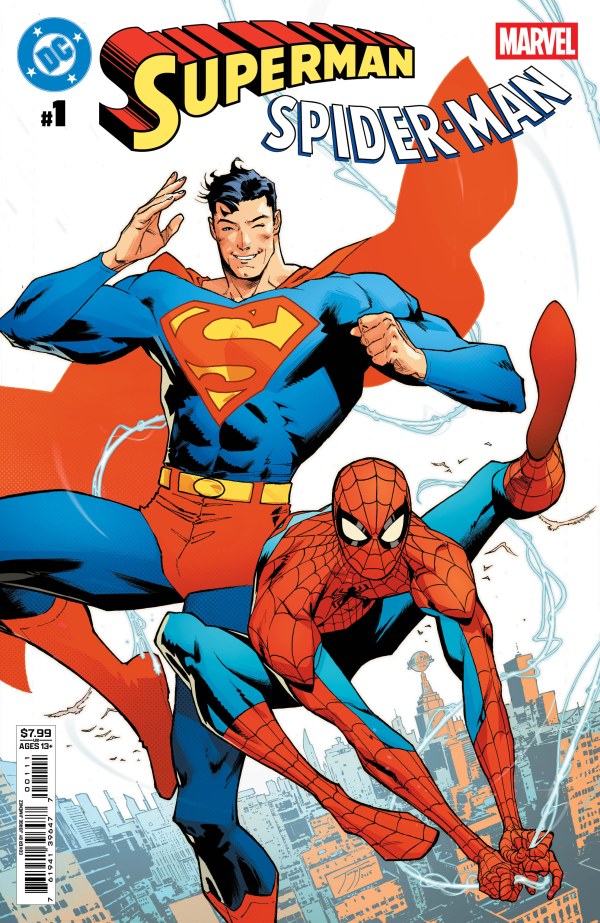
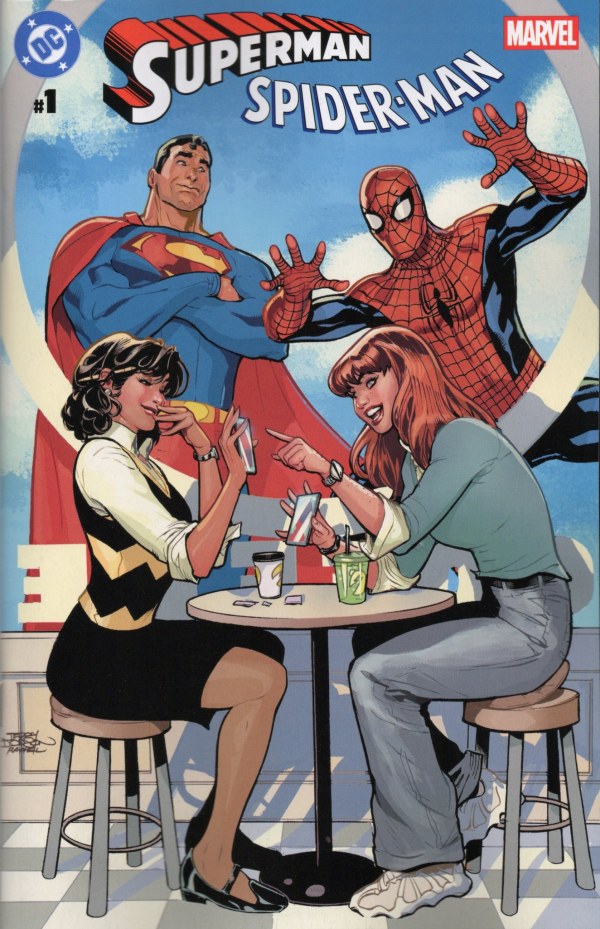
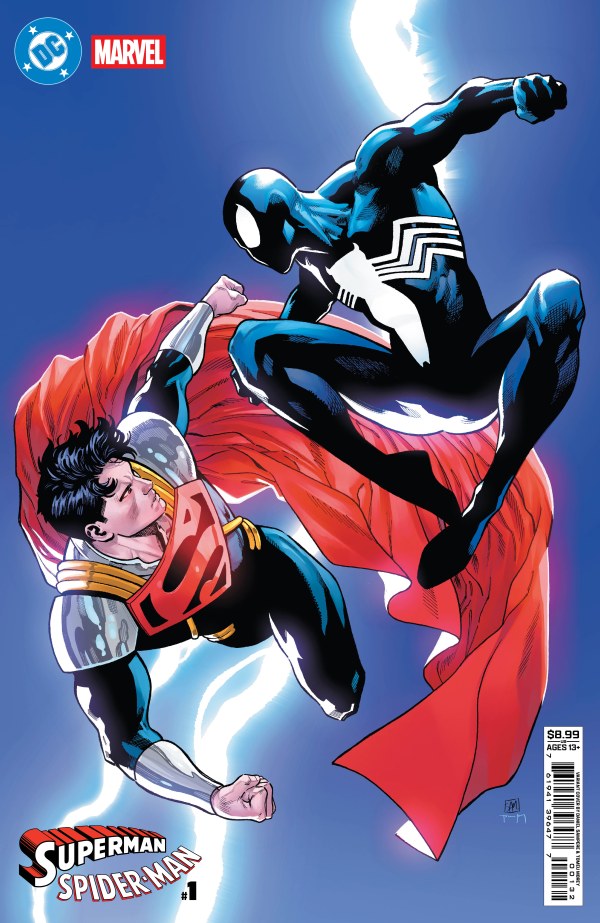
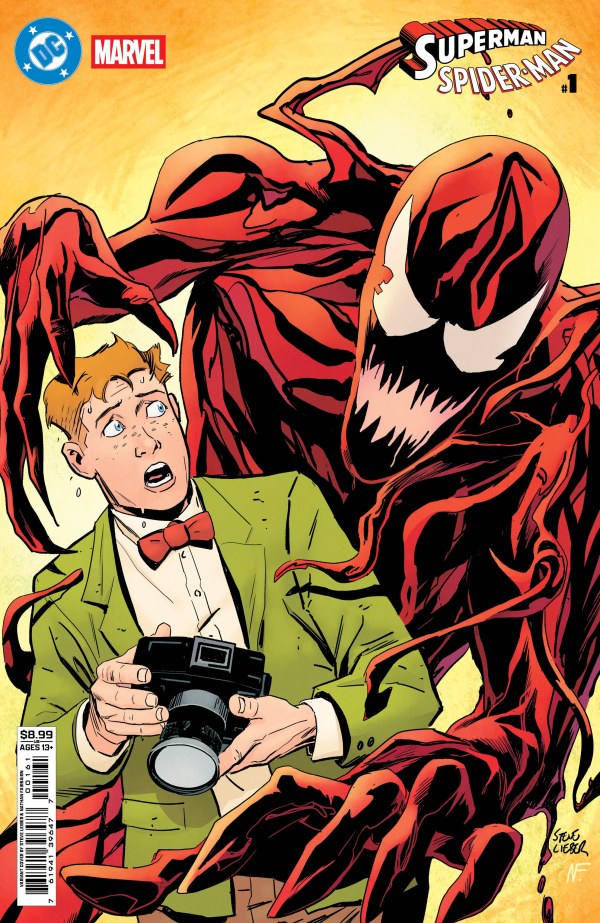
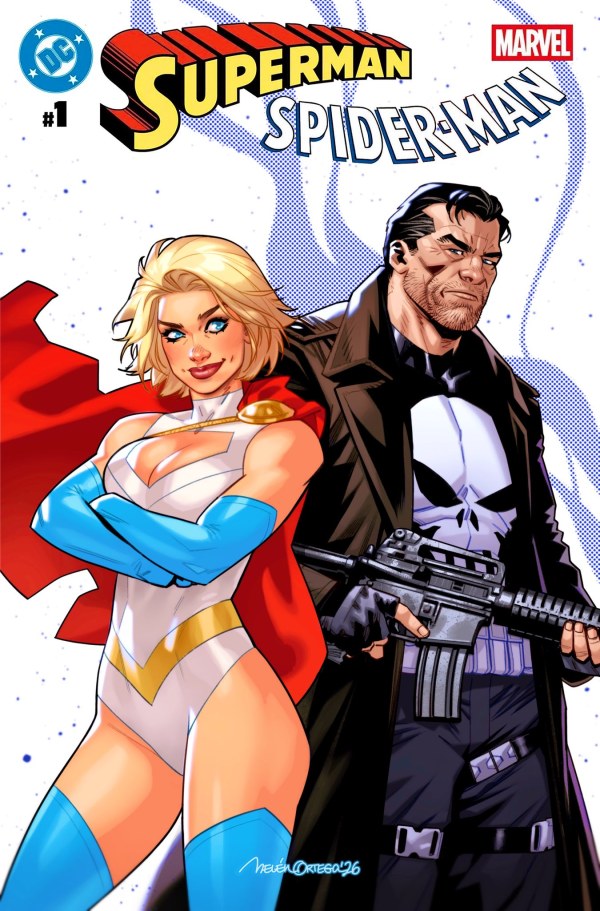


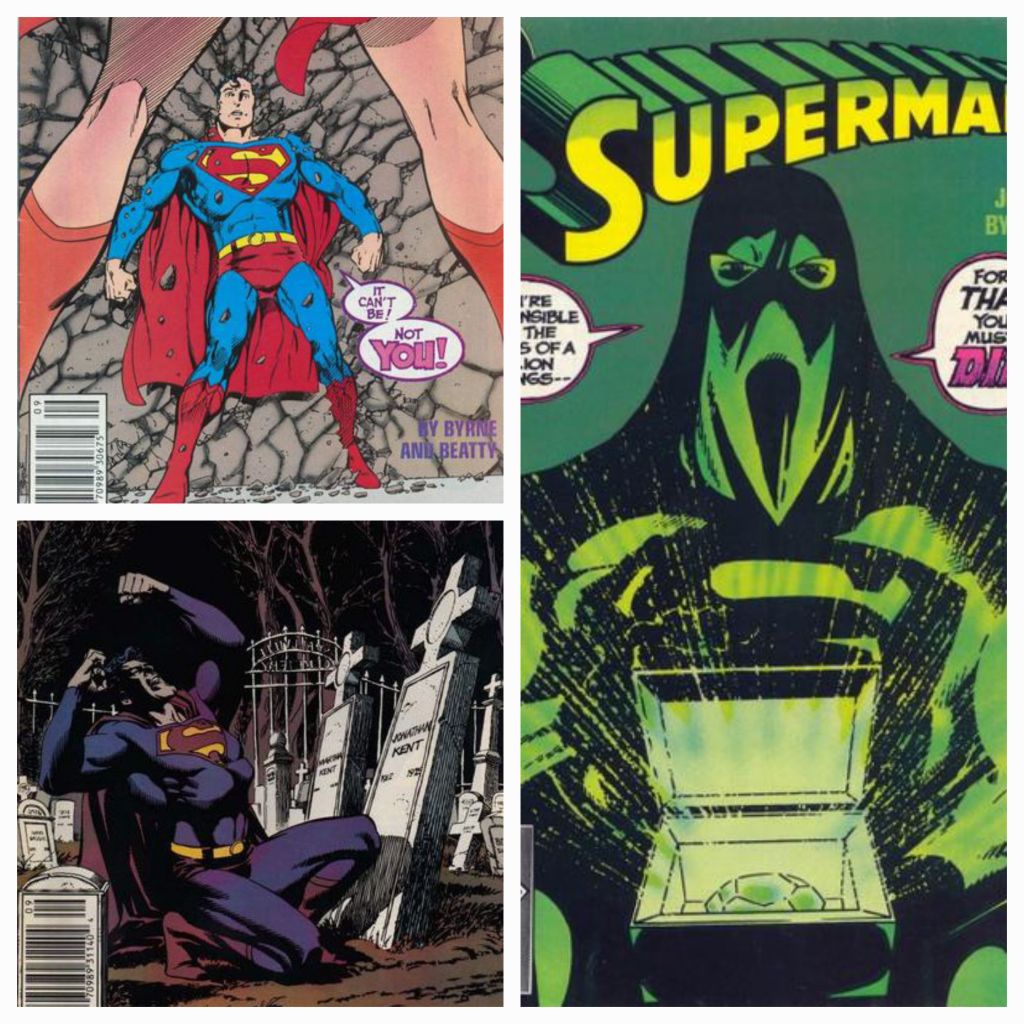

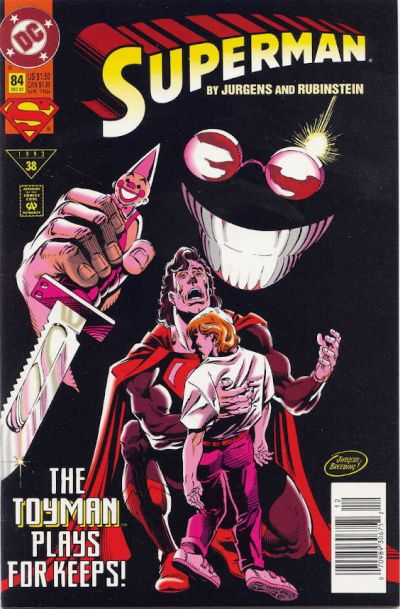

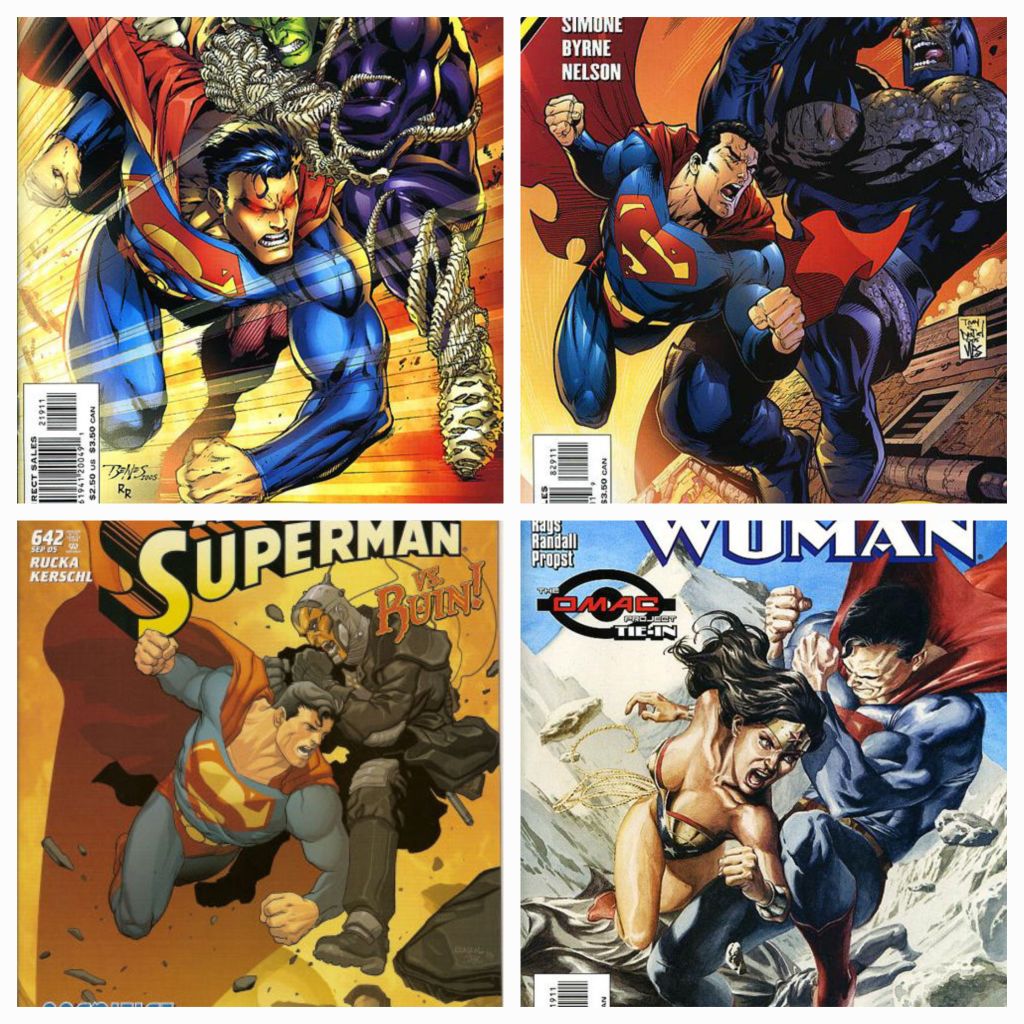
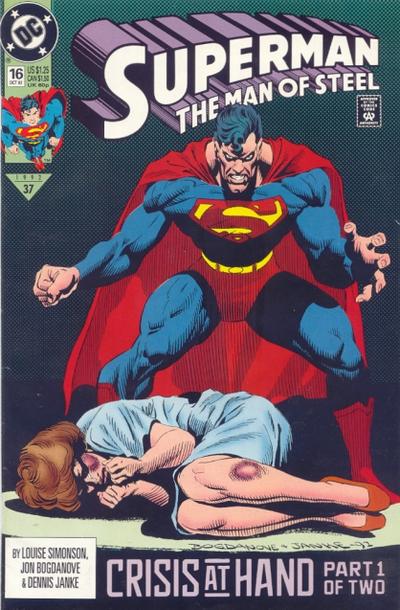


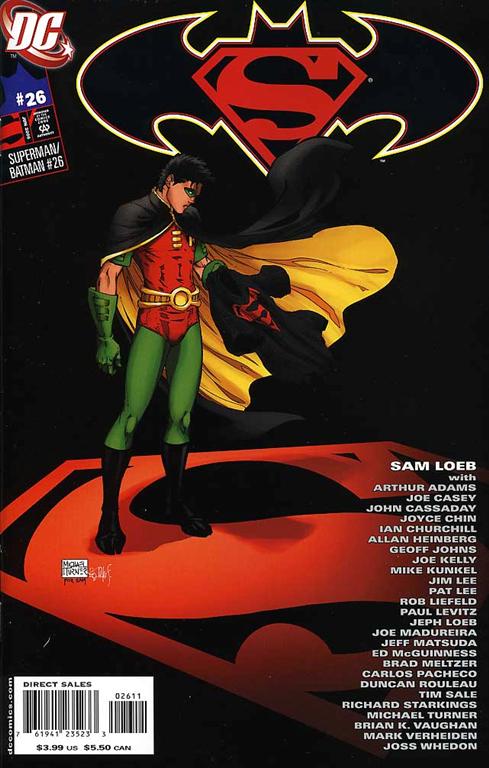


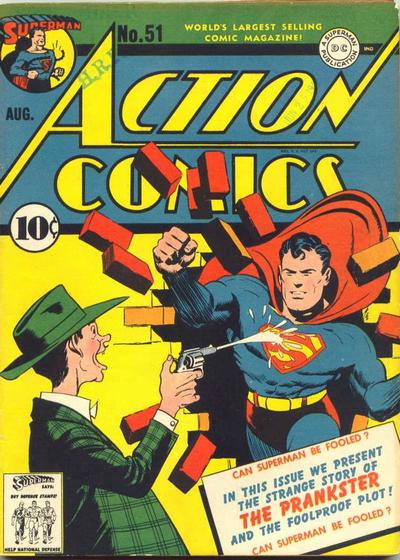


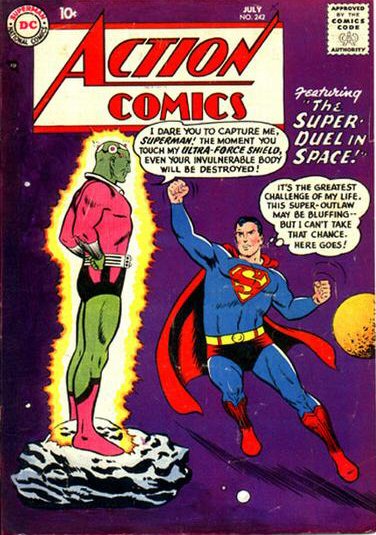
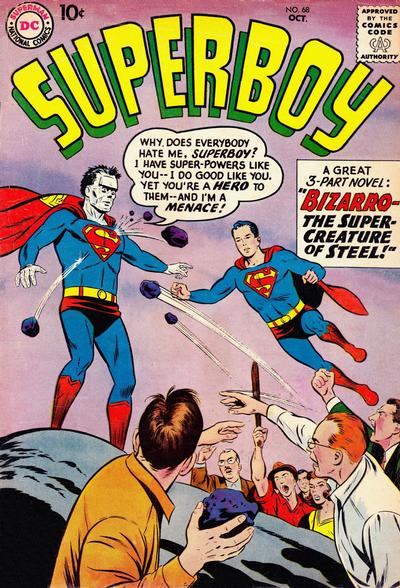


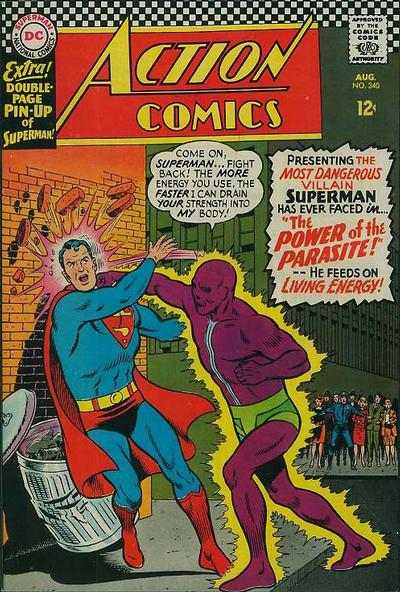
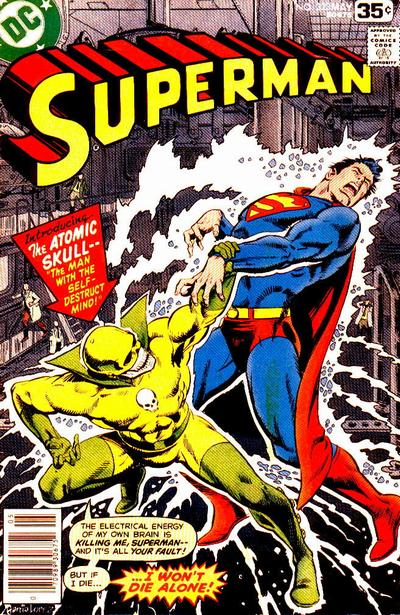


 Blake M. Petit