Hello, friends — for years now, it’s been a tradition of mine to turn out a new short story every Christmas to share with everybody. This year, I’m kicking off the fun a little early with a tale for Halloween. “Correspondence” is a new epistolary short set in the world of The Curtain (home of my novels Opening Night of the Dead and The Beginner). It’s a little world-building experiment for me, but I wanted to share it with you as well. Happy Halloween!
Month: October 2024
Geek Punditry #95: A Not-So-Scary Punditry
“You know Blake,” some of you may be saying, “Just because it’s October doesn’t mean that EVERYTHING you write about has to be scary. Some of us don’t necessarily NEED to immerse ourselves in serial killers and cosmic horror and Stephen King 24/7.”
“You’re right,” I said.
“I…I am?” you reply.
“Yeah, you are. I guess just because it’s October doesn’t mean EVERYTHING has to be scary.”
“Oh. Oookay. Well…GOOD!”
“So this week,” I say, “I’ll talk about some stuff that isn’t scary at all.”
“Thank you.”
“Still gonna write about Halloween, though.”
“Damn it.”
We all know how much I love the creepy content during Spooky Season, but that doesn’t mean there aren’t other things about Halloween that I love just as much – things that wouldn’t scare anybody but, at the same time, still contribute to the ghoulishly gleeful fun of this month. So if you’re NOT the kind of person who wants to be freaked out for Halloween but you still want to take part in the celebration, I’m going to give you guys a few recommendations for totally safe, family-friendly Halloween entertainment that will hopefully take you through to next month.

When I’m not watching somebody getting disemboweled in October, you know what’s the next best thing? Baking. I’ve been a fan for YEARS of the Food Network’s “Baking Championship” shows, and Halloween is the prime time. There are a whopping 14 seasons of Halloween Baking Championship available, and they’re all worth watching. In case you need someone to spell it out for you, it’s a pretty standard reality competition show. Each season a new group of contestants are gathered together and made to compete in a series of baking challenges, each episode one contestant is eliminated, and in the end, a victor is crowned. There are a wide variety of challenges as well – sometimes they have to make a certain type of dessert, sometimes they have to decorate their concoction based on a specific theme, sometimes there’s a specific ingredient they have to use. This is all well and good, but as I can’t actually eat any of the things that they’re making at home, I generally tune in to see what these creations look like. I’m in awe of some of these cakes and pies and cobblers that come out looking like monsters, skeletons, witch’s cauldrons, spellbooks, and any other sort of thing you can imagine.
Now, this isn’t one of those shows where they’re necessarily attempting to IMITATE real things (you’re thinking of Is It Cake?, where the goal is to make a cake that can trick someone into thinking it’s something else, like a shoe). This is purely about the artistry and creativity of the decorating and how good the food actually tastes. I don’t talk about it much, but I actually quite enjoy baking. It’s a fun, soothing, and edible hobby, and I think I can do a decent job making things that taste pretty good. However, absolutely NOTHING I have ever or will ever make in my entire life will look as amazing as the stuff we see on this show. Even the LOSERS turn out confections that put anything I could ever create to shame, and somehow I enjoy watching that.

I also like these shows way more than “traditional” reality competitions like Survivor or Big Brother because — unlike those other shows — you don’t have the pettiness, the nastiness, or the backstabbing that have made them world-famous. In fact, it’s not at all unusual to see the contestants on these shows HELP each other if they can. It’s not QUITE as cozy as The Great British Baking Show, but there’s still a vibe of camaraderie that makes this show far more entertaining than one where they’re voting each other off.
It’s not the only show that has this pedigree as well. There are two other Food Network shows with similar formats that I also enjoy. Outrageous Pumpkins is structurally the same, except instead of baking it’s about carving and building elaborate displays out of pumpkins. Then there’s Halloween Wars, which combines the two: on this show there are teams of food artists (typically a baker, a pumpkin carver, and someone skilled in making things out of sugar) working together to create remarkably elaborate dioramas that look like they could have spilled out of a haunted house.
Maybe that’s not your thing, though. You want something with a story, a plot. I’ve got just the thing, guys, and it’s called Bob’s Burgers. This has been one of my favorite cartoon series for years. At its core, it’s an animated sitcom about the owner of a struggling hamburger joint and his lunatic family, including his wife Linda and their three kids. The thing about this show, though, is that no matter how strange, bizarre, or absolutely ludicrous that week’s misadventure may get, there is a warm and loving core. Bob and Linda Belcher love each other and love their children completely and without reservation. That doesn’t mean they never get mad or have conflict, because real love doesn’t work that way, but at the end of the day they deeply care about one another, and that’s really refreshing in an era where so many TV comedies are about families who can’t even be in the same room together without being jerks.
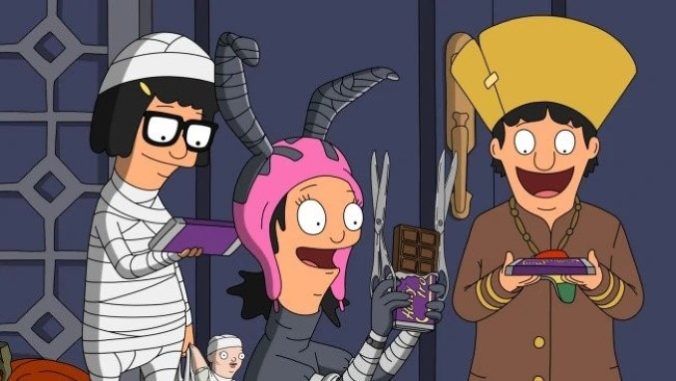
The Belchers are in their FIFTEENTH season, and they’ve actually done more for holiday episodes than almost any other show I’ve ever seen. Over a dozen of their fifteen seasons have included Halloween episodes. Not only that, but they almost always have a Thanksgiving episode AND a Christmas episode each year. Plus, while not exactly an annual occurrence like the others, there have been several Valentine’s Day episodes as well. The people behind this show LOVE their holidays. If you’ve got the Hulu streaming service, there’s a spot in their “Huluween” library where you can actually access every Halloween episode of Bob’s Burgers right now. Just try to ignore the fact that 13 Halloweens have gone by and Louise Belcher is still eight years old. It’s a cartoon, you know how this works.
Last year, I spent an entire column writing about some of the great Halloween specials and how much I want new ones. I’m not going to go through all of them again (go ahead and read last year’s column), but let’s remember how many awesome non-scary Halloween specials actually exist. Beyond the classics like It’s the Great Pumpkin, Charlie Brown and Garfield’s Halloween Adventure, there are lesser-known but still worthy movies and specials like Rankin and Bass’s Mad Monster Party, Halloween is Grinch Night, or The Legend of Sleepy Hollow.
But what about the SHORTS, guys?
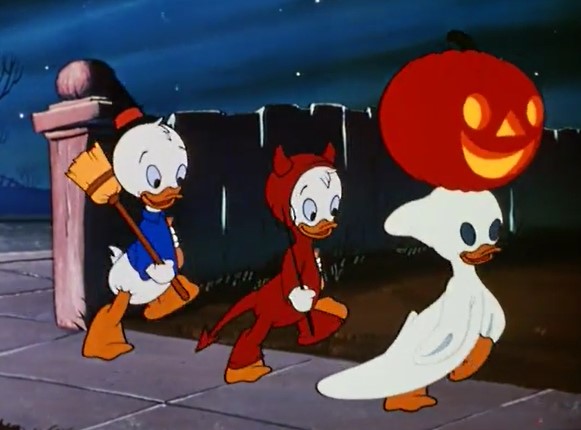
I have often felt like a man out of time in many respects, and none more so than my craving for theatrical animated shorts. There was a time, a halcyon era before I was born, when buying a movie ticket would include not just the feature film, but at least one short film. It’s the place where the Looney Tunes, Tom and Jerry, and the Disney pantheon all came from, and the fact that not even Pixar is still consistently giving us theatrical cartoon shorts makes me a sad, sad panda. But back in the day, these studios gave us some magnificent Halloween shorts that are still fun to watch today. Let’s talk about two of my favorites, both of which star the same phenomenal voice actor, the immortal June Foray.
In 1952, Jack Hannah gave us Disney’s Trick or Treat, which is in the running for my favorite Donald Duck cartoon of all time. I know you’ve seen this one: Donald pranks his nephews while they’re trick-or-treating by dumping water on their heads, because Donald is just that kind of a jerk sometimes. This transgression is witnessed by Witch Hazel – voiced by Foray – and she decides to give Donald his comeuppance. She comes after Donald with the help of the boys, some singing ghosts, and a magic spray that gives her control over his legs.
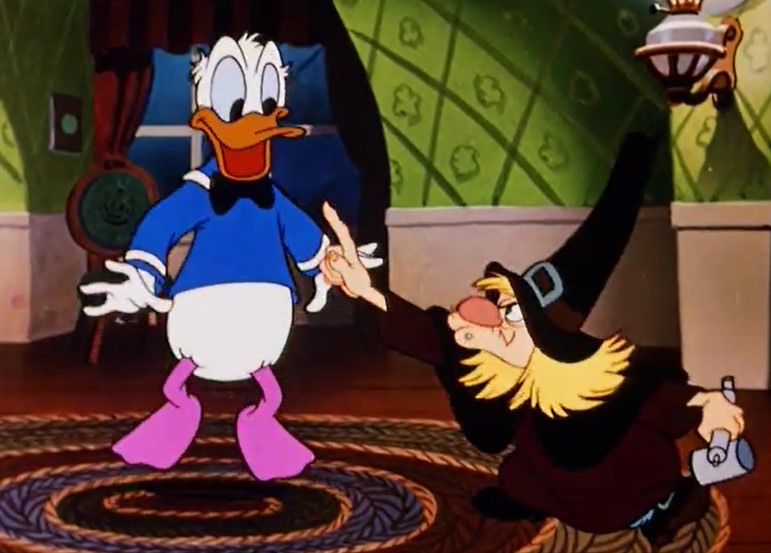
It’s a funny cartoon with gorgeous animation and, along with it, a song that should by God be a national Halloween anthem. I’m not even joking – if a kid came up to my house singing the “Trick or Treat” song from this cartoon I would just dump all of my candy into their bag and close the door, because they just won Halloween. Plus there’s June Foray as Witch Hazel, the only person in the history of American cinema who even comes close to Mel Blanc as a voice master. Some people have even called her the “female Mel Blanc,” while others find it more appropriate to refer to Blanc as “the male June Foray.” I’m not going to argue with either one of them.
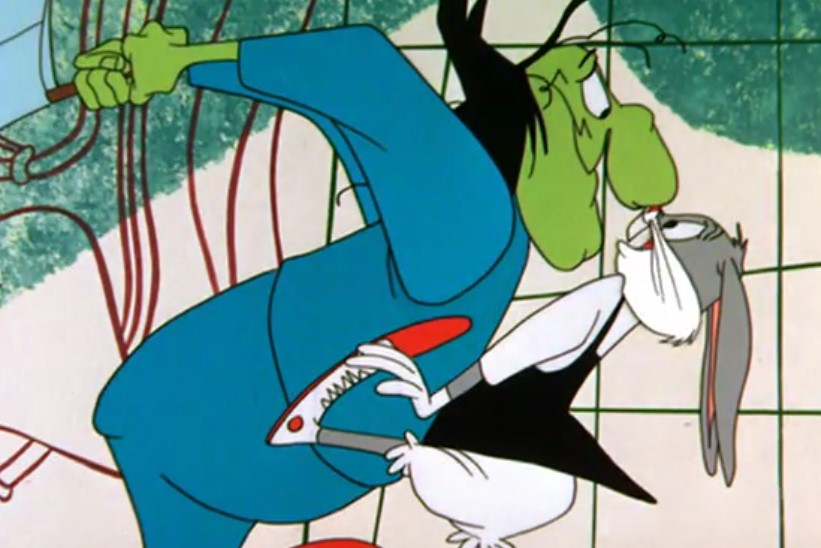
But it didn’t end there. Four years later, in 1956, director Chuck Jones asked Foray to reprise her role as Witch Hazel – not in a Disney short, but for the Looney Tunes. You see, Jones noticed that “witch hazel” is the name of an actual plant and, therefore, Disney could not trademark the name, making it free for him to use as well. Armed with the law on his side, he recruited Foray into his acting troupe for the cartoon Broom-Stick Bunny.

In this one, Bugs Bunny is wearing a witch costume for his trick-or-treating and winds up in the mansion of, once again, Witch Hazel, who thinks he IS a fellow witch and invites him in. It’s a great cartoon and knowing that Jones deliberately cast Foray to voice the character in an attempt to “remake” the Disney version makes it even funnier. Foray, for her part, did attempt to differentiate the two witches, using an American accent for the Warner Bros version instead of the British accent she gave the Disney witch, but it’s hard to watch the two cartoons back-to-back without picturing them as the same character. Foray would reprise the Witch Hazel role several times and ultimately became a frequent collaborator of Chuck Jones. The voice of Cindy Lou Who from How the Grinch Stole Christmas may have been totally different if Jones didn’t want to poke at the Disney machine just a little bit.
If you want to join in on the fun of Halloween but you don’t want to be scared, there are still plenty of options out there for you. Round up the kids, watch some of these classic cartoons, try to recreate some of the eerie edibles from the Food Network shows, and just have fun with it. Halloween should be fun, and if your idea of fun doesn’t involve having your blood chilled, there’s nothing wrong with that. You’ve just got to find what unlocks your inner ghoul with lighter fare.
QUICK NOTE: If you’re the type of person who actually reads the title of these columns (hi!) then you may notice that this issue the 95th installment of Geek Punditry. Coming up on the two-year anniversary and, perhaps more important, the nice, round 100th column. I’m the kind of nerd who likes nice, round numbers, and I want to do something special for the big 1-0-0…trouble is, I don’t know WHAT to do. So if you have a suggestion for something you think I should write about or something I’ve discussed in the past you’d like me to go back to, here’s your chance to let me know I’m open for suggestions! You can drop them in the comments here, on whatever social media you followed to get to this post, or email me at info@blakempetit.com!
Blake M. Petit is a writer, teacher, and dad from Ama, Louisiana. His most recent writing project is the superhero adventure series Other People’s Heroes: Little Stars, volume one of which is now available on Amazon. You can subscribe to his newsletter by clicking right here. He’s still not sure what he’s going to dress up as for Halloween this year. He was considering a Stephen King costume, but he hasn’t been able to find a Maine travel guide.
Geek Punditry #94: Four Color Terror
It’s October of course – glorious October, that precious time of year in which all the creepies crawl and the goblins gob and the gremlins grem. And at this time of year, many of us reach out and look for scary stories to cast to our televisions, books to fill our Kindles, and anything seasonal that might give us a little bit of a chill. A few days ago, for example, I saw someone on Facebook ask for recommendations for modern horror comics. While horror has long been a mainstay of the comic book medium – in fact, it was the biggest seller back in the 1950s, before the Comics Code strangled the life out of it – it’s not what most people think of when they think of comics these days. And that’s a shame, because like any other form of storytelling, there are plenty of scares to be had if only you know where to look.
Scary comics, of course, are different from scary movies or TV shows. Although they’re both visual mediums, comics don’t have some of the tools that filmmakers use to terrify people. There’s no creepy music, no way to rely on a jump scare, and even simple surprises can be difficult to pull off, as a shocking image can be spoiled if not carefully placed on the page to avoid allowing a major reveal before the creators are ready for it. (Robert Kirkman, who created The Walking Dead, is quite vocal about how aware he is of this sort of thing – he always tried to reserve majorly shocking moments for the first panel of a left-hand page to avoid a page-turn spoiler.) In terms of horror, comics have more in common with novels than film – they have to be reliant on mood and tone to pull off their scares. Sure, there ARE shock comics out there – even going back to the days of Tales From the Crypt and its blood-drenched contemporaries, there were plenty of comics that relied on gore. But these kinds of shock scenes are like slasher movies – good for a scare in the moment and plenty of fun, but they don’t necessarily create LASTING terror the way that a good book can.
So here are a few comics from recent years that I think are particularly successful at delivering the scares, stories that are well worth tracking down and reading as part of your Halloween wind-up.
On that initial Facebook post that prompted this column, one of the respondents stuck his metaphorical nose in the air and replied, “WELL, you won’t find any good horror from MARVEL or DC, but…”
What a prick.
It’s true that Marvel and DC are known as superhero publishers, and that’s what most of their audience comes to the table for, but that doesn’t mean they aren’t capable of delivering in other genres, even within the confines of their existing superhero universes. The best horror comic Marvel has published in a long time is actually Immortal Hulk. This series, which ran for 50 issues from 2018 through 2021, was written by Al Ewing with art mostly by penciller Joe Bennett, and followed the “death” of the Hulk in Marvel’s Civil War II event. Comic book characters die and come back to life all the time, of course. It’s reached the point where it’s not just a cliche, it’s almost a JOKE to say you’re going to kill off a major character. But Ewing takes the old comic book concept of the “revolving door in Heaven” and turns it on its head, becoming a literal green “door” in Hell.
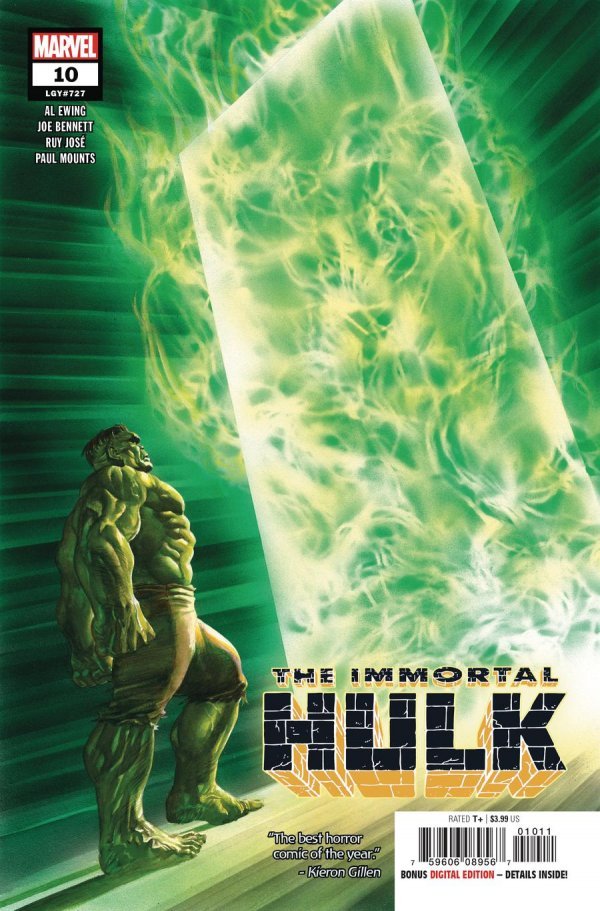
In this series, Ewing explores WHY characters like the Hulk seem to die and come back over and over again, drawing in most of the gamma-powered characters (hero and villain alike) in the Marvel Universe and telling a deeply unsettling story about Bruce Banner, the multiple personalities that co-exist inside his head, and a battle against his true greatest enemy. Despite being a part of the Marvel Universe and occasionally guest-starring characters like the Avengers and the Fantastic Four, this is a legitimately creepy story and probably one of my favorite runs of Hulk of all time, second only to Peter David’s legendary first run back in the 80s and 90s. If you don’t think there’s room in a shared universe for something truly scary and disturbing, I challenge you to check out this series right away.
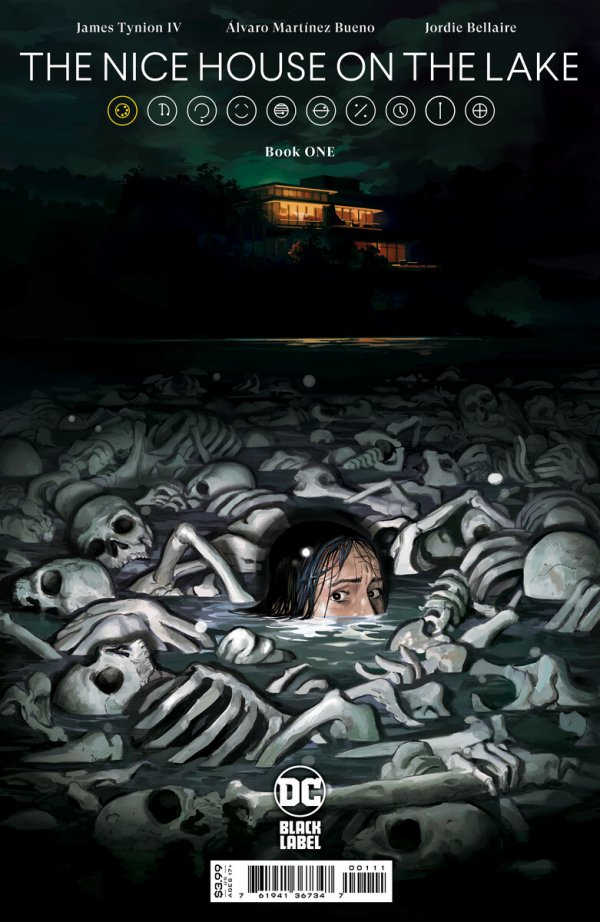
On the DC side, there isn’t an awful lot of horror to be found in the modern DC Universe itself. Even those characters that use the trappings of horror, such as Dr. Fate or the Creature Commandos (coming soon to MAX!) aren’t usually used in legitimately frightening stories. But DC’s library doesn’t stop at the outskirts of Metropolis. From DC’s Black Label line, writer James Tynion IV and artist Alvaro Martinez brought us The Nice House on the Lake in 2021, a 12-issue sci-fi saga about a group of ten people who are invited by a mutual friend for a little getaway in the titular nice house on the lake. Some of them know each other, some are nearly strangers, and the only thing they all have in common is their buddy Walter. But on their first night in the house, something utterly heart-stopping happens that I’m not about to reveal because it would ruin the beginning of one of the best and most original horror comics in years. This 12-issue series was absolutely phenomenal, full of well-drawn characters and a concept that is creepy and compelling all at the same time. The creative team has reunited for a sequel, The Nice House By the Sea, the third issue of which was recently released. Grab the collected edition of the first series and come aboard.
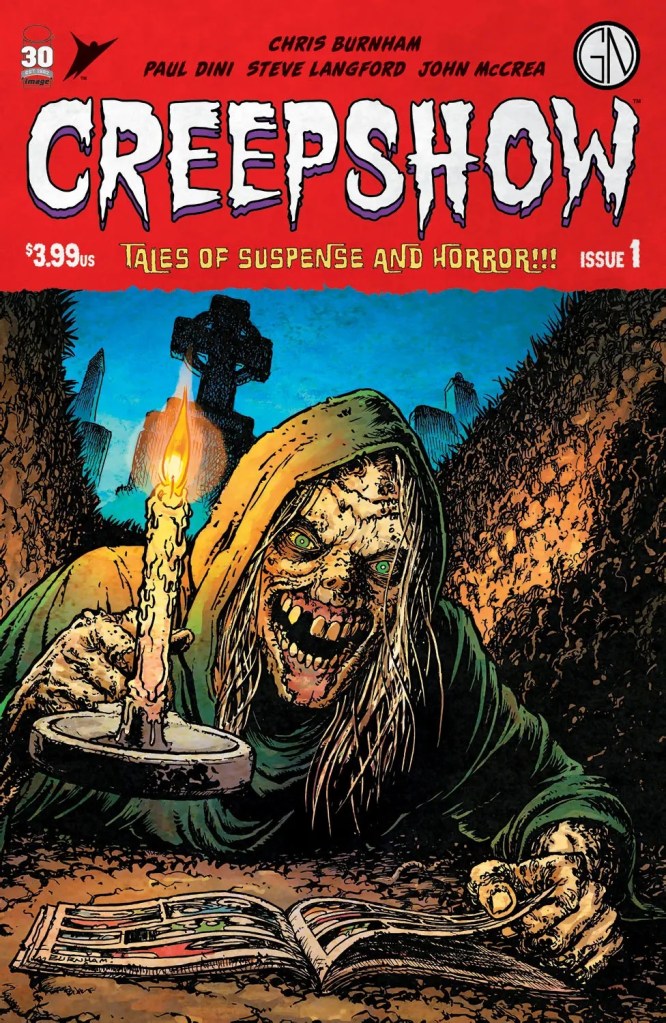
Speaking of Robert Kirkman, as I did that back in paragraph two, his Skybound Entertainment (published via Image Comics) has been giving us more horror lately as well. The house that The Walking Dead built has been branching out into licensed comics, including two pretty significant horror properties. First is Creepshow: what started as a George Romero/Stephen King movie that paid tribute to the likes of the old EC Comics has expanded into a franchise with the current anthology TV series on Shudder. Skybound has taken to publishing Creepshow comics now, with three miniseries and a few one-shots, including a Christmas special last year and another one-off adapting a story by King’s son, the prolific horror author Joe Hill. Most regular issues of the comic include two stories by assorted writers and artists, each of which includes the requisite amount of gore and most of which display the kind of twisted sense of justice that befits a tribute to the likes of Tales From the Crypt. As with any anthology, the quality of the individual stories can vary – in other words, some are better than others. But if you’re looking for the sort of tongue-in-cheek horror that we got from the Cryptkeeper back in the day, there’s no better place to look right now.
Kirkman has also acquired – to my shock and delight – the license to the classic Universal Monsters. While Dracula and Frankenstein may be public domain, this license includes the versions specific to the films of Bela Lugosi and Boris Karloff, as well as the original Universal creations. Even better, each of the series they’ve produced so far has been drastically different from all of the others, making for a very diverse and enjoyable reading experience. The line began last year with Universal Monsters: Dracula, a four-issue series by James Tynion IV (the Nice House on the Lake guy) and artist Martin Simmonds. Tynion and Simmonds retell the story of the movie through the perspective of a mental patient, with a heavy emphasis on the character of Renfield. Simmonds’ artwork is bizarre and scattershot, befitting the point of view of someone who is mentally unstable, and the whole thing is wonderfully creepy.

The second miniseries, written by Dan Watters and Ram V with art by Matthew Roberts, is Universal Monsters: The Creature From the Black Lagoon Lives! This one is a straight-up sequel to the original film trilogy, set in the modern day as a woman decides to delve into the mystery of the swamp monster from decades ago. And like most great horror, it’s more about the humans that are wreaking havoc than the monster itself. It’s a fantastic, worthy sequel that could easily be made into a movie if Universal Pictures had any idea what it was doing with these classic creations.

Most recently, they’ve kicked off a series based on my favorite member of the Universal Pantheon with Michael Walsh’s Universal Monsters: Frankenstein. We all know that Henry Frankenstein (changed from the novel’s “Victor” for reasons I’ve never understood) stole the corpses of the dead to make his creature, but how often have we really thought about the people that the Karloff monster once was? This miniseries is told from the point of view of a young boy who, still in grief over his father’s death, discovers that his late father’s body is now part of Frankenstein’s monster. It’s a brilliantly original concept. As big a Frankenstein fan as I am, it’s not easy to find an angle on the story that I haven’t seen before, and Walsh nails it.

The hip bone’s connected to my — DAD’S bone…”
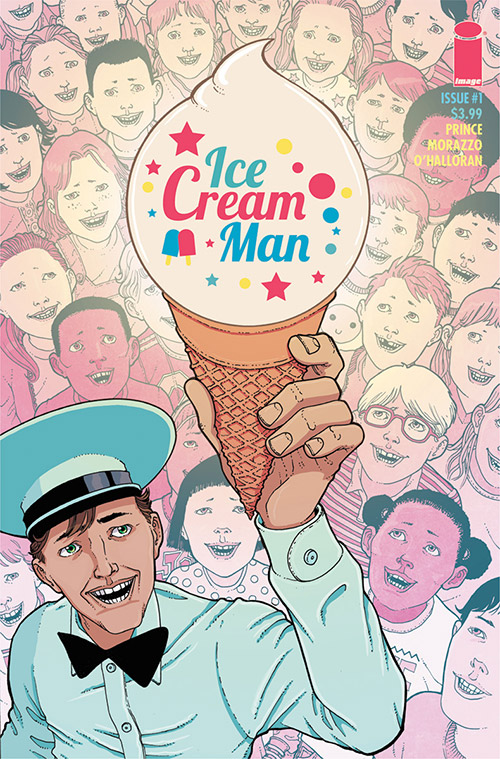
Sticking with Image Comics, let’s talk about their acclaimed ongoing series Ice Cream Man, written by W. Maxwell Prince with art by Martin Morazzo. The horror series tells a different story in each issue, with the only connective tissue at first seeming to be Rick, the titular Ice Cream Man, who rolls through each issue at some point. The series hits on all kinds of disturbing themes, dealing heavily with existential dread and frequently drifting into Kafkaesque body horror and other such things. It’s a bleak, nihilistic comic, which isn’t usually my thing, but Prince very slowly and subtly reveals that these seemingly one-off stories are, in fact, connected, and there’s a vast backstory of deep cosmic horror that Rick has spawned from. The stories delve into terrors that deal with the very nature of existence, taking very human fears and externalizing them the way that few other stories – comic books or otherwise – can do effectively. It’s remarkably disquieting horror.
Rounding out our time with Image Comics, there’s a new series from Geoff Johns and Ivan Reis worth mentioning. Only one issue of Hyde Street has been published so far, but it’s already got its hooks into me. On Hyde Street, we see characters like “Mr. X-Ray” and a twisted Boy Scout going by the name of “Pranky” as they lead the unsuspecting residents and visitors of Hyde Street down dark paths of destruction. They’re in some sort of competition, reaping souls for a hidden gamemaster for purposes that have not yet been revealed. As I said, there’s only been one issue so far, but it hints at a vast and complex mythology, and there are few writers out there who do that better than Geoff Johns. I’m very excited to see where this series is going.

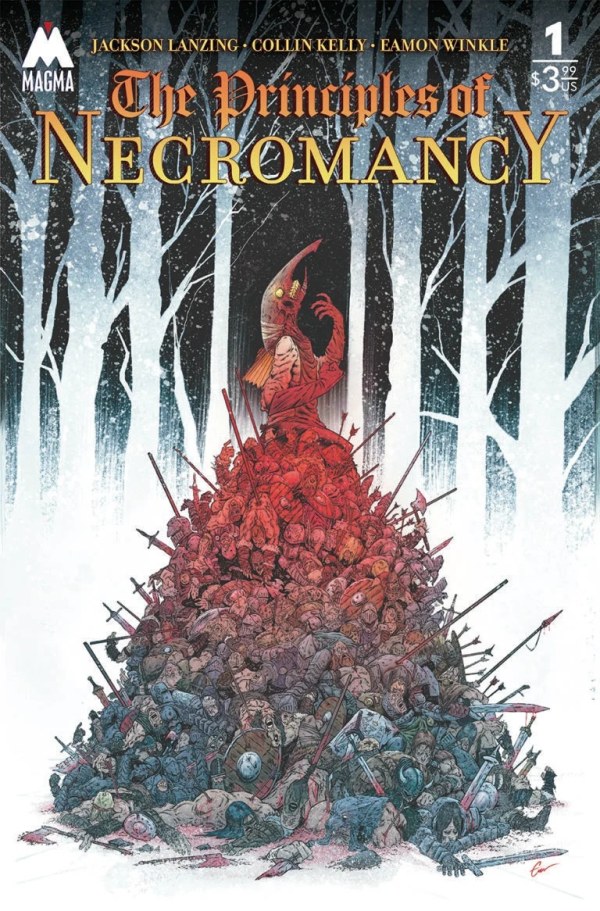
Finally, I’m going to leave you with a lesser-known miniseries from Magma Comix that just recently wrapped, The Principles of Necromancy. Written by Collin Kelly and Jackson Lanzing with art by Eamon Winkle, this tale of horror is set in a world where magic has been ostensibly driven out by the “City King,” leaving in its wake a realm of reason and science. Not everybody subscribes to these beliefs, however. The miniseries features the ghastly Dr. Jakob Eyes, the man inventing the art of necromancy in an effort to conquer death itself. If body horror is your thing, this is a book to check out, as we watch Eyes’ gruesome experiments and deliciously twisted practices over the course of four issues which ends on a note that leaves things wide open for further exploration of this dark world. Kelly and Lanzing have become favorite writers of mine in the last few years, doing great work at Marvel, DC, and IDW (particularly with their run on Star Trek), and it was on their names that I decided to pick up this series. I’m very glad that I did.
So my point, friends, is that horror is out there. If you’re still looking for creepy comics to fill your bookshelf before Halloween ends, here are some fine suggestions for you, and I’m sure the folks down at your local comic shop can give you even more. Dive in and get ready for a chill on every page.
Blake M. Petit is a writer, teacher, and dad from Ama, Louisiana. His most recent writing project is the superhero adventure series Other People’s Heroes: Little Stars, volume one of which is now available on Amazon. You can subscribe to his newsletter by clicking right here. He misses the days of Friday the 13th and Nightmare on Elm Street comics, though. Those need to come back.
Geek Punditry #93: The Narrative Chain of ‘Salem’s Lot
Welcome to The Narrative Chain, the newest of my many column-within-a-columns here at Geek Punditry Global Headquarters. In The Narrative Chain, I’m going to take a look at a story that has been told multiple times and examine some of the different versions, whether this be books that have been turned into movies, comics that have been adapted to television, remakes, reboots, or adaptations, we’re going to pick into them here. And I thought that, for October, we would start with the second published novel by Stephen King, as well as the various adaptations thereof (including the one that dropped just last week): the vampire drama ‘Salem’s Lot.

The original novel, published in 1975, tells the story of an old-world European vampire named Kurt Barlowe (no, really) who comes to the little town of Jerusalem’s Lot, Maine, and begins to worm his dark tendrils into the citizens thereof. The novel focuses mostly on a small group of citizens who come together to fight back against the vampire, including Ben Mears (a novelist, because as early as his second book Stephen King was establishing patterns), local woman Susan Norton, 12-year-old Mark Petrie, Father Donald Callahan of the local Catholic Church, and a few more. But interspersed between the scenes with our heroes are many chapters detailing the activities of the other citizens of the ‘Lot as they fall prey to the darkness.
Although his first novel, Carrie, was a hit in his own right, I feel like this is the book where we really started to see the Stephen King who would become a literary juggernaut. It’s much longer (although still a drop in the bucket compared to the likes of The Stand or It), and the first of his books to establish a large cast of characters that he bounces between as he tells the story of a community under siege. These are things that King does better than almost anyone, and you really see it as he paints the citizens of Jerusalem’s Lot, warts and all.
In an introduction to an anniversary edition of the book years later, King said that his goal with this novel was to create a sort of marriage between the storytelling of Bram Stoker’s Dracula and the American style of horror he grew up with in EC Comics like Tales From the Crypt. In practice, I’m not sure that he completely succeeded in that particular goal. Although not utterly hopeless, the ending of ‘Salem’s Lot is considerably bleaker than the ending of Stoker’s novel (and King himself says that the story ends in a more hopeful place than he originally intended). Similarly, it doesn’t quite have the sort of bitter sense of humor or twisted concept of justice that the EC Comics brought to the table, both elements that would be more visible in some of King’s later works. There’s also an odd sentimentality to the book – the characters seem to meet and immediately form lifelong bonds (not that “lifelong” is a particularly lengthy period in a vampire novel) in just hours. It’s a way to drive up the tension and make you feel for the characters a bit more, but there are times where it feels a tad unearned.
That said, I don’t want you to give the impression that I don’t like this book. I very much do – the atmosphere King creates is magnificent, and the way he treats his vampires is as evocative as anything Stoker does, even though he DOES borrow some non-Stoker elements that really gained prominence thanks to vampire MOVIES, such as the vampires’ vulnerability to sunlight. I re-read the book last month in anticipation of the new movie, and I found it just as engaging as I did the first time I read it years ago. It’s not my favorite Stephen King novel – heck, it probably wouldn’t make my Top Five. But when you consider just how many books the man has written, Top Ten is nothing to sneeze at.
There have been three adaptations of ‘Salem’s Lot to date, all of which I watched (or re-watched) after reading the book, and I’m going to break them down in order to discuss the pros and cons of each, beginning with the original CBS miniseries from 1979. This version starred Starsky and Hutch’s David Soul as Ben Mears, Die Hard’s Bonnie Bedelia as Susan Norton, and…um…Enemy Mine’s Lance Kerwin as Mark Petrie. Directed by Texas Chainsaw Massacre director Tobe Hooper, this is the version of the story that a lot of people grew up with and most of the old-school fans consider the best. I have to say, though, I was only two years old when this miniseries came out. I didn’t watch it until I was an adult, and the nostalgia glasses weren’t on, and I have to say…to me it’s just kind of okay.
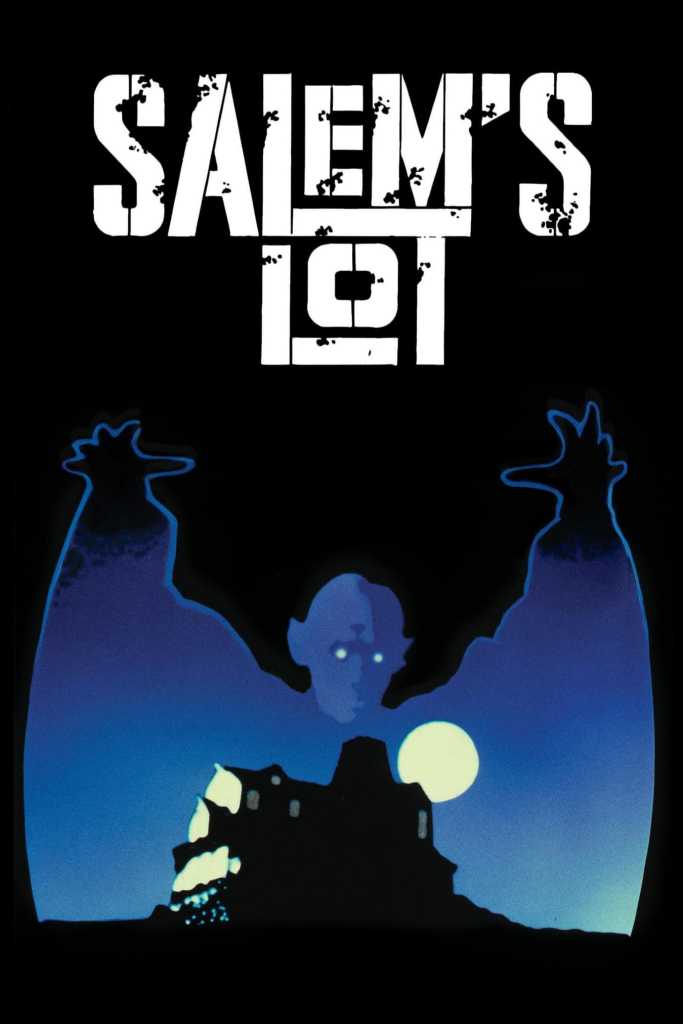
You have to take into account that it’s a TV movie from the 70s, and by the standards of a TV movie from the 70s, it’s not bad. The vampire makeup is pretty effective, especially that of Reggie Nadler, who plays Barlow. Beefy David Soul doesn’t quite pull off the skinny, contemplative Ben Mears of the novel, but if you aren’t trying to reconcile him with the character from the book he gives a pretty solid performance, with appropriate dread on his face during his encounters with the undead. Bonnie Bedelia is absolutely charming as Susan as well, and it’s easy to see why John McClai– I mean, Ben Mears would fall in love with her so quickly.
This miniseries, with its three-hour run time, just goes to prove something that’s true of a lot of Stephen King adaptations, and not just of this book. When he creates a world full of rich, engaging characters, trying to squeeze them into three hours or less just doesn’t cut it. Father Callahan’s role in this film is reduced to little more than a cameo, and several of the other characters are merged or done away with entirely. I understand the demands of different media, and I know that you’ll never be able to translate a book to a movie with 100 percent accuracy. I’m okay with most changes, provided that the spirit of the original work is left intact. But when so much of what makes the book work is the enormous cast and the way King shows life in all the different corners of the ‘Lot, the way the story and characters are pruned becomes a serious disadvantage to the film. Worst of all is Barlow himself – while he LOOKS scary enough, this version never speaks, losing all the sly, hideous charm of the character in the novel and becoming more of an analogue for Nosferatu than Dracula.
Another issue comes in the prologue to the story. In the novel, we open with a “boy” and a “man” on the run in a flash-forward to the time after the main events of the story. It isn’t until much later in the book that it becomes clear exactly which two members of our sizable cast they are. In a movie, though, you see them on screen from the first minute, completely erasing the question as to which characters are going to survive the vampyric rampage that consumes the town and losing the thing that makes the prologue worthwhile.
There’s a sequel to this miniseries, A Return to ‘Salem’s Lot (1987), which I’ve never seen – and from the comments of even the most stringent of admirers of the ‘79 version, I don’t think I’m missing anything. I’m not immune to nostalgia. If you get me started talking about cheesy movies and TV shows of the 1980s, I can wax poetically for hours about the things I love in films that – objectively speaking – really aren’t that great. So I appreciate the deep affection a lot of people have for this rendition of ‘Salem’s Lot. But I don’t SHARE that nostalgia, and the warts stand out to me a little bit more. This first attempt at adapting the story isn’t disappointing, but it’s not a sacrosanct film that should never be attempted again, so I wasn’t particularly upset when a new version was announced in 2004.

This remake, a TNT miniseries, stars Rob Lowe as Ben Mears, Donald Sutherland as Richard Straker (Barlowe’s familiar), and James Cromwell as Father Callahan, so already it’s off to a better start than the version from the 70s. It takes far more liberties with the original story, but I feel like some of them are for the better. For example, the original prologue is done away with for one that is more effective in leaving the viewer questioning what’s going to happen next, with a nice misdirect that Constant Readers may believe is pointing towards another King novel where one of these characters appears.
Mears is, once again, quite different from his portrayal in the book, taking on a dark detective persona early on in a quest to seek out the truth about the ‘Lot. He’s changed from a novelist to a journalist, with a thirst that makes him more proactive (if a bit of a cliche). His relationship with Susan Norton (Samantha Mathis) is also different – not as fairy tale/star-crossed tragic lovers as the older version or the novel. Rutger Hauer’s Kurt Barlow, however, is a bit more in keeping with the original. He may not look like he spilled out of the pages of an EC Comic, but neither did Barlowe in the book. They sacrificed his “European-ness” for the sake of the actor they wanted, but the result was a more interesting character. One of the more positive changes in this version is the greatly increased role of Father Callahan – not just compared to the original miniseries, but even in comparison to the book. James Cromwell isn’t somebody who should be wasted on five minutes of screentime, and screenwriter Peter Filardi and director Mikael Salomon make very good use of him.
One of the best things about this version, though, is that it does a much better job of bringing in the expansive cast of the book. It’s not a perfect adaptation, of course. There are still some merged and missing characters, as is pretty much always the case in an adaptation, but for the most part I feel like it captures the “town” aspect of the novel much better than the 1979 iteration.
I’m not wild about the ending, which doesn’t really fit the novel at all, but I at least have to concede that it fits this particular adaptation. If I hadn’t read the book or watched the earlier miniseries, I probably would have thought it was appropriate. As such, though, while I liked this better than the first miniseries, I was hopeful for the new version, a movie that dropped on the Max streaming service earlier this month.
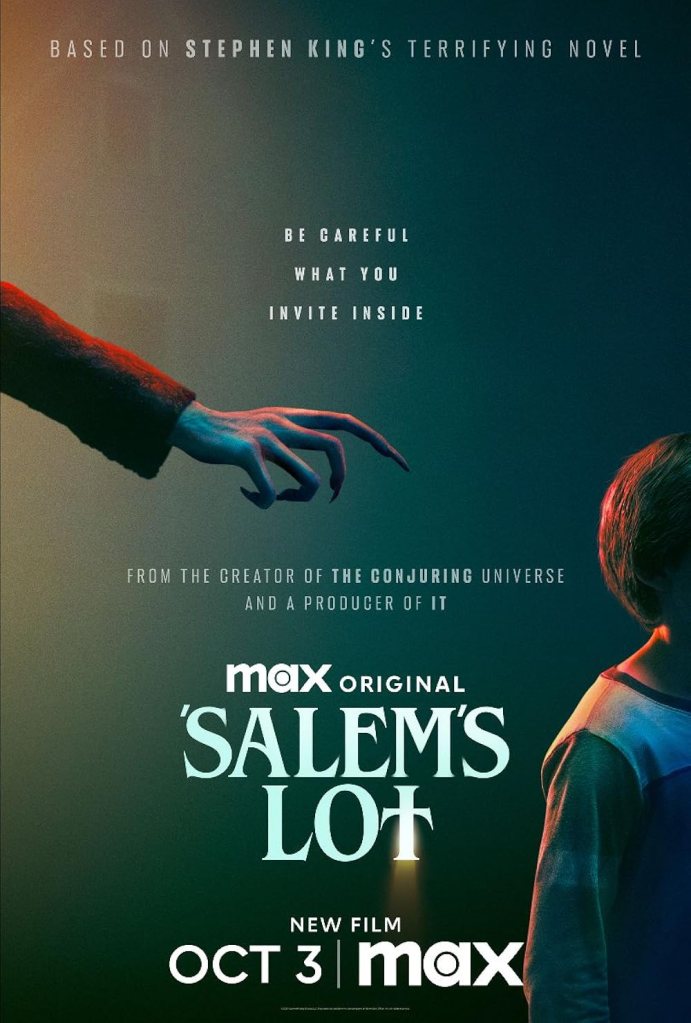
The 2024 movie has had a bit of a troubled pedigree. Originally slated for theatrical release in 2022, it seemed to get caught up in the chaos of the Warner Bros/Discovery merger and tossed around in the same cataclysmic atmosphere that led to the loss of the Batgirl and Acme Vs. Coyote movies. As it sat on the shelf for two years, many people were skeptical that it would ever see the light of day, and when it was finally announced that it would be released on Max, many people were skeptical that it SHOULD. As soon as it premiered it seemed like half the internet came out in force to hate it, but that doesn’t actually mean anything. Half the internet hates EVERYTHING. It can’t help it, it’s a reflex action like breathing or screwing Oreos open to eat the creme first, so I didn’t put any stock in the initial reaction, determined to make up my own mind.
The cast for this movie, I must say, is effective. Lewis Pullman as Ben Mears and Makenzie Leigh as Susan Norton both feel quite natural in the roles, and while I wouldn’t go so far as to say they have great chemistry, the stark atmosphere in director Gary Dauberman’s telling doesn’t really demand the gooey, doe-eyed love of the book anyway. Alfre Woodard as Dr. Cody gives a solid performance because she’s not capable of any less, and it’s always nice to see Stephen King adaptation veteran William Sadler, this time as Sheriff Parkins Gillespie. But the standout in this cast is Jordan Preston Carter as Mark Petrie. He’s not only the first actor to play Mark that’s actually a child instead of a teenager, but he’s also the first that has the sort of cool disposition and intensity that the character has in the book. Novel Mark Petrie is wise and level-headed beyond his years. Neither of the other two adaptations pulled that off, but Carter lands it perfectly.
I also appreciate the mood Dauberman has created. While the 2004 version was a little too clean and the 1979 version was a little too…well, “70s TV movie,” this version of ‘Salem’s Lot really has a good atmosphere, a dark tone, with some great effects as the townspeople turning into vampires delve into the shadows or attack an unsuspecting victim. Dauberman doesn’t shy away from some of the more spiritual aspects either – in the book, crosses and crucifixes actually glow with power when used against a vampire. This is the first version of the story to do that, and we get a fantastic visual when it does. This version of Barlow (Alexander Ward) again has a very Nosferatu-like style, but he’s got more life and animation than the ‘79 version, including a — sadly abbreviated – version of the novel’s epic face-off with Father Callahan (John Benjamin Hickey).
The ending, like the 2004 version, is greatly changed from the book, but I like this one better. There’s a fun set piece that I don’t want to spoil because it’s just nicely creative idea for how to stage the finale, although some of the special effects are wanting (we’re in the age of CGI artists being rushed instead of given the time to do the job properly, my friends). It also seems like the sun sets abnormally fast…but come on, am I really gonna complain about a scientific inaccuracy in a vampire flick? There’s a lot to like about this movie.
Unfortunately, in one vital aspect, the internet is correct: this movie is clearly chopped to hell. The pacing is a mess and there are huge gaps in the narrative as the story leaps from one high point to another without taking the time for the slower character moments in-between that make the best of Stephen King’s stories so good. Most of the intriguing side characters are missing altogether; the few that remain are reduced in scale to minor cameos, and it’s only our Vampire Squad that gets any attempt at development at all. And at 113 minutes – less than two hours – it can’t really be a surprise. Even the two miniseries, with three hours each (after commercials, of course) didn’t feel like there was enough time to tell the story properly. Perhaps the most frustrating thing, though, is that there is reportedly a three-hour cut of this film that New Line Cinema whittled down to the dismally insufficient running time. And for the love of Father Callahan: WHY? I could at least understand the financial incentive – if not the creative one – when the movie was slated for a theatrical release. The shorter the movie, the more times it can be shown per day, the more money the movie will theoretically make. But none of those factors apply to a movie on a streaming service. There are so many good PARTS to this movie, that I have to think a longer version with proper pacing would be the best of the adaptations to date. I’m not the sort of guy to start a website and start demanding the studio “Release the Dauberman Cut,” but if somebody else starts doing that, I’m not gonna disagree with them.
As it stands, the best version of this story is still the book – which honestly should come to no surprise to anybody: I’ve only ever seen two movies I feel definitely improve upon the book they were based on, and neither of those were Stephen King adaptations. As far as the film version goes – people will hate me for this, but I honestly place the 1979 version at the bottom of the pile. It’s harder to choose between the other two. The 2024 version has better pieces, the 2004 has a better construction. Flip a coin – either way you’ll get some good things and some bad. But to date, I don’t think we’ve had a definitive ‘Salem’s Lot on film. We’ve gotten enough chunks to prove that it’s possible, but it hasn’t happened yet. I can only hope, after he finishes his adaptations of The Dark Tower, that Mike Flanagan continues on his obvious life’s calling of adapting all of Stephen King’s works the way Kenneth Branaugh tried to do with Shakespeare. If anybody can really nail this story, he’s probably our best hope.
Blake M. Petit is a writer, teacher, and dad from Ama, Louisiana. His most recent writing project is the superhero adventure series Other People’s Heroes: Little Stars, volume one of which is now available on Amazon. You can subscribe to his newsletter by clicking right here. The Godfather and Jaws. He knows you were wondering what the two movies were that are better than the book they were based on. It’s those two. But he’s never read Psycho, which is currently in his to-be-read pile, so he’ll let you know if that changes.
Geek Punditry #92: The Spectrum of Horror and Comedy
If there need be any further evidence that Hollywood executives frequently don’t have the slightest idea what they’re doing, let’s talk about the fact that they seem to be afraid of horror/comedy hybrid movies. ‘It’s confusing,” they will tell you, pulling their hair out over a movie like Behind the Mask or Happy Death Day. “We don’t know how to market this! Who is it for? Is it supposed to be a horror movie or a comedy?” Whereas the answer is obvious to anyone smarter than a movie executive, which is a very large part of the Venn Diagram, and includes virtually all horror movie fans: it’s both. Horror and comedy BELONG together. They are a natural combination, the peanut butter and chocolate in the Reese’s Peanut Butter Cups of the movie industry, and the notion that there are people who don’t understand that is maddening to me.
Admittedly, humor and terror seem to be on the two extremes of the emotional spectrum, but that’s one of the reasons they compliment each other so well. Another reason is that, structurally speaking, they are very similar to one another. Both of these styles of storytelling are built upon creating an emotional response in the audience, and both of these responses are constructed through the careful buildup and release of tension. In fact, if separated from context, it might be impossible to tell if a scene is intended to be funny or scary until the punchline hits and the audience either laughs or screams, because until that point they can be virtually identical. A funny movie can turn on a dime if an expected laugh turns into a scare, and the dread of a scary movie can be decreased to a manageable level by a well-timed joke.
The horror/comedy combo is one of my favorites in all of storytelling, but there is a spectrum that these movies and stories exist on. Some of them lean heavier towards the comedy side, some more on the horror, and it’s fair if you prefer one side more than the other. But for the sake of discussion, this week I thought it would be useful to go over what I think of as the five levels on the horror/comedy spectrum and give some examples of each. We’ll start on the more comedy-heavy side.
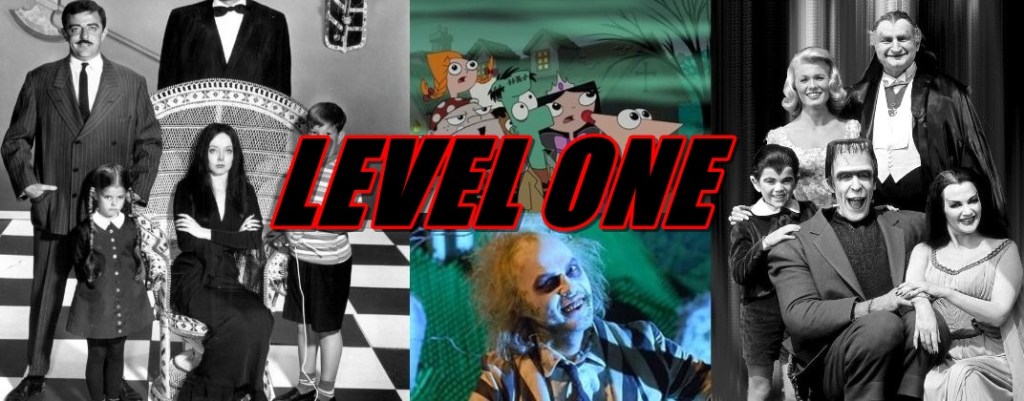
Level one is where I place the mildest iteration of horror/comedy, where the emphasis is on the comedy. This is usually pretty lighthearted, and more often than not it’s family friendly. It usually has the TRAPPINGS of horror: haunted houses, ghosts, monsters, and pretty much anything else you would consider acceptable in an elementary school Halloween decoration, but there is rarely (if ever) a legitimate attempt at scaring people with this. The classic examples here are the legendary sitcoms The Addams Family and The Munsters. People will argue until the end of time as to which one was better (as far as the original TV show goes, that is – there can be no debate that the Addamses have superior movies), but whether you’re a Gomez Guy or a Lilly Lover, these two franchises are about as close to G-rated as horror gets. There are more recent entries into the category as well, like the Hotel Transylvania movies and underrated movie Igor, and a lot of family cartoons and sitcoms shift into this for Halloween episodes, often seen on the likes of Roseanne, Home Improvement, or Phineas and Ferb.
It’s worth pointing out here that, again, I’m calling this a spectrum, and even these five subcategories have different levels. Technically, I would place Beetlejuice here as well (the original, at least, I haven’t seen the sequel yet), because I don’t think that the movie is ever actually intended to be scary. However, it’s obvious that the movie is more intense than the adventures of the Addamses and the Munsters, and thus if it IS a Level One, it’s towards the high end of the spectrum. A 1.9, perhaps.

On the second level, I place those stories in which the situations are relatively serious, but the characters themselves are funny and react to the scary moments in funny ways. Ghostbusters is the classic example of this. The ghosts aren’t played for laughs (not usually, at least, especially not in the first film), and some of the things could actually be legitimately frightening, such as the first appearance of the Library Ghost. But the behavior and antics of Bill Murray, Dan Aykroyd, Harold Ramis, and Ernie Hudson are very funny and keep you from feeling any legitimate terror. Even when it looks like a Sumarian Deity is about to curb-stomp the city of New York, you know that Venkman is going to have a wisecrack to defuse the situation. Another of my favorite films, Abbott and Costello Meet Frankenstein, falls into this category. The classic Universal Monsters are there, and Lon Chaney Jr. (the Wolf-Man), Glenn Strange (Frankenstein’s Monster) and Bela Lugosi (Count Dracula himself) all play their roles perfectly straight, as if they’re in one of their solo adventures and trying to chill the spines of the audience. But with Lou Costello freaking out over a candle and Bud Abbott doing his impression of everybody who never sees Michigan J. Frog singing, there’s no real sense of danger. The blend of master monster performers and master comedians is never more evident than in this film.
Other works that are typically family-friendly but where the villains have the POTENTIAL to cause actual harm fit in here as well. Hocus Pocus and The Nightmare Before Christmas fall into that category, as do certain classic cartoons such as the Bugs Bunny short Transylvannia 6-5000. I struggled a bit with one of my other favorite Halloween movies, Ernest Scared Stupid, trying to figure out if it belongs here or level one. Ultimately, I’m placing it here, because there are kids (the intended audience) who might find the trolls actually frightening, and they’re trying to do bad things. It’s only through the intercession of American hero Ernest P. Worrell that they’re stopped in time. Yes, that means I’m giving Ernest a higher rating than Beetlejuice, but my metric is how scared the INTENDED audience might be, and I’m sticking with it.
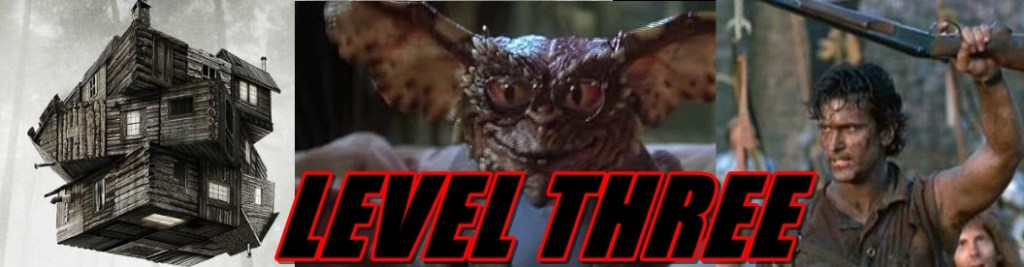
Level three stories have a fair balance between the horror and the comedy. Parts of the film may feel like you’re watching a scary movie, other parts feel like a pure comedy, and when this is done well there is no discrepancy felt by the audience. These two styles of storytelling just match each other very well. Drew Goddard’s The Cabin in the Woods is a great example of this. We start out with what looks like some sort of bland, white-collar office comedy, then cut to a bunch of teenagers getting drawn into what appears to be a very stereotypical slasher movie. But the creeps start to claw their way into the office setting, while the events in the titular cabin turn out to be funnier than you would expect, and by the time we get to the full-on collision of the two settings and you come to understand what one has to do with the other, we’ve got a great blend of the two that maintains pretty much throughout the rest of the film.
We often see this type of balance, by the way, in later films in a franchise. It’s not unusual to see a relatively serious horror movie get zanier in the sequels. Gremlins 2 is one of my favorite examples of this. The first film has its humorous moments, but the sequel really leans into absurdity, with the monsters taking different forms and playing out scenes as though they fell out of a Looney Tunes cartoon. The result is a movie that many fans even prefer to the original. Another good example of this is Army of Darkness, the third movie in the Evil Dead trilogy. The first movie is pure horror, almost nothing funny about it. The sequel, Evil Dead 2, is still very dark, but brings in enough comedic elements to earn it a spot on my spectrum. (That spot is in Level Five, and we’ll get to that soon enough.) But in Army of Darkness, Sam Raimi decided to let Bruce Campbell’s comedic skills and charm really shine through, resulting in a movie that is very different, tonally, from the rest of the franchise, but like Gremlins 2 is a favorite of a large number of fans.

Level Four is where things are getting a lot darker. These are films that are primarily horror movies, but movies that have a twisted sense of humor, and that often comes down to the villain of the franchise. We see this most clearly, I think, with A Nightmare on Elm Street. You’ve got a dead child killer who has the ability to enter and attack you through your dreams, which is not funny at ALL. But the child killer in question also has a wicked funny bone, which manifests itself both in what he says and in the scenarios that he traps his victims in – scenarios that can go from bitterly ironic to just plain goofy. I think it’s the reason that Freddy became such a breakout star in the 80s. There were lots of slashers at the time, but in an era when most of them were imitating Michael Myers and acting as the Strong, Silent Type, Freddy was blazing a trail as a new kind of killer. There have been efforts to imitate him, but few have succeeded.
Probably the most successful imitator, tonally at least, is Chucky from the Child’s Play series. In this franchise, we’ve got a child’s plaything, a three-foot doll, inhabited by the spirit of a serial killer. Making a kid’s toy creepy is a fairly common occurrence in horror (the idea of something that’s supposed to be wholesome and nurturing turning dangerous is frightening), but again, it’s the wit and cleverness of the Chucky character and Brad Dourif’s performance that made the franchise successful and allowed it to grow into so much more than it was in its origins. Oddly enough, later films in the franchise and the follow-up television series do drift, but not lower on the scale of comedy, but towards having a bit more melodrama. It’s a weird, unique transmogrification of the concept, but it never loses its sense of humor.
The Cryptkeeper from Tales From the Crypt and other assorted horror anthology hosts often fall into this category as well. Whether we’re talking about a TV series, movie, or comic book, the format is usually the same: they present to you a scary story, popping in before and after (or sometimes during, if it’s a format that has a commercial break) to drop in a few witticisms about the hapless characters marching stoically to their doom, and the audience loves them for it. The truth is, fans tune in as much for the Cryptcreeper’s ghoulishly ghastly puns as we do for any of the scares that are coming our way.
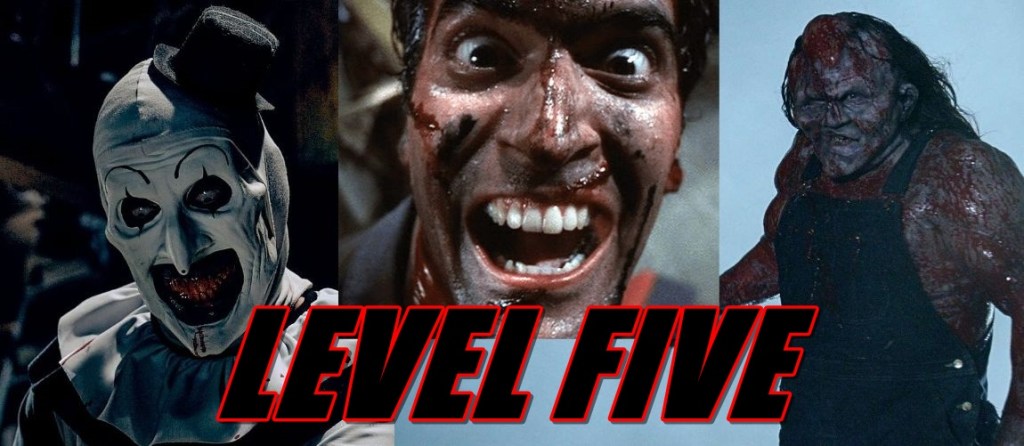
Finally, we arrive at the top tier, that level of horror that’s furthest away from comedy while still, at the same time, having some funny beats. In this category, I place movies that are primarily horror films, but that have a pitch-black sense of humor. Evil Dead 2, again, is a prime example. Bruce Campbell and his girlfriend are under assault by the horrific “Deadites,” demonic creatures that are out to torture and mutilate. Not funny. They take his girlfriend and turn her into one of them. Not funny. One of them possesses Campbell’s hand and he’s forced to cut it off with a chainsaw. Not –
–actually, that part is kinda funny. And that’s how movies on this level go. They take things that SHOULD be horrible and graphic and terrifying, but elevate them to a level that’s almost too cartoonish to take seriously, allowing some laughter. Campbell is great at this. We also see it done to good effect in Adam Green’s Hatchet series. The characters who are NOT undead revenant Victor Crowley are often pretty funny, but Crowley himself is the unspeaking sort of horror. The kills he pulls off, though, are so ridiculously gruesome that the realism is drained away, giving the audience permission to laugh a little bit. To a lesser extent, the same is true of the hugely popular Terrifier films, where the silent Art the Clown brutally tortures his victims. Early screenings for the third film (opening soon) are reporting people walking out during the first ten minutes, with one audience member allegedly even throwing up in the theater. If this is the reaction filmmaker Damien Leone is going for (and I believe it is), then you have to believe he is intentionally going way over the top.
So there you have it, friends, the levels of horror/comedy. Keep in mind that this scale is meant to determine INTENSITY and in no way is indicative of the QUALITY of a film. Every level has great movies and awful movies that belong there. But if you’re trying to figure out how intense a movie you’re looking for this spooky season, think of the scale and make sure you’re not in a Level Two mood when your friend shows up recommending a Level Five.
Blake M. Petit is a writer, teacher, and dad from Ama, Louisiana. His most recent writing project is the superhero adventure series Other People’s Heroes: Little Stars, volume one of which is now available on Amazon. You can subscribe to his newsletter by clicking right here. The only movie on his scale to ever achieve a Level Six? Babe 2: Pig in the City. Weird, huh?
 Blake M. Petit