Geek Punditry #39: In a Streaming World, Does Size Matter?

Two years ago, in a move that made pundits across the world scratch their heads and say, “Well how the hell did that happen?”, Netflix purchased the Roald Dahl Story Company. This trust, of course, is responsible for the works of the creator of such things as Charlie and the Chocolate Factory, James and the Giant Peach, Matilda, and that one short story about the snake. At the time, Netflix announced that this acquisition would lead to the development of their own shared universe, copying the Marvel Method just like everybody else has been trying to do for the last decade. So far, though, we haven’t seen a ton of stuff that feels like it’s part of that world. We’ve gotten a film version of the theatrical Matilda: The Musical, and later this year they’re going to release Wonka, an origin story for a character that Tim Burton definitively proved in his film version has absolutely no need for an origin story, but not much else.
Pictured: Much Else.

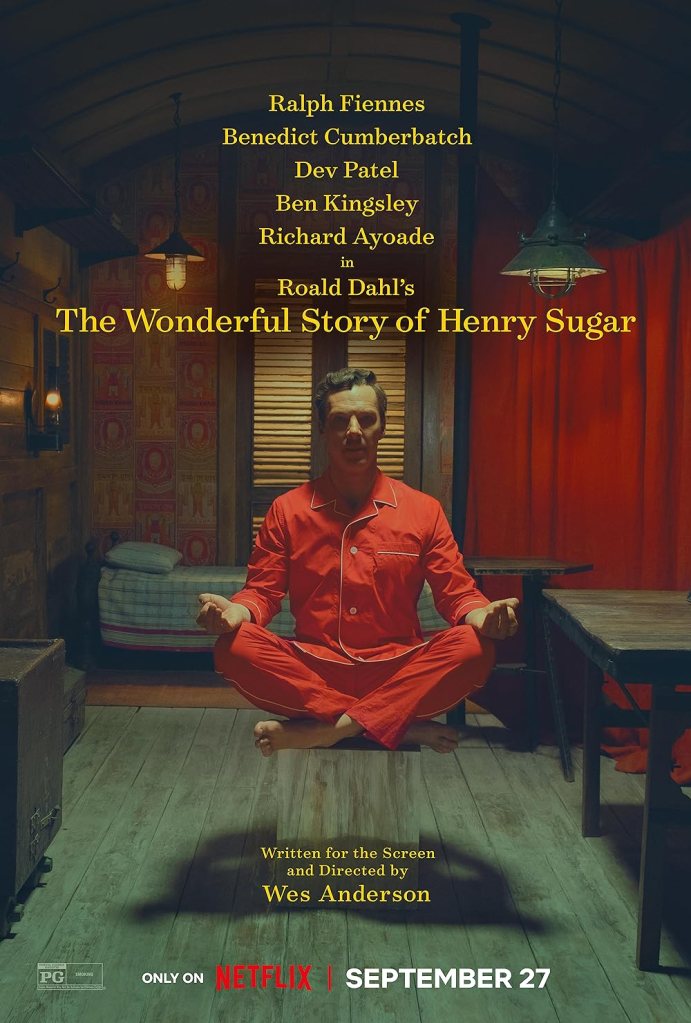
Earlier this week, though, Netflix surprised us all by dropping The Wonderful Story of Henry Sugar, a film based on one of Dahl’s short stories. The movie is directed by Wes Anderson (who also directed the Dahl adaptation The Fantastic Mr. Fox back in 2009) and stars Benedict Cumberbatch as a compulsive gambler who finds a secret to a mysterious power that could potentially make him the wealthiest man in the world. Despite a premise that could easily go very, very dark, the film (and the story it is based on) is remarkably sweet and optimistic, lacking the cynicism that so often creeps in when modern filmmakers attempt to adapt a classic piece of literature that didn’t have a lot of cynicism in the first place. It’s very much a Wes Anderson film, carrying on an odd obsession with films mimicking stage plays that we also saw in his recent feature Asteroid City. The sets of the film are flown in and out in full view of the cameras, the majority of dialogue is spoken directly to the viewer as if the actors were narrating a play, and even visual effects are done in a dime-and-nickel fashion, such as making a character “levitate” by having the actor sit on a box painted to match the set behind him. It’s weird and bizarre and utterly delightful.

It’s also only 39 minutes long.

Although originally presumed to be a feature film when announced, Anderson quickly corrected people, saying that it’s actually the first of four shorts he is making adapting various Dahl stories for Netflix. True, 39 minutes is longer than most of us think of as a “short” film (the classic Looney Tunes shorts were usually in the seven-minute range, and even the Three Stooges rarely broke 20), but it’s certainly not long enough to qualify as a feature film, which has to hit at least 80 minutes to be worthy of consideration. We’ve all seen poorly-made films that pad out their running time to hit that mark, in some extreme cases even running the credits at an excruciatingly slow pace just to cross that 80-minute finish line. The Academy of Motion Picture Arts and Sciences officially defines a short film as running no longer than 40 minutes, including credits, so Anderson got in just under the wire if he’s looking for Oscar consideration, which I’m sure Netflix would LOVE. 

“That’s 43 minutes, Wes. Ya gotta chop four more if you’re gonna party with this guy.”

The odd thing is, as recently as 10 years ago, a film of this nature would have struggled to find a home. Since the end of the era of true theatrical shorts (an era I long for, an era I would dearly love to see return), a lot of theaters never would have run one as long as Henry Sugar. The only way such a film would get any theatrical showing would be in a showcase of short films, which wouldn’t be in wide release, or as part of an anthology of shorts, which historically have not performed all that well. As far as a TV release, it could possibly be aired as a “special,” but would certainly be cut up to add commercial breaks, and possibly even cut down to make room for more commercials. At any rate, stopping a film of this nature to show an ad for Tide Pods would be absolutely gutting to the flow and pace, and make for a far less enjoyable experience than watching it all in one go, like a stage play, as Anderson intended.

Netflix is honestly the perfect home for a film of this nature, and it’s not just this one. Although I have many issues and concerns with the streaming culture that we all live in nowadays, one of the main advantages I think it has given us is the freedom to make a film as long or as short as necessary to tell the story. 

Many people get twitchy at the prospect of watching a movie that’s “too long” (these people usually define that as anything north of 90 minutes). I don’t know if it’s a short attention span or a bladder that just can’t wait, but once they see that runtime creep towards 130, 140 or higher, there are lots of people who would rather skip the whole experience. I have no problem with a long movie – most of my favorites would fall into this category, in fact – so long as the story justifies the length. I hear people complain about the length of the Peter Jackson Lord of the Rings films, for example, but I’ve never been given a satisfactory answer when I ask them what they think could be cut for time without damaging the story. This is why miniseries became so popular in the 80s and 90s, giving more time to adapt a novel that couldn’t fit into a two-hour theatrical experience. It’s why full television series are now being based on books, things like Game of Thrones or Outlander, stories that just flat-out couldn’t squeeze into a movie. And this is, for the most part, a positive thing.

A priceless moment of cinema.

The opposite is also true, however. If stretching out a movie longer than it should be is dull, padding a short movie to make it feature length is deadly. As an avid and enthusiastic moviegoer, I’ve probably seen hundreds of films in theaters over the course of my life, and one of the few times I can remember ever actually falling asleep was in the 2001 film Imposter. (Side note: pound for pound, boring movies are even worse than bad movies. A boring action movie is simply unforgivable.) The film was about an alien race using androids as hidden human bombs trying to attack Earth, and Gary Sinese’s desperate attempt to prove he was not one of these living bombs. It’s a good concept, and Sinese is a great actor, so it’s almost criminal how unbearably dull that film is. I was baffled as to how such an excruciatingly boring movie could be made…until I found out that it was originally made as a short film, part of an anthology of science fiction stories, and it was then expanded out to feature length. If you carved out the parts of the movie that were part of the original short, you may have had a good, taut sci-fi thriller, but by adding additional unnecessary scenes to essentially triple the length of the film, it’s as entertaining as watching Hollywood accountants try to lie about how much money a movie made. 

This movie, for instance, made at least twelve bucks while I took a nap.

Telling a short story is an art that requires different skills than longform stories. The tools are the same, but you wield them differently. A long story can spend time developing plot AND character AND setting AND mood AND theme, whereas shorter works often have to settle for focusing on just one or two of the elements. When it’s done well, it can be a masterpiece. But even those masterpieces can be damaged if you go back and start adding things that don’t belong. It’s like taking a VW Beetle, cutting it in half, and inserting a segment from a stretch limousine. You’ve taken two perfectly good automobiles and turned them into an abomination that doesn’t belong on the road.

It’s hard to make a feature film out of a short story, because by definition, those stories are intended to be short. It CAN be done very well, of course. Several of Stephen King’s short stories have been made into solid features – 1408, the original Children of the Corn, and by all accounts the new adaptation of The Boogeyman (I haven’t seen it yet but I hear very good things about it) each took a brief story and expanded it into features that are engaging and entertaining. On the other hand, sometimes the filmmakers can’t quite build a feature out of a short story, giving us lesser offerings like The Mangler. And sometimes they just try to trade on the name and make no effort at adapting the story at all, and here I of course am referring to Lawnmower Man.

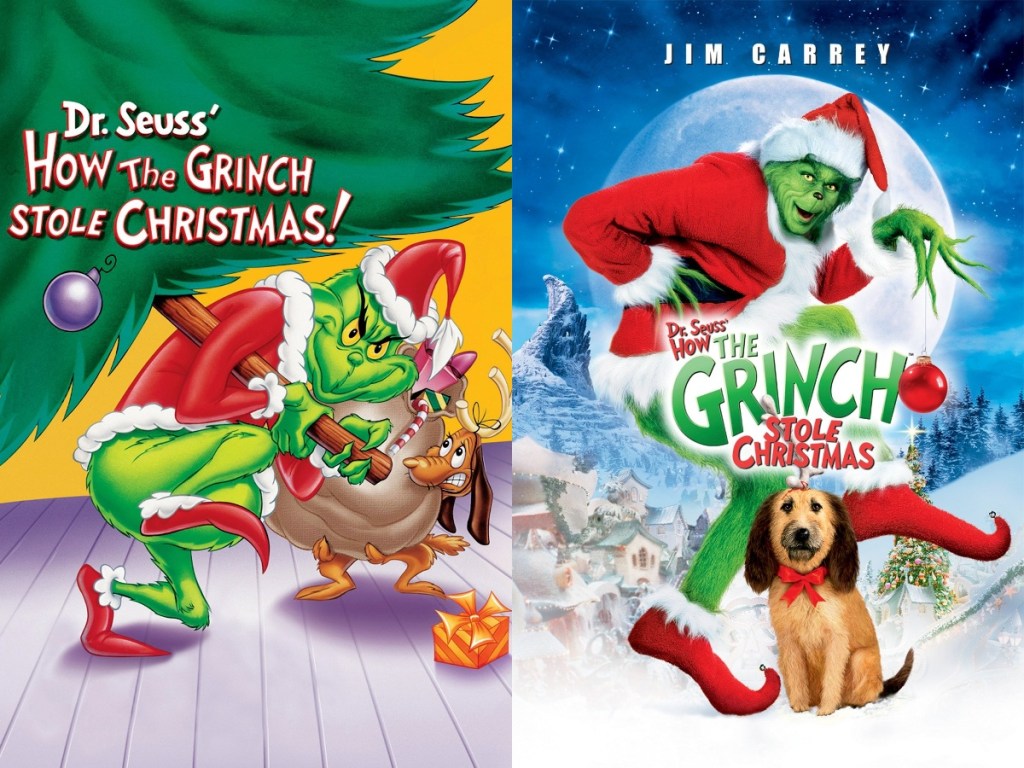
Children’s books are frequent victims of this problem. Books for kids – especially picture books for young children – may only have enough story to last 20 minutes or so. But if you want a theatrical release, that just ain’t long enough, and you have to start inventing stuff out of whole cloth. Sometimes it works. Dreamworks took two short children’s books – Shrek and How to Train Your Dragon – and turned them into flourishing franchises by using the book more as inspiration than a blueprint. On the other hand, look at the awful efforts that the late Dr. Seuss has been subjected to. There have been two separate feature films based on How the Grinch Stole Christmas, and both of them suffer from inflation and unnecessary backstory. What Chuck Jones nailed in 26 minutes, Ron Howard and Jim Carrey puffed out to a painful 104. 

The less said about The Cat in the Hat, the better.
Scientific proof that bigger isn’t always better.

The streaming world has changed this paradigm, though. Previously, there were only two “acceptable” outlets for a film: television or theatrical release. Sure, direct-to-video was a thing, but those usually tried to emulate theatrical movies in form, either to fool people or to maintain an air of respectability. But whether you were making a project for theaters or TV, either way you were chained by scheduling in one way or another. In traditional ad-supported television, almost anything you make has to fit perfectly into a strict schedule of 30 or 60-minute blocks, minus an exact amount of time for commercials. Deviation is not tolerated, because we have to fit in a very specific amount of advertising time. Even premium cable channels, which are not beholden to advertisers, often use that 30-minute grid for scheduling, then pad out the remaining time with promos for their own networks so they can start the next movie or TV show on the hour.

Theatrical movies have a little more wiggle room – there isn’t a hard and fast rule that a movie has to be EXACTLY 90 minutes – but there are still parameters that have to be adhered to. If a movie is less than 80 minutes, theater chains usually won’t run it, as filmgoers will be disappointed at spending $127 on tickets, candy, and soda to take their family out to see something that’s over in under an hour and a half. On the other hand, the longer a movie is, the fewer times a day it can be shown, meaning fewer tickets sold, which again makes theater owners hesitate unless it’s a film they feel is a guaranteed blockbuster. Marvel movies can get away with a longer runtime because they historically bring big box office. Oscar bait dramas can do so as well, particularly if they come from a major studio. But if you’ve got a no-name director, no big stars, and aren’t tied to a recognizable IP, showing up at AMC with your 3-hour long epic about the Battle of New Orleans probably isn’t going to fly.

But on Netflix, Prime Video, or any of the other bajillion streaming services, neither of these factors need to be considered. A viewer doesn’t have to be in front of their TV at 8 o’clock because that’s when their favorite show airs anymore. They don’t have to show up at the theater at 6:45 to get settled in before the previews roll at 7, and they don’t have to worry about running out in the middle of the film to feed the parking meter because Kumquat Warriors 7: The Kumquatening is a longer movie than the previous three combined. In a streaming world there is no reason to make a movie or TV show any longer or shorter than is necessary to effectively tell the story. 

By the time Avatar 4 comes out, you’re gonna need to get a hotel room for the night to finish it.

Streaming series have been running with this a lot. Although they still kinda aim for the old TV paradigm of half-hour comedies and one-hour dramas, they aren’t strict about it. If an episode takes 37 minutes instead of 30, no big deal. If it only reaches 48 minutes instead of 60, we can let it slide. The series The Orville, for its most recent season, jumped from the Fox broadcast network to the Hulu streaming service, and once they were no longer locked in to 42 minutes of show plus 18 for commercials, they delivered an entire season of episodes that went well over an hour. Several of them are long enough that they could have been released as theatrical films. And for the most part, they were very entertaining and compelling, using the freedom of the format to great effect.

And while movies can have the freedom to get longer, things like Henry Sugar are demonstrating that the real freedom is to get shorter. In 2020, in the midst of the Covid lockdowns, Rob Savage made a horror film called Host. The film used the lockdown to great effect, telling a story of a group of friends on a zoom meeting that accidentally summon a dangerous spirit. Shudder picked the movie up and it became a cult hit, despite the fact that the running time is only 57 minutes. This is a film that never could have found a theatrical release without adding a half-hour of fluff, but the streaming world allowed Savage to just tell his story as he saw fit, and that gave it wings that it wouldn’t have had with any traditional distribution model.

To be fair, though, most of us feel this way if we need to attend a Zoom meeting for work.

There are a lot of things about the streaming world that concern me – I’ve mentioned many of them before. But if there’s one thing that is definitely positive about it, it’s the fact that time constraints are largely a thing of the past. The freedom to tell a story in the most effective way without trying to adhere to largely arbitrary rules of running time has already produced some really great content. The important thing is that a filmmaker is allowed to include whatever is necessary but not forced to add things that don’t matter, and that path (in the hands of a skilled crew) will make better movies. If there’s nothing else we can learn, it’s that when it comes to telling a good story, size isn’t what matters at all.  

Blake M. Petit is a writer, teacher, and dad from Ama, Louisiana. His current writing project is the superhero adventure series Other People’s Heroes: Little Stars, a new episode of which is available every Wednesday on Amazon’s Kindle Vella platform. He‘s hoping that this season’s finale of Lego Masters has a seven-hour streaming cut.

Geek Punditry #38: Whence Elseworlds?

Multiverses are big these days. What was once a relatively niche science fiction concept has become popularized by things like the Spider-Verse movies, Best Picture winner Everything Everywhere All At Once, and about seven thousand fanfics where the guy from the Avatar: The Last Airbender cartoon meets and beats up his counterpart from the live action movie. So it’s odd to think that one of the first fictional worlds to use the multiverse as a major concept once attempted to do away with it because it was deemed too confusing. DC Comics introduced its multiverse in 1961 with Flash #123, in which writer Gardner Fox had the Flash of that time period (Barry Allen) meet the Flash of the 1940s (Jay Garrick). The problem was it had been established earlier that, in Barry’s world, Jay Garrick was considered a fictional character that Barry had read about as a child. The fix was to declare Jay’s world an alternate universe, an “Earth-2,” even though he had been around first. Fox was even slick enough to write himself into the story, claiming that the writer “Gardner Fox” had some sort of telepathic link to the other world and didn’t realize the stories he was conjuring that he believed to be pure fiction were, in fact, reporting on actual events from Earth-2. It was a wild, crazy concept for the time, and it started an avalanche.

In the 90s, DC Comics gave us Elseworlds, a series of books set outside of the "real" DC Universe that fans quickly latched on to. This week in Geek Punditry, I take a brief look at the origins of the imprint, the history of DC'S multiverse, and explain how Elseworlds is back -- even if DC doesn't want to admit it.
“How long do you think we can keep this up?”
“Oh, I’d say at least 60 years.”

It wasn’t too long before the Silver Age Green Lantern, Hal Jordan, met his own Earth-2 counterpart, Alan Scott. Heroes who had been continuously published since the Golden Age and were not replaced by other characters (predominantly Superman, Batman, and Wonder Woman) discovered that they had almost identical doppelgangers on Earth-2, and eventually the Earth-1 Justice League of America met the Earth-2 Justice Society for an annual get-together. 

And once there are two universes. why not more? Earth-3 had villainous versions of the heroes: Superman became the evil Ultraman, Batman the crafty Owlman, Green Lantern the kinda lame and poorly-named Power Ring, and so forth. Then DC started adding worlds that included the characters they’d purchased from other defunct publishers: the heroes of Charlton Comics inhabited Earth-4, the Shazam! Family of Fawcett Comics fame was from Earth-S, and the heroes of Quality Comics were shifted off into Earth-X – a world where the Nazis won World War II! 

“Not gonna lie to you, Sam, this is kind of awkward.”

By the 80s, though, DC felt that things had gotten unwieldy, so writer Marv Wolfman gave us Crisis on Infinite Earths, their first mega-crossover event, in which all but one Earth was destroyed and the surviving heroes of many different worlds came to reside there. Both Green Lanterns and Flashes, otherworldly heroes like Plastic Man, the Blue Beetle, and Captain Marvel, and many more populated this “new” DC Universe. For the most part, I think this has worked to DC’s benefit over the years – it’s easier to build a cohesive world if all your main characters inhabit the same universe. Were it not for this, we never would have had the Blue Beetle/Booster Gold friendship, the Flash family wouldn’t have developed into the legacy it currently is, and people would have forgotten about Peacemaker long before John Cena showed up to actually make him interesting for a change. Despite that, though, I have always disagreed with the fundamental thesis that led to the writing of Crisis in the first place – that a multiverse storyline was too complicated for the casual reader. And if anything, the proliferation of multiverse stories in recent years, I think, has proven me to be correct.

What’s more, I think even many of the writers at DC Comics felt the same way, because it wasn’t too long before they started to branch out again and tell stories that didn’t fall into the canon of the one and only DC Universe. Just three years after Crisis ended, DC published Gotham By Gaslight, a one-shot story by Brian Augustyn and Mike Mignola, which featured a Victorian Batman doing battle with Jack the Ripper. The book was a hit, and the idea of telling stories of DC heroes in different worlds came back. Batman: Holy Terror by Alan Brennert and Norm Breyfogle, showed an alternate history in which the British Empire never fell out of favor and the colonies in North America are run by an oppressive government. In this version, Batman becomes a sort of Guy Fawkes-esque character, rebelling against British rule. This book was labeled an “Elseworlds” title, and the name became the brand under which DC stories from outside the continuity took place for the next decade and a half.

Original slogan:” Elseworlds-Because there can’t be too many different versions of Batman.”

Over the years we got some magnificent books, each casting the heroes of the DC Universe in different scenarios. In Superman: Speeding Bullets, Kal-El of Krypton crashed not in Kansas, but in Gotham City, where he was raised by Thomas and Martha Wayne. Batman: In Darkest Night showed us a world where Abin Sur crashed in Gotham City instead of Coast City (a LOT of alien spacecraft touch ground in Gotham in Elseworlds) and thus Bruce Wayne became Earth’s Green Lantern instead of Hal Jordan. Justice Riders casts the Justice League in a western yarn and The Golden Age tells a bittersweet ending to the saga of the Justice Society. Even crossovers with other companies occasionally bore the Elseworlds brand – Batman met both Marvel’s Captain America and Tarzan (published, at the time, through Dark Horse Comics) in Elseworlds stories.

Perhaps the high point of the imprint came in 1996, when Mark Waid and Alex Ross published their four-issue masterwork Kingdom Come. Set a few decades in the future, this is a DC Universe that has been disintegrating ever since Superman left humanity behind following the tragic death of his wife, Lois Lane, and the brutal murder of her killer, the Joker, before he could face justice. In his absence, the world has been overrun by a new breed of metahuman, heroes in name only, more interested in fighting each other than protecting the human race. In this story the Spectre takes a minister named Norman McCay on an Ebenezer Scrooge-type tour of this world as Superman is called back to action following a catastrophic event that pushes the entire Earth to the edge of annihilation. The story is largely a response to the sort of over-muscled, over-gunned, over-pouched heroes that were so popular in the 90s, and despite having a distinct dystopian flavor, it is ultimately one of the most beautiful and powerfully optimistic stories comics have ever produced.

You’re probably expecting some kind of joke here, but this is just straight-up one of the greatest comic book series ever made.

DC quietly pushed the Elseworlds brand aside in 2003, the argument being that it had become overused and was starting to grow stale. It’s hard to argue with that, too, especially when you start counting the number of Elseworlds that basically boiled down to “Kal-El landed somewhere other than Smallville, Kansas.” (Off the top of my head, we’ve got Superman: Red Son, Superman: The Dark Side, Superman: True Brit, JLA: The Nail, The Superman Monster, and even another Dark Horse collaboration, Superman/Tarzan: Sons of the Jungle, all of which hinge on that same basic point.) As the multiverse was slowly creeping back into the “real” DC Comics, Elseworlds was placed…well…elsewhere. It came back briefly in 2010 for a three-issue Superman miniseries, Last Family of Krypton (this time little Kal-El’s parents escaped Krypton with him), and the name was used for an Arrowverse crossover event on TV, but other than that, it’s been gone for a long time.

“Okay, so you’re kind of over Batman Elseworlds. How about 37 Superman Elseworlds that all have the same starting point?”

Or has it?

DC is not using the name anymore, no, but they certainly are using the same basic concept. There are a lot of DC books being published that feature versions of the DC heroes in different worlds. Sean Phillips’s Batman: White Knight and its various sequels and spinoffs are set in a world where the Joker goes sane. Since that series premiered in 2017, it’s built a small universe of its own. There’s also the world of DCEased, a universe in which Darkseid succeeds in gaining the Anti-Life Equation, unleashing a memetic virus that transforms its victims into a sort of techno-undead creature, but don’t you dare call them zombies. Jurassic League was a miniseries that re-cast the Justice League as anthropomorphic dinosaurs, because why the hell not? Dark Knights of Steel features a medieval world where Jor-El, Lara, and Kal-El came to Earth together and live in a sort of fantasy setting surrounded by analogues of the other DC heroes and villains. And then there’s the cleverly-named DC Versus Vampires, which is about the signing of the Magna Carta.

Pictured: Pope Innocent III and King John.

Kidding. No, it’s exactly what it says on the wrapper. 

The thing about these books is that none of them are self-contained. Most Elseworlds, back in the day, ran anywhere from one to four issues, but that was typically where it ended. White Knight and DCEased both had multiple series and one-shots. Vampires and Steel each ran for 12 issues plus spin-offs. And each of these worlds has been designated a number in the new, current, DC Multiverse. They are Elseworlds in all but name – in fact, in a more literal sense than many of the older (forgotten) Elseworlds books, as they are actually other worlds in the DC Multiverse. Many of the other Elseworlds of the past have been “imported” into the new DC Multiverse as well, especially the much-loved and highly-inspirational Kingdom Come, which has crossed over and interacted with the “Main” DC Universe on many occasions, including in Waid’s current run on Batman/Superman: World’s Finest.  

Since DC has once again embraced the concept, what I (and, I suspect, many of the fans who were reading comics in the 90s) would like is for them to once again embrace the brand. Bring back Elseworlds. When these books are reprinted, give them the label. When the inevitable sequels come out, give them the label. If anything, the label will only help. While it may be clear that Jurassic League isn’t the “real” DC Universe, a casual fan picking up DC Versus Vampires might be concerned about why Hal Jordan is doing his best Dracula impression in this series but it doesn’t seem to be affecting the regular monthly Green Lantern title. Having a specific brand would alleviate that problem.

The only difference between these and an Elseworlds is the label.

And since the current philosophy at DC seems to be “every story happened SOMEWHERE in the Multiverse,” I say they should run with it. Don’t just put the Elseworlds LABEL on the book, plop a NUMBER in it as well. When they print the Dark Knights of Steel omnibus, give it an Elseworlds logo with a little mark signifying that this is Earth-118. Instead of reprinting Kingdom Come under the “mature readers” Black Label imprint (where it is woefully misplaced), give it back the Elseworlds mark and label it as Earth-22. There are two more miniseries coming out this year set on Earth-789, the world shared by the Christopher Reeve Superman and Michael Keaton Batman movies – give THOSE the Elseworlds labels too!

It exists, it has fans, and it has a clear purpose now that’s more than just a grab bag of weird. It’s true that the label was overused in the 90s, but the solution to that isn’t to never use it again, it’s just to use it sparingly. There’s no fan of the books that currently exist that would be turned off by an Elseworlds label, and there are many fans who may be more inclined to pick them up if they saw that familiar, beloved brand again. If nothing else, I think, it’s worth the try. Nothing in comics ever really dies – Superman can come back from Doomsday, Barry Allen can come back from the Speed Force…let’s let the Elseworlds brand have its time back from the dead. 

Blake M. Petit is a writer, teacher, and dad from Ama, Louisiana. His current writing project is the superhero adventure series Other People’s Heroes: Little Stars, a new episode of which is available every Wednesday on Amazon’s Kindle Vella platform. Fingers crossed for the Elseworlds miniseries set on Earth-26, home of Captain Carrot. By now you should know he’s not joking.

Geek Punditry #37: What’s Your Favorite Scary Franchise?

I’ve said it before and it’s worth repeating: what true fans want, above all else, is more. And this is especially true of horror movie fans. The concept of a “horror franchise” goes back at LEAST to 1935, when Bride of Frankenstein was the first sequel to one of the classic Universal Monster movies. (One could even argue that it goes back to the Golem films of the silent era, but only one of those has survived.) Frankie’s creature would go on to appear in eight official films, with his pals Dracula, the Wolfman, the Invisible Man, and the Creature From the Black Lagoon each appearing several times. In the 70s and 80s, the horror franchise became a cinematic staple, with the likes of The Exorcist and The Amityville Horror paving the way for the slasher icons of Halloween, Friday the 13th, and A Nightmare on Elm Street, among a sea of others. I love horror movies, and I appreciate many of the great franchises throughout history. But when I look at the vast sea of horror available, I’m surprised to see which franchise – besides the Universal classics, of course – holds the trophy as my personal favorite…the bloody good adventures of Ghostface in the Scream series. 

“I wish I knew how to quit you…”

Having recently watched the sixth and most recent film, I’ve been thinking about why I enjoy them so much. I’m not going to start a debate over which series is the best – there’s no way that you’re going to convince anybody that their personal favorite isn’t the best and it’s useless to try – I’m just saying that it’s the one that means the most to me. There are a few reasons for it. First off, there’s nostalgia. Believe it or not, Scream was the first horror franchise I ever got into. Growing up in the 80s, I already knew the characters and tropes of slasher films via cultural osmosis, but my parents weren’t into horror movies and I was never really exposed to them until college, when my friend Jason showed me the first Scream. (Jason was the manager of a video store at the time, then later the owner of the video store, then later employed in an entirely different line of work because video stores ceased to be a thing.) We watched Scream because Jason wanted to see the newly-released Scream 2 and I HAD to see the original first, and he was right. I was hooked. I loved the meta comedy, I loved the characters, and I was impressed at the structure of the mystery. Even before I considered myself a horror fan, I was a fan of Ghostface. 

This was cool in the 90s, I swear.

Over the next few years I branched out and slowly acquainted myself with the films of Freddy, Jason, Michael, and the rest, but I kept coming back to Scream. There are great films in every horror franchise, but to this day this is the only franchise where I haven’t seen anything I would classify as a “bad” movie. Even the worst Scream film (that would be Scream 3, for those of you keeping score) is watchable, with funny moments and good twists, and I would never skip over it when doing a rewatch of the series the way I would, say, Halloween: Resurrection

It’s not even close.

Even in the early years I felt somewhat protective of the franchise. While 3 was not my favorite, I accepted it as the end of the story, capping off the trilogy in a way that tied things up and left the characters I cared about in a satisfying place. When word came of the fourth installment 11 years later, I was somewhat disturbed, thinking that it would break the ending of a supposedly-completed story the way other franchises have (lookin’ at YOU, Toy Story 4), but with both director Wes Craven and original writer Kevin Williamson returning, I decided to give it a chance. To my shock, I thought it was the best film since the first and eagerly awaited part 5. I did not expect it to take another 11 years, the death of Craven, and a quasi-relaunch to get it going again…but the relaunches have worked for me as well, in ways that many other remakes, reboots, and “requels” have not. 

There’s something unique about the way the franchise has been crafted. One of the strengths, I think, is Ghostface himself. Unlike most other horror franchises, the “face” doesn’t belong to a singular villain that comes back from the dead time and again. Ghostface is merely a mask, picked up by a different character (or more than one) each time to wreak havoc all over again. This allows the franchise to maintain the mystery of who the killer is each time (something that Friday the 13th had to abandon after the first installment). It also doesn’t have to worry about how to resurrect the villain time and again, with increasingly complicated supernatural rules that can get confusing and run the risk of being contradicted by future installments (such as what happened to A Nightmare on Elm Street). And unlike most other long-running horror franchises, it has never been rebooted (just TRY to explain the Halloween timeline to someone who isn’t already a fan). That really means something to people like me.

“So in the FIRST continuity Michael had a niece named Jamie and in the SECOND continuity he had a nephew named John and in the FOURTH continuity he wasn’t related to Laurie Strode at all and in the ROB ZOMBIE continuity — hey! Why aren’t you taking notes?”

I think this also makes it easier to accept changes in the franchise, the fact that there’s a singular figure, but not a singular character propelling the plot along. Replacing the actor behind a horror icon is tricky. If you ask most fans, Robert Englund IS Freddy Krueger, Doug Bradley IS Pinhead, and efforts to recast them have at most been grudgingly tolerated, and at worst, outright rejected. Even icons who wear masks and have been portrayed by multiple actors still spark a heated debate. Ask any group of fans who the best Jason Voorhees was and you’ll find the room sharply divided between those who believe it’s Kane Hodder and those who are certifiably insane.

The closest thing Ghostface has to an icon performer is Roger L. Jackson, who has provided the voice of the killer in every movie. He would be difficult to replace, because he’s so damned good at delivering a voice that can shift between charming, snarky, and terrifying at the snap of a finger, but when the time comes that he’s unwilling or unable to keep going, it wouldn’t be a death knell for the series.  

There’s no point in arguing who the “best” Ghostface is because every Ghostface is different and brings something different to the table, and that’s by design. It would be bonkers to argue whether Billy Loomis was a “better” Ghostface than Mickey Altieri, because they’re not the same character. Sure, one could (and will) argue about which performance or story or motivation or one-liners they enjoy more, but there’s no room for arguing that one of them goes against the “spirit” of the character the way one could do with Michael Myers. (Is he supernatural? Is he not? Is it Tuesday? What was with that guy with the black boots?) 

I know it seems like I’m picking on the Halloween franchise a lot. That’s because for every masterpiece of horror in that line, there are two movies full of crap like this.

It’s this versatility in the main villain that allows the franchise to be malleable and re-started every so often without the kind of pushback you had against Jackie Earle Haley as Freddy Krueger. It also allows the tone of the series to shift slightly as sensibilities change. The original Scream was a slasher movie about people who had watched too many slasher movies. As the franchise continued, it got deeper into the metafictional aspect of the concept. Scream 2 was a sequel about horror movie sequels, and introduced the “film-within-a-film” Stab, which was based on the events of the first movie and proved to provide fuel for the rest of the franchise going forward. In Scream 3, we saw the conclusion of a trilogy about trilogies. Scream 4 was a movie about remakes (but not really). The 2022 Scream was about “requels” and included a joke at its own expense about dropping the number even though everybody knew it wasn’t an actual continuity reboot. With Scream VI they’ve finally embraced the idea of the rules of franchises, as opposed to specific installments. Where they go after this, I’m honestly not sure, but I’m along for the ride.

First the Muppets, then Jason, and now Ghostface takes Manhattan.

Some people will ask how I can stack Scream up against other horror franchises, many of which I enjoy very much, but this is without a doubt the series that I’ve rewatched more than any other. It helps that there are (for now, at least) fewer of them than most of the other really iconic series. There are currently six Screams, and until January of last year, there were only four to throw into a quick binge. When you put together every iteration of the franchise A Nightmare on Elm Street has given us nine films, Friday the 13th is at 12, and Halloween has churned out a weekend-slaughtering 14. The less said about how the Amityville name has been pimped out, the better. 

The fact that it’s never been rebooted makes it feel a bit more – and I hesitate to use this word, but I can’t think of another one – a bit more real. Freddy’s seventh film went into an entirely different continuity, although it did so brilliantly. The Friday movies never technically had a reboot until the remake came out, but it also plays fast and loose with what actually “counts,” especially the later films. The last three of them make virtually no attempt to directly follow the earlier movies at all. Get somebody who doesn’t watch horror to watch the first Friday the 13th and then Jason X and see if they can figure out how the dots connect. The upcoming Crystal Lake prequel TV series will probably not make things any clearer, for that matter. 

And then there’s Michael. You know the rest.

But every installment of Scream (save for the in-name-only TV series from a few years back) is part of the same continuity, despite playing with the rules of remakes and requels. Every film not only counts, but is recounted in the later films. There are scenes in the most recent film that are full of what film nerds like me call “continuity porn,” full of elements and items that not only recall all of the previous films, but are ripped straight from them, but it’s done in a justifiable way. I’m anxious to find the website where someone (inevitably) has cataloged all of the Easter Eggs that can be spotted by going through that scene one frame at a time, because I’m sure there’s a lot that I missed.

In a surprise crossover, Ghostface takes decorating advice from Tony Stark.

Speaking of the most recent film, the one that came out earlier this year, it’s an interesting anomaly. Without getting into spoiler territory, it’s the one where the “rules” seem to matter least, but it pulls it off without sacrificing the love of movies that is at the core of the story. Ghostface is behaving differently this time around, and the film pulls off some great red herrings that work because it plays with the expectations of horror movie fans, but at the core it still has Scream in its DNA. And this is where I think they’ve got to start figuring out how to keep the franchise going, if that is indeed the intention. (Seeing as how they’ve already done preproduction for Scream VII, it seems clear that it is.) They’ve touched on pretty much everything they can on horror movies of the last few decades. If they don’t want to wait another 10 years or so for horror to evolve again, they’ve got to find different ways to make the story work. They’ve built a solid and likable core group of characters that is sufficiently different from the original trio of Sidney, Dewey, and Gale to not just feel like a remake. At the same time, they’ve also kept the window open to bring back the legacy characters, which this film does in a mostly satisfying way. This film – being the second story with these characters – also has some echoes of Scream 2 in terms of setting and motivation, without just being a copy. And that leaves the question about the next one…eh, More on that in a minute. 

Wherever they go, I will be there to watch, and anxious to see who the next people are to don the Ghostface mask and cause a little terror and a lot of laughs. Whereas once I was satisfied to let it lie, I now feel optimistic for the future of this story, and happy to note that there is, indeed, life after Wes. 

If you’ve already watched every Scream movie to date, including VI, skip below my standard plug for a little bonus – I pontificate about the identity of the killer in Scream VII. By necessity, my theory will have spoilers.

Blake M. Petit is a writer, teacher, and dad from Ama, Louisiana. His current writing project is the superhero adventure series Other People’s Heroes: Little Stars, a new episode of which is available every Wednesday on Amazon’s Kindle Vella platform. Roger L. Jackson has got to have one of the sweetest gigs in Hollywood, right? Every few years he comes in, spends a few hours recording lines off-camera, and is one of the most recognizable horror icons of all time.

I’m about to take you for a ride.

You back? Great. Okay, so I think I’ve already figured out the killer of Scream VII, and it’s before they’ve even filmed a frame of it. Actually, I have two theories, and it really depends entirely on how dark they’re willing to get. The new series is, in essence, “requeling” the original trilogy. Scream (2022) is the requel of the original: a girl (Neve Cambpell/Melissa Barrera) is stalked by a killer indulging ties to her past (Sidney’s mother/Sam’s father). In the end the killer – or one of them, at least – turns out to be her boyfriend (Skeet Ulrich/Jack Quaid).

I made it through this whole column without a Star Trek reference, so let me just quickly say how awesome Quaid is on Lower Decks.

Scream VI requels Scream 2: the characters are now in college, and the main killer turns out to be a side character (Laurie Metcalf/Dermot Mulroney) who was secretly the parent of the previous killer and is seeking revenge for his death. 

Laurie Metcalf murders considerably fewer people on The Big Bang Theory.

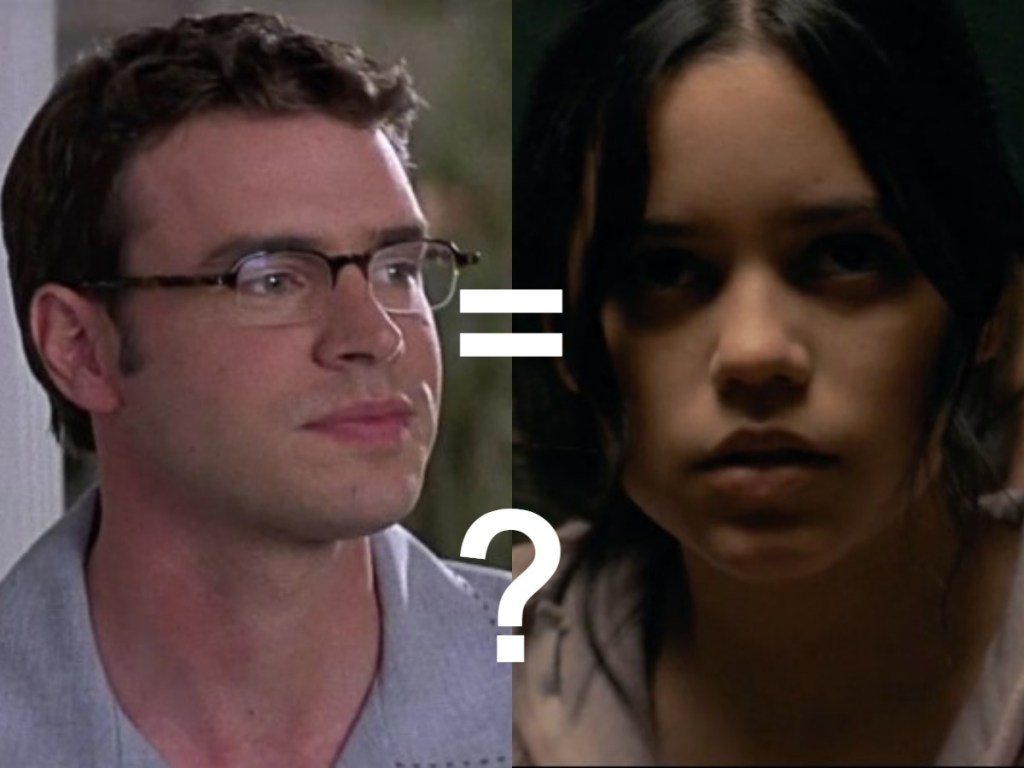
If they continue following the pattern, Scream VII would logically requel Scream 3. This was the only film in which the killer went solo (which is called out in VI), and it turned out to be Sidney’s long-lost half-brother Roman Bridger (Scott Foley). So for Scream VII, are they going to go the long-lost half-sibling route again?

Nah. I think they’re going to go for the half-sibling that’s right in front of our face. I think it’s going to be Jenna Ortega’s Tara. She’s the half-sister of the main character, so she would fit the pattern. There’s even a bit of dialogue in VI that points out how logical it would have been if, at some point, Courteney Cox’s Gale Weathers had snapped from her repeated trauma and become a Ghostface herself. That could easily be seen as teeing up the ball for it to be Tara in the next go-around.

TELL ME THIS DOESN’T MAKE SENSE.

Let’s call that Theory A. The biggest question mark is if the series would REALLY go that dark, allowing us to grow attached to a character for two movies before pulling the twist and making her the villain. They MIGHT…but if they don’t, I still think the killer would have to have a family connection. In that case, Theory B: the killer will turn out to be Tara and Sam’s absent mother. She’s never appeared on screen. Sam rejected her for lying about who her father really was, and when the truth came out it ended her marriage to Tara’s father. When Tara learned the truth in her first film, she cut off ties to her mother as well. She could be coming after Sam for “stealing” her family from her. Still dark – a mom wanting to murder her daughter – but not QUITE as dark as making Tara the killer.

Of course, these are theories and – with the Hollywood strikes continuing – who knows what’s going to happen with anything? Whatever is currently planned might wind up on the scrap heap of history. But as of right now, I’m calling it. That’s what I think is likely to happen in Scream VII, Theory A and Theory B.

Then again…A+B=C? In most Scream movies, after all, there have been two killers…

Geek Punditry #36: On a Gridiron Far, Far Away

I haven’t listened to the radio in years. I know this is no longer a novel position. Most people in this digital age ignore the radio in favor of populating their own playlists on Spotify, Pandora, Amazon Music, Heimdall’s Jockstrap, or whatever app is en vogue at the moment. But even before the rise of such services, podcasts had long since become my entertainment of choice while driving. One such podcast I discovered years ago helped turn me on to “podiobooks” (audiobooks delivered in podcast form, in case you couldn’t decode the term), and that in turn directed me to the new pantheon of writers that were riding the wave that came at the time that medium was burgeoning: people like Mur Lafferty and J.C. Hutchins and, most pertinent to our discussion today, the Future Dark Overlord himself, Scott Sigler.

Clearly the creation of an evil genius.

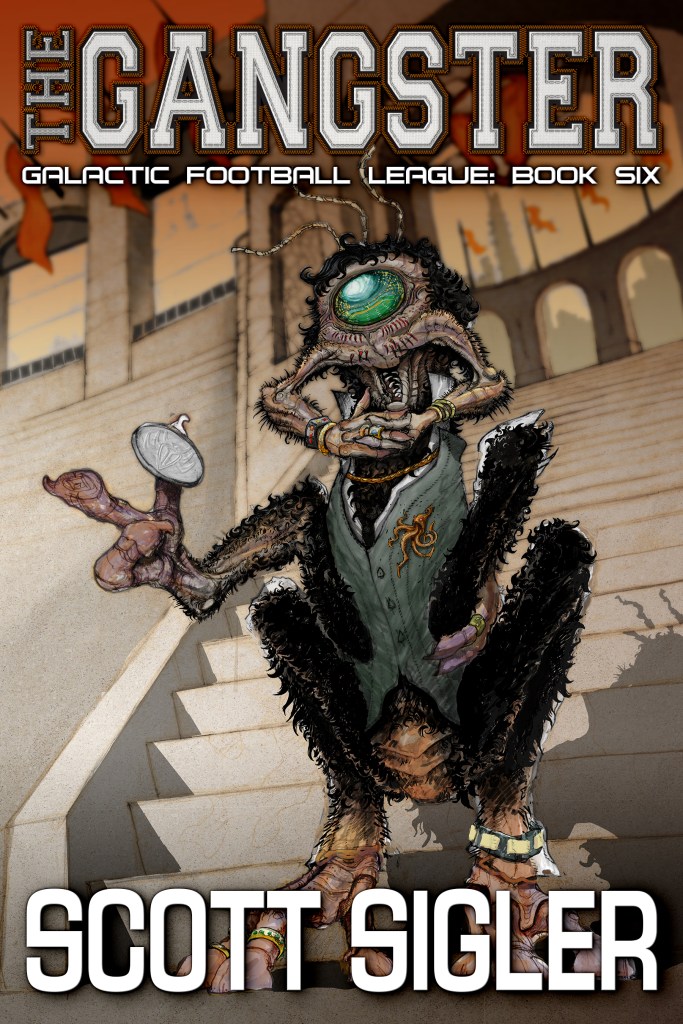
So as not to bury the lede, the reason I’m writing about Sigler this week is because a new podcast series is launching that presents his most popular series of stories starting over from the beginning. So right now I want you to open your chosen podcasting app (yes, that includes Spotify) and subscribe to “Scott Sigler’s Galactic Football League Series.” Then, while the first three episodes are downloading, I’m going to tell you why this series is awesome and you should be giving Sigler your attention.

Sigler, as you could probably guess from the inclusion of the word “Galactic,” is a science fiction writer. He has developed a complex and fascinating universe with intriguing characters, wild and bizarre alien species, and a degree of worldbuilding that could make Tolkien and Rowling take notice. Sigler has laid out thousands of years of history (both before and after the present day) that he feeds his audience a little bit at a time. The individual novels or series stand on their own, but when read together you get a rich and textured science fiction tapestry that plays out over 2000 years.

Let’s start with the Galactic Football League stories, since that’s what the podcast is going to cover. The stories in the GFL era take place about 700 years in the future, in a universe where humanity has spread out to the stars, encountered several sentient species of alien, and bifurcated into many different worlds and governments. Football – American-style football, also known as “Gridiron” – has been adopted as a sort of de facto peacekeeping event in a galaxy in turmoil. Football, you see, is no longer played only by humans, but by the massive and powerful Ki, the swift and agile Sklorno, and the brutal Quyth, among others. By forcing these different races to work together on the field, conflicts between them have been mitigated, even as most of them are under the rule of an alien empire of small, batlike creatures that rule through sheer force of numbers. The story focuses on Quentin Barnes, a young quarterback raised in the xenophobic Purist Nation, who has to learn how to cooperate with these bizarre alien species if he wants to achieve his goal of winning a Galaxy Bowl. 

So right off the bat, the GFL series has aliens and sports, which are both a lot of fun. But that’s not all. In the time of the GFL, Gridiron Football has largely come under the control of massive organized crime syndicates, with teams owned by actual criminals, illegal substances smuggled on the team transport ships, and players doubling as strongarm enforcers for their leaders. That’s right: it’s also a gangster series. (In fact, that’s the title of the sixth book: The Gangster.) And as the story goes on, although football never leaves, it becomes increasingly clear that the story is about more than just football, that Quentin is more than just a quarterback, and that the stakes they’re really playing for are much, much higher than a championship ring. Sigler has developed an intricate and fully fleshed-out universe that is completely engrossing on multiple levels. 

One of the most impressive things about it, for me, is the degree of work he has put into crafting his various alien species. There are none of the “rubber forehead” aliens that we see in Star Trek or most TV and movie sci-fi franchises, a fact that’s made easier because these are novels and Sigler doesn’t have to worry about budgetary concerns. Every alien species in Sigler’s universe is imagined from the ground-up with their biology, life cycle, and culture carefully crafted, many of them in ways very unlike what we’re used to. The species that is most like humans, the Quyth, are really only like us in that they are bipedal and experience a similar emotional range. Unlike humans, the Quyth have a biological caste system that divides the species, which is covered in either fur or chitin depending on which caste they belong to. They also have a pair of dexterous pedipalp arms protruding under their head and their one massive eye, which changes color to indicate their mood. Quyth leaders gain their dominance by castrating their siblings while still in the womb. Quyth females are never seen by outsiders at all. This is the CLOSEST alien species to humanity in this universe, and it’s a species that in real life would be virtually unthinkable, except perhaps in southern California.  

See? Just like us.

But I digress – the GFL is probably Sigler’s most popular work amongst his fans. It’s certainly the era that is discussed the most and for which we are most eager to see new installments. But it’s not the ONLY era. 200 years before the GFL comes The Crypt, a military drama about a crew assigned to a ship with the reputation of being a deathtrap for anybody who is put on the duty roster – usually as a sentence for some crime. Then there are the modern stories, such as Ancestor, Earthcore, and the Infected trilogy. While the GFL stories are suitable for young readers, these other books are (even) more violent and brutal, and definitely not intended for kids. They are, however, part of the same universe, something that becomes clear in the second Infected book when the characters are given a glimpse of an alien race that is terrifying to them, but that readers of Sigler’s other work will quickly recognize as a familiar species in the GFL era. And then he does it again with the Generations trilogy, a series set a millennia after the GFL about a group of teenagers who wake up on a distant spacecraft with no memories of their past. I don’t want to get too spoilery, but I will reveal that eventually the series, again, starts to share familiar species with the reader.

Rated TV-KSD: Not approved for people with Kitchen Scissors or the city of Detroit.

The point I’m getting at is that Sigler has a universe that is complete, complex, intricate, and really entertaining, and is so in various time periods, which is a trick that very few writers have managed to pull off. So I respect and admire Sigler for that as much as I am a fan of the writing itself.

But that’s not all. There are lots of writers whose work I admire and respect. What sets Sigler apart, why I’m writing about him today, is the way he has masterfully crafted a community around himself. From the early days when he branded himself the Future Dark Overlord of the world to the way he has cultivated relationships with the many “Sigler Junkies” that populate the internet, I am in awe of the way he’s built out his fan base. Sure, there are highly devoted fans of Harry Potter, Lord of the Rings, Twilight, and plenty of other book series, but most of those have been built over many years or were done with the help of a major publishing empire or movie studio to enhance the brand. Sigler has done it without those things. Oh, he’s had some mainstream success: he’s published books through Crown, hit the New York Times list, and he’s even contributed licensed novels and short stories to the Alien and Predator franchises…but for the most part, his community and his fervent, devoted fanbase was cultivated by himself and his small support staff. 

You know you’ve arrived when there’s a Geiger monster holding a bloody helmet on your resume.

When I look at what he’s done and how effectively he’s done it, I know that Scott Sigler is who I want to be when I grow up. He’s the reason I did audiobook versions of Other People’s Heroes and A Long November back in the day when podcasting was still young and easy to get into if you didn’t have any resources. (Most people don’t know this, but the name “Blake” is actually from an obscure Peloponisian dialect and translates roughly to “lacks both resources and the wisdom to use them correctly.”) While the new media landscape has changed dramatically since the days when he was starting, and I don’t know if his techniques could work today, that doesn’t matter. It already worked for him, and he’s allowed to enjoy the fruits of his incredible amount of hard work and talent.

Plus, in every interaction I’ve had with the guy online, he’s seemed to be a really cool and stand-up dude. 

So I’m saying all this to give back to him just a little bit for the hours of audio entertainment he’s provided me over the years. If anything I’ve said sounds interesting to you – if you’re into sci-fi or sports, if you’re looking for your next audiobook, if you’ve got a middle-grade kid in your life that you’re trying to get into reading, check out the GFL saga. The first three episodes dropped this week, and there literally years worth of content coming down the line. Hopefully enough that the podcast won’t wrap up before the FDO finishes writing the series.

Don’t worry. I’ve got faith that he’s not going to George R.R. Martin us. If there’s one thing that I believe is true about Scott Sigler, it’s that he doesn’t know how to stop working.

Blake M. Petit is a writer, teacher, and dad from Ama, Louisiana. His current writing project is the superhero adventure series Other People’s Heroes: Little Stars, a new episode of which is available every Wednesday on Amazon’s Kindle Vella platform. Hopefully, before you get too far into the GFL series, you’ll understand why Blake is constantly looking at some fool doing something foolish and muttering, “This kid needs a Ma Tweedy in his life.” 

Geek Punditry #35: Cracking Open the Mailbag

Here at the Geek Punditry Global Media Hub and Frozen Yogurt Emporium, we do our best to keep on the cutting edge of popular culture. We check in on all the websites. We read the “Tweets” and the “X”s. We “Insta” and we “Thread.” We do not TikTok, however, because although we do have several incurable neuroses, narcissism is not one of them.

And as such, occasionally we find ourselves being asked questions by you, the faithful reader, about some of the elements of pop culture that are flickering across the internet as we speak. So this week, we’re going to crack open our bulging folder of email and address some of the questions that you’ve had for us lately.

Dear Geek Punditry,
I’ve recently subscribed to the Marvel and DC Comics apps so I can get down and read a whole bunch of comic books, and I was wondering where to start. There’s so much stuff on there and I’m not sure what I should read first.
Overwhelmed in Omaha

Overwhelmed,

You’ve certainly come to the right place. While the sheer amount of content on these two apps can be intimidating, if you figure out how to filter through it and find the things you like, the services are worthwhile. For example, if you’ve got the DC Ultra level, you can access all of Neil Gaiman’s Sandman and Bill Willingham’s Fables. The recently-released first issue of Mark Waid and Bryan Hitch’s Superman: The Last Days of Lex Luthor is there, and it is excellent. I’ve been using the app myself to catch up on those Knight Terrors miniseries that fall into books I don’t usually buy and therefore aren’t getting physically, and I’ve enjoyed several of them as well. And of course, no visit to the DC app would be complete without reading DC Challenge and Captain Carrot and His Amazing Zoo Crew.

As for the Marvel app, when I first started using it my goal was to figure out what’s going on with the X-Men in the age of Krakoa. I started reading those books when Jonathan Hickman took over, then gave up because there were simply too many of them to keep up with. I saw the app as an opportunity to read the entire line all in one place without spending a fortune, and I’m happy to report that having all of the installments of the various X-Men related titles available in one place has in absolutely no way made it easier to keep up with them or, for that matter, even really understand what the hell is going on. I’d also recommend Chip Zdarsky’s Daredevil, which I’ve mentioned before, Gail Simone’s Variants, and for old-school fun, check out Peter Porker, the Spectacular Spider-Ham.

When the hell is THIS crossover going to happen?

Geek Punditry,

I’m a teacher, and earlier today one of my students saw the display of Superman stuff I keep in my classroom and he called it “lame.” How do I let him know that he, in fact, is the lame one, and also a stupid-head, without getting called in to the Principal’s office again?

Educational in Erie.

EE,

Ah, the “Superman is lame” argument. I’ve heard it many times. “He’s too powerful, he’s too perfect, he’s too basic.” Indeed.

First of all, I wish I could talk to the person who decided that “basic” is a pejorative. “Basic” means simple or uncomplicated, and frankly, there are a lot of days where I think it would be great if the whole damned world was more basic.

That said, the concept of Superman may be basic, but the characterization certainly is not. What you have, when you boil Superman down to his essence, is a man with the power to do virtually anything but who chooses to use that power to do good. I think people reject that concept because they can’t conceive of anybody behaving that way in real life, but that’s what makes the character so compelling to me. What kind of person, with the ability to conquer the world, would rather use it to get kittens out of trees? Of course, that’s only a small part of his job description – he also averts natural disasters, saves people from fires, thwarts supervillains, flummoxes corrupt super genius scientists/businessmen, and saves the world seven times before breakfast…and he does it because he can. Because it would be inconceivable to him to do otherwise. 

I’m not saying that there haven’t been bad Superman stories in the past (written in the past few years, beginning shortly after Action Comics #1000, theoretically speaking), but when Superman is good, there’s nothing better. Great Superman stories take this concept of an incredibly powerful alien and blend it with just a hint of the Pinocchio syndrome: he wants to be human. And like the best Pinocchios, he wants it so badly that he winds up becoming more human than anybody. Superman is a character who believes in Good – not the lowercase adjective good, but a proper noun Good that is a tangible force in the universe. He believes that most people carry it within them, and his job is to bring it out. He believes the best of everyone, he cares about everyone. In a recent story by Phillip Kennedy Johnson (Action Comics #1053) he was asked by someone why he would bother to save the life of one of his enemies. His answer was the most Superman response I’ve ever heard: if someone who has done wrong dies, they will never have an opportunity to become better.

When you don’t believe in yourself, remember that this guy would.

THIS is the Superman I love. The one who first identified himself, when asked who he was by Lois Lane, as “a friend.” The one who will never give up on people. The one whose faith in the inherent decency of humanity is both his greatest weakness and his greatest strength. If you can’t tell a great story with Superman the fault lies not with the character, but with the writer. 

Also, I like the trunks on the outside.

Hailing Frequencies Open,

In the past, you have extensively discussed your love for various iterations of Star Trek in this column. I was wondering if you would be willing to rank the various series for us, from your favorite to least favorite.

Andorian Andy

Andoriandrew,

I really hate ranking things, you know. I feel like it creates a sort of unnecessary drama, an unnatural division amongst people who, at their core, should have more in common with each other than differences. The only reason I can think of for producing a ranked list of one’s totally subjective preferences is to have something to argue about, and I don’t want to do that. I love Star Trek in all its forms, and for many different reasons.

Nearly 60 years of awesome. And also that episode of Voyager where they turned into salamanders.

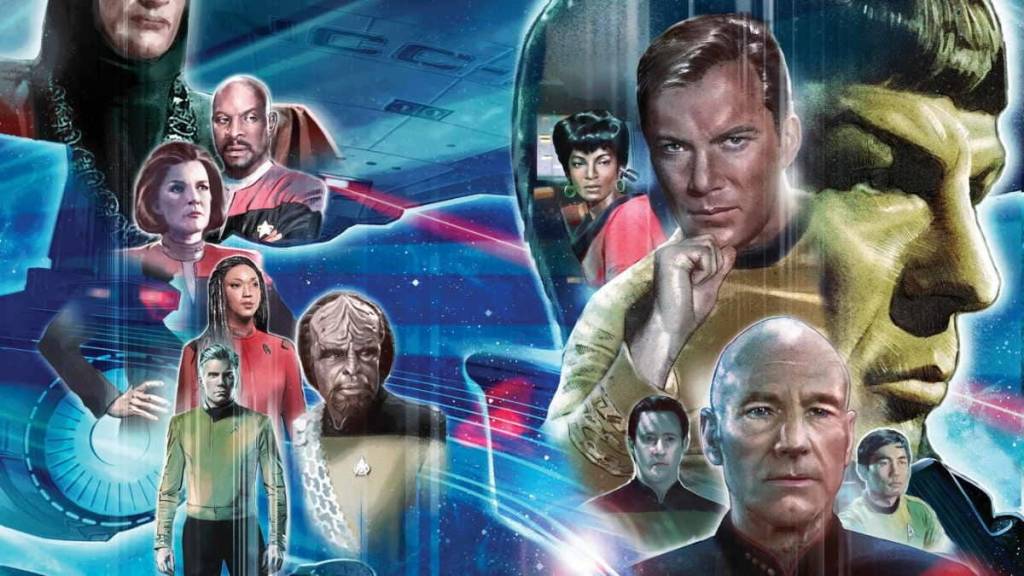
The Original Series created a rich, vibrant science fiction universe that has captured the imaginations of generations, and The Animated Series began to expand upon that world, allowing writers to do wilder things that the budget of a live action TV series at the time would not have allowed. Next Generation resurrected that universe, giving us some of the greatest and most beloved characters in the entire franchise (such as Data, that other great Pinocchio of the modern day). Deep Space Nine was the first series to attempt an extended story arc, and has some of the deepest and most profound stories and character arcs in the entirety of Trek. Voyager compounded the memorable characters and took an opportunity to explore different settings. Enterprise was a step back that showed us the roots of the universe that we loved so much. The Kelvin timeline films are a fun, fresh look at something that was remarkably familiar. Lower Decks shows us that there is room for both lighthearted fare and serious science fiction in the same story. The final season of Picard is a brilliant conclusion to the stories of many of our favorite characters. Strange New Worlds recontextualizes the original series and gives new life and energy to something that we thought we knew all there was to know about. Prodigy is a series that introduces kids to the core thesis and heart that makes the Star Trek universe what it is in an exciting and engaging way. And Discovery has Tig Notaro sometimes. 

Dear Constant Reader,

You’ve spoken before about your love for the works of Stephen King. With his newest novel, Holly, hitting the stands, I was wondering if you have any thoughts or feelings about the Holly Gibney character in her previous appearances or any hopes or expectations for this new story.

Roland from 1919 19th Street, Co-Op City

R19,

I am, in fact, an avowed reader of the works of Stephen King. I’ve been a fan of his since high school and I have devoured a great many of his books. As for Holly Gibney, however, I’m afraid I actually haven’t read any of the books with her in it yet. Holly first appeared in King’s 2014 novel Mr. Mercedes, you see, and 2014 also happened to be the year I got married. That’s a busy time in a person’s life, as you may have heard, and in that time I fell a bit behind on reading pretty much anything. Then just as things were starting to settle down, my wife and I had a kid, and if the transition of getting married makes you busy, the transition of becoming a parent is like having a tornado drop into the middle of your living room and steal all your books. So the truth is, I’m way behind on reading not just Stephen King, but pretty much every other author whose work I enjoy.

The good news, as I’ve mentioned before, is that my son is a bit older now and I’m finding it a bit more possible to pick up a book and read again, so I’m slowly getting back into the game. I’ve actually made several lists of authors and series that I want to get into or back into, and I’ve been chipping away at them a little at a time. The Stephen King novels I haven’t read yet are all on those lists, and I have every intention of getting to them eventually. The funny thing is that, of all of his books that I haven’t read, only three of them were published prior to 2014…and I don’t know that I’m going to get around to Pet Sematary anytime soon. As a dad, it might just be too much for me.

Guess which one of these I’m probably going to read first.

Blake,

Is it true that you just couldn’t think of any topic to write about this week that was worth devoting an entire column to, and thus resurrected this contrived mailbag format as a way to work in a variety of different topics that wouldn’t support an extended discussion? And if so, when did it occur to you that the “mailbag,” while a classic trope, is hopelessly outdated and it would be better served to structure future such columns in the form of social media interaction?

Curious in Cambodia

Dear Curious,

Shut up, that’s why. 

Blake M. Petit is a writer, teacher, and dad from Ama, Louisiana. His current writing project is the superhero adventure series Other People’s Heroes: Little Stars, a new episode of which is available every Wednesday on Amazon’s Kindle Vella platform. What’s odd is that, although he hates ranking things, he enjoys making lists. Isn’t that bizarre?