Geek Punditry #139: Who’s to Blame?

Once August hits every year, I ramp up my viewing of scary movies in preparation for the Halloween season. The name for this event changes annually: sometimes I call it “Shocktober,” sometimes “Scream-A-Thon,” sometimes simply “Extended Spooky Season.” This time I’ve elected to call it “Toddoween,” in celebration of the late, great horror actor Tony Todd, who passed away earlier this year. I’m making a special point to watch as many of his movies as I can in the 2025 season, and as such, throughout August I’ve been sneaking in the various Final Destination movies whenever possible. The only one I’ve got left is the newest film, Final Destination: Bloodlines, which came out earlier this year and which turned out to be Todd’s last film.

And he went out swinging.

If you’re not familiar, Final Destination is kind of a unique horror franchise. Rather than having a psychotic killer chasing after the victims with a machete or something, the series has a very different formula. Each movie begins with the protagonist (a different one each time) having some sort of a psychic flash about an impending disaster, which they react to in such a way that saves them and a group of other people from whatever cataclysm is fated to occur. In the first one it’s a plane crash, the second is a huge traffic pileup caused by logs falling off a truck, in the third it’s a roller coaster disaster, and so forth. Rather than having escaped their fates safe and sound, though, the survivors inevitably start to get picked off one by one by bizarre and increasingly improbable “accidents.” The idea behind the series is that Death itself isn’t happy that they escaped its plan, and it’s coming to take what belongs to it.

The series, interestingly enough, started off as a pitch for an episode of The X-Files that didn’t get used, so writer Jeffrey Reddick spun it out into its own thing, and it’s fairly popular among horror movie fans despite the fact that it lacks a single unifying figure like Michael Myers, Jason Voorhees, or Freddy Krueger. In fact, the closest thing the franchise has to an “icon” is Tony Todd’s character of Bludworth the mortician, and even he has only appeared in four of the six films, usually in just a single scene. This makes Final Destination an extremely rare horror example of one of my favorite subcategories of film: stories without a traditional antagonist.

And, consequently, without a series of action figures.

Quick English Teacher moment: at some point you may have been taught – probably by a well-meaning middle school teacher who was trying to keep things simple – that a “protagonist” is the “good guy” in a story, whereas the “antagonist” is the “bad guy.” This is not true. I mean, USUALLY if the story has a traditional “good guy” and “bad guy,” the protagonist and antagonist fill those respective roles, but that’s not what those words MEAN. The protagonist is the character or group of characters whose actions drive the story, or simply the “main character.” They CAN be good, but they don’t have to be. Look at Breaking Bad, for example, an amazing show where Bryan Cranston shows us Walter White’s slow descent into becoming a villain protagonist. 

Antagonists, on the other hand, are the people or forces who work in opposition to the protagonist. Again, this doesn’t necessarily make them BAD. My Cousin Vinnie is a good example. The closest thing the movie has to an antagonist is the prosecuting attorney (played by Lane Smith) that Joe Pesci’s Vinnie is trying to defeat in court, but he’s a warm, friendly person who genuinely likes Vinnie and has no ill will or animosity towards him; he’s simply doing his job and attempting to prosecute two men he sincerely believes to be murderers. And when he’s confronted with evidence that proves the defendants are innocent, he IMMEDIATELY drops the charges. Not a bad guy at all. 

Villain Protagonist, Hero Antagonist. It’s like how Lincoln had a secretary named Kennedy and Kennedy had a secretary named Lincoln.

We’re so used to the protagonist/antagonist dichotomy in fiction that when we get a story that legitimately has no antagonist, it’s often a breath of fresh air. One of my favorites in this category is Andy Weir’s novel The Martian, and the Matt Damon movie based on that book. Mark Watney, astronaut, is stranded alone on Mars after a storm makes the rest of his crew mistakenly believe him to be dead. Once Mission Control back on Earth discovers that he’s alive, they do everything in their power to bring him home. By the end of the story, the entire planet is watching and rooting for him. Even traditional rivals like the Chinese space agency are cooperating in the hopes of saving one man. If there’s any antagonist in this book it’s science itself, because that’s what causes every danger to Watney’s life. It’s an incredibly uplifting, optimistic story, so hopeful and positive that even Sean Bean fails to die. I’m really looking forward to Project Hail Mary, also based on a Weir novel, and also utterly lacking in a traditional antagonist.

It’s a little more common to see stories like this in fiction aimed at younger audiences. The Winnie the Pooh stories, for instance, are utterly bereft of danger. In both the original books and the Disney cartoons everybody is friends with everybody else, and the conflicts usually arrive from misunderstanding or happenstance, at least until the character went into public domain and the sort of chuckleheads who think it’s funny to turn beloved icons of childhood into serial killers did their thing. Mary Poppins is another good example. Mary Poppins swirls into the lives of the Banks family ostensibly to act as their nanny, and although their father initially disapproves of her methods, that doesn’t really make him an antagonist. In fact, by the end of the film it has become clear that Mary Poppins didn’t really show up for the kids at all, but rather to help teach George Banks to express the love and devotion he’s always had for his children, which has been previously locked behind a facade of British propriety. 
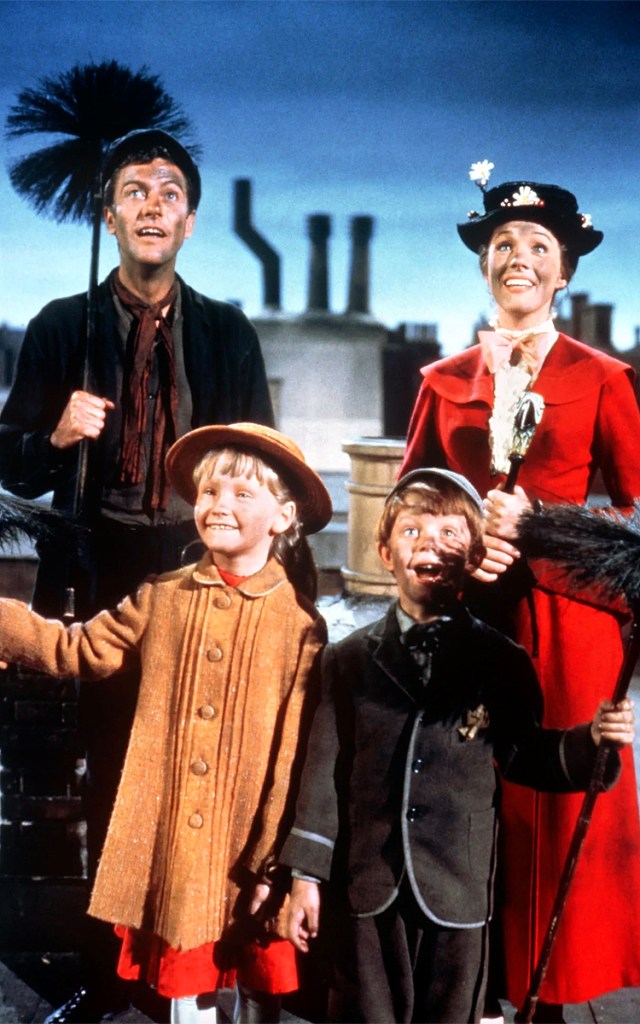
Actually, in early drafts there WAS an antagonist, but it was so hard to imagine anyone not falling in love with Julie Andrews that they had Bert stop murdering suffragettes and made him a chimney sweep instead.

Non-antagonist stories are frequently highly positive and optimistic. Those that aren’t usually fall into the category of “Man Vs. Nature,” stories where the heroes struggle against something that has no consciousness and therefore isn’t INTENTIONALLY working against them: The Perfect Storm, 127 Hours, or the Twister movies fall into this category. But Final Destination is kind of unique in this way. The question I’m asking right now is this: IS there an antagonist in Final Destination?

First of all, I have to remind myself that I haven’t seen Bloodlines yet, so I suppose it’s entirely possible that the new film has already answered my question, rendering this entire train of thought moot. If so, don’t tell me. I’m going to try to squeeze the movie in during the Labor Day weekend. But the obvious answer is no. Death is not, strictly speaking, a “character.” Nobody shows up in a hood and cowl waving a scythe through the air, nor is there some peaceful angel who arrives to usher people off to their reward or punishment as the case may be. In some of the films (but not all of them) we may see one of the survivors who breaks under the realization that Death is coming for them and turns on the others, but that’s an aberration. At most, those characters are minor antagonists, supporting the main force.

But that main force, Death itself…does it count? Is it active, is it aware? The films seem to imply that it is. Hell, even the fact that I’ve insisted on capitalizing “Death” in this column implies that it is. Not only is Death an intelligent force in this universe, but it’s a nasty and sadistic one that enjoys playing with its victims. If taken in and of itself, you could clip out any death scene from the franchise and view it simply as a dramatization of an accident. (The fact that those accidents vary wildly in tone – some of them come across as tragedy, others as comedy, some as almost insultingly absurd – is irrelevant.) But pieced together, it really does feel as though Death, despite lacking a face, is in fact a character. It’s actually kind of impressive. Not all of the Final Destination movies are great (a couple of them are downright lousy), but even the bad ones help contribute to the storytelling magic trick of making a malevolent force that has no tangible representation in the entire franchise feel very real, and even imbue it with a personality. That’s actually kind of cool.

I mean, it’s not the kind of personality you’d bring home to meet your parents, but it DOES count as personality.

So I’m going to keep that in mind when I sit down to watch Bloodlines, and I’ll be curious to see if the most recent movie in the franchise continues this particular magic trick or if they give into temptation and make Death more of a “thing.” 

In either case, I’m curious as to your thoughts on the subject. If you’ve seen these movies, do you think Death counts as an antagonist?

And I’m open to suggestions for other films to fill Toddoween. I’ve already got the Candyman and Hatchet franchises queued up, as well as the Night of the Living Dead remake, but I’ve got two more months to fill. Help me have fun with the best of one of the greats of modern horror, and join me in raising a glass to the magnificent Tony Todd.

Blake M. Petit is a writer, teacher, and dad from Ama, Louisiana. His most recent writing project is the superhero adventure series Other People’s Heroes: Little Stars, volume one of which is now available on Amazon. You can subscribe to his newsletter by clicking right here. He’s also started putting his LitReel videos on TikTok. He’s also gonna try to squeeze in Tony Todd’s episode of Holliston, if he can remember how a Blu-Ray player works. 

Geek Punditry #53: How Not to Use the Public Domain

January brings a lot of things with it: New Year’s Resolutions, a deluge of commercials from companies offering to do your taxes, another chance for the Cowboys to choke in the playoffs, and – most importantly – new items moving into the public domain. A quick explanation for those of you who don’t know: when a creative work (like a book, painting, movie, song, etc.) moves into the “public domain,” that means that the copyright has expired and anyone is free to use that work in certain ways – remake it, create derivative works, write their own sequels, and so forth. It’s the reason that anybody can make their own version of a Shakespeare play or a Dickens novel, or why it’s okay to sing certain songs on TV without worrying about paying for the rights. The full explanation is as complicated as anything else related to the law, but currently, copyrights in the United States last for 95 years, with the work in question rolling into public domain on the first of January the next year. Over the last few years, this has taken on an almost party-like atmosphere, with people champing at the bit as they wait to see what new toys they’ll have to play with. In recent years we saw The Great Gatsby enter public domain, bringing forth a wealth of unauthorized sequels, “reimaginings,” and crappy party supplies bought by people who didn’t read or understand the book. Two years ago, the earliest Winnie-the-Pooh books joined the club, bringing with them the inevitable horror movie Winnie-the-Pooh: Blood and Honey. And a few days ago, on January 1, 2024, we got the big enchilada. “Steamboat Willie” and “Plane Crazy” entered the public domain, the first two shorts starring a little guy the world would come to know as Mickey Mouse.

I can finally post this picture without making a Disney lawyer’s Litigation Sense start to tingle.

I need you all to understand something. I am a firm adherent to protecting copyright. The person who creates a work of art is entitled to exploit that art to the fullest. Sometimes, of course, they “exploit” that right by selling the copyright to someone else or, in the case of a lot of things, they created it as a work-for-hire and a company owned the copyright from the beginning. (There are a lot of people who have been screwed by work-for-hire agreements, historically, but the principle is valid.) But I also believe that this protection should expire and that works should eventually become free to use by all, and that’s for the good of art itself. Allowing future generations to create their own twists and spins on a classic piece of art or storytelling helps to keep those works fresh and alive. But it’s also important that those works be respected in the process. So while I’m not terribly surprised that mere hours after “Steamboat Willie” became free to use we were deluged with announcements of Mickey Mouse as the star of horror movies and violent video games, I am substantially disappointed that people can’t find a better way to use this newfound freedom.

Walt Disney is rolling over in his cryogenic suspension unit right now.

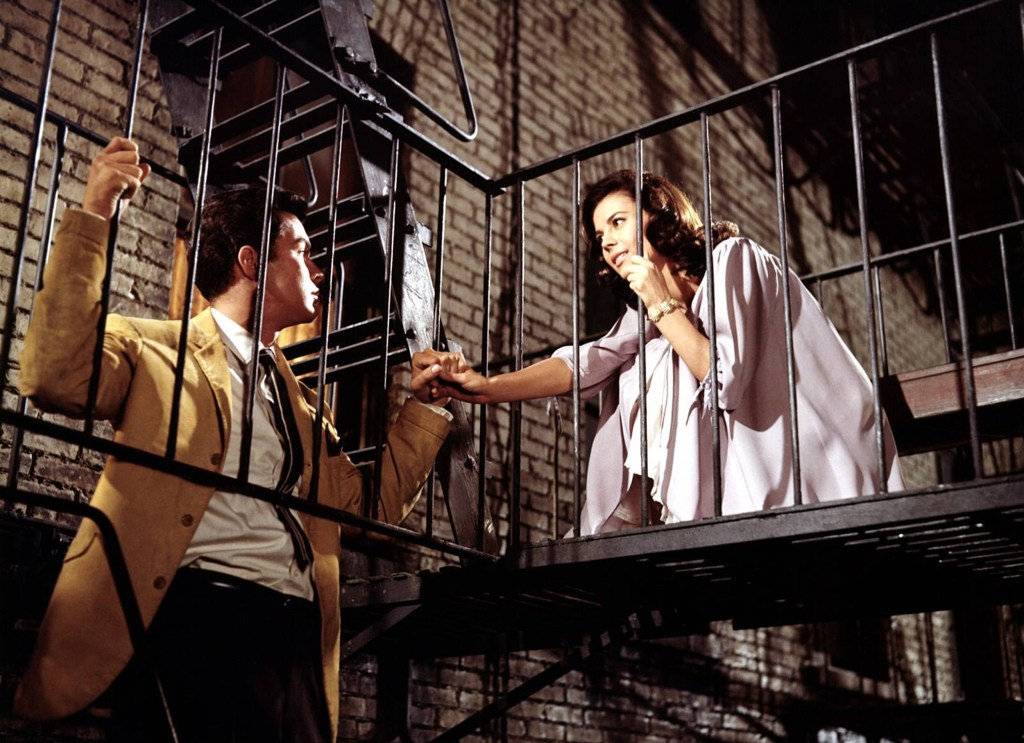
There have been great works created based on things that are in the public domain. Universal Studios built their brand on it in the 1930s with their versions of Dracula and Frankenstein, neither of which were particularly faithful to the respective novels (Dracula was actually based on the stage play), but they still defined the characters for subsequent generations. Without those two films, who’s to say anybody would remember Bram Stoker or Mary Shelley today? There are a thousand and twelve versions of A Christmas Carol, and although plenty of them are trash, there are also some excellent ones. A Muppet Christmas Carol is a fantastic rendition of the story, quite faithful to the book, with one of Michael Caine’s most legendary performances. Scrooged is a great update of the story to the 1980s, with Bill Murray giving us a different but perfectly valid take on the character, making it into something new while still, clearly, owing its own existence to the Charles Dickens novel. And what about West Side Story, the 1950’s musical about street gangs that lifts cleanly from Romeo and Juliet? In fact, I would argue that West Side Story actually IMPROVES upon Romeo and Juliet. In West Side Story, the two young lovers are destined for a tragic ending because of the arbitrary labels of race and class that divide them, making a statement about those things that was not only poignant to the era and place where the musical is set, but is equally applicable to all times and all places. In the original Romeo and Juliet, though, the two young lovers are destined for a tragic ending because everybody in that play is dumber than a sack of hammers. 

(Note to any ninth grade students who are scheduled to study Romeo and Juliet in this upcoming spring semester: I am TOTALLY kidding about this. Romeo and Juliet is the bomb. The bomb dot com. Listen to your teacher and stay in school.)

“The bad news is you’re still gonna die. The good news is that, thanks to public domain, you don’t have to die like a moron this time.”

Anyway, the point I’m getting at is that the folks behind Mickey’s Mouse Trap and other, similar works are taking the easy way out. They also display a pretty specious understanding of how copyright actually works, because what’s in public domain are specifically the versions of Mickey and Minnie that originally appeared in “Steamboat Willy” and “Plane Crazy,” nothing else. They also don’t seem entirely aware that copyright and trademark aren’t quite the same thing, and the trademark behind Mickey is still nice, strong, and supported by enough lawyers employed by the Walt Disney Entertainment Global Megaplex and Shadow Government to invade Portugal. They may be able to get away with showing a guy in a black-and-white Mickey Mouse costume holding a knife, but calling the movie Mickey’s Mouse Trap? I am sitting nearby with a bucket of popcorn waiting for the lawsuits to start.

“M…I…C…”
“See you in court!”

But even if that weren’t the case, that doesn’t change the fact that a Mickey Mouse slasher movie is the cheap and easy way out. The freedom we get when something joins public domain is important, but far too many people waste that freedom with lazy works churned out for shock value without any real reason to create something other than to say, “Heh heh, that’s messed up.” And while I know some would disagree with me here, that’s not a good enough reason. Blood and Honey thought it would be funny to take a beloved icon of childhood and make it a bloodthirsty killer. I didn’t see the movie because, frankly, the idea itself is distasteful to me (and you’re talking to someone who’s excited about the Toxic Avenger remake, for heaven’s sake). But at least they did it first. The filmmakers behind Mickey’s Mouse Trap don’t even have THAT in their favor. They’re pulling the same joke somebody else did. It’s lazy, and it’s boring. Telling a bad joke once is unfunny. Stealing a bad joke from somebody else is the sign of a hack.

I usually have a pretty firm rule not to try to analyze a movie I haven’t seen, so I’m going to base my critique purely on the trailer, which not only looks lazy and boring, but straight-up steals one of the most famous jokes from the first Scream movie. In and of itself, the fact that they chose to showcase this joke in the trailer quashes any hopes I may have had for this movie’s transcendence, I’m sure the filmmakers, if confronted with this, would claim it’s an “homage,” but if this were an essay turned in by one of my 12th-grade students, this is where I would stop reading and simply give them an “F” for plagiarism. (Unless, of course, they gave proper citations to Kevin Williamson and Wes Craven.) 

Do you have the right, legally speaking, to make a movie whose only real purpose seems to be to show cartoon characters committing brutal acts of violence? Sure. But as George Lucas tried to demonstrate to us when he had Greedo shoot first, just because you have the right to do something doesn’t always make it a good idea. The best argument for letting works into the public domain is so that new, innovative works can be built upon those things that have helped build our culture. Things like Mickey’s Mouse Trap fails on both of these counts. 

“Wait, people thought we were serious about this?”

The 1920s and 30s were a pretty rich time, culturally speaking, and there are a lot of characters and works that will soon be free to use. Next year the first Marx Bros movie, The Cocoanuts, will be in the public domain, along with Ernest Hemingway’s novel A Farewell to Arms. In 2027, the aforementioned Universal Frankenstein and Dracula movies will no longer be copyrighted. And looking ahead a decade, the first appearances of Superman will be public domain in 2034, followed the next year by Batman and, the year after, Wonder Woman. And I’m sure there’s some hack filmmaker already planning to do his Superman slasher that year (hint: there already is one, it’s called Brightburn, and it was pretty good), followed by the other two, and then bringing them together as an evil Justice Society once All-Star Comics #3 joins the PDA (Public Domain Association). 

“Been there, done that, murdered innocents with my heat vision.”

I’m putting you on notice now, guys: if you’re planning to exploit these works when the time comes, that’s fine. That’s your prerogative. But if your idea of doing so is nothing more than “Ha ha, what if Superman murdered people?” keep it to yourself. We all deserve better. 

Blake M. Petit is a writer, teacher, and dad from Ama, Louisiana. His current writing project is the superhero adventure series Other People’s Heroes: Little Stars, a new episode of which is available every Wednesday on Amazon’s Kindle Vella platform. He feels ways about things sometimes. 

Geek Punditry #21: A Complete Trip Down the Yellow Brick Road

No matter what your particular fandom is, there are many different strains of Geekery – the Viewer just watches the movies or shows, the Shipper is obsessed with who is (or should be) hooking up with who, the Collector wants the merch, the Debater just likes to argue – and all of them are perfectly valid. One of the more difficult ones to be, though, is the Completionist. The Completionist is someone who wants to read, watch, or play every incarnation of their favorite franchise, no matter what. (When you cross this with the Collector, you wind up with someone who can open a museum.) Being a Completionist can be time-consuming or all-encompassing if you allow it to be, which is why I try to restrain myself, because I definitely have Completionist tendencies. I can refrain from reading every Star Trek novel ever written, but I definitely want to watch every movie and TV series in the franchise, even the one I don’t like. (Yes, that’s singular.)

Completionism is more difficult with some properties than others, of course. Fans of modern franchises like Game of Thrones or Harry Potter have it relatively easy – the number of books, movies, and TV shows is comparatively small and all of them are easily available for anyone who wants them. A George R.R. Martin Completionist’s fear is that the series will never be finished, not that they won’t be able to find it. But it gets much more difficult if you’re a Completionist for an older property, especially one that has lapsed into the public domain. For example, I’m a big fan of L. Frank Baum’s Land of Oz, and if I really wanted to, I could spend the rest of my life trying to complete my experience in that world and never have a chance of success. When Oz is mentioned, the average person usually thinks of The Wizard of Oz, the 1939 film starring Judy Garland and absolutely zero suicidal Munchkins, no matter what Freddy Campbell told you in sixth grade. The movie is, of course, a legitimate classic, and everybody has seen it. Fewer people have read the novel it’s based on, The Wonderful Wizard of Oz, although most people are probably at least vaguely aware that it exists. What even fewer people understand, though, is just HOW MUCH Oz content exists in the wild.

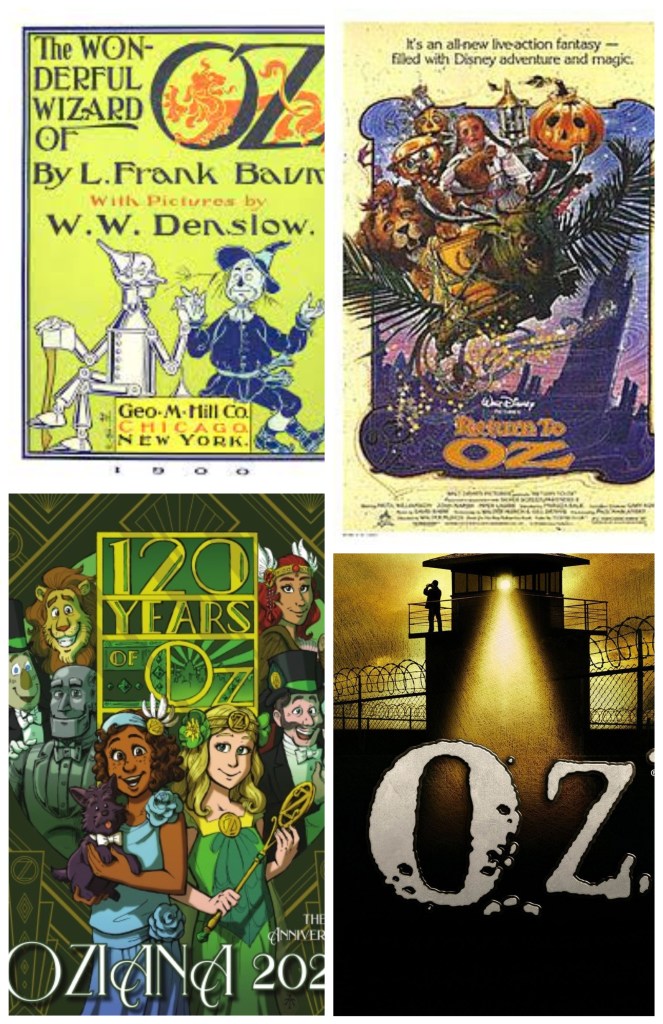
Wait a second, I think Google Image Search may have screwed something up here…

Baum himself wrote 14 novels about Oz, plus assorted short stories, some stage plays, and even a couple of silent movies. After he passed away, his position of “Royal Historian of Oz” was passed on by the publisher to Ruth Plumly Thompson, who wrote even more books than Baum before the title got passed along again. All in all, the “original” Oz series consisted of FORTY different books by seven different authors before it was retired in 1963. Not that the authors retired, though. Many of them wrote other Oz books later in life, although those are not usually counted among the “Famous Forty,” as they are known to Ozites. 

But this is only the beginning. In addition to the seven official “Royal Historians,” other people started to put out their own versions of Oz, even before the earliest books started to slip into the public domain. W.W. Denslow, the illustrator of the original Wizard of Oz, tried doing his own Oz stories without Baum after the two had a falling-out, although they didn’t enjoy the staying power of his collaborator. Some of Baum’s own children wrote Oz books that wound up getting squelched when they were sued by their father’s publisher for violating their copyright. But once the Baum books went into Public Domain, things exploded.

A quick explanation of Public Domain, just in case there’s anyone who doesn’t know what that means: when someone makes a creative work, they (or their employer, if it’s a work-for-hire) automatically own the copyright to that work. Copyright can be sold, transferred, or licensed, but only the copyright owner has the legal right to profit off that specific work in any way. Eventually, some time after the creator’s death, copyright expires and these creative works lapse into what is called Public Domain, which means that nobody owns the rights any longer and anybody is free to create their own derivative work based upon it. It’s the reason why so many people do their own versions of Shakespeare’s plays and why there are ten billion different versions of Charles Dickens’s A Christmas Carol – you don’t have to pay anybody to use the story, but you still get to trade on the public opinion of the name to build your audience. Copyright laws have changed over the years, mostly due to the efforts of the lobbyists working for the major IP holders (Disney in particular) trying to get it extended over and over again, but eventually it does end. It’s going to be really interesting to see what happens when Steamboat Willie, the first Mickey Mouse cartoon, finally enters public domain next year.

Another masterpiece brought to you courtesy of Public Domain.

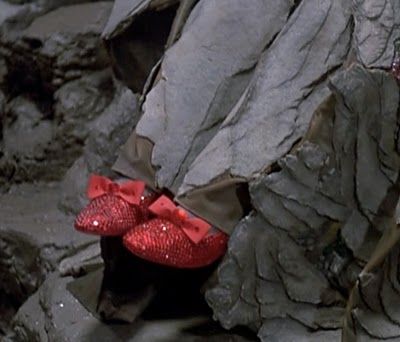
Having said that: a work can be in public domain, but the derivative works can still be copyrighted. The Baum Oz novels are in public domain, but the MGM movie is not, so you cannot use any elements specific to the film in your own work without paying up. The best example of this came with Return to Oz, the 1985 Disney film that you may remember as giving you nightmares when you were seven years old. The movie was based on the second and third Baum books, The Marvelous Land of Oz and Ozma of Oz, and they were free to use those elements, but they also wanted one of the most iconic symbols of Oz: the Ruby Slippers. The problem is that in Baum’s books, Dorothy’s magic shoes were silver. MGM changed them to Ruby to better show off their Technicolor process, and they still owned the copyright on Ruby Slippers, so Disney had to pay them for the right to use Ruby Slippers in the film. Crazy, right?

This one shot cost Disney seven times your annual income.

Anyway, once the copyright finally ended on the earliest Oz books, the ones by Baum, it became legal for anybody to tell their own versions of or use elements from that story as they wished. From SyFy’s Tin Man miniseries to the classic musical The Wiz, the public domain nature of Oz has led to hundreds if not thousands of derivative works. And here’s where it gets hard to be a completionist: not only is there simply too much stuff out there to read or watch it all, it’s almost impossible to even create a comprehensive list.

A while back, I decided to try to compile a list of Oz books and short stories, but even with the help of websites like The Royal Timeline of Oz or their sister website, Wikipedia, it became apparent that the sheer volume of what I was attempting to do made it nearly impossible. I started putting together a Google Sheet with all of the different Oz books I could find, a list that as of this writing is breezing past 400 different works and still going. That’s to say nothing of the hundreds of Oz comic books (a few of them are on my Sheet, but not nearly all) or countless movies and shorts that have been built around Baum’s universe. By the way, I invite anyone interested to take a look at my sheet and let me know what I’m missing – I may never finish the list but I’ll never stop adding to it either. It’s the Completionist in me.

You see, in addition to the “official” works, dozens of other publishers have taken it upon themselves to continue the stories, both in ways that are faithful to Baum’s original works and others in ways that Baum may never have considered or even approved of. That’s another aspect of Public Domain: the fact that anybody can make a derivative work can often draw upon people who are doing so not out of love for the original property, but in an attempt to subvert it. Earlier this year, for example, we saw the release of the film Winnie the Pooh: Blood and Honey, which takes A.A. Milne’s beloved icons of childhood joy and innocence and turns them into bloodthirsty horror movie slashers. Give me a break.

Oh, bother.

Look, I like horror movies. I like slasher movies. I like goofy slasher movies. But I don’t care for people who take a crap on precious childhood memories. Characters like Pooh and Tigger are beloved by children all over the world – do they really need to see Pooh gutting somebody with a chainsaw? Full disclaimer here: I have not seen Blood and Honey, nor do I intend to, because it’s the concept itself I dislike. (Quick note to mention that it’s the original Milne books that are in public domain, not the more well-known Disney version of Winnie the Pooh. Man, it always seems to come back to Disney, doesn’t it?)

That doesn’t mean that there’s no room for a dark derivative of an old story, of course. Let’s run down the Yellow Brick Road again to Gregory Maguire’s Wicked, a novel of Oz that tells the life story of the Wicked Witch of the West. Like the original Wizard of Oz, Wicked is a fine novel that has been somewhat overshadowed by its own musical adaptation, but no matter which version of the story of Elphaba you’re enjoying, it’s definitely a more mature version of Oz than Baum ever wrote. With Wicked, though, Gregory Maguire was using Baum’s backdrop to tell an intriguing story, something with interesting social commentary, something that had a point. I have no problem with that whatsoever. What bothers me is when someone twists an icon of childhood without a good reason to do so, when somebody creates something shocking just for the sake of being shocking. I don’t care for that. I don’t respect it. And everything I’ve seen of Blood and Honey makes me feel like that’s what the movie does. If I’m wrong, by all means, let me know.

Anyway, the point is that with all of the Oz out there, it seems impossible that I’ll ever get through it all. I’ve read all of the Oz books Baum himself wrote, but I haven’t made it through the rest of the Famous Forty yet. I’ve enjoyed Eric Shanower’s original graphic novels and I loved the adaptations of the Baum originals he did with Skottie Young for Marvel Comics, but Zenescope Comics’ Grimm Fairy Tales has a whole Oz spinoff line that I’ve barely touched upon. I’ve still got three out of four Wicked Years books to read, and I’ve only begun to scratch the surface of the series by later authors like March Laumer or Baum’s own great-grandson Roger S. Baum. And this is to say nothing of the “official” productions that are still coming out! The International Wizard of Oz club produces an annual magazine, Oziana, which always includes new short stories (and sometimes even short novels) set in Baum’s world. And as they had the utter temerity to begin publishing Oziana back in 1971, before I was even born, it seems quite unlikely that I’ll ever be able to track down every piece of Oz media that exists.

Slow down! I’ve got twelve decades of IP to catch up on!

But that isn’t going to stop me from trying, is it?

Completionism is a fool’s game, my friends, and it’s a game that most of us are doomed to lose. But even so, it can still be an awful lot of fun to play.

Blake M. Petit is a writer, teacher, and dad from Ama, Louisiana. His current writing project is the superhero adventure series Other People’s Heroes: Little Stars, a new episode of which is available every Wednesday on Amazon’s Kindle Vella platform. He is most definitely not writing this column just to give people ideas for what to get him for Father’s Day, his Birthday, Christmas, or International Oz Completionist Day.