It’s the second week of my year-long adventure in reading, watching, and generally enjoying all things Superman. This week, I take a look at the earliest Fleischer cartoons, I watch more of Superman and Lois, and I take my family to Fan Expo New Orleans!

Wed., Jan. 8
Comics: Krisis of the Krimson Kryptonite, story found in Superman Vol. 2, #49, Adventures of Superman #472, Starman #28, Action Comics #659, & Superman Vol. 2 #50; Black Lightning Vol. 4 #2 (Guest-appearance by Natasha Irons, aka Steel), Supergirl Vol. 2 #20 (Guest-appearance by Superman)

Notes: I’ve got to be careful with some of these comics. My goal, in this “Year of Superman,” is to spend a little time with ALL eras of the Man of Steel, but every time I go back and look at one of the comics from my formative years, I feel the urge to just go on reading them. I could very easily make this “my year of reading Superman comics from the 90s” if I didn’t show a little restraint and restrict myself to the high points. All that said, I couldn’t possibly do this without reading Krisis of the Krimson Kryptonite. As much as the first Christopher Reeve movie made me a fan of the character himself, this is the story that made me a fan of Superman COMICS.
I was relatively new into comics at the time, and if there was one character I followed more than others, at this point, it was Spider-Man. But then something happened which was pretty rare at the time – Superman turned up on the news. After over 50 years, they said, he was going to ask Lois Lane to marry him. I was intrigued and I sought out the five parts of this story to see what was going on. And then I got the next Adventures of Superman the week after. And then I came back for the next week’s Action Comics. And I haven’t missed an issue of any of the regular Superman comic books ever since. It’s a pretty darn impressive streak, if I do say so myself. I also eventually hunted down almost all of the previous comics since the reboot of the character in 1986, so when I say that this era is MY Superman, I mean that as literally as possible for anybody who didn’t actually create the books themselves.
What’s interesting is that the element of this story that got me – and presumably a lot of other people – to buy it is almost a throwaway moment. The bulk of the story involves the Red Kryptonite (only called “Krimson” on the covers) given to Lex Luthor by Superman’s old sparring partner, Mr. Mxyzptlk. Mxy is busy in another dimension – delightfully implied to be harassing the Fantastic Four as the Impossible Man – and he’s going to miss his scheduled tete a tete with Superman. Instead, he gives Luthor the Red Kryptonite – the first instance of such an element in the post-Crisis continuity, and promises it will make Luthor “Superman’s equal.” Instead of giving Luthor powers, though, the rock takes the power AWAY from Superman.
Most of the five issues – four issues of the Superman comics and a crossover with Starman, also written by Action Comics scribe Roger Stern – involve Superman either trying to figure out where his powers went, trying to get them back, or trying to compensate for their loss with things like a suit of powered armor. It’s a nice change of pace, watching a story where Clark has to rely on his brains, resources, and friends rather than the raw power of the Man of Steel. It also nicely showcases the supporting cast Superman had built up around him at the time. Besides the usual merry band at the Daily Planet, we also get to see him with the likes of Guardian, Gangbuster, and one of my favorite side-characters, Professor Emil Hamilton. They’re Superman’s supporting cast as much as the Planet staff is Clark’s, and they serve a similar function in the story.
As for the engagement – it crops up in the last chapter, when Martha Kent calls Clark and asks if he’s bothered to unpack his suitcase since his last trip to Kansas, and there he finds the Kent family engagement ring. He shows it to Lois during a quick lunch at the cafe in the Planet building and proposes with all the romance of saying, “So, you wanna?” Then they get interrupted, he gets his powers back, and on the last page of the issue she accepts. It’s hardly the most memorable proposal in the world, but oddly enough, it feels somewhat appropriate for this version of the characters. These are people who never have time to slow down or stop, whether they’re acting as reporters or as superheroes, and even something as monumental as a marriage proposal has that same kind of mood and cadence. This was the first story where I really saw the character potential in Lois and Clark, beyond just the cookie cutter stereotypes of the Silver Age, and it’s what I’ve enjoyed about them ever since.
TV Episodes: Superman and Lois, Season One, Episode 8, “Holding the Wrench”; Episode 9, “Loyal Subjekts.”
Thur., Jan. 9
Comics: Infinity, Inc. #2 (Power Girl-team member), Superman #5, New Adventures of Superboy #30
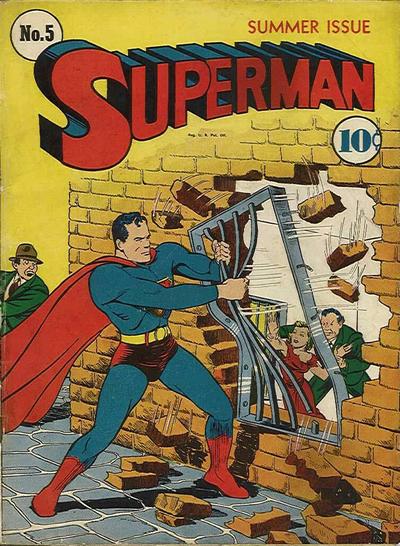
Notes: (On Superman #5) It’s a hoot to go back and read these early adventures of Superman. In the lead story of this comic, from 1940, Superman is out to cleanse Metropolis of the scourge of…drumroll please…slot machines. In this modern age, when every issue is about stopping a time-travelling alien telepathic computer intelligence from taking over the multiverse and plunging the entirety of humanity into perpetual mind-control and slavery, there’s something darn quaint about a comic where the stakes are “a racketeer is tricking kids into dropping pennies into this rigged game.” It couldn’t maintain an extended run, of course, but I think it would be fun to see a modern writer do a one-off story where Superman gets caught up in trying to solve some problem on a similar level…like an unscrupulous Girl Scout leader hoarding all the good streetcorners to sell Thin Mints or something.
It’s also interesting to note that, while much has been made of the powers Superman GAINED over the years – flight, X-ray vision, freezing breath, and so forth – there are other powers that sort of vanished after a while. In one of the stories in this issue, Superman impersonates somebody by “contorting his features” until he looks like the man – which evidently also includes whitening his hair, getting a receding hairline, and growing a mustache. Thank goodness they eventually moved away from powers like this one in favor of more sensible abilities, such as “Rebuilding the Great Wall of China Vision.”
Fri., Jan. 10
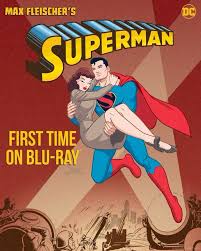
Shorts: “The Mad Scientist” (aka “Superman”) & “The Mechanical Monsters,” Fleischer Studios, 1941
When I was a kid, my grandmother had a VHS tape full of old cartoons that she would put on whenever we went to her house. I didn’t realize it at the time, but it was one of those compilation volumes made up entirely of cartoons that were (or at least were thought to be) in the public domain, so the distributor could make a quick buck off of them. I didn’t care then and, honestly, I wouldn’t care now. This tape introduced me to the Looney Tunes short “A Tale of Two Kitties,” which I believe is the genesis of my lifelong love affair with Bud Abbott and Lou Costello.
But the tape also included several of the old Fleisher Superman shorts, meaning that this is another of my early encounters with the Man of Steel. Looking back on it now, over 80 years after it was made, it’s STILL a blueprint in how superhero stories should be told. The origin is done away with in the first minute of this cartoon, giving the audience everything they need to know to understand the story that’s about to unfold – and remember, this cartoon was made only three years after Superman’s comic book debut, so it wasn’t a given that everyone watching these shorts during their Saturday matinee would be familiar with his origin like we all are today.
Next we have an animation style that’s smooth, fluid, and gorgeous. It looks as good as the best work Disney or Warner Bros were putting out. I’ve heard that these cartoons were supposedly the most expensive animated shorts ever made at the time. I can’t confirm if that’s true or not, but looking at just how good the animation is, I can easily believe it. In one sequence, for example, the titular Mad Scientist shoots his superlaser at a target, only for Superman to swoop in and push back against it, actually punching the laser beam all the way back to the Scientist’s lair. In terms of how physics works, this doesn’t make the slightest bit of sense. But when the animation is this good, you just straight up don’t care.
Finally, let’s talk about Bud Collyer. We all know how good Christopher Reeve was, and George Reeves get a lot of love as well. Tim Daly and George Newburn are frequently talked about for the animated Supermen. But Bud Collyer – who voiced Superman here and on the radio show – doesn’t get nearly enough love, in my opinion. His Clark Kent is high-pitched and a little mealy-mouthed, whereas when he shifts to his Superman persona he drops his voice a full octave and suddenly fills the space with his presence. His Clark/Superman divide is every bit as impressive as that of Christopher Reeve, albeit in a totally different medium.
The second Fleischer Superman short, “The Mechanical Monsters,” is every bit as good as the first. The design of the robots is really impressive, capable of transforming into various configurations to carry out their master’s nefarious tasks. Like Bud Collyer as Superman, Joan Alexander is a wonderful early Lois Lane. She’s got a slight sultry tone at moments, then shifts into mild panic when the robots show up. Moments later, though, she’s going after the robots herself, having overcome her fear and showing us how tough as nails Lois Lane should be.
This short also shows Superman using his X-Ray vision for the first time, and it’s WILD – the pupils of his eyes recede and are replaced by a weird energy. I’ve never seen X-Ray vision depicted this way anywhere else, and it’s crazy, and I love it.
These cartoons are fundamental parts of Superman history. If anyone hasn’t watched them, especially these first two, get out there and find them. They’re all on YouTube, but watching this is making me thirst for the recently-released Blu-Ray remaster of them all.
Sat. Jan. 11
TV Episodes: Superman and Lois, Season 1, Episode 10, “O Mother, Where Art Thou?”, Episode 11: “A Brief Reminiscence In-Between Cataclysmic Events”, Episode 12: “Through the Valley of Death”

Notes on Episode 10: As I said, this is my first time watching through Superman and Lois, and I’m enjoying it. I’ve been told by many fine superfans of my association that Tyler Hoechlin is the best on-screen Superman since Christopher Reeve, and that’s a pretty massive statement to make. I’m not seeing it yet, but I definitely see the potential here, as I approach the end of the first season. He’s got the right temperament – he’s strong, but gentle, fearless, but kind. He hits all of the beats I want in a Superman, and all that remains is to see if he gets great stories to go with his great performance.
Episode 10, “O Mother, Where Art Thou?”, is not quite giving me those vibes. The show takes pretty wild swings with continuity, including having Kal-El’s Kryptonian mother, Lara Lor-Van, being a scientist behind a project that has the potential to destroy humanity if used the wrong way by her son – not Superman, but rather his heretofore unknown half-brother, who has been hiding on Earth under the name of Morgan Edge. I don’t actually mind the divergences from continuity. I mean, this is a show where Lois and Clark have twin sons and move back to Smallville to raise them, not to mention the fact that John Henry Irons comes from an alternate universe where he was married to Lois Lane. Like I said, wild swings aren’t a problem. The issue I’m having at the moment is that the show is employing two tropes that have been done to death: the Sibling Our Hero Never Knew About, and – a more Superman-specific one – the Evil Kryptonian Trying to Bring Back Krypton By Destroying Earth. Both of these are things that we have seen many, many times in the past, and I’m a little tired of them.
That said, even the most exhausted trope can be revived if the storytellers are good enough, and this show is doing a pretty good job. It may be Lara’s invention that has caused the danger, for instance, but they avoid making Lara herself a villain, showing that her technology has been abused. This episode has a good bit where Lara’s consciousness is “downloaded” into Lana Lang, giving her a chance to have some heartfelt conversations with both Clark and Lois that feel very genuine. As someone who has lost his own mother, I think a lot about the kind of conversations I would have with her if I could, if she was back in this world even just for an hour. I want to talk to her about my child, her grandson that she never met. I want to tell her what my life is like. And seeing Clark having those conversations with Lara – even a Lara riding shotgun in Lana’s body – hits me pretty deep. It’s a powerful scene, and it very much overcomes any reluctance I may have from the stuff that’s a bit more “it’s all been done.”
Notes on Episode 11: As the title of this episode implies, we step aside from the Morgan Edge invasion of Earth storyline to show a flashback of Clark’s early days, including the creation of the Fortress of Solitude, his return to Smallville, and his arrival in Metropolis. I absolutely ADORE the fact that, in this continuity, Superman’s original costume is basically the Fleischer cartoon suit. Even more, I love seeing Tyler doing the “awkward Clark in the Big City” stuff that he doesn’t do as much with the show based in Smallville. And is there any other actor in the world who could get a compliment about the costume and actually sell the line, “Thanks, my mom made it for me”?
This episode, fortunately, isn’t really an “origin of Superman” story, but more of an “origin of Lois and Clark” story. It’s less about him and more about THEM, and that’s what makes it work. Tyler Hoechlin and Elizabeth Tulloch are a fabulous pair, and this episode allows for a showcase on them as a couple rather than as parents – which, if there are any parents out there, you know is not exactly the same thing. But as I mentioned a few days ago, when I was reading Krisis of the Krimson Kryptonite, I prefer a dynamic where Lois falls in love with Clark rather than Superman. To me, I always see Clark as the real character and Superman just as a name he uses when he’s not using his own. This episode is just touching in a way we don’t always get to see.
Notes on Episode 12: Aw, I was right about John Henry. He’s on our side now. Isn’t that the best?
Wait, what the hell do you mean, this wasn’t the season finale?
Sun. Jan. 12
Today I’m heading out to Fan Expo New Orleans, the biggest convention that hits my town and one of my favorite weekends of the year. It’s also something that will take up most of the day, and tonight there’s playoff football, so I squeeze in my Year of Superman viewing while my wife is taking a shower before we leave. With time being of the essence, I go with the next Fleischer short.
Short: “Billion Dollar Limited”
Notes: In this one, a bunch of gangsters with cool masks and a cooler car plan a heist of a moving train that’s carrying an enormous amount of cash. Lois Lane winds up on the train as well, because she’s Lois Lane and the laws of narrative causality declare that this is to be the case. Superman doesn’t show up until about halfway through the film, when Clark Kent intercepts a report of the train running wild on the Daily Planet teletype machine, and then he flies into action.
Speaking of “flies,” this short leaves me wondering – are the Fleischer cartoons where it was established that Superman actually FLIES, rather than just leaping from place to place, as he does in the early comic books? I feel like I read that somewhere once. I suppose I could look it up, but I’m leaving for Fan Expo in a few minutes. Anyway, the short is great.
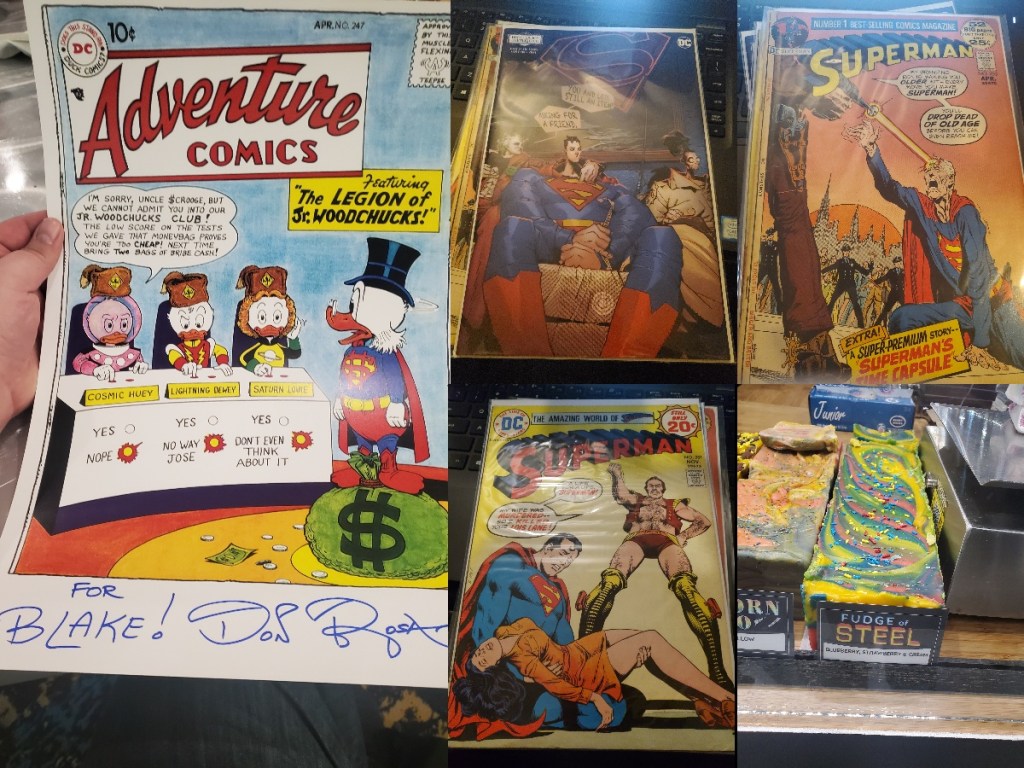
Notes Before Fan Expo: Like I said, this is the biggest show of the year in the New Orleans area, and I’m always excited to go, even though none of the things on my schedule are Superman-related. I’ve been invited – as I have for the past few years – to sit in on some panels, one about fantasy movies and another about why we love Star Trek. (In terms of fandoms, Star Trek is a close number two behind Superman on my list.) I was planning to wear a Superman shirt today, just to keep the branding that I’m trying to establish here, but that plan got derailed when I found out Don Rosa was going to be at the show. Rosa, if you don’t know, is a now-retired cartoonist who did some of the finest Uncle Scrooge and Donald Duck comics of all time, including the legendary story The Life and Times of Scrooge McDuck. I’m crazy excited to meet him today, even though I’ve met him before. And just so that this rambling isn’t completely bereft of Superman, I should point out that the last time I saw him at a convention I purchased from him this recreation of the Action Comics #1 cover starring our beloved ducks.

Notes After Fan Expo: I decided that for this convention – and any other shows I might happen to attend over the course of this year – I would document any Superman-related purchases or activities here in the blog. For this show, though, that was a relatively slim prospect. Sad as it makes me, it feels like the larger the convention, the less the actual comic book content, whether you’re talking about vendors or panels or guests. Everything is being consumed by movies, TV, and anime, which is something that makes me sad, and will most likely be a Geek Punditry feature in the near future.
There were a lot of Superman-related guests at this show: assorted Clark Kents including Tom Welling, Brandon Routh, Dean Cain, Tyler Hoechlin, Tim Daly, and George Newburn all made appearances, plus several other actors from different supporting casts, but I’ve never been the sort to chase autographs or celebrity pictures. I did, however, get Don Rosa’s recreation of Adventure Comics #247, the first appearance of the Legion of Super-Heroes, with Scrooge McDuck taking Superboy’s place. From back issue bins, I pulled copies of Superman #250 and #281, and the recent Beetlejuice Beetlejuice variant cover for Superman Vol. 6 #17. And at one of the many candy-making booths, my lovely wife Erin got us a slab of the “Fudge of Steel,” which had a nicely Clark Kentian color scheme.
Mon., Jan. 13
Comics: Justice League of America #13

Notes: These early Justice League stories are always fun, in the silliest of Silver Age ways. When the JLA was first introduced, Superman and Batman were often sidelined to make room for the other, less-popular characters, which is pretty much the opposite of what happens in superhero team books today. (Anyone remember that era in the 00s when Wolverine was in four X-Men books and three Avengers titles a month?) Eventually they stopped doing that and began integrating them into the stories more, but that brought up another problem: how do you come up with a menace that challenges Superman without having a villain that could basically turn Green Arrow into putty on the bottom of his shoe? The result were silly stories like this one, where the Justice League is abducted by aliens and essentially made to compete in the Space Olympics against robot duplicates of themselves. This ostensibly has something to do with saving the universe. It’s a good time.
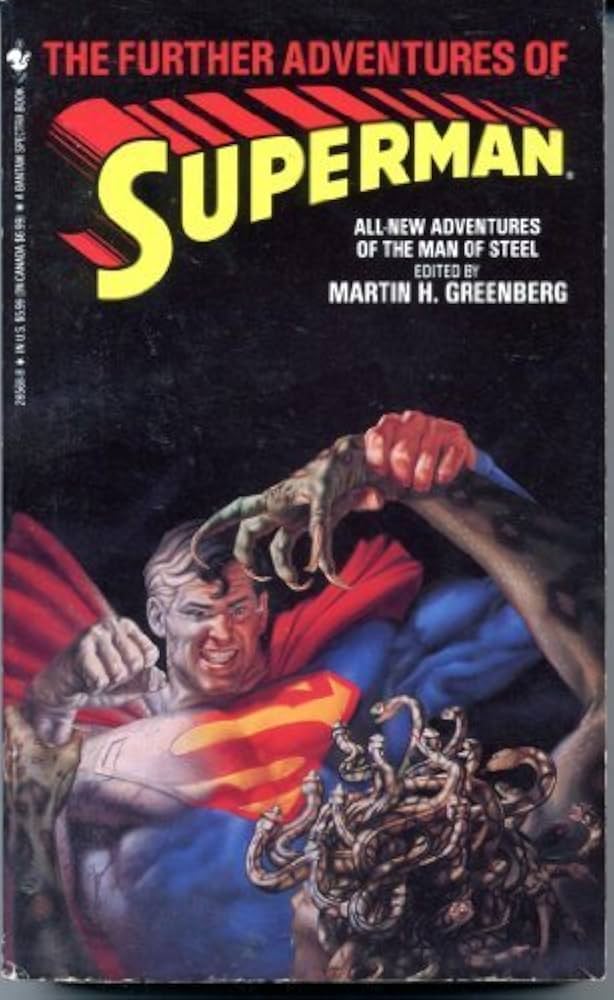
Short Story: “Dateline: Metropolis” by Karen Haber (from The Further Adventures of Superman) anthology
Notes: Despite the unforgivably boring title, I really liked this little story. Lois Lane, her usual news-sniffing nose working overtime – has stumbled on the story of the century. The strange, evasive man in the glasses and bland suits has evaded her over and over again, but now she’s got him nailed to the wall. Now she’s finally going to prove that Superman’s true identity is…mysterious businessman Roger Gunn.
The story is told mostly though Lois’s point of view, with both Superman and Clark Kent playing a supporting role. (In fact, I’m pretty sure that Superman never actually appears in the story at all, but is only mentioned.) But Karen Haber takes the old status quo of Lois trying to ferret out Superman’s secrets and turns it on its ear by changing her target. There’s a devilishly funny charm to this story, as the reader sees Lois rushing from one false conclusion to another, completely oblivious to all the subtle clues that her fellow reporter – with whom she is sharing her “Gunn is Superman” theory – is just as likely a candidate as the weird businessman with a mysterious past and a temperament that doesn’t suffer the existence of a bully very well.
The voice of the story works very well for me too. I don’t know if it was intentional on the writer’s part, but reading this story, I could very much hear Margot Kidder reciting Lois’s lines, Christopher Reeve’s squeaky put-on Clark Kent voice as he tries to reason with her, and Jackie Cooper’s Perry White bellowing at her when she goes too far. This feels so much like a lost episode of the Superman ‘78 series, and there’s something really charming about that.
Tues., Jan. 14
Comics: Superman’s Girl Friend, Lois Lane #9, World’s Finest Comics #303, Superman’s Pal, Jimmy Olsen #134
Notes on Lois Lane #9: The DC Universe Infinite app is a great resource. You get access to thousands of thousands of comic books covering the entire history of the publisher from the Golden Age to as recent as a month ago, and it’s already been a nice help in my Year of Superman project. That said, there are some pretty substantial gaps in the library, including large swaths of Superman’s Girl Friend, Lois Lane, which is a shame because I would LOVE to go in and do a definitive tally of just how many stories in this ludicrous comic book series involved Lois either trying to reveal Superman’s identity, marry him, or both.
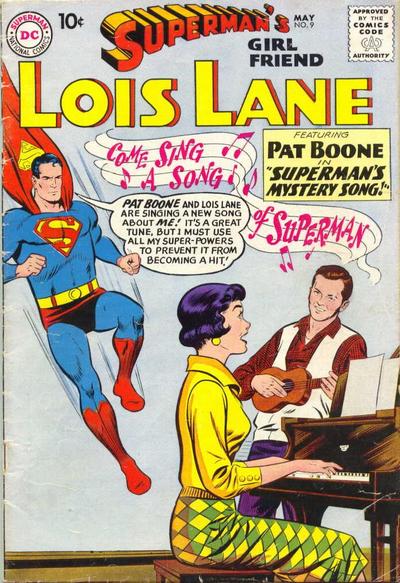
The first story in this issue, “The Most Hated Girl in Metropolis,” turns Lois into a pariah when a story she wrote exposing Clark as Superman is printed. Lois claims that she wrote the story over a year ago and discarded it when she found out her evidence was faulty, but somehow it made it to the front page of the Daily Planet without anybody knowing, which raises some serious questions about their copyediting procedure. As she desperately protests her innocence, everyone treats her like Typhoid Mary for six pages until it turns out the whole thing was a ruse to trick Lois before she’s named “girl reporter of the year” on the TV show This is Your Life. This is just one of the many unconscionably cruel jokes played on Lois in the course of this series, and it gets even worse when Superman gets an amnesia victim to pretend to be Clark so they can appear together. Dude, you’ve got robots. You’ve got Batman. Leave people who have suffered brain injuries alone.
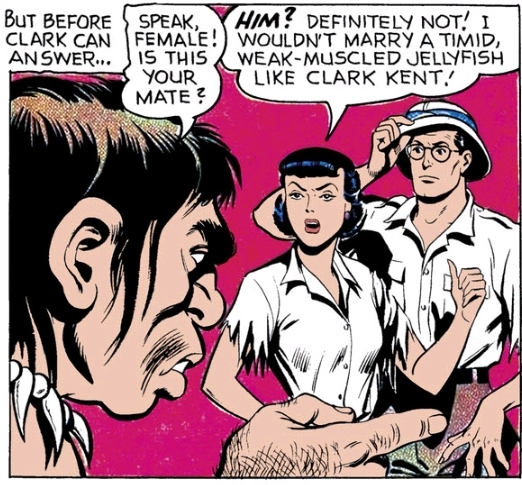
In the second story in this issue, Clark has to save Lois from marrying a caveman. I have no notes.
And finally, in “Superman’s Mystery Song,” Pat Boone tries to make Lois into a musical sensation because he was extremely popular at the time and they figured putting him on the cover would sell a few copies. I have no idea where to look up the sales records of comic books from the 1950s, but if anybody can tell me if this issue did, in fact, experience the Pat Boone Bump, please let me know.
When people call Superman boring, I obviously don’t agree, but I understand where they’re coming from. They’re thinking of comic books from this era, a time when the comics were pretty bland, the stakes were either relatively low or utterly false, and the characters were just sort of plopped into a formula and went through the motions over and over again. This is what happened to the superhero genre after World War II, and it didn’t really start to break out of it until Stan Lee and Marvel Comics changed the paradigm and made it more permissible for superheroes to be – well – interesting. And Superman DID get better in the 60s and 70s. But for my money, the character’s golden age didn’t come until the 80s and 90s.
Thus ends week two, my friends. As I’ve said before, I don’t have a specific blueprint for this little project, but I’m starting to get ideas for “themed” weeks, with things like Superman parodies, time travel stories, Elseworlds, and other things. But I’m certainly open for suggestions. If you have a specific Superman story you’d like me to cover – whether that story is in the comics, a TV episode, or anything else – I would love to hear from you.
Blake M. Petit is a writer, teacher, and dad from Ama, Louisiana. His most recent writing project is the superhero adventure series Other People’s Heroes: Little Stars, volume one of which is now available on Amazon. You can subscribe to his newsletter by clicking right here. He’s also started putting his LitReel videos on TikTok.





 Blake M. Petit