Geek Punditry #83: The Simple Way to Save the Day

The truth is, I kind of blame myself. The very first Geek Punditry column I ever wrote was to extoll the virtues of Star Trek: Prodigy on Paramount+. Then, like a thief in the night, the Paramount bigwigs decided to cancel the show, despite the fact that the second season was nearly finished, and even removed the previous season from the service. A few months later, at the conclusion of Star Trek: Picard, I made a powerfully compelling case (if I do say so myself) for using it as the launchpad for showrunner Terry Matalas’s proposed Star Trek: Legacy project. And yet here we sit, over a year later, with no movement on that front. You would think I would have learned my lesson, but no – upon the conclusion of season four of Star Trek: Lower Decks, I wrote about what makes it the best Star Trek series of the century so far. I may as well have signed its death warrant myself.
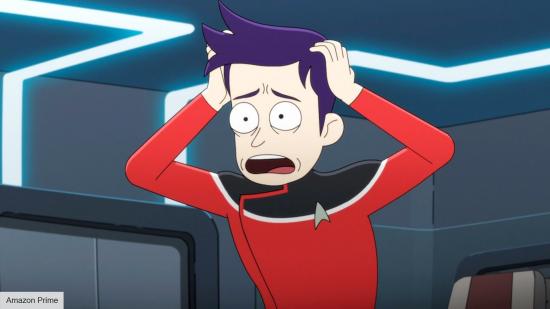
“WHY? Why would he TELL THEM he likes us?”

It’s enough to make a guy consider pretending to like crap just to get it off TV.

But no, I refuse to compromise my principles like that. I’m going to keep talking about those things I love, damn the consequences. The word from Paramount+ is that the Lower Decks will end after the upcoming fifth season, but consarn it, this show deserves more. Sure, some people point out that it’s ending after five seasons, same as Discovery, and while there certainly HAVE been “save Discovery” campaigns, they haven’t caught fire or gained traction like the Cerritos fans. I think what you have to remember here is that, as a half-hour animated series, a ten-episode season of Lower Decks only gives us five hours of content, a total of 50 half-hours. A season of Discovery would have as many as 13 episodes, with a runtime usually between 45-60 minutes, totaling 65 episodes at the end of the run. That’s far more than twice the Disco, comparatively. Or to put it in even clearer context, back in the 90s a season of Next Generation or Deep Space Nine could go on for 26 episodes. With commercials, that’s 26 hours of Trek. Lower Decks will end with five five-hour seasons – altogether the entire run of the show will be less than a single season of any of those series we grew up with. It’s simply not time for this show to end.

The good news is, it ain’t over yet. Netflix swept in and saved Prodigy, giving both the first season and the new season a home, and that second season has garnered immense critical and audience acclaim. Matalas still talks about Legacy in a way that doesn’t say “never gonna happen,” but rather, “not at this time.” And then last week, at San Diego Comic-Con (which, as you may recall, I was unable to attend), Lower Decks showrunner Mike McMahan talked about the future of Lower Decks in a way that seems somewhat hopeful. Specifically, McMahan was quoted by several sources as saying “You’re getting a closure that feels like the end of a chapter, but you’re not getting a closure on the Cerritos or these characters.” In other words, he does not see the final episode of this season as the final word on our pals Beckett Mariner, Brad Boimler, Sam Rutherford, and D’Vanna Tendi. And that’s great, because these are amazing characters with the potential to have more and more adventures for many years to come. 

But perhaps even more encouraging than McMahan’s statement was one made by Alex Kurtzman, the sometimes-controversial figure who is in charge of the entire Star Trek franchise these days. After McMahan suggested that fans “watch the hell out of this season when it airs,” Kurtzman further added, “Watch it twice because, actually, it does register. Finish it, and then watch it again… Guys, your petitions are incredible. They’re incredible. Look what you did for Prodigy. Do it again.”
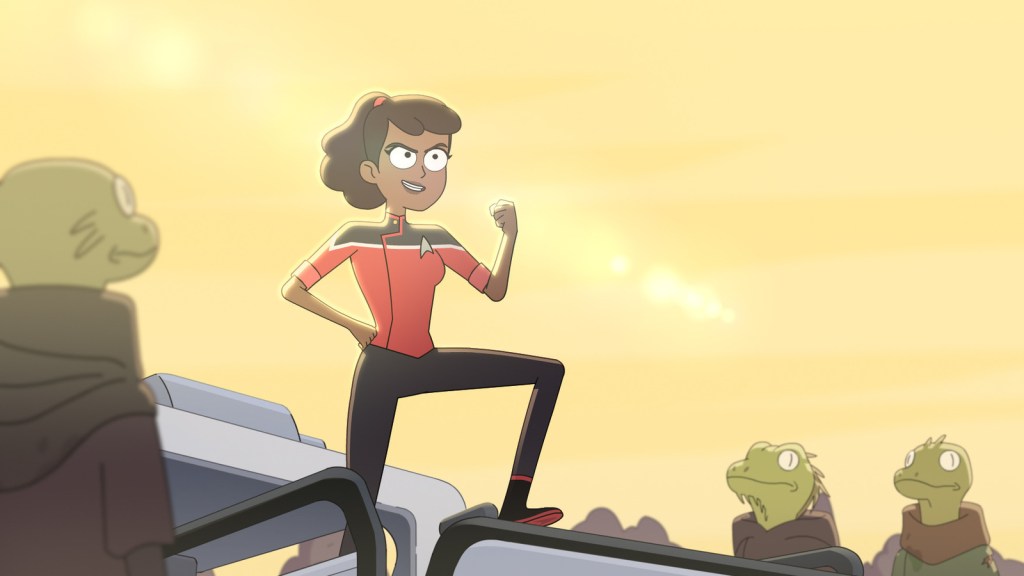
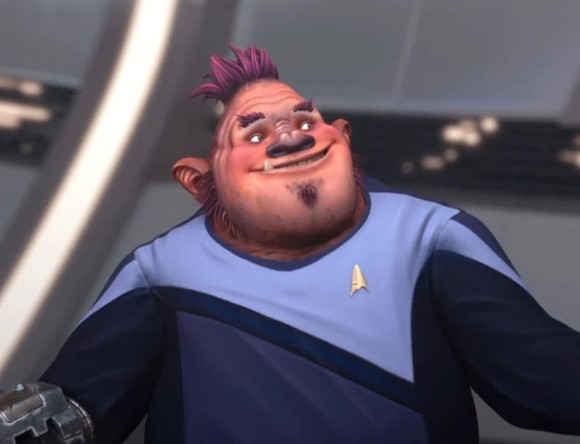
“That’s right, people! It ain’t over ’till the fat Horta sings!”

If this doesn’t ring in your ears as a call to action, I don’t know what will. Talking to the fans, to the actors, to the creators, to the producers, it doesn’t seem like ANYBODY wants Lower Decks to end, with the exception of the boardroom guys at Paramount. THOSE are the people who have to be convinced. One theory I’ve heard – and one that I think has merit – is that they feel like Lower Decks has too limited a potential audience. To be fair, the show is VERY continuity-heavy and a lot of the stories rely on the audiences’ familiarity with the various incarnations of Star Trek. Paramount would rather focus on projects with an easier entry point for new fans. I get that. I think it’s stupid, but I GET it.

The sad truth is that the “business” part of “show business” is often what makes the creative decisions, and the only way to convince the boardroom guys that a show is worth saving is to give them numbers that indicate such a thing. So yeah, that means watching the show, RE-watching the show, and doing it as soon as possible when it drops, because something else they look at very carefully is how QUICKLY an audience engages with the provided content. 

And this is why it drives me absolutely CRAZY when I see fans talk about how angry they are at Paramount+ (I get that), how they don’t trust Paramount+ to give the show the love it deserves (I get it) and how, rather than paying for Paramount+, they’re just going to download the show illegally (you blithering idiots). 

“That’ll show ‘em!” they say. “I’m not gonna give those evil corporations one thin dime, but I’m STILL going to reap the benefits of what they make!” Swell! And in so doing, you’re putting the nail in the coffin of those things you love.

“For your information, MANY Orions haven’t pirated any movies or TV shows for over FIVE YEARS!”

I’m not going to sit here and debate the morality of pirating TV and movies with you guys. I know I’m not going to change your mind. But I AM going to point out that if you really want a series like Lower Decks to continue, pirating it is one of the WORST things you can do. 

Like I said, the studio looks at the viewership numbers. And to be certain, some of you will point out that large numbers of illegal downloads demonstrate that there’s a demand for a series. Sure, that’s true. But it’s even MORE true that the studio doesn’t give one flying fig for your download numbers because they do not make any money off of those numbers. In fact, every number that rings up for an illegal download is a number that they consider a loss.

“It’s not a loss,” you say, “because I wouldn’t have paid for it anyway.” 

My favorite argument.

I want to put yourself in my position for a moment, guys. You know that I’m a writer. I write books and then I try to convince people to buy them. I am not particularly GOOD at that part, but I try anyway. I’ve even got a little Facebook page where occasionally people talk about them. And there is, I believe, exactly ONE person who is blocked from that page, someone who had read one of my books and liked it, and that’s swell. And then she made a comment about how she downloads all her books to “beat” the big companies like Amazon. And I gotta tell ya, it feels GREAT to know that she swindled Jeff Bezos out of his cut of MY book when I’ve got to buy my kid school supplies with a royalty check that looks like a soccer score. But it’s okay because you wouldn’t have read it anyway? You know, I think I would have preferred that you didn’t instead of you popping onto my page and telling me how proud you are of getting away with something.
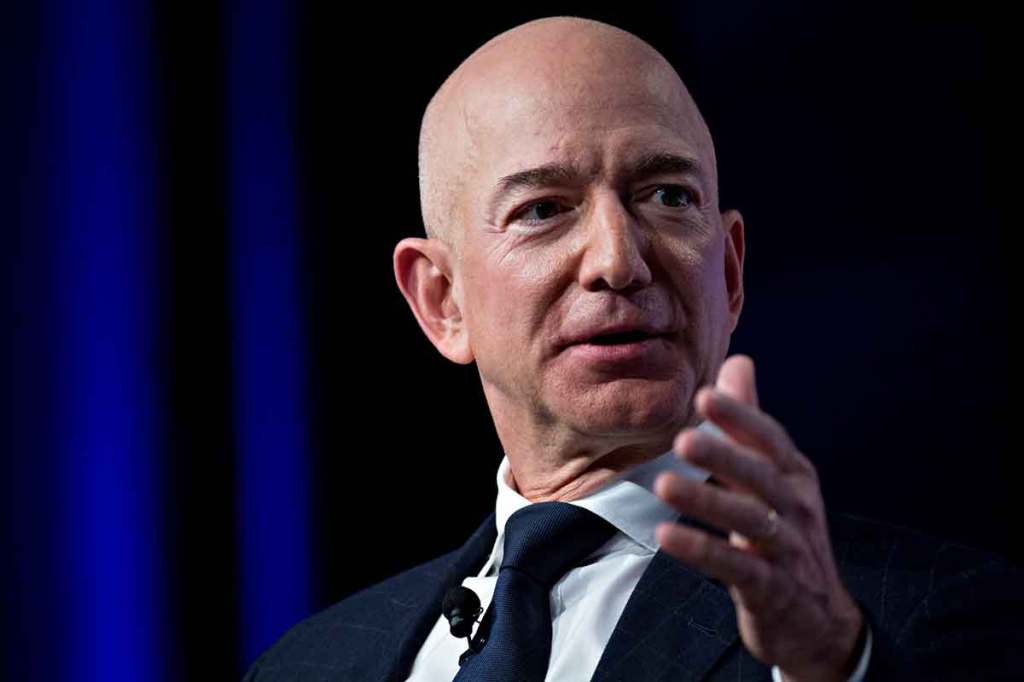
Independent authors are eating ramen noodles, but at least Lex Luthor had to settle for only six yachts this year.

But that’s getting back into the morality of it again, and I’m sure nobody wants to hear that, because it may force you to question your judgment. Let’s get practical. The guys in the boardroom look at the pirate numbers and ask – surprisingly logically – “why should we keep spending money to make something that these people are going to watch for free?” The point of a business – ANY business – is to make money, and to continue spending money making a product that loses money is foolishness. 

The way to save Lower Decks – to save ANY television show that’s on the cusp – is to convince the studio that keeping it alive makes financial sense. That means buying the DVDs, getting the t-shirts, snagging the merch, pre-ordering the comic books, supporting the sponsors, and (and this is the part that’s going to make some people angry) WATCHING IT ON A LEGAL PLATFORM. Whether that’s a paid subscription like Paramount+ or a free ad-supported platform like the Roku Channel, these are the ways that the creators of the shows make their money. If you want them to keep making the shows, you need to keep making money for them.

Plus, you’ll still have the physical media if the studio decides to remove it from the app as part of their plan to commit tax fraud.

By the way, I’m talking about TV shows because Lower Decks is the current show that’s sending out the S.O.S. signal, but this is all true of movies and any other form of media as well. Everyone wants to complain that Hollywood has “no new ideas,” that all they make are sequels and spin-offs and remakes. Guys, look at the top movies for the past decade. How many of them are sequels or spin-offs or remakes? Hell, look at the box office receipts for THIS year! As of this writing, the top TWELVE movies for 2024 are all sequels or spin-offs or remakes. You don’t get an original idea (John Krazynski’s imaginary friend fantasy IF) until spot number THIRTEEN. Now ask yourself how many lower-tier movies – movies that AREN’T sequels or spin-offs or remakes – have been downloaded. 

I took a screenshot in case it’s changed by the time you read this. Inside Out 2 totally deserves that spot, by the way.

If you love Lower Decks – and if you’ve bothered to read this far I believe that you do – you need to heed McMahan and Kurtzman’s call to watch it, watch it a lot. But if you don’t watch it the right way, it doesn’t matter at all. If you don’t, then our pals on the Cerritos will join the likes of Trelane, Beverly Crusher’s husband that Picard got killed, and those salamander babies Tom Paris and Janeway had  – a vibrant afterlife on Memory Beta, but in canon, merely a remembrance of something golden.

RED ALERT: UPCOMING PLAYING FAVORITES!

Well, friends, back to school is creeping up on us. Whether your kids go back next week like mine or if you still have a free chunk of August, the time is approaching…so I’m going to celebrate with another PLAYING FAVORITES! In “Playing Favorites,” I throw out a topic and ask YOU to give me categories to cover in an upcoming “Geek Punditry” column. For instance, when the topic was “Christmas,” I was asked for my favorite songs written for a Christmas movie. With the “Superhero” topic I was asked my favorite sidekicks. In the “Summer” topic I talked about my favorite beach movies, and so forth.

This time the topic is SCHOOL. I’m looking for categories that apply to the usual Geek Punditry quadrants: movies, TV, books and comics. As always, I’ll pick my favorite suggestions and give my picks. Let the nominations begin!

Blake M. Petit is a writer, teacher, and dad from Ama, Louisiana. His most recent writing project is the superhero adventure series Other People’s Heroes: Little Stars, volume one of which is now available on Amazon. You can subscribe to his newsletter by clicking right here. He really wants you to think about a creative parent having to explain to their kids why they have to get Rose Art crayons instead of Crayola the next time you download something. Jerk. 
Geek Punditry #47: The Gift of Physical

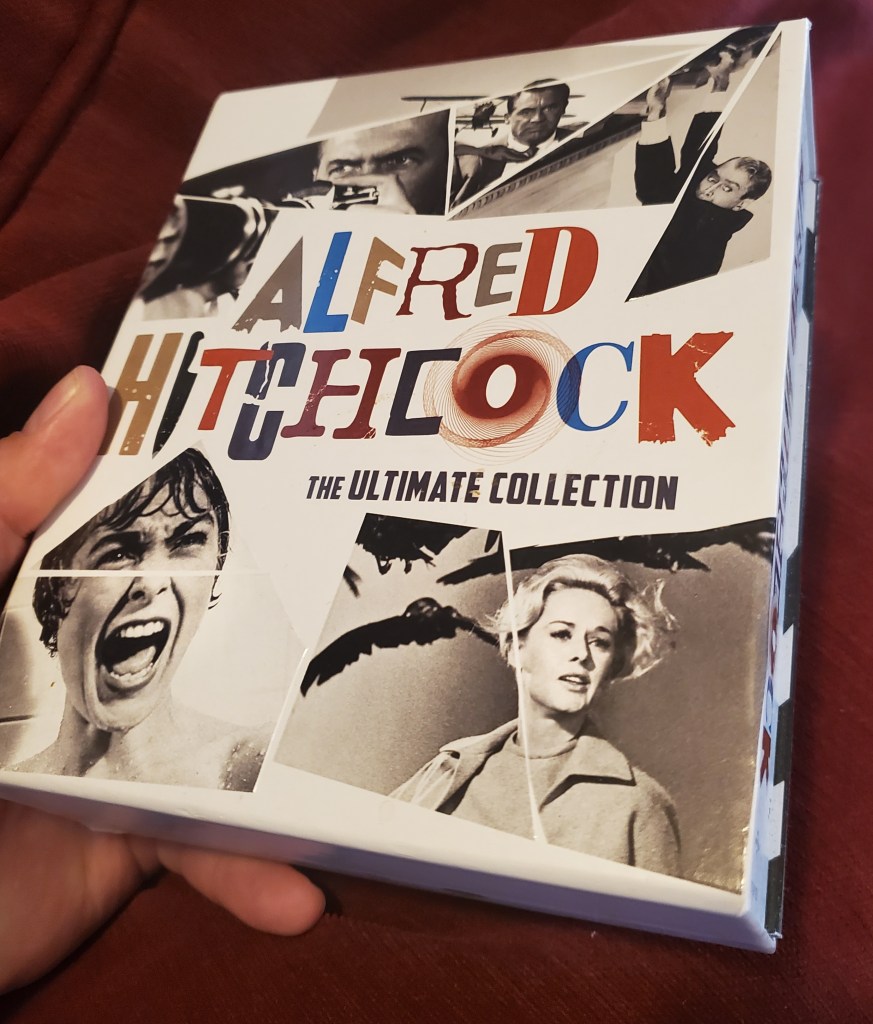
Here we are, my friends, the most chaotic, volatile, and lucrative date on the American calendar: Black Friday. Of course, Black Friday isn’t quite what it was just a few years ago. In the not-too-distant past, it wasn’t unusual to watch footage of mobs at Target trying to murder each other with croquet mallets in the attempt to get a cheap widescreen television set. That was last month in San Francisco, of course, but that sort of behavior USED to be restricted to the day after Thanksgiving. These days, though, with people having less money to spend, prices rising, and online shopping becoming easier and more tempting than ever, it’s becoming far less likely to see someone get a shiv in the kitchen section of Home Goods. We’re still planning to shop, of course, we’re still all trying to find just the right gift for the people we care about, and as far as the geeks in your life are concerned, we’ve learned something important this year. When it comes to sharing your favorite movies, music, books, or games…the truth is, physical media needs to come back.

Because no matter how hard you try, you can’t club somebody over the head with Netflix.

A few days ago Christopher Nolan, discussing the Blu-Ray release of his movie Oppenheimer, encouraged people to purchase the disc “So no evil streaming service can come steal it from you.” The joke, of course, is that over the course of 2023 it has become horribly fashionable for streaming services to quietly (or sometimes not-so-quietly) remove content from their platforms in a cost-saving measure. There are various ways this can theoretically work – by writing it off as a loss on their taxes, by licensing it off to some other service and getting money from them, and so forth, but whatever the reason the end result is the same. It becomes difficult and confusing for fans to find what they want, and in the case of the writers, directors, performers, and other people who actually made the content in question, all their work is reduced to numbers on a spreadsheet, without giving anyone the opportunity to actually experience it in the way intended.

Warner Bros.’ Max service has become the most notorious for this practice, canning numerous films that were close to completion (including a Batgirl movie, a holiday-themed sequel to Scoob!, and most recently the John Cena/Wile E. Coyote legal drama Coyote Vs. Acme), but they are by no means the only culprit. After a few weeks on their streamer, Disney+ pulled the kids’ sci-fi film Crater, later putting it out for sale or rent on digital media, but it’s no longer available as part of the prepaid package that director Kyle Patrick Alvarez’s mom can tell her friends to watch the next time they ask what her son is up to. But perhaps the strangest instance of this phenomenon came from Paramount+, the streaming service that built its audience as the online home of Star Trek, when they made the decision to not only cancel the nearly-finished second season of Star Trek: Prodigy, but to yank season one from the service as well. Since then, the show has been conspicuous by its absence. This summer they even launched a celebration of animated Star Trek to mark the 50th anniversary of Star Trek: The Animated Series, and while they spent a lot of time hyping that original series, Lower Decks, and the animated webseries Very Short Treks, they did the best they could to pretend that Prodigy didn’t exist. 

But come on, who could ever forget this face?

But the fans refused to play along. A strange thing happened when it became public that Prodigy was being taken down from Paramount+. Within a day or two, the Blu-Rays and DVDs for the first half of season one were completely sold out. (The second half had not been released yet.) You couldn’t find a copy in brick and mortar stores, and online retailers like Amazon, Best Buy, and Walmart all cleared out their warehouses before you could blink. It was as if fandom all, simultaneously, realized that media that only exists on a streaming platform can be removed at any time, capriciously, and without warning, and that the only sure way to have access to the content you want is to actually own a physical copy.

What a concept.

I’m not here to decry streaming or to say I’m gonna cancel Netflix. For one thing, that would be REALLY dumb, since they’re the service that wound up saving Prodigy, and I ‘m greatly looking forward to season two. But streaming services are proving themselves to be increasingly problematic for the companies that own them. They’ve become such a huge part of our lives that it’s easy to forget they’re still a relatively new business model, and what we’ve learned this year is that even the big boys like Disney and Warner Bros. haven’t actually figured out how to make money off of them yet. And sure, some of you may be thinking, “Well Disney has enough money, why should I care if Disney+ isn’t turning a profit?” That’s very progressive of you, make sure you put that on a t-shirt. But that doesn’t change the fact that the Walt Disney Global Media Conglomerate and Shadow Government and Pottery Export Business is still, in fact, a business, and if they can’t make money off a project they’re not going to keep making it. 

The “Plus” stands for “Plus all of your money.”

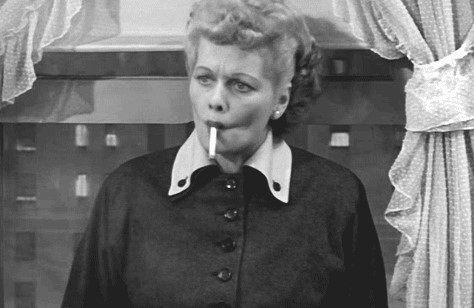
In the early days of broadcast TV, the burden of monetization was put on sponsors. Phillip Morris Cigarettes gave Desilu money to make I Love Lucy in exchange for the show promoting their product, everybody was happy, and lots of people got lung cancer.

Okay, maybe I was wrong — smoking DOES make you look cool.

Then came cable, and the model changed somewhat. While sponsors still existed, cable channels made the bulk of their money by selling their content to a cable provider like Cox or DirecTV, which made ITS money by charging consumers for packages of channels from those various sources. These days media companies are attempting to cut out the middleman with their own streaming services, making the content AND controlling the distribution themselves…only to discover that the middleman actually turned out to be kind of necessary in this particular equation. And since they haven’t yet worked out the new equation, they’re starting to cut corners – raising rates for the service, putting ads on streamers that didn’t have ads in the past, and of course, chopping content that they think they can make more money with some other way.

Physical media protects you from losing content, but it’s also becoming a way to show your support for a project. With streaming numbers being a closely-held secret, it can be almost impossible to tell how successful any series is. Fans were blindsided this week, for instance, when Disney+ announced that they won’t be doing a second season of the beloved Muppets Mayhem. (This has been a BAD year for shows that I loved enough to devote an entire Geek Punditry column to.) It was acclaimed by fans, but there was no physical release for us to attach our support to. I can’t say fit certain that it would have made a difference, but it certainly wouldn’t have hurt, because those numbers DO matter. When Star Trek: Picard wrapped up its third and final season, fans asked showrunner Terry Matalas what they could do to encourage Paramount to support his proposed Star Trek: Legacy spinoff series. His answer was telling: keep steaming Picard, yes, but also buy the Blu-Ray of Season Three so Paramount knows you will support it.

I’m not saying you need to rush out and buy everything that’s made, but if you want to send a message about what shows and movies you enjoy, buying the physical media helps accomplish that, and that will give support to similar projects in the future. Sure, I watched Fuller House on Netflix, but I don’t feel any particular need to get it on disc. But when Stranger Things drops its final season next year, you can bet I’ll be first in line for that complete series boxed set.

Available on twelve discs or 97 VHS tapes.

After Nolan made his comments, Guillermo del Toro added his own two cents to the discussion, saying, “Physical media is almost a Fahrenheit 451 (where people memorized entire books and thus became the book they loved) level of responsibility.” In other words, you’re not just clinging to that DVD set of the complete series of Mama’s Family for kicks, it is your civic duty. These things aren’t being preserved anymore, not by the people who actually own and control the IP, so it’s becoming incumbent upon the fans to do it themselves. This is especially true in a world where retailers like Best Buy have announced that they’re abandoning physical media sales entirely. Back before I had a kid and there was such a thing as free time, I could spent hours wandering around the Best Buy DVD section. Over the years I got sadder every time I stepped into the store, watching my favorite section get smaller and smaller. As of now, I honestly don’t remember the last time I walked into a Best Buy store, and that’s on them.

Movies and TV are not, of course, the only kinds of content affected by streaming. Music was hit a long time ago, and eBooks have been around for quite some time. In both of those arenas, though, something odd has happened. The importance of the physical media has grown in the digital age. Despite the obvious convenience of eBooks, a survey showed that in 2022 print books outsold them nearly four-to-one. And in the area of music, while lots of people use Spotify or Amazon Music to get their pop fix, die-hard fans have actually gone back in time and resurrected the vinyl album as their physical format of choice. Spotify is fine for a casual listener, but the hardcore fans want something they can see, touch, hold, display, and screech in terror when their kids hit the arm on the record player and scratch it up. I think, in the next few years, movie and TV fans will experience a similar renaissance. Casual fans will settle for Netflix and Hulu, but the collectors (a faction that will increase in both number and intensity) will thirst for that physical release with pristine picture and sound and loaded with extra features. 

So be a Chris Nolan, guys. Get your Barbenheimer fix on a disc. And try not to beat anybody up in the electronics aisle. 

Blake M. Petit is a writer, teacher, and dad from Ama, Louisiana. His current writing project is the superhero adventure series Other People’s Heroes: Little Stars, a new episode of which is available every Wednesday on Amazon’s Kindle Vella platform. He hopes you all have a great Christmas season, and he promises loads of holiday content right here, because that’s the kind of nerd he is.

BONUS ANNOUNCEMENT!

In October I introduced a new feature to Geek Punditry, Playing Favorites, in which I give you a topic and ask you for suggestions of categories to share some of my favorite things. For example, the category for Halloween was “Horror Movies,” and suggestions included things like sci-fi/horror movies, comedy/horror hybrids, horror movie performances that I felt deserved Oscar recognition, and lots of other cool choices. It wound up filling up two full columns! (Part One, Part Two)

Well, never let it be said that I don’t know how to milk an idea to death use a good idea when it’s available. With Christmas coming up, I’m announcing the next round of Playing Favorites, in which I’m asking you guys for categories of Christmas content! Movies, books, TV shows, comics – what are the categories I can play favorites with this time? Give me your suggestions in the comments below or on whatever social media you used to find this link!

Geek Punditry #27: Death and Taxes-A Streaming Crisis

A few days ago, between eating entirely too much barbecue and trying to figure out if there was room for apple pie, my sister and I were talking about movies and TV shows we’d recently watched with our kids. She mentioned a Disney+ original film called Crater, a science fiction adventure about a bunch of kids living on a lunar mining colony. I’d heard of the film before, and I thought it would be something that my son might have an interest in, at least the spaceship parts, and made a note to check it out soon. Unfortunately, “soon” didn’t turn out to be soon enough, because the next day word came down that Crater was being removed from the platform less than two months after its release, and would no longer be available anywhere.

Turns out the title was actually a reference to the film’s chances.

This isn’t the only Disney+ original to get this treatment. The Willow series, canceled after just one season, was also unceremoniously axed, as well as the quirky documentary The World According to Jeff Goldblum, among others. Nor is Disney+ the only streaming platform to do such a thing in recent months. Netflix has removed shows such as Hemlock Grove, Hulu quietly evaporated Y: The Last Man, and before they dropped the “HBO” from their name, HBO Max made headlines by removing a lot of content, including the almost-finished but now never-to-be-seen Batgirl movie starring Leslie Grace and the most beloved man on the Internet, Brendan Fraser. 

If the new Betty White couldn’t save that movie, nothing could.

There have been various reasons given for these cancellations: merchandising revenue losses, a lack of viewers, to avoid paying royalties or residuals to the people involved, or most egregiously, some of them were cut so that the studio could use the massive cost of production as a tax write-off to counteract losses elsewhere in the company. Whatever the specific reason, they all boil down to the same thing: the studio believes they can somehow make more money by erasing these films and TV series and pretending they never existed than they can by allowing them to remain on the streamer. 

I am not an economist. I don’t pretend to understand exactly how these things work. What I’m seeing is that we are once again seeing creative work being strangled in the name of the bottom line.

Now let me be clear about this: no, I’m not an economist, but I’m not an idiot either. I know that it’s called show business for a reason, and I accept that the people putting out the money have to make money back if they’re going to keep doing it. There are few things in the universe I find stupider than when someone says that an artist or a writer should just do their creative work “for the art” and not worry about the money, as if artists and writers are somehow immune to the need to eat. These things need to turn a profit one way or another, and I’m okay with that in principle. I just wish they would find some way to do it that doesn’t come at the expense of the people who make the damn things.

I write. I try to write every day. And I’m not doing it just because it feels good to push buttons on a keyboard, I do it because I want people (like you) to read what I have to say. When I hear about things like what happened to Crater, I’m thinking about the people who wrote the movie, the director who steered the ship, the actors who performed in it, the set designers and special effects artists and musicians and everybody else who bled for that film, believing that their work would be out there for the world to watch whenever they wanted…except now it’s not available anywhere. That has to be gut-wrenching. Even if a movie or TV show is canceled because it’s objectively terrible, I feel for the people involved. Nobody tries to make a bad movie, after all. I can’t imagine anybody who walks on to a set thinking, “Let’s make this puppy suck.” They’re doing what they can to make an entertaining product so that it will be seen. Even the infamous 1994 Fantastic Four movie isn’t immune to this principle. The movie was literally rushed out as quickly as possible so that the studio wouldn’t lose the rights to the franchise, never having any intention of actually releasing it…but none of the people making the movie knew that. They did the best they could, and honestly, crappy special effects aside, they’ve done better than anyone else with the FF in live action so far. 

That’s not even a joke. This is literally the best we’ve had so far.

The issue here is that streaming services are bleeding money. None of them, not even the juggernauts, are making enough to cover the costs of the original content they’re creating, and that’s largely in part to the way the streaming universe has bifurcated. It wasn’t so bad when it was just Netflix, Hulu, and Prime Video, and pretty much everything you wanted to find was on one of those if it was anywhere. But then we saw the tentacles begin to reach out as nearly every studio or network decided to create its own service instead of signing with one of the existing streamers: Disney+, Max, Paramount+, Britbox, AMC+, Shudder, ESPN+, Screambox, Apple TV+, Peacock, MGM+…not only did it quickly get unwieldy, but it’s terribly frustrating how over fifty percent of them just stole the “Plus” from Disney rather than trying to come up with an original name. 

Pick one. I dare you.

There are simply too many streamers for the average person to keep up with. Even if they had the money for them all (which the average person does not), keeping track of what’s streaming where or what services have the shows and movies you actually want to watch is getting to be a full-time job. What’s more, there’s the question of signing up for a service just for one series or one movie – nobody sane would do that, right? So instead, people sign up for the free trial and binge what they want, then cancel once they’re finished. The streamers obviously don’t make money that way, and if they don’t make their money they’re not going to keep doing it. 

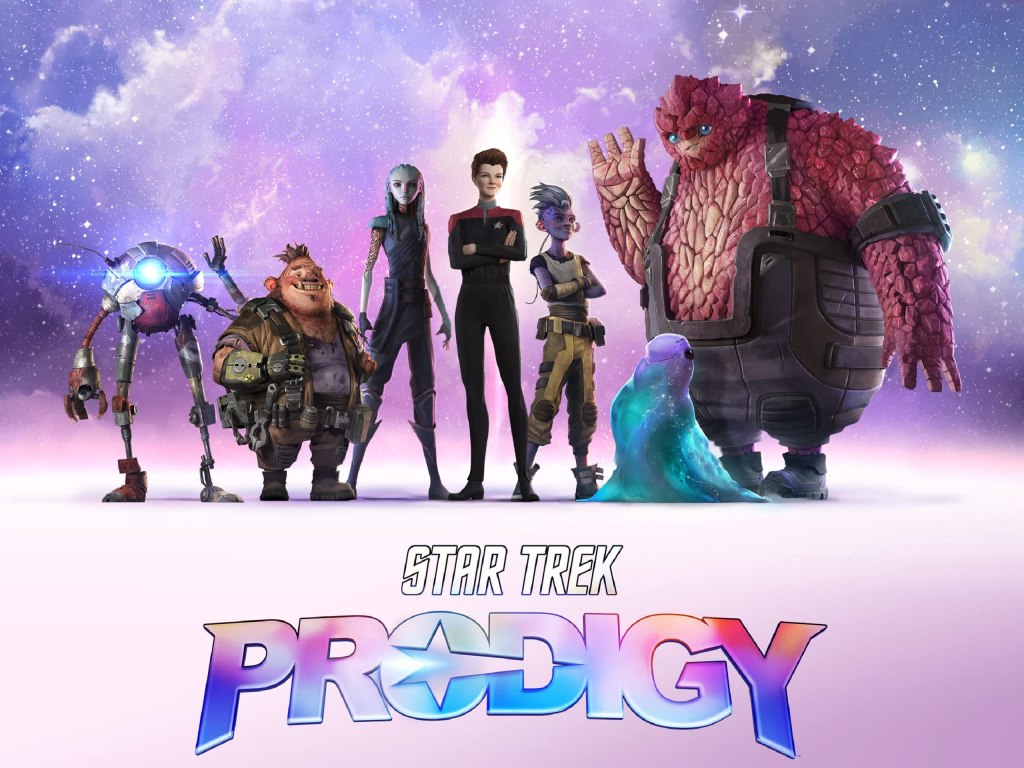
Let’s look at the biggest recent example. Paramount+ (previously CBS All-Access) was, frankly, the house that Star Trek built. The big selling point for the streamer when it launched was that it had every episode of every Star Trek series, and that furthermore, it was going to be launching several new Trek series, bringing it back to television for the first time since the cancellation of Star Trek: Enterprise twelve years prior. And for a few years, it was working out okay…until a few weeks ago when Paramount announced that the animated series Star Trek: Prodigy was being canceled, that the almost-finished second season would not be shown on the service, and that the existing first season would be removed. And before you could blink your eyes, the crew of the USS Protostar was GONE.

Cheer up, guys. They cancelled Kirk’s show too. Twice.

Now everyone who reads this column knows I’m a Trek nerd. In fact, my inaugural Geek Punditry column was all about how awesome the first season of Prodigy was. So nobody is going to be surprised to learn I’m upset about this. But I’ll bet I’m nowhere near as upset as the cast and crew of that series.

Something funny happened once Prodigy was removed, though. Within 48 hours, the Blu-Ray of the first season was sold out at Amazon, Target, Walmart, Best Buy…pretty much anywhere you can buy Blu-Rays. Sadly, the Blu-Ray only had the first half of the first season, not the second set of 10 episodes, not the cliffhanger ending that may never be resolved now. But the fans mobilized and actually spent the money, which is what Paramount wanted in the first place.

Streaming is a great thing in terms of convenience. It’s fantastic to be able to pull up any episode of Star Trek (except for those 20 episodes of Prodigy) from my remote control without worrying about changing discs or tracking down when it’s going to be broadcast. But as if we didn’t know it already, the unstable landscape of the streaming world means that no matter how much you love something, it can be taken away at the whim of some studio accountant. Supporting the things you love, while important, is only ever going to be part of the equation. What I think we’ve all learned here is that having a permanent way to keep them is more important than ever.

Blake M. Petit is a writer, teacher, and dad from Ama, Louisiana. His current writing project is the superhero adventure series Other People’s Heroes: Little Stars, a new episode of which is available every Wednesday on Amazon’s Kindle Vella platform. After he heard about Prodigy getting the ax, he added all of the Star Trek Blu-Rays he didn’t already own to his Amazon wish list. Can you blame him?

Geek Punditry #1: The Next Next Generation

I’ve been a Star Trek fan for close to 40 years now. I liked the original series, the movies, the Nickelodeon reruns of the animated series, and when The Next Generation premiered, I was a steady customer. Deep Space Nine set the hook even more firmly, giving the strongest story and the greatest character arcs of any Trek to date (even now, 30 years after the series’ debut). After that, though, although my passion for the Trek universe was untarnished, my satisfaction with specific series and movies began to vary. I never particularly cared for Voyager, and although I liked Enterprise, I was too busy in those pre-DVR days to keep up with it. I liked the Abrams movies well enough, but I thirsted for a new show, and then Discovery…well it wouldn’t be until Lower Decks that a new Trek series would fully capture my heart.

Then came Star Trek: Prodigy. Another animated series, and the first one to be specifically targeted at children. I knew I would watch it, I knew I would give it a chance, because it’s Star Trek. I ALWAYS give Star Trek a chance. But my expectations, to be honest, were not high.

At first, those low expectations seemed to be justified. We were back in the Delta Quadrant from Voyager (ugh), far away from the stories and situations I loved. The cast was made up entirely of brand-new or obscure species, which further divorced this series from the Trek saga that began in 1966. Worst of all, these characters had never even heard of Starfleet or the United Federation of Planets. If it weren’t for the prototype Starfleet vessel they found and the holographic recreation of Kathryn Janeway on board, there would be nothing about this series to designate it as Star Trek at all. It wasn’t bad. It wasn’t loaded with shoestring stories and catchphrase-spouting idiots like so many shows targeted at kids. But I finished the first episode – the first few episodes, actually – feeling like I had watched something that belonged in the world of The Clone Wars or one of the subsequent Disney Star Wars series. Not to say anything negative about those cartoons – they’re good Star Wars. But I didn’t want good Star Wars. I wanted good Star TREK.

After watching a few episodes together, my wife gave me permission to watch the rest of the season without her, as polite an indication of dissatisfaction as there can be, and I really couldn’t blame her. This wasn’t what we expected coming in. And I considered joining her in abandoning the show, because I wasn’t really satisfied, but…

Something told me to keep going. Maybe it’s my renewed devotion to Trek that has become far more passionate over the last few years. Maybe it was that each episode was only a 22-minute investment instead of an hour. Maybe I’m just pigheaded. But I kept watching.

And thank God I did, because as the season wore on, I realized I was watching the most brilliant magic trick TV has given us since someone found a hatch on Lost.

The thing I forgot in the first few episodes was that this is, first and foremost, a show for kids. It’s a show that airs on Nickelodeon, where kids can stumble upon it, and not just on Paramount+, where the existing fans seek it out. That’s important, though, because this is the first Star Trek project since 1966 that is intended specifically for an audience that has no pre-existing expectations of Star Trek. The familiar aliens, the ships, the characters, the lore – everything I love would be completely foreign and meaningless to a child watching this as their first Star Trek.

Just. Like. The. Characters. On. The. Show.

This is where the Hageman brothers, the showrunners, did something so unbelievably brilliant that I want to hug them until security has to drag me away.

As the season continued, through the holo-Janeway at first, we saw bits and pieces of familiarity. A known alien species. A recognizable name. An Easter Egg or three. And the Prodigy kids began to learn about the history and the mission of Starfleet – which is, of course, the history and mission of Star Trek.

And they loved it.

Loved it so much, in fact, that by the midseason finale (where we see the real Janeway and not just the hologram), all they wanted was to be a part of it.

And who can blame them?

I saw someone on Facebook describe Prodigy as a show about kids from Star Wars trying to run away to Star Trek, and never has a description been more apt. But the beautiful thing, the glorious thing, is that the show is constructed in such a way that the kids watching at home (like my 8-year-old nephew Grant, watching with his Trek-loving mother) who know nothing about this Trek are on this journey with them. 

In the second half of the season the curtain is pulled back further – it wasn’t just Easter Eggs anymore, but full plots and stories built on the scaffold of classic Trek and intended for the new kids, the ones still learning. And by the time we reached the magnificent two-part season finale, the trick was complete. The first half of the season taught the kids to appreciate Trek. The second half is where the Protostar crew proves they belong there, and do so in the finest tradition of Kirk, Spock, Data, and Dax.

If you, like my wife, decided to bail on this show after a few episodes, it’s totally understandable. I get it. You didn’t know. But I’m here to tell you that it’s worth revisiting. Give it another shot, at least until the midseason finale, before you pass final judgment. It’s worth it to see how they took a bunch of characters who had no business being in Star Trek and turned them into a crew as worthy as any that has ever borne the name. 

Blake M. Petit is a writer, teacher, and dad from Ama, Louisiana. His current writing project is the superhero adventure series Other People’s Heroes: Little Stars, a new episode of which is available every Wednesday on Amazon’s Kindle Vella platform. You wouldn’t believe how long it took him to type this up, what with all his fingers crossed for Picard season 3 the entire time.