Geek Punditry #140: It’s In a Book

Tomorrow, September 6, is National Read a Book Day. This holiday, designated by the American Institute to Come Up With Holidays Until We’ve Filled Every Day of the Calendar Year Twice Over, is legally and trademarkably different from National Book Lover’s Day, which happened on August 9. You see, Book Lover’s Day was a celebration of the people in your life who love books, which is why I received so many boxes of candy and bouquets of flowers that day. National Read a Book Day is the day in which you are to pick up a book and read it whether you like it or not, or else hamsters will crawl out of your closet at night and nibble your earlobes off.
Read a book or I’ll break your kneecaps.

Or something like that, I admit, I didn’t read too deeply into the website where I saw this holiday listed. But a day dedicated to books is a good thing, regardless of any rodentia-based nocturnal terrors that may or may not exist but definitely do. As a teacher, I spend my day with teenagers and, perhaps more tellingly, with samples of their writing. And I’ve got to tell you, ANYTHING that exposes our young people to more competent volumes of prose is not only a good thing, but necessary for my personal mental health. When I assign essays, I constantly get back papers without indentations, without punctuation, with words like “because” and “you” shortened to the totally efficient and time-saving “bc” and “u.” I know the reason is that a lot of these kids don’t spend any time at all reading things longer than a text message, the majority of which are composed by OTHER kids that don’t spend any time reading anything longer than a text message. That’s not just a shame, but it’s DANGEROUS for their cognitive capabilities. 

Not long ago, one of my students attempted to debate me on the necessity of punctuation. As in, she didn’t think we needed any punctuation at all. Her argument, which I swear upon the ghosts of Merriam AND Webster, was that “we shouldn’t have punctuation because people should just be smart enough to know what everyone is saying.”

I want all of you to remember that next time your local government calls for any sort of vote that would give teachers a raise. 

My reply, and I paraphrase, was twofold. First of all, if your argument is contingent upon everyone in the world suddenly becoming much more intelligent than they currently are, it’s time to change your argument, because you’re failing as badly as someone with a business plan that includes “after I win the lottery.” Second, punctuation exists in order to make writing more understandable. That is literally its function. To prove my point, I found an image online of some old text before punctuation was invented.
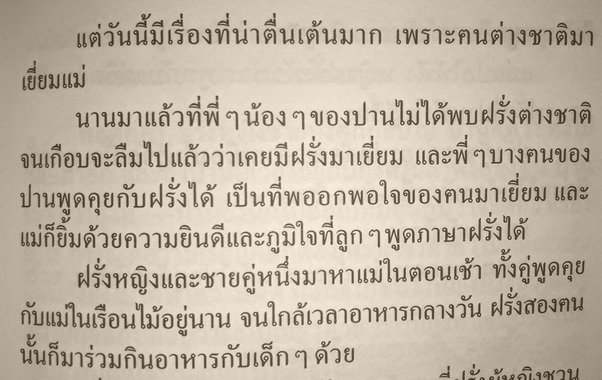
This isn’t what it looked like, but it may as well have been.

“It wouldn’t look like THAT!” the student wailed. 

“Well of course not, this is calligraphy from nearly thousand years ago, because that’s how long it’s been since we realized that punctuation is necessary.”

The thing is, arguments like this would typically be avoided if the person who institutes them simply had an appreciation for the written word. And I know it makes me sound like an old crank (which I am), but there isn’t enough of that these days. Recreational reading – after several years of increasing – seems to be on the decline again. Even short-form reading is under attack. People turn to videos on YouTube or TikTok instead of written analyses of anything. And I don’t mean to criticize people for having personal tastes on anything – if you would rather watch a video essay than read a written essay, that’s certainly your prerogative – but if I’m trying to find instructions for home repair that would take about 30 seconds, I don’t want to have to watch a four-minute video begging me to subscribe to somebody’s channel before I get to it.

“I’ll show you how to replace a flange, but you’re gonna have to WORK for it.”

If you’re the sort of person who reads my little Geek Punditry columns, you’re probably NOT the sort of person who needs anyone to convince you that reading books is a good thing. I imagine the Venn Diagram of people who appreciate books and people who like reading to me ramble on about Star Trek has an awful lot of overlap. But maybe tomorrow you can do a little something to try to recruit somebody else. Suggest a book to a friend. Take your kids to the library. Do a post on social media about the last book you read and enjoyed. Anything that makes reading a little bit more visible and reminds people that – hey – it’s cool, too. 

And a few things to remember:

Reading is inclusive. And I don’t just mean in subject matter (although I do mean that), but also in format. It drives me crazy when I hear someone say that audiobooks aren’t “real books.” Just because you’re not looking at a page doesn’t mean you aren’t processing the information in the book, and the actual mental process is the most important part of the whole thing. People forget how relatively recent it is, in the history of the human race, that literacy has been considered NORMAL. Only a couple of hundred years ago the percent of people who even COULD read, let alone DID read, was only a fraction of what it is today. And yet these people still knew stories from history, from folklore, from the Bible, from classical mythology. How? Because other people TOLD them these stories, and they listened. And that makes audiobooks as valid as any other form of reading.
This is what I look like in the car.

Graphic novels and comic books, similarly, are “real” books. And while I don’t ONLY mean the American superhero comic book, I don’t EXCLUDE them either. Comic books, in general, have a higher percentage of unique words per hundred than most prose novels aimed at a similar reading level. They activate all the same mental processes as a book that’s only words. And most importantly, they give the reader things to delve into that may lead them to other books. I started reading comics at a young age. It was the stuff I read in comics that led me to other writers like Isaac Asimov and Ray Bradbury. From there I moved on to Mark Twain, Ursula Le Guin, Daphne du Maurier, Dave Barry, Orson Scott Card, L. Frank Baum, Edgar Allan Poe, Judith and Garfield Reeves-Stevens, Stephen King, and pretty much every other author I have ever read in my entire life. I started with Stan Lee, now I teach Shakespeare. It all helps.

And finally, nonfiction also counts. While, to be fair, I certainly PREFER reading fiction when I’m reading for pleasure, that doesn’t mean that someone who’d rather read a book about World War II military campaigns, the lives of the greatest players of Major League Baseball, or migratory patterns of Canadian geese isn’t still reading. It’s all reading. It’s all good.

In fact, it’s all great.

So tomorrow, grab a book, grab somebody to read with you, and join the celebration. National Read a Book Day may only come once a year, but books are forever. 

Blake M. Petit is a writer, teacher, and dad from Ama, Louisiana. His most recent writing project is the superhero adventure series Other People’s Heroes: Little Stars, volume one of which is now available on Amazon. You can subscribe to his newsletter by clicking right here. He’s also started putting his LitReel videos on TikTok. If you happened to want to read one of HIS books tomorrow, that would be nice, but it’s not a requirement. 
Geek Punditry #123: TBR Terrors

Warning: This week’s Geek Punditry might be disturbing for people who love books, because this week I’m going to be discussing the three most terrifying letters for a bibliophile: TBR.

Almost as scary as IRS.

TBR, if you aren’t a reader, stands for “To Be Read,” and it’s something that will chill the blood of anyone who actually enjoys reading, because the TBR is the most intimidating thing in the universe. Some of us have actual, physical piles of TBR books. For others, it’s just a list. Still more have a sizeable section of our e-reader’s memory taken up with books that they’re going to read, and I quote, “someday, I swear to God.” But no matter what form your TBR takes, the existence of the TBR is a constant reminder that there are more books deserving of our time than we can possibly devote that time to.

It’s so easy to make that TBR bigger. All it takes is for you to become aware of a book that sounds good. Your favorite author has a new release? It goes into the TBR. Your friend tells you about something great they read on a recent beach trip? TBR. You’re wandering through one of those bookstores that you somehow keep stumbling into when you’re supposed to be buying groceries or perhaps extinguishing a fire, and some book catches your eye? TBR. There’s a new cover on this one? T.B.R. 

A NEW FOREWORD? By HAROLD BLOOM?

Adding a book to your TBR is easy, almost effortless, especially if you just maintain a list. But getting them electronically is easy too – after all, ebooks are usually mostly text (unless you’re talking about graphic novels, but that is a different – albeit similar – conversation). Text files don’t take up nearly as much space on a storage disc as music, videos, or photographs, so you can store a LOT more books on your phone or tablet than anything else, and you can add more…and more…and more.

Then there are the physical book readers, those who have overflowing shelves of books they’ve read and three times as many shelves of books in the TBR. For some of us, we display books the way a hunter or a fisherman will have a prize kill mounted and placed on the wall.

“Here we are, Under the Dome by Stephen King. Hardcover, 1074 pages. I brought this bad boy down back in 2011.”

“Cool. Say, what are all these books on these shelves over here?”

“We’re not gonna talk about those.”

So yes, adding a book to the TBR is effortless. But removing it is a torture the likes of which should seriously have been studied by the Geneva Convention, because it requires you to actually READ the book.

Oh, what fresh Hell is THIS?

“But Blake,” you’re saying, “I thought you said that the whole TBR thing is only relevant to people who LIKE to read.”

Oh, you silly person. Just because you LIKE to read doesn’t mean you actually get to DO it. We live in a world of chaos and terror and reality television, and although reading is a pastime that we book lovers dearly enjoy engaging in, the universe frequently colludes to deny us the time to do it. What’s more, even if you find the time, the little things that chip away at you day in and day out may sometimes leave you too emotionally exhausted to actually do the thing that you do to relax. If you just like, for example, watching baseball, then when you get home you can turn on a baseball game and the extent of your intellectual engagement will be formulating your Facebook post explaining why the umpire is an idiot. But reading is, ipso facto, a more mentally demanding pastime than many of these others, and after a long day at work or with the kids or just dealing with the avalanche of depression that social media has somehow convinced us to plug directly into our veins, the idea of picking up that novel about the vampire apocalypse may start to seem a little daunting, no matter how good the writing is.

The point is, stuff is added to the TBR much, much faster than it can feasibly be removed unless you physically drag your bookshelf into a sterile room with no connection to the outside world. The closest thing many of us get to that sort of distraction-free environment is reading on an airplane, which is actually where I achieved some of my greatest TBR accomplishments before I started traveling with a child, at which point even that avenue was largely closed to me. 

“I don’t actually want to go to Taipei, but how else am I supposed to finish reading the new Hunger Games prequel?”

To make matters worse, although you CAN eventually get a book off the TBR by reading it, a lot of us also like to…this is insane, but listen to me here…we like to read books AGAIN. 

We’re crazy, I know. But there are legitimate reasons for doing so. Perhaps the next book in the series is about to come out, but it’s been 17 years since George R.R. Martin released the last one, so you need to read it again to refresh your memory. Perhaps the last time you read To Kill a Mockingbird was in high school and you have come to recognize that your perspective as an adult is vastly different than that of the 16-year-old who previously read the book and it may be worth re-evaluating it from this new point of view. Maybe it’s just a comfort book, and you feel the need to return to it every so often to sort of ground yourself and remind yourself of the things in the world that you actually like and make you happy as opposed to…well…everything else. No matter the reason, the practical result is that even a book once removed from the TBR can be returned to the TBR at any moment and without warning, and then once again, your only shot at removing it is to read it all over. 

People who don’t read books are listening to this and assuming that I’ve lost my mind, whereas book readers are nodding at me and trying to remember if To Kill a Mockingbird is already on their TBR and, if not, adding it. 

The sheer volume of books that exist doesn’t help. No matter how old you currently are, people were writing books thousands of years before you were born, and at least seven of them are worth reading. What’s worse, there are a bunch of assholes out there right now casually writing even more great books that deserve to be read, as if you didn’t already have enough on your plate, the inconsiderate jerks. There is a point where most book readers have to face the fact that yes, they own more books than they can ever hope to finish reading in their lifetime, but they’re still reluctant to get rid of any of them, because any of these books MIGHT be called up to the major league at any given moment. 

“Well, Blake,” you continue, having this dialogue despite the fact that I wrote this several days before it was posted online and your ability to speak back through the time-space continuum is uncanny, “At least if you’ve got a massive TBR, you never have to worry about what you’re going to read next, right?” Ha ha ha! What an idiot! No, having a TBR makes it even HARDER to choose your next read. Think of it this way, if you have lunch at Raising Cane’s, you really only have one choice to make: will you substitute your cole slaw with extra fries or extra toast? But if you go to, say, the Cheesecake Factory, they hand you a menu so thick that, at first glance, you may think it should be added to your TBR. So let me ask you, my friends, at which restaurant will you have an easier time making a decision? 

Exactly.

The last book I took off my TBR was The Final Girl Support Group by Grady Hendrix. It was a great book, about a group of survivors of slasher-type murderers (the characters are very thinly veiled homages to the final girls of movies like Friday the 13th, Scream, Silent Night Deadly Night, and many others) who have an therapy group they attend together until someone starts trying to kill them. This is the third of Hendrix’s books I have read and I’ve really become a fan of the way he blends plots right out of a scary movie with a dark and sharp sense of humor. Unfortunately for me, after three hits in a row from him, I’ve pretty much decided that every book he’s ever written deserves to be on my TBR. I’m looking at Horrorstör next, billed as “a haunted house story set in a furniture store.” It sounds ridiculous and amazing, and there’s no telling how long it will be on the TBR before I get to it.

“Look at me, Song of Achilles! Take in my glory, The Redemption of Time! THE TBR CAN BE ESCAPED!”

But the point is, I FINISHED Support Group, so I got to take it off the TBR. Great! Go me! So…what next? More horror? Do I want another horror story so quickly, or do I want to mix it up a little bit? A little comedy? There was definitely humor in Support Group, but it wasn’t a laugh riot, so something a little lighter might be welcome. I’ve got a ton of Star Trek novels I haven’t gotten around to yet…but it hasn’t been THAT long since I read one. Maybe I should go back and pick up one of the Ruth Plumly Thompson Oz books I haven’t gotten around to, except that I didn’t really care for the last one I read, Grampa in Oz, and while I intend to eventually read all of the Famous Forty, I’ve put her on probation for a while. I read the first book of that trilogy by Gwenda Bond a couple of months ago and I really liked that, so perhaps I should pick up book two. Or maybe…

And my mind goes around like this for hours at a time until a friend of mine on Facebook posts that she just started reading Hail Mary by Andy Weir which, of course, makes me think that it’s time to finally go back and read The Martian for a second time.

Not even joking, this is the most scientifically-accurate book I’ve read since my second year of college.

Again, non-readers are ready to send me to an asylum. Book lovers know EXACTLY what I’m going through. 

So my friends, be kind to those of us who love to read. We have chosen a recreational activity that frequently includes as much planning and careful mental preparation as getting another job, except that instead of getting paid for it, we just get more books to put on the TBR. It’s a curse.

A lovely, wonderful-smelling curse that none of us would give up even if we could. 

Blake M. Petit is a writer, teacher, and dad from Ama, Louisiana. His most recent writing project is the superhero adventure series Other People’s Heroes: Little Stars, volume one of which is now available on Amazon. You can subscribe to his newsletter by clicking right here. He’s also started putting his LitReel videos on TikTok. He added six books to his TBR while writing this. Shut up. 

Geek Punditry #89: What is Mr. Petit Reading?

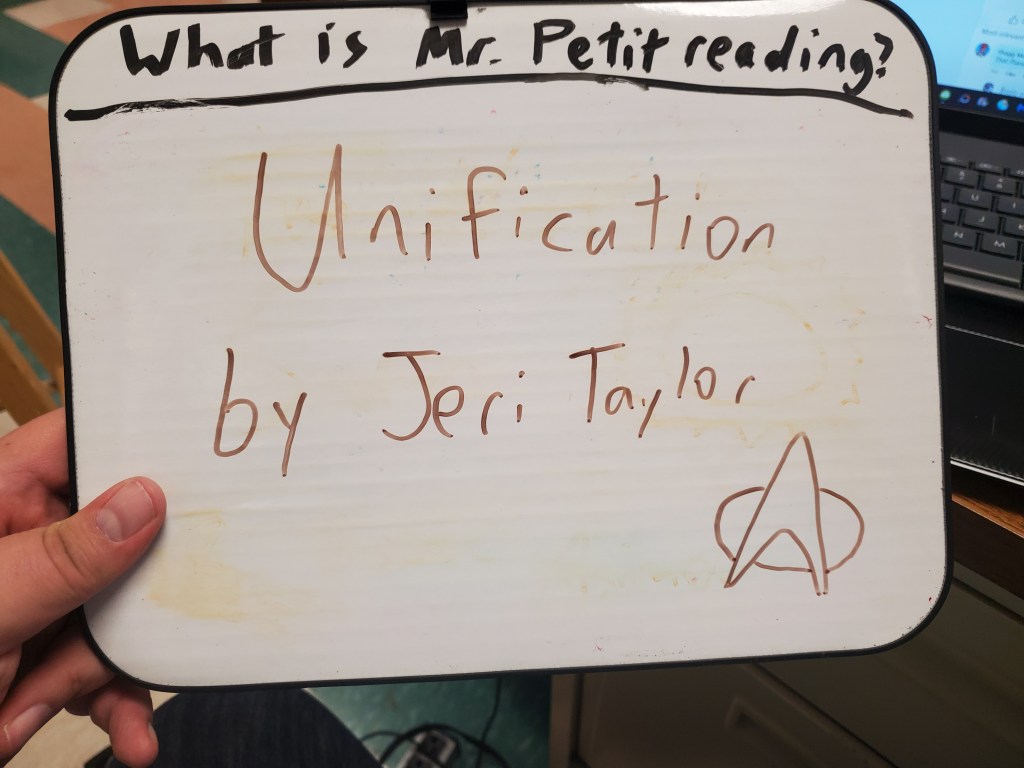
There’s a relatively new trend among teachers – English teachers, at least – that I’ve grown quite fond of: the “What am I reading?” board. There aren’t enough kids out there who read just for the pleasure of it, and it seems like that number dwindles every day. Sure, talking about books all day is one of the best parts of my job, but I think kids get the idea that I spend all my time marinating in Shakespeare or F. Scott Fitzgerald. And while I certainly enjoy many things about both of those authors, that ain’t what I read for fun. So teachers have started making signs or bulletins that declare that we’re reading for our own recreation in the hopes of stirring some conversation. I never draw attention to the board, or let them know when I’m changing it up, but in the past year or so that I’ve kept the board in my room it has spurred a few questions like, “How many books DO you read?” and “Why do you draw that little star next to so many of them?”

It’s a Starfleet delta, you heathens.

Anyway, another thing that this board has been good for is keeping me reading at a relatively brisk pace. The last thing I want is a kid asking me why I’ve spent the last month and a half on the novelization of Spaceballs. So I carve out a little time to read each day, usually before I go to bed, and I keep that board updated as often as possible. It’s been really helpful to me, giving me an impetus to read more often, and I thought today it may be fun to look back on a few recent reads that I’ve enjoyed.

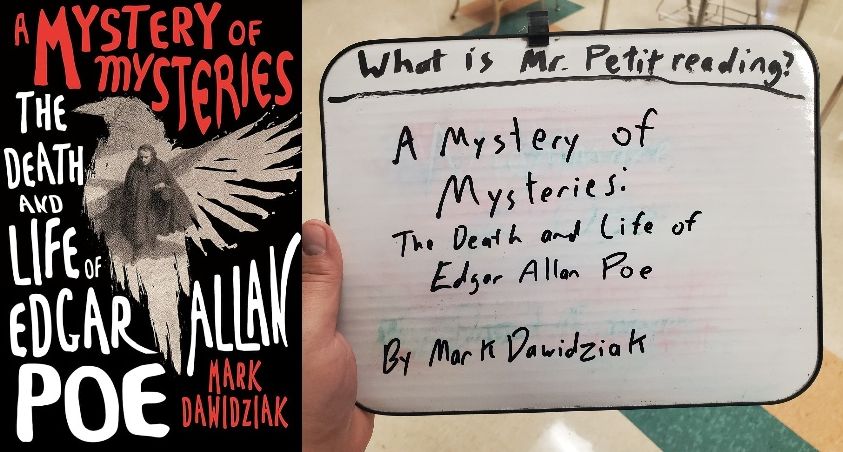
A Mystery of Mysteries: The Death and Life of Edgar Allan Poe by Mark Dawidziak

I picked this book up at Barnes and Noble on my birthday, part of my Rear Window date night with my wife, and I finished reading it a couple of days ago while riding out Hurricane Francine. I like to think Edgar Allan Poe would have approved. This is a great biography of Poe, with an emphasis on the unsolved mystery surrounding his death, found wandering the streets of Baltimore in a haze, drunk, possibly rabid, and dying a few days later crying out for an unknown person called “Reynolds.”

Or so the reports say. 

Dawidziak alternates chapters between telling the story of Poe’s life and the story of Poe’s death, and in both cases he spends a lot of time unraveling a lot of the scandalous tales that have plagued the widest-read author in American history ever since his death. Was he actually an opium addict? (No.) Was he an alcoholic? (He had his troubles with alcohol, but at the time of his death he had taken – and adhered to – a temperance pledge.) Did he die of rabies? (The water he drank on his deathbed seems to rule that out.) Granted, I haven’t read a LOT of books about Poe’s life, but Dawidziak definitely paints the most balanced portrayal of the man that I’ve ever read. There’s a clear admiration of Poe in his words as well. This is obviously the work of an author who holds Poe in high regard, so it’s not surprising how much work he does to rehabilitate Poe’s reputation. At the same time, though, the writing is clear and engaging, and the book left me feeling like I know much more about the man who we all imagine hunched over a shadowed writing desk, an ominous raven perched on his shoulder. If you’re at all a fan of Poe, I can’t recommend this book enough. It’s the perfect way to pregame for Spooky Season

A Nightmare in Oz by David M. Keyes

I’ve written before – frequently – of my abiding love for L. Frank Baum’s Oz in all its forms, and when I encountered author David M. Keyes on Threads discussing his series called the “New Oz Chronicles,” I decided to give it a chance. I’m really glad I did. 

A Nightmare in Oz is set in the modern day, 120 years after Dorothy Gale’s first journey to Oz and almost as long since she and her Aunt Em and Uncle Henry came to Oz to live permanently (which happened in Baum’s sixth book, The Emerald City of Oz, in case you didn’t know). But in Oz, nobody ages or dies, so Dorothy is still a young girl here in the 21st century. The story begins with Dorothy having a nightmare – her first since coming to Oz over 100 years ago. As she seeks an answer to her dark visions, she discovers that many of the residents of Oz that, like her, originally came from the non-fairy world are having nightmares of their own: Em, Henry, the Wizard of Oz (who also came back – really people, read the original books) and even her little dog Toto. The mystery of where the nightmare comes from brings back an ancient threat and opens up the doors for an engaging new fantasy series.

Since the Oz books went into public domain, dozens of authors (maybe even hundreds) have tried to put their own stamp on the world of Baum’s creations. Some, like Eric Shanower, do their best to create a world that seems like it could have spilled from the pen of L. Frank Baum himself. Others, such as Gregory Maguire of Wicked fame, use the skeleton of Oz to do something quite different that doesn’t strictly fit in with anything that Baum has done or would have done with his stories. 

But Keyes has found a marvelous balance between these two extremes. He is taking Baum’s works as canon, and Dorothy and the other characters have the same inherent goodness and sweetness that readers of the Famous Forty would find familiar and comforting. But by bouncing the action forward a century, he also adds a layer of modernity and sophistication that many contemporary writers don’t attempt. It’s the same old Dorothy, but she’s got a century of experiences that are belied by her childlike exterior. The danger in this book feels more real and more layered than most of the old stories, while not going to the extreme of some other modern writers. I really enjoyed this book, and I’m looking forward to digging into the rest of the books in this series.  

The Naked Sun by Isaac Asimov

But this accelerated reading schedule isn’t only reserved for new books. I’ve taken advantage of it to dive back into some old favorites as well, such as Isaac Asimov’s robot series. Most recently I read the second book in the series, The Naked Sun. In a future in which the citizens of Earth are limited to lives in huge, domed cities without ever facing the outside world, Detective Elijah Baley is summoned by an old partner – Robot Daneel Olivaw – to help solve a murder on a distant planet where the sky is open to all, but is so sparsely populated that people live solitary lives without ever seeing one another in person. 

Asimov was renowned as a science fiction master, and the world-building in this series has always impressed me. We’re all familiar with the Three Laws of Robotics and all the stories that have been written trying to thwart them, but that’s just the beginning. The projected future of the human race and how Earth is made subservient to its own colonies is fascinating, as are the different types of worlds explored throughout these stories. But I don’t know that people give Asimov enough credit for how good he was as a mystery writer. This is by no means the only mystery novel Asimov wrote, and not even the only mystery/sci-fi hybrid, but the unique circumstances of the world in which the story takes place adds an additional level of complexity to the mystery that makes this one a joy to unravel.

Of course, not every book that I’ve read in the year since I started keeping my board has been a winner, but as I always do with this column, I’m doing my best to focus on those things that I love. You’re not going to hear about the clunkers. At any rate, these are just a few of the stories that I’ve dug into lately that have helped me jumpstart my love of the written word. Hopefully, you’ve been having fun with books lately too.

Blake M. Petit is a writer, teacher, and dad from Ama, Louisiana. His most recent writing project is the superhero adventure series Other People’s Heroes: Little Stars, volume one of which is now available on Amazon. You can subscribe to his newsletter by clicking right here. The toughest thing about Blake’s new reading routine? Figuring out what book to read NEXT. There’s a…sizable list of candidates. 

Geek Punditry #30: Summer Reading

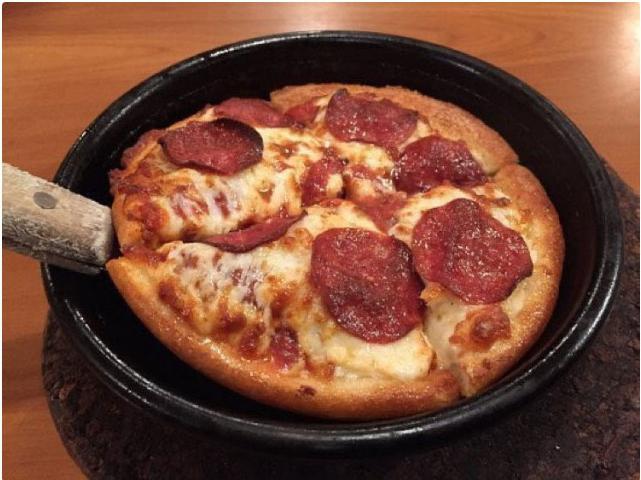
Summer reading. The phrase calls up different memories, different emotions, depending on how old you are. If you’re my age (or you’ve seen the memes), it may bring you back to those halcyon days when you were tracking each book you read in the pursuit of a free personal pan pizza. Depending on what school you went to, it may cause you to recall those last few hours before a new school year began, binging A Tree Grows in Brooklyn or Of Mice and Men, even though you had two months with virtually no responsibilities in which to get it done. For a lot of people, it brings to mind the beach or the pool, where you set up on a towel or a chair and pull out a romance novel, a potboiler mystery, a spy thriller, or whatever it is that you connect to. Whatever the specifics of your personal relationship with books, it seems very curious to me that people have settled on the summer as the time to read.

Of course, if you’re just trying to SOUND smart, this sucker is available on Amazon and can tell you everything you need to know.

And we can blame teachers and Pizza Hut all we want, but there’s something that makes us all reach for that to-be-read pile during the summer months. Any book lover will tell you that we add to that pile constantly, most of us have stacks and shelves (or files bursting with digital downloads) of books that we know we have no hope of finishing in our lifetime, barring one of those Twilight Zone scenarios and minus the poor eyesight. That doesn’t stop us from piling new books on, of course, as we constantly tell ourselves and our partners that we need to be grateful it’s books and not, for example, meth. As that pile gets bigger and bigger, summertime is the only time where it seems to dip a little (or at least grow more slowly). 

Me on June 1.

This is even true for those of us who, through a terrible confluence of biology and neurochemistry, happen to love both books and our own children. In my entire life, there has never been a single event that slowed down my reading more than the birth of my son. And he’s worth it, of course. I love him to death, and I make sure to tell him that every time I look at the 17 books Stephen King has published since his last haircut that I haven’t gotten around to consuming yet.

The good news, parents, is that kids get older, and eventually they do reach a point that makes it a little easier to start reading again, and this summer seems to have finally gotten my family to that sweet spot. Of course, we did need a little help. Our local public library, as they always do, has issued a “summer reading challenge” to its patrons, both children and adults. There are prizes (no pizza, sadly), and of course, bragging rights, and the weird thing is that having this carrot dangling in front of us has really worked for my family.

Not quite as well as this, of course.

The St. Charles Parish Public Library is affiliated with a reading app called “Beanstack,” which allows you to track your reading time, track books you’ve read, even track the number of pages read (although I personally have not taken advantage of this feature, as most of the books I read these days are eBooks, and tracking the pages isn’t always easy). You can write reviews as well, and share your reading with others. You earn points and badges. I got a free umbrella. It’s kind of goofy that a grown ass adult (or whatever I am) would need to treat reading books like accumulating a high score on a video game, but by God, it worked.

My summer ends next week, when the teachers at my school report back for a few days of professional development in advance of the avalanche of students the week after, but when it comes to reading, I’ve really taken advantage of this summer. Since school let out in May, I’ve recorded 80 different reading sessions, 20 different books, and a whopping 2578 minutes of reading time, most of that at night before bed, because knowing I don’t have to wake up at 5 am makes me feel a little more free to stay up late with a book like I did when I was a kid. My wife – who is not a teacher and thus does not have the summer away from work – hasn’t quite matched my numbers, but she’s also found herself reading more thanks to the use of the app. There’s something oddly communal about the experience, knowing that other people in the system are reading as well, trying to stack up their numbers, and having fun doing it.

Um…just ignore that second stat.

The communal aspect, I think, is one of the things that makes it work. I can see how many reading minutes everybody signed up for the Library system has accumulated over the summer (currently hovering at about 2.1 million, which means some of you people have been slacking), and there’s something about knowing that other people are reaching for the same goal as you are at the same time that makes it a little bit easier and a little bit more exciting. It’s the same reason people share their steps from a Fitbit, the same reason so many of us jump into NaNoWriMo every November. You’re aiming for a goal that you always have on some level. It’s easier to go after that goal when you know you’re not doing it alone.

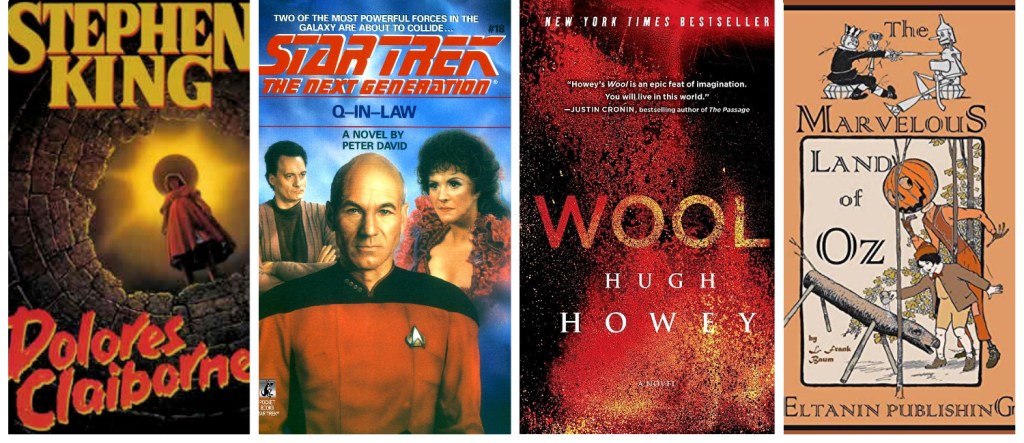
Those 20 books that I’ve dug into, by the way, are also in pursuit of various smaller goals. Most of them are in series or by authors I enjoy, but that I’ve never gotten around to finishing. I’ve started a re-read of all of L. Frank Baum’s Oz novels (in case you were wondering why I wrote about that back at the beginning of summer) with the intention of continuing on and reading the other books in the “Famous Forty” that weren’t written by him, most of which I’ve never read before. I’ve read a few Star Trek novels. I’ve read books in George R.R. Martin’s Wild Cards series and Hugh Howey’s Silo saga. I’ve even tackled two of those Stephen King books that I hadn’t gotten around to yet. He wrote four more in the time that it took me, but baby steps. 

If you can think of a better way to spend the summer, I’d love to hear what it is.

The only problem I’ve got with Beanstack is that I don’t think you can add friends from outside your own library system, so I don’t know that all of you fine folks out there could link up with me there – although if anybody knows of a similar app that’s not geographically-locked, by all means let me know. And while you’re at it, let me know how your own summer reading has gone. What have you read on the beach, what books have finally escaped your-to-read pile, and do you too feel like you read more when the heat is on?

Blake M. Petit is a writer, teacher, and dad from Ama, Louisiana. His current writing project is the superhero adventure series Other People’s Heroes: Little Stars, a new episode of which is available every Wednesday on Amazon’s Kindle Vella platform. Blake is also considering doing a total read-through of Rick Riordan’s Percy Jackson universe, but that dang Stephen King keeps adding other books he need to get to first.