Geek Punditry #115: Swept Up By the Past

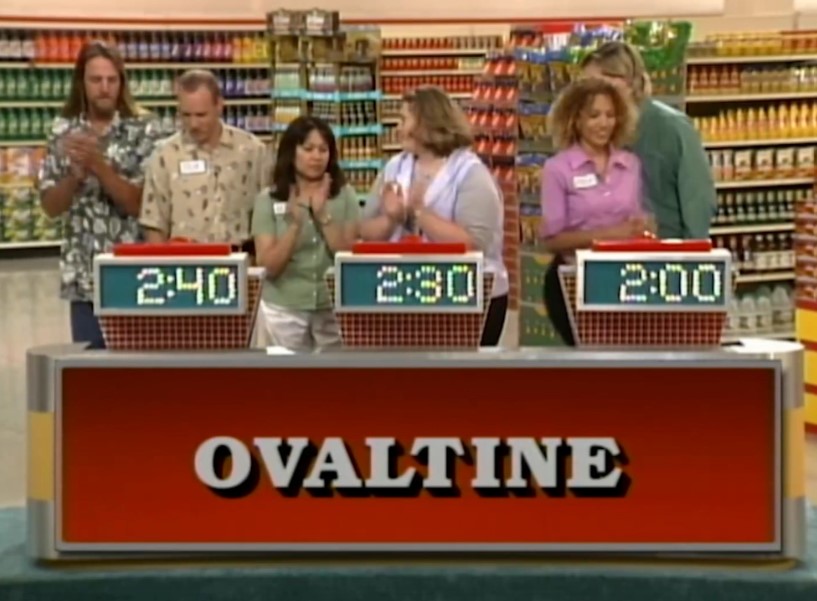
I know that parents brag about their kids a lot, and a lot of it is overblown and unwarranted, but today I’ve got a legitimate achievement for you. I am willing to bet that my son is the only second grader in the entire state of Louisiana who plays Supermarket Sweep when he’s supposed to be getting ready for school in the morning.

Bite it, Teletubbies.

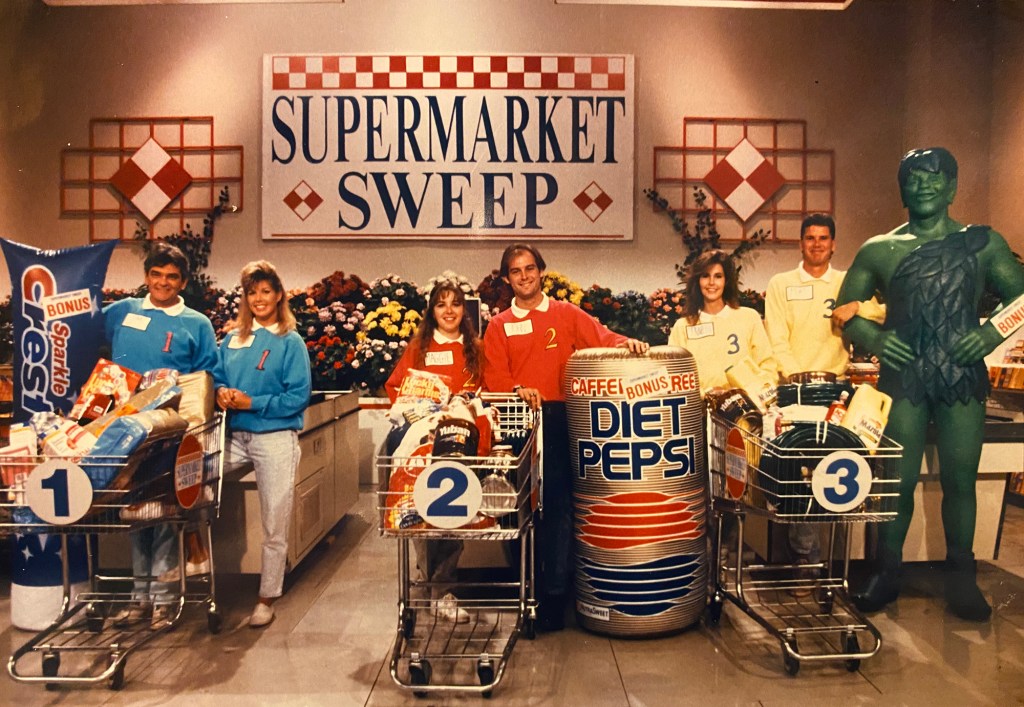
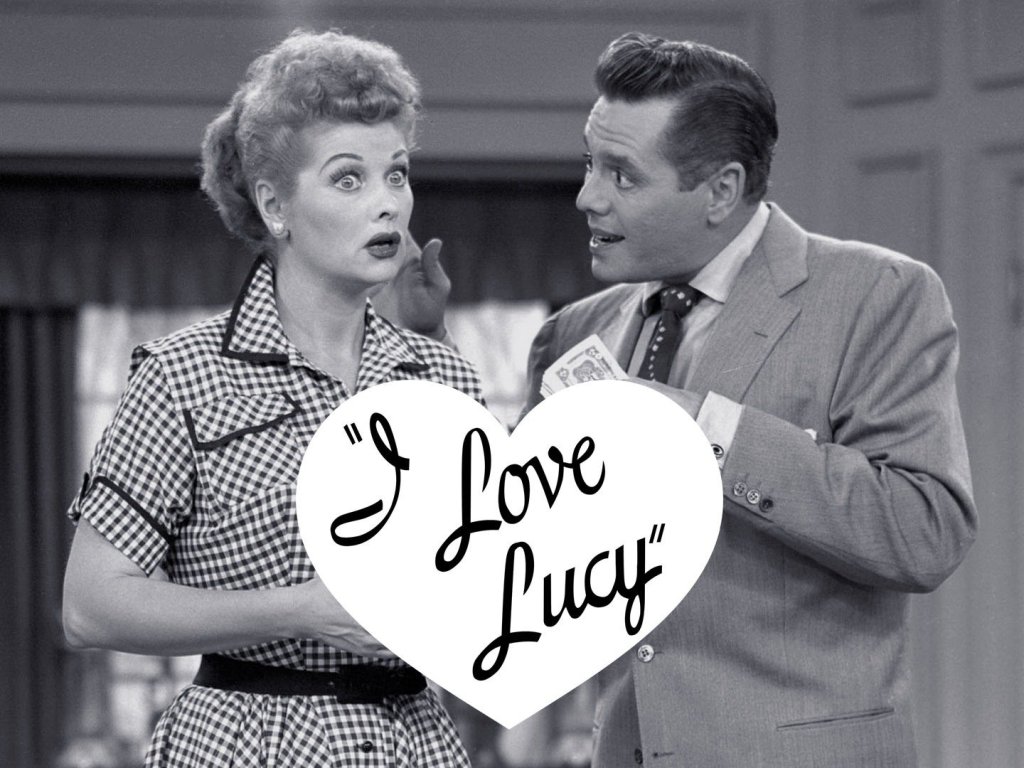
I’ve written before about my love for Pluto TV and their various channels full of old TV shows. If you’re a Pluto viewer, though, and you stick with a single channel long enough, you see the shows start to cycle back to the beginning, so I find that we tend to go through phases. For a while there, whenever we turned on Pluto TV it was to watch I Love Lucy. Then there was a period where we were stuck on the channel with old episodes of Cheers and Frasier. We went through a Top Gear period and a Nick Jr. Channel phase and a nice chunk of time where we watched the old Mr. Rogers’ Neighborhood. But in recent weeks we’ve gravitated towards Supermarket Sweep, the old 90s game show where contestants answered trivia questions and played games about groceries and shopping, not to win money, but to win TIME. Then they used that time in a mad dash through the supermarket, trying to grab as much as they could in bonuses and merchandise for the right to play the final $5000 game. If you were around in the first half of the 90s, I’m sure you watched this show. I’m sure you thought about being ON this show. Hell, host David Ruprecht even ENTICED you with it at the end of every episode: “Remember, the next time you’re at the checkout counter and you hear that beep (BEEP BEEP), think of the fun you could have on Supermarket Sweep!”

Such a tease, that David Ruprecht.

The face of temptation.

Anyway, we can never quite predict which shows Eddie will latch on to, and something about Supermarket Sweep has really captured his attention. He runs around the house, grabbing random items for his “sweep,” and declaring which ones are bonus items and how much the bonuses are worth. Unlike the original sweep, where bonuses were usually worth something between $50 and $300, sometimes Eddie will declare the bonuses his mother and I have won to be worth, and I quote, “ZERO DOLLARS,” followed by an insane giggle. It’s all about the joys of parenting.

Watching this 30-year-old game show is a kind of television comfort food. It’s very low-stress, except when you’ve figured out one of the clues and the contestants haven’t and you’re YELLING at them that they’re supposed to be looking for the FLINTSTONES VITAMINS, NOT THE FRUITY PEBBLES, YOU MORON! At one point, I was writing something on my laptop when my wife shouted “KUDOS!”, and for a moment I thought she was congratulating me before I realized she was referring to a granola bar. Sometimes the answer will be a product neither Erin or I have ever heard of, or sometimes it’ll be something they stopped making 20 years ago and suddenly we find that we miss it. It really tugs on those nostalgic strings. 

This episode triggered Ralphie Parker’s PTSD.

There’s also a quaintness to it. For instance, in one game the contestants are presented with three different products and they have to guess which one costs more than, say, $2. And I laugh, because every one of those products would be at least $7 today, and I realize that if I were to go back in time and be a contestant on this show, I would be very, very bad at the pricing games.

There was a revival of Supermarket Sweep a few years ago hosted by Leslie Jones, but it didn’t last. I watched it a couple of times, and it didn’t really get to me the way the old ones do. I feel like modern games shows work really hard to amplify the stakes. Bigger prizes, bigger sets, flashy graphics. I’ve seen shows that literally have an enormous roulette wheel, others where an incorrect answer will have someone ejected into a pool of water…and I still haven’t got the slightest idea what Fox’s The Floor is supposed to be.

Like this, but starring Rob Lowe.

Even the old stalwarts have had to change with the times. Wheel of Fortune and Jeopardy both have bigger prizes on the line than they did back in the day, and while part of that can certainly be chalked up to inflation, it also feels like there’s an effort to keep “modernizing” it. Wheel has new types of puzzles than they used to, for instance, with sometimes baffling rules. Jeopardy is still played more or less the way it always has been, but it’s become more attached to the cult of celebrity. It’s been a long time now since they got rid of their five-day limit for returning champions, but in recent years there’s been a push to make “stars” out of any champion who gets on a particularly long winning streak. I get it, it’s playing the media game, but watching these shows today does bring out a thirst for the classics.

A few years back, after Hurricane Ida hit, we were without internet at our house for about a month. Fortunately, we have an antenna, so we weren’t completely cut off from the world around us, but we certainly didn’t want to watch news coverage of the storm 24 hours a day. So my wife and I (this was before Eddie had quite reached the point where he was demanding control over the remote) settled on leaving the TV most of the time on one of the many digital channels that have cropped up since the analog signal was abandoned, one that showed nothing but game show reruns 24 hours a day. There was no Supermarket Sweep there, but we found ourselves reacquainted with old shows like Hollywood Squares, Match Game, and Card Sharks, cycling through the old games and chuckling at the old prizes. 

That’s right, Bob, flip it like you mean it.

It’s a similar feeling to watching old sitcoms or science fiction shows, but there’s a strange contradiction when it comes to the stakes. If I’m watching an old episode of Star Trek, there’s a tension there about the fate of the crew of the Starship Enterprise, even though I know for a fact that these are all actors, that nobody was actually hurt in the filming of this episode, and that pretty much everybody not wearing red is guaranteed to be back next week unless their name is Denise Crosby. On the other hand, watching an old game show has none of that tension, even though the people on that show WERE real people and WERE playing for real money and prizes that might have changed their lives. The game shows are less intense for the viewer, even though there is far more at stake for the people involved. It’s such a weird juxtaposition, but it’s true.

“And if you get the Jolly Green Giant bonus, it comes with some of your absent father’s love.”

I don’t know how long Eddie is going to remain obsessed with Supermarket Sweep. If past performance is any indicator, it will go on until we stumble upon something else, purely by chance, that diverts his attention. It could be a cartoon, could be a sitcom, could be another game show. There’s no telling. But in the meantime, I’m kind of enjoying a virtual run down the aisle, trying to stack up on those big blocks of cheese worth $30 each or grabbing the three items from David Ruprecht’s shopping list for a bonus $250. And when the contestant can’t figure out that the clue is supposed to send them shopping for Aquafresh Toothpaste, I am there to yell the correct answer at the screen, only for Eddie to echo me a moment later. 

It’s not game-changing television. It’s not Squid Game or Yellowstone, it’s not something people will be talking about around the water cooler if people still do that sort of thing. But it’s nice.

Sometimes just nice is okay.

Blake M. Petit is a writer, teacher, and dad from Ama, Louisiana. His most recent writing project is the superhero adventure series Other People’s Heroes: Little Stars, volume one of which is now available on Amazon. You can subscribe to his newsletter by clicking right here. He’s also started putting his LitReel videos on TikTok. Also nice: reruns of The Dating Game that do not involve serial killers. So, that’s at least 75 percent of them.

Geek Punditry #56: The Pundy Update

January is kind of a stale month, pop culture-wise. There aren’t any huge movies out to discuss. The holiday backup has us all in its grip as we spent the month recovering from frivolity by trying to get everything back in order, so we don’t have as much time to indulge in the things we love in the first place. The playoffs are a thing. And this year especially, although the writer and actor’s strikes are over, the delay in new material has us rather struggling to find decent TV worth watching. Yes, friends, it’s a quiet time here in the Geek Punditry Global Media Hub. I don’t have a ton of things to say a lot about.

So instead of choosing a topic that doesn’t quite fit into a full column and stretching it out unnecessarily, this week I’m going to do a little bit of an update. I’ll scroll through columns from the past and give you a bit of new information to tell you how those topics are going, how I feel about them now, whether or not anything has changed since I last wrote about them. It’s this or another mailbag. What do you say?

That’s what I thought.

Item One: Last April, I wrote about the magic of the show I Love Lucy and how Lucy, in many ways, codified the sort of serialized storytelling that is commonplace on television today. (See Geek Punditry #15: How Lucy Gave Us the Arc.) In that column, I also spent a little time talking about the greatness of Pluto TV. This is an app on your smart TV that gives you free access to hundreds of channels of specialized content. There’s one channel that just shows the entirety of I Love Lucy, another devoted to The Carol Burnett Show. Others bring us RiffTrax, Mystery Science Theater 3000, Top Gear, Bar Rescue, Unsolved Mysteries, and hundreds of others. I know there are other apps, like Roku TV and FreeVee, that have similar features. Some of them even have the same specific channels. But Pluto TV is the one we use most often, so it’s the one I’m talking about.

I’m just saying, there are worse ways to spend a weekend.

Not long ago, while trying to find something appropriate for my son to watch that wouldn’t make me want to gouge my own eyeballs out, I stumbled upon Pluto’s Garfield and Friends channel, and I left it on. Eddie soon became hooked. He now specifically requests Garfield on most occasions when I let him pick what to watch unless there’s a football or hockey game on. (My kid is a sports nut, which probably makes people who knew me in college snort milk out of their noses laughing. Even if they aren’t drinking milk at the time.) I watched this show when I was a kid and I enjoyed it, but this is the first time I’ve really sat down and paid attention to it in quite some time, and can I tell you something folks? As comedy, Garfield and Friends legitimately holds up.

Comedy peaked in 1989.

While the Garfield comic strip is often criticized for being somewhat bland in its comedy, pushing no boundaries and having as much of an edge as a donut, the show is actually quite the opposite. The scripts are littered with sharp puns, sarcastic humor, and the occasional slightly more adult reference you know the writers were just hoping would slip past the censors. The fourth wall on this show is less of a rule and more of a vague suggestion, and the propensity for overly-long jokes is the kind of thing that I’ve always found hilarious. Part of the credit has to go to head writer Mark Evanier, a longtime TV and comic book writer who perhaps is best known these days as the co-writer of Sergio Aragones’s sword-and-sandals parody comic Groo the Wanderer. Evanier had spent a lot of time working on cartoons where the kind of stale, inoffensive storytelling we criticize the Garfield comic for was the norm, and apparently he went into full-on rebellion against the form. 

There are a lot of episodes of this show with kind of a downer ending, if you really think about it. Jon Arbuckle is a perennial loser and he’s treated as such. Garfield’s relationship with Penelope (who replaced the comic’s Arlene for reasons that still aren’t clear) is completely selfish, with him only loving her because her owners have an Italian restaurant. Evanier even introduced the maddening Buddy Bears specifically to mock the shows he had worked on before – the Buddy Bears’ credo is that you are never allowed to disagree with anything and you must always get along, and thus they are portrayed as completely insane. The US Acres (or Orson’s Farm segments in certain countries) similarly have a slyness to them that most cartoons of the time couldn’t touch, and few cartoons specifically for children do today. If you haven’t watched Garfield and Friends in a couple of decades, click over to Pluto TV and give it a watch. The show is still great. And if not, it’s at least better than whatever is on Disney Jr. right now.

Item Two: Back in November, I wrote about Marvel Comics announcing a new version of Ultimate Spider-Man, featuring an adult Spider-Man married to Mary Jane Watson and with two kids. (See Geek Punditry #44: What’s Wrong With a Spider-Family?) Having spent the better part of two decades complaining about Marvel Comics’s refusal to tell stories about an adult Spider-Man with a wife and a family, I felt it would be somewhat hypocritical of me not to try the new series by Jonathan Hickman and Marco Checchetto. The first issue came out a couple of weeks ago and, I’m happy to report, it’s even better than I hoped. It may well be the best single issue of a Spider-Man comic that I’ve read in twenty years. I am not exaggerating that number, friends. 

This is what a Spider-Man comic book ought to be, people.

I’m going to explain what makes it so great, but I can’t really do that without getting into spoilers for that book, as well as the miniseries that launched this new Ultimate Universe, Ultimate Invasion. So if you haven’t read either of those and are trying to stay spoiler-free, just leave it at knowing that I really liked this book and jump down to Item Three. Deal?

Ultimate Invasion was about the Maker, the Reed Richards of the original Ultimate Marvel Universe (the one that gave us Miles Morales), which was destroyed during the 2015 Secret Wars event, also written by Hickman. Miles and the Maker were the only two survivors, and migrated to the main Marvel Universe. In Invasion, the Maker decides to recreate his original universe, but with “tweaks” this time, eliminating the events that created many of that world’s superheroes and manipulating the one that remain, so we are given a world that is quite different from the Marvel Universe we’re used to. Most relevant to this book, the Maker prevented the genetically altered spider from ever biting Peter Parker, thus denying this world its Spider-Man. 

Ultimate Spider-Man #1 picks up that story in the present day, where an adult Peter is married to Mary Jane and has the aforementioned kids. But the book is loaded with many more surprises than that, such as when we find out that the editor of the Daily Bugle is, in this universe, Peter’s uncle Ben Parker. You never think about it, but in this world where Pete never becomes Spider-Man, his uncle is never murdered. Then a few pages later we learn that Ben is a widower, and that in this world it is MAY Parker who died from violence, during a terrorist attack carried out by Howard Stark (read Ultimate Invasion for that sentence to make sense). 

Aside from the surprises, I’m utterly in love with the way Hickman is writing the Peter/Mary Jane dynamic. Peter is deeply dissatisfied with his life because of this horrible, gnawing void in his stomach. He knows something is missing, but he doesn’t know what. Too many writers – too many BAD writers – would play this for drama at the expense of Peter and Mary Jane’s relationship: MJ would take his dissatisfaction personally, thinking it has something to do with her, a rift would form between them, drama would ensue. Hickman’s MJ, however, is both smart and kind enough to realize that’s not the case, and while something is missing from her husband’s life, it’s not about her and he doesn’t blame her for it. THIS Mary Jane is deeply supportive and believes in her Peter. So when he gets a message from a kid calling himself TONY Stark, claiming that the universe is messed up, Peter was supposed to be one of this world’s greatest superheroes, and there’s something in this package that can fix things, MJ is the one who encourages him to do it. And then he opens up the case and finds a vial with an itsy-bitsy spider…

This book is just gold. Hickman has built new versions of very familiar characters that feel truer to the spirit of the ones we love than any version we’ve seen in ages. I know this first issue did blockbuster numbers, but that’s not a surprise. Hickman is a hot writer, it’s launching a new universe, and it has a billion and twelve variant covers, all of which translate to sales. The key will be to see if people keep buying it six months from now. I hope they do.

Item Three: One of the consequences of this fallow period in television is that, among all of the other things that aren’t happening right now, there’s no new Star Trek for me to enjoy at the moment. I’ve mentioned my affection for Star Trek in the past (See Geek Punditry #1-55), but it occurred to me that I’ve never mentioned exactly what happened to draw me so deeply into Trek fandom over the last few years. I’ve been a Star Trek fan since I was a kid, growing up on the original series and reruns of the animated series on Nickelodeon. I got into The Next Generation and Deep Space Nine pretty heavily, and in high school and my early college years, I was a major fan. But as you get older you get into more things and different things, and my passion started to wane. It never died – I still liked the shows and I’d watch every new movie, but it wasn’t so much a lifestyle choice for me.

In 2017, my sister told me about a podcast she was listening to called Star Trek: The Next Conversation. Hosted by TV writers Matt Mira and Andy Secunda (Mira also being podcast veteran from shows like Nerdist, James Bonding, and approximately 400 others), the concept was that Andy was a Trek fan who had never watched The Next Generation for some reason, so hardcore fan Matt would walk him through the series an episode at a time as they broke down and dissected the storytelling from the perspective of TV writers. I’d listened to several of Matt’s shows before and Andy won me over immediately. There’s a friendship and chemistry between the two of them, which is probably the single most important element to making a successful podcast. Their thoughts and insights on the show are solid and interesting, and their wild tangents (the second-most important element in a successful podcast) are crazy entertaining. 

Don’t tell Paramount about the logo, though. I don’t know if there’s a copyright thing going on here.

What’s more, listening to these two guys geek out about Trek made ME geek out more about Trek. Since then, I’ve been watching every episode of Star Trek along with them, even shows I didn’t care for, because listening to these two guys talk about it has been my reward. They finished The Next Generation in May of 2022, and since then they’ve been going through my favorite series, Deep Space Nine. And if you’re willing to jump into their Patreon, they also cover Voyager, Enterprise, and all of the live-action new Trek series as new episodes drop. (They do not cover my beloved Lower Decks, sadly, because as comedy writers they feel like their nitpicking of Lower Decks would not be as entertaining as the other episodes…and honestly, based on their commentary on the Strange New Worlds/Lower Decks crossover episode, I think they’re right.)

But not only has this show made me start watching more Star Trek, my fandom has increased as well. I find myself hunting down and reading the old comic books and novels. I’ve gotten more shirts and nicknacks. I slowly began to assemble a collection of the miniature Eaglemoss Enterprise models, only to rush and get the last few when Eaglemoss went under. What I guess I’m saying is that Matt Mira and Andy Secunda are responsible for making me an even bigger nerd than I already was, and I thank them for it. 

Item Four: I don’t know if you’re the kind of person who reads the little blurbs at the end of every one of these columns, but if you are, you know that I’ve worked in a bonus joke in the last line of every one. Good for you. If you rearrange the letters in them you’ll get a secret message.

More importantly, though, that blurb has also always had a pitch for my Kindle Vella series, Other People’s Heroes: Little Stars. The language of that blurb is going to have to change beginning this week, though. I’ve always called it my “Current” writing project. As of this week, it will now be my “most recent” writing project. After two and a half years, I’ve finally finished this epic story. I talked more about it on this blog a few days ago, so I won’t get into detail about it right now, but if you’re the kind of person who likes superheroes and adventures and absolute doorstoppers of storytelling I’d like to invite you to check it out. I’m immensely proud of the story I told, and I’m hoping that you’ll enjoy it too.

Come on, people, how often do I ask you for anything?

Blake M. Petit is a writer, teacher, and dad from Ama, Louisiana. His most recent writing project is the superhero adventure series Other People’s Heroes: Little Stars, now complete on Amazon’s Kindle Vella platform. What about a Garfield/Star Trek/Spider-Man crossover? Would that be a thing? Could we make that happen?

Geek Punditry #15: How Lucy Gave Us the Arc

A few weeks ago I wrote about how, for a lot of people, familiar TV shows, books, and movies, act as a kind of pop culture comfort food, something that calms, soothes, and entertains you almost as much as a visit with an old friend. We rewatch these shows because the familiarity does us good and makes us happy, and that’s what makes Pluto TV the best app around, in my opinion. Pluto TV gives you (free) access to hundreds of channels that provide you with this sort of entertainment. There are channels dedicated to old sitcoms, channels dedicated to old gameshows, an entire channel that shows reruns of The Carol Burnett Show, another that gives you a steady stream of Mystery Science Theater 3000, one that’s all RiffTrax, and two separate channels dedicated to repeats of the various Star Trek series. My son specifically asks to watch “Nick Jr. on Pluto TV” as opposed to asking for a particular show, and as that has weaned him away from YouTube I’m not complaining in the slightest. There are also channels for news, sports, music, movies, cartoons, and (for my wife) true crime shows and documentaries. It’s honestly an app that has something for everyone. 

I swear they’re not paying me to say this. I just really like it.

But most pertinently to this week’s Geek Punditry, there’s a channel that only shows episodes of I Love Lucy, the timeless sitcom about the love between Lucy and Ricky Ricardo and the barely-disguised loathing of their best friends, Fred and Ethel Mertz. To my surprise, once we added the Lucy channel to our regular Pluto TV rotation, I learned that my wife had not watched this show growing up, so for her, it’s all new. It’s given me a good excuse to voraciously rewatch the show and, since Pluto shows the entire series in order, it’s also allowed me to notice something that hadn’t occurred to me before.  I don’t need to remind anyone what a groundbreaking, legendary series this was, about how it literally invented the rerun, how it pioneered the three-camera setup used by many sitcoms ever since, or about how Lucille Ball was simply one of the funniest human beings ever to walk the Earth. But what I didn’t realize until recently is that Lucy and Desi also apparently invented – or at least codified – one of the primary elements of television that exists today: the story arc.

“Luuuuuucy…are you breaking new ground in televised entertainment AGAIN?”

These days, of course, arcs are commonplace, and no longer the purview of only soap operas. Babylon 5 is largely responsible for bringing the technique to science fiction, blazing a trail that shows like Star Trek: Deep Space Nine began to follow a few years later. Then Lost premiered in 2004, probably the first mega-hit to run with an ongoing storyline, and since then almost any drama that isn’t a police procedural (and many that are) has followed suit. 

Comedies were a different breed, though. A “sitcom” is literally a “situation comedy,” and changing up the situation was a big no-no. In the past TV comedies existed in a state of permanent status quo, where anything that changed in the story had to be changed back by the end of the episode. If it was a show about a nuclear family, that family stayed nuclear. If it was a show about a workplace, the people employed at that workplace stayed constant. Nobody ever moved away without moving right home again, nobody in the main cast ever got married or divorced, and if somebody lost their job, they had to regain it in 30 minutes or less. There’s a single episode of The Honeymooners where Ralph is laid off but they forgot to put him back behind the wheel of the bus before the episode ended. They simply ignored it the next week and moved on as if nothing had happened, but it was so shocking that it became a punchline in an episode of Family Guy decades later.

“When I catch the guy who forgot to gimme my job back, BANG! ZOOM!”

Now I could be wrong. I’m not a TV historian, and I know that things like radio dramas and soap operas had arc-based stories for some time, but when it comes to primetime shows, especially comedies, I feel like this is another area where Lucy broke new ground. Over the six seasons of the show, I count no less than six storylines that can legitimately be described as “arcs” (which, for ease of discussion, I will hereby define as a story thread or change to the status quo that carries through multiple episodes before resolution). The first was a matter of necessity: when Lucille Ball was pregnant during the second season of the show, they decided to incorporate it into the story rather than disguise it like so many shows have done before and since. (It was not, however, the first TV show to depict a pregnancy, as is often erroneously reported. A mostly-forgotten show called Mary Kay and Johnny actually beat them to the punch by a full four years, and they did it for the same reason that Lucy did.) Lucy’s pregnancy was announced in season 2, episode 10 and the baby was born in episode 16, with the five episodes in-between pretty much all dealing with the pregnancy as that episode’s major plot point.

Before and, for a time, after the birth of Little Ricky, I Love Lucy was mostly content with the one-off stories that were sitcom staples. In season 4, however, things changed with an absolutely massive arc in which the cast uprooted and went to Hollywood. It started in season 4, episode 6, when Ricky had a screen test with a movie producer. The next couple of episodes dealt with him waiting to hear back about the test, getting an offer to do a movie, planning a trip to Hollywood with the Mertzes for some reason, and several episodes of buying a car, fixing up the car, and driving from New York to California before finally arriving in Hollywood in episode 17. The cast stayed in California for the remainder of the 30-episode season, not returning home to New York until episode 6 of season 5. The arc was in many ways an excuse to bring in a bunch of celebrity guest stars like John Wayne and Harpo Marx, but it was still an unprecedented change to a series of this nature.

“Do you really think they’ll watch five episodes of us driving?”
“Of course they will, Nintendo hasn’t been invented yet.”

They didn’t stay home very long, though. In episode 10 of season 5, Ricky’s band is given an opportunity to tour Europe, and after a few episodes of getting a passport and (again) planning a trip with the Mertzes, they set off on a cruise ship in episode 13 and then continued traveling the continent for the remainder of the season’s 26 episodes. 

Season 6, the final season of the show in its original form, brought with it two more arcs. The first one, once again, was based on travel, with episodes 6-9 centered around a vacation to Miami and to Cuba to meet Ricky’s relatives (with the Mertzes). The final arc is a little harder to define, but it’s there. In episode 15, Lucy decides she’s tired of city life and wants to move to the country. Cue several episodes about buying a house, moving, and settling down in their new home, along with the Mertzes, proving that Bert and Ernie’s was not television’s first codependent relationship. Episode 20 is about the Ricardos and Mertzes trying (hilariously) to start up an egg farm, and that’s where I declare the “arc” over, as the remainder of the season’s (and series’) 27 episodes didn’t really deal with the move anymore, but the fact that they were new in town did still turn up as a plot point more than once.

No other show at the time had ever done so many extended storylines, especially nothing as long as the Hollywood arc, and it was a long time before such things were handled the same way. While changes in the status quo began to be allowed, they still often took the form of a single episode where a change was made and a new status quo took over: the move of the Laverne and Shirley characters to California, Richie joining the Army and leaving Happy Days, and of course, the infamous introduction of Cousin Oliver on The Brady Bunch are good examples of this. Changes were happening, but they were done so quickly that it was almost like a whole new show took over after an episode rather than the sort of slow burn that Lucy and Desi pulled off.

No matter how mad you are about what happened on your favorite show, remember, it could be worse.

Comedies now embrace arcs as well. The Office, for example, started off with the unrequited love between Jim and Pam, which was the sort of thing that sitcoms had always done, but then they did something shocking in season three and (gasp) REQUITED it. So they needed new arcs. They had the “Michael Scott Paper Company” storyline, the Sabre arc, the Dwight/Angela/Andy love triangle, and assorted other storylines of varying length and quality. Most other successful sitcoms these days bring in arcs after a while, if not built in to the DNA of the series from the very beginning. But as I sit there with Pluto TV showing me Lucy spending two episodes ruining and then trying to fix John Wayne’s footprints in wet cement in the middle of their year-long brush with Hollywood, I am in awe of the people who blazed the trail for everyone else.

Blake M. Petit is a writer, teacher, and dad from Ama, Louisiana. His current writing project is the superhero adventure series Other People’s Heroes: Little Stars, a new episode of which is available every Wednesday on Amazon’s Kindle Vella platform. He didn’t even touch on the Pluto channels for Doctor Who, Top Gear, or The Price is Right, because how much awesome can you realistically handle in one column?