Geek Punditry #98: Playing in the Kitchen Sink

I’ve never been much of a video gamer. Oh sure, I’ve played SOME, but the last time I owned a console was when my parents gave my brother, sister, and me a Sega Genesis for Christmas one year, to give you an idea of how long it’s been since I had regular access to any platforms. Still, I live in the year 2024, so even though I don’t PLAY video games, I get constantly bombarded with the advertising for them and have a basic knowledge of what at least the most popular ones are. Because of that basic awareness, there was a moment not that long ago where I felt a bit of an urge to get into a new game: when I heard about Multiversus. This is a video game that draws characters from dozens of properties owned by Warner Bros, including characters from Looney Tunes, Scooby-Doo, Rick and Morty, Steven Universe, Adventure Time, Game of Thrones, and of course, the DC Universe. A fighting game in and of itself doesn’t really appeal to me, but…a game where I can pit Superman against Bugs Bunny or Tom and Jerry? Where the Powerpuff Girls can take on Jason Voorhees or Beetlejuice? Where Gizmo from Gremlins can face off against Agent Smith from The Matrix

It’s like being a kid again.

And did I mention the Iron Giant? Did I mention the Iron Freaking Giant?

I didn’t play a ton of video games as a kid, but I DID have a lot of action figures, and while some kids are meticulous about keeping the different lines of figures separate, I always mashed mine together. I saw no contradiction in having my G.I. Joes interact with the Masters of the Universe even though, relative to Duke and Snake-Eyes, He-Man and his crew were giants with a serious thyroid problem. And although there was no way Lion-O from Thundercats could actually fit inside and ride Optimus Prime, that didn’t stop me from PRETENDING he could as they rushed off to tackle Darth Vader and his army of B-level DC and Marvel villains culled from the Super Powers and Secret Wars lines. (Side note: a personal dream of mine would be to begin a collection of those superhero figures from my youth. I don’t need them in the packaging or in mint condition, but I at least need them to have all the limbs and, when appropriate, capes. There was also a short-lived line based on Archie Comics’ Mighty Crusaders that I would like to include. Christmas is coming up, people.)

In a way, I think this is even why I like certain modern toy lines. Things like Funko Pops take characters from virtually any franchise you can imagine and recreate them in the same style and the same scale, something I would have been all over as a child. Even LEGO has appeal for that same reason, although LEGO’s appeal obviously goes much further.

Anyway, Multiversus seems to run with this idea in the same way that I would have when I was a kid, and although I still haven’t (and probably will not) play the game, I AM reading the comic book miniseries based on it, Multiversus: Collision Detected, written by Bryan Q. Miller with art by Jon Sommariva and covers by Dan Mora, who is perhaps my favorite artist working in comics today. The comic is fun and wild, with the characters from the different universes all spilling into the DCU as the Justice League tries to make sense of what’s going on. It gets really crazy when the bad guys show up, including the Wicked Witch of the West from The Wizard of Oz and, wildest of all, The Nothing from The Neverending Story. Obviously there was never a “Nothing” action figure back in the day, but you better believe this is the kind of story I would weave on the living room floor with mountains of figures from every conceivable IP of the 80s battling it out with one another.

“Yeah, a collision of FUN!”
“For the last time, Stuart, stop pitching taglines.”

There is a certain thrill that comes with combining characters that we don’t normally see together. Comic books do it all the time, with crossovers between different publishers and different universes. Marvel and DC just last month released the first of two giant omnibus hardcovers collecting most of their crossovers to date, a hefty volume that’s a testament to the fact that geeks like me love stuff like this. How would these characters who should never meet react to one another? Would they fight? Would they get along? Would they team up? Would they fall in love?
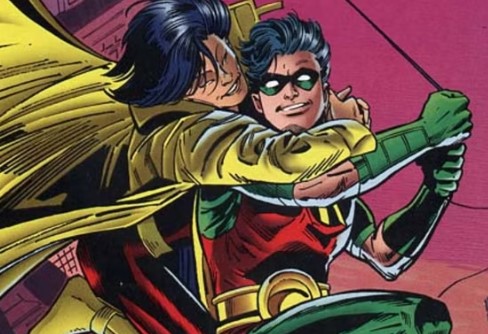
Considering the love lives of their respective mentors, only having an impermeable dimensional barrier between them is practically a win.

For some reason that last one is often a sticking point in crossovers. There’s a certain segment of the population that thinks that the best love story Tim Drake (the third Robin) ever had happened in the pages of the DC Vs. Marvel crossover, when he and the X-Men’s junior member Jubilee fell for each other in a tragically doomed romance that had to end when their universes were separated again. In the 90s, Valiant Comics and Image Comics based their Deathmate crossover on the fact that their nigh-omnipotent characters Solar and Void met and came together, causing their universes to merge. 

Other crossovers are based on how ridiculous the idea may be. Archie Meets the Punisher is a real comic that happened because their respective publishers recognized that the two properties couldn’t be more different from one another, but somehow turned into a story that was not only entertaining, but respectful of BOTH very diverse universes. Then there was the Star Trek/X-Men crossover, a story that you will NEVER convince me wasn’t conceived entirely around the page where Nurse Chapel calls for “Dr. McCoy” and both Leonard “Bones” McCoy of the USS Enterprise and Henry “Beast” McCoy of the X-Men answer at the same time, then look at one another incredulously.

“My work here is done.”
“Lobdell, we need 47 more pages.”
“I already wrote the only one that matters.”

I think this mashup madness is the main reason I’m still playing one of the few mobile games I play, Disney Magic Kingdoms. It’s an idle game, where you build up your theme park by adding rides and concession stands and the like, but the real appeal to me is the ability to “collect” characters from various Disney-owned properties, including not only the classic Disney characters and the films of the Disney animated canon, but also the characters from Pixar, the Muppets, Indiana Jones, and Star Wars. Earlier this year they started adding properties from the franchises they acquired in their absorption of 20th Century Fox as well, beginning with the heroes of the Ice Age movies. While I don’t expect them to add EVERY IP in their catalog (it’s hard to imagine the Xenomorph from Aliens running around outside Dumbo’s Flying Elephants), I’m really surprised that they have not yet started including Marvel characters, but I also suspect it’s only a matter of time.

Marvel is slowly starting to take advantage of their corporate parentage as well. They’ve done crossovers where the Predator has fought Wolverine and Black Panther, and another where the Avengers deal with Aliens. Less likely but more fun, we’ve had a series of one-shots casting the Disney heroes as the Marvel superheroes. So far we’ve gotten Donald Duck as Wolverine and Thor, and upcoming specials will give us Minnie Mouse as Captain Marvel and the Fab Four (Mickey, Minnie, Donald, and Goofy) as Marvel’s Fantastic Four. They’ve also taken their popular “What If?” comic book and released an Aliens miniseries based on an alternate universe where Carter Burke, Paul Reiser’s character from Aliens, survived. And as a curious note, the comic book is co-written by Paul Reiser himself. No further miniseries have been announced yet, but I thought the Aliens comic was really entertaining, so I wouldn’t be surprised if we start seeing more “What If?”s based on Marvel’s corporate siblings like Predator, Planet of the Apes, or Star Wars either. 
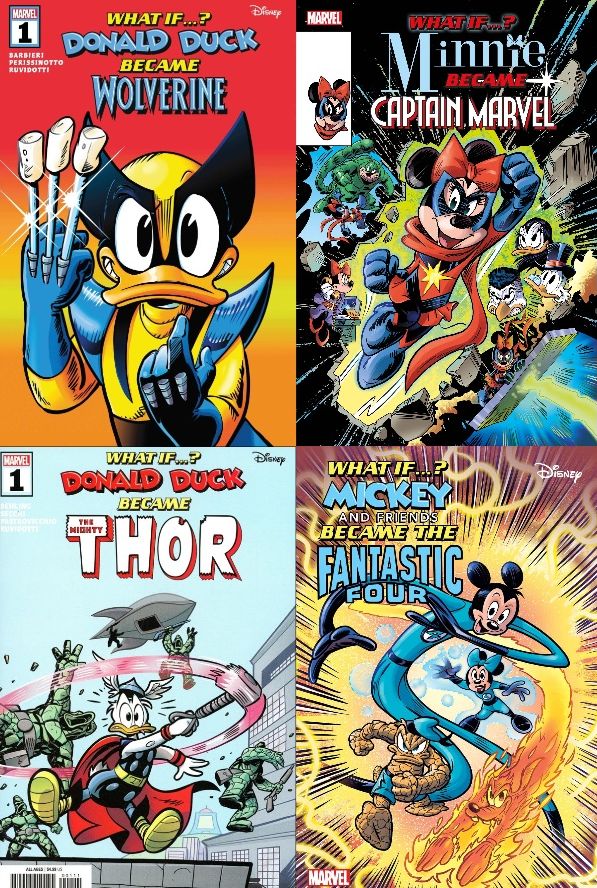
Got my fingers crossed for “What if Goofy Became the Punisher.”

(That joke is WAY darker when you realize it has to be Goofy because, canonically, he’s the only father in the group.)

We don’t get these sort of “everything but the kitchen sink” crossovers much on TV or in the movies, though. Oh sure, we get the occasional crossover like Godzilla Vs. Kong, Freddy Vs. Jason, or Kramer Vs. Kramer, but real multi-universe mashups are kind of rare. I think it’s part of the reason that we all loved Who Framed Roger Rabbit? so much. Yeah, it’s a great movie, but it’s also the only place, canonically, where we’ve ever seen Mickey Mouse and Bugs Bunny together, or Donald Duck face off against Daffy Duck. The film also included Droopy Dog, Betty Boop, Woody Woodpecker, and a real Who’s Who of cartoon stars of the 30s and 40s – and as those are still the greatest cartoon stars of all time, we loved it. Wreck-It Ralph would do the same thing with video game characters, and the Toy Story films did a lot of that with the classic playthings of our youth, and yeah, we love them for it.
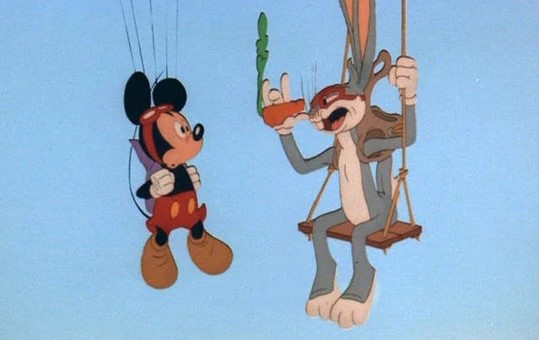
Eat your heart out, “DeNiro and Pacino in Heat.”

And of course, let’s not forget the greatest crossover event of all time, 1990’s Cartoon All-Stars to the Rescue, which combined the forces of the Smurfs, the Muppet Babies, Alvin and the Chipmunks, Garfield, Winnie-the-Pooh, Alf, the Looney Tunes, Slimer from The Real Ghostbusters, and Huey, Dewey, and Louie from Ducktales in a half-hour anti-drug special that’s so bizarre you have to imagine that they were actually ON drugs while making it. (This is a real special, people. Don’t take my word for it, you can watch it on YouTube.)

And yet, even THAT has a certain weird charm to it. 

It’s important to remember that the people who make cartoons, movies, comic books, and video games, were once children as well – at least, until they are all replaced by AI – and as such they enjoyed throwing their toys together just as much as we did. That’s why I’m digging the Multiversus comic, why I’m reading the “What If” specials in which the Disney stars become Marvel heroes. It’s not because I’m looking for something huge, something life-changing, something of great profundity.

It’s just fun.

And honestly, guys, shouldn’t that be enough?

Blake M. Petit is a writer, teacher, and dad from Ama, Louisiana. His most recent writing project is the superhero adventure series Other People’s Heroes: Little Stars, volume one of which is now available on Amazon. You can subscribe to his newsletter by clicking right here. If you’ve played Multiversus, he’s got a question for you: have they overpowered Shaggy in deference to his status as a meme? Because honestly, that would be kinda cool. 

Geek Punditry #53: How Not to Use the Public Domain

January brings a lot of things with it: New Year’s Resolutions, a deluge of commercials from companies offering to do your taxes, another chance for the Cowboys to choke in the playoffs, and – most importantly – new items moving into the public domain. A quick explanation for those of you who don’t know: when a creative work (like a book, painting, movie, song, etc.) moves into the “public domain,” that means that the copyright has expired and anyone is free to use that work in certain ways – remake it, create derivative works, write their own sequels, and so forth. It’s the reason that anybody can make their own version of a Shakespeare play or a Dickens novel, or why it’s okay to sing certain songs on TV without worrying about paying for the rights. The full explanation is as complicated as anything else related to the law, but currently, copyrights in the United States last for 95 years, with the work in question rolling into public domain on the first of January the next year. Over the last few years, this has taken on an almost party-like atmosphere, with people champing at the bit as they wait to see what new toys they’ll have to play with. In recent years we saw The Great Gatsby enter public domain, bringing forth a wealth of unauthorized sequels, “reimaginings,” and crappy party supplies bought by people who didn’t read or understand the book. Two years ago, the earliest Winnie-the-Pooh books joined the club, bringing with them the inevitable horror movie Winnie-the-Pooh: Blood and Honey. And a few days ago, on January 1, 2024, we got the big enchilada. “Steamboat Willie” and “Plane Crazy” entered the public domain, the first two shorts starring a little guy the world would come to know as Mickey Mouse.

I can finally post this picture without making a Disney lawyer’s Litigation Sense start to tingle.

I need you all to understand something. I am a firm adherent to protecting copyright. The person who creates a work of art is entitled to exploit that art to the fullest. Sometimes, of course, they “exploit” that right by selling the copyright to someone else or, in the case of a lot of things, they created it as a work-for-hire and a company owned the copyright from the beginning. (There are a lot of people who have been screwed by work-for-hire agreements, historically, but the principle is valid.) But I also believe that this protection should expire and that works should eventually become free to use by all, and that’s for the good of art itself. Allowing future generations to create their own twists and spins on a classic piece of art or storytelling helps to keep those works fresh and alive. But it’s also important that those works be respected in the process. So while I’m not terribly surprised that mere hours after “Steamboat Willie” became free to use we were deluged with announcements of Mickey Mouse as the star of horror movies and violent video games, I am substantially disappointed that people can’t find a better way to use this newfound freedom.

Walt Disney is rolling over in his cryogenic suspension unit right now.

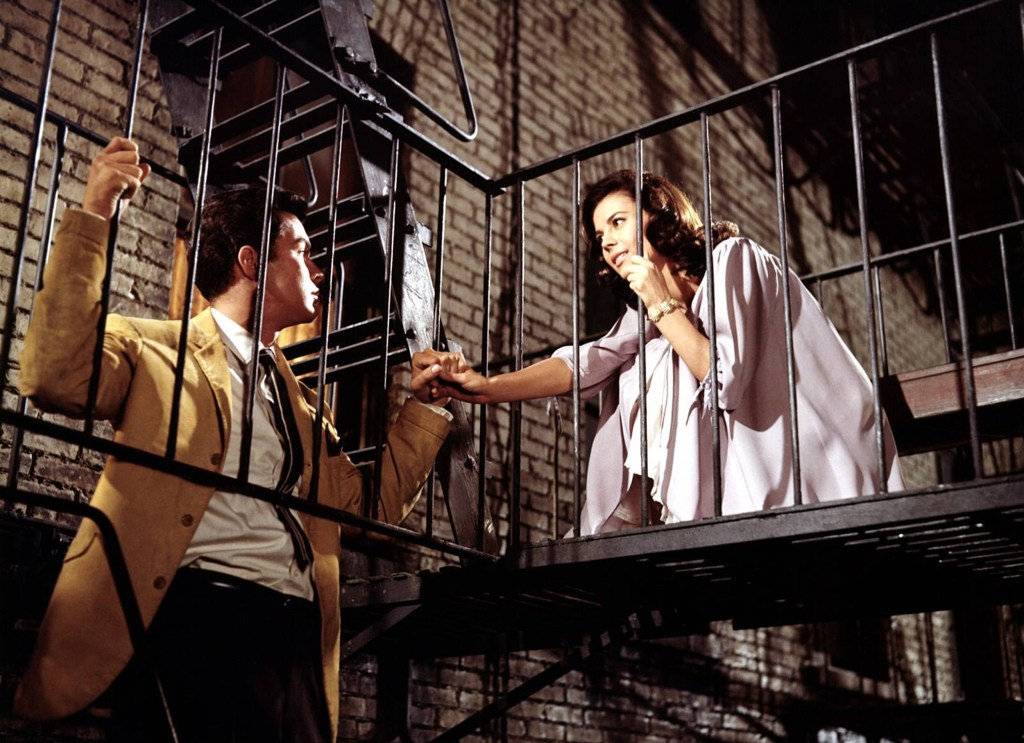
There have been great works created based on things that are in the public domain. Universal Studios built their brand on it in the 1930s with their versions of Dracula and Frankenstein, neither of which were particularly faithful to the respective novels (Dracula was actually based on the stage play), but they still defined the characters for subsequent generations. Without those two films, who’s to say anybody would remember Bram Stoker or Mary Shelley today? There are a thousand and twelve versions of A Christmas Carol, and although plenty of them are trash, there are also some excellent ones. A Muppet Christmas Carol is a fantastic rendition of the story, quite faithful to the book, with one of Michael Caine’s most legendary performances. Scrooged is a great update of the story to the 1980s, with Bill Murray giving us a different but perfectly valid take on the character, making it into something new while still, clearly, owing its own existence to the Charles Dickens novel. And what about West Side Story, the 1950’s musical about street gangs that lifts cleanly from Romeo and Juliet? In fact, I would argue that West Side Story actually IMPROVES upon Romeo and Juliet. In West Side Story, the two young lovers are destined for a tragic ending because of the arbitrary labels of race and class that divide them, making a statement about those things that was not only poignant to the era and place where the musical is set, but is equally applicable to all times and all places. In the original Romeo and Juliet, though, the two young lovers are destined for a tragic ending because everybody in that play is dumber than a sack of hammers. 

(Note to any ninth grade students who are scheduled to study Romeo and Juliet in this upcoming spring semester: I am TOTALLY kidding about this. Romeo and Juliet is the bomb. The bomb dot com. Listen to your teacher and stay in school.)

“The bad news is you’re still gonna die. The good news is that, thanks to public domain, you don’t have to die like a moron this time.”

Anyway, the point I’m getting at is that the folks behind Mickey’s Mouse Trap and other, similar works are taking the easy way out. They also display a pretty specious understanding of how copyright actually works, because what’s in public domain are specifically the versions of Mickey and Minnie that originally appeared in “Steamboat Willy” and “Plane Crazy,” nothing else. They also don’t seem entirely aware that copyright and trademark aren’t quite the same thing, and the trademark behind Mickey is still nice, strong, and supported by enough lawyers employed by the Walt Disney Entertainment Global Megaplex and Shadow Government to invade Portugal. They may be able to get away with showing a guy in a black-and-white Mickey Mouse costume holding a knife, but calling the movie Mickey’s Mouse Trap? I am sitting nearby with a bucket of popcorn waiting for the lawsuits to start.

“M…I…C…”
“See you in court!”

But even if that weren’t the case, that doesn’t change the fact that a Mickey Mouse slasher movie is the cheap and easy way out. The freedom we get when something joins public domain is important, but far too many people waste that freedom with lazy works churned out for shock value without any real reason to create something other than to say, “Heh heh, that’s messed up.” And while I know some would disagree with me here, that’s not a good enough reason. Blood and Honey thought it would be funny to take a beloved icon of childhood and make it a bloodthirsty killer. I didn’t see the movie because, frankly, the idea itself is distasteful to me (and you’re talking to someone who’s excited about the Toxic Avenger remake, for heaven’s sake). But at least they did it first. The filmmakers behind Mickey’s Mouse Trap don’t even have THAT in their favor. They’re pulling the same joke somebody else did. It’s lazy, and it’s boring. Telling a bad joke once is unfunny. Stealing a bad joke from somebody else is the sign of a hack.

I usually have a pretty firm rule not to try to analyze a movie I haven’t seen, so I’m going to base my critique purely on the trailer, which not only looks lazy and boring, but straight-up steals one of the most famous jokes from the first Scream movie. In and of itself, the fact that they chose to showcase this joke in the trailer quashes any hopes I may have had for this movie’s transcendence, I’m sure the filmmakers, if confronted with this, would claim it’s an “homage,” but if this were an essay turned in by one of my 12th-grade students, this is where I would stop reading and simply give them an “F” for plagiarism. (Unless, of course, they gave proper citations to Kevin Williamson and Wes Craven.) 

Do you have the right, legally speaking, to make a movie whose only real purpose seems to be to show cartoon characters committing brutal acts of violence? Sure. But as George Lucas tried to demonstrate to us when he had Greedo shoot first, just because you have the right to do something doesn’t always make it a good idea. The best argument for letting works into the public domain is so that new, innovative works can be built upon those things that have helped build our culture. Things like Mickey’s Mouse Trap fails on both of these counts. 

“Wait, people thought we were serious about this?”

The 1920s and 30s were a pretty rich time, culturally speaking, and there are a lot of characters and works that will soon be free to use. Next year the first Marx Bros movie, The Cocoanuts, will be in the public domain, along with Ernest Hemingway’s novel A Farewell to Arms. In 2027, the aforementioned Universal Frankenstein and Dracula movies will no longer be copyrighted. And looking ahead a decade, the first appearances of Superman will be public domain in 2034, followed the next year by Batman and, the year after, Wonder Woman. And I’m sure there’s some hack filmmaker already planning to do his Superman slasher that year (hint: there already is one, it’s called Brightburn, and it was pretty good), followed by the other two, and then bringing them together as an evil Justice Society once All-Star Comics #3 joins the PDA (Public Domain Association). 

“Been there, done that, murdered innocents with my heat vision.”

I’m putting you on notice now, guys: if you’re planning to exploit these works when the time comes, that’s fine. That’s your prerogative. But if your idea of doing so is nothing more than “Ha ha, what if Superman murdered people?” keep it to yourself. We all deserve better. 

Blake M. Petit is a writer, teacher, and dad from Ama, Louisiana. His current writing project is the superhero adventure series Other People’s Heroes: Little Stars, a new episode of which is available every Wednesday on Amazon’s Kindle Vella platform. He feels ways about things sometimes. 

Geek Punditry #43: The Halloween Special Special

A few days ago I was watching TV with my six-year-old son and we happened to land on Disney+, where I saw something that got me excited. Something lovely. Something that was a true work of beauty, a rare creature that seems to always dance on the edge of extinction, only to be pulled back time and again. Something that I want to share with my child.

A new Halloween special.

“Mickey and Friends III: Season of the Witch”

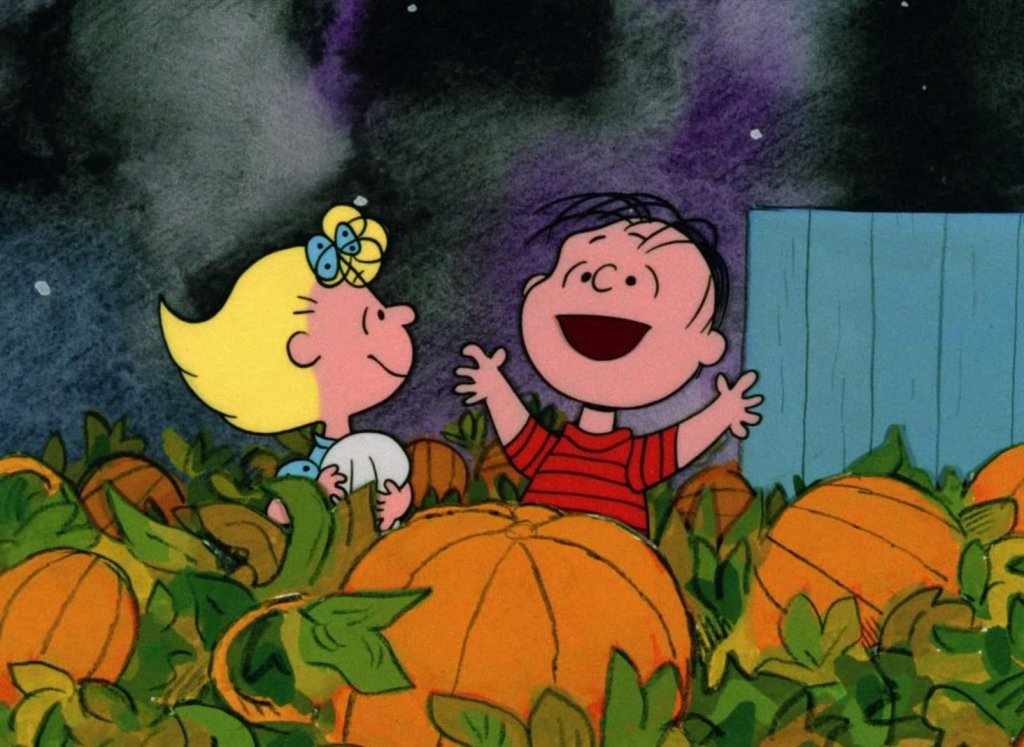
I grew up in the 80s, the apex of holiday specials on television. Oh sure, they weren’t new when I was a kid, but I’m from that generation where the classic specials from the likes of Rankin and Bass and Mendelson-Melendez were still in perpetual rotation and original specials were premiering every year, sometimes many of them. It was simplicity itself to mix the old specials with the likes of the Smurfs, Alvin and the Chipmunks, and the other Saturday Morning heroes of my youth. Like so many things when it comes to the pop culture landscape, it’s changed. And like so many things for those of us of a certain age, it doesn’t feel like it’s gotten better. They don’t show the classic specials on TV all that much anymore, first of all. As people have drifted to the streaming world, the days of everyone needing to be in front of the TV at the same time if they’re going to watch It’s the Great Pumpkin, Charlie Brown are pretty much over. And don’t get me wrong, it’s nice that I can watch the DVD any time I want, but it’s not the same as knowing that they’re watching it next door and down the street and somewhere in Cincinnati at the same time.

This is good, but somehow it’s even better if I’m watching it at the same time as someone I’ve never met in Patterson, New Jersey.

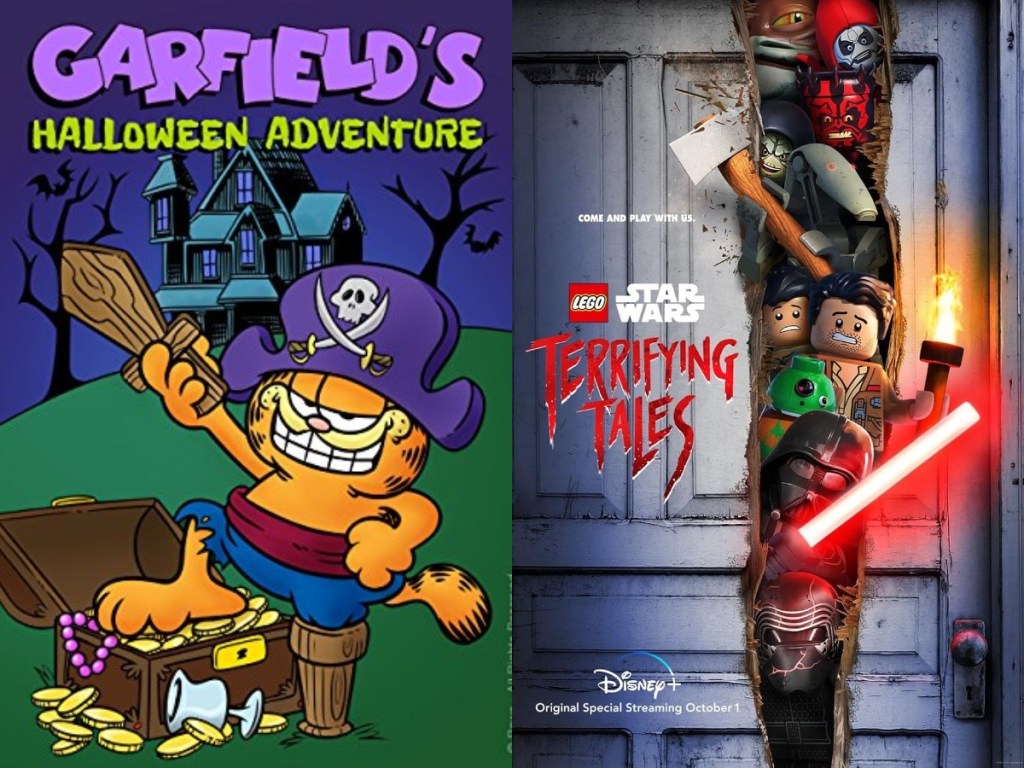
And while it’s true that specials are still being made, I don’t feel like we’re getting them with the frequency that we once did. Of course, part of that may be that they’re now all spread out amongst a thousand streaming services and you don’t even know that they’re there. And those that do exist haven’t broken into the cultural zeitgeist, again, probably because of the preponderance of sources. Even as I was typing this sentence I thought of nearly a half-dozen Halloween specials from the last few years that I’ve watched, but I haven’t re-watched most of them like I do the classics. Great Pumpkin was, and remains, essential viewing before Halloween. So was and is Garfield’s Halloween Adventure. But when I think about going back and watching, for example, LEGO Star Wars: Terrifying Tales from 2021, I know that if I skip it this year I’m not going to feel like I’ve missed anything.

One of these is a legendary piece of animation history based on a globally-beloved property and is appointment viewing every Halloween season. The other one is a Star Wars movie.

LEGO Star Wars, by the way, was also a Disney+ special, and I have to give them credit for turning out more things like this, especially for kids, than most of these streaming services. The new special Eddie and I watched this week was Mickey and Friends: Trick or Treat, in which Donald Duck (of COURSE it’s Donald’s fault) convinces the rest of the gang to trick or treat at a haunted house that happens to belong to a witch who doesn’t appreciate visitors. It isn’t a mind-blowing cartoon, but it’s cute and it’s new and – maybe best of all – it’s stop motion. If a new Halloween special is an endangered species, a stop motion special is a friggin’ unicorn. There was a stop motion Christmas special last year featuring Mickey and Friends as well, and while none of these are going to join the pantheon of the greats, I have to applaud their effort.

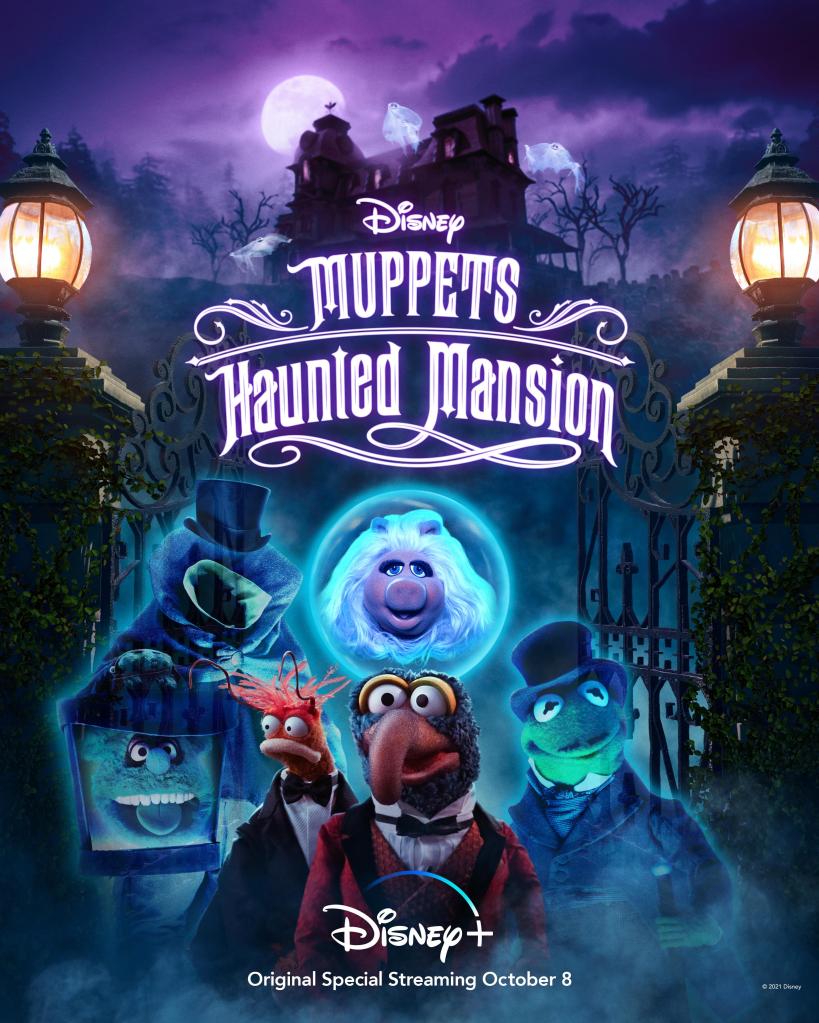
Disney+ is also responsible for Muppets Haunted Mansion, another 2021 special in which the Great Gonzo and Pepe the King Prawn spent Halloween the night in…well…Disney’s Haunted Mansion. It had the requisite music and celebrity cameos that one expects from the Muppets, and it was decent. I actually watched that one a second time last year, but I haven’t gotten around to it in 2023, and I’m okay with that. The difficulty here was that this not only had to live up to the great Halloween specials, but also had to live up to great Muppet movies, and in both categories it’s just middling. 

If “It’s okay, I guess” was a picture.

So the question has to be, where will the great Halloween specials of the future come from? Don’t get me wrong, I intend to watch Garfield and Charlie Brown every October for the rest of my life, but that doesn’t mean I don’t want more. (I feel like I need to get this put on a T-shirt because I seem to say it in this column at least once a month: What do fans want? MORE!) Is there anybody out there carrying the torch of Mendelson, Melendez, Rankin, or Bass?

There are some people doing Halloween content, fortunately. Movies, for example. Feature-length films are in no short supply. Prime Video this year gave us Totally Killer, a time-travel comedy about a girl who goes back to the 80s when her parents were teenagers to face off against the slasher that terrorized them then. Not a family movie, but it was original, and I liked it. Last year there was Spirit Halloween: The Movie, a film about kids who sneak into one of the ubiquitous Halloween pop-up stores overnight, unaware that this particular store is haunted for real. Disney+, again, gave us a sequel to the Halloween favorite Hocus Pocus, which is included here to prove that just because a movie is about Halloween doesn’t automatically make it good. 

But that’s not what I’m looking for. I love a good Halloween movie, but a holiday “special” is, to me at least, a different sort of beast. I’m talking about the one-off films, a half-hour to an hour at length, which take characters that we already know and give them a seasonally appropriate adventure. The classics mostly fit into this category – Garfield and the Peanuts gang, for example, spring from the pages of newspaper comics, and even most of the Rankin and Bass Christmas classics were based on preexisting stories. Many of their best specials (and here I’m thinking of Rudolph the Red-Nosed Reindeer, Frosty the Snowman, Santa Claus is Coming to Town and Here Comes Peter Cottontail) were based on popular songs. There were a few based on Bible stories, one on a novel by Oz creator L. Frank Baum, and so forth. There are a few Rankin and Bass classics based on entirely new ideas, but the truth is, those aren’t the ones we remember.

Even their one great foray into Halloween wasn’t wholly original – 1967’s Mad Monster Party was a stop motion feature film that featured characters they couldn’t technically call the Universal Monsters, but anyone who watches it knows they’re really the Universal Monsters. It was easy for the public domain characters – Dracula, the Frankenstein Monster, a generic werewolf – but they even managed to sneak in characters obviously based on copyrighted monsters like the Creature From the Black Lagoon and (people don’t lump him in with the Universal Monsters, but they SHOULD) King Kong. Hell, it even starred Boris Karloff as Baron Frankenstein. 

If you haven’t seen this movie, it counts as a character flaw.

Pulling out new specials that fit the mold of the classics depends largely on which characters you can use. Disney, as we said, is making use of the likes of Mickey and his pals, and they worked in their Star Wars and Muppets characters a couple of years ago, but there’s more that could be done. Could you imagine, for example, a Wreck-It Ralph Halloween Special in which Ralph and Vanellope have to make it through a (kid friendly) survival horror game like Silent Hill or Five Nights at Freddy’s? Or more Marvel content – last year they gave us the excellent MCU Halloween Special Werewolf By Night, based on a classic Marvel monster comic from the 70s, and I loved it. But why not an animated special featuring the Guardians of the Galaxy on a “Planet of Terror?” Have Doctor Strange fight some sort of Lovecraftian horror? Heck, tie it into the What If? brand and you could do virtually anything – there’s already a zombie universe out there in the MCMultiverse. 

Then across the metaphorical street (by which I mean one row over on the apps on my Roku), we’ve got Disney’s rival, Warner Bros. Their MAX service also has a new Halloween special this year, a Sesame Street show called Oscar’s Handmade Halloween. That’s not bad. I’ll take any Sesame Street content I can get for my kid. But considering the depth of Warner Bros’s catalog, what else have we got? Admittedly, last year there was a Scooby-Doo Halloween movie, and that’s all well and good, but how about the DC Universe? They brought in the Super Sons in an animated movie earlier this year – I would love to see a half-hour cartoon about Superboy trying to convince Robin to go trick-or-treating with him, with all the chaos that would inevitably ensue. How about a new Looney Tunes Halloween special? Witch Hazel is sitting right there in the catalog, guys. 

And what about other characters that aren’t necessarily tied into any huge IP farm like Warner Bros or the Walt Disney Pictures Shadow Government and Pedicure Emporium? In this year’s Halloween episode of the Totally Rad Christmas podcast (a show about Christmas in the 80s, except when it’s about things that aren’t from the 80s and/or aren’t about Christmas), the hosts talked about their love of Monster Cereals. After going after the hard questions (why is Frankenberry British?) they asked the obvious one – how is it possible that Count Chockula, Frankenberry, and Boo Berry never got their own animated special? That’s a great question. I suppose the answer is that, when those cereals were ascendant, there were laws in place that prevented children’s programming from being used as advertisements for a product, so they couldn’t make such a special. But those laws have been gone since the early 80s, since the birth and explosion of He-Man and the Masters of the Universe. Do you mean to tell me that, in the years since, nobody has thought to call up General Mills and get an animated special going?

Look me in the eye and tell me these guys are less deserving of a Halloween special than Raggedy Ann and Andy.

I know that I sound like an old man waxing nostalgically for things from his past that are gone and are never to return, but there’s a good reason for that. I am an old man waxing nostalgically for things from his past that are gone and are never to return. Except for that last part, actually, because I don’t think I’m ready to accept that things like this are gone forever. There are still children in the world – I’ve met at least seven of them – and those kids still watch TV and still like cartoons. And those kids have parents who would love to have new things to watch with them instead of watching that same Mickey Mouse special 17 times before Halloween. 

The audience is there. All we need is for somebody to step up and give us the content.

Blake M. Petit is a writer, teacher, and dad from Ama, Louisiana. His current writing project is the superhero adventure series Other People’s Heroes: Little Stars, a new episode of which is available every Wednesday on Amazon’s Kindle Vella platform. Three words, Disney: Encanto Vs. Freddy. C’maaaaaaaan, you know you wanna.