Geek Punditry #145: What Makes an Icon?

Matt Groening, creator of The Simpsons, famously said he believes one of the keys to an iconic cartoon character design is whether the character is recognizable just from their silhouette. Think about it – if you show pretty much anybody anywhere in the world the mouse-ear shape, they’ll instantly recognize Mickey Mouse. The same can be said for characters like SpongeBob Squarepants, Phineas and Ferb, Bugs Bunny, and a lot of the other cartoon all-stars. And Groening himself is legendary for utilizing this tactic with the signature nine spikes on Bart Simpson’s head or the trademark antenna on the top of Futurama’s robot character Bender Bending Rodriguez. But as insightful as this piece of wisdom is, I don’t think it applies only to cartoons. In truth, any truly great design should have elements that make it instantly recognizable. And with Halloween only three weeks away, this week I’m going to help you all make your costuming decisions by applying this reasoning to horror movie icons.

Of course, the silhouette isn’t the only thing that makes for a horror icon. There are several factors to take into consideration. The overall design, in addition to just the silhouette, needs to be memorable. The characters themselves should be interesting and unique. A character should be popular enough that people will recognize them and you won’t have to spend the entire Halloween party explaining what your costume is. And when you’re talking about Halloween costumes, above all else, they should be fun to play. So let’s go over some of the all-time great horror movie icons and see just how they stack up to this metric before you suit up for your Halloween party. 

Every one is a winner.

We’re gonna start old-school with the Universal Monsters. The great thing about these characters is that they are all INSTANTLY recognizable, even to children who were born 90 years after the movies were released and have never seen any of them. Characters like Dracula, the Frankenstein Monster, and the Invisible Man are all based on classic literature and are not Universal originals, but when you ask somebody to picture them, they invariably envision the versions popularized by Bela Lugosi, Boris Karloff, and Claude Rains, respectively. In fact, those designs are all copyrighted (at least for the next few years). If you were to make a movie about Frankenstein, you couldn’t give your monster the flattop or neck-bolts, because those are all owned by Universal Studios even though the monster himself isn’t. So these classic horrors all meet the standard of memorability and recognizability. The only caveat comes with the Mummy and the Wolfman. Although those are, of course, classic monsters, the designs here (while still amazing for the time) aren’t as immediately attributable to the Universal designs specifically. It’s very easy to mistake Im-Ho-Tep or Larry Talbot for a generic mummy or werewolf. And of course, there’s nothing wrong with being a generic werewolf. But if you want to be the Lon Chaney Jr. Wolfman specifically, you may need something like a silver wolf-headed cane as an accessory to drive the point home. 

I don’t think even a mother could love that face.

The 70s and 80s gave us our next great wave of horror movie icons, and many of them have persevered. Leatherface, the killer from Texas Chainsaw Massacre, was probably the first great iconic character of the era. He’s got an easily-identifiable apron, a mask made of human skin, and – of course – a chainsaw to whip around his intended victims. He arguably started the trend of slasher movie icons that would explode in popularity in later years. He wouldn’t necessarily be my first choice to cosplay as, however. To be blunt, his appearance is a lot scarier than some of his successors. That’s not always a deal-breaker, of course, but you have to consider your audience. I’m a dad, and if I’m going to any sort of Halloween event there’s a 99 percent chance that there will be children in attendance. Leatherface is immediately frightening in a way that even the likes of Freddy and Jason are not. Of course, if you’re going to an adults-only event or to something like a horror convention, that’s less of a concern, but you should always keep in mind who’s going to see your costume. There’s also his signature weapon to consider. Having a prop to use as part of your costume is a plus, but you have to remember that you’re going to be keeping track of the thing all night long. Do you really want to spend the entire party looking for places to put your chainsaw? 

Eh, my money is still on the Gorn.

Michael Myers from Halloween is a really simple costume – all you need is a jumpsuit and a mask. A bladed weapon is recommended, but optional. And that’s all it will take to be a character that 99 percent of people will recognize whether they’ve ever seen one of his movies or not. The question now becomes: how dedicated are you to staying in character? Michael is a silent killer. He stalks and he tracks you like an unstoppable monolith, and he never says a word. The closest thing you get to an emotion from him is when he tilts his head quizzically to look at the victim he’s just pinned to the wall. If you’re the type of costumer who enjoys not only dressing up, but also embodying the character that you’re playing (minus the actual murder part, of course), you have to be prepared to spend the evening being very restrained, slow, and deliberate with your movements. It’s not a dealbreaker, but you should definitely check if four out of five dentists recommend Michael Myers or somebody else.
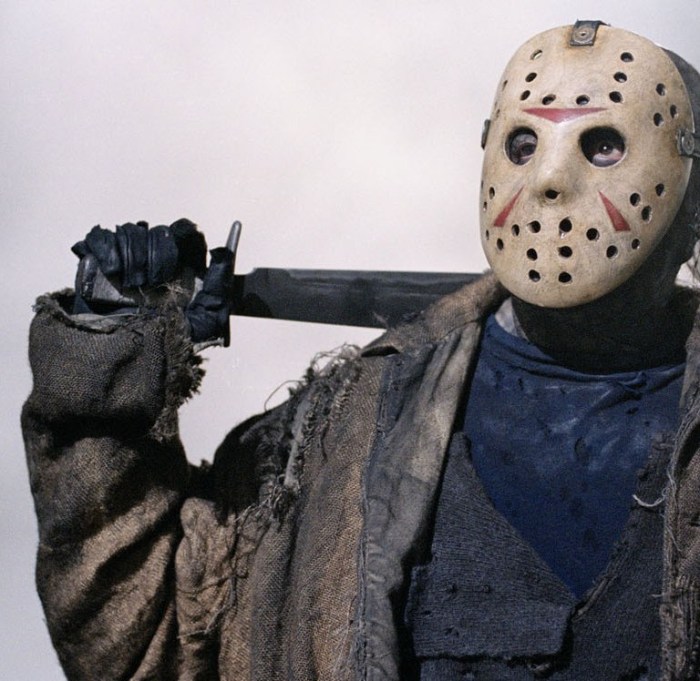
“Yeah, I slept on Mario Lemieux’s couch for like six months after I got drafted…”

Jason Voorhees of Friday the 13th has a similar concern. Again, the costume is pretty simple – virtually any ragged, ratty slacks and shirt will be suitable as his clothing, and an easy-to-aquire mask and machete will complete the ensemble. And as far as iconic characters go, I would say that Jason is perhaps even more recognizable to the general public than Michael Myers is. Michael has a William Shatner mask that’s spray-painted white, but almost ANY hockey mask will evoke feelings of Jason. Like Michael, Jason doesn’t talk. Unlike Michael, though, he’s much faster and more brutal, expressing his emotion through his actions rather than words. It can be a fun part to play depending on how willing you are to commit.

The absolute worst dream analyst in the phone book.

The great slasher triumvirate is completed with Freddy Krueger of A Nightmare on Elm Street. Iconic, indeed. Everybody knows Freddy on sight, with his classic red-and-green sweater, fedora, and bladed glove. The tricky thing with Freddy is his face. The character is a burn victim, and although he’s so ubiquitous in pop culture that I don’t really have the same concerns about him being too scary for kids that I have with Leatherface, the burns present a different problem. You see, Freddy – unlike Jason or Michael – is a talker. His quick, dark sense of humor is integral to the character, and if you’re gonna dress up like Freddy you’re going to want to throw out bon mots all night long, with an emphasis on extra “bitch”es should you encounter anybody at the party dressed like Rick and Morty. If you wear a Freddy mask, though, that talkiness becomes more difficult and cumbersome. Wearing a rubber mask makes it more difficult for people to understand what you’re saying, and actually speaking under the mask increases the temperature beneath the rubber roughly ten degrees per “bitch.” If you live in a climate like I do in Louisiana, that ten degrees may be the difference between life or death. The alternative to a mask is makeup, which can be time-consuming, difficult to apply, and easy to mess up. Please understand, I’m not saying any of this to discourage someone from playing Freddy – I just want to point out some of the possible concerns that come with such a costume.
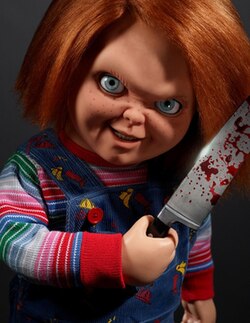
“Chuck, look, I’ve thought it over and… well… I’ve decided that, no, I do NOT want to play.”

The last great slasher icon of the 80s is probably Chucky from the Child’s Play franchise. When my son was five years old, we took him to Spirit Halloween and we toured all the costumes before finally asking him which one he wanted. He jumped in delight and exclaimed “CHUCKY JUMPSUIT!” I actually took out my phone and recorded him saying it because I knew nobody would ever believe he picked it on his own.

My wife Erin and I are both horror movie fans, but we’re not idiots – our five-year-old son had never seen any of the Child’s Play movies, and the 8-year-old he is now STILL hasn’t seen any of them. But that doesn’t matter – Chucky is one of those ubiquitous characters that even kids recognize. His bright blue overalls and multicolor sweater, a shock of red hair, and freckles across his nose all give us a nice, friendly image that kids enjoy. That is, of course, the point of the character – he’s a child’s doll that is possessed by the spirit of a serial killer, so of COURSE his image is something that would be appealing to children. However, this also leads to a problem: it’s hard to wear this costume as an adult without coming across as creepy, and not in the right way. Five-year-old Eddie was the most adorable little serial killer ever, but if a 35-year-old puts on the jumpsuit, he needs to be DARN sure he’s got a receptive audience before he shows up, or he’s going to be getting strange looks all night.
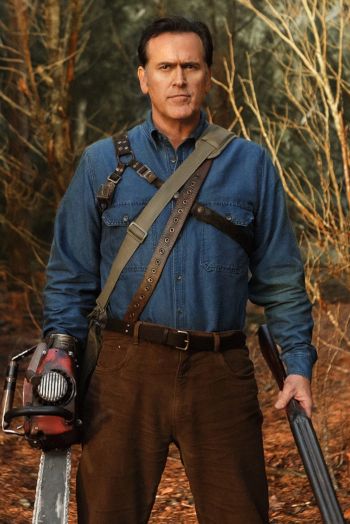
Still groovy after all these years.

Not every horror icon is a villain, of course. Ash Williams, Bruce Campbell’s hero from the Evil Dead franchise, is another solid costume choice. Most of the costume is relatively simple too – slacks, a blue shirt, a bandolier, and some blood splattered across your face. The most iconic part of Ash’s appearance, though, is the most difficult: in Evil Dead 2, Ash’s hand becomes possessed by a Deadite and he is forced to amputate it, then top off the stump with a chainsaw. Now you’ve got all the same problems as cosplaying Leatherface with the added difficulty of finding a way to keep a chainsaw attached to your hand all night. Alternatively, you could go with Ash from the third film, Army of Darkness, in which he replaces the chainsaw with a mechanical hand. It’s certainly easier than the chainsaw, but it’s FAR less iconic and less likely to be recognized. And honestly, even WITH the chainsaw, Ash doesn’t have the cultural penetration of a Freddy or a Jason. If you’re wearing the costume to a horror convention, people will know you immediately, but for the office Halloween party, be prepared to explain your costume over and over again. 

Greenscreen backdrop of an 80s New York skyline sold separately.

Of course, as far as 80s monster movie heroes go, there’s nothing more iconic than the Ghostbusters. This has become a classic choice for a Halloween costume because it ticks all the boxes: it’s simple, it’s recognizable, and it’s fun. You need two things: a jumpsuit with a Ghostbusters patch and a name tag, and a proton pack. The jumpsuit is readily available in any costume shop and easy to make if you’re so inclined. The proton pack is more difficult, but there are inflatable ones that are lightweight and are usually included with commercial costumes, or more expensive and detailed ones that you can buy or assemble yourself. It’s also a highly adaptable costume. There are the classic khaki jumpsuits from the first movie, the gray variants from Ghostbusters II, the 2016 jumpsuits, multicolored costumes from The Real Ghostbusters cartoon, the red parkas from the Frozen Empire movie, versions from other cartoons, video games, toys…the list goes on. And fans often come up with their own original variants and designs. In fact, similar to the 501st Stormtrooper Legion (a Star Wars fan collective that has expanded far beyond just cosplay to things like public appearances and charity work), there are Ghostbusters chapters all over the world of fans who enjoy this sort of thing. I don’t have the time, talent, or money to be a really good cosplayer, but I’ve always said that if I DID have the opportunity to join such a group, it would be the Louisiana Ghostbusters.
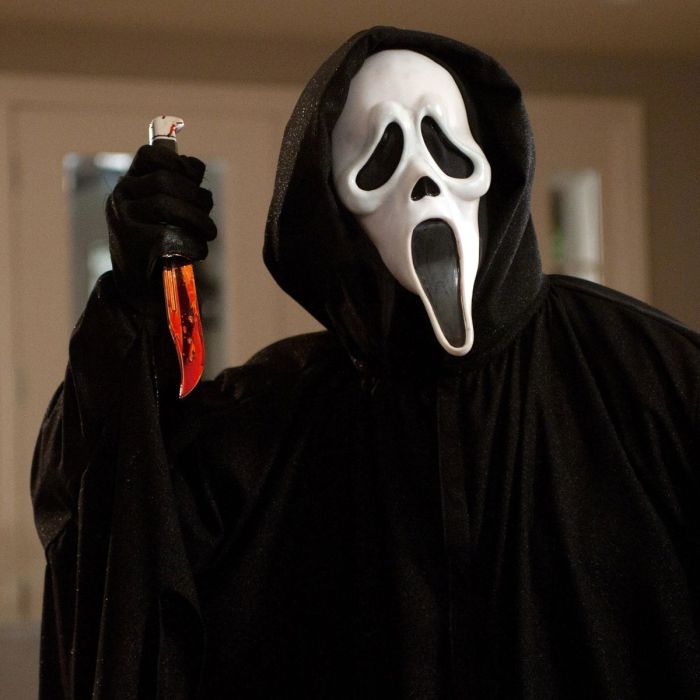
“Stabbity-Stab-Stab-Stab!” -Ghostface in Scream 7, probably.

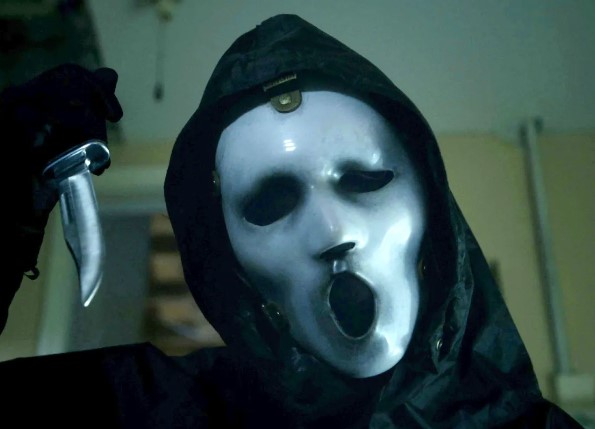
Moving on from the 80s, let’s look at the most iconic horror character of the 90s: Ghostface. The killer from the Scream movies is unique in that the costume is the only constant – a different set of villains wears it in every movie. In fact, over the six Scream movies to date, over a dozen different characters have donned the mask to engage in murderous shenanigans. But this lack of uniformity hasn’t been an obstacle for Ghostface becoming an icon – in fact, it’s probably the STRENGTH behind it. More so than any other character, anybody can wear the Ghostface mask.

It’s also unique in that the costume itself didn’t actually originate with the movies. It was part of a line of Halloween masks produced by a company called Fun World. Director Wes Craven liked the mask, put the character in black robes, and entered into a licensing deal with Fun World that has had them rolling in cash for nearly 30 years now. Not everybody may know the name “Ghostface,” of course, but we all recognize “the guy from Scream.” A few weeks ago my sister told me that my 11-year-old nephew – who is even less likely to have seen the movies than my 5-year-old was, because my sister is NOT a horror fan – has declared his intention to be Ghostface for Halloween this year. I’m very proud as an uncle and I can’t wait to see him when my sister and I take our kids trick-or-treating together. I just wish the boys had collaborated on being movie killers in the same year, because that would have been cute. (Eddie isn’t going as a murderer this year – he wants to be Superman. This is the proudest moment of my entire life.)

Since the turn of the century there have been several efforts at creating new horror icons. And while characters like Victor Crowley of the Hatchet franchise, Trick ‘r Treat’s Sam, and Leslie Vernon of the woefully underrated Behind the Mask are great and have many of the trademarks that make for a classic icon, the only recent monsters that have reached the degree of cultural penetration that the classics enjoy are a pair of clowns. 

Nope, no nightmare fuel here.

In 2017 we got a theatrical version of Stephen King’s It. The first dramatization of It, a TV miniseries from 1990, featured Tim Curry as Pennywise the Clown, and he was magnificent. Curry in general is magnificent, of course, and his makeup as Pennywise is suitably creepy when Tim Curry is wearing it. But Bill Skarsgard from the 2017 version – let’s be honest here – has broken into the mainstream in a way that Tim Curry’s never quite did. The design of the makeup is creepier, and Skarsgard’s performance is unsettling in a more insidious way. A lot of people would recognize you if you dressed as Tim Curry’s Pennywise, but EVERYBODY recognizes the Skarsgard version. Either version is relatively easy to cosplay – you need the costume and the wig, which are readily available. Skarsgard’s makeup is more complicated, though, and if you don’t want to subject yourself to the same masking problems you’d have with Freddy, make sure that you – or someone you trust – is capable of making that transformation.

Llllllllllllllllllladies.

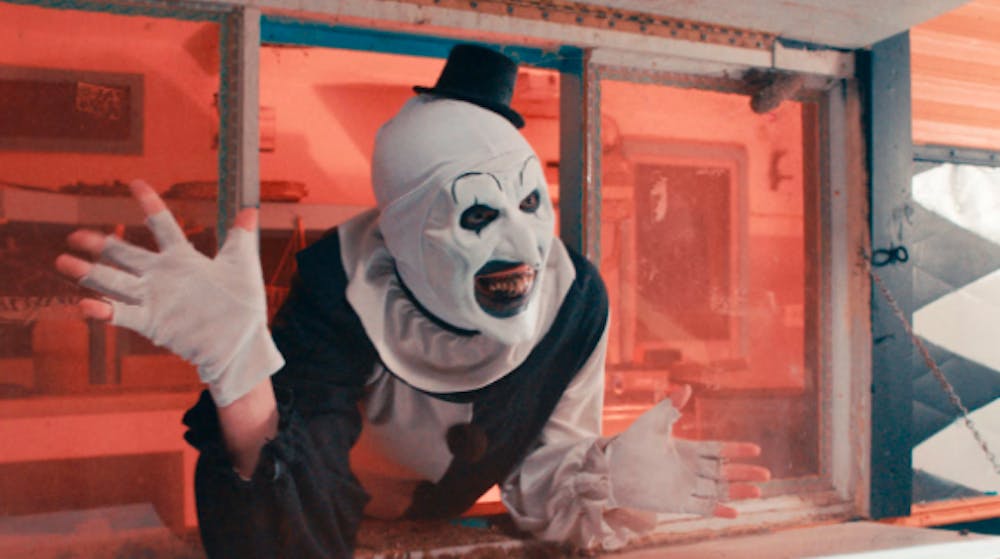
The most recent character to break into the echelon of horror icons, though, is probably Art the Clown of the Terrifier franchise. Art was originally played by Mike Giannelli in a series of short films and anthology segments, but Giannelli retired from acting and the role was taken over by David Howard Thornton for the first full-length Terrifier film in 2016. A malevolent clown with a stark black-and-white costume and makeup that is immediately recognizable, Art has risen to iconic status faster than anybody since Ghostface. As far as horror icons go, Art is perhaps the darkest, most brutal, most sadistic character ever to crack into the public consciousness. He’s more violent, more aggressive, and while the voiceless beast DOES still have a sense of humor, it’s so dark that it makes the likes of Freddy Krueger look like an episode of Bluey by comparison. 

Naturally, he’s become a huge favorite among horror fans. 

In terms of costuming, again, Art is relatively easy. Costumes and masks are available, and since Art doesn’t talk you don’t have to worry about being muffled. On the other hand, makeup is more expressive and less restrictive than a mask, so if you’ve got the skill (or someone with the skill to help you) I would always prefer the makeup approach. Something else to consider is that Art – while huge among horror fans – is not necessarily someone that the average person on the street will recognize, at least not YET. On the other hand, even if your audience doesn’t know ART the Clown, the general appearance of the character is more than sufficient to give the idea that this is NOT a funny clown, and the mystique is preserved.

There are plenty of other characters that we didn’t quite touch on, of course, and you should always go with whatever is comfortable and fun for you. Hopefully I’ve given you a few tools you can use to evaluate your own costume choices when you’re making the decision. You’ve got three weeks left, folks – get started.

Blake M. Petit is a writer, teacher, and dad from Ama, Louisiana. His most recent writing project is the superhero adventure series Other People’s Heroes: Little Stars, volume one of which is now available on Amazon. You can subscribe to his newsletter by clicking right here. He’s also started putting his LitReel videos on TikTok. Since Eddie is Superman this year, he’ll be wearing his own Kryptonian pajamas come Halloween night. Scary can wait. 

Geek Punditry #129: Fact and Fiction

Statistics are a funny thing, and by “funny” I mean “likely to make my brain sad.” I recently read a statistic that claims only about 46 percent of American women read fiction (novels, short stories) on a regular basis. It’s a lower number than I would like, but reading rates in general seem to always be declining, so it can’t be that surprising. What WAS surprising is that the rate of MEN who read fiction, as of 2022 when this study was conducted, is about 27 percent. That’s appalling to me. That means that if I line up four guys, odds are only one of them will have read anything more inventive than the sports page in the past year. And THAT guy is just reading Brony fanfic. 

“Fluttershy slipped out of her fishnet holster…” good grief, people are deranged…

I don’t want it to sound like I’m against nonfiction, mind you. You can read any genre you want, as long as you’re reading. I constantly beg my students to find SOMETHING to read every day, be it a video game magazine or Crime and Punishment, I don’t care. But it leaves me confused, baffled, as to what exactly it is that drives so many men away from fiction. They go to movies, they watch TV shows – but when it comes to picking up a book, they’re more likely to turn to history or how-to. I guess it goes back to the old joke about men, upon reaching a certain age, having to choose whether they’re going to get really into either grilling or World War II. (I am past that certain age, by the way, and I am obsessed with many things, but not those.)

That’s not to say I don’t read nonfiction, I do, but the funny thing is that most of the nonfiction I read is nonfiction ABOUT fiction. For instance, the current book I’m finally chopping off my To Be Read pile is Teenagers From the Future, a collection of essays edited by Tim Callahan about DC Comics’ Legion of Super-Heroes. That’s the kind of nerd I am. I like to read the analysis of fiction written by other nerds. I’ve read books about the history of Universal Studios, specifically their monster movies from the 1920s to the 50s. I’ve read books about the making of Alfred Hitchcock’s Psycho and the life of Edgar Allan Poe. Not long ago, when making one of my world-famous, soon-to-be sponsored by Netflix LitReels (this part is absolutely not true), I was doing a little research about movie novelizations from the 1980s. In the course of that research I discovered that Ryan North, the writer behind the current excellent runs of Fantastic Four and Star Trek: Lower Decks comic books, has written an entire book analyzing the differences between the film Back to the Future and its movie novelization. This made me realize that I needed to read the novelization again, then read North’s book, B^F.

An all new way to go back in time.

If I’m going to read a memoir, it’s not going to be one written by a former president or supreme court justice, but an actor or a writer. Stephen King’s On Writing: A Memoir of the Craft, for example, is one of my favorite books. I go back and read it again every few years, if for no other reason than to remind myself that the best-selling writer on the planet suffers from many of the same struggles as any other schmuck who dedicates themselves to figuring out the proper order to put words in on a daily basis. I really enjoyed Growing Up With Manos: The Hands of Fate by Jackey Neyman Jones, daughter of the director of one of the worst movies ever made, about the journey to create that cinematic oddity and the strange way it has impacted her life. And actor, comedian, and talk show host Craig Ferguson’s American on Purpose is an uplifting, magnificent exploration of what my country can mean to somebody looking at it from the outside, with all the wit and humor that you would expect from Ferguson. 

That’s not to say that I stick with just feel-good stuff. I’ve read, for instance, Matthew Perry’s Friends, Lovers, and the Big Terrible Thing and Jeanette McCurdy’s I’m Glad My Mom Died, both of which dig into the lives of actors, both of which are deeply tragic in very different ways. And let’s not forget Maus, Art Spiegelman’s haunting graphic novel (yes, nonfiction graphic novels do exist) detailing his father’s experiences in Auschwitz. Spiegelman makes the interesting narrative choice of depicting the Jews as mice and the Germans as cats, with other nationalities occasionally popping up as other animals (Americans, for instance, are dogs, from the old “dogface” nickname). The result is a book that looks like a sort of hybrid of Watership Down and history’s greatest nightmare. These aren’t books that make me feel better about the world, but I’m certainly glad that I read them.

These books have one thing in common: none of them will cheer you up.

More often than that, though, I like reading books about the creation of movies, comics, television, and even other books. A few years ago, for example, I found a pair of books by Dustin McNeill and Travis Mullins called Taking Shape and Taking Shape II. The first was a deep dive into the creation of all the different movies in the Halloween horror franchise, which was cool. The sequel, however, was far more interesting: an exploration of all the scripts, pitches, and abandoned ideas for Halloween sequels and reboots that were NOT made for one reason or another. McNeil also has a solo effort, Slash of the Titans, about the long and twisted road that eventually led to the movie Freddy Vs. Jason, including discussion of some abandoned story ideas that, frankly, I think showed more potential than the final film we actually got. I’m fascinated by the creative process, and exploring the different ways these stories have been told, or even not told, is something that really compels me.

These books, paradoxically, make a delightful little romp.

If you want me to get into history (of the two I’m far more likely to get into grilling, but let’s stick with history for now), I prefer it to be couched it in the world of fiction. Do I want to read a book about life in Victorian England? No. Do I want to read Les Standiford’s The Man Who Invented Christmas, about how life in Victorian England eventually led to the creation and legacy of Charles Dickens’ A Christmas Carol? Absolutely. Am I particularly interested in investing any more time than I already have into McCarthyism and the moral crusading of the 1950s and 60s? That’s a no from me, dawg. but if you hand me David Hadju’s The Ten-Cent Plague: The Great Comic Book Scare and How it Changed America, now you have my attention.

Often, when I write these Geek Punditry pieces, I’m trying to show people the universality of what I’m writing about. The thesis of this column is to discuss things I like and urge others to share in my joy. But I have to wonder if, in this instance, I’m a little too unique for that. The real world is scary enough, friends, and I sometimes think we all spend too much time immersed in it anyway, with 24-hour news networks dedicated to showing us the worst possible angle on everything that happens and 24-hour doomscrolling on social media dedicated to making the worst even more horrific. I prefer spending my time in worlds of the imagination, and I make no apology for that. So I guess what makes me a little different is that, even if I’m exploring reality, I’m doing so out of a thirst to find the paths to fantasy. 

Blake M. Petit is a writer, teacher, and dad from Ama, Louisiana. His most recent writing project is the superhero adventure series Other People’s Heroes: Little Stars, volume one of which is now available on Amazon. You can subscribe to his newsletter by clicking right here. He’s also started putting his LitReel videos on TikTok. If you were surprised at the fact that he didn’t bring up Star Trek this week, that’s because there ARE nonfiction books about Star Trek, but frankly, not enough of them.

Geek Punditry #90: The Mount Rushmore of Monsters

Yesterday, September 19, when I got home from work, my wife was ready and waiting for something we’ve been looking forward to for months: putting up the Halloween decorations. Oh I know, some people may scoff. Some may say it’s too early. Some may say that preparing for Halloween before October is a terrible breach of seasonal etiquette. To these people I say, bite my gourd. Halloween is one of my favorite times of the year, and I’ve been waiting for this day since I went back to work from summer vacation on August 1. It is well past time, as far as I am concerned.

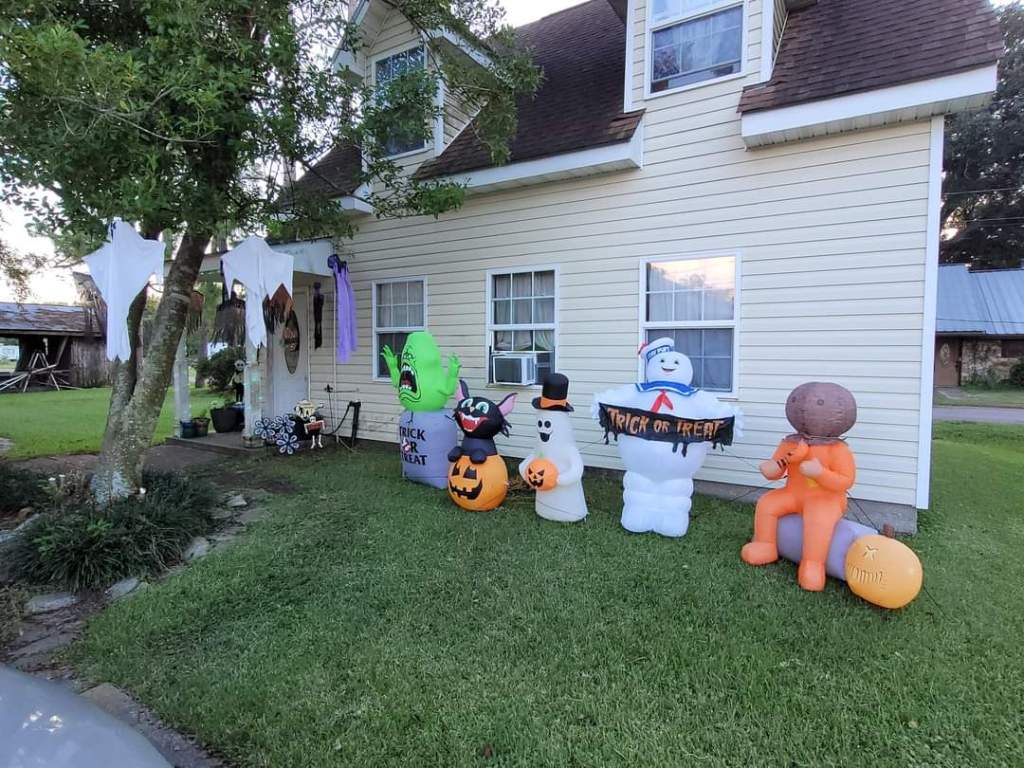
Our decorations aren’t terribly complex, because we can’t afford anything terribly complex. Nor are they terribly scary, because we have a seven-year-old and we don’t want to give him nightmares. But Eddie does love monsters and creepy crawlies, so we’re not above hanging a few ghosts from the trees, wrapping the posts in front of our door with LED lights, and setting up inflatables of the likes of Slimer and the Stay-Puft Marshmallow Man. We’d have more if we could, but we’re happy with what we got.

Pictured: Not Complex Decorations

As we were decorating, though, I started to think about just which horror icons I would adorn our home with if money was no object. If I could grab the icons of terror from any time period, who would they be? In short, what creatures belong on the Mount Rushmore of Monsters?

It was honestly too hard to narrow down all the different monsters from throughout history to a simple quartet, so I decided instead to do three different mountains dedicated to three different eras: the Universal Monsters, 80s Slashers, and 21st Century Terrors. Obviously there are plenty of other ways I could subdivide things, but restricting myself to these three keeps me from going overboard (and gives me an excuse to return to this topic later, should I so choose). 

I’m making my decisions based on how iconic I think the monsters are – how far have they come in terms of penetrating popular culture? For example, no matter how good a movie I think Behind the Mask: The Rise of Leslie Vernon is (and it IS a GREAT movie, and you should all watch it) the fact that he’s kind of faded away since then is going to keep Leslie off the list.

But enough of that. Who HAS made the cut?

Universal Monsters

Universal Studios didn’t invent the horror movie, and in fact, most of their iconic creatures came not from them, but from the annals of public domain. That said, when people think of these classic monsters, the average member of the public is picturing the versions that came from the Universal monster flicks. The Universal Monsters are still known worldwide, a valuable brand that even kids will recognize without ever having seen a single one of their films. Their versions of Dracula, Frankenstein, the Wolfman, the Invisible Man, and many more are absolute legends. How in the world do you narrow it down to just four?

Well, you do it by deciding which ones are the MOST iconic, which ones are known by EVERYBODY – even people who hate monster movies or don’t like Halloween. And for that reason, I think the first two spots have to go to the Frankenstein Monster and his lovely Bride, as portrayed by Boris Karloff and Elsa Lanchester, respectively. Karloff wasn’t the only actor to play the creature for Universal (Lon Chaney Jr., Bela Lugosi, and Glenn Strange each had turns as well), but he was the first and there can be no denying that he was the most memorable. It’s his picture that you see on the merch, his face that the Halloween masks are based on, and his rendition that has informed pretty much everything from his three successors to Frankenberry cereal. As for the Bride, despite the fact that she only appeared in the one film – and only in the final scene of the movie at that – she has become as iconic as the Monster himself. The tall hair with the white streak, the bandage-wrapped body draped in gossamer, and Lanchester’s wide eyes and legendary scream have earned a permanent place in pop culture.

“Still a better love story than–” Ah, you know the joke.

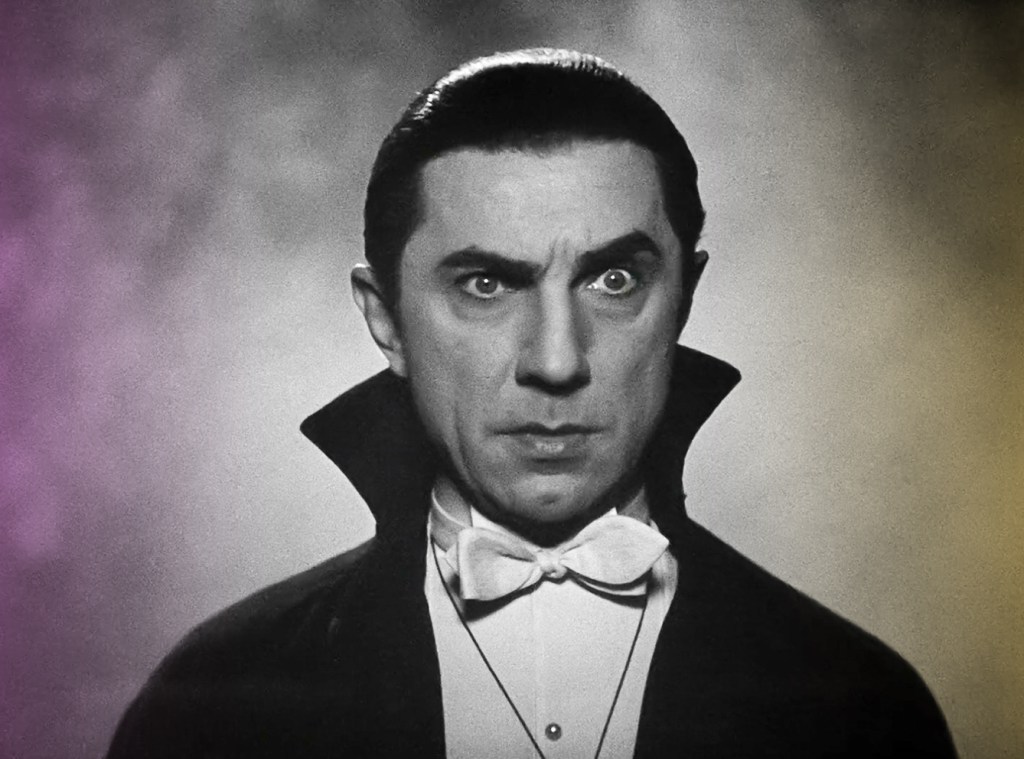
Spot #3 on the mountain couldn’t possibly be given to anybody but Bela Lugosi as Dracula. People don’t often realize that Lugosi only played the count twice, in the original 1931 Dracula, then not again until 1948 in Abbott and Costello Meet Frankenstein. But like Karloff’s Frankenstein Monster, his is the most recognizable version of Bram Stoker’s bloodsucker. Everything we accept about Dracula’s hairstyle, his clothes, and his accent (a remnant of Lugosi’s own Hungarian background) come from this version of the creature. Even today, when you watch a Hotel Transylvania movie, it’s Lugosi that Adam Sandler is doing a parody of. Like Karloff, his depiction of the monster is so famous that anybody who tried to do a novel-accurate version of Dracula would probably be met with confused looks as people asked why the hell he has a mustache.

“Sometimes I do, in fact, say ‘Blah, blah, blah’.”

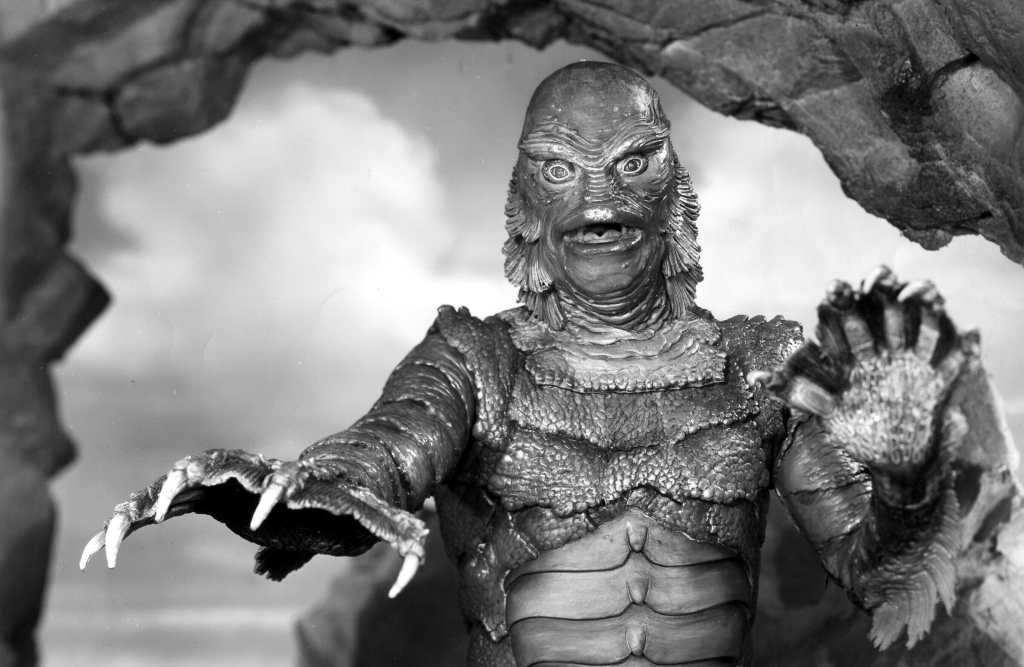
And then there’s the final spot and…guys, this is hard for me. REALLY hard. Not because there isn’t an obvious choice, but because it means I’m going to have to sideline one of my favorites. I love Lon Chaney Jr. as the Wolfman. I think he’s got some of the best, most nuanced performances in the entire Universal monster canon, and if this mountain was just my favorites, he’d be right up there. But in terms of how ICONIC he is…well…there are a lot of werewolves in movieland, and he doesn’t quite have the complete dominance over his version of the monster that Karloff and Lugosi do. But you know which monster IS instantly recognizable as the one and only Universal creation? The Creature From the Black Lagoon.

He’s not my favorite of the monsters (in fact, a few years ago I actually ranked him as my LEAST favorite of the iconic Universal Monsters), but EVERYBODY knows the Creature. And since this is the only iconic Universal Monster that is a wholly original creation, not based on an existing book or folklore, there’s not even any real competition for him to have to crush. He’s the one and only. (Although the most famous knock-off happened to win the Academy Award for Best Picture. Go figure, Universal exec who turned down Guillermo Del Toro.)   

And he never needs a moisturizer either. Guy is legit.

80s Slashers

It has been said by many a horror fan that the slashers of the 80s are the spiritual successors to the Universal Monsters. Granted, they’re far gorier and less kid-friendly than the classics; I’ll sit down and watch a Universal classic with my son, but we’re not going to be sharing a Nightmare on Elm Street marathon any time soon. But at the same time, many of these creatures have achieved the same level of cultural awareness as the creatures of the golden age of cinema. In other words, although not everybody may have watched all of – or ANY of – the Friday the 13th movies, I don’t think there is anyone in the western world who can see somebody wear a hockey mask and pick up a knife without thinking, “JASON!”

Which is why, by the way, he gets the first spot on the 80s Mount Rushmore. Jason Voorhees is synonymous with slasher movies. Even though he wasn’t the bad guy in the first movie and he didn’t get his iconic hockey mask until the third, the version of Jason we’ve had since then has made his mark on our culture. It’s a go-to Halloween costume for bigger dudes (guilty) because it’s so simple – the mask, a weapon, some old clothes and everybody knows who you are. He’s a lumbering monument to the iconic nature of the 80s slasher. Also, the question of which version of Jason is most iconic is largely moot, since no matter who plays him, the mask makes him look pretty much the same. Besides, the best one was Kane Hodder and you know it. 

The downfall of the summer camp industry began here.

Next to him will be his one-time sparring partner, Freddy Krueger, and this time the creature IS permanently associated with one actor, Robert Englund. (Jackie Earle Haley played him in the Nightmare on Elm Street remake, and although I don’t think anyone really blames that movie’s failure on his performance, it’s still a version we’d rather forget.) In an era where most of the slasher icons were silent killers – hulking brutes who were just as capable of breaking your bones as slitting your throat – Englund’s Freddy is svelte, agile, and with a wonderfully wicked sense of humor that has made him as beloved in the real world as he is terrifying to the teens of Elm Street. Even before the two characters faced off in the movie Freddy Vs. Jason, people would often say their names in a single breath as the two most well-known movie monsters of the era.

The only guy on this list to have recorded a song with Will Smith.

The third slot belongs to another quiet killer, Michael Myers from the Halloween franchise. (I know, the first movie came out in 1978, but he’s part of that 80s echelon of horror regardless.) Like Jason, many actors have played the role, but unlike Jason I don’t know that there’s necessarily a consensus as to who did it the best. That said, the creepy killer in a William Shatner mask painted white is indelibly linked to the holiday of Halloween. If you weren’t afraid he might stick a knife in their stomach, you might be sending your kids to sit on his lap for a picture like we do Santa Claus and the Easter Bunny. Jason and many other killers over the decades have taken their cues from John Carpenter’s creation, and few have done it better.

The original strong silent type.

The fourth spot is a little tougher this time. There’s an argument to be made for Leatherface, gruesome titan of the Texas Chainsaw Massacre franchise, but A) only ONE of his films actually came out in the 80s, and B) I don’t think he’s nearly as recognizable to the general public as Freddy, Jason, or Michael. But you know who is? CHUCKY. 

“Chucky, I appreciate your offer, but I’ve considered the situation and…well…I have decided that I do not, in fact, ‘wanna play’.”

Charles Lee Ray, the bloodthirsty serial killer played by Brad Dourif who has possessed the body of a child’s “Good Guy” doll and, in the process, made us all afraid of our kid’s toys, has earned his spot on my Mount Rushmore. Okay, only one of Chucky’s movies (the original Child’s Play) came out in the 80s, but he’s a MUCH more recognizable figure than Leatherface. In addition to his film series, he’s the star of a TV series that is currently on the air and – let’s face it: the merch. Chucky’s as much a brand as he is a character at this point. Everybody knows who he is and what he looks like, and the name “Chucky” is now permanently associated with a red-haired pint-sized whelp who brings chaos and despair in his wake, although part of that may be attributable to the cartoon Rugrats. 

21st Century Terrors

This last mountain of mine is going to be the most challenging, mostly because the pop culture penetration part is a little harder to say for sure with modern monsters. Lots of things are popular when they’re NEW, but will they still be instantly recognized 40 to 90 years later like the monsters I’ve talked about already? Only time will tell. That said, these are the four that I would currently put on the mountain, based on how popular they are NOW and how popular I think they are likely to remain. I’ll go in chronological order of their first films for this batch.

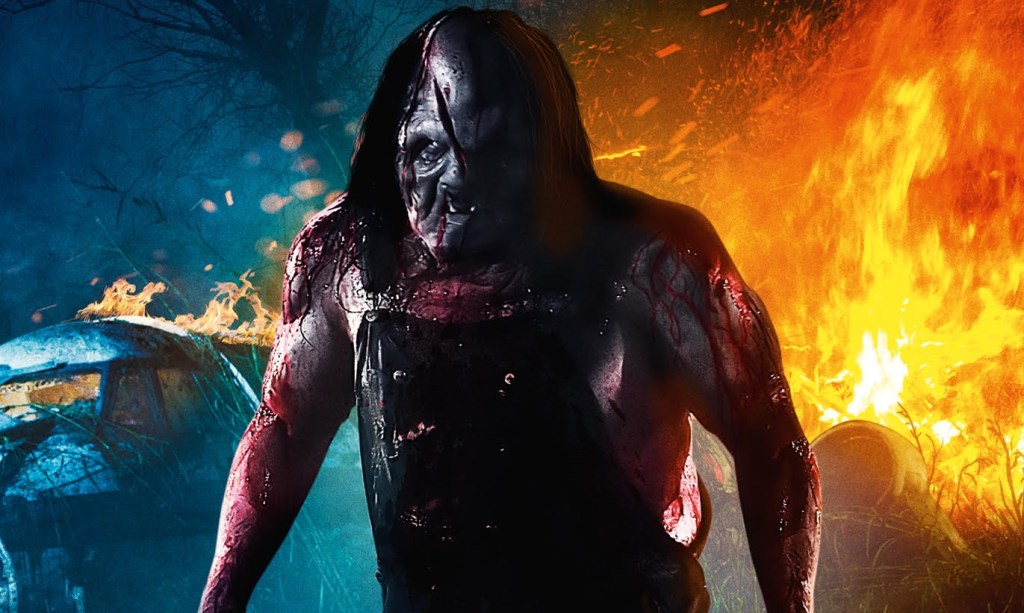
First up is Victor Crowley, the hatchet-wielding killer of Adam Green’s…well…Hatchet series. Victor is a good ol’ Louisiana swamp boy, accidentally killed by his own father as the result of a cruel Halloween prank gone tragically wrong and transformed into a murderous, vengeful spirit that allows no one to leave his home in Honey Island Swamp alive should they be so foolish as to venture there after dark. 

“No, Victor, you’re still a…a handsome young man…”

I admit to a little bias on this first choice – I’m a big fan of Adam Green and his work in general, so I’m always ready to promote it a little bit. Regardless, I think Victor (who has ONLY been played by Kane Hodder) is highly deserving of this spot. The first Hatchet movie, in 2006, came at a time when virtually all horror was a remake or reboot, either of an older franchise or of a Japanese horror film. Green had the guts to come out with an 80s-style slasher in a time when they weren’t in vogue and created a popular, beloved franchise. It’s been a few years since his last outing (in 2017’s Victor Crowley) but he’s still filling toy stores and turning out new comic books from American Mythology, keeping him alive until Green and Hodder are ready to polish up their hatchets and bring him back to the screen.

Next, from 2009, I’m picking Sam from writer/director Michael Dougherty’s anthology film Trick ‘r Treat. This is one of my favorite Halloween movies, an annual must-watch featuring four delightfully scary stories that all center around the same small town on the same Halloween night, with the diminutive orange-and-burlap clad creature called Sam serving as the common element to all four of them. The movie has a highly devoted fan base, and every few years we get our hearts broken all over again as news of a sequel is announced and then, sadly, nothing happens. Despite that, though, Sam has only become more and more popular as an icon, with costumes, decorations, and toys filling the shelves of a Spirit Halloween near you even as we speak – and really, is there a better measure of an iconic monster than that?

The cutest lil’ lunatic of the season.

The psycho that gets the third spot comes from 2016’s Terrifier by writer/director Damien Leone: Art the Clown. (And let me just say for the benefit of those readers who happen to be my wife that I intended to include Art BEFORE you looked over my shoulder and saw the title of this column and said, “You better include Art the Clown.” You’re welcome.) Art actually appeared in a couple of short films and the 2013 anthology All Hallow’s Eve, played then by Mike Gianelli. But it wasn’t until the 2016 Terrifier, when David Howard took over the role, that the character really started to get stratospheric popularity.

If you weren’t scared of clowns already, this guy will change that.

What is it, exactly, that makes Art so creepy? I suppose part of it is just our cultural fear of clowns, which has only gotten worse in the last decade. Part of it is the unnerving design of the character and his ghastly makeup. But a lot of the credit has to go to Howard’s performance. His Art is lithe, quiet, menacing, and probably the single most brutal horror to yet appear on my list. Seriously, if one of my Mount Rushmore Monsters was coming after me, there’s nobody I’ve mentioned that I would be more disturbed by than Art the Clown. Art, like Sam, has begun to ascend that Mount Rushmore of Merchandise as well, with costumes, decorations, and tchotchkes appearing everywhere this Halloween season in anticipation of the upcoming Terrifier 3 which, amusingly enough, is going to be a Christmas film. My wife got a stuffy of him when we made our first Spirit trip this year. It’s adorable.

The last monster on my last mountain? It’s going to be a controversial choice, I know, but I challenge anyone to make an argument that Bill Skarsgård’s rendition of Pennywise the Dancing Clown doesn’t belong there. Like Art, the villain of Stephen King’s It has that creepy vibe to him, but unlike Art, he’s a chatterbox. He’s as likely to talk the terror into you as he is to jump out from a closet. Whereas Art is an anomaly, a creature of unknown origins who is all the more horrible for it, we know what the deal is with Pennywise. He’s a nightmare out of time, a beast from another universe that preys on our fears and surfaces every 27 years to do so. And Skarsgård is flawless in the role – sly, charming, compelling, and an absolute terror every second he’s on the screen.

This is the guy who WOULD say “yes,” when Chucky asks if he wants to play.

I know some of my Stephen King purist friends will turn on me for this one. And look, I love Tim Curry as much as anybody. But he’s be honest here, Skarsgård’s version of the character has completely eclipsed Tim Curry in terms of cultural awareness. Children of the 80s and 90s remember Curry as Pennywise, but if you ask anyone who didn’t see that miniseries in their formative years, the vision of the character they come away with is Bill Skarsgård. 

And damned if I don’t think he earned it.

There you have it, friends, three Mountains of Malevolence. But lists like this one are intended to INSPIRE discussion, not settle a debate. So tell me, who would YOU put on each of those mountains? And what other mountains would you build? Let me hear all about your Quartets of Corruption! 

Blake M. Petit is a writer, teacher, and dad from Ama, Louisiana. His most recent writing project is the superhero adventure series Other People’s Heroes: Little Stars, volume one of which is now available on Amazon. You can subscribe to his newsletter by clicking right here. Other mountains he considered were Hammer Horror, Final Girls, Horror Heroes…ah well. Next time. 

Geek Punditry #42: Halloween — the TV Series?

Last week Miramax Pictures (motto: 100 percent Weinstein-Free these days) announced the news that horror fans have been waiting for with baited breath. They have acquired the rights to make a TV series based on John Carpenter’s Halloween franchise. And if that wasn’t enough, there are talks about spinning it off into (drumroll please) a new cinematic universe! Isn’t that great? Isn’t it amazing? Isn’t this the best news you’ve ever heard?

Yeah, I thought the same thing.

Look how happy he is. Like a kid on Christmas.

I’m sure the question most of you are asking is, is a universe really necessary? The answer, of course, is “No, of course not, what are you, high?” Marvel pulled the cinematic universe off, but nobody else who has tried it has come close to their level of success. Of course, this hasn’t stopped people from attempting it with everything from the works of Roald Dahl to the world of My Little Pony. I’m frankly stunned that no one has tried to link the recent movies Air, Flamin’ Hot, and Blackberry into a “Folks Coming Up With New Products” Cinematic Universe, although now that I’ve willed it into existence, no doubt someone will try.

As for making a TV show out of it…eh. I have mixed feelings. There’s nothing inherently wrong with making a TV series based on a horror franchise. It’s been done before to some acclaim (such as Bates Motel and the current Chucky series), after all. Freddy’s Nightmares cast the titular Krueger as a sort of Cryptkeeper lite, narrating anthology stories, although he occasionally took part in them as well. Then there were shows like Friday the 13th: The Series, which had nothing to do with Jason Voorhees except for a cameo appearance by a hockey mask. It could go either way. The question should be, is Halloween really the best choice for this kind of a project? 

The good, the bad, and the Freddy.

First of all, what storyline are they planning to follow? The film series has been rebooted and restarted so many times that there are no less than five different continuities spread out among the 14 movies, which most of you will recognize as being at least four too many. What’s more, each and every continuity has its own fans and its own detractors, so the idea of choosing one that will satisfy a majority of fans seems slim. The best option is probably to start from scratch and not worry about any of the previous continuities – of course, going that route will only result in a sixth iteration of the franchise. (Which is five too many.)

Realtime photo of the Halloween continuity.

Let’s say, just for the sake of discussion, that they go in this direction: a new continuity, unbound from any of the previous films. And let’s be generous and assume that they do it really well, in a way that all of the fans (okay, let’s be realistic here – a plurality of the fans) are satisfied with the show. That still leaves the question of how the hell you turn a single-villain slasher franchise into a cinematic UNIVERSE. I just don’t think there’s enough meat on that bone.

 If you decide that you want to tie together multiple existing horror franchises, it could make sense. They did it with Freddy Vs. Jason, and the criminally underrated film Behind the Mask: The Rise of Leslie Vernon is implied to place in a world where ALL the classic horror movies are canon. The comic book series Hack/Slash takes this approach as well, using generic villains that “feel” like the classics most of the time, but it has also included several official crossovers with horror franchises including Chucky, Hatchet, The Crow, Army of Darkness, and Re-Animator. Of course that’s a comic book, where quick crossovers are relatively easier to negotiate. In a practical sense, with the rights to all these franchises spread out among dozens of different studios, it’s all but impossible to see such a cinematic universe materialize until the Walt Disney Corporation and Shadow Government and Tanning Salon finally gets around to buying up all the different companies, which isn’t scheduled to happen until next Tuesday.

How do you make Halloween, by itself, a universe? There’s only one antagonist, first of all. Maybe more if you count the “Curse of the Thorn” storyline that ran through a few of the films, but that’s frankly one of the weakest ideas in the franchise’s history – never adequately explained and butchering Michael Myers as a character by making him a sort of victim of supernatural forces rather than the personification of evil that makes him so iconic. What other characters could you build a world on? I could see someone planning a prequel series about the life of Dr. Loomis, but that doesn’t mean I think it’s a good idea. Prequel series are fraught with their own landmines that make them difficult to do successfully. As for the other main characters, does anyone really want to watch Laurie Strode without Michael Myers? For that matter, does anyone really want to watch Laurie Strode without Jamie Lee Curtis? 

As odd as it sounds, if Miramax simply must try the cinematic universe idea, there’s really only one place I think they could look. They need the weirdest, most off-kilter installment of the entire franchise. They need Halloween III: Season of the Witch.

“Help me, Obi-Wan Tom Atkins. You’re my only hope.”

Quick history lesson, for those who don’t know how this happened: when John Carpenter was approached to do a third Halloween movie, he decided to take it in a totally different direction. Rather than bring Michael Myers back for Round Three, he tried to make the franchise into an anthology series, with the plan being to make a new horror movie every year or two centered on the holiday of Halloween but totally standing on its own. Season of the Witch is about an evil novelty company that has a bonkers scheme including Druids, Stonehenge, and rubber Halloween masks with the intent to murder millions of innocent children for reasons. It underperformed and was torn apart critically, and the franchise has not deviated from the story of a Michael Myers since. 

In recent years, however, people have begun to reexamine Halloween III, calling it an underrated gem of a film, that it works as a clever deviation from the audience’s expectations, and that Tom Atkins’s mustache does not at all look like a caterpillar hoping to eat his upper lip. I…I’ll be honest, I don’t agree. I mean, the movie has a certain cheesy charm, but that’s far from calling it a good movie. That said, I agree that it may have been received better (as many argue) if it was the second film in the franchise instead of the third, or if it had just been released as a standalone film divorced from the Halloween franchise, or even if it had come out 30 years later, when anthologies were on the rise. 

But the truth is, it doesn’t even matter if the movie itself was good or not – it’s still the bedrock upon which this cinematic universe should lie. I’m not saying they should ignore Michael Myers, of course. Doing a Halloween series without Michael Myers would be as ludicrous as doing, say, a Scream series and changing the mask.

This never happened.

But I think if they link Michael directly to the doings of the Silver Shamrock company, makers of the demonic masks, this may be the linchpin the universe needs to get started. It’s true that Michael Myers should not be a supernatural character. He’s much more frightening and interesting when he’s a murderous, unspeakably evil human being. On the other hand, that’s not the same thing as saying that the supernatural cannot exist in the same universe as him. 

What I would do, were I the showrunner of this hypothetical Halloween series, is start with a sort of platonic ideal of Michael Myers. He’s a killer, he’s escaped from custody, he has terrified the town of Haddonfield, Illinois in the past. I would not marry him to any specific continuity from the previous films. I might mention Laurie Strode or Dr. Loomis, but only in passing – wouldn’t even confirm one way or another whether they’re alive or dead in this universe. The story here is that of the insidious Silver Shamrock company, whose attempt at destroying the world some years ago failed (way to go, Tom Atkins and his mustache!) but they’re ready to try again.

“A little louder for the people in the back!”

This time, their scheme hinges on Michael Myers. If they can get their hands on the real-life boogeyman, who is again unleashing havoc on a small town, they can use their magic to weaponize the pain and anguish he has caused for their own nefarious ends. How are they going to do it? They’ve got to replace his iconic mask with one of their magic ones. Our heroes, now, are a new group of characters who start out trying to stop Michael’s killing spree (like you do), but halfway through the first season discover the Silver Shamrock connection and realize that they not only have to defeat him, but they also have to save him from falling into Silver Shamrock’s hands. 

So there’s the first season. But how, Blake, does this sort of thing lead into a full-on cinematic universe? Well, there’s a few ways that it could go, but here are the two I would find most interesting, and they’re ideas that compliment each other:

  1. Silver Shamrock is a big company, with lots of different cells around the world, each of which is dedicated to wreaking havoc using the local boogeyman of that area. This would not only allow us to create new villains, but we would no longer be limited to just slashers. Bring in other monsters – vampires, werewolves, do a season set in New Orleans featuring the Loup Garou. The possibilities are endless. The important thing is, wherever the current chapter is set, it’s about trying to weaponize fear.
  2. They’ve been doing this for a while. Who are the other heroes that have stood against them? Perhaps an entire underground society of monster-slayers has risen up, a kind of Buffy crossed with John Wick organization, dedicated to ending the threat of these menaces once and for all. Maybe Loomis was part of it, maybe not. Maybe, if they get really ambitious, they could try to recruit Laurie Strode. Or maybe not – again, if it ain’t Jamie Lee Curtis, that would be a hard sell.

Anyway, with this set-up, you’ve constructed a universe that allows for virtually any kind of horror movie story you want to tell, which is what Carpenter wanted to do with the franchise back in 1982 anyway, except this time it’s all tied together. As for the title – well, that’s simple enough. Under the rules of this shared universe, all of the evil forces we encounter are at their strongest at – drumroll please – Halloween. You can bring in Michael Myers any time you want, but you’re not beholden to him. It’s possible to build a dense mythology, with shows or movies focusing not just on Michael, but on the monster-slayers or any of the various monsters or the history of Silver Shamrock. Hell, you can even throw in the Curse of the Thorn as one of the various evil organizations our monster-slayers fight against. A set up like this would give the world room to grow.

This is what I would do, anyway. But I’m not on the payroll of Miramax (although I would be willing to discuss compensation for this obviously brilliant idea), and odds are if they’ve even gone far enough to tell people they’re planning a cinematic universe, they’ve probably also got an idea already as to how they want to do it. That’s their prerogative. What I’m here for is to suggest a way to do it that’s not just a case of retreading old ground. 

And if they instead just do more of the same and it flops…well, I guess I’ll see you at Halloween Iteration Seven. 

Blake M. Petit is a writer, teacher, and dad from Ama, Louisiana. His current writing project is the superhero adventure series Other People’s Heroes: Little Stars, a new episode of which is available every Wednesday on Amazon’s Kindle Vella platform. Come back next time when he explains to you the intricacies of the Prom Night cinematic universe! (Hint: there isn’t one.)

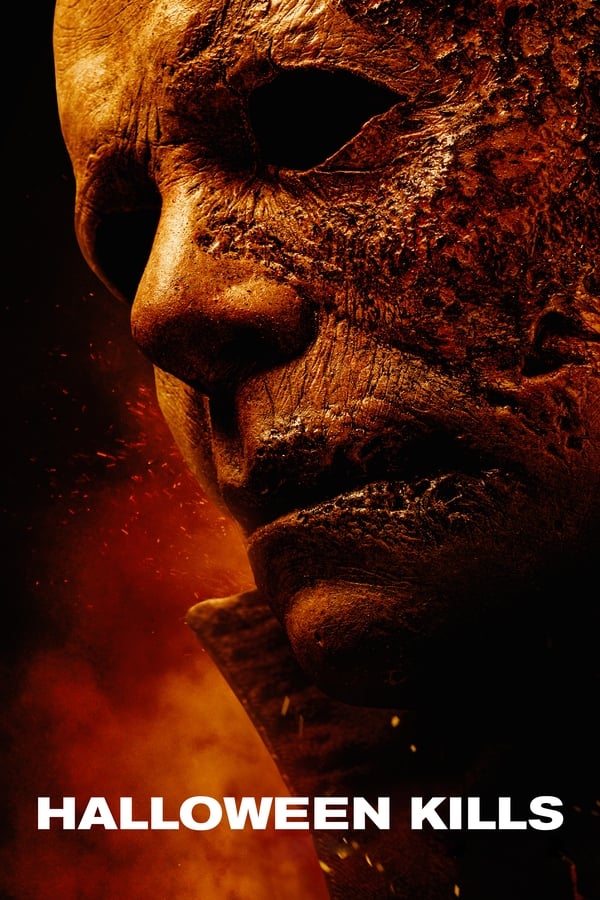
Halloween Kills: A Review

I’ve seen a lot of people complaining online about Halloween Kills. In and of itself, there’s nothing unusual about that. People complaining online is part of the natural downfall of our species — hell, some may argue that’s what online is actually for. However, it’s rare that I find myself not only disagreeing with the mob mentality, but utterly incapable of figuring out exactly what they’re angry about in the first place. All of this is to say, I thought Halloween Kills was fantastic.

I enjoyed the 2018 Halloween movie (which I STILL by God wish they had given a subtitle, because did we really need THREE movies in this franchise simply called Halloween?), but in some ways, I think I enjoyed Halloween Kills even more. I’m going to talk spoilers here, because I can’t really think of a way to explain what I liked so much without them, so if you want to remain spoiler free, go away now, secure in the knowledge that I just really, really liked the darn film.

The movie picks up mere moments after the end of the previous movie — Laurie Strode, her daughter Karen, and granddaughter Allyson are in the back of a truck fleeing from the burning remains of Laurie’s home where they trapped Michael Myers and left him to die. (Quick tangent: all three of the Strode women were utter baddasses in the first movie, they continue to be so in this one, and how great is it that Judy Greer is finally getting to play a character that’s not just the hero’s ex-wife?) Before we pick it up, though, we bounce back to 1978, the night of the original Halloween movie, for one of several scenes that flesh out what happened both on that night and during the previous film. In particular, these scenes recontextualize Frank Hawkins’s storyline, amplifying the tragedy that he’s facing in his own quest to see Michael destroyed.

“Amplifying the tragedy,” by the way, is a good way to summarize this movie as a whole. Frank accidentally killed his own partner while trying to stop Michael back in 1978. And if that wasn’t enough, we later learn that he carries even more guilt for the current slaughter because he stopped Dr. Loomis from killing Michael that night. In the present day, Michael survives the inferno when the gas is cut off and the fire extinguished by firemen who are doing what firemen are supposed to do, and then get butchered for it. Across town, we meet a new-ish group of characters having their annual Halloween support group at the bar: survivors of Michael’s original 1978 massacre (some of which are even played by the original actors). 

This is the first thing that set this movie apart for me. So many slasher movies — going back to when Halloween first popularized the genre — are about celebrating the killer. Fans aren’t necessarily going for the story or the characters or for anything except to see how many people Freddy and Jason and Michael can kill and if they can do it in a more creative way than they did last time. And I get it, I enjoy those movies too, but in a very dark way it strips of us of our ability to think about what the consequences of a night like that would be for real people.

Halloween Kills is very much about those consequences. In a rare move for a slasher movie, this film spends a lot of its run time dealing with the survivors of Michael’s rampage and the families of his victims, to the point where original survivor Tommy Doyle manages to whip dozens of them into an angry mob that puts the ones that used to chase Frankenstein’s monster to shame. It forces us to think about the fact that every time a slasher movie shows us some teenager getting impaled on a pike, in-universe this would be somebody’s son or daughter or mother or father. What Michael Myers does shouldn’t be applauded. He’s leaving behind a trail of orphans, widows, and friends who will never heal. A few moments in the film focus on the mother of Oscar, one of the teenagers killed in the last movie (a few hours ago in movie-time) for scenes that add absolutely nothing to the story, but drive home the gut-wrenching nail that this mother has just lost her son to a senseless act of violence. In one scene, Karen and Allyson argue because Allyson wants to join the aforementioned mob, whereas Karen (whose husband died just hours ago and whose mother is in a hospital bed) just wants her daughter to stay the hell where she is and be SAFE, dammit… and in that moment, both of these women are 100 percent right to feel the way that they do. 

Perhaps ironically, the other way the filmmakers this time demonstrate the real horror of a Michael Myers is by spending more time with the victims before they get ripped apart in some of the most inventive kills yet. We get to see more of their lives and who they are, and so when they die (in increasingly brutal ways) it’s far more disturbing than those of us who cheer when Victor Crowley takes a belt sander to somebody’s face are used to. 

As much as I love the tone, story, and characterization, there are a couple things about the film I have to take issue with. One is the dialogue. I don’t mind a little cheese, but there are a lot of one-liners and some heavy speechifyin’ from Anthony Michael Hall’s character that add enough ham to make a whole charcuterie tray. 

Then there’s the ending, which frankly, is baffling. In the last moments of the film, we are presented with the theory that killing literally makes Michael Myers stronger and more unstoppable, and you realize that the kills in this movie and the previous one have gotten increasingly brutal even as he seems to have grown increasingly powerful. In this moment, Michael has been beaten, shot, and stabbed to a degree that it seems for certain even HE must be dead. And then he just… stands up. And resumes the rampage, killing even several survivors we have come to love. It seems very clear that the filmmakers are taking a supernatural take on Michael Myers, something that the previous film pointedly avoided.

Whenever this has happened in previous iterations of the franchise, this has been one of the weak spots of the character — he’s much more interesting when he’s a human driven by a soul of pure evil than a demon or driven by a curse. So the decision to go in this direction is, frankly, troubling. But I remind myself that this is the end of act II, not the end of the story. The third and final film in this trilogy is coming out next year, and at this point I’ve enjoyed the first two parts of the story enough that I’m willing to go along for the ride and see if they stick the landing. 

Blake M. Petit is a writer, teacher, and dad from Ama, Louisiana. His current writing project is the superhero adventure series Other People’s Heroes: Little Stars, a new episode of which is available every Wednesday on Amazon’s Kindle Vella platform. His current child is Edward, who at the moment is watching YouTube videos of cars running over what the guy who makes the videos CLAIMS is rotten fruit, but Blake is skeptical.