
This will be a slightly odd week in the blog, at least for me. I’m loading up this morning (June 18th, as I write this) to take a trip with my wife and son to Pittsburgh to visit some family and friends, and it just so happens that our travel days (today through Tuesday the 24th) exactly match up with my Year of Superman weeks. In other words, for the next week I’m gonna be on the move.
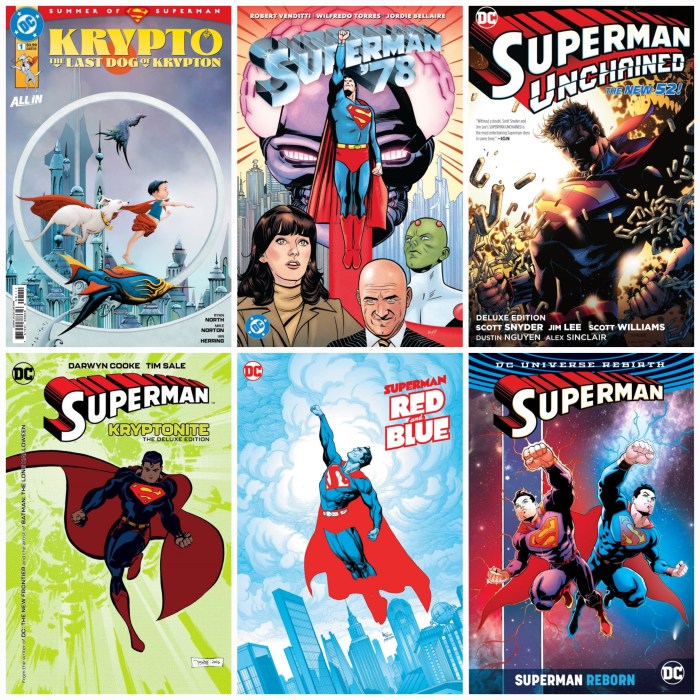
So to make certain that I’m going to be able to keep up, I’ve gone to the DC Universe Infinite app and downloaded several Superman-related graphic novels. As I’ve said before, I’ve got a massive list of comics I’m interested in reading before this year is out, but for this trip I’ve downloaded full trade paperbacks, most of which comprise a single story or theme. I’ve also deliberately selected books that don’t necessarily fit into one of the theme weeks I’ve got planned. So while this week may seem a little random to you, it’s going to be less random for me.
And as always, you can check out earlier blogs in the Year of Superman Archive!
Wed., June 18
Graphic Novels: Superman: Kryptonite (Collects Superman Confidential #1-5, 11); Superman Unchained (Collects issues #1-9)
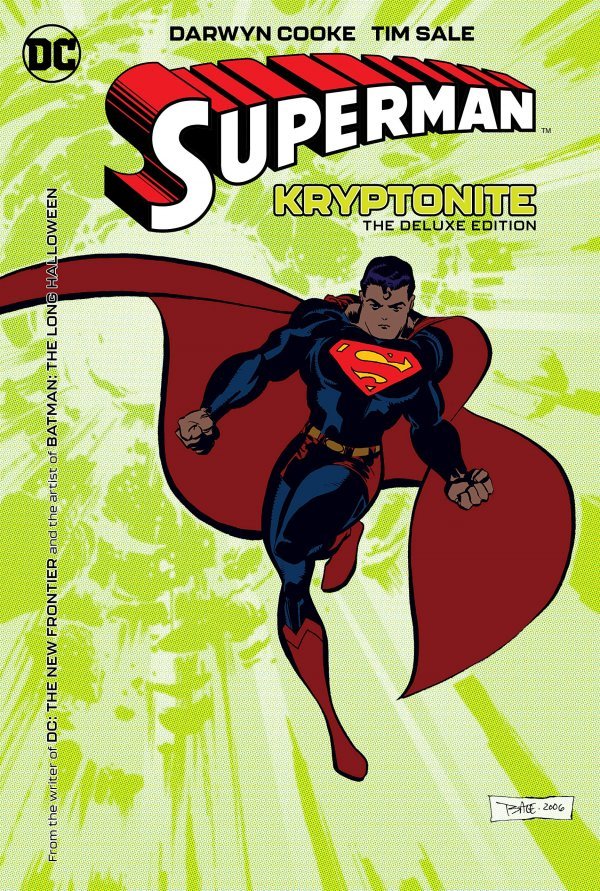
Notes: The plan for this trip, especially on travel days like this one, is to read the graphic novels I’ve downloaded on the DC app, which theoretically I should be able to do even once airborne, even if I stubbornly refuse to pay eight bucks for a wi-fi connection on the one-hour flight from New Orleans to Nashville. My flawless plan lasts until approximately four minutes after takeoff, when I discover that the book I chose to begin with — Superman: Kryptonite by the sadly late creative team of Darwyn Cooke and Tim Sale — failed to download properly and I can’t finish reading it. I know from experience that the only way to deal with this particular problem is to delete the book and attempt to re-download it once I have wi-fi, presumably in the Nashville airport. However, the moment I delete the book, the entire app crashes. I try multiple times to restart it, clearing the cache, even restarting my tablet, but all efforts are met with failure. I know — also from experience — that it will be impossible to solve this problem in the air, so I surrender and return to the prose book I am currently reading, Teenagers From the Future, a collection of essays about the Legion of Super-Heroes edited by Timothy Callahan.
The DC app has existed, in some form or another, since 2018, and these kinds of technical problems have been constant. Through two phones and three tablets, I’ve never had a device for which this specific app wasn’t plagued by a morass of glitches and faulty downloads. I continue to subscribe because I love DC Comics and I love having access to the library, but I am BEGGING whoever is in charge of the tech side of this app, GET YOUR SHIT TOGETHER.
In Nashville, we get to the gate with our connecting flight in just enough time for me to re-download Kryptonite, then check a few more of the downloaded books to make sure they’re downloaded properly. At some point, once I’m on hotel wi-fi, I’ll check them all, but as we lift off from the Music City I’m able to finish Cooke and Sale’s underrated gem. Both men are better remembered for other Superman or Superman-adjacent comics (New Frontier and Superman For All Seasons, respectively), and thus this book can be unfairly lost in the shuffle sometimes. Kryptonite is Cooke’s story of a young Superman, just months out from his public debut, who does not yet know his own origin. After having to break a date with Lois due to a volcanic eruption, she calls things off with him and begins dating Tony Gallo, a casino owner who turns out to have ties to organized crime. Gallo has something else as well: a ring with a green stone chipped from a much larger stone he has in his possession, composed of an unearthly mineral neither Superman nor anyone else has ever encountered. And it even has a surprise in the center, like an enormous, radioactive Kinder Egg.
I adore the Cooke/Sale perspective. This Superman isn’t just young, but also inexperienced in a way that few other stories have played with. He knows, for instance, that his powers make him resilient, but he hasn’t yet explored the limits of that invulnerability, so when he gets lost in a sea of molten lava he’s legitimately afraid he could die. Even more shocking, when he escapes relatively unharmed, Superman doesn’t rejoice in his power, but rather experiences an existential crisis, wondering what being indestructible means in terms of his humanity. When he finally encounters the Kryptonite and learns that there is something in the world capable of killing him, it actually triggers feelings of joy, as if he has regained a tether to the human race he was in danger of losing.
Although For All Seasons was written by Jeph Loeb, the continuity of Sale’s artwork and the themes therein really make this book a fine companion for that one. Sale’s work — both here and in many of his other works, such as he and Loeb’s storied Batman collaborations — is not truly timeless. Rather, it evokes times that don’t exist at all, with old art deco styles juxtaposed with modern technology. (The panel where Jimmy Olsen complains about the hassle of getting a new cell phone while dressed like a member of the cast of Newsies comes especially to mind.)
Compared to the other masterpieces its creators are associated with, this book doesn’t get the love it deserves. But I’m so, so glad I read it again today.
After the damn app let me download it, anyway.

The good news is that I am capable of reading much faster in the distraction-free environment of an airplane, so despite the download dilemma, I had time to knock out a second graphic novel before we landed in Pittsburgh. This time I chose the New 52 era story Superman Unchained by Scott Snyder and Jim Lee. A terrorist group called Ascension is planning a major strike that could destabilize the entire world, and if that weren’t bad enough, our old pal Lex Luthor has plans to piggyback on their attack with a strike of his own. Fortunately, Superman isn’t alone – Batman and Wonder Woman are there to lend a hand, as well as his new best frenemy, Wraith, an alien who has been in the employ of the United States government since the 1930s. Wraith is even more powerful than Superman, but he admires the Man of Steel – which makes it all the more tragic that he’s going to have to kill him.
If you’ve been reading this blog all along – as well you should – you may remember that I didn’t particularly care for Jim Lee’s previous work with Superman on the Brian Azzarello-written Superman: For Tomorrow. This nine-issue story proves quite conclusively that the problem was the writer, not the artist. Unchained is a great action movie in comic book form, with Superman leaping from one threat to another with nary a moment to catch his breath. This isn’t a story about deep characterization or quiet, personal moments with Clark Kent and his friends, it’s about Superman in an insane race to save the world from one threat to another.
The best characterization, in fact, comes in the person of Sam Lane. Sam is in charge of the Wraith project (of course) and there’s one moment where he takes Superman to task that I liked a lot. In most continuities where Sam is put in the antagonist role, his hatred of Superman is either a result of pure xenophobia or just the fact that he resents having someone that powerful around that he can’t control. This version is different. His work with Wraith (he says) proves that he doesn’t have a problem with aliens. His beef with Superman is that he considers him a coward for not using his powers to stop the real threats to the world. Superman usually stays out of politics and military conflicts, and Sam believes he should be using his powers to deal with THAT kind of threat, the way that he uses Wraith. Of course, there are countless stories that demonstrate why Superman doesn’t (and shouldn’t) use his powers that way, but Sam Lane doesn’t have the luxury of having read, for example, Mark Waid’s Irredeemable. In real life, if somebody says that Superman should use his powers this way, it just proves that they don’t understand Superman. But Sam legitimately DOESN’T understand Superman, which makes this a very clever way to motivate the character that’s a little out of the norm.
Wraith is an interesting character as well – a nice foil to Superman who has very similar powers, but has chosen to use them in a different way. This is the only story Wraith has appeared in, and I guess it’s probably for the best, but I feel like there’s more story potential out there for him. And Lee’s artwork was perfectly matched to this kind of high-octane, never-catch-your-breath story.
There isn’t anything particularly revelatory or world-changing for Superman in this graphic novel. It’s just, simply, a good Superman story. Perhaps the best of the New 52 Era, if I’m being honest.
Thur., June 19
Comic: Man and Superman 100-Page Super Spectacular #1

Notes: For a few years, DC had a nice run of 100-Page Super Spectaculars, usually specials that collected comics or storylines that were connected to a recent media tie in or a new event story, as an inexpensive way for readers to catch up. In 2019, they published this one, though, the anomalous Man and Superman 100-Page Super Spectacular, which collected four issues that had never been previously published. Legendary writer Marv Wolfman and artist Claudio Castellini had been commissioned, about a decade prior, to do a four-issue run on the Superman Confidential anthology series (the same series that gave us Superman: Kryptonite), but even though their story was finished, Confidential was cancelled before it was published, and Man and Superman sadly languished in limbo. Why they decided to publish it in this format instead of as a miniseries or an original graphic novel I don’t know, but I’m glad it finally made it out there. In his introduction, Wolfman says he thinks this is the best thing he’s ever written, and this is coming from the man behind Crisis on Infinite Earths and The New Teen Titans, so that’s a hell of a statement.
Having re-read the whole thing, do I think he’s right?
Well…calling it THE best may be a stretch. But it’s pretty damned good.
Wolfman’s story is his take on Superman coming to Metropolis for the first time. It is, of course, a story that has been told time and again. We looked at no less than seven different versions of that back in Origin Week, and honestly, I could have read this special back then and it would have fit. But this is Marv Wolfman’s take on it, and it’s good. Man and Superman is a character study, not an action movie. It’s about Clark Kent and who he was before he became Superman, about HOW he becomes Superman, and to a degree, it’s also about who Lois Lane is to him. As the story begins, Clark is moving to Metropolis for the first time, thirsty for a job as a reporter in a city that’s overcrowded with people trying to become reporters, desperate to find a way to make himself stand out. He and his parents have already made his uniform (insistent terminology in this book, too: it is a uniform, not a costume) but he isn’t quite ready to put it on yet. And thus Metropolis starts hearing reports of a mysterious “flying man.” Some people think he’s there to help, others are terrified of him, and Clark Kent is struggling to figure out how to be who he wants to be.
Lex Luthor is in the book too, because of course he is, but this is 100 percent Clark’s story. After two chapters of him trying to find his footing in a city that seems to be falling apart under the weight of a corrupt government and threats from a terrorist organization, Clark finally crosses paths with Lois Lane, and this is where the book really shines. Wolfman’s Lois is exactly who Lois is supposed to be – strong, brave, and dedicated to her craft as a journalist. When she meets Clark Kent, she doesn’t see him as either a mousey bookworm or a rival to be hated, as their early relationship is often depicted. Instead, Wolfman’s Lois relishes some healthy competition and is excited about the prospect of somebody else (FINALLY) showing up with the journalistic chops to present a real challenge to her. In Wolfman’s world, Clark Kent falls in love with Lois Lane not because she’s beautiful (although Castellini’s artwork makes it quite clear that she is), but because he finds in her the fire and inspiration he’s been lacking. She doesn’t know it, but it is the passion and courage of Lois Lane that gives Clark Kent the courage to put on his uniform and step out of the shadows.
Like so many of the stories I’ve read this year, Man and Superman is not part of current Superman continuity, and in fact, I don’t think it ever was. But increasingly, I find that doesn’t matter. Superman – all of the great heroes from the likes of DC and Marvel – are part of our modern mythology. And just like the stories of Odysseus, Hercules, and Thor take many different forms over the centuries, so do the stories of Superman, Batman, and Captain America in the nearly 90 years we’ve been lucky enough to enjoy them. That doesn’t make any of them more important than another, that doesn’t mean that they don’t matter. It just means that different people tell these stories in different ways, and all that really counts is whether or not it’s a good one.
This is most definitely a good one.
Fri., June 20
Graphic Novel: Superman/Batman: Public Enemies (Collects Superman/Batman #1-7)
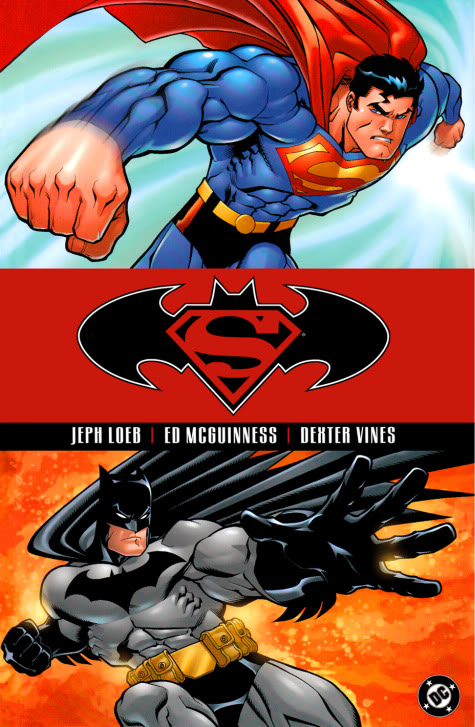
Notes: Last week I watched the animated feature based on this graphic novel, so it felt like a good inclusion in my week of reading-on-the-go. I’m not going to get into a detailed recap, but here’s the quick one: a massive meteor made of Kryptonite is on a collision course for Earth, and President Lex Luthor is gaslighting the planet into thinking that Superman is responsible for it. Superman and Batman go on the run, chased by a squad of government-manipulated heroes led by Captain Atom, on a desperate chase to both clear Superman’s name and stop the meteor before it destroys all life on Earth.
The interesting thing, to me, is that while the movie did a pretty good job of adapting the overall plot including several bits where the dialogue was lifted straight from Jeph Loeb’s script, there was much more that was left OUT of the movie than I had remembered. For instance in the second chapter, while Superman is in the Batcave recovering from being shot by a Kryptonite bullet, he encounters and has a battle with a future version of himself. This older Superman has white at the temples and black in his costume – sort of an in-between step between his modern incarnation and the Superman people had come to embrace from Kingdom Come. (I have to remind myself that, at this period in DC history, Kingdom Come was still thought of as a possible future of the main DCU rather than a different world in the multiverse.) The movie also skips the sequence where the allies of the world’s finest attack the White House, believing Superman and Batman to be held hostage. I’m kind of disappointed they left that one out. There’s a good squad here: Nightwing, Robin, Batgirl, Huntress, Superboy, Supergirl (the mostly-forgotten Cir-El version), Steel, and Krypto all taking the fight to Luthor makes for a good sequence, and really helps cement who these two characters are to the rest of the DC Universe.
Mostly, though, the thing I appreciate about this graphic novel is how well Loeb writes this team. I’ve mentioned it before, both when I covered Batman: Hush and The Supergirl From Krypton in this blog, but Loeb is very good with both of these characters. When it comes to writing them TOGETHER, though, he may well be the best. I hadn’t necessarily intended to read his entire Superman/Batman run for this blog project, but I’m kind of starting to feel inclined to do so. Between this one and the Supergirl story, I’m nearly halfway there anyway.
Sat. June 21

Graphic Novel: Superman/Batman: Saga of the Super-Sons (Collects World’s Finest Comics ##215-216, 221-222, 224, 228, 230, 231, 233, 238, 242, 263 and a story from Elseworlds 80-Page Giant #1)
Notes: Last week, during my discussion of Superman/Wonder Woman, I mentioned how often team-up comic book starring characters who have their own ongoing series can often feel somewhat irrelevant. World’s Finest Comics, during the later years when Superman and Batman’s individual comics became more episodic, definitely fell victim to that particular problem. Bob Haney found an interesting solution to that in 1972, when he started a serial in World’s Finest starring not Superman and Batman, but their sons, Clark Kent Jr. and Bruce Wayne Jr. This series ran through 12 (mostly non-consecutive) issues of World’s Finest, and right from the jump it’s a little hard to define this series. I suppose it’s an “imaginary tale,” as they were called at the time. There wasn’t really an effort to make the stories seem like a possible future, as the styles and slang felt very much of the late 60s and early 70s. Years later, it would even be established that this was yet another world in the DC Multiverse, although whether it’s a world that exists in the current multiverse or not, I’m honestly not sure.
The conceit is that both Superman and Batman marry and have sons who are virtually identical to them. When the Juniors reach adulthood, they decide to take up their fathers’ mantles as Superman Jr. and Batman Jr., despite Clark Jr. having only half of his father’s powers, as his mother is human. These adventures are, again, pretty of the time. There are a few issues where they roam the country like Green Lantern and Green Arrow, stumbling into different situations that need their help. In others they set out to solve a problem or a mystery, such as the issue where they wind up in alternate camps of a pair of sociologists trying to use a primitive tribe attempting to prove whether human nature is basically good (Clark’s perspective) or evil (Bruce’s). There’s even a particularly cruel issue in which Bruce Sr. is murdered, leading to a feud between Bruce Jr. and Dick Grayson over who deserves to take over as Batman, before ultimately revealing that Bruce Sr.’s death was a ruse to catch a criminal because of course it was, and he didn’t let anybody except for Superman Sr. know about it because of course he didn’t.
The weird thing to me about these stories is just HOW wild they get, HOW inconsistent they are, despite all being from writer Bob Haney. Depending on which issue you’re reading, Clark and Bruce Senior are either loving, devoted fathers or cookie cutter stereotypes in the “Parents just don’t understand” vein. Similarly, the boys bounce back and forth between showing respect and disdain for their fathers. Even their origins vary wildly: in the first issue, Bruce Jr. resents his father for hiding the fact that he was Batman from him while he was growing up, but only a few issues later he tells Clark he believes humans are inherently evil because of all the times in his childhood that he saw his dad come home after nearly getting killed by the bad guys Batman was trying to clean up.
It’s also pretty amusing to me how Haney (perhaps due to editorial edict) constantly steps around the question of who Clark and Bruce’s respective mothers are. Both Clark and Bruce Sr. are happily married to the mothers of their sons in this series, but they are never addressed by name, and whenever they appear on-panel it’s either with their back turned, their faces obscured in shadow, or (my favorite) wearing comically oversized hats to try to hide their features. Which is kind of funny, as Dick Dillin (the usual artist) draws virtually the same face for Clark Sr., Clark Jr., Bruce Sr., and Bruce Jr. The only discernible differences are the glasses the Clarks wear, Clark Jr.’s slightly longer hair, and Bruce Jr.’s sideburns. What I’m getting at here is that showing the faces of the moms likely would be of no help as to determining who they were. As it is, we DO see Clark’s mom with very dark, Lois Lane-shaded locks, whereas Bruce’s mom has brown hair that could be any number of women that Bruce Sr. had dalliances with over the years, but I personally choose to believe it was Selina Kyle.
The last two stories in this book are both bizarre and, in the case of the first one, almost insulting. Dennis O’Neil took over the writing chores for one last Super-Sons story nearly four years after Haney finished his run, claiming that the stories of the Super-Sons were just a simulation run on the computer in the Fortress of Solitude. Not sure why that was necessary, but okay… Then the simulated sons somehow are released from the computer and fight briefly alongside their super-dads before being made to disintegrate themselves for reasons. Haney did come back 20 years later for one final story in the Elseworlds 80-Page Giant, ignoring O’Neil’s story and substituting his own, in which Clark Sr. fakes HIS own death. This time, though, it’s not to catch a criminal, it’s for the much more reasonable and parental reason of teaching his son a dang lesson.
The book is a curiosity. It’s fun and nostalgic, which I certainly appreciate, but it’s not necessarily great comics. The best part of its legacy, really, is the fact that it kind of paved the way for the eventual Jon Kent/Damian Wayne series by Peter Tomasi, which was excellent, and which I intend to read again before this year is out.
Comic: Krypto: The Last Dog of Krypton #1
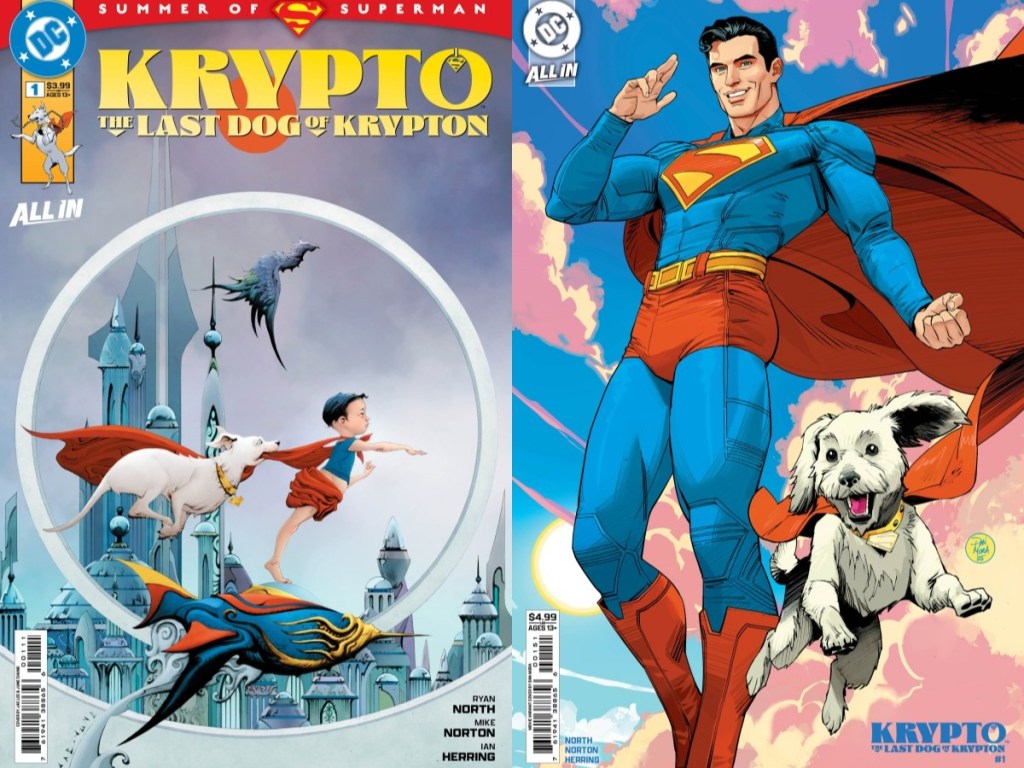
Notes: Whenever I travel, I like to hit local comic shops, and this week’s trip to Pittsburgh is no different. Although I already preordered Krypto #1 by Ryan North and Mike Norton at my local comic shop back home, BSI Comics, when we visited New Dimension Comics here in Pittsburgh I couldn’t resist picking up the variant cover by Dan Mora. I am not typically a variant guy, but I love Mora’s artwork and, as we get closer and closer to July 11th, my enthusiasm for the movie is reaching a fever pitch. So I picked up the comic and read it in the hotel room.
Damn it, Ryan North, you’re going to make me cry with every issue, aren’t you?
We all know the story of Krypto, of course: pet of Jor-El and Lara, sent to Earth in a prototype of the rocket that would eventually take Kal-El and make him Superman. North is telling that story from a different point of view – that of Krypto himself. This is not the super-smart Krypto of the Silver Age, with human-level intellect and thoughts. This is just Krypto, dog, who has no idea what kind of calamity his people are dealing with. North’s script takes us through the dying days of Krypton, as Jor-El and Lara make preparations to create the spacecraft they hope will allow them to escape Krypton’s destruction, ultimately leading to using Krypto as a test subject. Norton’s wonderful artwork, though, stays pretty much at dog-level, with the humans often talking above him. They even play a neat trick with the word bubbles – most of the dialogue is lowercase and faded, with only certain words showing up in typical comic book all caps and bold: words like Krypto’s name and other words the pup is likely to recognize. All this talk about the destabilization of the planet’s core, after all, is probably so much gibberish to even a very good boy like Krypto.
As much as Mora is my favorite artist in comics these days, Ryan North has been fighting his way to the top of my list of writers. His run on Fantastic Four has been incredible, his work on Star Trek: Lower Decks has been as funny and poignant as the show itself. I am not surprised at just how good, how MOVING this issue was. It’s a thing of beauty, and I can’t wait for the rest of the story.
Sun., June 22
Graphic Novels: Superman ‘78; Superman ‘78: The Metal Curtain (Each collecting six issues of the respective miniseries)
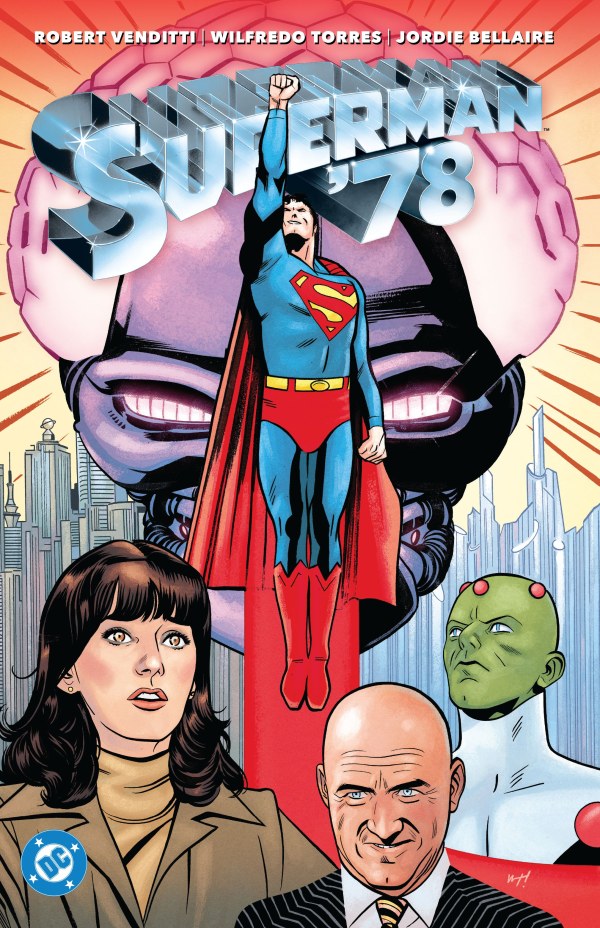
Notes: A few years ago, DC Comics finally did something that fans have wanted for a long time and officially established certain movie and TV properties of theirs as part of the DC Multiverse. In particular, the Christopher Reeve Superman and Michael Keaton Batman movies (the first two of each, anyway) were canonized as happening on the same world, designated Earth-789, And to inaugurate them properly, each of them got a miniseries, then a later follow-up. Today, I reread the two Superman books that continued the adventures of the Richard Donner Superman world.
The first Superman ‘78, written by Robert Venditti with art by Wilfredo Torres, shows us this very familiar world’s first face-off against Brainiac. The computer intelligence from Colu comes to Earth, surprised to find a Kryptonian there. Overwhelmed by this new threat, Superman turns to an unlikely ally – the recently-paroled from prison criminal mastermind Lex Luthor. But Superman winds up in Brainiac’s clutches, startled to learn that before Krypton was destroyed he miniaturized its capital city, Kandor, and all the people who lived there – including Superman’s parents, Jor-El and Lara.
The sequel was called Superman ‘78: The Metal Curtain, once again written by Venditti, with Gavin Guidry handling the artwork this time. A rain of Kryptonite meteors falls in the Soviet Union, spurring on the creation of a new armored “super man” of their own. Calling himself Metallo, the Soviet villain takes on Superman publicly in an effort to demonstrate Russian superiority.
Both of these books are fantastic. Venditti has a natural feel for the world of the Donner movies, capturing the characters and their voices perfectly. Luthor has a line, for instance, where he casually insults Superman by saying “all of your muscles are BELOW the neck” – a quick way to call his hated foe stupid (which, of course, is not true) that absolutely rings with the voice of the late Gene Hackman. Luthor, Perry White, Lois Lane, and especially Clark Kent feel absolutely true to the actors who performed the roles and the lines that were written for them.
The stories, too, feel very indicative of the time period, especially the second one. Venditti plays on Cold War fears in a way that feels very natural for the era, but ends it in a way that maintains optimism and positivity that is so inherent in Superman. In truth, considering how it plays on some of the same themes, it’s a far better way of dealing with the politics of the 80s than Superman IV: The Quest For Peace.

I also greatly appreciate the way these two miniseries expanded the world of the movies by bringing in other characters who hadn’t appeared. Brainiac and Metallo, of course, the two main villains fall into this category, but we also get the Superman ‘78 versions of Steve Lombard and Sam Lane, plus hints that indicate that this universe may not be without a Hawkman or a Green Lantern. The two Batman ‘89 miniseries (once they were finally over, after a series of egregious delays) did the same thing, adding new versions of the Scarecrow and Harley Quinn, plus versions of Robin, Two-Face, and Batgirl that fit better with this world than the versions from the Joel Schumaker films, which I think we can all be grateful to see excised from canon. Now that the second Batman ‘89 is FINALLY finished, I’m really hoping that DC will follow this up with an Earth-789 Justice League, bringing in the John Wesley Shipp version of the Flash and the Lynda Carter Wonder Woman (neither of which have been confirmed as taking place on Earth-789 yet, but there’s nothing saying that they DON’T take place on this Earth either).
Wilfredo Torres’ artwork is good, but the first Superman ‘78 was originally created as a digital comic before being collected in print, and for some reason DC at the time insisted on a digital format that basically makes each digital “page” a half-page of a print comic. It’s not too bothersome when you read it on a tablet, but reading it in print gives you a gutter cutting right through the center of every page, which eventually becomes very noticeable and distracting. Guidry had no such limitation for the second volume and the artwork is much stronger for it. Both artists do a good job of capturing the likenesses of the actors who played the characters, and largely escape the problem that some artists fall into by trying to make them SO photorealistic that the images feel static and lifeless. That’s never a problem here.
I’ll probably rewatch the other continuation of the Donner Universe, Superman Returns, some time in the next couple of weeks before the new movie drops. As much as I like that movie, though, these two books have totally supplanted it in my mind as the definitive continuation of the Reeve/Donner Superman, with all the wonder and glory that I’ve loved since I was a kid. I sincerely hope that we haven’t seen the last of this world.
Comic Book: New Gods Vol. 5 #6 (Guest Appearance)
Mon. June 23
Graphic Novel: Superman: Red and Blue (Collects issues #1-6)

Notes: Today we’re tackling Superman: Red and Blue. This series has its genesis way back in 1996, when DC did a Batman: Black and White anthology series, in which a wealth of different writers and artists did short Batman stories without color. The idea has been resurrected several times, as backup stories in other comics and in subsequent miniseries, but oddly enough it took until 2021 before it occurred to them to try it with a different character. In Superman: Red and Blue, assorted teams told bite-sized Superman stories in which red and blue are usually the only colors used (although a few stories broke that rule, usually with skin tones). That was followed up by Wonder Woman: Black and Gold, then Marvel got in the game with their assorted Black, White, and Blood series, which to me kind of miss the point, as the DC books all focus creators telling personal stories indicating what the character means to them, whereas the Marvel books are kind of just an excuse to ramp up the violence.
But I digress.
Red and Blue is an anthology, and like all anthologies, the quality of the stories therein can vary greatly. Some of them are good, some of them are adequate, some of them are darn near masterpieces. And it can turn on a dime from one page to another, and different readers will invariably find themselves attached to different stories. I’m not going to go through a recap of the dozens of stories in this book, but some of my personal favorites include:
- “Human Colors,” written by Dan Watters with art by Dani. A 5th dimensional imp of the Mxyzptlk variety not only steals color from Earth, but erases the concept from the collective minds of the human race. The story is an interesting meditation on color and what color means, with plenty of that symbolism crap we English teachers like so much.
- “Into the Ghost Zone” by Chuck Brown and Denys Cowan, a story of Val-Zod, the Superman of DC’s Earth-2 series. He’s a good character that doesn’t turn up too often these days, and I really should try to find some of his greatest hits to cover in this blog before the year runs out.
- “My Best Friend Superman” by Stephanie Phillips and Marley Zarconne. A little girl comes to school for show-and-tell with a memento of an encounter she had with Superman…but kids are kids, and not everyone believes her.
- “Deadline” by Jesse J. Holland and Lauren Braga, has Bruce Wayne and Diana Prince at lunch making a wager over whether Clark is going to join them on time or if, as always seems to be the case, something is going to come up.
- “A Man Most Saved” by Brandon Thomas and Berat Pekmezci shows a man whose life has been saved by Superman a dozen times – and who finally has a chance to return the favor.
- “Namrepus” by Mark Waid and Audrey Mok is a charming story about Superman turning the tables on Mxyzptlk.
- “Prospect of Tomorrow” by Francis Manapul is a beautiful tale of Superman and Bizarro on the surface of Mars.
- “Generations” by Daniel Warren Johnson, a quiet story about the love of a parent and how that love can save the world.
- “Hissy Fit” by Sophie Campbell, who is now the writer/artist of the new Supergirl ongoing series. This wordless tale is a funny little yarn about Streaky.
And this is me trying to be abbreviated. I may have a problem.
The stories in this book cover pretty much every era of Superman. We have modern stories, stories of the Golden Age, stories of alternate continuities. (John Ridley kicks the series off with a sequel to a story from World’s Finest Comics from 1970.) And while the stories cover a lot of territory and a lot of perspectives, there are certain themes that turn up over and over again. Many writers choose to focus on Clark Kent’s early years – stories about his life in Smallville, or how Jonathan and Martha taught him valuable lessons. Other stories are about the relationships other characters have with him – Jimmy Olsen, Bizarro, various stories told from the perspective of people he’s saved. These stories, the best stories in this book, all seem to center around Superman as an ideal – a symbol of hope. But it’s not just a matter of seeing some far-off symbol in the sky and trusting that he’ll be there to stop Brainiac’s invasion or something. He’s there and present and a part of these people’s lives. He visits a little girl who’s being picked on because she believes in him. He has lunch with the guy whose life he’s saved over and over. Jimmy reveals that his favorite picture he’s ever taken of Superman isn’t one of the iconic shots of him in battle, but an accidental picture he took of the two of them together when he realized he’d forgotten to take the lens cap off his camera.
There are very few big action scenes in this book. The stories, for the most part, are small and personal. And that’s what makes them special. If you want a story of the adventures of Superman, those stories are plentiful and easy to find. But the stories that really explain what makes Superman such a powerful symbol aren’t always the ones that get the attention. This book puts those kinds of stories in the spotlight for once, and I love it for that.
Tues., June 24
Graphic Novels: Superman: Lost (Collects issues #1-10), Superman: Lois and Clark (Collects issues #1-8), Superman: The Final Days of Superman (Collects Superman Vol. 3 #51-52, Action Comics Vol. 2 #51-52, Batman/Superman #31-32, Superman/Wonder Woman #28-29), Superman Reborn (Collects Action Comics #973-976, Superman Vol. 4 #18-19)
Notes: My week of Superman-On-the-Go concludes today as the family hops a plane in Pittsburgh to wing our way back home to Louisiana. I’m writing this at the Atlanta airport during our layover, after having read two graphic novels on the flight from PA, with the intention of reading more on our final leg, assuming nothing goes wrong.
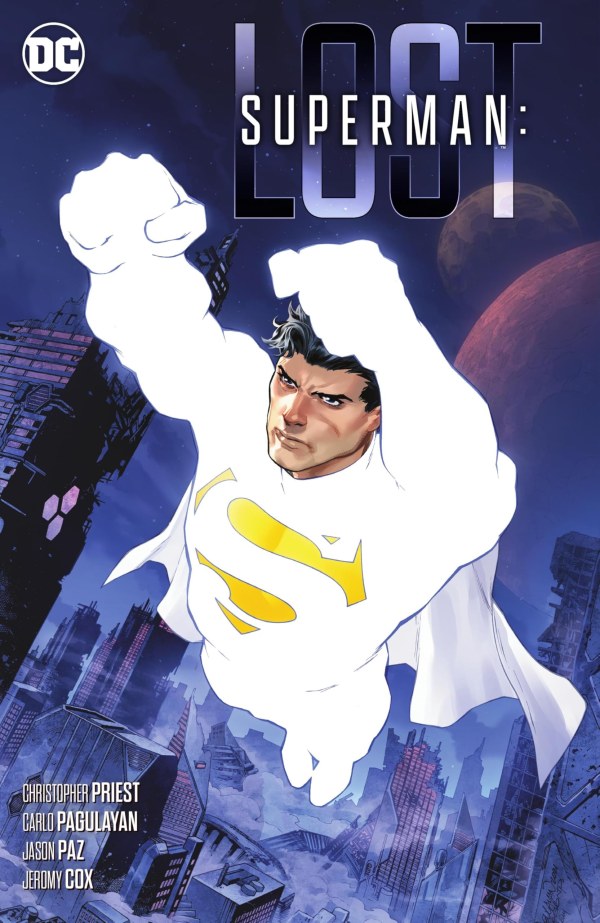
First was Superman: Lost, written by Christopher Priest with art by Carlo Pagulayan, (with a few pages assisted by others). In this story, Clark is called away from Lois for a routine mission with the Justice League, but when he returns home only a few hours later, he reveals that for him, twenty years have passed. Lois is shocked, of course, and her shock quickly turns to anger as she realizes how two decades in outer space have affected her husband.
The ten issues of this series bounce back and forth between Superman’s experiences during his twenty-year exile and how he deals with his return. After being pulled into a time anomaly, Superman finds himself in an unfamiliar galaxy on a world with a sun turning red and rapidly draining his powers. This part of the story is taken up with his efforts to get home, as well as his experiences on a world he calls “Newark,” and the people there he is forced to abandon. Back home, Superman struggles to cope with the trauma of his experiences in space, especially the notion that there is a world out there on the brink of destruction that he promised to help – and failed.
Priest loosely based this story on The Odyssey, with Superman in the role of the storm-tossed Odysseus and Lois playing one righteously angry Penelope. We also get a sort of Circe in the form of an alien woman whose name translates most closely to “Hope.” Hope has a Green Lantern ring, but no connection to the Corps or way to contact the Guardians, and it becomes clear early on that she would much rather keep Clark with her than help him find his way home.
For the most part, I really enjoy this story. Priest finds a way to prey on Superman’s greatest fear: that of being unable to help people. Every second he’s in space there are people on Earth he’s unable to save. Once he finds his way home, he is broken with the knowledge that he abandoned the people of Newark. The two desires cannot be reconciled, and while I’m no expert on the idea, the Earthbound side of this story (of which Lois is unabashedly the protagonist) comes across as an exploration of Post Traumatic Stress Disorder. Lois’s husband returned to her only hours after he left, but he isn’t her husband anymore, and the pain he’s going through takes its toll on her as well.
The book is great, but I have to be frank: I’m not really a fan of the ending. I feel like it’s kind of a cop-out, and I can’t explain why without spoiling it, so consider this your warning. If you don’t want to know how the story ends, skip the next two paragraphs.
Superman makes it home by finding a time warp in which he encounters an older version of himself. This older Superman, he is told, is one of several possible versions of himself who suffered from his Odyssey (sorry, but I couldn’t think of another word), but he eventually finds his way to the familiar planet Rann and returns to Earth with the help of Adam Strange. But after months of being unable to reacclimate to Earth, he returns to the time anomaly and realizes that the older version of himself he encountered before wasn’t a possible future, it was HIM in the future. He returns himself to Lois by altering the timestream and helping an earlier version of himself find his way home in just days rather than decades, then takes his place as the guardian of the anomaly.
In the end, Lois gets “her” Clark back, which is all well and good, but what this ultimately means is that the Superman we have at the end of the story didn’t experience any of the ordeals that we’ve read about. It’s not quite as bad as changing the timeline so that it never happened, but it’s CLOSE, and as an ending trope, I NEVER like that. It makes it feel as though everything we’ve just experienced is somehow inconsequential. I’m not saying I have a better way to restore the status quo, mind you – Priest is a great writer and I wouldn’t presume to tell him how to do his job. But it does leave me with a slightly sour taste in my mouth.

On the other hand, I had no problem enjoying the second book I read from beginning to end: Superman: Lois and Clark. The New 52 era, as I’ve mentioned before, erased Lois and Clark’s marriage from continuity. But in 2015, the Convergence event revealed that every version of the DCU still existed in the multiverse, including the pre-Flashpoint version I grew up reading and loving, and THAT Lois and Clark were still married and, moreover, had a child. At the end of Convergence, they wound up on the New 52 Earth, and decided to adopt new identities (Lois and Clark White) and raise their son Jonathan in privacy.
Of course, neither Lois nor Clark is content just sitting on the sidelines. Since the world already has a Superman, Clark goes out and averts disasters, saves lives, and captures villains in secret, even going so far as to build a new Fortress, complete with prison. Lois, meanwhile, using the not-at-all suspicious pseudonym “Author X,” resumes her career as an investigative journalist, and is on the verge of publishing a new book exposing Intergang to the world as the story begins in earnest.
Dan Jurgens, who writes this one, bounces back and forth between scenes from the lives of the “White” family and their current-day exploits, which include Clark fearing that this new universe’s version of Hank Henshaw is about to go down the path of the version he remembers, the one who became the horrific Cyborg Superman. Intergang, meanwhile, is trying to track down Author X, putting both Lois and Jon in danger – a danger that may only be survivable if a certain little boy finds the steel inside himself.
Although he was born during Convergence, this is the book that really established Jon Kent as a character, beginning my love for him that didn’t end until Bendis Bendised the character in a way that only Bendis can Bendis. But my goodness, it was glorious to see Lois and Clark as young parents, to watch Jonathan discover his father’s secret, and ESPECIALLY the scenes where Jon discovers his own powers. It’s no surprise that I enjoyed Dan Jurgens’ work so much – he’s been one of my favorite Superman creators for over 30 years now, and this was basically the Lois and Clark whose stories he guided for so long brought back to us. It’s a fun, exciting book that feels so authentic to the characters in a way that other books of the era did not. I loved it so much that when we sat down to wait for our flight in Atlanta, I hopped on the wifi and downloaded two more books that sort of complete a trilogy with this one, the stories that restored “my” Lois and Clark permanently: The Final Days of Superman and Superman Reborn, which I’ll read in the air between Atlanta and New Orleans.

Now I’m back home in Louisiana, finishing this write-up and feeling really satisfied with the whole thing. The Final Days of Superman is one of the reasons why. DC Comics decided to end the New 52 era in favor of Rebirth, which was more of a soft reboot than the previous one. There weren’t any massive, sweeping continuity changes (yet), but rather an attempt to reset parts of the DCU that had gotten away from them back to what had worked before. In the case of the Superman books, that meant clearing the slate. The New 52 version of Superman, at this point, had gone through a period of losing his powers, regaining his powers, and then having his identity go public. In this story, which ran through the last two issues of each of the New 52-era Superman titles (Superman, Action Comics, Superman/Wonder Woman and Batman/Superman), Clark finds out he’s dying due to a combination of various traumas he recently encountered. With no hope for a cure, he decides to make peace with his friends and try to prepare a new champion for Earth. He asks Batman to help him track down the missing Supergirl and reluctantly tells Wonder Woman – who he’s dating at this point, remember – that he’s dying. At the same time, a strange man with unfathomable energy powers begins to cut a swath through Metropolis, claiming to be Superman.
Without getting too much into the plot, this was a surprisingly good story, and it frankly had the deck stacked against it. Unlike the classic Death of Superman storyline, by the time this one started, DC Rebirth had already been announced. We all knew that the old-school Clark – the one from the Lois and Clark miniseries – was going to be the main Superman again. But that in no way stopped writer Peter J. Tomasi from giving the character a proper send-off. Superman is resigned to his fate, but doesn’t use that as an excuse to quit, fighting every step of the way. The fact that the story crossed over into the books he shared with Batman and Wonder Woman works in its favor as well, making them a major part of his “final days.” The climactic battle includes not only the two of them, but also Supergirl, Steel, Lois Lane, Lana Lang, and the pre-Flashpoint Superman, all of them at his side. And his death is quite surprising as well – not falling inert as Superman did after fighting Doomsday, but exploding into energy and turning into dust.
What was that all about?
We didn’t have to wait too long to find out.

Superman Reborn came almost a year into the Rebirth era, but concluded the mystery of New 52 Superman’s death. What had happened in the interim, to summarize: New 52 Lois Lane and Lana Lang both mysteriously gained Superwoman powers, but Lois burned out and died, with the pre-Flashpoint Lois stepping into her role at the Daily Planet. At the same time, everyone forgot Superman’s identity, and a new, totally-human Clark Kent appeared at the Planet offices. Reborn (by Tomasi and Jurgens, writers of the two previous books) ties it all up in a neat little bow as we discover that much of this was due to the machinations of our old friend Mr. Mxyzptlk. Mxy was, in fact, the human Clark, and had taken the role (even going so far as to erase his own memories) in order to “help out” after Superman died. He even wiped the knowledge of his dual identity from the world in a way that fit neatly.
The best thing, though, was the revelation that, despite what he’d been led to believe, this Earth was the one that Pre-Flashpoint Lois and Clark were from, and that a mysterious force had split them each into two. The New 52 Lois and Clark, both of whom are “dead,” are fused with the Pre-Flashpoint versions, reassembling their history and their place in the universe. Jurgens and Tomasi found a satisfying way to completely reinsert the old Lois and Clark without utterly dismissing what the creators of the New 52 era had done with the character. It was all “true,” it was all “real,” and it was really OUR Lois and Clark all along. It’s not often that you find a way to have your cake and eat it too, but they nailed it.
It was a long week, friends – not just for Superman, but also for me. But I’m home and happy now, and with our family trip for this summer behind me, there’s only one thing left on my radar. That’s right: the 40th anniversary of Back to the Future!
Nah, you know what I’m talking about. July 11th is right around the corner, and I’ve got so much more to watch and read and talk to you about before then.
Blake M. Petit is a writer, teacher, and dad from Ama, Louisiana. His most recent writing project is the superhero adventure series Other People’s Heroes: Little Stars, volume one of which is now available on Amazon. You can subscribe to his newsletter by clicking right here. You can join in the Kryptonian Konversation every day in the Year of Superman Facebook Group!
 Blake M. Petit