Arthur Hardy is retiring. For the majority of you reading this, that probably doesn’t mean anything, but if you’re from the New Orleans area that name has resonance and the knowledge that his era is coming to an end probably makes you a little bit sad. Hardy is a local historian who, for nearly 50 years, has also been the publisher of an annual Mardi Gras guide that has become a significant part of local culture. This annual magazine contains not only the routes and schedules for virtually every Mardi Gras parade in Southern Louisiana (and for those of you who’ve never done Mardi Gras, I’m telling you now, there’s probably a lot more of them than you think), but also detailed, entertaining, and informative writing about the history and traditions of carnival and the various Krewes, significant figures, and all the collected effluvia that comes with the season. Much like every kid in America used to sit around waiting for the annual Sears Christmas Catalog every year, here in New Orleans it just wasn’t carnival season until Hardy’s Mardi Gras guide showed up on the magazine racks in local gas stations and drugstores.
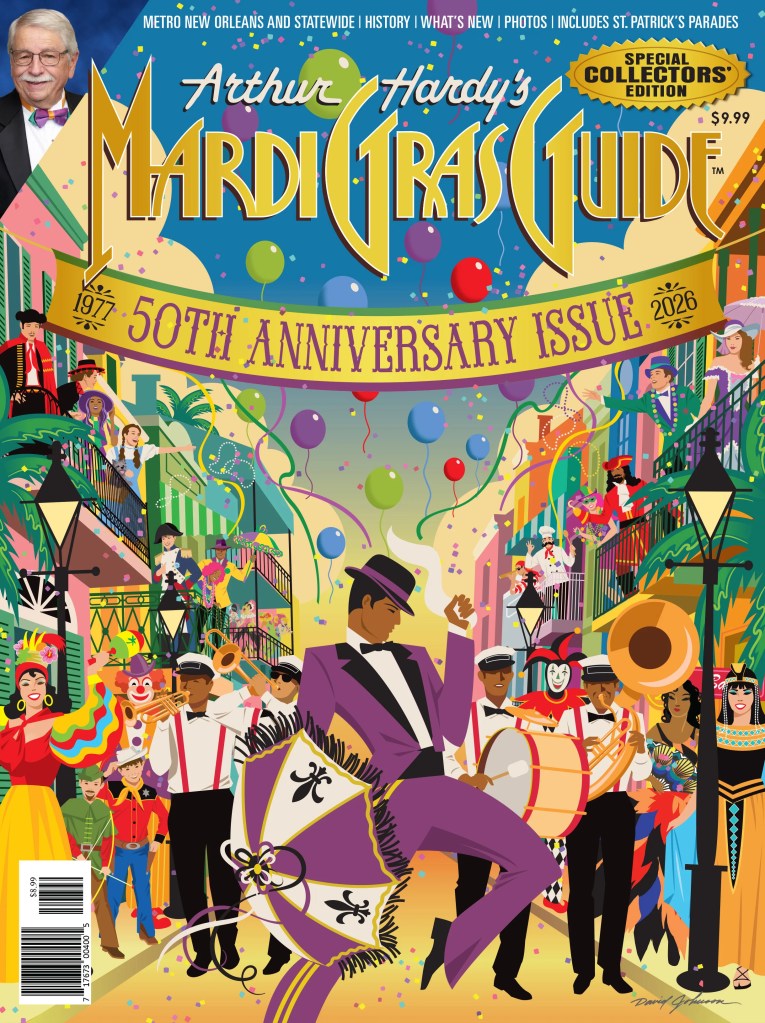
I bring up Arthur Hardy because in his final season as the unofficial king of carnival, the local PBS station has produced a documentary about his life and career, Arthur Hardy: Our Mardi Gras Guide. If you’re in New Orleans and want to watch it, it’s going to air on Jan. 22 at 7:30 pm on WYES, with additional airings to follow, and it will also stream on the app. I’m excited to learn about this, not only because Hardy is a figure of great cultural importance to the most quintessentially New Orleans tradition there is, but also because I’m a sucker for a good documentary.
I love movies in general, of course, it would be impossible to read more than a couple of pages on this blog without that becoming abundantly clear, but there’s something about a great documentary that can be really compelling. To tell a true story and tell it accurately is an art form that even the greatest narrative filmmaker can struggle to pull off. Finding those bits and pieces of a person’s life and assembling them into a story isn’t easy, especially if the subject of said documentary is someone that the audience will likely already be familiar with. What can you say about this person that hasn’t already been said? What can you show that the fans don’t already know? And can you take the stuff they do know and present it in a way that’s both compelling and entertaining?
In the case of these biographical documentaries, I particularly find myself drawn to those that focus on somebody I’m already a fan of. Films like Jim Henson: Idea Man , Music By John Williams, or To Hell and Back: The Kane Hodder Story all scratch that itch for me, giving me a deeper dive into the life of someone whose work I adore. That said, it’s not a requirement that I’m already intimately familiar with the subject of a documentary for me to enjoy it. For example, I’ve never been a wrestling fan and I knew virtually nothing about the life of Andre the Giant outside of his participation in The Princess Bride, but the Jason Hehir-directed Andre the Giant documentary moved me to tears. I’m just more LIKELY to watch a documentary if it’s a subject I’m already familiar with.
So in anticipation of the Arthur Hardy documentary, today in Geek Punditry I’m going to talk about five of my favorite “biodocs” from the last decade or so, five films that delve into the life of an artist or actor whose work is meaningful to me and why the documentaries land so well.

Super/Man: The Christopher Reeve Story (2024)
This is one of those moments where nobody who is even remotely familiar with my taste will find anything surprising. I am, of course, the biggest Superman fan that most people who meet me will ever meet, and I even made one of my (sadly) all-too-rare movie theater visits these days to catch this documentary during its limited Fathom Events screening when it premiered. I was born near the end of the 70s, reared in the 80s, and in my heart of hearts, Christopher Reeve is and always will be MY Superman.
The movie tells two stories in parallel: the story of Christopher Reeve from the beginning of his life through the growth of his career and his life as Superman, intercut with the story of the horseback riding accident that put him in a wheelchair and the unexpected direction his life took after that. The directors (Ian Bonhote and Peter Ettedgui) go back and forth between these two periods, telling their individual stories more or less chronologically but bouncing between the two every few minutes. The result is the surreal experience of watching this young man – strong, talented, and determined – juxtaposed by the person he would become at his lowest point and how he managed to crawl back from that point to become something more. The story of him portraying Superman is presented side-by-side with the story of him actually proving what a real-world Superman can be.
The movie is, as is to be expected, heartbreaking and uplifting at the same time. It’s a beautiful tale that everybody knows from the beginning will have a tragic ending. The filmmakers don’t try to portray Reeve as perfect either – they spend time (especially in his early years) putting on display his faults and some of the questionable choices of a young man who is propelled to stardom. The movie also spends a surprising amount of its runtime focusing on Reeve’s relationship with Robin Williams. It’s common knowledge that the two of them were good friends, but until watching this documentary I don’t think I ever realized just how deep that friendship was. If you aren’t crying at that point already, get ready for the moment where Glenn Close (one of many actors interviewed for the film) speculates that if Reeve hadn’t died, Robin Williams would still be with us today as well.
Hell, you might be crying right now and you haven’t even watched the movie yet.
The film is currently streaming on HBO Max, which means if you want to watch it you should probably hit “play” in the next 15 minutes before they do something else stupid and remove more content from the service that absolutely should still be there.
The Scrooge Mystery (2018)
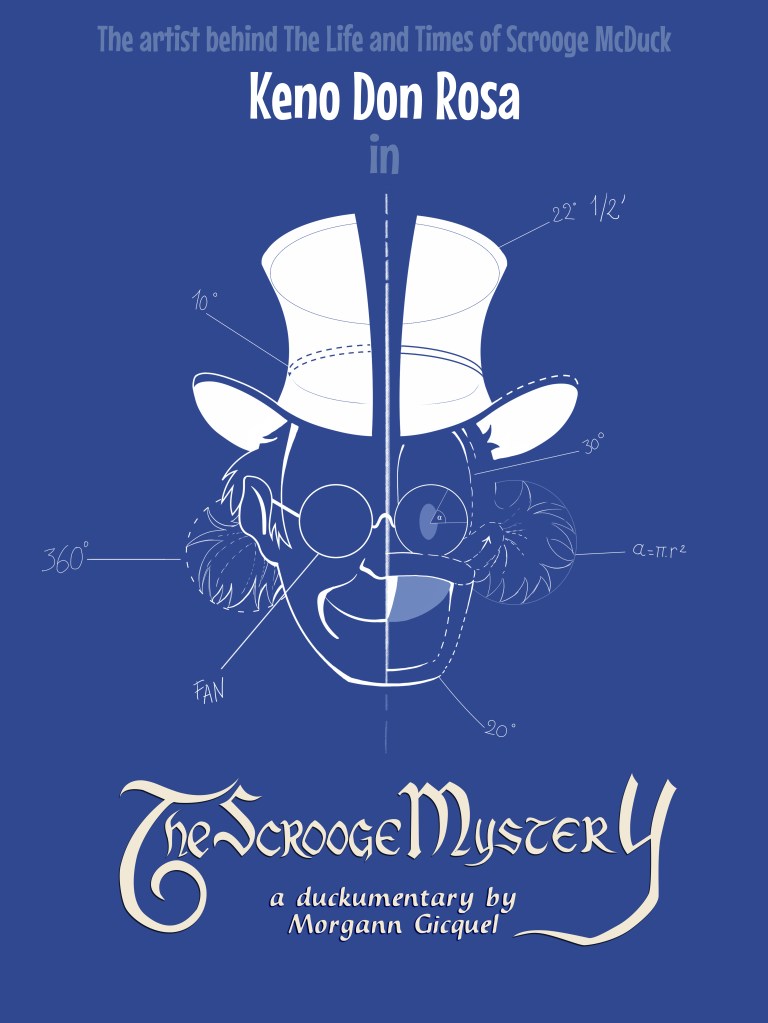
Don Rosa is one of the most globally popular comic book creators of all time, but far too many American fans have never heard his name. That’s because the bulk of his career was spent chronicling the adventures of Scrooge McDuck, his nephews, and the assorted characters that have sprung up around him in the world of Duckberg. Rosa spent decades writing and drawing stories of Scrooge and Donald Duck, and while they have been published and enjoyed here in America, they have achieved rock star status in Europe, where Disney comics are among the biggest pop culture outlets there are.
Rosa’s life and career is the focus of this documentary by filmmaker Morgann Gicquel, and through its two hours you’ll see the story of a young comic book fan who fell out of the artform and found his way back by carrying on the mantle of the great Carl Barks, Scrooge’s creator. Rosa talks candidly about his career, including his interactions with various publishers around the world, which ones treated him better than others, and his relationship with the company that actually owns the characters that he has made even more famous through works like his masterpiece The Life and Times of Scrooge McDuck.
The movie is entertaining, filling in blanks in Rosa’s life that even comic book fans (like myself) probably wouldn’t know, since the lives of cartoonists are not nearly as heavily covered by the media as those of actors and directors. As Rosa gives the filmmaker a tour of his home – including a gargantuan comic book collection that will make anyone who loves reading deeply envious – he comes across as a little awkward and eccentric, but endearing in the process. You’ll also get to see Rosa at work and feel your heart crumble a bit as he describes his deteriorating vision and how it is one of the things that caused him to retire. To look at some of the amazing, meticulously detailed artwork he’s created over the decades and know that the man whose pencils made those lines now has to practically press his face against the page in order to keep drawing is truly saddening.
I was one of the original Kickstarter backers for this movie back when it was in production, so I got a Blu-Ray copy of the film upon its release, which I was lucky enough to have Rosa to autograph last year when he came to Fan Expo New Orleans. Those of you who don’t already own the film may expect to see it on Disney+, but the odds of that happening are pretty slim. (Spoiler warning: although Rosa had good relationships with many of the publishers he worked with over the years, he makes it abundantly clear in this film that his feelings about the modern House of Mouse itself are far from kind.) Fortunately, it is currently available on several free streaming platforms, including Pluto TV, Hoopla, and Tubi. If you’re interested in Disney, comic books in general, or the marriage of the two, this is a great film.
For the Love of Spock (2016)
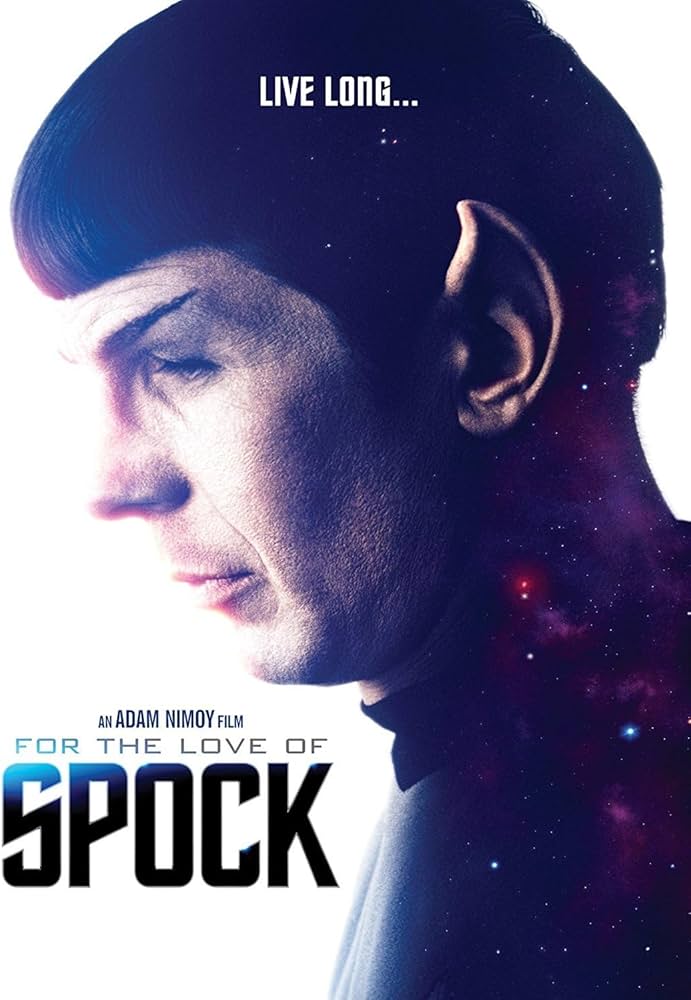
So far this list has turned out to be a chronicle of my own personal fandoms, hasn’t it? First Superman, then Scrooge McDuck, and now Star Trek. There have been a great many documentaries made about Trek over the years (one of the best movie theater experiences I ever had was watching Trekkies in a room full of like-minded nerds), but as far as films focusing on the life of a single person, I think this one is the best.
For the Love of Spock looks at the life of Leonard Nimoy and his sometimes tumultuous relationship with the character he brought to life. The film discusses those years when he tried to distance himself from the role and how he ultimately came around to embrace it. These are things that Trek fans, of course, are already intimately aware of. What makes this movie special is its director: Leonard Nimoy’s son, Adam. This is a very specific subcategory of documentary – films made by the family of the subject – that I always find intriguing. Adam Nimoy, as one would expect, has a very personal and unique perspective on the life of his father and what exactly Star Trek means – not only to Leonard Nimoy himself, but to the world at large. There are a lot of people who could tell the story of Leonard Nimoy, but it is doubtful that anybody else would tell it the same way as Adam Nimoy.
Nimoy passed away in 2015, while this movie was in production, so in a way it also serves as kind of a “last word” on him and the character. At least, as much as there will ever be a “last word.” Star Trek isn’t going anywhere anytime soon, and Spock is one of the signature characters of the franchise, so this movie is never going to not be relevant. But it will always be, to quote Nimoy’s signature character, “fascinating.”
Like The Scrooge Mystery, this one is currently streaming on Pluto TV, Hoopla, and Tubi, as well as the Roku Channel.
Won’t You Be My Neighbor (2018)
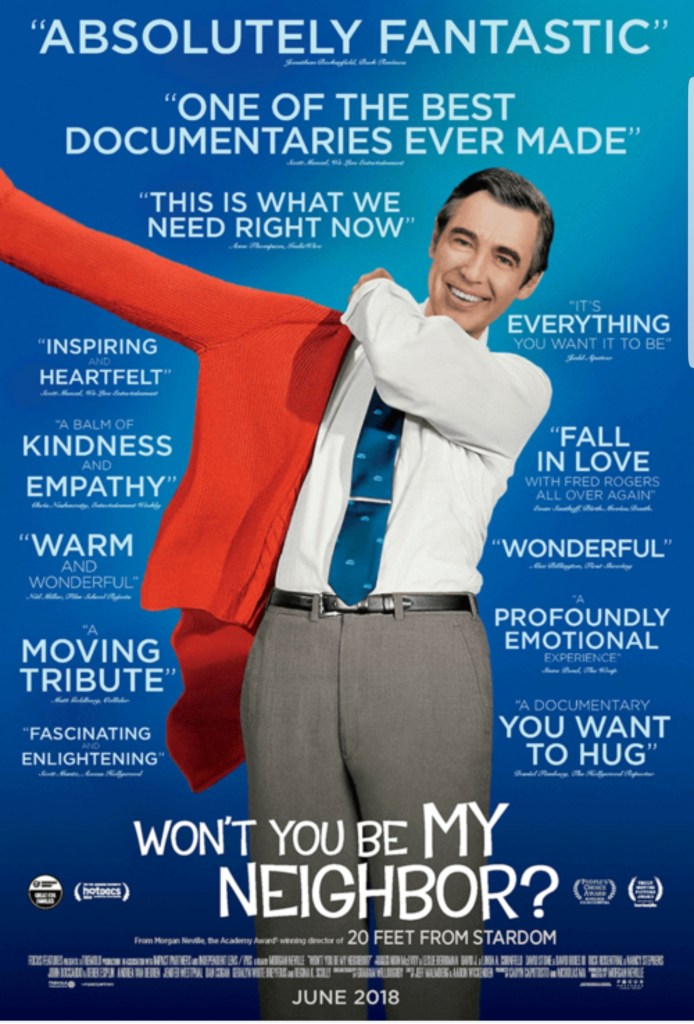
Morgan Neville directed this film about the life and career of Fred “Mister” Rogers, a man who probably helped raise most of the people who are reading this column right now. For over three decades, Mr. Rogers’ Neighborhood came into the homes of the children of America and showed us things about creativity, imagination, kindness, and life. The question someone on the outside would likely ask, then, is how much of that was an actor playing a character and how much of that was the man himself.
This film puts forth the thesis that, when it came to Mr. Rogers, ol’ brother Fred was doing very little acting. The sweet, tender, and understanding soul that entertained us in the mornings of our formative years was the same soul Fred Rogers carried with him in his day-to-day life. The movie uses interviews with actors and crew from the TV show, Rogers’ wife Joanne, and others that were touched by him over the years to paint a portrait of an intrinsically good and humble man who never wanted anything other than to show children kindness.
That said, the movie isn’t totally saccharine either. It delves into the struggles of the creating the show, those periods where the real world was too harsh and how Rogers struggled how to deal with it, and the sort of existential crises that truly good people sometimes go through. Rogers was human, and not without his doubts. Towards the end, after his retirement, there’s a segment about how he struggled when asked to come back and make a short video speaking to children after 9/11, and the pain as he tries to figure out what to say is palpable. On the other hand, whereas many movies of this nature spend time looking at the failures or vices of its subject, this movie struggles to FIND any vices to put on the screen. It is particularly telling when Joanne reports that, as Rogers’ life was coming to an end, he was worried that he hadn’t done enough good for the world he was leaving behind.
Good grief. If Mr. Rogers wasn’t good enough, what chance do ANY of us have?
But the takeaway here should be that the doubt was only in his mind, that it is only the truly good among us that would ever worry about such a thing. And I am using the adjective “good” here rather than “great” very deliberately – if you don’t understand the distinction, you need to watch more Mr. Rogers.
This one is streaming right now on Amazon Prime Video
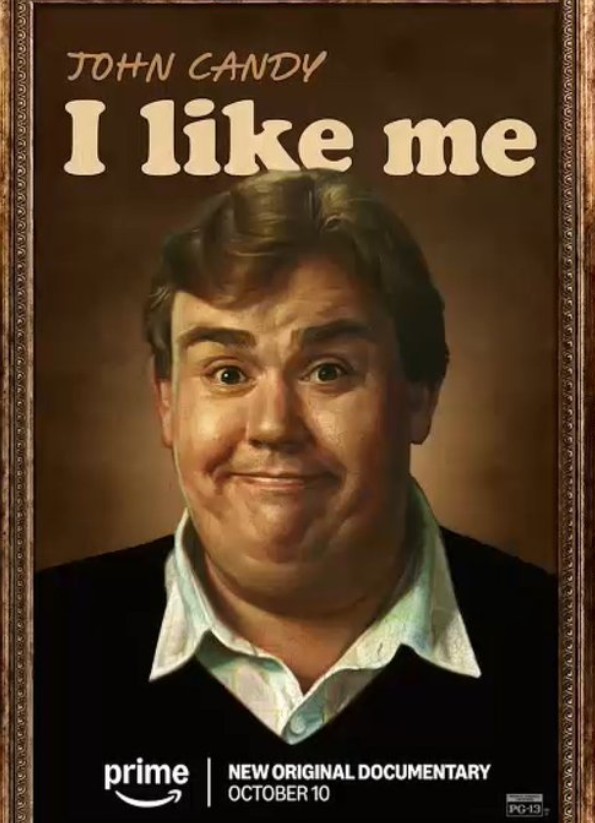
John Candy: I Like Me (2025)
The newest film in my top five came out just a few months ago. Directed by Colin Hanks, John Candy: I Like Me is a sweet dissection of the life and career of one of the funniest men of the 1980s, and to a degree, about how the world failed him. Hanks interviews Candy’s friends, co-stars, and family to give us an image of someone who was deeply kind and generous, but at the same time, wasn’t without his own demons. Hanks does his due diligence by showing those things, but it’s all through the perspective of interviews with people who obviously adore Candy and are in the business of preserving his memory.
This is a case where I don’t think there’s anything in the movie that’s particularly revelatory, but in which we dig more deeply into things we already knew. For example, Macaulay Culkin (who co-starred with him at the advanced age of eight) mentions how Candy was one of the first people who seemed to notice the toxic and abusive nature of Culkin’s father, and how he went out of his way to check in on and shield the boy on the set of their film Uncle Buck. Conan O’Brien’s remembrances of Candy came not as the host of a popular talk show, but from when he met the already-famous Candy when he was a college student, and how his interactions with the man shaped his career.
The movie is awash with interviews with the likes of Bill Murray, Catherine O’Hara, Mel Brooks, Eugene Levy, Martin Short, Steve Martin, Dan Aykroyd, and many other people who seem to be lining up to tell the world that John Candy was a beautiful, kind, and talented man. If you’ve ever been a fan of his, I don’t think there’s anything in this movie that you’ll find shocking. But by the end of it, as you wipe the tears from your eyes, you’re definitely going to find yourself wishing that we had been lucky enough to have more of him before the ride was over.
This one is a Prime Video original, so go stream it there.
As always with these “Five Favorites” columns, my choices are inherently subjective and may change at any moment. There are a dozen other documentaries I can think of that would have fit into this list, and on any given day, may have bumped one of the ones that made the cut. But I’m always interested in more. If you know of a great biodoc, particularly one about a creative type like the five I’ve listed here, drop your own suggestions in the comments. I’d love to watch another one.
Blake M. Petit is a writer, teacher, and dad from Ama, Louisiana. His most recent writing project is the superhero adventure series Other People’s Heroes: Little Stars, volume one of which is now available on Amazon. You can subscribe to his newsletter by clicking right here. He’s also started putting his LitReel videos on TikTok. He cannot fathom why his Kickstarter for a documentary about American Idol alumni William Hung keeps getting flagged and taken down.
 Blake M. Petit