Geek Punditry #143: NOW Where Do We Find Our Comics?

If you’re anything like me, you probably read my columns approximately 97 times after I post them, intent on finding typos and turns of phrase that you think could be improved upon. In fact, if you’ve ever gone back and read a column again only to notice that a word has been changed or a misplaced modifier has been re-placed, that’s probably because I caught the error after one of my meticulous re-evaluations and made the change, which for some reason my wife finds tremendously amusing. But in the course of that obsessive re-reading, you may remember that last week I discussed the news that Mad Cave Studios is going to be publishing a comic book based on the classic 80s film The Last Starfighter. I was, of course, terribly excited about this news and I couldn’t wait to order a copy from my local comic shop. But as I pondered this, something quite disturbing occurred to me. I want to order a copy…but I’m not entirely certain HOW.
Me asking the universe how the hell to order comics anymore.

The comic book market is in quite a quandary at the moment, and like most other problems in the universe, I think it’s at least partially Marvel’s fault. I’m going to give you a heavily condensed version of what’s happened to the comic market over the past 30 years or so, so buckle up. Once upon a time, there were several companies that distributed comic books to the stores of North America. Publishers had deals with multiple distributors, and comic shops and newsstands were free to pick and choose which distributors they wished to do business with. But in 1994, as part of a series of bad business decisions that eventually led to the company’s bankruptcy, Marvel Comics decided to purchase one of those distributors and begin using their own distribution company exclusively. The ONLY way to get Marvel Comics was going to be by ordering through their distributor, Heroes World. 

This understandably caused a lot of the other publishers to be concerned. Marvel was – and remains – the biggest publisher of comic books in North America, and everybody knew that all the stores would HAVE to use Heroes World to get Marvel Comics, which meant that many of these stores would start dropping the OTHER distributors, making it harder for publishers to get their comics on shelves. The other publishers, then – DC, Dark Horse, Archie, and more – realized that the last thing they wanted was to put their biggest competitor in charge of their distribution system, and they all rushed to sign exclusive deals with another distribution company, Diamond. Pretty soon, most of the other distributors frittered and died, leaving only Diamond and Heroes World, and even though Marvel was the biggest kid on the playground, they came to realize that even they were NOT bigger than every other kid on the playground put together. Furthermore, Heroes World itself didn’t have enough infrastructure to handle 100 percent of Marvel’s orders, and the company fell into chaos. By 1997 Marvel gave up on self-distribution, shut down Heroes World, and signed their own distribution deal with Diamond.

And then, for about three decades, Diamond had a virtual monopoly on comic book distribution in North America. 

Imagine this logo has a goatee and a little mustache to twirl.

This was a situation that pleased nobody (except, presumably, Diamond’s shareholders), but that’s the way things were until a few years ago. The many, many problems Diamond had – such as frequent late, lost, and damaged shipments among other things – finally made some of the same publishers that made them a juggernaut jump ship and look for alternative means of distribution. Without the revenue of the big boys like DC, Marvel, and others, Diamond itself began to atrophy, and now it’s going out of business. Other distributors are beginning to rise again, and for the most part I think that’s a good thing. I sincerely believe that competition helps people – and companies – get better, and the fact that Diamond turned to crap while it had no competition to speak of is evidence of this.

However, there is one thing from the Diamond Era going  to cause real problems if it’s gone for good. Once a month, Diamond published Previews, a massive catalog that listed all of the comics, graphic novels, toys, clothes, statues, collectibles, and other paraphernalia that the distributor handled. Comic shops sold the catalog, or sometimes gave it for free to their regular customers, and those customers could then easily look through the listings of virtually every publisher to tell their shop what they wanted to order. When the other publishers started jumping ship, the bigger ones (Marvel, DC, IDW, Image) started publishing their OWN catalogs for readers to use. 

There was a time when this MEANT something, damnit.

The problem, hopefully, is becoming clear now. The Big Boys have their own catalogs. But Mad Cave – to get back to my Last Starfighter conundrum – does not. So how will we know when the new comic is available to order? How will we know when it’s scheduled to be released? If and when Diamond goes away entirely, how will we know which of the 38 different variant covers we want reserved for us? 

“Well Blake, have you ever heard of a little thing called the INTERNET?” you may be asking, if you’re the kind of person who feels like being a jerk about it. Well yeah, duh, I know about the internet. It’s this box on my computer that I use to edit my columns 194 times after I publish them. And I suppose it’s useful for other things too. If I know a book is going to be solicited soon I can keep an eye out, do searches, even set up a Google alert. But that’s for ONE comic. Are people going to be willing to do that EVERY time they hear about a new comic book they want to read? And what’s worse, what about the stuff that ISN’T made into news but  that they would be interested in, if only they knew about it? 

What I’m getting at is that this lack of unity could be a crippling blow to a lot of smaller publishers.

Of course, the smaller publishers in question ARE finding distribution. There’s a new distributor called Philbo, for example, that recently started putting out a catalog featuring a sizable number of smaller publishers, including the likes of Red 5, Abstract Studio, Antarctic Press, and Monarch Comics. (Unfortunately for The Last Starfighter, Mad Cave is not among their number, at least not yet.) And even though that physical catalog isn’t necessarily showing up in every shop, it’s available on their website. More good news.

You guys just don’t know how badly I wish I’d been present at the marketing meeting when they chose “Philviews” as the name of their catalog.

The bad news is that if we want a system where readers can find EVERYTHING that’s available, it doesn’t exist anymore. That puts much more of the burden on the potential customer to actively try to stay aware, which also increases the burden on the publishers to find ways to MAKE the customer aware. We’ve built a system where readers will have to fight to stay abreast of virtually every publisher and every distributor and seek them out once a month if they’re to have any chance of finding what they’re looking for. Promotion has always been a challenge for small publishers, and this is only going to make it more difficult. 

So what’s the solution? As much as the Diamond monolith hurt comics, I think having a one-stop location for solicitations was beneficial to most publishers, and I think we need that back. There’s a proposal that I wish somebody would take up. Not me, mind you, because I don’t have the time or the technical know-how to build a resource of the type I’m about to suggest, but if anybody else sees this idea and decides to run with it, all I ask is that you tell me when it’s ready.

I think we need a resource that collects the solicitations of all the distributors that service the comic shops of North America. One website, maybe even one app, that breaks these things down so that we can browse and search everything easily. It could, perhaps, be organized by publisher, with links to each distributor that particular publisher works with. Readers and retailers could set alerts for new solicitations featuring their favorite publishers, creators, or IPs. And, of course, customers could read through all the solicits and, at a click, build a list of the books and assorted merch they wish to order that month, which could then be provided to their local comic shop. I know that there have been efforts in the past to build an app that customers could use to send their orders to their shop, but to the best of my knowledge there hasn’t been one that’s as comprehensive or successful as what I’m proposing – certainly not one that has the widespread coverage that the former Previews catalog had. 

I think readers and retailers alike would probably welcome such a system, although as I said, I wouldn’t have the slightest idea how to go about creating such a thing. But if you do, give it a shot.

And if you DO know of an app that’s already doing something similar to what I’m suggesting, for Heaven’s sake, let me know about that, too. This is a problem in desperate need of a solution. 

Of course, this only applies to people who read PHYSICAL comics. Digital comics are a whole different animal with a whole different set of problems. But there are – fortunately – people seeking a solution to that one.

We’ll talk about that next week.

Blake M. Petit is a writer, teacher, and dad from Ama, Louisiana. His most recent writing project is the superhero adventure series Other People’s Heroes: Little Stars, volume one of which is now available on Amazon. You can subscribe to his newsletter by clicking right here. He’s also started putting his LitReel videos on TikTok. He lives for the day when he can set an app to alert him to new Captain Carrot merchandise. 
Geek Punditry #142: Three Wishes Presents 80s Reboots

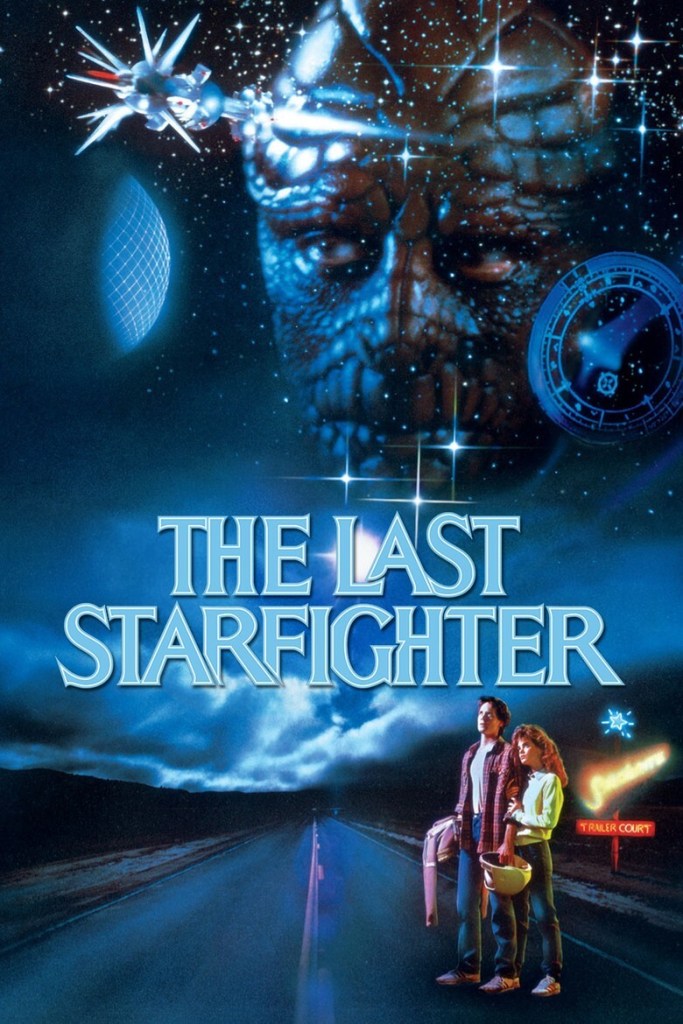
This week the world of pop culture was totally rocked by the news that one of the greatest underrated movies of the 80s is FINALLY getting a sequel. Director Nick Castle’s 1984 science fiction epic The Last Starfighter is being revisited, after over four decades, in a new comic book series by Mad Cave Studios and the planet absolutely REJOICED. 

Well it rocked MY world, anyway.

I don’t give a damn what you’ve been told, THIS is what Epic actually looks like.

I loved The Last Starfighter growing up. If you’ve never seen it, here’s the short version: teenager Alex Rogan (Lance Guest) is addicted to a video game – a cabinet video game, not one of them newfangled home consoles – and keeps playing it until he shatters the record. That night, he’s visited by an alien called Centauri (Robert Preston) who tells him that the game is actually a secret test, and Alex has been recruited to join the real StarLeague in its battle against “Xur and the Ko-Dan Armada.” In fact, for a lot of people my age, just SAYING the phrase “Xur and the Ko-Dan Armada” activates something inside of us similar to saying “mitochondria is the powerhouse of the cell.”

There were lots of movies in this era trying to ride the coattails of Star Wars, and this is one of my favorites. It’s been adapted before – there was a novelization, a Marvel comic book adaptation, and even a stage musical – but despite being pretty well loved by its fan base, there was never a sequel and the story has never continued until now. Original screen writer Jonathan Betuel is working with writers Deric A. Hughes and Benjamin Raab as well as artist Willi Roberts on this new series, which Beutel hints is the beginning of a plan to tell larger stories to expand the universe of the film. And I, for one, couldn’t be happier about it. Honestly, it couldn’t happen to a better franchise.

That said, just because this is the perfect franchise to relaunch as a comic book, that doesn’t mean there aren’t others. Mad Cave has taken the forefront on this in recent years, with reboots of Speed Racer, Dick Tracy, and Defenders of the Earth, as well as individual Defenders characters such as Flash Gordon and the Phantom. And Dynamite Publishing has stepped up to the plate with more “sophisticated” reboots of old cartoons like Thundercats, Silverhawks, Space Ghost, and Captain Planet. It’s not really surprising that writers and artists who grew up on these franchises want to resurrect them in comic book form and put their own spin on them. That said, even with the avalanche of classic stuff we’ve gotten in the last few years, there are still a few that haven’t been touched.

Yet.

So today, in a “Three Wishes” special, I’m going to propose three franchises that – to the best of my knowledge – have never had a sequel or reboot of any kind since their original run ended. And this was harder than it sounds – I thought about nearly a dozen different movies and TV shows that I discarded when I checked and found out that there HAD been a comic book or TV reboot that had escaped my notice. But I’m pretty sure that, for the three I’m about to talk about, any continuation of the original story exists only in the imagination of fans everywhere. Here are three 80s IPs that I would love to see get a reboot or sequel as a comic book. 

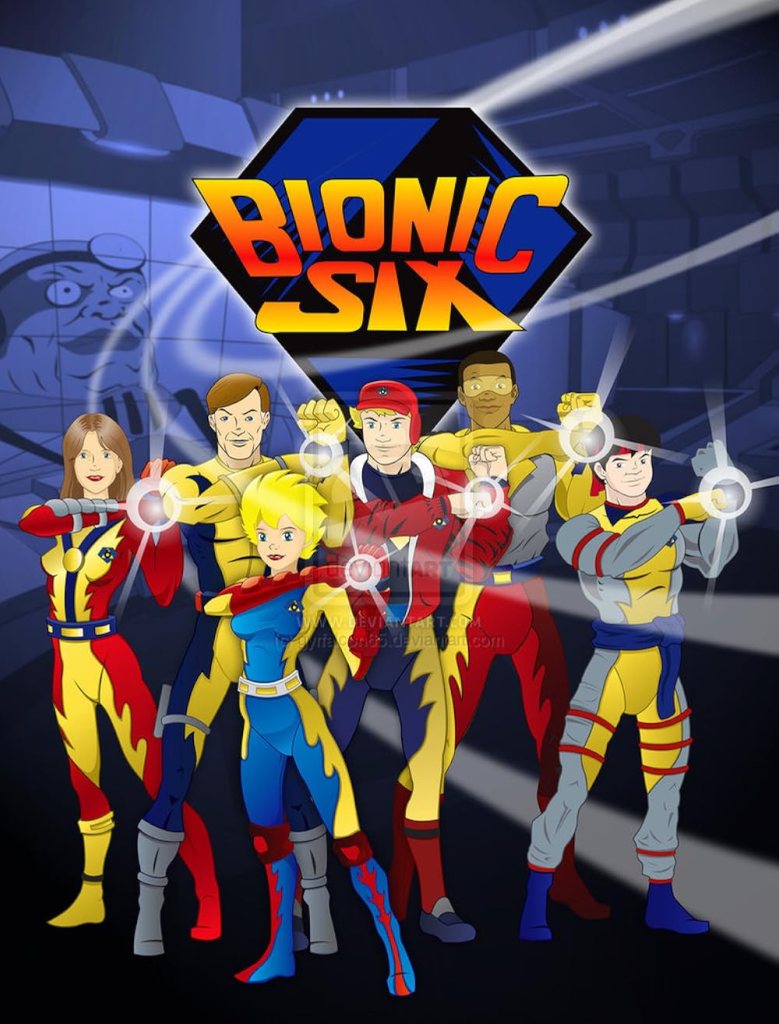
Bionic Six

Although Bionic Six had only one season in 1987, this was in the day when a season of a syndicated show ran for 65 episodes, and the reruns could be broadcast for ages. I remember distinctly that our local station showed it fairly early in the morning, and I would watch this cartoon every day when I was getting ready for school, which is probably why I have such fond memories of it. In the “near future,” test pilot Jack Bennett is given super powers through a series experimental of bionic implants and acts as a superhero and secret agent, Bionic-1. But when an avalanche on a family vacation buries his entire family (his wife, son, daughter, and two foster sons) with an object giving off bizarre radiation, the professor who gave him his bionics decides that the only way to save his family is to bionicize the whole batch of ‘em. Professor Sharp becomes the handler/science guy for the team as they fight the supervillain Scarab (who also happens to be Sharp’s brother) and his minions. 

I watched this show faithfully every morning, loved the heroes, loved hating the villains, and I even became a fan of some of the side-characters like the Bandroids (a robot rock band) and pair of villains called Perceptor and Kaleidoscope who did a heel-face turn and joined the good guys. There was a line of action figures in the same scale as the G.I. Joe toys I loved, and even better, the figures had transparent plastic and die-cast metal pieces for the bionics, objectively making them some of the coolest figures of the era. And although it didn’t become as well-known as the likes of Silverhawks or Captain Planet, I think the concept has just as much potential for continuation.

Were I to relaunch the book, here’s what I would do: I would pick up the story several years later. Professor Sharp has passed away, Scarab has long since been defeated, and the Bionic Six are in retirement. Eric (aka Sport-1) has settled into a low-level job, bitter that his dreams of becoming a professional athlete were quashed because he realized he could never compete without the secret of his bionics becoming public. His sister Meg (Rock-1) has found happiness as a music teacher. Their adopted brother Bunji (Karate-1) has retreated to a monastery somewhere, embracing a life of peace and solitude. And J.D. (IQ) has spun his remarkable intelligence into an enormous business empire. Things are mostly okay. 

Until Scarab returns, kidnapping Eric’s daughter, Meg’s son, and J.D.’s twin girls. The siblings reunite, fetching Bunji from his retreat, and head out to rescue the kids. When they arrive, though, they find that Scarab has begun experimenting on them. To save them, J.D. finds himself forced to repeat Professor Sharp’s experiments and bionicize the kids, who never knew that their family was the legendary Bionic Six. After a few near-tragedies caused by their inexperience, Eric and Bunji agree to train them in the use of their powers, with J.D. providing financial backing and support. Although he and Meg decline to return to active duty, they agree to help out if the situation demands it, but now Eric, Bunji, and the four kids are the new Bionic Six. Bunji tries to teach them a more peaceful, spiritual approach, while Eric is desperate to prove himself, causing some nice little interpersonal conflict amidst the family in their new adventures. 

Call me, Mad Cave.

Galaxy High School

The next sci-fi cartoon of the 80s I would give another shot is Galaxy High School. Like Bionic Six, this show only lasted one season. Unlike Bionic Six, though, it was a Saturday morning cartoon, and in its one season it only turned out 13 episodes. I was pretty stunned when I discovered that – I have memories of watching this cartoon that I could have SWORN lasted for YEARS. Reruns are a powerful thing, I guess. Anyway, the show was created by future blockbuster director Chris Columbus (who you may know as the guy who masterfully helmed the methodical torture of Joe Pesci and Daniel stern in Home Alone, among many other films).

In the show, two teenagers from Earth are accepted to the intergalactic “Galaxy High School.” Doyle Cleverlobe is a popular all-star jock, while Aimee Brighttower is an all-star in academics, but shy and unpopular. When they arrive at a school full of aliens, however, the script is flipped: the aliens all adore the brilliant Aimee, while Doyle finds himself immediately rubbing many of them the wrong way and turning into an outcast. The core of the show was the friendship (and teased romance) between the two of them and the adventures they had with their wild cast of alien friends.

If I were to continue this series, I’d pick up right where it left off in Galaxy High School: Sophomore Year. Doyle isn’t quite the outcast he was before, mostly because the others tolerate his presence since he’s friends with Aimee. He’s still eager to prove himself, but he’s a bit less of a dork about it. Aimee, meanwhile, will have a bit of a crisis when a new student rolls into school – a computer intelligence from another planet that’s even smarter than her. 

In addition to continuing the teen romcom with the two of them, I would want to explore the hell out of this universe. The aliens in the show were really wild and creative (Gilda Gossip’s species had several mouths that never stopped talking, Booey Bubblehead had a literal bubble for a head, and the school bully Beef is a giant chicken), but we didn’t see much of their individual cultures in the show’s mere 13 episodes. I would do stories with field trips to other planets, or comics that take place during school breaks and holidays where Aimee and Doyle go with their friends back to their homeworlds for a visit, really getting a chance to explore. Galaxy High School only hinted at a larger, hilarious sci-fi universe that was kind of a kid-friendly version of Douglas Adams. I want to see more of that.

Condorman

The last 80s character I would love to see again comes from the little-known 1981 Disney movie Condorman. Woody Wilkins (Phantom of the Opera star Michael Crawford) is a comic book writer and artist who insists on testing out his fictional hero’s stunts in real life, such as building a Condorman hang glider and trying to fly from the Eiffel Tower. Woody gets caught up in a document exchange with a woman who turns out to be a Soviet spy who falls in love with him and decides to defect to the United States. The movie is kind of half superhero/half James Bond spoof with a lot of awesome gadgets and vehicles that sincerely appealed to the kid I was when I watched it over and over again. To this day, I think about the scene where Woody and Natalia are in what looks like an old truck that, with the flip of a switch, turns into the cool-as-hell Condormobile. It was pretty atypical of Disney, even for the time, but it was fun.

If I was bringing back Condorman, what would I do? Glad you asked, my friend. I’d keep the 80s time frame, because once you hit the 90s spy movies just weren’t what they used to be. I’d reintroduce the characters a year or two after the film, where Woody and Natalia have become a real spy team (mostly due to her doing her best to keep him from getting killed) and send them on another quest, this time to find an American asset who has been captured behind the Iron Curtain. After several adventures, we’d finally rescue the American, only to hit us with the big reveal: the American in question turns out to be Cliff Secord, a pilot in his 60s who once saved the United States wearing the jetpack and helmet of the Rocketeer.

Yeah, that’s right. I would use Condorman as a stealth entryway into a Disney Cinematic Universe. I would also bring in things like Tron, with those characters battling Russian programs. Woody and Natalia would find the remains of the Black Pearl from Pirates of the Caribbean. Tech would be built by Professor Ned Brainard (The Absent-Minded Professor) and Dr. Wayne Szalinski (Honey, I Shrunk the Kids). They would face off against the Sanderson Sisters from Hocus Pocus at Halloween, meet The Santa Clause’s Scott Calvin at Christmas! And I’m not sure when or how, but at some point SOMEBODY would have to Escape to Witch Mountain.

Look, crazier things have happened.

Blake M. Petit is a writer, teacher, and dad from Ama, Louisiana. His most recent writing project is the superhero adventure series Other People’s Heroes: Little Stars, volume one of which is now available on Amazon. You can subscribe to his newsletter by clicking right here. He’s also started putting his LitReel videos on TikTok. He may have gotten a little carried away on the Disney Universe thing, but he has no regrets.