Geek Punditry #127: Revival Vs. Reboot

As you no doubt have heard by now, at least partially because I’ve mentioned it here two weeks in a row, Disney’s brought back its fantastic animated series Phineas and Ferb, and the first part of the new season dropped on Disney+ today. It may surprise you, then, to know that as of this writing, I haven’t watched it yet. You see, I have to wait for my wife to get home from work, because as any competent marriage therapist would tell you, holding off on watching coveted television programming until your spouse is available to watch it with you is a love language. 

But I don’t want to talk about Phineas and Ferb specifically today, I want to talk about what it represents: the TV Revival. That concept of bringing back old TV shows from the dead. It’s not a new idea, of course. The history of television is littered with shows that were cancelled and then came back after some time. Game shows like Jeopardy, Supermarket Sweep, and Let’s Make a Deal are all better remembered from their second incarnation than the original, for example. The 80s gave us resurrected versions of old sitcoms like Leave it to Beaver and The Munsters. And for a time, it was popular to continue a TV series by creating an animated version, as they did with the likes of Star Trek, Happy Days, or Gilligan’s Island. 

It’s like time stood still.

But in recent years, where studio executives are more hesitant than ever to take a chance on a new idea, it seems as though the revival has become a fundamental part of the television landscape. Is anybody going to want to watch a comedy about the goings-on at a municipal courthouse? Maybe not…unless we remind them that they already DID a few decades ago by making that show a new version of Night Court. Go ahead and look at any current network TV schedule (or spin through the offerings of a streaming service) and you’ll be astonished at just how much of the current episodic landscape is stuffed to the gills with shows that have relaunched older ones. I don’t object to revivals as a concept, but like anything else in the sphere of entertainment, I fear that we’ve reached a point of saturation where they’ve become a crutch rather than a tool.

That said, that doesn’t mean resurrecting an old show can’t be successful. But what, exactly, does it take to make a good one? The creators of Phineas and Ferb released a video to social media a few days ago, ramping up to the new season, where they very explicitly chanted “It’s not a reboot – it’s a REVIVAL!” It’s an important distinction, although I think there are a lot of people who don’t understand the difference. A reboot, to me, means starting a franchise over from scratch. You take the concepts, the tropes, the characters, but begin from square one, as though there had never been a previous iteration. Wednesday is a good example of this – there’s nothing that specifically ties it to the canon of any of the previous versions of the Addams Family – not the original TV series, the animated series, the 90s film series, the more recent animated films, the Broadway musical, or the original comic strips that the whole franchise was based on. It’s using the pieces of the older shows, but it is inherently its own thing. So yeah, reboots CAN be good.

In general, though, I prefer a revival – you’re not eliminating the previous canon. You’re not starting over. You’re just picking up where you left off. The original Phineas and Ferb took place across one epic summer. The new season – which they wisely promote as “Season Five” rather than “Season One” of a new series – starts one year later, at the beginning of the NEXT epic summer. Night Court returned to the same courtroom after an absence of many years, bringing back one returning character and one new character who was the child of an original. You get a revival more often when the old cast – or at least some of them – is still active and wants to return. We’ll be getting that with the new version of King of the Hill, coming to Hulu soon, and creator Bill Lawrence has announced a Scrubs revival where – although nobody has officially signed on yet – many original cast members have expressed interest in returning.

If this picture doesn’t make you vaguely uncomfortable, you’re too young.

Sometimes it can be difficult to tell whether a show is a revival or a reboot at first. In 2005, when the BBC brought back its defunct science fiction series Doctor Who, it wasn’t immediately clear if the old shows were in canon or not. And as part of the Doctor’s whole deal is that he occasionally regenerates into a new body, you couldn’t even make up your mind based on the fact that there were no returning cast members. Slowly, references to the old series started to appear, and eventually it was made explicit that this was a continuation – not only of the old series, but it even included the American co-produced TV movie that had tried (and failed) to revive the franchise a decade before. The show has been reinvented many times since then, and the DNA of the franchise makes it fairly easy to do so, but every version has thankfully been a revival rather than a reboot.

This straight-up wouldn’t work with a revival of The Andy Griffith Show.

The reason I prefer revivals is because a reboot has a tendency to dismiss the original. It takes place in a universe where the original didn’t happen and doesn’t matter, and that makes no sense to me. From the perspective of a studio, the only advantage a revival or reboot has over a brand-new property is the built-in audience, so why would you START by declaring that the thing the audience loved doesn’t exist anymore? Paul Feig and the cast of the 2016 Ghostbusters reboot will claim until their dying breath that their film failed at the box office because the fans were put off by the all-female cast, but any conversation with a true fan of the franchise will make it pretty clear the reason it was rejected was because fans wanted a revival. And when they got a true revival a few years later with Ghostbusters: Afterlife (with a main character that was a preteen girl), fans were delighted. 

That’s not to say that a reboot CAN’T be good. When J.J. Abrams was given the task of rebooting Star Trek for the big screen, he wisely took the track of making it an alternate universe. A villain traveled back in time and created an alternate reality in which these new films would take place. The original timeline still existed, and was still available when the TV revivals began a few years later. No matter what you think of the Abrams Star Trek films, most fans will agree that the alternate timeline was a good idea. Similarly J. Michael Straczynksi has been trying for years to get a reboot of his seminal science fiction series Babylon 5 off the ground. In 2023, he even gave us an animated film, Babylon 5: The Road Home, which ended in a way that – similar to the Star Trek example – opened up a different, alternate timeline in which the reboot could take place.

The classic sci-fi trope of “Eh, close enough.”

Of course, it’s easier to do that with a science fiction series than it would be a drama or a sitcom. If somebody wanted to do a reboot of The Golden Girls, for example, it’s unlikely that they would start with a CGI Betty White causing some sort of temporal rift that would take us to a different dimension where the girls all moved in together in 2025 rather than 1985. But that also begs the question: would you really WANT a reboot where they cast people other than Bea Arthur, Rue McClanahan, Estelle Getty, and Betty White anyway?

That’s another thing that revivals have over reboots: the continuity of keeping a cast that the fans love. One of the reasons a Babylon 5 reboot is more likely than a revival is because so many members of that cast, in the years since the show ended, have sadly passed away at a surprisingly young age. Over the course of that show’s five years, 17 actors were series regulars for at least one season. Seven of them are no longer with us, and several others have retired from acting altogether. It would be anathema to many of us to see Bruce Boxleitner’s John Sheridan return with somebody other than Mira Furlan playing his wife, Delenn. In a new timeline, though, with new actors in BOTH roles…that feels a little easier to swallow.

Some shows, however, simply should never be brought back, for many of these same reasons. Any ideas of a Friends revival, for example, went up in smoke with the sad death of Matthew Perry. Any revival, even a one-off movie – would necessitate either recasting Chandler Bing (which fans will tell you is basically impossible) or writing him out of the show by having him either die or leave his wife and children, which would be depressing as hell. As for a reboot…poll the fans. Ask if anybody would want a different cast, and I’m pretty sure you’ll hear a resounding NO.

It would be impossible to recreate this and a mistake to even try.

It’s less of a problem if the actor is still alive and has chosen not to return, or if they’ve fallen from grace in the years since the show’s airing and neither the studio nor the fans want them back. Tom Welling and Michael Rosenbaum, two of the stars of Smallville, occasionally make noise about wanting to bring back the show as an animated series or through animated movies. Many fans would welcome this, although it is unlikely that anyone will bat an eye if Chloe Sullivan is recast. (I’m not gonna get into it – if you don’t know why this would be necessary, just Google it.) In a less problematic example, former child actor Erik Per Sullivan has retired from the business, so when a revival of Malcolm in the Middle was announced, nobody was really angry that they decided to recast his character of Dewey.  

In general, though, revivals are more interesting to me – I want to see a continuation of the original series. There was chatter for years about a reboot of Buffy the Vampire Slayer, but Sarah Michelle Gellar wasn’t interested. Therefore, I wasn’t interested. Then they announced that they’d landed on a pitch that Gellar IS interested in, a pitch in which she is mentoring a new character entirely rather than trying to have somebody else play Buffy Summers… well, at this point, I’m willing to listen.

(There’s an irony here in that Gellar’s series was, in fact, a reboot of a mediocre movie starring Kristy Swanson as Buffy. But again, it just goes to prove to you that reboots CAN work sometimes.)

There’s an adorable video of when Gellar called Ryan Kiera Armstrong and told her that she got the part, because REAL slayers go by three names.

For some shows, the question of reboot vs revival is academic, of course. It doesn’t matter for nonscripted series like game shows, or shows that dramatize real events such as Unsolved Mysteries. You may miss Robert Stack, but that doesn’t mean the show can’t be made without him. Similarly, anthology series like The Twilight Zone are by their very nature immune to this. That show has been brought back several times over the years, and as there was never a regular cast or set of characters to follow, it’s a non-issue as long as the show has the flavor of the original – in this case, that of a sci-fi show with horror elements and, usually, some sort of twist ending. 

The biggest problem comes when a resurrected series – whether it’s a reboot or revival – lacks that taste of the original. Every so often you’ll hear about a new version of a show where they proudly announce that none of the current creators are fans of the original. This is a position so bafflingly stupid that I’m surprised it’s not mandated by federal law. While it’s true that some fans can be a bit too close to the property, a bit too reverent, if NOBODY involved in the creation of a show has any passion for it, the odds of creating something that satisfies the existing fan base drops so dramatically as to be almost nonexistent. 

“Well, we’re not making this show for the OLD fans,” some of these studio executives say. “We’re trying to appeal to NEW fans.”

Bullshit. If all that matters is acquiring a new audience, there’s no reason to bring back an old property. By bringing back a classic IP you are inherently announcing a desire to get the attention of an existing fan base, and by creating something you know will dissatisfy them, all you’re doing is trying to court controversy, as if that somehow inoculates you against the need to make a good show. Sometimes I think they’re COUNTING on that. They know their reboot is weak, so they rile up the fans against it, giving them a handy shield of claiming that these narrow-minded old fuddy-duddies just don’t want something new, thereby preventing them from having to admit that they made something that sucks.

Ultimately, I try to judge any show – revival, reboot, or brand-new idea – on its own merits. But when you’re reaching back to a classic series, you need to really think about what made that show successful in the first place before you even THINK about giving it a try.

Blake M. Petit is a writer, teacher, and dad from Ama, Louisiana. His most recent writing project is the superhero adventure series Other People’s Heroes: Little Stars, volume one of which is now available on Amazon. You can subscribe to his newsletter by clicking right here. He’s also started putting his LitReel videos on TikTok. Someday, he swears, somebody is gonna do a revival of Cop Rock, but they’re gonna do it RIGHT this time.

Geek Punditry #102: Making a Merrython

When the holidays roll around, one thing you can be certain of is that I’ll be queuing up all of the great Christmas movies and specials. And I don’t just mean the obvious ones like It’s a Wonderful Life, National Lampoon’s Christmas Vacation, the Rankin/Bass catalogue, or the legendary yuletide adventures of Garfield and Charlie Brown. I also have a great affection for Christmas episodes of old TV shows. As I’ve written before, there was a time when I would get home from school and watch reruns of old sitcoms for hours on end, allowing me to have a far greater memory of the contents of said television programs than I ever will less pertinent information, such as my wife’s telephone number. 

In this age of streaming, it seems like it would be simplicity itself to cultivate a massive playlist of holiday-themed episodes to start your own Christmas marathon…but alas, that does not seem to be the case. Although most streaming services have a “holiday” category, none of them seem to have what I really want, namely an option to just create my own playlist of episodes and set it to run on shuffle. I want an easily-curated selection of shows for a Yuletide Marathon – a Merrython, if you will. 

But if Netflix, Hulu, and Paramount Plus won’t let me do it, damn them, I’ll do it myself. Plex is a great system, an app that I can use to arrange and watch all of the movies and TV shows I’ve got saved on my own server, complete with my own cultivated playlists and a shuffle option. Now the catch here is that you actually have to provide the video yourself, which obviously limits things a little bit…but I started collecting DVDs almost a quarter of a century ago. I’ve got a LOT of TV shows on disc, and I’ve got lots of compilation DVDs of Christmas episodes from assorted TV series that I can throw into the mix as well.

While I certainly encourage everybody to create their own playlists, today I’m going to share with you a part of MINE. Here are just a few of my favorite Christmas-themed episodes of my favorite sitcoms, many of them episodes that are sitting in my Plex queue waiting to be watched. On Plex I set the playlist to shuffle, so I never know what’s coming up next…but for you guys, I’ll put them in chronological order.

The Honeymooners: “Twas the Night Before Christmas.” Season 1, episode 13, original air date Dec. 24, 1955.

My love for The Honeymooners knows no bounds. The only sitcom duo better than the pairing of Jackie Gleason and Art Carney is the pairing of Jackie Gleason and Audrey Meadows. Ralph Kramden’s antics with both his best friend and his wife are legendary, and have become part of the DNA of television comedy. While I can’t be certain that the Kramdens are the FIRST example of a sitcom schlub married to a woman who’s way out of his league, it’s definitely the trope codifier.

This legendary episode sees Ralph struggling to get a present for his wife, Alice, on the day before Christmas. Ralph is berating himself for having previously squandered money that he could have used to get her something nice on a bowling ball for himself (and before anybody says “Simpsons did it!” I must remind you that this show was some three decades before the adventures of Homer and Marge). As is always the case, Ralph ropes his sidekick Ed Norton into a variety of short-lived schemes to try to get the money or get a present for Alice, each of which is thwarted in a delightfully goofy fashion. In the end, the story works out to a sort of one-sided but utterly heartfelt variation of “The Gift of the Magi,” one that I never get tired of watching this time of year. Audrey Meadows was an absolute treasure, and this episode shows that as well as any.

I Love Lucy: “The I Love Lucy Christmas Show.” Season 6, episode 27, original air date Dec. 24, 1956

In this episode, the Ricardos and Mertzes are spending Christmas Eve together, struggling with decorating the tree and talking about how wonderful it was to have a child – Little Ricky – with whom to celebrate the holidays. I’ve mentioned before what an innovative show I Love Lucy was, on top of just being one of the funniest shows in television history, but this episode in particular has some historical significance. When Lucille Ball was pregnant in real life, they incorporated her pregnancy into the show. Those episodes proved to be overwhelmingly popular, and they wanted to milk a little of that juice again, so they used this episode to showcase the characters remembering the adventures they had surrounding Little Ricky’s birth. You see, not only did Lucy and Desi invent the rerun, but this Christmas episode marks the first clip show in television history.

These days, a lot of people consider clip shows tedious and wasteful, a cheap way to squeeze out an extra episode without spending a lot of money actually filming it, and in this day of shorter seasons the practice is almost extinct. But seventy years ago it was a chance for people to re-watch segments they loved, because there was no other option.

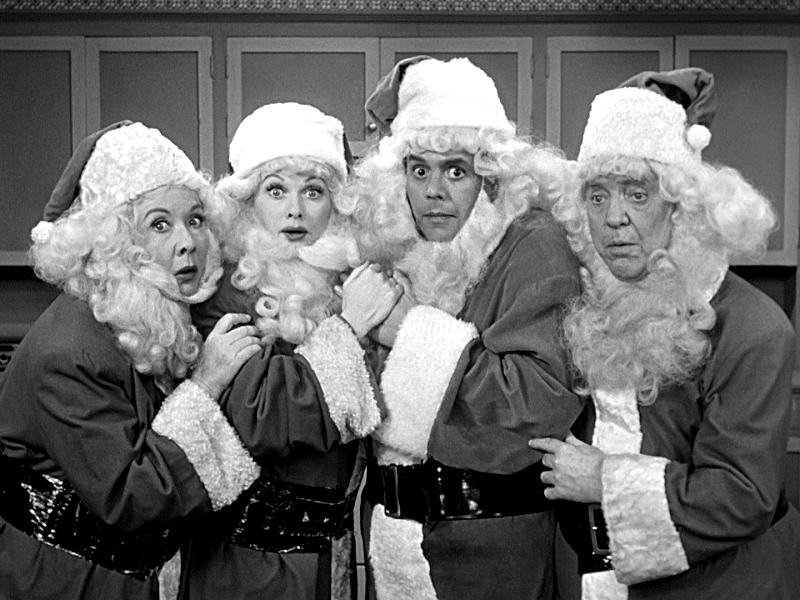
The show didn’t only recycle the clips, though, but also a gag at the end when all four adults (Lucy, Ricky, Fred, and Ethel) each independently decide to dress as Santa Claus to surprise Little Ricky. They wind up getting into a slapstick chase in the living room, during which a fifth Santa appears. As they remove each other’s beards trying to determine who is who, the superfluous St. Nick grins and vanishes before their eyes. They had first used this gag at the end of a season one episode, “Drafted,” in a tag that had nothing to do with the episode itself, and had shown it again in subsequent Christmases. This “remake” made a lot more sense, given the episode it was used to conclude. 

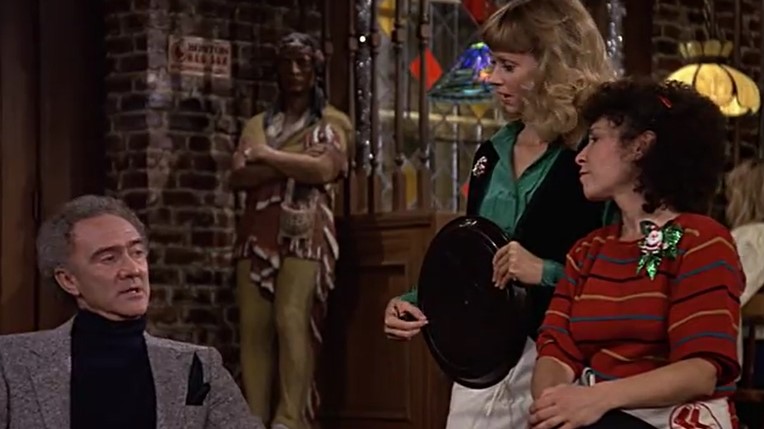
Cheers: “The Spy Who Came in For a Cold One.” Season 1, Episode 12, original air date Dec. 16, 1982.

Cheers did a few Christmas episodes over its 11-year run, but none of them cling to my mind better than this one from the first season. This was, of course, a period where the show was still kind of trying to find its identity. It was still predominantly a romantic comedy, focusing on Sam and Diane’s relationship, but even at this point the ensemble piece it would eventually become was starting to shine through.

In this episode, a stranger shows up for a drink at the bar around Christmas and “accidentally” lets it slip to the patrons that he is – drumroll please – a spy. Diane, ever the pragmatist, meets his claim with the expected skepticism, but most of the rest of the gang plays along with it, plying the stranger for stories of his exciting lifestyle. When Diane finds a way to trap the spy in his own web, everything blows up in her face.

Aside from the date and the decorations, this isn’t an especially Christmasy story. We don’t get the usual “very valuable lesson” that so many of these episodes come with, nor is there a heartwarming moment at the end where everybody gets together for a group hug and reminds one another that friends are the real family. But I like the way it hammers down the dynamics of the group, how Diane gets a somewhat needed comeuppance about being too smart for her own good, and how it deftly establishes some of the tone and tropes that would follow the series further down the line, even after Shelley Long left the show. 

The Golden Girls: “Twas the Nightmare Before Christmas.” Season 2, episode 11, original air date Dec. 20, 1986.

It’s Christmas in Miami, and the girls are all making plans to jet off to visit their respective families in other parts of the country. Things get derailed, however, when a man dressed as Santa Claus shows up at Rose’s grief counseling center and starts taking hostages.

Hopefully, by this point, nobody needs me to tell them what a brilliant show Golden Girls was. You had a cast of four outrageously talented comedic actresses and a team of writers who were willing to push the envelope in ways that few other shows in the 1980s took a chance doing, and it has legitimately become recognized as one of the greatest TV comedies ever made. The amazing thing about this particular episode is the way it breaks down the story into three segments, any of which would have been an entire episode of a lesser sitcom. It starts with a funny scene showing the gift exchange between the girls before they leave for the holidays, which itself is ripe with comedic potential. Then we crash into the hostage situation, which seems like it would be the whole episode on its own until Sophia casually takes the gun away from the hostage-taker and berates Dorothy for not being able to tell the difference between a real gun and a fake. The final act shows the girls – now stranded in Miami and unable to make their flights – having a Christmas Eve dinner in a diner where they slowly come to the realization that they haven’t missed out on a Christmas with family after all.

This episode wraps up with some of the schmaltz that the Cheers episode was missing, and it’s just lovely. It was only the second season of the show, and while the bond between the characters was evident, this was the episode that kind of cemented how deeply the four of them all cared about one another, which (despite any friction on the set in real-life) was truly the core of the show. And of course, typical of the Golden Girls, the drippy, gooey sentiment at the end is nicely undercut by a joke from Sophia, who is one of the greatest characters in television history.  

ALF: “ALF’s Special Christmas.” Season 2, episodes 12 & 13 (two-part episode), original air date Dec. 14, 1987

Ah, is there anything that says “TV in the 80s” better than the adventures of a Muppet-esque alien living with a typical American family to the delight of audiences everywhere and – apparently – to the eternal disdain of the cast that had to work with him? From all accounts, the set of ALF was not a pleasant place to be, but this show was a favorite of mine as a kid, and I’m still on a quest to complete my run of the Marvel ALF comic books (50 regular issues, three annuals, two Christmas specials, a “spring” special, and two digests). It’s an oddly formative part of my personality.

In this two-part episode, the family leaves the Tanner home for a trip into the woods for Christmas. Willie rents a cabin for the family to stay in where ALF will be free from prying eyes, but as tends to happen, the little furball gets lost, winding up in a hospital where he’s mistaken for a doll and given to a child with a serious illness. He befriends the girl and eventually leaves, but the memory of her clings to him. Meanwhile, the Tanners find out that the man they’re renting the cabin from is giving it to them – two weeks after the death of his wife, he seems to be divesting himself of a lot of things…

This is honestly a pretty dark episode, even for a show like ALF, which frequently mixed a little darkness into its humor. (Cat buffet, anybody?) The two plotlines are about a child with a terminal illness and an old man contemplating suicide – fun for the whole family, right? But the whole thing is done with the typical ALF touch. There’s some goofy humor in it, and a dose of heart that makes the darkness a bit more bearable…and honestly, I think that’s kind of the point. The show doesn’t turn a blind eye to the bad things in the world, but does its best to show how to cope with them. That’s something I’ve always appreciated about it.

Frasier: “Frasier Grinch.” Season 3, episode 9, original air date Dec. 19, 1995

Let’s wing our way back to the Cheers Universe for this third-season episode of its successful spinoff show. The original Frasier was a brilliant series and arguably the most successful comedy spinoff of all time, but there was one thing about the adventures of Frasier Crane in Seattle that always kinda bugged me: the distance from his son. When the producers decided to give Kesley Grammar a spinoff they shipped him off to the other side of the country to do their best to resist the urge to have cameos from his former co-stars every other week, but the side effect here was that Frasier often came off as a very absentee father…ironic, as one of the best parts of this show was watching as Frasier rekindled his relationship with his own father, Martin. In this episode, Fraiser’s son Freddy is coming to Seattle to spend the holidays with his dad, and Frasier decides to shower the boy with the very thing every kid wants for Christmas: educational toys! It’s not long before Frasier realizes the enormity of his error and has to venture out to find the gifts Freddy REALLY wants for Christmas.

Like Diane in the parent show, the intelligentsia in the Crane family occasionally needed a reminder that they were not always the smartest ones in the room. This episode does a lot to help Frasier seem like a well-meaning father willing to go to great lengths to give his child a Merry Christmas (the least he could do, as he only sees the kid in one or two episodes a season). It also has some really great stuff with Martin, nailing the dynamic between Kelsey Grammar and John Mahoney. Frasier did many more Christmas episodes than Cheers, but this is my favorite.

Community: “Abed’s Uncontrollable Christmas.” Season 2, episode 11, original air date Dec. 9, 2010.

By the second season of Community, the show had firmly embraced its role of commenting on and parodying the various tropes of sitcoms, and in this episode they went one step further by parodying classic Christmas specials. The entire episode is done in stop motion animation, mimicking the old Rankin/Bass “Animagic” style, as Abed is somehow stuck seeing the world as a holiday special. With the help of Professor Duncan, Abed’s study group tries to get to the bottom of his delusion and help him see the world the way that it really is.

This is not the first sitcom to try an animated special for the holidays – Home Improvement had a memorable episode that had a segment in stop motion animation, for example. But what elevates Community is that the episode does not ONLY parody Christmas specials, but also makes a real commentary on the characters. Despite his delusions, we learn things in this episode about Abed and his family that leave deep fingerprints on the character and make him a little more understandable than he may have been in the past. The episode has one of the most bizarre explanations for “the meaning of Christmas” that I’ve ever heard, but damned if it isn’t just perfect for this show. 

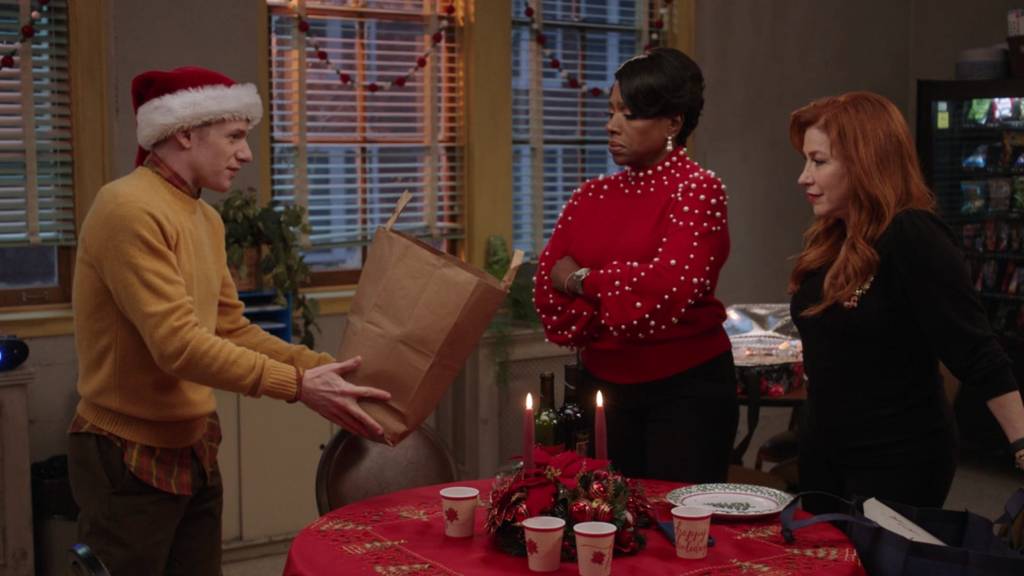
Abbott Elementary: “Holiday Hookah.” Season 2, episode 10, original air date Dec. 7, 2022.

The newest entry on my Christmas playlist comes from what I maintain is the best live-action comedy currently on television, ABC’s Abbott Elementary. After the last day of school before the winter break, young teachers Janine and Gregory (who have had your classic “will they/won’t they” thing happening for some time now) happen to run into each other at a hookah bar, each with a group of friends. Even if you’ve never seen an episode of this particular series, if you’ve watched other shows that use the same trope (see about a billion other shows) you’ll see the trajectory that this plotline is taking. There’s awkwardness, obvious attraction, confusion, and a reluctance to hook up with somebody you work with. It’s all done well, but is kind of standard stuff.

What I really like about this episode is actually the B-plot. Two of the older veteran teachers, Barbara and Melissa, have a tradition of having a Christmas dinner together after the end of the fall term each year. This year Jacob – a young teacher who fancies himself to be far cooler than he actually is – finds out about their celebration and winds up crashing their “Christmas Lounge.” The interaction between these three is wildly funny, and the relationship between Barbara (Sheryl Lee Ralph) and Melissa (Lisa Ann Walter) has become a core pillar of the show at this point. Although the two are almost diametrically opposites of one another, personality-wise, their shared experience and long relationship has them stand out as the best of friends. It’s one of the sweeter, most realistic elements of the show (I can name several pairs of teachers I know in real life that remind me very much of these two), and I think this episode showcases that extremely well.

We also get your usual “somebody has to learn a lesson” moments that frequently accompany any Christmas episode, and as befits this series, they come from unlikely sources. Ava – the crazy principal who often seems wholly unsuited for her job – comes to Janine’s rescue, while Jacob gets his head screwed on straight thanks to the timely intervention of conspiracy nut custodian Mr. Johnson. All of it together makes for a fine Christmas viewing. 

There you have it, friends, some sitcom classics to get you in the Christmas mood this year. This is, of course, not to be considered a comprehensive list. There are hundreds of shows that have done Christmas episodes, and creating a truly complete list is probably beyond my abilities as a humble Geek Pundit. Which is why I invite you to share some of your favorites here in the comments, or on whatever social media you followed to get here! What are some of the all-time great Christmas episodes that have made it to YOUR Merrython playlist?

Blake M. Petit is a writer, teacher, and dad from Ama, Louisiana. His most recent writing project is the superhero adventure series Other People’s Heroes: Little Stars, volume one of which is now available on Amazon. You can subscribe to his newsletter by clicking right here. He didn’t even get to Laverne and Shirley, The Simpsons, Bob’s Burgers, The Beverly Hillbillies, Friends, Family Ties, Night Court, Family Matters, Perfect Strangers, Mama’s Family, Seinfeld, The Office, or The Big Bang Theory. Maybe there needs to be a sequel to this column next year.