Geek Punditry #145: What Makes an Icon?

Matt Groening, creator of The Simpsons, famously said he believes one of the keys to an iconic cartoon character design is whether the character is recognizable just from their silhouette. Think about it – if you show pretty much anybody anywhere in the world the mouse-ear shape, they’ll instantly recognize Mickey Mouse. The same can be said for characters like SpongeBob Squarepants, Phineas and Ferb, Bugs Bunny, and a lot of the other cartoon all-stars. And Groening himself is legendary for utilizing this tactic with the signature nine spikes on Bart Simpson’s head or the trademark antenna on the top of Futurama’s robot character Bender Bending Rodriguez. But as insightful as this piece of wisdom is, I don’t think it applies only to cartoons. In truth, any truly great design should have elements that make it instantly recognizable. And with Halloween only three weeks away, this week I’m going to help you all make your costuming decisions by applying this reasoning to horror movie icons.

Of course, the silhouette isn’t the only thing that makes for a horror icon. There are several factors to take into consideration. The overall design, in addition to just the silhouette, needs to be memorable. The characters themselves should be interesting and unique. A character should be popular enough that people will recognize them and you won’t have to spend the entire Halloween party explaining what your costume is. And when you’re talking about Halloween costumes, above all else, they should be fun to play. So let’s go over some of the all-time great horror movie icons and see just how they stack up to this metric before you suit up for your Halloween party. 

Every one is a winner.

We’re gonna start old-school with the Universal Monsters. The great thing about these characters is that they are all INSTANTLY recognizable, even to children who were born 90 years after the movies were released and have never seen any of them. Characters like Dracula, the Frankenstein Monster, and the Invisible Man are all based on classic literature and are not Universal originals, but when you ask somebody to picture them, they invariably envision the versions popularized by Bela Lugosi, Boris Karloff, and Claude Rains, respectively. In fact, those designs are all copyrighted (at least for the next few years). If you were to make a movie about Frankenstein, you couldn’t give your monster the flattop or neck-bolts, because those are all owned by Universal Studios even though the monster himself isn’t. So these classic horrors all meet the standard of memorability and recognizability. The only caveat comes with the Mummy and the Wolfman. Although those are, of course, classic monsters, the designs here (while still amazing for the time) aren’t as immediately attributable to the Universal designs specifically. It’s very easy to mistake Im-Ho-Tep or Larry Talbot for a generic mummy or werewolf. And of course, there’s nothing wrong with being a generic werewolf. But if you want to be the Lon Chaney Jr. Wolfman specifically, you may need something like a silver wolf-headed cane as an accessory to drive the point home. 

I don’t think even a mother could love that face.

The 70s and 80s gave us our next great wave of horror movie icons, and many of them have persevered. Leatherface, the killer from Texas Chainsaw Massacre, was probably the first great iconic character of the era. He’s got an easily-identifiable apron, a mask made of human skin, and – of course – a chainsaw to whip around his intended victims. He arguably started the trend of slasher movie icons that would explode in popularity in later years. He wouldn’t necessarily be my first choice to cosplay as, however. To be blunt, his appearance is a lot scarier than some of his successors. That’s not always a deal-breaker, of course, but you have to consider your audience. I’m a dad, and if I’m going to any sort of Halloween event there’s a 99 percent chance that there will be children in attendance. Leatherface is immediately frightening in a way that even the likes of Freddy and Jason are not. Of course, if you’re going to an adults-only event or to something like a horror convention, that’s less of a concern, but you should always keep in mind who’s going to see your costume. There’s also his signature weapon to consider. Having a prop to use as part of your costume is a plus, but you have to remember that you’re going to be keeping track of the thing all night long. Do you really want to spend the entire party looking for places to put your chainsaw? 

Eh, my money is still on the Gorn.

Michael Myers from Halloween is a really simple costume – all you need is a jumpsuit and a mask. A bladed weapon is recommended, but optional. And that’s all it will take to be a character that 99 percent of people will recognize whether they’ve ever seen one of his movies or not. The question now becomes: how dedicated are you to staying in character? Michael is a silent killer. He stalks and he tracks you like an unstoppable monolith, and he never says a word. The closest thing you get to an emotion from him is when he tilts his head quizzically to look at the victim he’s just pinned to the wall. If you’re the type of costumer who enjoys not only dressing up, but also embodying the character that you’re playing (minus the actual murder part, of course), you have to be prepared to spend the evening being very restrained, slow, and deliberate with your movements. It’s not a dealbreaker, but you should definitely check if four out of five dentists recommend Michael Myers or somebody else.
“Yeah, I slept on Mario Lemieux’s couch for like six months after I got drafted…”

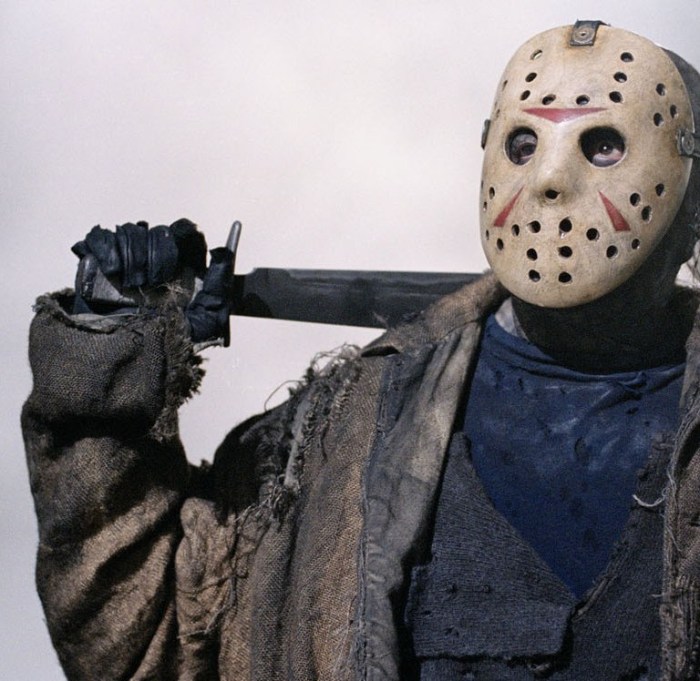
Jason Voorhees of Friday the 13th has a similar concern. Again, the costume is pretty simple – virtually any ragged, ratty slacks and shirt will be suitable as his clothing, and an easy-to-aquire mask and machete will complete the ensemble. And as far as iconic characters go, I would say that Jason is perhaps even more recognizable to the general public than Michael Myers is. Michael has a William Shatner mask that’s spray-painted white, but almost ANY hockey mask will evoke feelings of Jason. Like Michael, Jason doesn’t talk. Unlike Michael, though, he’s much faster and more brutal, expressing his emotion through his actions rather than words. It can be a fun part to play depending on how willing you are to commit.

The absolute worst dream analyst in the phone book.

The great slasher triumvirate is completed with Freddy Krueger of A Nightmare on Elm Street. Iconic, indeed. Everybody knows Freddy on sight, with his classic red-and-green sweater, fedora, and bladed glove. The tricky thing with Freddy is his face. The character is a burn victim, and although he’s so ubiquitous in pop culture that I don’t really have the same concerns about him being too scary for kids that I have with Leatherface, the burns present a different problem. You see, Freddy – unlike Jason or Michael – is a talker. His quick, dark sense of humor is integral to the character, and if you’re gonna dress up like Freddy you’re going to want to throw out bon mots all night long, with an emphasis on extra “bitch”es should you encounter anybody at the party dressed like Rick and Morty. If you wear a Freddy mask, though, that talkiness becomes more difficult and cumbersome. Wearing a rubber mask makes it more difficult for people to understand what you’re saying, and actually speaking under the mask increases the temperature beneath the rubber roughly ten degrees per “bitch.” If you live in a climate like I do in Louisiana, that ten degrees may be the difference between life or death. The alternative to a mask is makeup, which can be time-consuming, difficult to apply, and easy to mess up. Please understand, I’m not saying any of this to discourage someone from playing Freddy – I just want to point out some of the possible concerns that come with such a costume.
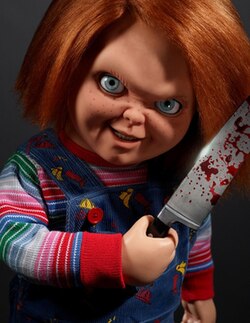
“Chuck, look, I’ve thought it over and… well… I’ve decided that, no, I do NOT want to play.”

The last great slasher icon of the 80s is probably Chucky from the Child’s Play franchise. When my son was five years old, we took him to Spirit Halloween and we toured all the costumes before finally asking him which one he wanted. He jumped in delight and exclaimed “CHUCKY JUMPSUIT!” I actually took out my phone and recorded him saying it because I knew nobody would ever believe he picked it on his own.

My wife Erin and I are both horror movie fans, but we’re not idiots – our five-year-old son had never seen any of the Child’s Play movies, and the 8-year-old he is now STILL hasn’t seen any of them. But that doesn’t matter – Chucky is one of those ubiquitous characters that even kids recognize. His bright blue overalls and multicolor sweater, a shock of red hair, and freckles across his nose all give us a nice, friendly image that kids enjoy. That is, of course, the point of the character – he’s a child’s doll that is possessed by the spirit of a serial killer, so of COURSE his image is something that would be appealing to children. However, this also leads to a problem: it’s hard to wear this costume as an adult without coming across as creepy, and not in the right way. Five-year-old Eddie was the most adorable little serial killer ever, but if a 35-year-old puts on the jumpsuit, he needs to be DARN sure he’s got a receptive audience before he shows up, or he’s going to be getting strange looks all night.
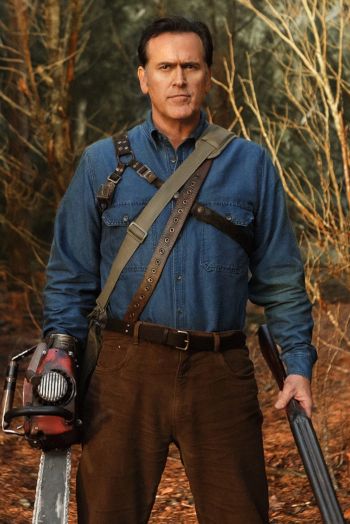
Still groovy after all these years.

Not every horror icon is a villain, of course. Ash Williams, Bruce Campbell’s hero from the Evil Dead franchise, is another solid costume choice. Most of the costume is relatively simple too – slacks, a blue shirt, a bandolier, and some blood splattered across your face. The most iconic part of Ash’s appearance, though, is the most difficult: in Evil Dead 2, Ash’s hand becomes possessed by a Deadite and he is forced to amputate it, then top off the stump with a chainsaw. Now you’ve got all the same problems as cosplaying Leatherface with the added difficulty of finding a way to keep a chainsaw attached to your hand all night. Alternatively, you could go with Ash from the third film, Army of Darkness, in which he replaces the chainsaw with a mechanical hand. It’s certainly easier than the chainsaw, but it’s FAR less iconic and less likely to be recognized. And honestly, even WITH the chainsaw, Ash doesn’t have the cultural penetration of a Freddy or a Jason. If you’re wearing the costume to a horror convention, people will know you immediately, but for the office Halloween party, be prepared to explain your costume over and over again. 

Greenscreen backdrop of an 80s New York skyline sold separately.

Of course, as far as 80s monster movie heroes go, there’s nothing more iconic than the Ghostbusters. This has become a classic choice for a Halloween costume because it ticks all the boxes: it’s simple, it’s recognizable, and it’s fun. You need two things: a jumpsuit with a Ghostbusters patch and a name tag, and a proton pack. The jumpsuit is readily available in any costume shop and easy to make if you’re so inclined. The proton pack is more difficult, but there are inflatable ones that are lightweight and are usually included with commercial costumes, or more expensive and detailed ones that you can buy or assemble yourself. It’s also a highly adaptable costume. There are the classic khaki jumpsuits from the first movie, the gray variants from Ghostbusters II, the 2016 jumpsuits, multicolored costumes from The Real Ghostbusters cartoon, the red parkas from the Frozen Empire movie, versions from other cartoons, video games, toys…the list goes on. And fans often come up with their own original variants and designs. In fact, similar to the 501st Stormtrooper Legion (a Star Wars fan collective that has expanded far beyond just cosplay to things like public appearances and charity work), there are Ghostbusters chapters all over the world of fans who enjoy this sort of thing. I don’t have the time, talent, or money to be a really good cosplayer, but I’ve always said that if I DID have the opportunity to join such a group, it would be the Louisiana Ghostbusters.
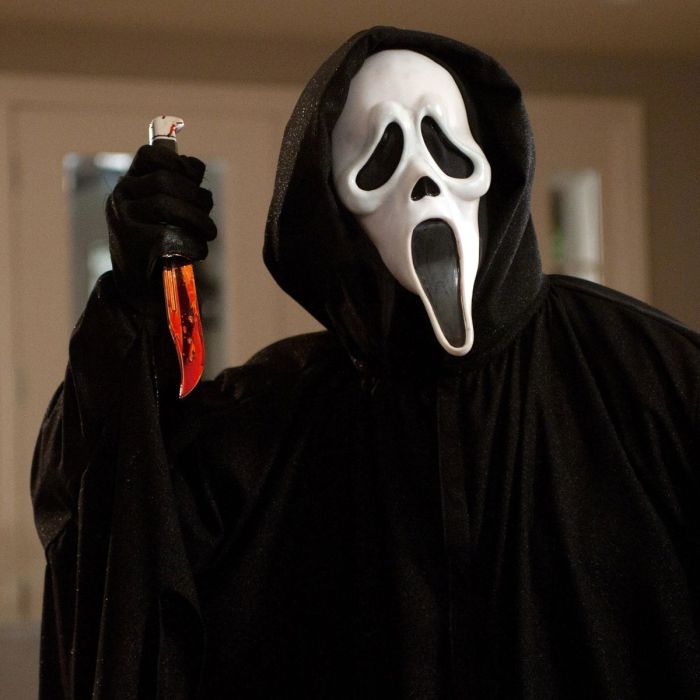
“Stabbity-Stab-Stab-Stab!” -Ghostface in Scream 7, probably.

Moving on from the 80s, let’s look at the most iconic horror character of the 90s: Ghostface. The killer from the Scream movies is unique in that the costume is the only constant – a different set of villains wears it in every movie. In fact, over the six Scream movies to date, over a dozen different characters have donned the mask to engage in murderous shenanigans. But this lack of uniformity hasn’t been an obstacle for Ghostface becoming an icon – in fact, it’s probably the STRENGTH behind it. More so than any other character, anybody can wear the Ghostface mask.

It’s also unique in that the costume itself didn’t actually originate with the movies. It was part of a line of Halloween masks produced by a company called Fun World. Director Wes Craven liked the mask, put the character in black robes, and entered into a licensing deal with Fun World that has had them rolling in cash for nearly 30 years now. Not everybody may know the name “Ghostface,” of course, but we all recognize “the guy from Scream.” A few weeks ago my sister told me that my 11-year-old nephew – who is even less likely to have seen the movies than my 5-year-old was, because my sister is NOT a horror fan – has declared his intention to be Ghostface for Halloween this year. I’m very proud as an uncle and I can’t wait to see him when my sister and I take our kids trick-or-treating together. I just wish the boys had collaborated on being movie killers in the same year, because that would have been cute. (Eddie isn’t going as a murderer this year – he wants to be Superman. This is the proudest moment of my entire life.)

Since the turn of the century there have been several efforts at creating new horror icons. And while characters like Victor Crowley of the Hatchet franchise, Trick ‘r Treat’s Sam, and Leslie Vernon of the woefully underrated Behind the Mask are great and have many of the trademarks that make for a classic icon, the only recent monsters that have reached the degree of cultural penetration that the classics enjoy are a pair of clowns. 

Nope, no nightmare fuel here.

In 2017 we got a theatrical version of Stephen King’s It. The first dramatization of It, a TV miniseries from 1990, featured Tim Curry as Pennywise the Clown, and he was magnificent. Curry in general is magnificent, of course, and his makeup as Pennywise is suitably creepy when Tim Curry is wearing it. But Bill Skarsgard from the 2017 version – let’s be honest here – has broken into the mainstream in a way that Tim Curry’s never quite did. The design of the makeup is creepier, and Skarsgard’s performance is unsettling in a more insidious way. A lot of people would recognize you if you dressed as Tim Curry’s Pennywise, but EVERYBODY recognizes the Skarsgard version. Either version is relatively easy to cosplay – you need the costume and the wig, which are readily available. Skarsgard’s makeup is more complicated, though, and if you don’t want to subject yourself to the same masking problems you’d have with Freddy, make sure that you – or someone you trust – is capable of making that transformation.

Llllllllllllllllllladies.

The most recent character to break into the echelon of horror icons, though, is probably Art the Clown of the Terrifier franchise. Art was originally played by Mike Giannelli in a series of short films and anthology segments, but Giannelli retired from acting and the role was taken over by David Howard Thornton for the first full-length Terrifier film in 2016. A malevolent clown with a stark black-and-white costume and makeup that is immediately recognizable, Art has risen to iconic status faster than anybody since Ghostface. As far as horror icons go, Art is perhaps the darkest, most brutal, most sadistic character ever to crack into the public consciousness. He’s more violent, more aggressive, and while the voiceless beast DOES still have a sense of humor, it’s so dark that it makes the likes of Freddy Krueger look like an episode of Bluey by comparison. 

Naturally, he’s become a huge favorite among horror fans. 

In terms of costuming, again, Art is relatively easy. Costumes and masks are available, and since Art doesn’t talk you don’t have to worry about being muffled. On the other hand, makeup is more expressive and less restrictive than a mask, so if you’ve got the skill (or someone with the skill to help you) I would always prefer the makeup approach. Something else to consider is that Art – while huge among horror fans – is not necessarily someone that the average person on the street will recognize, at least not YET. On the other hand, even if your audience doesn’t know ART the Clown, the general appearance of the character is more than sufficient to give the idea that this is NOT a funny clown, and the mystique is preserved.

There are plenty of other characters that we didn’t quite touch on, of course, and you should always go with whatever is comfortable and fun for you. Hopefully I’ve given you a few tools you can use to evaluate your own costume choices when you’re making the decision. You’ve got three weeks left, folks – get started.

Blake M. Petit is a writer, teacher, and dad from Ama, Louisiana. His most recent writing project is the superhero adventure series Other People’s Heroes: Little Stars, volume one of which is now available on Amazon. You can subscribe to his newsletter by clicking right here. He’s also started putting his LitReel videos on TikTok. Since Eddie is Superman this year, he’ll be wearing his own Kryptonian pajamas come Halloween night. Scary can wait. 
Geek Punditry #92: The Spectrum of Horror and Comedy

If there need be any further evidence that Hollywood executives frequently don’t have the slightest idea what they’re doing, let’s talk about the fact that they seem to be afraid of horror/comedy hybrid movies. ‘It’s confusing,” they will tell you, pulling their hair out over a movie like Behind the Mask or Happy Death Day. “We don’t know how to market this! Who is it for? Is it supposed to be a horror movie or a comedy?” Whereas the answer is obvious to anyone smarter than a movie executive, which is a very large part of the Venn Diagram, and includes virtually all horror movie fans: it’s both. Horror and comedy BELONG together. They are a natural combination, the peanut butter and chocolate in the Reese’s Peanut Butter Cups of the movie industry, and the notion that there are people who don’t understand that is maddening to me.

Admittedly, humor and terror seem to be on the two extremes of the emotional spectrum, but that’s one of the reasons they compliment each other so well. Another reason is that, structurally speaking, they are very similar to one another. Both of these styles of storytelling are built upon creating an emotional response in the audience, and both of these responses are constructed through the careful buildup and release of tension. In fact, if separated from context, it might be impossible to tell if a scene is intended to be funny or scary until the punchline hits and the audience either laughs or screams, because until that point they can be virtually identical. A funny movie can turn on a dime if an expected laugh turns into a scare, and the dread of a scary movie can be decreased to a manageable level by a well-timed joke. 

The horror/comedy combo is one of my favorites in all of storytelling, but there is a spectrum that these movies and stories exist on. Some of them lean heavier towards the comedy side, some more on the horror, and it’s fair if you prefer one side more than the other. But for the sake of discussion, this week I thought it would be useful to go over what I think of as the five levels on the horror/comedy spectrum and give some examples of each. We’ll start on the more comedy-heavy side.

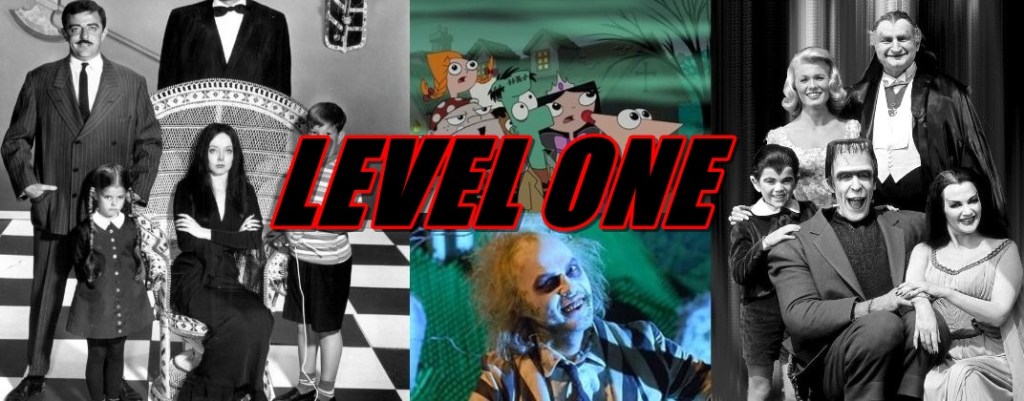
 Level one is where I place the mildest iteration of horror/comedy, where the emphasis is on the comedy. This is usually pretty lighthearted, and more often than not it’s family friendly. It usually has the TRAPPINGS of horror: haunted houses, ghosts, monsters, and pretty much anything else you would consider acceptable in an elementary school Halloween decoration, but there is rarely (if ever) a legitimate attempt at scaring people with this. The classic examples here are the legendary sitcoms The Addams Family and The Munsters. People will argue until the end of time as to which one was better (as far as the original TV show goes, that is – there can be no debate that the Addamses have superior movies), but whether you’re a Gomez Guy or a Lilly Lover, these two franchises are about as close to G-rated as horror gets. There are more recent entries into the category as well, like the Hotel Transylvania movies and underrated movie Igor, and a lot of family cartoons and sitcoms shift into this for Halloween episodes, often seen on the likes of Roseanne, Home Improvement, or Phineas and Ferb.

It’s worth pointing out here that, again, I’m calling this a spectrum, and even these five subcategories have different levels. Technically, I would place Beetlejuice here as well (the original, at least, I haven’t seen the sequel yet), because I don’t think that the movie is ever actually intended to be scary. However, it’s obvious that the movie is more intense than the adventures of the Addamses and the Munsters, and thus if it IS a Level One, it’s towards the high end of the spectrum. A 1.9, perhaps.

On the second level, I place those stories in which the situations are relatively serious, but the characters themselves are funny and react to the scary moments in funny ways. Ghostbusters is the classic example of this. The ghosts aren’t played for laughs (not usually, at least, especially not in the first film), and some of the things could actually be legitimately frightening, such as the first appearance of the Library Ghost. But the behavior and antics of Bill Murray, Dan Aykroyd, Harold Ramis, and Ernie Hudson are very funny and keep you from feeling any legitimate terror. Even when it looks like a Sumarian Deity is about to curb-stomp the city of New York, you know that Venkman is going to have a wisecrack to defuse the situation. Another of my favorite films, Abbott and Costello Meet Frankenstein, falls into this category. The classic Universal Monsters are there, and Lon Chaney Jr. (the Wolf-Man), Glenn Strange (Frankenstein’s Monster) and Bela Lugosi (Count Dracula himself) all play their roles perfectly straight, as if they’re in one of their solo adventures and trying to chill the spines of the audience. But with Lou Costello freaking out over a candle and Bud Abbott doing his impression of everybody who never sees Michigan J. Frog singing, there’s no real sense of danger. The blend of master monster performers and master comedians is never more evident than in this film.

Other works that are typically family-friendly but where the villains have the POTENTIAL to cause actual harm fit in here as well. Hocus Pocus and The Nightmare Before Christmas fall into that category, as do certain classic cartoons such as the Bugs Bunny short Transylvannia 6-5000. I struggled a bit with one of my other favorite Halloween movies, Ernest Scared Stupid, trying to figure out if it belongs here or level one. Ultimately, I’m placing it here, because there are kids (the intended audience) who might find the trolls actually frightening, and they’re trying to do bad things. It’s only through the intercession of American hero Ernest P. Worrell that they’re stopped in time. Yes, that means I’m giving Ernest a higher rating than Beetlejuice, but my metric is how scared the INTENDED audience might be, and I’m sticking with it.

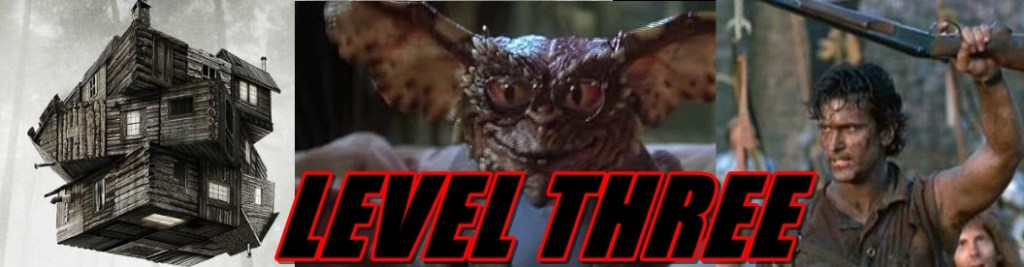
Level three stories have a fair balance between the horror and the comedy. Parts of the film may feel like you’re watching a scary movie, other parts feel like a pure comedy, and when this is done well there is no discrepancy felt by the audience. These two styles of storytelling just match each other very well. Drew Goddard’s The Cabin in the Woods is a great example of this. We start out with what looks like some sort of bland, white-collar office comedy, then cut to a bunch of teenagers getting drawn into what appears to be a very stereotypical slasher movie. But the creeps start to claw their way into the office setting, while the events in the titular cabin turn out to be funnier than you would expect, and by the time we get to the full-on collision of the two settings and you come to understand what one has to do with the other, we’ve got a great blend of the two that maintains pretty much throughout the rest of the film.

We often see this type of balance, by the way, in later films in a franchise. It’s not unusual to see a relatively serious horror movie get zanier in the sequels. Gremlins 2 is one of my favorite examples of this. The first film has its humorous moments, but the sequel really leans into absurdity, with the monsters taking different forms and playing out scenes as though they fell out of a Looney Tunes cartoon. The result is a movie that many fans even prefer to the original. Another good example of this is Army of Darkness, the third movie in the Evil Dead trilogy. The first movie is pure horror, almost nothing funny about it. The sequel, Evil Dead 2, is still very dark, but brings in enough comedic elements to earn it a spot on my spectrum. (That spot is in Level Five, and we’ll get to that soon enough.) But in Army of Darkness, Sam Raimi decided to let Bruce Campbell’s comedic skills and charm really shine through, resulting in a movie that is very different, tonally, from the rest of the franchise, but like Gremlins 2 is a favorite of a large number of fans.

Level Four is where things are getting a lot darker. These are films that are primarily horror movies, but movies that have a twisted sense of humor, and that often comes down to the villain of the franchise. We see this most clearly, I think, with A Nightmare on Elm Street. You’ve got a dead child killer who has the ability to enter and attack you through your dreams, which is not funny at ALL. But the child killer in question also has a wicked funny bone, which manifests itself both in what he says and in the scenarios that he traps his victims in – scenarios that can go from bitterly ironic to just plain goofy. I think it’s the reason that Freddy became such a breakout star in the 80s. There were lots of slashers at the time, but in an era when most of them were imitating Michael Myers and acting as the Strong, Silent Type, Freddy was blazing a trail as a new kind of killer. There have been efforts to imitate him, but few have succeeded.

Probably the most successful imitator, tonally at least, is Chucky from the Child’s Play series. In this franchise, we’ve got a child’s plaything, a three-foot doll, inhabited by the spirit of a serial killer. Making a kid’s toy creepy is a fairly common occurrence in horror (the idea of something that’s supposed to be wholesome and nurturing turning dangerous is frightening), but again, it’s the wit and cleverness of the Chucky character and Brad Dourif’s performance that made the franchise successful and allowed it to grow into so much more than it was in its origins. Oddly enough, later films in the franchise and the follow-up television series do drift, but not lower on the scale of comedy, but towards having a bit more melodrama. It’s a weird, unique transmogrification of the concept, but it never loses its sense of humor.

The Cryptkeeper from Tales From the Crypt and other assorted horror anthology hosts often fall into this category as well. Whether we’re talking about a TV series, movie, or comic book, the format is usually the same: they present to you a scary story, popping in before and after (or sometimes during, if it’s a format that has a commercial break) to drop in a few witticisms about the hapless characters marching stoically to their doom, and the audience loves them for it. The truth is, fans tune in as much for the Cryptcreeper’s ghoulishly ghastly puns as we do for any of the scares that are coming our way.

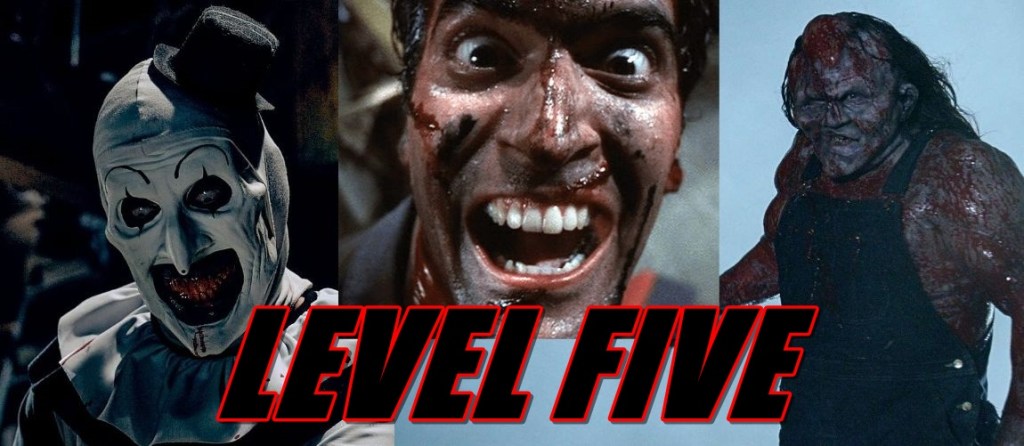
Finally, we arrive at the top tier, that level of horror that’s furthest away from comedy while still, at the same time, having some funny beats. In this category, I place movies that are primarily horror films, but that have a pitch-black sense of humor. Evil Dead 2, again, is a prime example. Bruce Campbell and his girlfriend are under assault by the horrific “Deadites,” demonic creatures that are out to torture and mutilate. Not funny. They take his girlfriend and turn her into one of them. Not funny. One of them possesses Campbell’s hand and he’s forced to cut it off with a chainsaw. Not –

–actually, that part is kinda funny. And that’s how movies on this level go. They take things that SHOULD be horrible and graphic and terrifying, but elevate them to a level that’s almost too cartoonish to take seriously, allowing some laughter. Campbell is great at this. We also see it done to good effect in Adam Green’s Hatchet series. The characters who are NOT undead revenant Victor Crowley are often pretty funny, but Crowley himself is the unspeaking sort of horror. The kills he pulls off, though, are so ridiculously gruesome that the realism is drained away, giving the audience permission to laugh a little bit. To a lesser extent, the same is true of the hugely popular Terrifier films, where the silent Art the Clown brutally tortures his victims. Early screenings for the third film (opening soon) are reporting people walking out during the first ten minutes, with one audience member allegedly even throwing up in the theater. If this is the reaction filmmaker Damien Leone is going for (and I believe it is), then you have to believe he is intentionally going way over the top. 

So there you have it, friends, the levels of horror/comedy. Keep in mind that this scale is meant to determine INTENSITY and in no way is indicative of the QUALITY of a film. Every level has great movies and awful movies that belong there. But if you’re trying to figure out how intense a movie you’re looking for this spooky season, think of the scale and make sure you’re not in a Level Two mood when your friend shows up recommending a Level Five.

Blake M. Petit is a writer, teacher, and dad from Ama, Louisiana. His most recent writing project is the superhero adventure series Other People’s Heroes: Little Stars, volume one of which is now available on Amazon. You can subscribe to his newsletter by clicking right here. The only movie on his scale to ever achieve a Level Six? Babe 2: Pig in the City. Weird, huh?

Geek Punditry #40: Playing Favorites With Horror Movies (Part One)

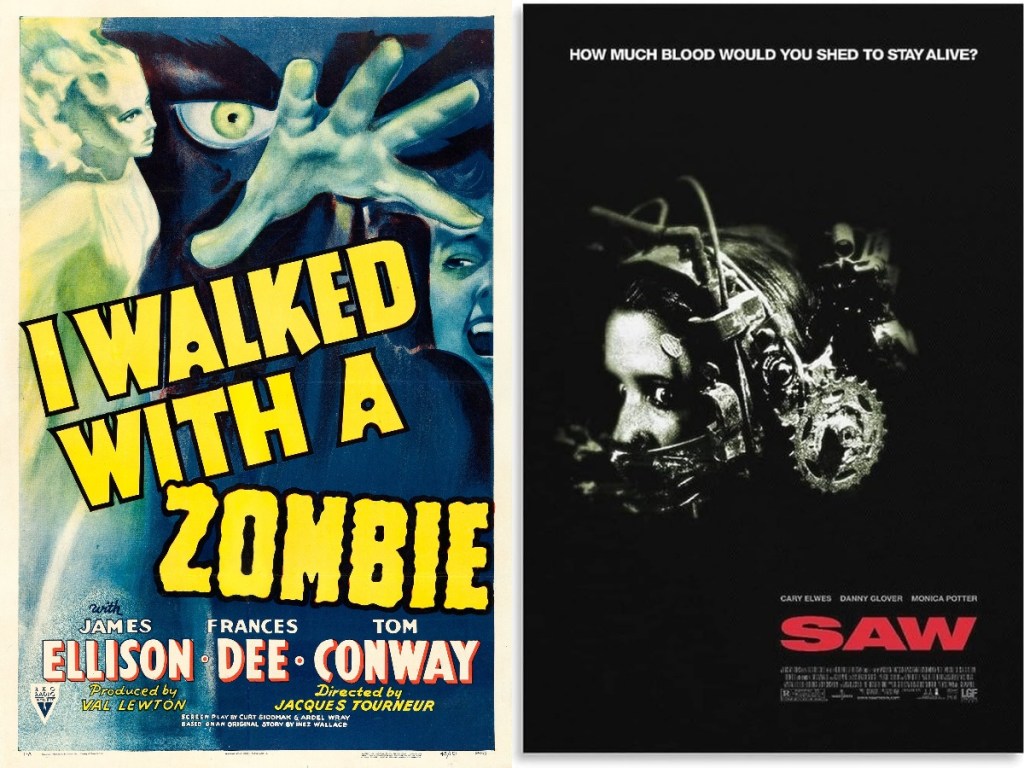
One of my favorite things, as a teacher, is when you find a class that you just click with. You enjoy their insights, you can have real conversations with them, and you look forward to seeing them walk into your room every day. Sometimes, those kids even ask you questions that get your creative juices flowing. This week, for instance, in one such class, a student asked me what my favorite horror movie was. This was a tough question for, as I’ve mentioned before, I don’t really like ranking things. I feel like it can sometimes be a hotbed for division and argument, for one. Also, sometimes it’s REALLY hard. Favorite horror movie? How do you pick? There are so many different KINDS of horror. Is it really fair to compare something like I Walked With a Zombie to Saw, both technically horror movies, but so different from one another that any comparison is really inadequate?

Samesies?

But then a thought occurred to me. One of the things that makes it hard is that there ARE too many categories to compare…so rather than try, why not look at my favorite films in each of these respective categories? So I turned to my friends on social media for a little experiment. I asked them to suggest different categories of horror movies, and I would take to this week’s Geek Punditry column to discuss my favorites in each category suggested. If it worked, I figured, it would be a cheap and easy way fun and clever way to draw future topics for GP columns. And if not? Well, it’s just one week.

Some categories are obvious, of course. Only a few weeks ago I spent an entire column talking about why Scream is my favorite slasher franchise. And not quite a year ago, before I even started GP, I wrote a blog post revealing that my favorite Universal Monster series is – to the surprise of absolutely nobody – Frankenstein. But I wanted to see what categories YOU guys could come up, and there were some doozies. So without further ado, I present to you the first ever Geek Punditry Presents: Playing Favorites…with HORROR MOVIES!

HORROR/COMEDIES

Lew Beitz kicked me off with a category I have a LOT to say about: the best horror/comedies. As people who’ve been reading my stuff for a long time know, I’ve covered this category in-depth in the past. Why, way back in 2012 I spent an entire month discussing 20 of the best horror/comedies of all time

You see, horror and comedy, I believe, co-exist on kind of a sliding scale. Both genres are absolutely dependent on an ability to build up tension and release it in a satisfying way: in comedy with laughter, in horror with screams. But the tools are largely the same, only the result is different, and it can be very easy to turn a moment from one where you laugh to one where you’re terrified with just the slightest twist to the left. Horror/comedies, as a subgenre, are also on a sliding scale. There are those that are mostly comedies, but use the tropes of horror movies as the backdrop for the fun (Bob Hope’s classic The Ghost Breakers falls into this category), whereas others are true horror movies that happen to have funny characters or funny moments (the best films in the Scream franchise go here – and this is where Freddy Krueger believes he exists, although his victims and, occasionally, his audience may beg to differ). 

Most people who know me know that two of my all-time favorite movies fall into the lighter side of this spectrum: Abbott and Costello Meet Frankenstein and Ghostbusters. Abbott and Costello jumped into the world of the Universal Monsters and delivered an absolute laugh riot, using all the elements that made those monster movies classic and combining them with their own flawless comic sensibility. And as if that wasn’t enough, they had Bela Lugosi returning as Dracula (only the second time he would play the Count, and the final time as well). Lon Chaney Jr. was on board as the Wolf Man! All they were missing was Boris Karloff as the Frankenstein Monster, although Glenn Strange did a fine job. There are two times I watch this movie: at least once every Halloween season, and any time it happens to turn up on MeTV’s Svengoolie. 

Wanna Laugh? Wanna be creeped out? No need to choose.

Ghostbusters, on the other hand, is a workplace comedy where the workplace happens to be an exterminator business for the dead. Legendary performances by comedic actors at the top of their game, special effects that are astonishing for the time (and the time constraints) in which the movie was made, and a script full of the best movie quotes ever written. My love for the real Ghostbusters knows no bounds.

But if you’re the sort of person who prefers their horror/comedy to slide further to the horror side of the scale, may I recommend Evil Dead 2? Bruce Campbell, a chainsaw, and an incursion of demonic creatures from beyond the grave makes for a gory and glorious time. And it doesn’t even matter if you haven’t seen the (scarier but less funny) original film, because the first 20 minutes is basically a condensed remake of that one. 

ALIENS SERIES

Sandy Brophy wants to know what I think the best movie is in the Aliens series. I assume he means Ridley Scott’s Xenomorphs, because if he just means any movie with an extraterrestrial, the scariest one is obvious: Project ALF.

Your cat is terrified.

But in the Ridley Scott series, we’ve got eight movies to choose from so far: the four films featuring Sigourney Weaver’s Ripley, the two Alien Vs. Predator films, and the preboot films Prometheus and Alien: Covenant. But if you’re hoping for a lot of fussing and prevaricating over this one friends, I’m sorry to disappoint, but this is an easy answer. It’s the original, by far. 

The tagline even makes a basic truth of physics scary.

To be clear, I haven’t seen all eight of these films. Alien3 was so bad that I just couldn’t bring myself to watch Alien: Resurrection. But with seven out of eight under my belt, I feel confident in saying the original wins the crown because it’s the only one that’s actually intended to be a horror movie. It’s a haunted house movie in space, and it hits all the tropes of that kind of story perfectly while still keeping it in a fully fleshed-out science fiction universe. A large part of what makes it scary was that you didn’t actually get a good look at the alien for most of the movie. Ridley Scott knew that what a person can imagine is far more frightening than what you can put on the screen. When James Cameron signed on for the sequel, Aliens, he wisely realized that it would be impossible to replicate that kind of suspense now that everybody knew what the aliens looked like and how they functioned, so he didn’t even try. He didn’t make it a scary movie, he made it an action movie, and he knocked it out of the park. Some may even make a convincing case for the sequel being a better movie than the original, but that’s not the question today, is it? The question is which is a better horror movie, and after the first one, the rest of the films in this franchise aren’t even competing in the same contest.

NON-XENOMORPH SCI-FI

Not to be outdone by Sandy, Jason Ritterstein asked for my favorite non-xenomorph science fiction horror movie.

Project ALF.

How many times can I get away with this?

But if that’s too scary for you, there are other options. I actually struggled with this one a little, as many of the most memorable sci-fi horror movies also fall into the “Horror/Comedy” category, like Critters, Killer Klowns From Outer Space, and Little Shop of Horrors, all of which are worth watching. But if you’re looking for something that’s not trying to be funny, or at least not trying as hard as those other ones, I like Chuck Russell’s 1988 remake of The Blob. He takes the premise of the original and updates it nicely to the 80s, although the effects are a little dated. The original is good too. And if neither of those is scary enough for you, get a change of pants and check out Event Horizon, a 1997 film about an expedition to recover a spacecraft that went missing seven years prior, and the absolutely terrifying things found on board. This came out at a time where all I really knew Sam Neill from was Jurassic Park (I would watch In the Mouth of Madness later), and holy gee willikers, it made me see him in a totally different way.

Space is scary as hell, guys. Why do we keep trying to go there?

BEST WORST MOVIE

Amber Foret asked for “the funniest unintentionally comedic horror,” while Seth Pontiff wanted to find out what I thought was “the best worst low budget horror.” I combined these two because I think they’re really asking for the same thing: what’s a terrible horror movie that’s fun to watch? And that’s tough, isn’t it friends? Because there are just SO. MANY. OF. THEM.

Part of me feels a little bad to shine a light on this, because nobody really tries to make a bad movie, but people do it every day. Back when video stores were a thing it was impossible to walk through the horror section without seeing dozens of movies that should never be attempted without the assistance of a current or former occupant of the Satellite of Love and a couple of wisecracking robots. When a horror movie fails, it can fail for so many reasons: a bad story, bad special effects, bad performances, bad scare attempts, bad takes on contemporary issues…when you look at how many things can go wrong, it’s almost a miracle that anybody ever makes a good movie at all. 

But if you’re looking for the perfect storm of terrible horror movies…well, I’m sorry if you’re looking for a revelation here, friends, but there’s no awful movie that’s more fun to watch than Troll 2. A movie that has no trolls in it, that was retroactively retitled to be the sequel to a horror movie nobody remembers, Troll 2 is one of the most bafflingly stupid, inept, and poorly-made movies in human history. It’s glorious. A family goes on vacation, renting a house in a town called Nilbog (oh yeah, Nilbog) and soon find themselves the targets of a group of vegetarian goblins whose plot is to turn humans into plants so they can eat them. You can read that sentence another 17 times if you want, friends, it won’t make any more or less sense than it does now. 

The movie nobody asked for, and yet we can’t live without.

This movie is so legendary that 20 years later the child star of it actually made a very good documentary about the cult following it’s garnered, Best Worst Movie, which reveals many of the reasons for film’s ineptitude. For example, writer/director Claudio Fragasso evidently wrote the script in his native Italian and then translated it, but refused to allow any of the actors to change even a word of their dialogue to make it sound more natural coming out of the mouths of 90s American teenagers. (Actual quote: “I’m the victim of a nocturnal rapture. I have to release my lowest instincts with a woman.” Ladies, if you ever have a date who says he’s a victim of nocturnal rapture, call the cops.) Budget constraints led to the goblins wearing what look like off-the-rack rubber masks that were then shat upon by a horse. The actors weren’t professionals (pretend to be shocked at that), and one of them turned out to be a patient at a local mental institution who got a role and filmed his scenes while on a day trip. The only actor in the movie who seems to be enjoying herself is Deborah Reed, who plays the villain, Creedence Leonore Gielgud (and make damn sure you use the whole name). She spends the film giving a performance so ridiculously over-the-top and hamfisted she makes Elvira look like a wallflower by comparison. This movie is a train wreck caused by a plane crash that happened on top of a Native American burial ground, and it could potentially be used to interrogate political prisoners who have proven surprisingly resistant to waterboarding and bamboo shoots under their fingernails. It’s a masterpiece. 

FOUND FOOTAGE

Our last suggestion for this week comes from reader Erin Petit, who moves up to the front of the queue because she happens to be my wife. (Sleeping with the writer gives you advantages, people.) She wants to know what my favorite found footage horror movie is, because it’s becoming a favorite subgenre of hers.

We seem to be on the downward slope of found footage movies at the moment. For a while there, especially after Paranormal Activity, they were booming…mostly because they’re relatively cheap to make, and there’s nothing a movie executive loves to hear more than “relatively cheap.” In fact, I’m pretty sure that exact language was used to describe them when the WGA was making their demands during the recently-concluded strike. But this boom brought with it a lot of bad movies, and finding the good ones can be rather difficult. 

If I’m gonna pick one, though, I have to go with Adam Green’s Digging Up the Marrow. This may be slightly controversial, as Green himself dislikes calling the film a “found footage” movie, preferring to refer to it as a fake documentary. And he’s right, it’s not “found” the way that most such movies are, where the conceit seems to be that you, the viewer, happened to stumble upon an old VHS tape in a box and you popped it into the machine to see what’s on it. Green’s movie is filmed like a documentary, with the requisite cutaway moments, talking head interviews, and the like…but the best, most effective parts of it use the language of found footage, so I’m going to stick with my answer.

AAAHH!!! Real monsters!

Anyway, in this movie Green plays himself, horror filmmaker Adam Green, approached by a man named William Dekker who is sending him drawings of dozens of monsters…monsters he’s trying to convince Green are real. It’s a great movie with some amazing practical monster effects, and Green and Ray Wise (as Dekker) put forth a fantastic performance. The ending is so creepy and effective that when we first watched it, Erin made me get up from the couch and lock our front door because she said heard a weird noise outside. (Sorry if you didn’t want me to tell that story, sweetheart, but you asked.)

Wow, guys. This is already almost the longest Geek Punditry column of all time, and I haven’t even gotten through half your suggestions! So you know what? NEXT WEEK WILL BE PLAYING FAVORITES PART TWO! If I didn’t get to your suggestion this week, I’ve got them all saved and I’ll tackle more next Friday. And if you didn’t give me a suggestion, there’s still time! Drop it in the comments here or hit me with it on any of the social media platforms you used to find this column. And while you’re at it, tell me your thoughts on the categories I covered THIS week! There’s PLENTY more to talk about this Spooky Season, and want to hear from you!

Blake M. Petit is a writer, teacher, and dad from Ama, Louisiana. His current writing project is the superhero adventure series Other People’s Heroes: Little Stars, a new episode of which is available every Wednesday on Amazon’s Kindle Vella platform. He did not expect this new column format to be such an abundance of riches, and now it’s going to be nigh-impossible to prevent him from running it into the ground. Way to go, guys.