Geek Punditry #141: Comedy in Crisis

It’s not something I ever thought I would say, but comedy is in danger of becoming a dying art. In movies, at least, it’s become harder and harder to sell a comedy to the theater crowd, mainly because in a world where movie theater attendance has never really recovered from the Covid shutdowns, people are far more discriminating about what they choose when they go out to a movie theater. The prevailing notion is that if you’re only going to see a movie in a theater a few times a year, it’s best to spend those chits on the big-budget special effects spectaculars, the things that really demand that IMAX treatment on the big screen. I know I’m guilty of that – my wife and I only get out to see a movie without our son a few times a year at best, so we’ve got to make sure it “counts.” After all, a comedy that’s funny in the theater will be just as funny at home, right?

Of course, some comedies aren’t funny no matter WHERE you are.

No, that’s not right at all, actually.

I’ve written before about that ever-so-thin line between comedy and horror, and about how both art forms are built on a similar formula of tension, buildup, and release, with the primary difference being that horror releases tension through screams whereas comedy releases it through laughter. It’s the reason, in fact, that horror/comedy hybrids can be so effective. But there’s another similarity that people don’t realize. Most horror movies are scarier in movie theaters than at home, where you can feed on the energy of the people around you, hear them gasp and shout with each scare, where you can see the girl a row ahead of you grab onto her boyfriend when the monster leaps at the screen. It makes watching a horror movie a communal experience that’s more enjoyable than watching the same movie alone. (There are exceptions, of course. Certain small, claustrophobic films like Buried or home invasion movies like Hush probably work better in a darkened living room with the curtains drawn and as few people as possible with you. But those are the exceptions, not the rule.)

Similarly, there’s something about comedy that’s funnier when you’re with an audience. There’s an emotional charge in the air that is infectious, spreading from one person to another. Even ONE person can be enough to trigger this. I’ll watch episodes of RiffTrax or Mystery Science Theater 3000 a dozen times by myself and chuckle with the riffs. But if I watch that same episode with my wife, those quiet laughs to myself become full-belly guffaws. Laughter, like terror, is contagious. One person’s laughter eases the path for others – it’s almost like hearing someone else laughing gives you PERMISSION to laugh, a permission that you don’t actually NEED, but that your psyche is waiting for anyway. 

Crow: I guess this is what he gets for making Green Lantern.

Unfortunately we didn’t make it to the theaters for this one, but the reboot of The Naked Gun is available digitally now, and my wife Erin and I watched it earlier this week. I’ve heard from many people whose opinions I respect that it was the funniest movie of the year, which sadly isn’t as bold a statement as it used to be. I grew up on the original Leslie Nielsen Naked Gun movies, as well as the Police Squad series that preceded it. I dearly loved that style of slapstick comedy, the kind we got from Mel Brooks’ Blazing Saddles or Spaceballs, and that the same Abrahams and Zucker Brothers combo that gave us Police Squad would refine in their disaster spoof Airplane! And I mourned – oh, HOW I mourned – the death of that kind of comedy when it was replaced by Friedberg/Seltzer stinkers like Date Movie, Meet the Spartans, and The Starving Games. 

So much high art it should be in a museum.

Someone watching a trailer for these movies might not be able to tell what the difference is on the surface. They’re all goofy movies built on absurd, surrealistic comedy that’s almost like a cartoon brought to life. But the difference is that Brooks, Abrahams, and the Zuckers understand how parody works. Blazing Saddles, Spaceballs, and The Naked Gun are spoofs of westerns, science fiction, and cop dramas (respectively). They mock the tropes of those films ruthlessly, while at the same time telling their own stories. Date Movie and similar films lack that kind of imagination or creativity. They replace actual gags with straight references to other films, and seem to think that simply acknowledging the existence of a (usually superior) movie somehow counts as a joke, but they have no identity or voice of their own. 

Airplane!, incidentally, is the oddball in this group. Whereas the others weren’t parodies of SPECIFIC movies (although Spaceballs leaned harder on Star Wars than most other sci-fi), Airplane! was almost a beat-for-beat remake of a lesser-known and much-forgotten disaster movie called Zero Hour, even borrowing some of the dialogue from the earlier film. They simply took the existing plot and characters and amplified them to absurd levels and created a comedy classic. 

But that kind of comedy had died out, as I said, replaced by the Reference Fests that slapstick has become in the last two decades. So when I heard they were rebooting The Naked Gun I was highly skeptical. When I heard that Liam Neeson had been cast as Frank Drebbin Jr., my optimism increased slightly – Neeson is a great actor and I believed he may have the comedy chops to pull it off. But it wasn’t until I saw the trailer, where they included a joke that addressed the elephant in the room – a certain cast member of the original trilogy who became infamous after the series ended – that I realized that this movie might just be self-aware enough to work.

And it really did.

And they get bonus points for mocking AI. Everybody gets bonus points for mocking AI.

Erin and I watched this movie and, from the first scene, I found myself laughing out loud at the antics on the screen. Liam Neeson has reinvented his career before – after a long period as a profound dramatic actor he took a left turn into action hero starting with the Taken franchise. Now it seems like he’s ready to reinvent himself again. He doesn’t play Frank Drebbin Jr. as completely stone-faced as his “father,” Leslie Nielsen, played the original. Instead, he’s got his own sort of blend of faux seriousness mixed with just enough winking at the camera to indicate that he recognizes just how ridiculous the movie is, and he’s cool with it. 

The real revelation here, though, was casting Pamela Anderson as the femme fatale of the movie. It’s been quite a while since Anderson was really in the public eye, and when she WAS making movies more frequently she wasn’t usually being sought out for her comedic skills. But she nailed it in this movie, with the same kind of goofy sensibility that Neeson brought to the screen. Word has it that she and Liam Neeson have actually begun a romantic relationship in real life after working together on this movie. That wasn’t on my bingo card for 2025, but after seeing them together I absolutely believe it, because the chemistry is flawless.
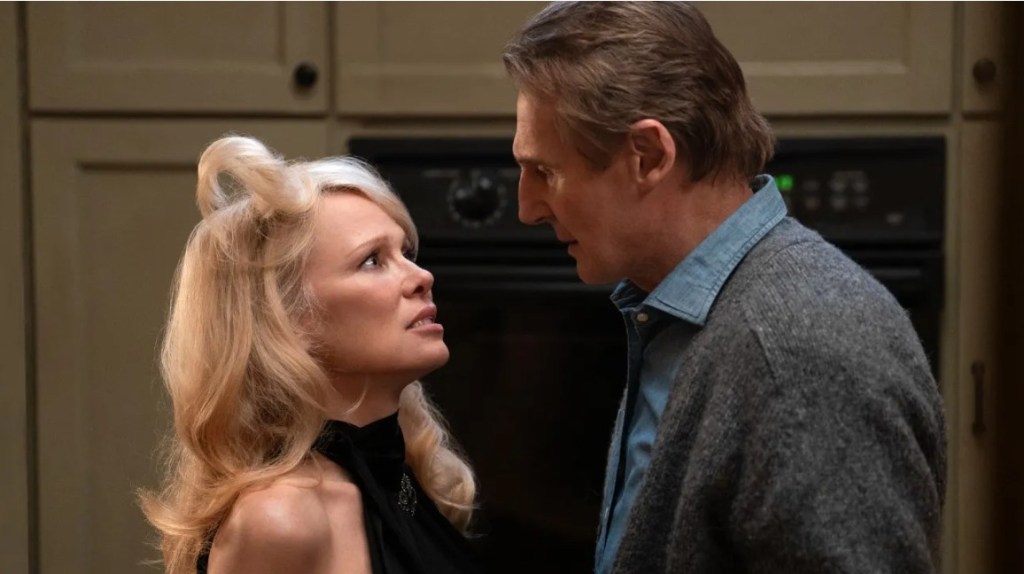
Get a guy who looks at you like that even with that hair.

Most importantly, though, the writing is sharp and clever. The jokes are about the tropes of a police procedural, not about the EXISTENCE of it. The screenwriters rarely make reference to any specific movie or TV show, and when they DO it’s actually done well (such as an extended joke where Neeson’s character is distraught that his Tivo has accidentally lost season one of Buffy the Vampire Slayer – the joke here being that a hardboiled cop at his age KNOWS so much about Buffy, not that it EXISTS). 

The Naked Gun (“the new version,” Neeson says in his first of many fourth wall-leaning moments) is the kind of comedy we don’t get anymore, and it’s the kind of comedy we need. Honestly, when is the last time you went to a movie theater to watch a comedy? I went back and looked at my Letterboxd diary to find the last time I saw a new movie in a theater that was an actual comedy and not just a superhero movie with comedic elements or a cartoon I was taking Eddie to watch. I made it back to 2017 when Erin and I saw The Big Sick, which is really more of a dramedy. Before that I’ve gotta go back to the action/comedy The Nice Guys in 2016. Both of those, by the way, are movies that deserve a lot more love than they get. 

The Naked Gun didn’t set the box office on fire, but it was highly lauded by critics and by those audiences that actually DID show up. I’m hoping that’s enough to justify Paramount moving forward with a sequel. Neeson and Anderson are such a great on-screen duo that it would be a crime not to pair them up again. This wouldn’t be the first time a movie – especially a comedy – found its audience after the lights dimmed in the movie theater, so I’m giving this my recommendation. Buy or rent it digitally. Stream it when it eventually shows up on Paramount+. Buy the Blu-Ray or DVD when it hits stores. I want more movies like this, and so should you. I didn’t get to see this one with a tub of popcorn in my lap and a huge screen in front of me, so I’m hoping I’ll get that shot for part two. 

Blake M. Petit is a writer, teacher, and dad from Ama, Louisiana. His most recent writing project is the superhero adventure series Other People’s Heroes: Little Stars, volume one of which is now available on Amazon. You can subscribe to his newsletter by clicking right here. He’s also started putting his LitReel videos on TikTok. You know what other movie didn’t get enough love? The Rocketeer. Just saying.

Geek Punditry #137: Teeny Tiny Terrors

Grady Hendrix’s novel How to Sell a Haunted House has been optioned for a motion picture. This is not new information, by the way – the deal was signed with Sam Raimi’s Ghost House studio about two years ago, but today is the first time I’ve heard about it, and it’s got me very interested. I like Hendrix’s work quite a bit. I’ve only read three of his books so far (the aforementioned Haunted House, Final Girls Support Group, and the very cool nonfiction book Paperbacks From Hell, about the history of horror novels and cover art in the 70s and 80s), but every one of them has encouraged me to read more. I don’t know if it’s fair to classify myself as a “fan,” having only really dipped my toes into his work thus far, but perhaps “fan-in-training” would be accurate. Regardless, having read How to Sell a Haunted House, I am immediately struck by the cinematic possibilities of the story, while at the same time, left very curious about exactly what tone they’re going to strike with a horror movie where the villains are – drumroll please – puppets.

You don’t even want to know what going through escrow is like.

I apologize if that feels like a spoiler to anyone, but it’s part of the synopsis of the book and, when the movie is made, it most likely will be in the trailer, so I don’t feel TOO bad. It’s kinda like if you hear that there’s a new slasher movie coming out and someone tells you that the killer wears a mask. In the novel, single mom Louise Joyner has to go back to her home town after her parents are killed in a car crash. Once home, she’s forced to go about the task of closing up her childhood home for sale with the help of her estranged brother. As they go through the house, they find that there may be more to their mother’s massive collection of puppets and dolls than they ever suspected.

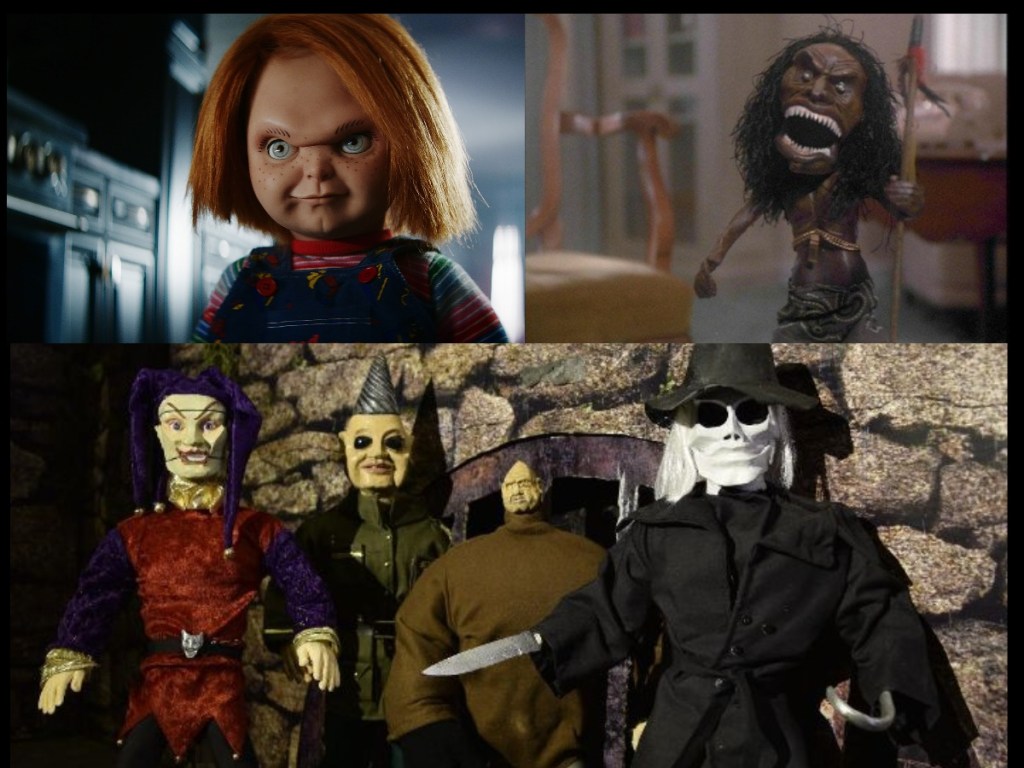
Once the movie is completed, How to Sell a Haunted House will join the echelon of horror flicks that I like to think of as “Teeny Tiny Terrors.” Horror, as a genre, has dozens (if not hundreds) of categories and subcategories, most of which can overlap at some intersection or another. How to Sell a Haunted House will fit into a few categories – haunted house movies, obviously, but also the narrower but quite popular category of killer toys, home of such classic films as Child’s Play, Puppet Master, and the last segment in Trilogy of Terror. The Joyner puppets will join a pretty fabulous collection of creatures.

Sorry if that gives you nightmares.

Not all Teeny Tiny Terrors are toys, of course. I’d also place things like Leprechaun, Gremlins, Ghoulies, Munchies, Critters, Hobgoblins, and even Sam from Trick ‘r Treat into this category: all monsters or aliens or some sort of supernatural threat that are embodied in what is – to an adult human, of course – a package that seems small and harmless until the teeth are bared. Because of this, almost all Teeny Tiny Terrors fall into one of my OTHER favorite horror subcategories: horror comedies. I wrote about this extensively last year, specifically about how common it is for horror to have elements of comedy, and how some lean harder on the funny parts and others lean harder on the terror. I even described a spectrum with varying levels of horror/comedies depending on which side they lean towards (a Type 1 is the lightest, funniest of the group, while 5 is the scariest). Almost any Teeny Tiny Terror will land on the spectrum somewhere. The first Child’s Play movie, I think, was a solid 4, although as is often the case the series lightened up with subsequent installments to 3s and even occasionally to 2s. 

With a Teeny Tiny Terror of any type, at least part of the humor is going to come from the concept of something that’s supposed to be innocent and harmless suddenly turning psychotic. The idea of the dolls in Puppet Master turning out to be possessed by the spirits of dead Nazis, for example, is so patently absurd that it’s hard to take it too seriously even as the likes of the Tunneler doll are drilling into somebody’s skull. There’s a macabre comedy to this. It’s similar to the psychotic clown craze from a few years back, although not exactly the same. With killer toys, you’ve got something that’s supposed to be harmless turning bad. 

Teeny Tiny Terrors are nothing new. They showed up in John Christopher’s baffling 1966 novel The Little People, were used to disturbing effect in Tod Browning’s 1932 film Freaks, and have showed up in folklore about as far back as you can imagine. Today we’re even retroactively applying it to full-grown terrors. Just a few days ago I got an email from Spirit Halloween announcing their new line of Horror Movie Babies, figures and decorations starring infantilized versions of Michael Myers, Chucky, Ghostface, the Frankenstein Monster and others. And even THAT is a spinoff of their long-running Zombie Babies line. There aren’t enough Teeny Tiny Terrors already, now we’re taking full-grown terrors and giving them the Jim Henson’s Muppet Babies treatment! 

Remember that episode where Leatherface gutted Camilla like a fish?

There are other subcategories related to the Teeny Tiny Terrors in different ways, such as the aforementioned Killer Klowns. Like deadly toys, the reason clowns can be scary is that you’re taking something that’s supposed to be innocent and perverting it. Dolls are inanimate, though, and supposed to be used to fuel a child’s imagination, but have no agency of their own. They exist only as a reflection of a child’s innocence. Clowns, on the other hand, are people, and we know that (unlike a doll) a person can easily hide their true nature. They commit their atrocities beneath makeup that was originally intended to induce laughter only amplifies the terror. Whether we’re talking about Pennywise, Art the Clown, or the Joker, killer clowns can be a hell of a lot scarier than killer toys.

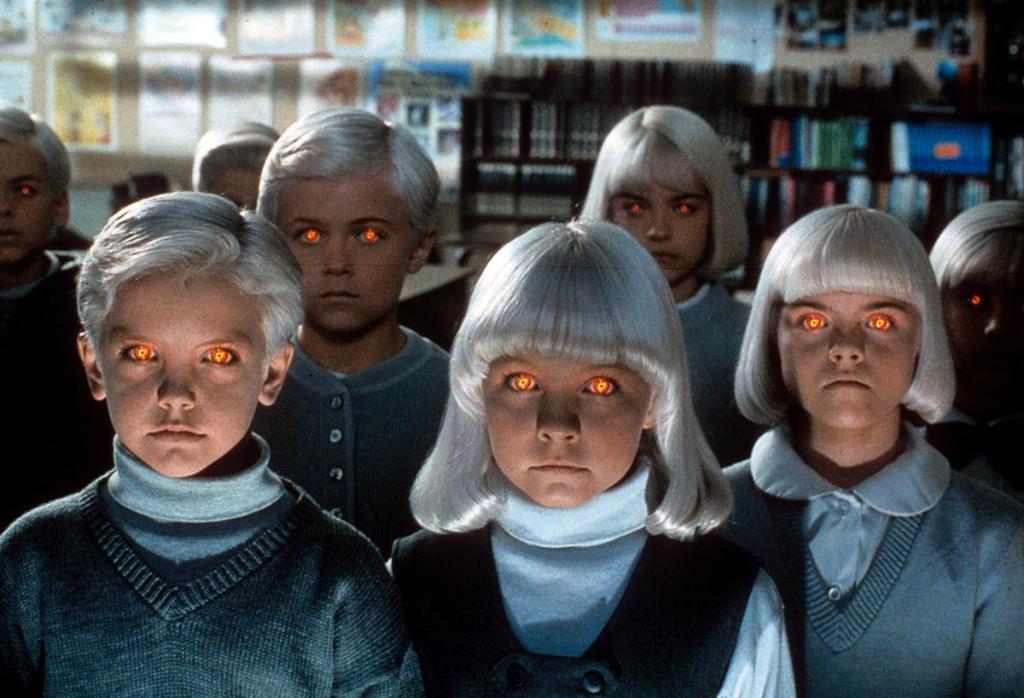
There’s also the related category of Creepy Kids, like we see in films such as Children of the Corn or Village of the Damned. Again, here’s something that should be innocent that’s turned bad, but in this case it’s far less likely to be funny. A demonic child is something of a perversion of innocence, it’s taking a human being in the period of their life where they are supposed to have the least darkness and transforming them into something ghastly. There are SOME Creepy Kids on the horror/comedy spectrum, but I think they’re far less likely to go there than Teeny Tiny Terror or Killer Klowns.

The good news is that modern cameras don’t create redeye, so there’s no chance of remaking this one.

But back to Grady Hendrix: I’m not surprised that an adaptation of his work would go into the horror/comedy territory, because pretty much everything of his that I’ve read seems tailor-made for it. Aside from Haunted House, he gave us Final Girl Support Group, a novel about women who survived attacks from slasher-type killers (most of whom are obvious copyright-friendly substitutes for the likes of Jason Voorhees and Michael Myers) and what happens when an unknown threat starts gunning for them. Hendrix plays with meta humor here, digging into the tropes and expectations of the slasher genre in a way that’s reminiscent of Wes Craven’s Scream movies (and, in fact, one of the Final Girls is a clear replacement for Sidney Prescott). Even his nonfiction book, Paperbacks From Hell, shows a deep love and understanding of all the tropes of horror fiction. Writers like that often enjoy playing with those tropes in an amusing way.

Art.

Assuming the movie adapts the tone of the book faithfully, I think it would also land in type 4. It’s not a laugh riot, and in fact, some of the stuff at the end could be downright grotesque depending on how the director chooses to film it. But as I said, the very concept of Teeny Tiny Terrors has an inherent humor to it that, even in the darkest moments, lends itself well to tongue-in-cheek references and black comedy. Hendrix is one of the modern greats in that regard. I hope that the movie does it justice. 

Blake M. Petit is a writer, teacher, and dad from Ama, Louisiana. His most recent writing project is the superhero adventure series Other People’s Heroes: Little Stars, volume one of which is now available on Amazon. You can subscribe to his newsletter by clicking right here. He’s also started putting his LitReel videos on TikTok. Despite what you may have expected, “Teeny Tiny Terrors” does not refer to what happens when your son realizes we’re out of cheese sticks. 

Geek Punditry #121: Tune In, Drop Out

If there’s one thing I hate, it’s when advertising works. But the truth is, we all know it does. Companies wouldn’t spend money playing the same commercial 187 times per episode of The Bachelor if they didn’t have statistical evidence that doing so increases sales. So all we can do, as viewers, is suck it up, move on with our lives, and remember to be on the lookout for the all-new PB&J Reese’s Peanut Butter Cups the next time we’re at the store.

On occasion, though, advertising can hit you from somewhere totally unexpected and really do a number on you, and that’s the reason I’m now a subscriber to Dropout TV.

Fortunately, my shame is mitigated by laughter.

It started on Facebook Reels where, in-between videos of people making hard candy or trying to identify LEGO kits from two or three pieces that viewers still had, I started to get these clips from what appeared to be a game show. But it wasn’t a normal game show – the rules seemed kind of absurd, and they didn’t always make sense. In fact, it didn’t seem like the players were even playing the same game from one clip to another. Then I finally realized that was the whole point. The show in question is called Game Changer, and the gimmick is that the game is different in every episode, and the players have no idea what they’re going to be playing until the game begins. It’s actually a great hook for a show, and as I watched more and more, I WANTED to watch more and more. 

It’s just like that Watson episode of Jeopardy.

Eventually, this led me to check out the source, Dropout TV, a streaming service that’s actually been around since 2018, but that I hadn’t heard about until these reels started coming across my screen. A spinoff of what used to be the College Humor website, Dropout specializes in unscripted comedy series, although it does have a few animated shows and stand-up comedy specials as well, and as a service that has been more or less consistently putting out content that isn’t available anywhere else for seven years now, there’s a cornucopia of comedy waiting there for me to watch. I’ve barely even scratched the surface so far, but I’ve become so quickly engrossed with their stuff that I wanted to talk about some of my favorites. 

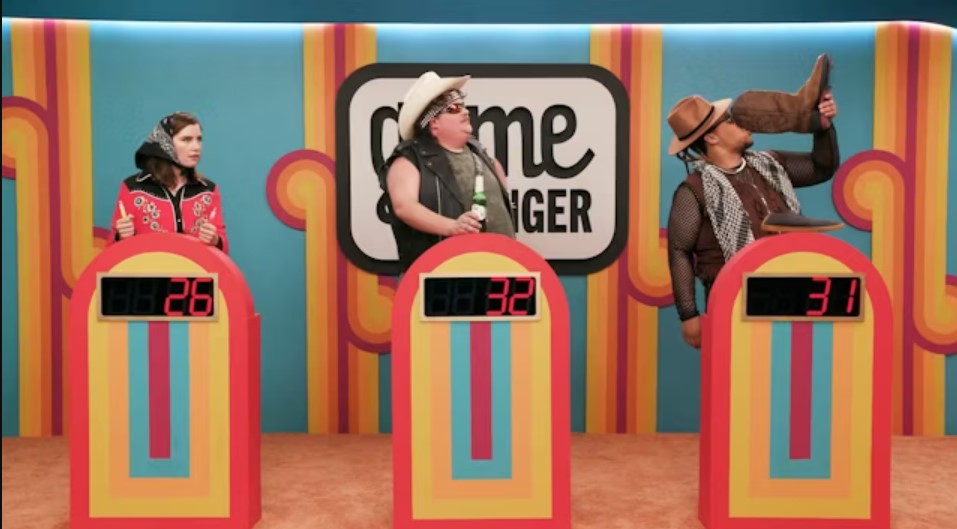
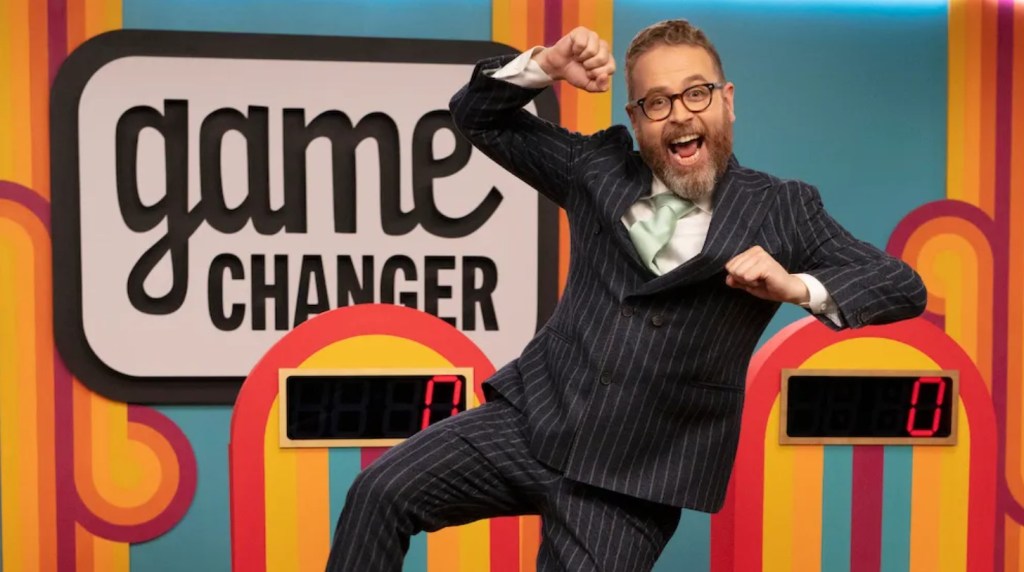
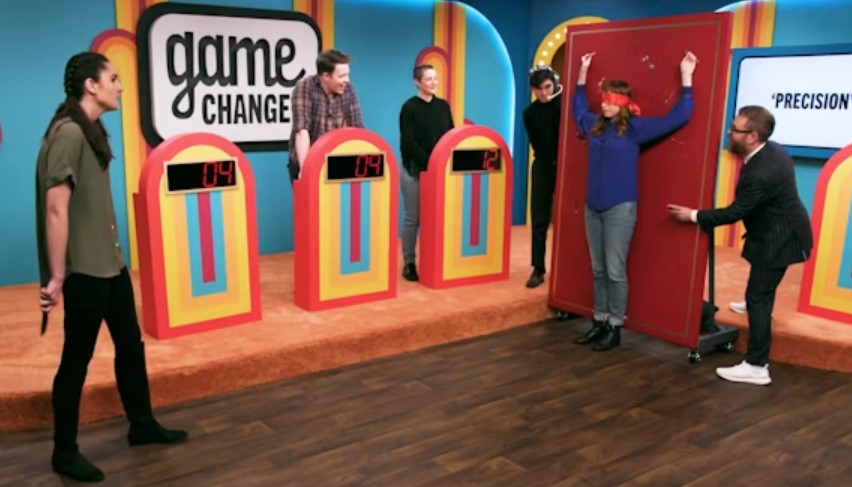
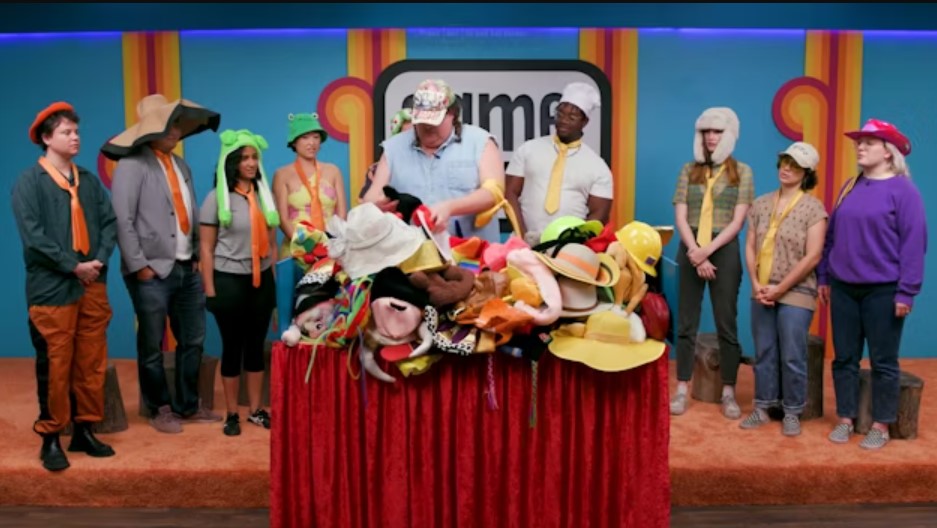
First up is the aforementioned Game Changer. Hosted by Dropout owner Sam Reich, Game Changer is a different game every time, and the contestants have to figure out what the game is AS THEY PLAY. The contestants, by the way, are usually comedians and comedy writers employed by Dropout, and so you see the same faces come back over and over. It’s not long before you get a feel for their personalities and begin to pick your favorites. The first episode had Sam asking the players personal questions, followed by a light flashing either red or green to indicate if they were telling the truth or lying. The twist – which was revealed early to the audience but not to the players – is that their respective significant others were backstage controlling the lights. As the players lost their mind trying to figure out how the “light” could know certain things, the camera would cut backstage to show their girlfriends laughing hysterically. 

And that’s just the first episode. As I said, each episode is totally different. There’s one where the players have to hastily assemble bizarre orders from a conveyer belt, another where they have to guess what food to feed a giant mouth. My favorite episode so far, though, was the season two finale, “Yes or No.” In this one the three players are simply asked “Yes or no?” by Sam, over and over again, with points awarded seemingly at random. The method of asking the question grows more elaborate and hilarious as the game goes on, but it always boils down to “Yes or no?” As the frustration mounts on the players and they – and the audience – sloooowly come to realize what the ACTUAL rule of that episode’s game is, the whole thing builds to one of the most monumentally epic improvised comedic monologues I’ve ever seen. It’s a thing of beauty.

Although you’ll come to recognize this as the face of the Devil.

That’s just the one show, though. There are plenty more to choose from. Make Some Noise is a spinoff of one of the more popular Game Changer episodes, featuring the comedians improvising lines, reactions, and even entire sketches based on goofy prompts. (Fans of Whose Line is it Anyway? will enjoy this one.) I’ve also grown fond of Smartypants, in which the cast prepares seemingly-academic college-style lectures on such ridiculous topics as cryptids, hot dogs, the month of February, and the importance of assigning a “Food Captain” to your friend group. Um, Actually is another game show in which the contestants are given “facts” with an error in them, then have to ring in and do what people on the internet love to do more than anything: correct each other.

Although if I’m being honest, she didn’t have to work too hard to convince me.

Are you into cooking shows? You need to check out Gastronauts. This time the comedians aren’t the contestants, but the judges. Real chefs compete to comply with their outrageous prompts to invent a meal, such as making something that can be eaten from a horse’s feed bag or creating the HEAVIEST (but still tastiest) dish. And although I haven’t quite gotten there yet, there’s an entire subcategory of the site called Dimension 20, several shows that revolve – in one way or another – around the obsession certain members of the Dropout family have with Dungeons and Dragons.

The shows are usually quick. Without adhering to a broadcast TV schedule, I’ve seen episodes as short as 16 minutes, although they usually clock in around 20-25. The longest I’ve seen so far was the 63-minute season premiere of the current Game Changer season – an epic episode because Sam gave the contestants a set of 15 tasks, then gave them a YEAR to accomplish them all on their own. Their presentations on how they accomplished the tasks were hilarious and, occasionally, oddly heartwarming. I think one of the things that makes these shows enjoyable is that you get a real sense that the people involved LIKE playing together and are actually having FUN in front of the camera, and there’s always room for more fun in the world. 

You can tell just from the body language how much every person on this stage is enjoying themselves.

Like I said, you see a lot of the same faces over and over again, making it easy to become devoted to the players. In fact, virtually everybody who is a regular appears on multiple shows, and people who host one show become contestants on the others. But there are guests as well: Wayne Brady and Ben Schwartz have both shown up on Make Some Noise, and the pandemic-era episodes of Game Changer featured surprise appearances by people as diverse as Tony Hawk and Giancarlo Esposito. There’s also Josh Ruben, one of the regulars, but whom I had already begun to follow not as a comedian, but as the writer/director of some of my favorite recent horror-comedy hybrid films, such as this year’s movie Heart Eyes, the recent Werewolves Within, and the excellent Scare Me, in which he also stars. 

It should be noted that this is NOT a service to watch with your kids. Although the comedy is usually good-natured and there hasn’t been anything I’ve come across that I’ve found particularly offensive, they lapse into blue humor frequently and have absolutely no filter when it comes to dropping language that you most certainly would not say in front of your grandmother. But if you’re okay with that sort of thing and you’re looking for some quick, crazy stuff that will make you laugh, it’s worth checking out.

I need to talk to the Geek Punditry Image Acquisitions department — I specifically asked for something WEIRD.

And hell, you don’t even have to become a subscriber to get a taste. There are tons of clips on the Facebook and TikTok pages for Dropout TV and the individual pages of the assorted shows. It took two or three months of me watching those clips before I finally decided to take the plunge and subscribe to the service, but I’m glad I did. There’s not enough humor in the world, and it’s great to find a new source with so much to choose from.

Blake M. Petit is a writer, teacher, and dad from Ama, Louisiana. His most recent writing project is the superhero adventure series Other People’s Heroes: Little Stars, volume one of which is now available on Amazon. You can subscribe to his newsletter by clicking right here. He’s also started putting his LitReel videos on TikTok. Shoot, he didn’t even get around to Very Important People. Ah well, next time. 

Geek Punditry #92: The Spectrum of Horror and Comedy

If there need be any further evidence that Hollywood executives frequently don’t have the slightest idea what they’re doing, let’s talk about the fact that they seem to be afraid of horror/comedy hybrid movies. ‘It’s confusing,” they will tell you, pulling their hair out over a movie like Behind the Mask or Happy Death Day. “We don’t know how to market this! Who is it for? Is it supposed to be a horror movie or a comedy?” Whereas the answer is obvious to anyone smarter than a movie executive, which is a very large part of the Venn Diagram, and includes virtually all horror movie fans: it’s both. Horror and comedy BELONG together. They are a natural combination, the peanut butter and chocolate in the Reese’s Peanut Butter Cups of the movie industry, and the notion that there are people who don’t understand that is maddening to me.

Admittedly, humor and terror seem to be on the two extremes of the emotional spectrum, but that’s one of the reasons they compliment each other so well. Another reason is that, structurally speaking, they are very similar to one another. Both of these styles of storytelling are built upon creating an emotional response in the audience, and both of these responses are constructed through the careful buildup and release of tension. In fact, if separated from context, it might be impossible to tell if a scene is intended to be funny or scary until the punchline hits and the audience either laughs or screams, because until that point they can be virtually identical. A funny movie can turn on a dime if an expected laugh turns into a scare, and the dread of a scary movie can be decreased to a manageable level by a well-timed joke. 

The horror/comedy combo is one of my favorites in all of storytelling, but there is a spectrum that these movies and stories exist on. Some of them lean heavier towards the comedy side, some more on the horror, and it’s fair if you prefer one side more than the other. But for the sake of discussion, this week I thought it would be useful to go over what I think of as the five levels on the horror/comedy spectrum and give some examples of each. We’ll start on the more comedy-heavy side.

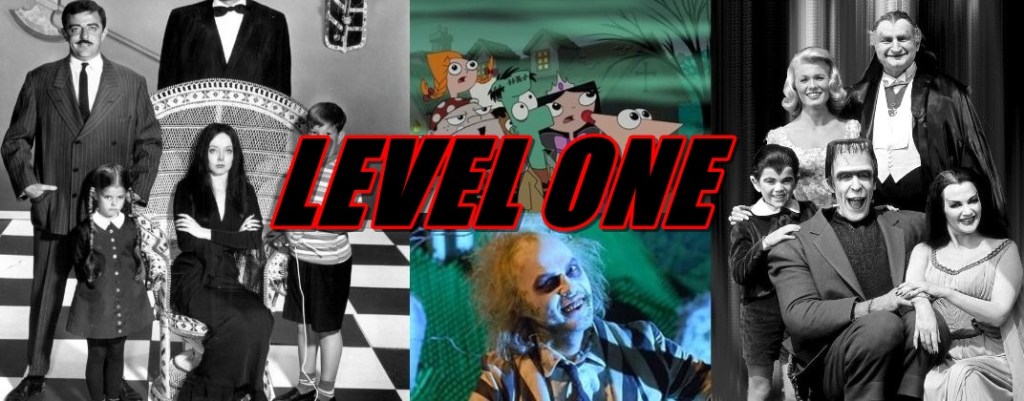
 Level one is where I place the mildest iteration of horror/comedy, where the emphasis is on the comedy. This is usually pretty lighthearted, and more often than not it’s family friendly. It usually has the TRAPPINGS of horror: haunted houses, ghosts, monsters, and pretty much anything else you would consider acceptable in an elementary school Halloween decoration, but there is rarely (if ever) a legitimate attempt at scaring people with this. The classic examples here are the legendary sitcoms The Addams Family and The Munsters. People will argue until the end of time as to which one was better (as far as the original TV show goes, that is – there can be no debate that the Addamses have superior movies), but whether you’re a Gomez Guy or a Lilly Lover, these two franchises are about as close to G-rated as horror gets. There are more recent entries into the category as well, like the Hotel Transylvania movies and underrated movie Igor, and a lot of family cartoons and sitcoms shift into this for Halloween episodes, often seen on the likes of Roseanne, Home Improvement, or Phineas and Ferb.

It’s worth pointing out here that, again, I’m calling this a spectrum, and even these five subcategories have different levels. Technically, I would place Beetlejuice here as well (the original, at least, I haven’t seen the sequel yet), because I don’t think that the movie is ever actually intended to be scary. However, it’s obvious that the movie is more intense than the adventures of the Addamses and the Munsters, and thus if it IS a Level One, it’s towards the high end of the spectrum. A 1.9, perhaps.

On the second level, I place those stories in which the situations are relatively serious, but the characters themselves are funny and react to the scary moments in funny ways. Ghostbusters is the classic example of this. The ghosts aren’t played for laughs (not usually, at least, especially not in the first film), and some of the things could actually be legitimately frightening, such as the first appearance of the Library Ghost. But the behavior and antics of Bill Murray, Dan Aykroyd, Harold Ramis, and Ernie Hudson are very funny and keep you from feeling any legitimate terror. Even when it looks like a Sumarian Deity is about to curb-stomp the city of New York, you know that Venkman is going to have a wisecrack to defuse the situation. Another of my favorite films, Abbott and Costello Meet Frankenstein, falls into this category. The classic Universal Monsters are there, and Lon Chaney Jr. (the Wolf-Man), Glenn Strange (Frankenstein’s Monster) and Bela Lugosi (Count Dracula himself) all play their roles perfectly straight, as if they’re in one of their solo adventures and trying to chill the spines of the audience. But with Lou Costello freaking out over a candle and Bud Abbott doing his impression of everybody who never sees Michigan J. Frog singing, there’s no real sense of danger. The blend of master monster performers and master comedians is never more evident than in this film.

Other works that are typically family-friendly but where the villains have the POTENTIAL to cause actual harm fit in here as well. Hocus Pocus and The Nightmare Before Christmas fall into that category, as do certain classic cartoons such as the Bugs Bunny short Transylvannia 6-5000. I struggled a bit with one of my other favorite Halloween movies, Ernest Scared Stupid, trying to figure out if it belongs here or level one. Ultimately, I’m placing it here, because there are kids (the intended audience) who might find the trolls actually frightening, and they’re trying to do bad things. It’s only through the intercession of American hero Ernest P. Worrell that they’re stopped in time. Yes, that means I’m giving Ernest a higher rating than Beetlejuice, but my metric is how scared the INTENDED audience might be, and I’m sticking with it.

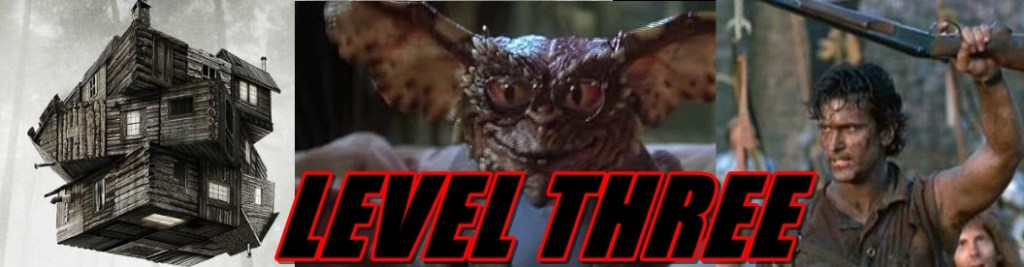
Level three stories have a fair balance between the horror and the comedy. Parts of the film may feel like you’re watching a scary movie, other parts feel like a pure comedy, and when this is done well there is no discrepancy felt by the audience. These two styles of storytelling just match each other very well. Drew Goddard’s The Cabin in the Woods is a great example of this. We start out with what looks like some sort of bland, white-collar office comedy, then cut to a bunch of teenagers getting drawn into what appears to be a very stereotypical slasher movie. But the creeps start to claw their way into the office setting, while the events in the titular cabin turn out to be funnier than you would expect, and by the time we get to the full-on collision of the two settings and you come to understand what one has to do with the other, we’ve got a great blend of the two that maintains pretty much throughout the rest of the film.

We often see this type of balance, by the way, in later films in a franchise. It’s not unusual to see a relatively serious horror movie get zanier in the sequels. Gremlins 2 is one of my favorite examples of this. The first film has its humorous moments, but the sequel really leans into absurdity, with the monsters taking different forms and playing out scenes as though they fell out of a Looney Tunes cartoon. The result is a movie that many fans even prefer to the original. Another good example of this is Army of Darkness, the third movie in the Evil Dead trilogy. The first movie is pure horror, almost nothing funny about it. The sequel, Evil Dead 2, is still very dark, but brings in enough comedic elements to earn it a spot on my spectrum. (That spot is in Level Five, and we’ll get to that soon enough.) But in Army of Darkness, Sam Raimi decided to let Bruce Campbell’s comedic skills and charm really shine through, resulting in a movie that is very different, tonally, from the rest of the franchise, but like Gremlins 2 is a favorite of a large number of fans.

Level Four is where things are getting a lot darker. These are films that are primarily horror movies, but movies that have a twisted sense of humor, and that often comes down to the villain of the franchise. We see this most clearly, I think, with A Nightmare on Elm Street. You’ve got a dead child killer who has the ability to enter and attack you through your dreams, which is not funny at ALL. But the child killer in question also has a wicked funny bone, which manifests itself both in what he says and in the scenarios that he traps his victims in – scenarios that can go from bitterly ironic to just plain goofy. I think it’s the reason that Freddy became such a breakout star in the 80s. There were lots of slashers at the time, but in an era when most of them were imitating Michael Myers and acting as the Strong, Silent Type, Freddy was blazing a trail as a new kind of killer. There have been efforts to imitate him, but few have succeeded.

Probably the most successful imitator, tonally at least, is Chucky from the Child’s Play series. In this franchise, we’ve got a child’s plaything, a three-foot doll, inhabited by the spirit of a serial killer. Making a kid’s toy creepy is a fairly common occurrence in horror (the idea of something that’s supposed to be wholesome and nurturing turning dangerous is frightening), but again, it’s the wit and cleverness of the Chucky character and Brad Dourif’s performance that made the franchise successful and allowed it to grow into so much more than it was in its origins. Oddly enough, later films in the franchise and the follow-up television series do drift, but not lower on the scale of comedy, but towards having a bit more melodrama. It’s a weird, unique transmogrification of the concept, but it never loses its sense of humor.

The Cryptkeeper from Tales From the Crypt and other assorted horror anthology hosts often fall into this category as well. Whether we’re talking about a TV series, movie, or comic book, the format is usually the same: they present to you a scary story, popping in before and after (or sometimes during, if it’s a format that has a commercial break) to drop in a few witticisms about the hapless characters marching stoically to their doom, and the audience loves them for it. The truth is, fans tune in as much for the Cryptcreeper’s ghoulishly ghastly puns as we do for any of the scares that are coming our way.

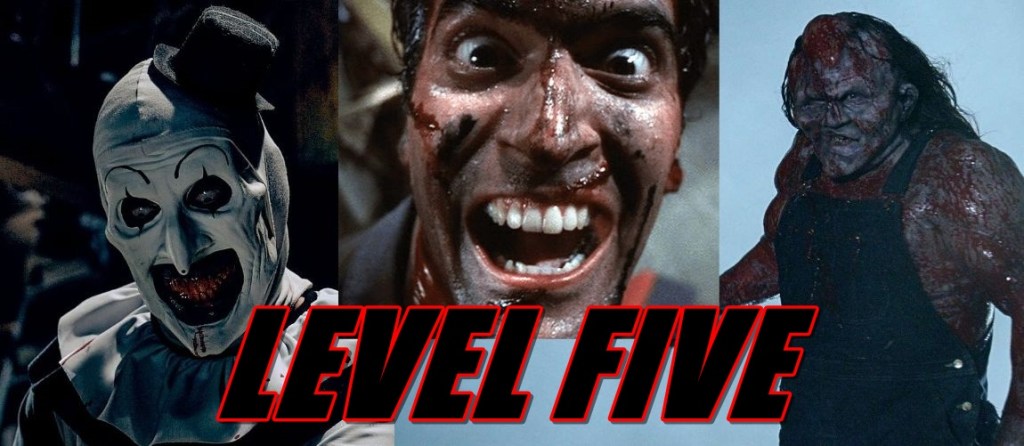
Finally, we arrive at the top tier, that level of horror that’s furthest away from comedy while still, at the same time, having some funny beats. In this category, I place movies that are primarily horror films, but that have a pitch-black sense of humor. Evil Dead 2, again, is a prime example. Bruce Campbell and his girlfriend are under assault by the horrific “Deadites,” demonic creatures that are out to torture and mutilate. Not funny. They take his girlfriend and turn her into one of them. Not funny. One of them possesses Campbell’s hand and he’s forced to cut it off with a chainsaw. Not –

–actually, that part is kinda funny. And that’s how movies on this level go. They take things that SHOULD be horrible and graphic and terrifying, but elevate them to a level that’s almost too cartoonish to take seriously, allowing some laughter. Campbell is great at this. We also see it done to good effect in Adam Green’s Hatchet series. The characters who are NOT undead revenant Victor Crowley are often pretty funny, but Crowley himself is the unspeaking sort of horror. The kills he pulls off, though, are so ridiculously gruesome that the realism is drained away, giving the audience permission to laugh a little bit. To a lesser extent, the same is true of the hugely popular Terrifier films, where the silent Art the Clown brutally tortures his victims. Early screenings for the third film (opening soon) are reporting people walking out during the first ten minutes, with one audience member allegedly even throwing up in the theater. If this is the reaction filmmaker Damien Leone is going for (and I believe it is), then you have to believe he is intentionally going way over the top. 

So there you have it, friends, the levels of horror/comedy. Keep in mind that this scale is meant to determine INTENSITY and in no way is indicative of the QUALITY of a film. Every level has great movies and awful movies that belong there. But if you’re trying to figure out how intense a movie you’re looking for this spooky season, think of the scale and make sure you’re not in a Level Two mood when your friend shows up recommending a Level Five.

Blake M. Petit is a writer, teacher, and dad from Ama, Louisiana. His most recent writing project is the superhero adventure series Other People’s Heroes: Little Stars, volume one of which is now available on Amazon. You can subscribe to his newsletter by clicking right here. The only movie on his scale to ever achieve a Level Six? Babe 2: Pig in the City. Weird, huh?

Geek Punditry #33: You Joke Because You Love

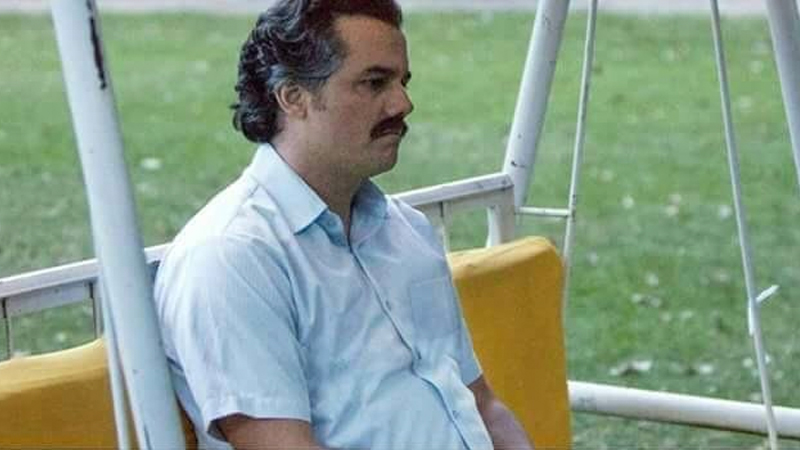
Last week was the season finale of Star Trek: Strange New Worlds, so when Thursday rolled around and I didn’t have a new installment of my favorite franchise waiting for me, I was not unlike that meme where the guy sits on a swing and pines away for something, probably football season. It was kind of pathetic to watch, actually. Just ask my wife.

“I wonder if Captain Pike’s hair misses me, too.”

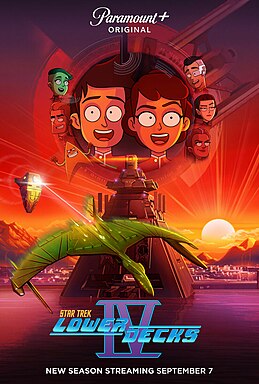
But that sadness was mitigated by the fact that in just a few short weeks, on Sept. 7, the new season of Star Trek: Lower Decks is dropping. There was a time when Star Trek went off the air and we had no idea how long it would be before it returned to television (that time was called 2005 and the answer turned out to be 12 years, by the way), but in this day and age we’ve got more to work with. There’s been a semi-regular flow of Star Trek since Discovery first hit screens six years ago, and some of it has been magnificent: Prodigy, Strange New Worlds, season three of Picard…but the truth is, of all the “NuTrek” shows, none of them have made me as consistently joyful as Lower Decks.

Boldly going to season four.

A lot of fans were dismissive when Lower Decks was announced. An animated Star Trek? A comedy? A comedy produced by someone who worked on Rick and Morty? If you’re the kind of Trekkie who wants the show to lean more on the dramatic side, it kind of sounded like a recipe for disaster. But every Trek series has had plenty of lighthearted moments, and even the occasional full-blown comedic episode (unless you’re trying to tell me we were supposed to take “Spock’s Brain” seriously), so I was happy to give it a chance.

I couldn’t be more satisfied with the results. I went in expecting to see a parody of Star Trek, but the truth is that isn’t really what Lower Decks is. It’s funny, absolutely. The characters are hilarious and the performances by the main cast are magnificent. But it’s not the comedy alone that makes Lower Decks work – what really makes it land is the fact that if you take away the jokes, you’re still left with plots that would work solidly on a more mainstream science fiction series. The season 2 finale is a great example: when a more “important” ship than the USS Cerritos is endangered on a first contact mission, our crew has to step up and save the day. Ultimately, they discover the only way to traverse a dangerous asteroid field is to strip off the outer hull of their ship and pilot through manually. (Trust me, it makes sense in context.) The scenes of the crew coming together to dismantle their own vessel and then maneuver through the field are as tense and action-packed as Trek at its best, and still funny to boot.

Many fans were won over by the first season. Not everyone, of course. There are still some who argue that Lower Decks lacks in actual comedy, and is just a rapid-fire recitation of references to other Trek series. While it’s true that the show is very reference-heavy, to say that this is the only source of comedy is untrue and reductive. So much of what makes it funny it comes from the characters, and it is the characters that make the show worth watching. The references are fun, however, and I think it’s the references that prove something that I sincerely believe to be true: the best parodies are made by people who honestly and sincerely love the thing they’re making fun of. 

Mike McMahan, the creator and showrunner of Lower Decks, was a writer on several animated shows, but he came onto the radar of the Trek producers via – of all things – a Twitter account in which he posted synopses for episodes of a fictional eighth season of Star Trek: The Next Generation. The account became a hit and he eventually rolled that into writing an officially-licensed book. Warped: An Engaging Guide to the Never-Aired 8th Season was a hilarious look at what might have been but, more importantly, the writing showed that McMahan truly understood the show, the characters, and their universe, and that was what he built the comedy on. When he got the chance to do the same with Lower Decks, it was as engaging and funny as anyone could have hoped for. 

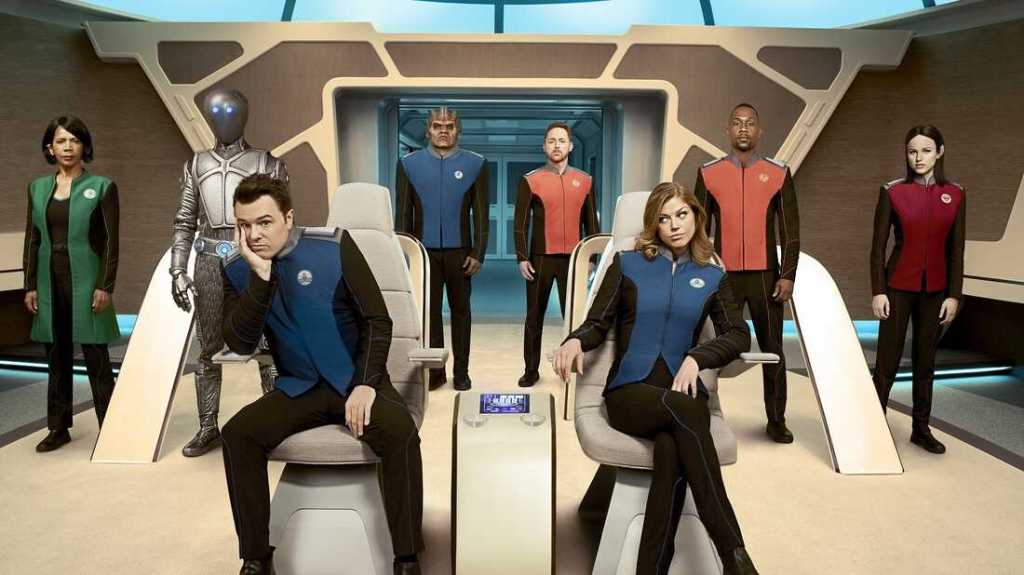
It should be noted that McMahan wasn’t the first writer to do that with Star Trek. By my count, he was at least the fourth. There are two previous projects that also take loving jabs at Trek while still working as science fiction in their own right. David Howard and Robert Gordon’s script for Galaxy Quest transports a bunch of Trek-esque actors into a Trek-stye adventure, and Seth MacFarlane’s The Orville started out as a comedic take on Trek tropes and quickly evolved into a sci-fi series as deep and powerful as Trek at its best, albeit with a few more jokes. In both cases, these were projects envisioned by creators who had a deep love of the franchise and wanted to pay tribute to it in their own way. 

“No, it’s not a Star Trek knock-off. Because our captain wears blue and our doctor wears green, that’s why.”

This is the thing that needs to be understood: something can be a great comedy and still be a great example of the kind of story that’s being told. It’s always frustrated me how the Academy Awards typically ignores comedy in most of the major categories, as if it is somehow less artful than drama. It’s only slightly better with awards shows like the Golden Globes or the Emmys, which separate comedies into their own category, with a subtle implication that they don’t deserve to compete against the “real” movies. There’s a sort of snobbish attitude that thinks of comedy as “lower” art. That’s ridiculous, of course. Comedy has existed since the birth of drama. Shakespeare’s tragedies may get more play in schools, but I’ll argue that Much Ado About Nothing is a vastly superior play to Romeo and Juliet any day of the week. And as far as the acting part goes, giving a great comedic performance is a skill set that not everyone has. All acting is about building and releasing tension, but the demands of comedy require you to land the release in a way that often far more difficult than drama. Think about how many great comedic performers have gone on to give great dramatic performances. Off the top of my head there was Jim Carrey in Man on the Moon, Robin Williams in Dead Poet’s Society, and Carol Burnett put forth a fantastic performance in the final season of Better Call Saul. Speaking of which, the “Gilliamverse” duo of Bob Odenkirk in Saul and Bryan Cranston in Breaking Bad pretty much embody this concept. On the converse, how many actors who became known as great dramatists then went on to give fantastic comedic performances? I’m sure the list exists, but the flip side is much more extensive. Go ahead, tell me Orson Welles’s best-known comedic performance. I’ll wait. 

You picked this one, right?

Great comedies are often great examples of the stories that they are supposedly parodying. Two of the most formative movies of my childhood, two of the movies that are probably responsible for shaping my sense of storytelling into what it is today, fall into this category. Ghostbusters began with Dan Aykroyd’s personal desire to tell a story about the paranormal. Although the script evolved and changed considerably from his original vision by the time it was on the screen, it was a fantastic story with some genuinely creepy moments buoyed up by some of the greatest comedic performances ever put to screen. The next year, Bob Gale and Robert Zemeckis gave us Back to the Future, a movie that’s effective as a science fiction film, but even more impressive as a relationship comedy about teenagers in love and a son rediscovering his parents. These movies are classics and are pretty much universally recognized as such. (Heck, as of this writing, Back to the Future still sits atop my personal “Perfect Movies” poll and has done so for over a year.)

Nor is this only true in film and television. Look at Douglas Adams The Hitchhiker’s Guide to the Galaxy and its assorted sequels. Begun as a radio drama before becoming part of the modern literary canon, Adams uses science fiction and humor hand-in-hand to satirize any number of targets. Terry Pratchett did the same thing with the fantasy genre in his Discworld novels – parodies of fantasy tropes, to be certain, but at the same time marvelous examples of a fully-realized fantasy world that had a lot of interesting things to say about the actual world we all live in most of the time. 

Recently I found a new member for this club of parodies that also perfectly encapsulate the thing that they’re parodying: the Hulu series Only Murders in the Building. I mentioned this show a few weeks ago when discussing shows I haven’t watched yet that I would try to get through during the (still ongoing) writer’s and actor’s strikes in Hollywood. Since then, I’ve made it through the first two seasons and begun the third, and I’m frankly angry at myself for not having watched it before. If you’re unfamiliar, the show stars Steve Martin, Martin Short, and Selena Gomez as neighbors in an enormous Manhattan apartment building. Initially strangers to one another, they bond over their mutual love of a true crime podcast. When a murder takes place in their own building, they decide to launch a podcast of their own while they try to solve it.

“That Petit guy is talking about us again. Get the murder.”

The show is a deft send-up of podcasts like Serial, with Tina Fey appearing in several episodes as an obvious stand-in for Serial’s host, Sarah Koenig. While gently mocking the format, it also occasionally says some serious things about the nature of an audience that draws entertainment from the death and suffering of real people (which, let’s face it, is what we all do when we “enjoy” the true crime genre). There are dark moments as well, as the pasts of each character are slowly opened up and revealed to the viewer throughout the course of the investigation. What’s more, the show isn’t afraid to get experimental, as we see in the format-breaking episode seven, which tells the story in a way few shows would have the guts to do. It’s also not afraid to tug at the heartstrings, as we see in season two when several episodes revolve around the concept of fatherhood and what it means, which is something that cuts into me personally pretty deeply.

In the midst of all this, though, there are two things that absolutely have to be said:

  1. The show is outrageously funny.
  2. Each season so far has been a fantastically-structured mystery in its own right.

In their mocking of the true crime culture, show creators Steve Martin and John Hoffman have managed to make one of the most engaging TV mysteries I’ve ever watched, laying out clues, unraveling threads, and sending us chasing after red herrings with the aplomb of Arthur Conan Doyle or Alfred Hitchcock. Even if it wasn’t funny, it would still be a good mystery, and that’s what really matters in regards to my grander point.

Good comedy is damned hard to do, and it deserves respect. And when that comedy lands, it’s not just funny, it’s transformative. It’s not fair to say Only Murders is a great mystery “for a comedy,” to call Lower Decks a good Trek show “for a comedy,” to say that Terry Pratchett’s Discworld novels are solid fantasy “for a comedy.” They just are. They’re great examples of their genres that also happen to be comedies.

When we can get everybody to wrap their brains around the premise, maybe the people who make us laugh will finally be able to get their due.

Blake M. Petit is a writer, teacher, and dad from Ama, Louisiana. His current writing project is the superhero adventure series Other People’s Heroes: Little Stars, a new episode of which is available every Wednesday on Amazon’s Kindle Vella platform. Hey, he hasn’t used Star Trek as a main topic in this column for six weeks now, he deserved this one.

Geek Punditry #6: Seeking Sitcoms

The show that is indirectly responsible for everyone you know that can quote an episode of Rick and Morty verbatim.

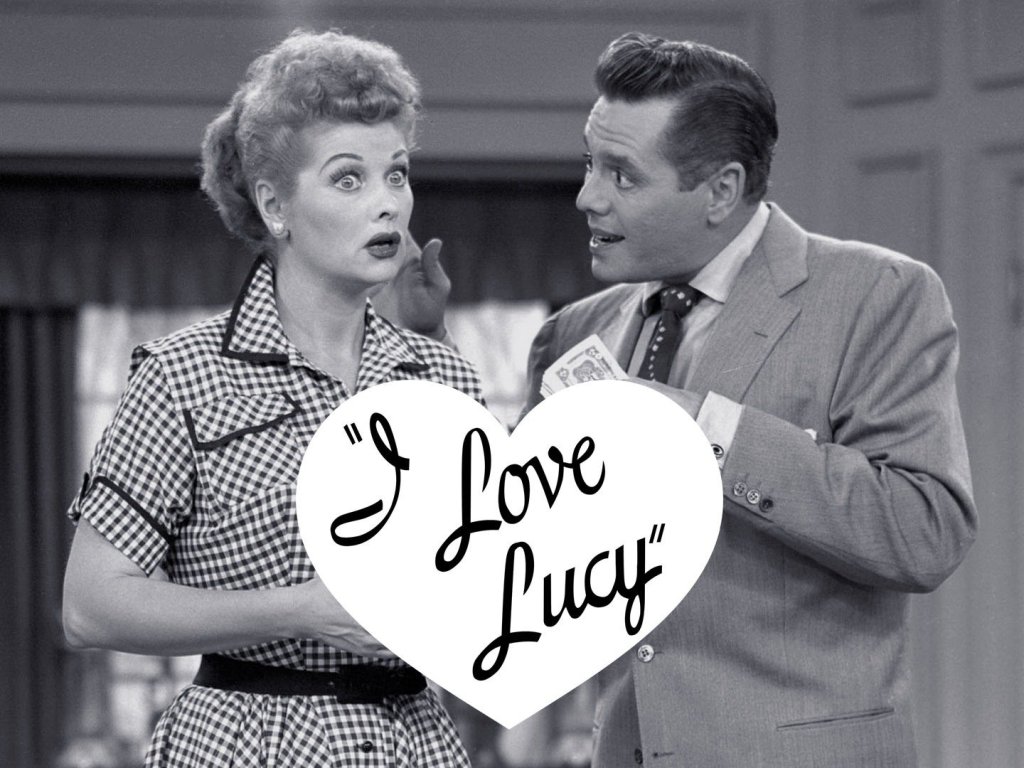
It’s Desi Arnaz’s fault. As the story goes, when Lucille Ball got pregnant during the run of their legendary sitcom I Love Lucy, it was Desi who suggested to the network that they run some older episodes again to fill in the weeks when she would be out of work. The idea was bizarre. Run episodes again? Re-run them? Who would want to watch an episode of a TV comedy that they had already seen?

The answer, as it turned out, was everyone. There’s a comfort in returning to something that made you happy the first time you watched it, like finding an old friend or reminiscing about the good old days. It’s something that we all need at some time or another. 

The rerun became a standard television feature and changed the landscape of entertainment. Not only could they run the same show for an entire year without having to make quite as many episodes or skipping a week, but this eventually led to the concept of syndicating reruns of old episodes to show outside of their original timeslot. And it is syndication, I believe, that has allowed TV shows to become iconic parts of our culture. Think about it: were it not for syndication, if the shows were not still available after their initial airing, would anyone today still know the theme to The Brady Bunch, or be able to tell you how many castaways were stranded on Gilligan’s Island? Who would remember the man named Jed, a poor mountaineer who barely kept his family fed? Could a gentle whistle  conjure up the image of Andy Griffith and Little Ronnie Howard carrying their fishin’ poles down to the fishin’ hole?

And although it isn’t a sitcom let’s not forget that Star Trek (arguably the font from which all modern fandom springs) is only remembered today because people kept watching the reruns after the series was canceled. It was in syndication that the show’s popularity truly boomed, syndication that led to things like Star Trek conventions, merchandise, novelizations, comic books, and fanfiction…and it was those things that fueled the fire and ultimately led to the revival of the franchise. That’s huge even if you’re not a Trekker, because the fandom of virtually every major franchise since then has followed that template.

I’m not saying it’s the greatest sitcom ever made, but I won’t argue if YOU say it.

When I was younger, I would get home from school and gorge myself on a diet of sitcom reruns. Shows like Cheers, Night Court, or Mama’s Family were staples for me. The 90s came and Home Improvement, Seinfeld, and Friends joined my education. And no matter how many times I watched any given episode, I faithfully watched them again, to the point where I can remember minute details of ancient TV shows better than I remember things like the current whereabouts of my social security card. Because of syndication, I can throw out an obscure joke or comment about virtually any topic, then watch my wife roll her eyes at me when I tell her it’s a classic Simpsons reference.

The streaming revolution has changed things, of course. Once, these reruns were a way to fill time on the air before new series start. Today, fewer and fewer people are using “air time” in their television viewing at all. With the exception of sports, weather, and Svengoolie on Saturday nights, I virtually never watch any live television anymore.

This does not mean the end of reruns, of course, it just means that you have to seek them out instead of turning on whatever Channel 26 was showing at 5 p.m. In fact, for many people seeking out these older shows has become a lifestyle choice. Whereas once someone would have to content themselves with the seventeen or eighteen episodes of The Big Bang Theory that TBS shows on any given weekday, now the option exists to literally watch it 24 hours a day on HBO Max, and you can choose any episode you wish. If you go to a Bob’s Burgers group on Facebook and ask what shows the fans watch when they aren’t watching Bob on Hulu, you will be greeted by several quizzical faces that fail to comprehend such a time could exist. There are people who watch The Office on constant repeat, people who never turn off Family Guy, and folks who will spend their entire lives immersed in Pawnee, Indiana with Parks and Recreation.

There are a few too many people who don’t understand this character was meant to be a cautionary example.

I’m not entirely sure this is a good thing. Oh sure, it’s great to be able to go back and revisit your favorite shows, but I think it’s making it more difficult to find new shows, especially comedies. There’s plenty of talk about “prestige” television, but most of the time this refers to genre shows like Stranger Things or dramas like Yellowstone. The conversation doesn’t really center on blockbuster comedies the way it used to. Would it even be possible, in the current TV climate, for a show with the level of cultural penetration as Friends or Seinfeld to come into being?

As much as I love the sitcoms of my youth, I’m also the sort of person who is constantly on the lookout for new characters, new stories, and new worlds to explore. Even now, I sometimes feel a strange guilt if I watch something I’ve already seen, faced with the knowledge that I could be using this time on new entertainment. I get over it, though, and since streaming really took off in force there are many classic comedies and shows of my youth that I’ve gone back and watched in their entirety: Cheers, Frasier, Wings, The Office, Head of the Class…part of it is because I like to watch new shows with my wife (hi, Erin), and I used to go back to older shows as something to watch while she’s at work. That didn’t quite work out, though, as she would get home while I was in the middle of an episode of Everybody Loves Raymond, she would get into it, and I then I had to wait to watch the old shows with her too. Now I just make her tell me explicitly which shows I am and am not allowed to watch without her to avoid confusion.

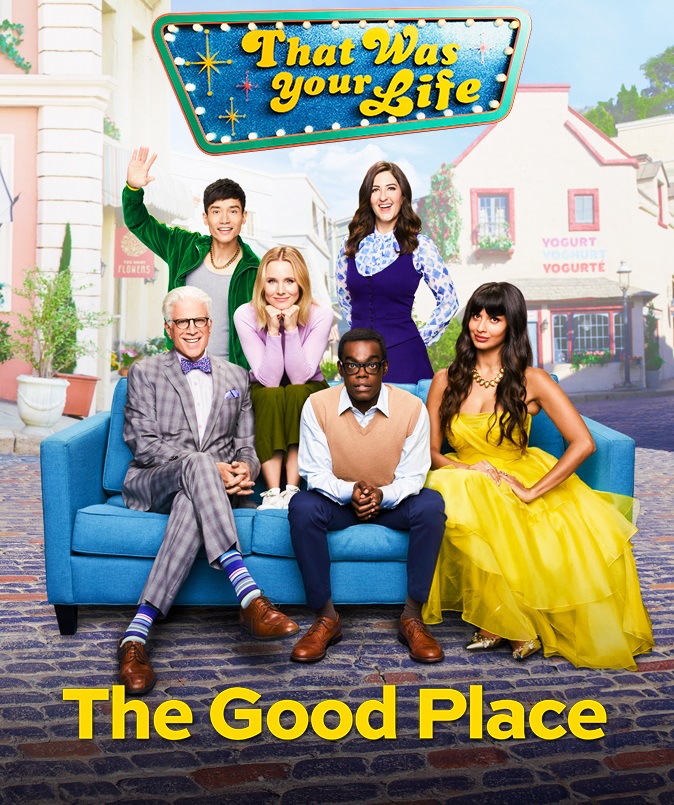
How legendary is Ted Danson? His picture is in this column twice.

Anyway few years ago, I realized it had been quite some time since I found a new comedy that I really got into, and I made it a point to start seeking them out. I began with The Good Place, which was both a wonderful choice and also completely antithetical to what I was trying to do. If you’ve never seen it, The Good Place is about a kind of scuzzy woman (played perfectly and adorably by Kristen Bell) who dies and, through a sort of cosmic clerical error, winds up in Heaven, which turns out to be run by Ted Danson.

I refuse to say any more about the story because to do so would rob new viewers of one of the most sublime television series ever made, but I will say that I never thought I would see a show that could blend together philosophy, spirituality, religion, and deep, complex contemplations on the meaning of life and the nature of existence itself with a fart joke and make it all seem utterly perfect. It is both hilarious and one of the most profoundly thoughtful and emotionally-compelling TV shows I’ve ever seen. And it’s for that reason that it’s not a show I can re-watch too often, because there are only so many times you can cry on a random Tuesday afternoon.

So The Good Place is an excellent show and I urge everyone to watch it immediately…but it wasn’t the sort of thing that made me want to put it on constant repeat the way I could Frasier. The search would continue.

The most scientifically accurate television program since SeaQuest DSV.

The next comedy that really got my attention was Abbott Elementary. Upon the suggestion of friends of mine from work (I am, in case you didn’t know, a high school English teacher), I checked out the first few episodes of the show, then I stopped and made my wife sit down and watch them with me, because it’s so good. On the surface, it feels like one of dozens of Office clones – a faux documentary set in an American workplace, this time an elementary school. There’s a wacky boss! There’s a new guy in the first episode to act as the audience surrogate! There’s a will they/won’t they couple that the audience is clearly supposed to root for! All the fingerprints are there!

What sets Abbott apart for me, at least, is the authenticity. There have been a number of TV comedies set in schools, but the majority of them have focused on the students (Saved By the Bell), or on the class of one influential teacher (Welcome Back Kotter, Head of the Class). This is the first show I’ve ever seen where the faculty are the stars of the program. What’s more, it’s the most realistic show set in a school I’ve ever seen. You’ve got the young teacher (played by show creator Quinta Brunson), eager to please and determined to be the best that she can be. You’ve got the grizzled veteran teacher (Lisa Ann Walter) who does what she wants and doesn’t care what anyone thinks of her. The awkward teacher (Chris Perfetti) who is determined to be thought of as cool despite the fact that he clearly is not. The teacher who has been at that school forever (Sheryl Lee Ralph), is perfect in everything she does, and is both intimidating and nurturing to everyone around her. I’ve taught with every one of these people. I have been many of them at some point or another.

It also shows the repercussions of events in a school in a way that most shows don’t. Budget cuts, classroom size, getting adequate parental support – all of these are issues that have turned up on the show in a realistic way. Well…semi-realistic. It is still a TV show, after all. Count the number of times in Saved By the Bell students are left in a classroom with no adult supervision, and know that every one of those offenses could (and depending on the severity of that episode’s hijinks, should) have resulted in somebody getting fired. Abbott actually shows consequences to even well-intentioned mistakes, (the Egg Drop episode is a wonderful example of this) and does so with relatable, enjoyable characters. Best of all, it doesn’t reduce every teacher to a useless buffoon. In fact, unlike most shows in a school setting, every faculty character — even Janelle James’s seemingly-useless principal — has moments where they show their worth as a teacher, as a friend, or as a mentor. It is the first school-focused TV show I’ve ever watched that didn’t make me ask if anyone involved had ever set foot in an American school in their lives. It’s really lovely.

It’s not perfect. The teachers do seem to have absurdly long lunch periods and planning times where their students are in someone else’s care, but I accept that as a necessity when you’re telling stories about the adults and not the kids. Those minor problems are easy for me to get past when I go back and put the show on repeat…which is where I stumble, since we’re only in the second season, and with modern TV the first season had a measly 13 episodes. While I eagerly await each new episode, there’s not enough Abbott for a good binge…not yet.

So I keep looking for more comedy.

There are two shows about dead people on this list, and I don’t know if that says more about me or about society.

The most recent show to get my attention, like Abbott, is only in its second season, but it has a few more episodes and I haven’t quite gotten through them all yet. I started watching CBS’s Ghosts on the advice of my brother (which I mention mainly because if he should happen to read this he will immediately jump in the comments and demand credit for it), and I’m enjoying it a lot. Ghosts, a remake of a British show of the same name, is about a young couple (Samantha and Jay, played by Rose McIver and Utkarsh Ambudkar, respectively) who inherit an old mansion from a distant relative, unaware that the ghosts of numerous people who have died on the property are trapped there. In the first episode, Sam has a near-death experience and wakes up with the ability to see and hear the ghosts, and the sudden connection between the ghosts and the “livings” changes things for all of them. 

It doesn’t sound like the premise of a wacky sitcom, but it’s really great. The ghosts cover a wide range of character types, from someone who died 1000 years ago (a Viking exploring the Americas played by Devan Chandler Long) to a dudebro businessman who died in the early 2000s without any pants on (Asher Grodman). The premise allows for characters with a variety of perspectives from different time periods, which makes for a fun blend of types: the former mistress of the house (Rebecca Wisocky) has attitudes about women’s roles stuck in the 1800s, while the hippie who got killed trying to hug a bear in the 1960s (Sheila Carrasco) tries to help her break out of them. The scout leader who was killed in an archery mishap in the 1980s (Richie Moriarity) wants to be best friends with Sam’s husband Jay, but it’s tough to be pals with someone who can’t see or hear you. 

The first season of the show is a fun one that sets up the premise very well, but the second season is even better as it starts to explore the world more fully. Sam encounters more ghosts beyond her own property, we get more information about the lives of the deceased, and an ongoing plotline begins to build around the 20s songstress Alberta (Danielle Pinnock), who always claimed she was murdered. Her insistence that she had an exciting demise was considered just a symptom of her hubris until evidence starts to accumulate that suggests she may be right. There’s even a great meta joke in the second season where the ghosts learn they cannot pass through the walls of a vault in the house and Jay quips that he appreciates the expansion of the mythology.

The only problem with Ghosts is, like Abbott, there’s just not enough of it yet. I’ve only got four more episodes until I’m caught up, and then what?

Time to watch the British original, I suppose.

The point is, I’m still on the lookout. The great sitcoms of the past aren’t going anywhere, and thank goodness for that. I know I can turn on Cheers or Everybody Loves Raymond or Night Court any time I want, and I frequently do. (In fact, I haven’t started watching the Night Court reboot yet because Erin and I have to finish our binge of the original series first.) But I still crave new entertainment. So I’m open for suggestions, friends. What are the current comedies that are worth watching? 

Blake M. Petit is a writer, teacher, and dad from Ama, Louisiana. His current writing project is the superhero adventure series Other People’s Heroes: Little Stars, a new episode of which is available every Wednesday on Amazon’s Kindle Vella platform. He’s also a big fan of Star Trek: Lower Decks, but he doesn’t consider that a sitcom so much as a way of life.