Geek Punditry #147: It’s Not Halloween (But Who Cares?)

The whole “What Qualifies as a Christmas Movie” debate has been at a fever pitch for several years now. Die Hard, Lethal Weapon, Iron Man 3 – each of these has defenders ranging from people who genuinely appreciate their holiday content for what it is to edgelords who think they’re somehow better than other people by picking Riggs and Murtaugh over Rudolph and Frosty. Strangely, though, Halloween has never really fallen victim to this sort of heated, brutal, occasionally family-schisming battle royale. People are eager to accept certain movies as part of their standard Halloween fare even if nothing in the film has any direct ties to the holiday. And I think we should embrace that philosophy.

Art.

Some of my favorite movies fall into this category. As anyone who has seen the posters in my living room knows, one of my favorite movies of all time is Abbott and Costello Meet Frankenstein. I love the Universal Monsters, I love Bud and Lou, and this film fused those two brands at their respective heights into a hilarious film that nevertheless holds up the Universal Monsters as icons that they are. Bela Lugosi’s Dracula! Lon Chaney Jr.’s Wolfman! Glenn Strange’s Frankenstein Monster! (Okay, it stinks that they couldn’t get Boris Karloff to come back to the play the monster one last time, but of all the actors who wore the makeup for Universal, Strange was #2 after Karloff.) And I watch this movie at LEAST once every October as part of my Halloween wind-up. There’s a masquerade party in the third act, but it’s not specifically noted as being a Halloween party, and the film doesn’t seem to have any indication of what time of year it takes place. But the gestalt of having the finest incarnations of the Universal Monsters is enough to place it on my list.

That’s one of the great things about Halloween – the inclusivity of the concept. You can get away with almost anything as a Halloween costume, even if what you’re dressing as has no Halloween link. You can be a superhero or a princess, you can make a costume based on a pun, you can be a character from your favorite TV show or you can dress up as your friend who you know is going to be at the same party and watch them stew about it as you imitate their mannerisms flawlessly. All of it counts. And because of that, it’s much easier for a character or a movie to be elevated to iconic Halloween status even if there’s nothing strictly Halloweenish about them.

My other top two movie franchises that fall into this category are, of course, Ghostbusters and Scream. None of the Ghostbusters films take place at Halloween, and Scream didn’t touch upon the holiday until the sixth installment, but both of them are eagerly accepted as standard Halloween costumes now, much like any other Universal Monster, 80s slasher, or Beetlejuice. And, in fact, I try to work them into my Halloween viewing rotation almost every year. (If I don’t get around to Ghostbusters I’ll save it for December – Ghostbusters II is a New Year’s movie, after all.)

Halloween movies are like pumpkin spice. Pumpkin spice doesn’t actually taste like pumpkin, it tastes like cinnamon and the other assorted ingredients you add to a squash to make it taste like a pie instead of…well…a squash. Similarly, there are a lot of great movies that may not have any Halloween ingredients to them, but nevertheless, deliver hard on the Halloween flavor. 

The Stuff (1985)

Still can’t get enough.

I remember seeing the poster for this in the video store every time my parents took us there to pick out a few movies when I was a kid. I knew my mom would never let me rent stuff like this, but it never stopped me from looking at the poster and wondering what it was all about. Once I was old enough to seek out the movies I wanted myself, I found that this Larry Cohen film was ridiculous and delightful at the same time. “Mo” Rutherford (Michael Moriarity) is hired by a dairy company to investigate a new product called “The Stuff,” a creamy substance that is obliterating sales of ice cream and other traditional desserts. Nobody knows what’s in it or what it’s made of, and when Mo learns the truth, the answers are horrifying. The Stuff has the feel of a 50s sci-fi alien invasion movie, it’s like Invasion of the Body Snatchers mixed with The Blob mixed with a Baskin-Robbins commercial. The tone is perfectly appropriate to blend in with your Halloween viewing – silly and over-the-top with an antagonist that is absurd on the face of it. As far as Halloween costume potential goes, there’s not really an iconic character for you to dress up as, but if you were to whip up a costume that looks like a “Stuff” carton, you’ll immediately figure out who the cool kids at your Halloween party are. If nothing else, this movie is the quintessential argument for food nutrition labels.

Killer Klowns From Outer Space (1988)

Pictured: 2016.

True story: Last year on November 1st, after Spirit Halloween put everything at 50 percent off, my wife picked up the 12-foot inflatable Jumbo the Clown from this, one of her favorite cheesy movies. Jumbo sat in his box in the closet until this September, when I told her it was time to test out our Halloween decorations to make sure they still worked and she remembered buying this thing. It wasn’t until he was plugged in for the first time that we realized just how tall 12 feet actually is.

Eddie for scale.

Totally worth it, though, because this movie is a delight. In Killer Klowns, alien clowns come to Earth and begin abducting people in cotton candy traps and taking them to their ship, which happens to resemble a circus tent. The story is ostensibly about a bunch of young people who band together to fight them off, but nobody is watching the movie for the humans. The clowns are the stars, lovingly created by the Chiodo Brothers in a fashion that evokes the finest puppet work of the Jim Henson company. The Chiodos actually repainted and reused some of the clowns a few years later for the trolls in a legit Halloween classic, Ernest Scared Stupid.

It may not be a Halloween movie per se, but there are few things in the world that feel more Halloweenish than a good ol’ creepy clown, and the ones from this movie are some of the best. The iconic looks make for great costumes, and the movie itself is a ton of fun.

It (All versions)

Georgie for scale.

Similar to the Killer Klowns, Stephen King’s Pennywise the Dancing Clown is one of those characters that feels as perfectly suited to Halloween as Ebenezer Scrooge does to Christmas. The Creepy Clown Coefficient is in full effect here, whether you’re looking at Tim Curry from the 1990 TV miniseries or Bill Skarsgard from the 2017 and 2019 films and the new Welcome to Derry streaming series. Pennywise isn’t silly like the Killer Klowns, of course. He’s a much darker threat and can be legitimately frightening, whereas it’s hard to imagine anyone being anything but charmed by the Chiodos’ creations. The movies lean on the darker side of Halloween, but that’s okay. The darker side is more pronounced here than in any other holiday, and that’s kind of what we love about it. 

The Addams Family (All Versions)

If Taylor Swift had referenced Gomez and Morticia in her songs instead of Romeo and Juliet, maybe she would have made something of herself.

I wonder what Charles Addams would think if he could see the cultural phenomenon his little one-panel gag comics have become. The original Addams family came from a series of comic strips that mixed comedy with macabre elements of a monster movie, and although some of the characters became regulars, they didn’t have names or distinct personalities until they were adapted into a TV series in 1964. While it was a popular enough show, and fondly remembered, Addams died before the property really exploded with the 1991 film starring Raul Julia, Anjelica Huston, Christopher Lloyd, and Christina Ricci. Since then we’ve had multiple cartoons, three live action films, two animated movies, a Broadway musical, and a new streaming series focusing on the Addams’ daughter Wednesday. But although Wednesday may be the breakout star, virtually every member of the family has become iconic. Gomez, Morticia, Uncle Fester, Cousin It, even Pugsley all have a distinct, unique look to them, and you can throw on any of the movies or any of the assorted TV shows and get a beautiful blend of creepy and comedy that is a perfect fit for the season. 

Shaun of the Dead (2004)
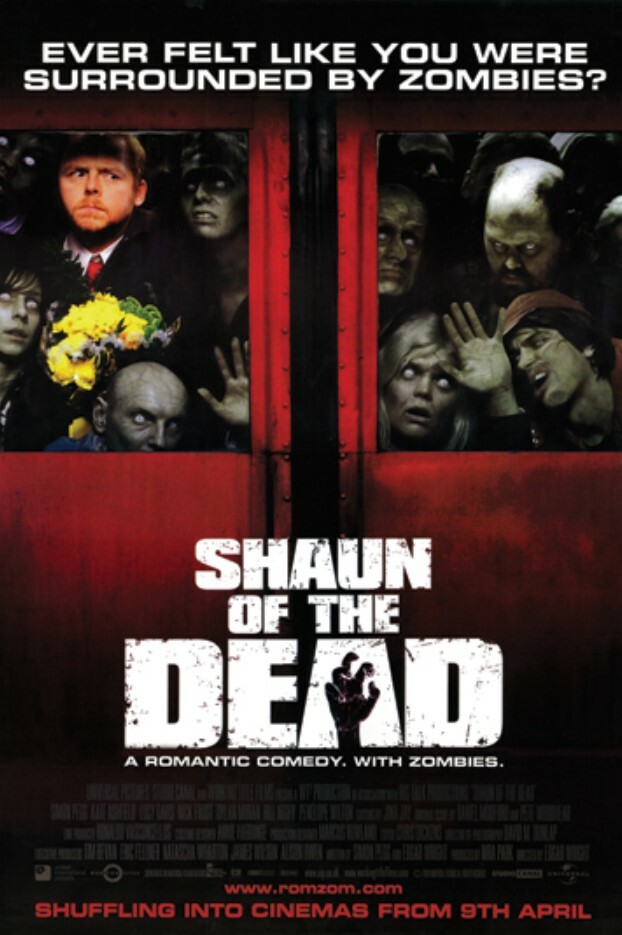
Because this is what it feels like going to WORK, amirite?

Edgar Wright’s comedic send-up of zombie movies has the perfect sense of scary and silly that you’re looking for. Shaun (Simon Pegg) is a retail jockey struggling with a girlfriend who wants more out of life than he seems willing to give, a mother whose husband he constantly clashes with, and a best friend who is enabling his arrested development more than anything else. He’s ALREADY living like a zombie even before the dead start to rise. Like a lot of the all-time great horror/comedies, Shaun works because the zombies themselves are played absolutely straight – nothing silly or goofy about them. The human characters, however, are funny and highly relatable. One could make an argument for virtually any zombie movie as being part of your Halloween rotation, but I’ve always felt that the more comedic ones fit in more with the fun of the holiday. And although there are plenty of zombie comedies out there, I don’t think it’s controversial to say that this is probably the best. It’s definitely the most iconic. Zombie costumes are easy, but cosplaying as the HERO of a zombie movie is often tough – they are, by the standards of the genre, usually kind of dull, generic, everyman types. But you can cosplay Shaun easily – a white shirt, crimson tie, a nametag, and a cricket bat are all you need. And make sure to get a little red on you.

Labyrinth (1986)

Where the hell is Fozzie?

Jim Henson’s fantasy film from 1986 may have flopped at the box office, but today the fans are devoted, dedicated, and legion. A young Jennifer Connelly plays Sarah, a teenage girl whose frustration at babysitting her infant brother inadvertently leads to his abduction by Jareth, the Goblin King (David Bowie). But Jareth offers her a chance to get him back – make her way to the Goblin City at the center of his remarkable Labyrinth before time runs out and she can take him home. The film is lavish and gorgeous. The characters, too, are memorable and loveable, with some of the finest work Jim Henson’s creature shop ever did. Even the bad guys have distinct personalities and witticisms that make them a joy to watch. And as the movie, technically, is all about monsters, it gives off those Halloween vibes any time of year.

There you have it, friends, a few non-Halloween flicks that you can throw into your rotation and feel perfectly seasonal. What are some of your favorites?

Blake M. Petit is a writer, teacher, and dad from Ama, Louisiana. His most recent writing project is the superhero adventure series Other People’s Heroes: Little Stars, volume one of which is now available on Amazon. You can subscribe to his newsletter by clicking right here. He’s also started putting his LitReel videos on TikTok. He didn’t mention the Munsters because lord knows he doesn’t feel like stirring up THAT can of worms yet again. The scars still haven’t healed from the last time. 
Geek Punditry #92: The Spectrum of Horror and Comedy

If there need be any further evidence that Hollywood executives frequently don’t have the slightest idea what they’re doing, let’s talk about the fact that they seem to be afraid of horror/comedy hybrid movies. ‘It’s confusing,” they will tell you, pulling their hair out over a movie like Behind the Mask or Happy Death Day. “We don’t know how to market this! Who is it for? Is it supposed to be a horror movie or a comedy?” Whereas the answer is obvious to anyone smarter than a movie executive, which is a very large part of the Venn Diagram, and includes virtually all horror movie fans: it’s both. Horror and comedy BELONG together. They are a natural combination, the peanut butter and chocolate in the Reese’s Peanut Butter Cups of the movie industry, and the notion that there are people who don’t understand that is maddening to me.

Admittedly, humor and terror seem to be on the two extremes of the emotional spectrum, but that’s one of the reasons they compliment each other so well. Another reason is that, structurally speaking, they are very similar to one another. Both of these styles of storytelling are built upon creating an emotional response in the audience, and both of these responses are constructed through the careful buildup and release of tension. In fact, if separated from context, it might be impossible to tell if a scene is intended to be funny or scary until the punchline hits and the audience either laughs or screams, because until that point they can be virtually identical. A funny movie can turn on a dime if an expected laugh turns into a scare, and the dread of a scary movie can be decreased to a manageable level by a well-timed joke. 

The horror/comedy combo is one of my favorites in all of storytelling, but there is a spectrum that these movies and stories exist on. Some of them lean heavier towards the comedy side, some more on the horror, and it’s fair if you prefer one side more than the other. But for the sake of discussion, this week I thought it would be useful to go over what I think of as the five levels on the horror/comedy spectrum and give some examples of each. We’ll start on the more comedy-heavy side.

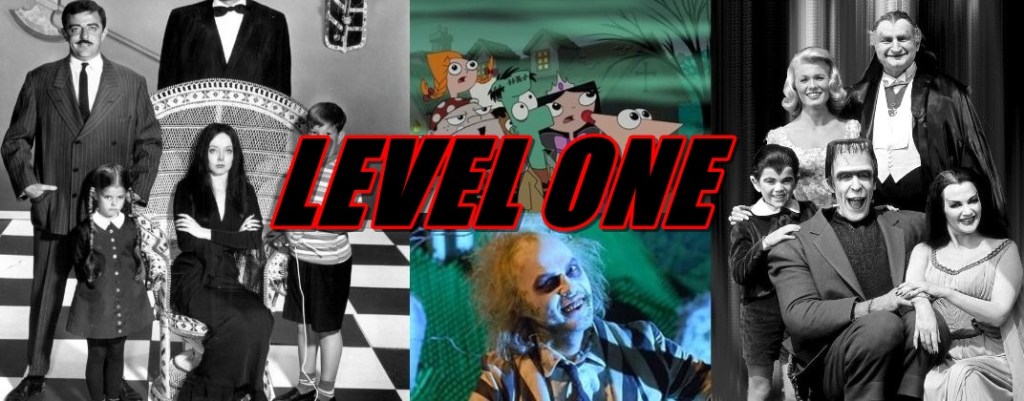
 Level one is where I place the mildest iteration of horror/comedy, where the emphasis is on the comedy. This is usually pretty lighthearted, and more often than not it’s family friendly. It usually has the TRAPPINGS of horror: haunted houses, ghosts, monsters, and pretty much anything else you would consider acceptable in an elementary school Halloween decoration, but there is rarely (if ever) a legitimate attempt at scaring people with this. The classic examples here are the legendary sitcoms The Addams Family and The Munsters. People will argue until the end of time as to which one was better (as far as the original TV show goes, that is – there can be no debate that the Addamses have superior movies), but whether you’re a Gomez Guy or a Lilly Lover, these two franchises are about as close to G-rated as horror gets. There are more recent entries into the category as well, like the Hotel Transylvania movies and underrated movie Igor, and a lot of family cartoons and sitcoms shift into this for Halloween episodes, often seen on the likes of Roseanne, Home Improvement, or Phineas and Ferb.

It’s worth pointing out here that, again, I’m calling this a spectrum, and even these five subcategories have different levels. Technically, I would place Beetlejuice here as well (the original, at least, I haven’t seen the sequel yet), because I don’t think that the movie is ever actually intended to be scary. However, it’s obvious that the movie is more intense than the adventures of the Addamses and the Munsters, and thus if it IS a Level One, it’s towards the high end of the spectrum. A 1.9, perhaps.

On the second level, I place those stories in which the situations are relatively serious, but the characters themselves are funny and react to the scary moments in funny ways. Ghostbusters is the classic example of this. The ghosts aren’t played for laughs (not usually, at least, especially not in the first film), and some of the things could actually be legitimately frightening, such as the first appearance of the Library Ghost. But the behavior and antics of Bill Murray, Dan Aykroyd, Harold Ramis, and Ernie Hudson are very funny and keep you from feeling any legitimate terror. Even when it looks like a Sumarian Deity is about to curb-stomp the city of New York, you know that Venkman is going to have a wisecrack to defuse the situation. Another of my favorite films, Abbott and Costello Meet Frankenstein, falls into this category. The classic Universal Monsters are there, and Lon Chaney Jr. (the Wolf-Man), Glenn Strange (Frankenstein’s Monster) and Bela Lugosi (Count Dracula himself) all play their roles perfectly straight, as if they’re in one of their solo adventures and trying to chill the spines of the audience. But with Lou Costello freaking out over a candle and Bud Abbott doing his impression of everybody who never sees Michigan J. Frog singing, there’s no real sense of danger. The blend of master monster performers and master comedians is never more evident than in this film.

Other works that are typically family-friendly but where the villains have the POTENTIAL to cause actual harm fit in here as well. Hocus Pocus and The Nightmare Before Christmas fall into that category, as do certain classic cartoons such as the Bugs Bunny short Transylvannia 6-5000. I struggled a bit with one of my other favorite Halloween movies, Ernest Scared Stupid, trying to figure out if it belongs here or level one. Ultimately, I’m placing it here, because there are kids (the intended audience) who might find the trolls actually frightening, and they’re trying to do bad things. It’s only through the intercession of American hero Ernest P. Worrell that they’re stopped in time. Yes, that means I’m giving Ernest a higher rating than Beetlejuice, but my metric is how scared the INTENDED audience might be, and I’m sticking with it.

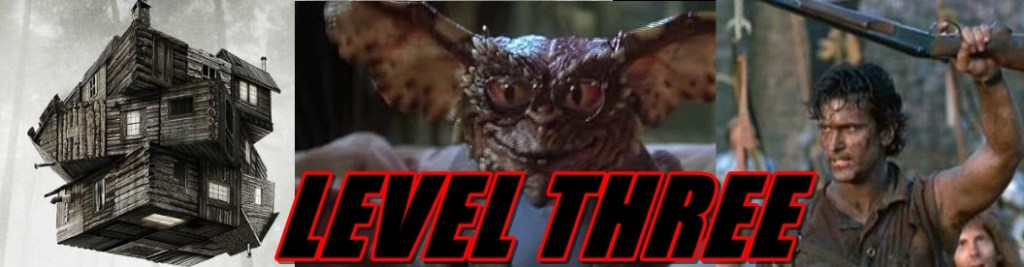
Level three stories have a fair balance between the horror and the comedy. Parts of the film may feel like you’re watching a scary movie, other parts feel like a pure comedy, and when this is done well there is no discrepancy felt by the audience. These two styles of storytelling just match each other very well. Drew Goddard’s The Cabin in the Woods is a great example of this. We start out with what looks like some sort of bland, white-collar office comedy, then cut to a bunch of teenagers getting drawn into what appears to be a very stereotypical slasher movie. But the creeps start to claw their way into the office setting, while the events in the titular cabin turn out to be funnier than you would expect, and by the time we get to the full-on collision of the two settings and you come to understand what one has to do with the other, we’ve got a great blend of the two that maintains pretty much throughout the rest of the film.

We often see this type of balance, by the way, in later films in a franchise. It’s not unusual to see a relatively serious horror movie get zanier in the sequels. Gremlins 2 is one of my favorite examples of this. The first film has its humorous moments, but the sequel really leans into absurdity, with the monsters taking different forms and playing out scenes as though they fell out of a Looney Tunes cartoon. The result is a movie that many fans even prefer to the original. Another good example of this is Army of Darkness, the third movie in the Evil Dead trilogy. The first movie is pure horror, almost nothing funny about it. The sequel, Evil Dead 2, is still very dark, but brings in enough comedic elements to earn it a spot on my spectrum. (That spot is in Level Five, and we’ll get to that soon enough.) But in Army of Darkness, Sam Raimi decided to let Bruce Campbell’s comedic skills and charm really shine through, resulting in a movie that is very different, tonally, from the rest of the franchise, but like Gremlins 2 is a favorite of a large number of fans.

Level Four is where things are getting a lot darker. These are films that are primarily horror movies, but movies that have a twisted sense of humor, and that often comes down to the villain of the franchise. We see this most clearly, I think, with A Nightmare on Elm Street. You’ve got a dead child killer who has the ability to enter and attack you through your dreams, which is not funny at ALL. But the child killer in question also has a wicked funny bone, which manifests itself both in what he says and in the scenarios that he traps his victims in – scenarios that can go from bitterly ironic to just plain goofy. I think it’s the reason that Freddy became such a breakout star in the 80s. There were lots of slashers at the time, but in an era when most of them were imitating Michael Myers and acting as the Strong, Silent Type, Freddy was blazing a trail as a new kind of killer. There have been efforts to imitate him, but few have succeeded.

Probably the most successful imitator, tonally at least, is Chucky from the Child’s Play series. In this franchise, we’ve got a child’s plaything, a three-foot doll, inhabited by the spirit of a serial killer. Making a kid’s toy creepy is a fairly common occurrence in horror (the idea of something that’s supposed to be wholesome and nurturing turning dangerous is frightening), but again, it’s the wit and cleverness of the Chucky character and Brad Dourif’s performance that made the franchise successful and allowed it to grow into so much more than it was in its origins. Oddly enough, later films in the franchise and the follow-up television series do drift, but not lower on the scale of comedy, but towards having a bit more melodrama. It’s a weird, unique transmogrification of the concept, but it never loses its sense of humor.

The Cryptkeeper from Tales From the Crypt and other assorted horror anthology hosts often fall into this category as well. Whether we’re talking about a TV series, movie, or comic book, the format is usually the same: they present to you a scary story, popping in before and after (or sometimes during, if it’s a format that has a commercial break) to drop in a few witticisms about the hapless characters marching stoically to their doom, and the audience loves them for it. The truth is, fans tune in as much for the Cryptcreeper’s ghoulishly ghastly puns as we do for any of the scares that are coming our way.

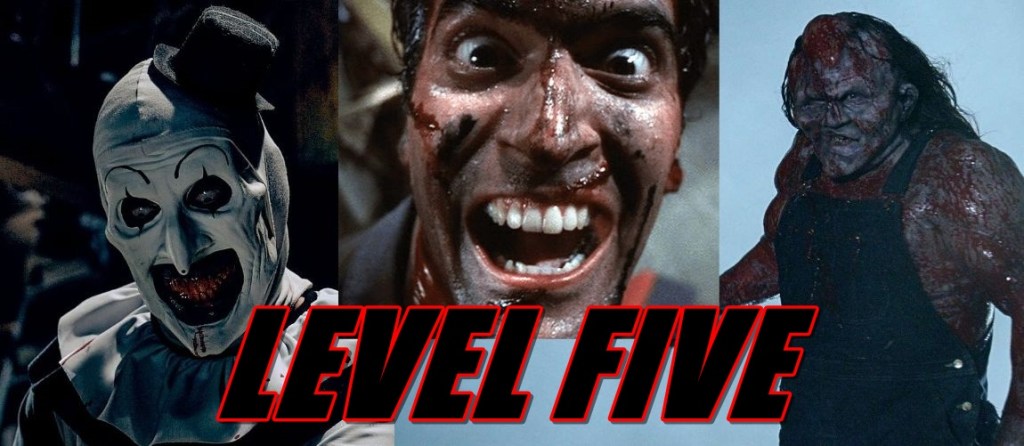
Finally, we arrive at the top tier, that level of horror that’s furthest away from comedy while still, at the same time, having some funny beats. In this category, I place movies that are primarily horror films, but that have a pitch-black sense of humor. Evil Dead 2, again, is a prime example. Bruce Campbell and his girlfriend are under assault by the horrific “Deadites,” demonic creatures that are out to torture and mutilate. Not funny. They take his girlfriend and turn her into one of them. Not funny. One of them possesses Campbell’s hand and he’s forced to cut it off with a chainsaw. Not –

–actually, that part is kinda funny. And that’s how movies on this level go. They take things that SHOULD be horrible and graphic and terrifying, but elevate them to a level that’s almost too cartoonish to take seriously, allowing some laughter. Campbell is great at this. We also see it done to good effect in Adam Green’s Hatchet series. The characters who are NOT undead revenant Victor Crowley are often pretty funny, but Crowley himself is the unspeaking sort of horror. The kills he pulls off, though, are so ridiculously gruesome that the realism is drained away, giving the audience permission to laugh a little bit. To a lesser extent, the same is true of the hugely popular Terrifier films, where the silent Art the Clown brutally tortures his victims. Early screenings for the third film (opening soon) are reporting people walking out during the first ten minutes, with one audience member allegedly even throwing up in the theater. If this is the reaction filmmaker Damien Leone is going for (and I believe it is), then you have to believe he is intentionally going way over the top. 

So there you have it, friends, the levels of horror/comedy. Keep in mind that this scale is meant to determine INTENSITY and in no way is indicative of the QUALITY of a film. Every level has great movies and awful movies that belong there. But if you’re trying to figure out how intense a movie you’re looking for this spooky season, think of the scale and make sure you’re not in a Level Two mood when your friend shows up recommending a Level Five.

Blake M. Petit is a writer, teacher, and dad from Ama, Louisiana. His most recent writing project is the superhero adventure series Other People’s Heroes: Little Stars, volume one of which is now available on Amazon. You can subscribe to his newsletter by clicking right here. The only movie on his scale to ever achieve a Level Six? Babe 2: Pig in the City. Weird, huh?

Geek Punditry #66: The Frankenssance

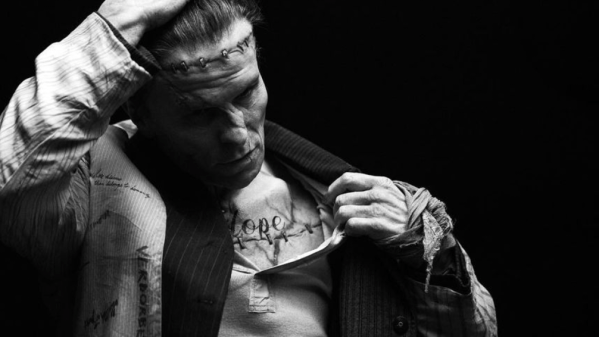
Earlier this week, the internet was abuzz with an image released from the upcoming film The Bride! (The exclamation point is part of the title – I’m interested, but not so excited as to declare it via punctuation.) Written and directed by Maggie Gyllenhaal, this movie seems to be an updated version of the Frankenstein story, moved to the 1930s and starring Bale as the monster and Jessie Buckly as the titular bride. Director James Whale’s original Bride of Frankenstein is probably the best of the old Universal Monster movies from the 30s and 40s, and ol’ Vic’s creation is hands-down my favorite classic monster, so news of this film intrigues me. But I think it intrigues me even more than it ordinarily would  because with this movie, at least the fifth Frankenstein-derived film released or announced in recent years, it seems that we are in the midst of a full-scale Frankenssance.

Of course, all anybody wants to talk about is the tattoo.

Let’s do a quick bit of literary spelunking for anyone who doesn’t know the story (both of you). In 1816, Mary Godwin was vacationing at the home of her friend Lord Byron with her soon-to-be husband Percy Shelley. This was in the era when visiting a friend could be an extended stay that lasted weeks or months at a time, as opposed to modern times when it lasts until the owner of the home claps his knees and says, “Well, I don’t let me keep you any longer” because the Pelicans game starts in a half-hour and he doesn’t want to watch it with a dirty Celtics fan like you. It was an exceptionally rainy and dreary summer, and to pass the time trapped inside, Byron proposed that they each write a “ghost story” to entertain one another. If you ever wonder which of them won that little competition, remember that it’s 200 years later and the only one that we’re still reading is the one that was written by the 19-year-old girl.

By the way, I really want to stress how amazing that is to me. Whenever somebody talks about the creation of Frankenstein, or the Modern Prometheus, they focus on how shocking it was that it was written by a woman. That shouldn’t be what surprises you. I’m a high school English teacher and I’m not shocked at all that a masterpiece of literature was written by a woman. I’m shocked that it was written by somebody the same age as a student that I had to ask to stop from pouring Pop Rocks into a bottle of Coke in the back of my classroom last week while I was trying to review gerunds. 

But I digress. The story follows Victor Frankenstein, a college dropout (nope, he’s not a doctor) who is so obsessed with conquering death following the loss of his mother that he finds a way to reanimate dead tissue. But when he does so, he’s so horrified by the hideousness of his creation that he flees in terror, leaving it to fend for itself. I always interpret his fear as being an expression of the Uncanny Valley problem, where something is so CLOSE to looking authentically human that even the smallest deviation is unacceptable to the eye, which is one of the many ways that the story of Frankenstein is a great metaphor for modern AI.

The Gold Standard. Okay, the GREEN standard.

Most people, of course, think of Boris Karloff’s version of the creature when they think of Frankenstein’s monster: the monosyllabic, hulking brute with the flattop, green skin, and bolts on his neck, whereas none of that really applies to the vision in Shelley’s novel. But that’s okay. I think that one of the things that really makes a character – any character – into a timeless one is its potential for reinvention. Compare the original Arthur Conan Doyle Sherlock Holmes stories to the Basil Rathbone movies, the Robert Downey Jr. version, or the Benedict Cumberbatch series. All are perfectly valid, but very different from one another. Think of all the different depictions there have been of Batman, Superman, Tarzan, Dorothy of Oz, Cinderella…if a character is unable to be adapted, it’s not a character likely to achieve immortality. Victor Frankenstein may not have lived forever himself, but the versatility of his creation ensures that his name will last forever.

Like I said, we all know Boris Karloff, but he wasn’t the first cinematic Frankenstein. That honor belongs to Augustus Phillips, who played the creature in a 14-minute film produced by Thomas Edison in 1910. After Karloff played the creature, the role was passed to Lon Chaney Jr., then Bela Lugosi, then Glenn Strange, who rounded out Universal’s original version of the creature in one of my favorite films of all time, Abbott and Costello Meet Frankenstein

I’m not kidding. This is maybe my favorite movie of all time. I will never get tired of it.

Since then the list of actors who have played the creature is staggering: Robert De Niro in Mary Shelley’s Frankenstein (1994), Christopher Lee in The Curse of Frankenstein (1957), Aaron Eckhart in I, Frankenstein (2014), Clancy Brown in The Bride (1985), and Tom Noonan in The Monster Squad (1987), and that just scratches the surface. There was a stage version in which Benedict Cumberbatch and Johnny Lee Miller EACH played the Creature and Victor Frankenstein, alternating nights. As of this writing, IMDB credits Mary Shelley as the writer on 115 different projects, and frankly, I think that number is low. I mentioned last week that I’ve got a little obsession with creating lists. On Letterboxd, I’ve logged 55 different movies that I tagged as adapting or being inspired by Mary Shelley’s creation, including Mel Brooks’s Young Frankenstein, The Rocky Horror Picture Show, the Hotel Transylvania series, all of the Universal films that featured the creature and several – but not all – of the Hammer Horror films that did the same. I’ve got a list of nearly 50 other Frankenstein movies that I haven’t seen yet, but I hope to get around to eventually. 

Whole lotta Frankie goin’ on.

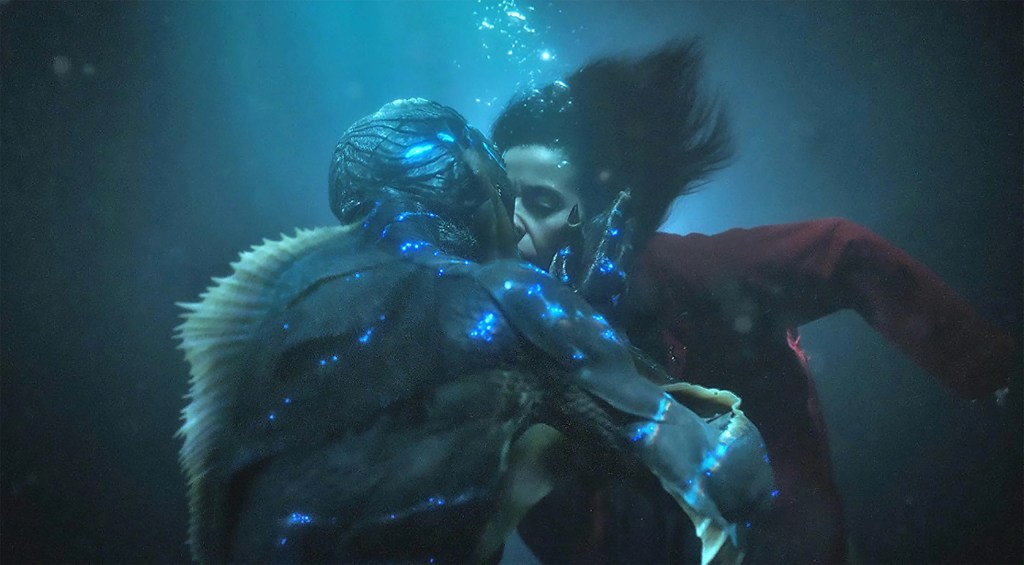
There’s a LOT of Frankenstein out there, is what I’m getting at. And while they haven’t all been great, there have been a lot of very interesting ones. We seem to have reached one of those moments in the cultural zeitgeist (there’s another English teacher word for you, folks) where the Creature is in ascendance. In addition to Gyllenaal’s The Bride!, Guillermo del Toro is working on his own version of the story for Netflix starring Oscar Isaac as Victor, Jacob Eldori as the creature, and current horror It Girl Mia Goth in a role that doesn’t seem to have been specified yet. A lot of sources seem to be reporting that she’s playing the Bride, but those same sources also reported that Isaac was playing the creature and Andrew Garfield was playing Victor Frankenstein, and those reports seem to have been wrong. It likely depends on how faithful del Toro intends to be to the original novel. (The bride existed in the original novel, by the way, but was destroyed by Victor before he could bring her to life.) It’s hard to say which of these two movies I’m more interested in. The images of Christian Bale are intriguing, but I don’t think I’ve ever been disappointed by a Guillermo del Toro film. The man won best picture for what was essentially a remake of The Creature From the Black Lagoon, and let’s hear it for the Universal executive who passed on that movie. 

The man made us root for THIS, he can make any movie he wants.

Of course, two upcoming films would not, in and of themselves, qualify as a Frankenssance. But those aren’t the only ones. In the last two years there have been at least three significant films based at least in part on the Frankenstein legend, all of which I’ve watched during my spring break, because that’s what spring break is for. First up, let’s talk about Poor Things, the movie that scored Oscar nominations for Best Picture and Best Director and a Best Actress win for Emma Stone. Based on the novel by Alasdair Gray, this film tells of a dead young woman (Stone) whose body is reanimated by a scientist (Willem Dafoe). The woman, dubbed Bella, starts with a blank slate of a mind, an infant mentality, and as she grows to learn about the world around her, finds herself rejecting many of the Victorian standards of morality and the world’s treatment of women. I haven’t read the book, but the film was an interesting statement about gender roles of the time period. I was a little disappointed that they didn’t spend as much time with Willem Dafoe’s character, though, a malformed scientist who seems to have an unusual kind of kinship with Bella. The film never quite makes it plain, but the interpretation I came away with is that Dafoe’s Godwin Baxter was actually the original Frankenstein monster, carrying on his father’s work. I don’t know if that was the intention of the film or the original novel. I suppose I could look it up, but where would the fun be in that?

Frankenstein, Frankensteiner, Frankensteinest.

Earlier this year we saw the release of the Zelda Williams-directed Lisa Frankenstein. In this film, set in 1989, Kathryn Newton (the actress getting all of the horror movie roles that aren’t going to Mia Goth) plays a teenage girl trying to begin a new life in a new town after her father remarries only six months after her mother’s violent death. Lisa doesn’t seem to fit in anywhere, not with her brutally abusive stepmother (Carla Guigno) or her well-meaning but vapid new stepsister (Liza Soberano). The closest thing she has to a friend is a bust on a tombstone she finds in an old, abandoned cemetery. A bolt of lightning reanimates the corpse underneath (Cole Sprouse) and they embark on a vendetta of revenge. The film is a horror comedy, although it’s got a darker, even meaner tone than I expected, but it’s made very well. The movie is the directorial debut for Williams (daughter of the late Robin) and I’m very interested to see what she can do next.

But the best neo-Frankenstein I’ve watched lately is probably the one you’re least likely to have heard of: The Angry Black Girl and Her Monster, written and directed by Bomani J. Story. Originally released via Shudder and now on Hulu, if you’re a Frankenstein fan, you’ve gotta check it out. Laya DeLeon Hayes plays Vicaria, a teenage girl who (like the original Victor) has been obsessed with conquering death since the early loss of her mother. Her rage is compounded when she loses her brother to violence, and she sets out to prove that death is a disease and she can cure it. The movie is set in the present-day, and Story wears his influences on his sleeve. It’s the furthest removed film from Mary Shelly’s original time, and yet, it also seems to be the one most devoted to her original vision. The idea of treating death as a disease is very much reflective of what Shelley wrote about 200 years ago, and while Story applies a contemporary lens and modern social issues to his tale, it still feels very authentically Frankenstein.

As I always say, if there’s one thing that a geek always wants, it’s more. For a fan of Shelley and Karloff and Strange like myself, this new influx of Frankenstein material can only be a good thing. I’m always anxious to see another twist or another take on the story. Keep them coming, Hollywood, and I’ll keep watching.

And once this wave passes, we’ll talk about giving the Wolfman his turn.

Blake M. Petit is a writer, teacher, and dad from Ama, Louisiana. His most recent writing project is the superhero adventure series Other People’s Heroes: Little Stars, now complete on Amazon’s Kindle Vella platform. If you didn’t know he was a devoted fan of Frankenstein, he can only imagine that you didn’t pay attention last Christmas when he was re-presenting all of his old short stories, like “Warmth.”