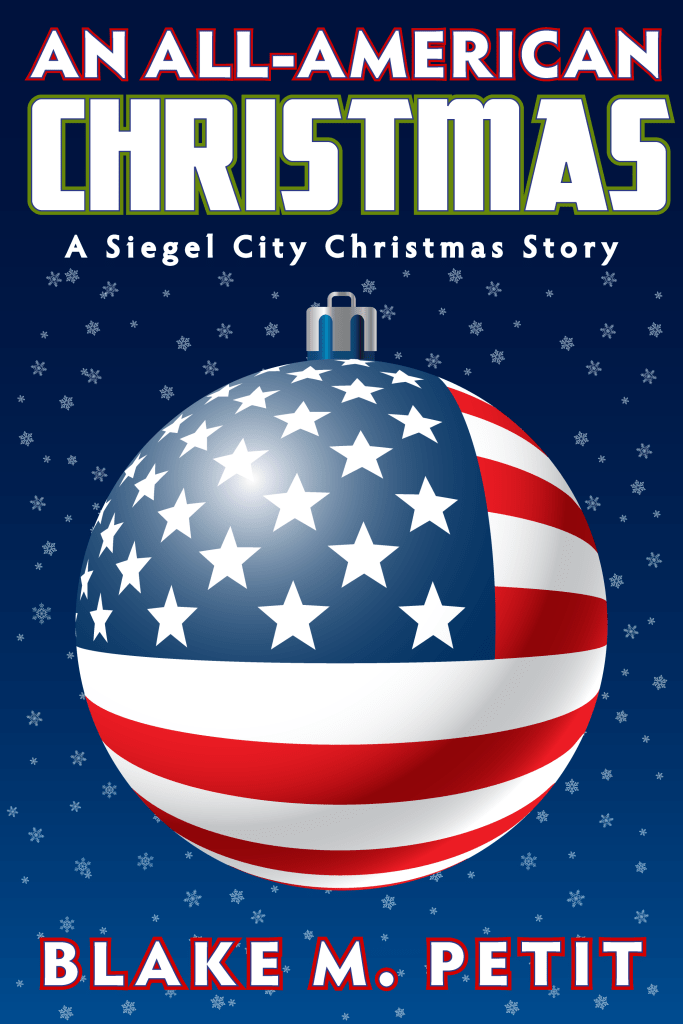
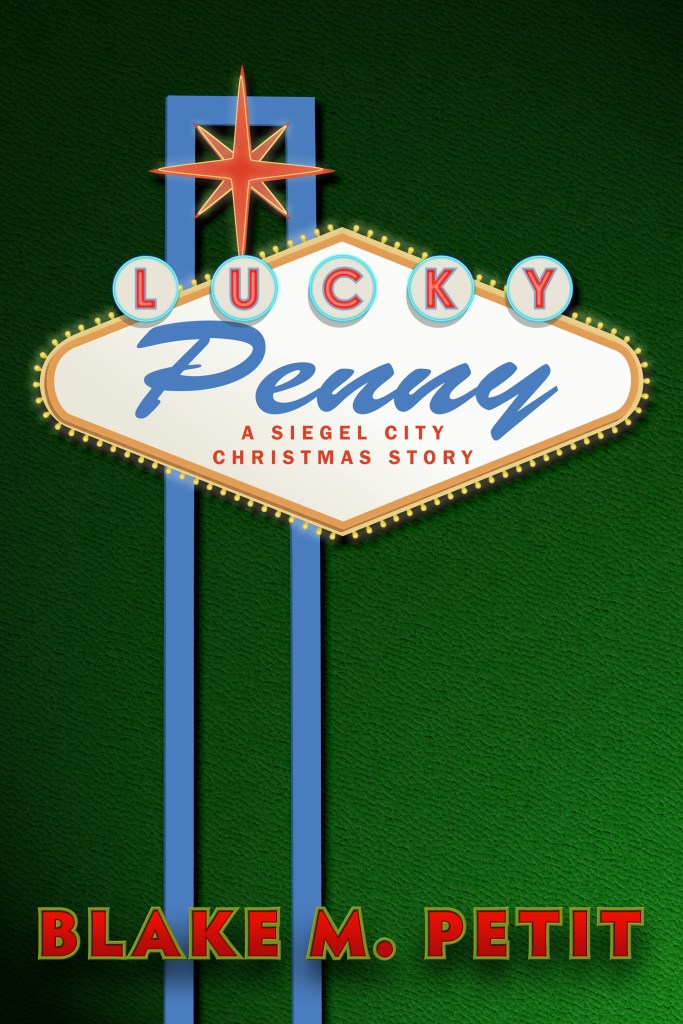
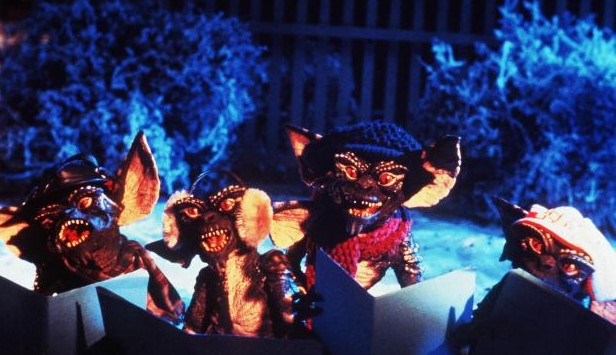
As I mentioned yesterday in the introduction to this little project, I got the inspiration to write a Christmas short story as a gift to my friends back in 2000. I was fresh out of college, working at a newspaper, and scribbling away at a story that had grabbed me about a reporter who discovers he has super powers, and thus wants to become a superhero himself. Originally intended to be a short story, when “Capes and Masks” reached 25,000 words and I realized I wasn’t even halfway through, I understood that I was actually working on my first novel. The book was eventually finished and given a slightly catchier title, Other People’s Heroes, and it’s kind of been the hub of my writing ever since.
As I was working on the book when the idea to do a Christmas story came to me, I wound up incorporating that universe I was building into the story in question, a habit that would become more and more pronounced for me over time. You will find, over the next few weeks of this time capsule project, that a great number of these Christmas stories are linked either to Siegel City, to my other fictional world which I refer to as “The Curtain,” or to various other projects that were in the works at the time and may or may not have ever been completed. (Mostly have not.)
But for now, my friends, please enjoy — and feel free to share — the first story in my annual tradition, the Siegel City tale called…
Ask anybody, I’ve been a huge fan of the entire Christmas season for as long as I can remember. I love the music, I love the movies, I love the TV specials, and lord knows I love the food. I love the stories, too – tales of redemption and hope, ghosts and angels…there’s something that makes any story a little more precious when it’s part of the Christmas season.
Way back in 2000, a year that was before any of the students in my current 12th grade class were even born, I learned an interesting bit of information about my favorite Christmas movie, It’s a Wonderful Life. The tale of George Bailey and Clarence the Angel, the beautiful story of a man who is given the gift of seeing a world where he never existed, did not actually begin life as a movie. The movie was a loose adaptation of the short story “The Greatest Gift,” a story that was written by Philip Van Doren Stern in 1943 and given to friends as a Christmas card after being unable to find a publisher for it. The story was passed around and eventually made its way to Hollywood, where Frank Capra and James Stewart transformed it into one of the most iconic films of the season. The thing that stuck with me, though? The notion of a short story as a Christmas card.
The idea lodged in my brain, inescapable, and it took root. I decided to do something similar that year, writing a short story that included characters from the novel I was working on, a weird little thing about superheroes that was, at the time, called Capes and Masks before I finally settled on the marginally-superior title Other People’s Heroes. The story featured two side characters from that novel and was set on the Christmas immediately before the events of the book. I was pleased with the story, I sent it out, and when I published the revised version of the novel several years later I included the story, “Lonely Miracle,” as a sort of special feature in the back.
The thing is, that first story wouldn’t sit still, and in 2001 I sat down and wrote a second story, this one directly inspired by Capra’s film. In 2002 I did it again. Then again. And here we are, 23 years later, and I have never failed to put a new story into the world every Christmas.
This year, I’ve decided it would be nice to dig back into the archives and once again share all these ghosts of Christmas stories past. Starting tomorrow, I’ll be re-presenting most of those stories to you, every day except Wednesday (because on Wednesdays the only thing you need to worry about reading will be the newest installment of Other People’s Heroes: Little Stars). I’ll once again share every short story with you, free of charge. That will make 20 of the 24 Christmases – the other four Christmases are accounted for with the three short Christmas novels I’ve written. I’ll give you those links now, since two of them are on Amazon.
First was A Long November, from Christmas 2005 (which also happened to be my first year attempting National Novel Writing Month). Duncan Marks is just like you: sick and tired of Christmas getting earlier and earlier every year. And just when you thought it couldn’t get worse, Duncan finds himself targeted by a strange pixie intent on rescuing his Christmas spirit – on the DAY AFTER HALLOWEEN. A Long November is available as an eBook collection from Amazon, which also happens to include several other of my earliest Christmas stories, the ones I’ll be sharing here for the next few weeks.
The second short novel was from 2013, a tale called Making Santa: Advent. Nicholas Grace is one of 200 men abducted by a bizarre alien race called the Yool, aliens who are testing their captives…training them for a very important task: to become the most famous figure in history. One of these men will become the new Santa Claus. Like A Long November, Making Santa: Advent is available as an Amazon eBook. This story, you may notice, has a few sequel hooks…I had thoughts at the time of doing a series with these characters. It hasn’t materialized yet, but never say never.
The third longer work is Santa’s Odyssey, an experiment that began on Christmas 2017 and lasted until Christmas 2018, counting as the story for both of those two Christmases. In this story, as Santa returns to the North Pole on Christmas Eve he is attacked by a coalition of angry holiday icons who feel his holiday has gotten out of control. Over the next year, Santa is forced to see the task of each of the other major holidays. This was a challenging story to write, turning out a chapter every month as the year progressed and covering two Christmases. It’s never been put out for sale, but you can download the PDF of it for free right here.
And with those three stories up front, the stage is set. Come back tomorrow for the first of these Ghosts of Blake’s Christmas Stories past, one every day (except Wednesdays) until we reach Dec. 23, when this year’s all-new story will make its debut! Hope you enjoy this trip through my development as a writer, guys. Merry Christmas!
And in case you missed any of the stories, they’ll be indexed right here!
Here we are, my friends, the most chaotic, volatile, and lucrative date on the American calendar: Black Friday. Of course, Black Friday isn’t quite what it was just a few years ago. In the not-too-distant past, it wasn’t unusual to watch footage of mobs at Target trying to murder each other with croquet mallets in the attempt to get a cheap widescreen television set. That was last month in San Francisco, of course, but that sort of behavior USED to be restricted to the day after Thanksgiving. These days, though, with people having less money to spend, prices rising, and online shopping becoming easier and more tempting than ever, it’s becoming far less likely to see someone get a shiv in the kitchen section of Home Goods. We’re still planning to shop, of course, we’re still all trying to find just the right gift for the people we care about, and as far as the geeks in your life are concerned, we’ve learned something important this year. When it comes to sharing your favorite movies, music, books, or games…the truth is, physical media needs to come back.
Because no matter how hard you try, you can’t club somebody over the head with Netflix.
A few days ago Christopher Nolan, discussing the Blu-Ray release of his movie Oppenheimer, encouraged people to purchase the disc “So no evil streaming service can come steal it from you.” The joke, of course, is that over the course of 2023 it has become horribly fashionable for streaming services to quietly (or sometimes not-so-quietly) remove content from their platforms in a cost-saving measure. There are various ways this can theoretically work – by writing it off as a loss on their taxes, by licensing it off to some other service and getting money from them, and so forth, but whatever the reason the end result is the same. It becomes difficult and confusing for fans to find what they want, and in the case of the writers, directors, performers, and other people who actually made the content in question, all their work is reduced to numbers on a spreadsheet, without giving anyone the opportunity to actually experience it in the way intended.
Warner Bros.’ Max service has become the most notorious for this practice, canning numerous films that were close to completion (including a Batgirl movie, a holiday-themed sequel to Scoob!, and most recently the John Cena/Wile E. Coyote legal drama Coyote Vs. Acme), but they are by no means the only culprit. After a few weeks on their streamer, Disney+ pulled the kids’ sci-fi film Crater, later putting it out for sale or rent on digital media, but it’s no longer available as part of the prepaid package that director Kyle Patrick Alvarez’s mom can tell her friends to watch the next time they ask what her son is up to. But perhaps the strangest instance of this phenomenon came from Paramount+, the streaming service that built its audience as the online home of Star Trek, when they made the decision to not only cancel the nearly-finished second season of Star Trek: Prodigy, but to yank season one from the service as well. Since then, the show has been conspicuous by its absence. This summer they even launched a celebration of animated Star Trek to mark the 50th anniversary of Star Trek: The Animated Series, and while they spent a lot of time hyping that original series, Lower Decks, and the animated webseries Very Short Treks, they did the best they could to pretend that Prodigy didn’t exist.
But come on, who could ever forget this face?
But the fans refused to play along. A strange thing happened when it became public that Prodigy was being taken down from Paramount+. Within a day or two, the Blu-Rays and DVDs for the first half of season one were completely sold out. (The second half had not been released yet.) You couldn’t find a copy in brick and mortar stores, and online retailers like Amazon, Best Buy, and Walmart all cleared out their warehouses before you could blink. It was as if fandom all, simultaneously, realized that media that only exists on a streaming platform can be removed at any time, capriciously, and without warning, and that the only sure way to have access to the content you want is to actually own a physical copy.
What a concept.
I’m not here to decry streaming or to say I’m gonna cancel Netflix. For one thing, that would be REALLY dumb, since they’re the service that wound up saving Prodigy, and I ‘m greatly looking forward to season two. But streaming services are proving themselves to be increasingly problematic for the companies that own them. They’ve become such a huge part of our lives that it’s easy to forget they’re still a relatively new business model, and what we’ve learned this year is that even the big boys like Disney and Warner Bros. haven’t actually figured out how to make money off of them yet. And sure, some of you may be thinking, “Well Disney has enough money, why should I care if Disney+ isn’t turning a profit?” That’s very progressive of you, make sure you put that on a t-shirt. But that doesn’t change the fact that the Walt Disney Global Media Conglomerate and Shadow Government and Pottery Export Business is still, in fact, a business, and if they can’t make money off a project they’re not going to keep making it.
The “Plus” stands for “Plus all of your money.”
In the early days of broadcast TV, the burden of monetization was put on sponsors. Phillip Morris Cigarettes gave Desilu money to make I Love Lucy in exchange for the show promoting their product, everybody was happy, and lots of people got lung cancer.
Okay, maybe I was wrong — smoking DOES make you look cool.
Then came cable, and the model changed somewhat. While sponsors still existed, cable channels made the bulk of their money by selling their content to a cable provider like Cox or DirecTV, which made ITS money by charging consumers for packages of channels from those various sources. These days media companies are attempting to cut out the middleman with their own streaming services, making the content AND controlling the distribution themselves…only to discover that the middleman actually turned out to be kind of necessary in this particular equation. And since they haven’t yet worked out the new equation, they’re starting to cut corners – raising rates for the service, putting ads on streamers that didn’t have ads in the past, and of course, chopping content that they think they can make more money with some other way.
Physical media protects you from losing content, but it’s also becoming a way to show your support for a project. With streaming numbers being a closely-held secret, it can be almost impossible to tell how successful any series is. Fans were blindsided this week, for instance, when Disney+ announced that they won’t be doing a second season of the beloved Muppets Mayhem. (This has been a BAD year for shows that I loved enough to devote an entire Geek Punditry column to.) It was acclaimed by fans, but there was no physical release for us to attach our support to. I can’t say fit certain that it would have made a difference, but it certainly wouldn’t have hurt, because those numbers DO matter. When Star Trek: Picard wrapped up its third and final season, fans asked showrunner Terry Matalas what they could do to encourage Paramount to support his proposed Star Trek: Legacyspinoff series. His answer was telling: keep steaming Picard, yes, but also buy the Blu-Ray of Season Three so Paramount knows you will support it.
I’m not saying you need to rush out and buy everything that’s made, but if you want to send a message about what shows and movies you enjoy, buying the physical media helps accomplish that, and that will give support to similar projects in the future. Sure, I watched Fuller House on Netflix, but I don’t feel any particular need to get it on disc. But when Stranger Things drops its final season next year, you can bet I’ll be first in line for that complete series boxed set.
Available on twelve discs or 97 VHS tapes.
After Nolan made his comments, Guillermo del Toro added his own two cents to the discussion, saying, “Physical media is almost a Fahrenheit 451 (where people memorized entire books and thus became the book they loved) level of responsibility.” In other words, you’re not just clinging to that DVD set of the complete series of Mama’s Family for kicks, it is your civic duty. These things aren’t being preserved anymore, not by the people who actually own and control the IP, so it’s becoming incumbent upon the fans to do it themselves. This is especially true in a world where retailers like Best Buy have announced that they’re abandoning physical media sales entirely. Back before I had a kid and there was such a thing as free time, I could spent hours wandering around the Best Buy DVD section. Over the years I got sadder every time I stepped into the store, watching my favorite section get smaller and smaller. As of now, I honestly don’t remember the last time I walked into a Best Buy store, and that’s on them.
Movies and TV are not, of course, the only kinds of content affected by streaming. Music was hit a long time ago, and eBooks have been around for quite some time. In both of those arenas, though, something odd has happened. The importance of the physical media has grown in the digital age. Despite the obvious convenience of eBooks, a survey showed that in 2022 print books outsold them nearly four-to-one. And in the area of music, while lots of people use Spotify or Amazon Music to get their pop fix, die-hard fans have actually gone back in time and resurrected the vinyl album as their physical format of choice. Spotify is fine for a casual listener, but the hardcore fans want something they can see, touch, hold, display, and screech in terror when their kids hit the arm on the record player and scratch it up. I think, in the next few years, movie and TV fans will experience a similar renaissance. Casual fans will settle for Netflix and Hulu, but the collectors (a faction that will increase in both number and intensity) will thirst for that physical release with pristine picture and sound and loaded with extra features.
So be a Chris Nolan, guys. Get your Barbenheimer fix on a disc. And try not to beat anybody up in the electronics aisle.
Blake M. Petit is a writer, teacher, and dad from Ama, Louisiana. His current writing project is the superhero adventure series Other People’s Heroes: Little Stars, a new episode of which is available every Wednesday on Amazon’s Kindle Vella platform. He hopes you all have a great Christmas season, and he promises loads of holiday content right here, because that’s the kind of nerd he is.
BONUS ANNOUNCEMENT!
In October I introduced a new feature to Geek Punditry, Playing Favorites, in which I give you a topic and ask you for suggestions of categories to share some of my favorite things. For example, the category for Halloween was “Horror Movies,” and suggestions included things like sci-fi/horror movies, comedy/horror hybrids, horror movie performances that I felt deserved Oscar recognition, and lots of other cool choices. It wound up filling up two full columns! (Part One, Part Two)
Well, never let it be said that I don’t know how to milk an idea to death use a good idea when it’s available. With Christmas coming up, I’m announcing the next round of Playing Favorites, in which I’m asking you guys for categories of Christmas content! Movies, books, TV shows, comics – what are the categories I can play favorites with this time? Give me your suggestions in the comments below or on whatever social media you used to find this link!
In January, I decided to do a soft relaunch of this blog, challenging myself to find something I was happy about in pop culture to write about once a week. And although I’ve been pretty successful with that goal so far, it hasn’t always been easy. This week, for example. This week’s post is scheduled for Nov. 17, the last Friday before Thanksgiving, and in a situation like that my normal inclination is to write something about the culture of the holiday, an exploration of some of the classic movies or specials that I always associate with the season, that I revisit every year, and that helps enrich and makes the holidays more meaningful for me. There’s only one problem. In that November, there isn’t that much to be thankful for.
I mean, it’s not even deep-fat fried.
Christmas is easy – there are thousands of Christmas-themed films, TV shows, books, and comics I can turn to, and between Hallmark and the Lifetime Channel they’ve turned out 17 more since we began reading this sentence. Halloween, similarly, isn’t difficult. There are a lot of Halloween-specific movies, and really, anything on the creepy spectrum can feel Halloween-appropriate, even if it’s not set around Samhain. Thanksgiving, though? That’s tougher.
There are a few Thanksgiving movies, but to date there’s really only been one GREAT Thanksgiving movie, and that’s the 1987 classic Planes, Trains, and Automobiles. If you’ve never seen it, I recommend you check it out before next week: Steve Martin plays an executive trying to get home from a business trip in time for Thanksgiving, and absolutely everything goes wrong. But he’s not alone: fate seems to have linked his travel mishaps with a buffoonish shower curtain ring salesman (really) played by the late, great John Candy. Both of these comedians are at the top of their game in this movie – Steve Martin plays the straight man for most of the film, save for one memorable freak-out scene at a rental car counter, and Candy manages to pull the viewer on a roller coaster ride that makes his character at turns goofy, charming, unbearable, sympathetic, and even tragic. My wife Erin contends (and I do not disagree) that if Candy hadn’t passed away at such a young age, he would have had a late-career dramatic renaissance like John Goodman or Bryan Cranston. And while I wouldn’t change anything about the Breaking Bad/Better Call Saul universe, there’s an alternate reality out there where Candy lived long enough to play Saul Goodman, and I bet that’s really interesting. At any rate, this scene shows hints of that dramatic master that, sadly, will never be. There are several must-see movies every Christmas and Halloween for me, but out of all the Thanksgiving movies that exist, Planes, Trains, and Automobiles is the only one I go out of my way to watch every year.
“Seriously, shower curtain rings?”
The first runner up would probably be Fun in Balloon Land, a horrific fever dream of a film where a child wanders through a fairy land made up of hideous balloon people at the behest of a creepy narrator, intercut with scenes of the world’s most boring Thanksgiving parade. This film is truly an abomination, but the good people of RiffTrax have put out a commentary track that is a favorite of mine.
But that’s it? Only two really memorable movies? One and a half, really – Balloon Land isn’t even an hour long. Thanksgiving is one of my favorite days of the year. I feel like it deserves more.
(This is the point where someone in the comments will point out Eli Roth’s new holiday slasher flick Thanksgiving, now playing. But I haven’t seen it yet, and even if I had, I feel like a minimum of five years needs to pass before it’s fair to designate a movie as a potential “classic.” Get back to me in 2028.)
So there aren’t enough Thanksgiving movies, that’s clear. But what about holiday specials? Once again, there are some to choose from, but not as many as the other two third quarter holidays. There’s Bugs Bunny’s Thanksgiving Diet, one of the late 70s/early 80s compilation Looney Tunes specials that wraps a new framing sequence around clips from the classic cartoons. BC’s The First Thanksgiving is…weird, although thematically it at least makes a little more sense than the Christmas special. Alvin and the Chipmunks: A Chipmunk Celebration? This is baffling, as it is CLEARLY a Thanksgiving special, but they NEVER EVEN SAY THE WORD “THANKSGIVING.” They dance around it, referring to the “holiday,” which is utterly bizarre to me. Thanksgiving doesn’t even have the religious connotations that make some modern specials afraid to mention Christmas, and what’s more, this came out in 1994. Does David Seville just despise the concept of “thanks”?
“Let’s get ready for Simon’s hate crime!”
Nah, just like Christmas and Halloween, the top two specials belong to our friends from the newspaper pages: A Charlie Brown Thanksgiving and Garfield’s Thanksgiving. The former features the legendary sequence in which Charlie Brown serves a highly-ungrateful Peppermint Patty a Thanksgiving dinner of popcorn, toast, pretzels, and jellybeans. It’s a classic bit, and it really makes me wonder why Kellogg’s, who released a Great Pumpkin-themed cereal for Halloween this year, didn’t follow suit with a cereal that looks like popcorn and jellybeans.
Put that in a bowl.
As for Garfield, this special is second only to his legendary Halloween adventure, showing Jon finally get a date with Liz the Vet, who bizarrely agrees to a first date of having Thanksgiving dinner with him. Jon being Jon, though, he totally fouls up the dinner, and winds up having to call Grandma Arbuckle to save the day. The special is great, with some of the surreal humor that made Garfield back in the day so much fun. Plus, you know how sometimes they manage to make cartoon food look so good that you crave it in real life? If I could bring one cartoon character into the real world, I’d have Grandma Arbuckle show up to make dinner.
I’m getting hungry just looking at this.
If there’s one area where Thanksgiving does have a little bit of traction in pop culture, it’s in the world of the television comedy. For decades, the sitcom has used Thanksgiving as a backdrop for some classic episodes, and there are few reasons for this. First of all, with the traditional television season running from September to May, shows (especially live-action ones) would usually keep the series more or less in real time. In other words, an episode that first aired in September was usually set during September, a show that aired in February was usually set in February, and so forth. That made it easy – and even logical – to use holidays to mark the passage of time. In this streaming era, though, that concept may be endangered – when Netflix drops an entire season of a comedy in mid-July, it makes little sense to have a holiday episode. (This was even lampshaded in the first season of their Mystery Science Theater 3000 reboot, where they had a Christmas episode, but the characters quipped that people binging the series wouldn’t be watching it anywhere near Christmas.)
The other reason is that a large number of sitcoms, historically speaking, have been about some type of family: either a traditional nuclear family, a nontraditional family, or about the “found family” that we sometimes create with a group of friends or closely-knit co-workers. As Thanksgiving is arguably the holiday most associated with family as a concept, it only makes sense to tell stories about those families at Thanksgiving.
Although many sitcoms have had Thanksgiving episodes, there are two that elevated it to an artform: Friends and Bob’s Burgers. The gang at Central Perk made up what is possibly the most recognizable example of the “found family” sitcom in history, and although every one of the main six characters had at least one other biological family member they could have spent the day with, after the first season (where their respective plans all fell apart and they instead spent the holiday together), they rarely made a comment about spending Thanksgiving with anybody but each other. This resulted in some legendary episodes, including “The One With the Football” (in which a touch football game goes wildly out of hand), and “The One With All the Thanksgivings,” (where they reminisce about Thanksgivings past and, quite memorably, Chandler first tells Monica that he loves her while she has a turkey on her head).
True love.
Bob’s Burgers, meanwhile, is a show about a family that owns a burger joint, with the titular Bob being a chef with dreams of grandeur, and who sees cooking Thanksgiving dinner as a point of personal pride and a constant challenge to outdo himself. Being an animated series, the shows often get far wilder than you would often see in live action, such as the Thanksgiving where a stampede of turkeys trapped the kids in an amusement park ride, the one where Bob has to drag his wife’s injured sister to Thanksgiving dinner in a blizzard, or the time a school Thanksgiving pageant turns into a horrific and hilarious gorefest. At the core, though, this is a show about a family that sincerely and deeply loves each other, and the Thanksgiving episodes are often some of the finest reflections of that.
Also true love.
Both of these shows would make for fine Thanksgiving marathons. If only Max and Hulu (the streaming services that have them) would wise up and include a button that allows you to watch all the Thanksgiving episodes in order. We know the technology exists, people. Warner Bros., Disney? Are you listening? I’m putting you on notice: I want a “Play Thanksgiving” button come November 2024.
And of course, no discussion of Thanksgiving episodes would be complete without what is perhaps the most legendary one of them all: WKRP in Cincinnati’s “Turkeys Away.” In this episode, the manager of the titular radio station decides to stage a Thanksgiving publicity stunt by escalating a turkey giveaway to preposterous levels. This is the first episode anybody thinks of when they think of WKRP, and even people who’ve never watched the series may still be familiar with the episode’s final line, a killer punchline that has resonated in the annals of sitcom history, but which I will not spoil here for anybody who hasn’t watched the episode. It’s a classic piece of television, but it also has one perplexing footnote. The original air date for this piece of Thanksgiving history? October 30, 1978 – the day before Halloween.
“This is the best we could have hoped for.”
Still, even with these examples I have provided, it should be clear that Thanksgiving has gotten the short end of the stick when it comes to classic pieces of entertainment. I can binge Halloween specials and horror movies all October long. And once Santa comes down Main Street in the Macy’s Thanksgiving Day Parade, there are more than enough Christmas movies, specials, and TV shows to keep me pleasantly stuffed until Twelfth Night in January. But even with a relatively short 22 days between Halloween and Thanksgiving, like we have this year, there just isn’t enough content to fill it all up. So to all the people out there who make movies and TV shows, I implore you: give Thanksgiving a chance. With such relatively little competition, it really wouldn’t be that hard to make the next definitive piece of Thanksgiving culture.
I’m putting you on the same timeline as the Hulu and Max people. You got one year, folks, or I may just have to do it myself.
Blake M. Petit is a writer, teacher, and dad from Ama, Louisiana. His current writing project is the superhero adventure series Other People’s Heroes: Little Stars, a new episode of which is available every Wednesday on Amazon’s Kindle Vella platform. He realizes that he neglected to mention one specific Lifetime Thanksgiving movie, the 2015 film Jim Henson’s Turkey Hollow, produced by the Jim Henson Company and based on an idea from the legendary Jim Henson before his untimely death. It was a’ight.
I don’t know if I’ve ever mentioned it in this column before, but I’m a bit of a Star Trek fan. I know, I hide it well, but it’s the truth. I love the characters, I love the worlds, I love the alien races and the starships. If I had a holodeck like they have on the USS Enterprise, I would just use it to pretend I was a crewmember on the USS Enterprise.
“Computer, put me in the Famke Janssen episode.”
There have been many iterations of Trek over the years, of course, some that I’ve connected with more than others, but most of them have had something that draws me back and keeps me engaged. Never has there been a version of Star Trek that didn’t at LEAST make me say, “Okay, I’ll give it a shot.” But that’s not true of everyone. There are some folks out there, some alleged fans, who had that attitude when the franchise crept tentatively from the extended television hiatus that it underwent after Star Trek: Enterprise went off the air in 2005. Trek returned in 2017 with the launch of a new series, Discovery, and the promise of two more shows: Star Trek: Picard, and Star Trek: Lower Decks. Without delving too deeply into the ups and downs of the first two shows, it’s the third one that seemed to be dismissed by most fans. Lower Decks, you see, was not only an animated series, was not only a comedy, but it was created by Mike McMahan, a writer whose previous credentials included shows like Drawn Together, South Park, and Rick and Morty. And no matter what your feelings may be on those particular shows, it would be difficult to argue that someone who claimed those as his pedigree would be the right choice for a new iteration of Star Trek.
But people who said the guy who created Pickle Rick was bad for Star Trek have NEVER been so wrong. Lower Decks turned out to be a sincere love letter to the franchise, a show that was steeped in the lore and history of Trek, a show that used humor to enhance the story and characters rather than as a substitute for them. Truth be told, of all the versions of “NuTrek” that we’ve gotten since the franchise was brought back to life, it is Lower Decks that is my favorite, Lower Decks that has stolen my heart, Lower Decks that is most dedicated to the finest tradition of Star Trek, even with the bleeped-out swear words and occasional pixelated area covering an ensign’s nether regions. If you dismissed Lower Decks because it’s “just a cartoon,” then buckle up, because I’m about to tell you what you’ve been missing out on. I’ll try not to spoil every story beat from the first four seasons, but it’ll be impossible to talk about what makes the show so great without some spoilers, so from here on out, read at your own risk.
Spoiler #1: Boimler is Keyser Soze
McMahan originally sold the show as being about the least-important crew on one of Starfleet’s least-important ships. The Cerritos is the sort of vessel that comes in after a flagship like Enterprise establishes first contact with an alien race, then does all the dull administrative work that would inevitably come along with such a mission. “Second Contact” is important, you see, but not sexy, and the same would seem to be true for the crew that mans the vessel. Rather than focusing on Captain Carol Freeman (Dawnn Lewis) and her senior staff, the show’s stars are four ensigns who get the crappiest jobs available: the wild and self-destructive Beckett Mariner (Tawny Newsome), high-strung rule-follower Bradward Boimler (Jack Quaid), science nerd cyborg Sam Rutherford (Eugene Cordero), and newly-minted and extremely eager Orion science officer D’Vana Tendi (Noel Wells). The first season introduces the characters and lets us learn a bit more about them, and in that first season there’s a lot of fun to be had. There are a lot of gags derived from classic Star Trek bits like the crew succumbing to an alien virus, parasites controlling crew members, and bizarre medical conditions happening as the result of upgrades to the ship’s transporter system. It was as if the writers had watched hundreds of hours of Trek and decided to do the funny version of some of the franchise’s most time-honored bits. There have been many, many times while watching this show that I’ve laughed so hard at a gag that my wife – who hasn’t watched nearly as much classic Trek as me – has hit pause and asked me to explain the reference.
Every time I start laughing like Kayshon, she glares at me like Mariner.
It was also great for bringing in actors from the old shows. Over the four seasons of the show we’ve seen actors from The Next Generation, Deep Space Nine and Voyager all show up to reprise their characters, which is perfectly in keeping as Lower Decks takes place right after that era of Trek ended. We’ve seen William Riker and Deanna Troy (Jonathan Frakes and Marina Sirtis) on Riker’s ship Titan, we visited with Kira Nerys and Quark (Nana Visitor and Armin Shimmerman) on Deep Space Nine, and Tom Paris (Robert Duncan MacNeill) made a stop where Boimler geeked out and tried to get him to sign one of his Voyager collector’s plates.
Oh yeah – that’s something else the show does extremely well. The characters are Star Trek fans like us. Not in a fourth wall breaking way, it doesn’t go quite that far, but they’re all as aware of the heroes and the legendary ships of Starfleet as we are. They know the stories that we’ve spent decades watching because they’ve studied the logs the stars of those respective series recorded at the beginning of each episode, and they have their favorite characters. Mariner is an Uhura fangirl, Boimler once dressed as Christopher Pike for Halloween, and Tendi – upon learning that Dr. T’Ana was recommending she train as a science officer – excitedly asked, “Like Jadzia Dax?” (Lower Decks, never missing a chance for a joke, has T’Ana say she doesn’t know who the hell Tendi is talking about, she was thinking more like Spock.)
The show was fun. Callbacks to obscure aliens or worlds was fun. Bringing in elements from the original Star Trek: The Animated Series was FUN. But somewhere in the show’s second season, it became much more than just “fun.”
Pictured: “Fun”
Once the characters and the tone of the show were established, the stories started to get more intense and we began to see a larger tapestry build up around the stalwart crew of the Cerritos. The Pakleds – a goofy race of space scavengers from a single episode of The Next Generation – not only returned to the franchise but were upgraded to a legitimate threat without becoming any less funny. We began to see hints that the sweet, kindhearted Sam Rutherford had a darker past that even HE didn’t seem to know about. We saw Tendi struggle to get out of the shadow of her race’s reputation of piracy, while at the same time being determined to fight against the bigoted notion that ALL Orions were pirates. The show was touching on larger, deeper themes much the way that classic Trek always did. If there’s one problem with efforts of modern Trek to replicate the socially-conscious tone of the franchise it’s that they will often beat you in the face with a theme instead of weaving into the story. (Discovery in particular is bad about this.) In this regard Lower Decks is better about capturing the feel of the universe of Gene Roddenberry than any of the other shows of the modern era.
But that’s not all. The show doesn’t only bring in themes in a classic sci-fi fashion, they also started to use stories that felt like old-school Trek, not just because they’re recycling aliens or plot devices, but because they’re finding new ways to tell the stories that feel perfectly in keeping with the versions of Star Trek that I grew up with. For example, in the season two finale, the Cerritos is assisting the USS Archimedes (captained by Sonya Gomez, another short-lived TNG character redeemed by this show), when the “more important” ship is disabled by a plasma wave and is in danger of falling into the gravity well of a planet. The only way Cerritos can get through the wave to save them is to detach the outer hull and fly defenseless through an asteroid field. This is NOT the stuff of comedy, this is the kind of badass space adventure that Trek in the 90s would have done if it wouldn’t have cost too much to do it in live action. The rescue sequence is intense, thrilling, and full of magnificent moments for our crew to demonstrate their worth. Boimler risks his life on an underwater mission to help detach the last piece of hull (it’s in the long-discussed but never-before-seen Cetacean Ops section of the ship). Rutherford’s cybernetic implants nearly cause a disaster because he’s been making triple backup files of all his memories after losing his memories of his “best friend” Tendi in a previous episode. Every single beat feels like it was pulled from a season of the old-school Star Trek…and then made funny on top of being made awesome.
Let’s see Janeway do THAT.
When a comedy series runs for a long time, one of two things tends to happen. Some shows just get progressively sillier than they already were. Take The Simpsons, for example. In the golden era of that show, Homer Simpson was a dimwitted but basically good-hearted cartoon dad. Now, three decades in, he’s become a character so ridiculously inept that the only possible explanation for his continued survival is the highly forgiving nature of cartoon physics and biology.
The other possibility is that the show grows and matures. That doesn’t mean it stops being funny, but that the characters transcend the stereotypes they were in their embryonic forms and become truly developed and compelling creatures. By the end of season four, there can be no doubt that this is what’s happening to Lower Decks.
The two sweetest characters on the show, Rutherford and Tendi, each has a darkness to overcome. Rutherford had to face his earlier self – a bitter, nasty version of himself he didn’t even remember existed – and fight to remain the man he wants to be. Tendi, on the other hand, has had to learn to embrace the darkness of her Orion heritage rather than try to pretend it doesn’t exist, reconciling with her family and using her past as a tool to help save the day in the season four finale…but not without paying a steep cost that will certainly help propel the show into season five. (Tendi and Rutherford, by the way, have a “will they/won’t they” relationship that is utterly delightful. Rather than the antagonistic form such relationships often take, their friendship is so innocent and charming that neither of them seems to entertain the notion of anything else happening, while at the same time demonstrating so clearly that both of them have deeper feelings than friendship. Watching them dance around their attraction is one of the most rewarding and, simultaneously, most frustrating parts of the show.)
Shipping is kinda dumb. Unless it’s for these two.
Bradward Boimler, as we were introduced to him in the first episode, was the overeager and terribly anxious young ensign who was desperate to do anything to move up the ranks. He was something of a sycophant, once even lying about being from Earth’s moon in an effort to ingratiate himself with the ship’s first officer, Jack Ransom (Jerry O’Connell). At the end of season four he’s gained confidence and learned to trust more in his friends than in regulations. He even gets a chance, in the season finale, to temporarily serve as CAPTAIN of the Cerritos, and he acquits himself – as any Klingon could tell you – with honor. At the end of season one Boimler is given a chance to serve on Riker’s Titan and jumps at it, something that made perfect sense for the character at the time. If that same offer were made to him at the end of season four? I don’t believe for a second he would leave the Cerritos behind again.
Brave as Kirk, wise as Picard, steadfast as Sisko…
And then there’s Beckett Mariner. From the beginning of episode one she seems to be the most stereotypical of the crew – she’s got a bad attitude, a distaste for authority, and it’s implied that she’s been around much longer than the other ensigns, constantly sabotaging her own career and getting busted down in rank. At the end of episode one we even learn that the only reason she’s even on the Cerritos is that Captain Freeman is her mother, and the only one left in the fleet who’ll give her a chance.
Holy crap, does Mariner grow.
“I promise, we won’t let them waste your character like they did Crusher and Troi.”
Over four seasons we watch as she builds bonds of loyalty with the other ensigns and restores her relationship with Freeman. Her attempts to sink her career are themselves sunk when it turns out that her superior officer, Ransom, has true faith in her and won’t allow her to ruin her life any further. And then, towards the end of season four, we actually learn why she’s been so self-destructive. She’s been suffering from years of survivor’s guilt over the death of a friend, someone who died as an ensign, and who she doesn’t want to surpass. The realization is made all the more powerful when we realize the friend in question is also OUR friend, TNG character Sito Jaxa, who only appeared in two episodes but left a powerful impact before her tragic death in the episode…wait, lemme look it up…
Aw, you clever goose, Mike McMahan. Sito died in the Star Trek: The Next Generation episode “Lower Decks.”
You know what? I bet they did that on purpose.
With the way each of these characters has grown and evolved, even being promoted from ensigns to Junior Grade Lieutenants this season, it has become increasingly clear that Mike McMahan lied to everybody when he said that this was the show about the least-important crew members on the least-important ship in the fleet. Far from it – this show is about people able to start from nothing, find their purpose, find themselves, find each other, and become more than they ever imagined, even if nobody else in the galaxy believes they have what it takes. The least important officers? Oh no. This series is the origin story of the next legendary Star Trek crew.
And yet, in all that, the show has never stopped being funny as hell.
If you decided to not watch Lower Decks because it was a cartoon or a comedy, all I can say, my friends, is that you were wrong to do so. If you watched an episode and said it wasn’t for you, can I recommend you jump ahead to the season one finale and give it a try? Because that’s when the show really begins finding itself and starts the transformation into the sublime work of storytelling that it actually is.
Lower Decks isn’t “good for a Star Trek parody.” It’s not even “good Star Trek.”
It’s GREAT Star Trek.
And I’ll follow the heroes of the Cerritos – I BELIEVE in the heroes of the Cerritos – with all the passion and fervor that I devoted to the Enterprise or station Deep Space Nine.
McMahan caused a little bit of a stir a few weeks ago when he said on Twitter that the show’s future is not secured past the upcoming season five, and fans panicked with the belief that it was being canceled. He had to come back a few days later and clarify: he wasn’t saying he’s been told the show is on the chopping block, just that he doesn’t KNOW yet if it will be renewed beyond season five. But the best way to keep it going, in this age of streaming, is to keep watching it and keep talking about it on social media, because the guys with the checkbooks actually do pay attention to that sort of thing. So check it out and let Paramount+ know how much you love it.
It’s already prospering. Now let’s help it live long.
CERRITOS STRONG!
Blake M. Petit is a writer, teacher, and dad from Ama, Louisiana. His current writing project is the superhero adventure series Other People’s Heroes: Little Stars, a new episode of which is available every Wednesday on Amazon’s Kindle Vella platform. 2800 words about this show and he didn’t even get around to talking about what a great addition T’Lyn was in season four.
Last week in a shocking announcement, Marvel Comics revealed it will be publishing a new Spider-Man series in which Peter Parker and Mary Jane Watson are (hold your horses, folks) – married.
I know, that’s probably a total stunner to you, possibly because you think it’s impossible to tell compelling stories with a married couple. Perhaps it’s even MORE shocking when you find out that they will have children, because as we all know, anybody who is married or a parent is clearly too old to be an engaging protagonist. No, these characters are now either relegated to supporting roles as their offspring take over as the primary character, or they must be made the subject of a traumatic domino chain that is the emotional equivalent of watching all 10 Saw movies in immediate succession, possibly preceding it with The Human Centipede as an aperitif. After all, the only characters capable of maintaining an interesting narrative are young and have no familial attachments, with the possible exception of an aunt whose death is a foregone conclusion that may be teased and waved in front of our hero for years as an additional piece of mental torment.
It would only be logical if that were your reaction. After all, that’s been more or less the official stance of Marvel Comics for a couple of decades now.
🎵”Spider-Dad, Spider-Dad, Don’t you tell him his jokes are bad…”🎵
Okay, at this point I imagine the regular comic book readers out there are all nodding their heads in understanding, while those of you who only know Spider-Man as Tom Holland (or possibly Andrew Garfield or Tobey Maguire) are somewhat confused, so for the sake of that latter group, let me explain. First of all, the comic in question is a new version of Ultimate Spider-Man, written by Jonathan Hickman and explicitly set in an alternate universe than the mainstream Spider-Man. That’s right, thanks to the marvels of the multiverse, we can have that book coexisting with the “normal” Spider-Man, whose adventures will continue to be chronicled in The Amazing Spider-Man, where he remains childless, spouseless, joyless, and probably has had a puppy taken away from him in the last 15 minutes just to make sure he is constantly being beaten up by the universe.
The thing is, Peter Parker and Mary Jane Watson were married once, and for a long time. Their wedding took place in Amazing Spider-Man Annual #21, published in 1987, and it was the status quo for my formative years. I was a child when they married. I was a teenager when I read the books voraciously. And although I never once, in all that time, thought it was difficult to relate to a character who had a wife and stable family life, apparently former Marvel Comics Editor-In-Chief Joe Quesada disagreed with me. Quesada spent years after becoming Marvel’s EIC in 2000 teasing fans, talking about his distaste for the marriage and expressing his belief that it “aged” Spider-Man too much. Finally, after 20 years of having Peter and MJ as a married couple, Quesada gave us “One More Day,” a storyline in which Peter traded his marriage away to Mephisto, Marvel’s equivalent to Satan, in exchange for May Parker’s life.
You only imagined this. It’s a Mandela Effect or, like that black and blue/gold and white dress or something.
This will require a little more explanation, so buckle up: the reason Aunt May’s life was in jeopardy in the first place was because of the Civil War storyline, written by Brian Michael Bendis. This was one of those crossover storylines that involved virtually every Marvel comic being published at the time, but a lack of communication among the other writers about what was actually going on made it a garbled mess. In this story some of the Marvel Heroes began supporting a “Superhero Registration Act,” requiring superheroes to register with the government or become outlaws. Despite nearly 40 years of stories showing heroes standing up against measures such as this, many characters sided with the Pro-Registration side, led by Iron Man, as opposed to the Anti-Registration side, fronted by Captain America.
Let’s take a moment to try to parse the fact that anybody – any damned person – in the Marvel Universe would for even a split second side with Iron Man over Captain America in any question of an ethical nature, let alone a question of government overreach. Let’s parse that.
Spider-Man, for reasons, took Iron Man’s side. Then, just to prove how much he agreed with the Pro-Registration side, he revealed his secret identity to the world. This proved how great Registering was, even though several books specifically said that nobody who registered would be forced to reveal their identities to the public. Even though it said that. Spider-Man did it anyway. To support the government.
Parse that too.
And then, after 40 years of stories demonstrating that superheroes revealing their identities to the world would put their loved ones at risk, Spider-Man’s revelation shockingly put his loved ones at risk, and May Parker was shot by a bad guy.
If only someone could have predicted such an outcome.
Spider-Man being confronted by the consequences of his own actions (2007, colorized).
Finally, in order to save his aunt’s life – something that apparently was beyond medical science, the machinations of Dr. Strange, or even Disney’s in-staff physician Doc McStuffins – Peter cut a deal with Totally Not Satan: save May’s life and make everyone forget his secret identity. In exchange, Mephisto didn’t even want Pete’s soul. He just wanted to make everyone in the world forget that Peter and Mary Jane had ever been married. Even Peter and Mary Jane themselves. He wanted this for reasons.
If this whole story sounds unfathomably stupid to you there’s a good reason for it: it was. Even J. Michael Straczynski, the writer tasked writing with the story, tried to have his name taken off it. Although to be clear, he was still willing to write a story that would wipe out the marriage, he just thought this particular method of doing it was weak. I’m sure that his version would have been better, even if I personally find the planned outcome distasteful, because Straczynski is a great writer. And certain elements clearly COULD have worked, because the movies Captain America: Civil War and Spider-Man: No Way Home both borrowed select elements of that storyline and made great movies, disproving the old adage that you can’t polish a turd.
Anyway, fans were not happy, but Marvel has persevered with this new status quo. Over the years since then Peter and Mary Jane have been together and been apart, but the marriage has never been restored. Dan Slott, who wrote Spider-Man for a long time in this period, has said that people higher up the corporate chain than even Quesada (who is no longer with the company) don’t want Peter and Mary Jane to be married again, ever. And while that may be true, that just makes it crueler how often assorted writers have teased a reconciliation over the years. This teasing even included an earlier alternate reality series, Amazing Spider-Man: Renew Your Vows, which was good, but has been somewhat forgotten.
This, however, is totes canon. Well, somewhere in the Spider-Verse, anyway.
The most recent run of Amazing Spider-Man ended with Peter and Mary Jane together again (if not married) and it left them in a good place. Then came a new writer for the current run, which started with a six-month timeskip, everybody hating Spider-Man for reasons that went unexplained for a year, and Mary Jane having school-age children with another man. I stopped reading the book at this point, something I had only done once before: after “One More Day.” I have not returned, although I’ve read the explanation for everything we didn’t know in the timeskip, and the explanation this time is so egregiously stupid that it makes “One More Day” almost seem quaint by comparison.
I’m sorry if it sounds like I’m ranting, but this is important. Spider-Man is an iconic character, one that means a lot to a lot of people, including myself, and the way Marvel seems bound and determined to make him permanently miserable is, frankly, a source of real frustration to me. That’s why I was so excited when I heard about Hickman’s new Ultimate Spider-Man series. The fact that it’s set in a different universe is barely even significant at this point, as Multiverses now shoot out in pop culture like candy from a Pez dispenser. It’s a married Peter and MJ,something I have wanted to see return for 16 years. It would almost be hypocritical of me to not read this series.
Hickman is probably my favorite writer who has done consistent, long-running titles at Marvel in the past decade or more, but he’s never done a long run with Spider-Man before. Giving him the character, even as part of the new Ultimate Universe, is something that excites me. That doesn’t mean I expect the book to be all sunshine and rainbows – Hickman is too good a writer for that. But I am hoping for stories that use the dynamic of a family to tell compelling, interesting stories that use the family as part of the tapestry instead of viewing it as a nuisance that needs to be brushed aside.
But the existence of this book still doesn’t address the fundamental problem – this baffling notion that there are no good stories to be told with a family. DC Comics ran into a similar stumbling block with Superman and Lois Lane, who married in 1996 after nearly 60 years of courtship. (Pete and MJ had a comparatively brief 20 years before they tied the knot.) In 2011, as part of the “New 52” relaunch, the characters were made younger and the marriage was dissolved. It only took DC a few years to realize the mistake, though, as fans were vocal about preferring the Lois and Clark dynamic. DC eventually played along by not only restoring the marriage to canon, but by giving Lois and Clark a child, Jon.
Plenty of heroes have had long relationships. Barry Allen (the second Flash) and Iris West were together and married for quite some time before Iris’s death (which was later reversed). His protege Wally West, a character who had been around for about three years when Peter Parker was created, married Linda Park and they recently welcomed their third child. Both Flashes have had their relationships wax and wane and occasionally disappear via comic book-style reboots, but they’re back these days. (Well, Barry and Iris aren’t currently married, but they are together.) The first Flash, Jay Garrick, has similarly been married for decades, and DC even recently introduced his own daughter as part of a group of new characters who were previously “erased” from the timestream, opening up new avenues for storytelling. Elongated Man and Sue Dearbon-Dibney were a married couple for decades before falling into comic book limbo – and hey, DC, bring ‘em back. We love them. And of course, over in Marvel Comics we have Reed and Susan Richards, the prototypical comic book parents, with their children. They’ve been married for nearly 60 years now.
I mean, who wants to read about a married superhero anyway?
But the argument, I suppose, is that having a family makes a character seem “older,” and most of these previous characters I mentioned were already older than Spider-Man. Fair point, but my contention that new, exciting stories can still be told with them as married couples still stands. In fact, adding Jon Kent to the Superman mythos gave the characters a welcome new dynamic that produced some fantastic stories before Civil War’s Brian Michael Bendis took over the series and screwed it up. Wally West’s children are pretty much co-leads of his comic book, and his daughter Irey has even become besties with Maxine Baker, daughter of Wally’s sometime Justice League teammate Animal Man, yet another married superhero. And let’s not forget about Batman – while no one has got him down the aisle yet (he almost took that walk with Catwoman, but she bailed), he’s been a dad pretty much since he adopted the first Robin back in 1940. And in recent years, it’s been literal, with the addition of Damian Wayne to the family.
And the thing is, the Clark and Jon stories are nothing like the Bruce and Damian stories, and neither of those have anything in common with the stories about Wally and his kids Irey and Jai (or the newborn Wade). Because – here’s the shocking part – children are people. They’re not all identical. And when you put an interesting, developed individual into the mix with another interesting, developed individual, you’re going to get an interesting, developed story. This isn’t even counting the thousands of stories outside of comic books that have successfully told tales of parents with children.
But what about the other argument, that being married or a parent it makes it difficult for young readers to “relate” to Peter Parker? Let’s say that, just for a second, I actually believed that. (Spoiler: I don’t.) The thing is, there are two important factors that make that argument irrelevant.
First: the notion that an older Spider-Man might be a turnoff for young readers is dumb because there aren’t any younger readers. American comic books are in something of a crisis. Older readers have always drifted away, but in the past newer readers would come in and fill the void. That isn’t happening now, at least not in numbers significant enough to concern ourselves with. It’s absurd, because thanks to the success of Marvel Studios over the last decade and a half, Marvel characters are more popular than ever. But there has been approximately zero success at drawing in the kids watching those movies and getting them to read the comic books. Meanwhile, many of the strategies they’ve employed in an effort to get new readers (such as constant reboots or replacing classic characters with younger “legacy” versions) have only served to drive off the readers who have been around for years. It’s been a lose/lose situation, and comics have to admit that those “fixes” aren’t working before anything else they do is going to matter. This is a major problem in the industry, and it’s worth discussing, but preventing Spider-Man from growing as a character is not the solution.
Pictured: new comic book readers
Second: if the goal actually is to have a Spider-Man that younger readers can relate to, MARVEL ALREADY HAS ONE AND HIS NAME IS MILES MORALES. Miles is one of the few new “legacy” characters that has actually taken off and found mainstream popularity, being the star of two incredibly successful and extremely well-made animated movies. Hell, Miles Morales’s first movie won the Oscar for best Animated Feature. If Marvel’s argument is “we need a young Spider-Man,” congratulations! You’ve got him! Do the “young guy” stories with Miles and stop torturing Peter by trying to force him back into a box he outgrew in the 1980s!
(In the interest of total fairness, I should point out that Miles Morales was co-created by Brian Michael Bendis.)
“Heard of me, Marvel? I won a friggin’ Academy Award.”
I no longer harbor any hope for the “mainstream” Peter Parker and Mary Jane actually getting a happy ending, at least not until the next editorial overhaul at Marvel. That’s the thing about comics, everything is cyclical. The people in charge now won’t be in charge forever, so if you’re unhappy with the direction of a book, there are two things you can do. Cross your fingers and hope the next creative team is better, and – far more importantly – stop buying it. And since there seems to be a Spider-Man on the horizon that does seem a better fit for my tastes, I choose to support that book, rather than the one that leaves a sour, spidery taste in my mouth.
Help us, Jonathan Hickman. You’re our only hope.
Blake M. Petit is a writer, teacher, and dad from Ama, Louisiana. His current writing project is the superhero adventure series Other People’s Heroes: Little Stars, a new episode of which is available every Wednesday on Amazon’s Kindle Vella platform. He realizes that he may have some of the behind-the-scenes details incorrect in his dissertation on comic book history, but in his defense, he’s never pretended to be a journalist in this column. Which frankly gives him far greater integrity than anybody working – for example – at the New York Times.
A few days ago I was watching TV with my six-year-old son and we happened to land on Disney+, where I saw something that got me excited. Something lovely. Something that was a true work of beauty, a rare creature that seems to always dance on the edge of extinction, only to be pulled back time and again. Something that I want to share with my child.
A new Halloween special.
“Mickey and Friends III: Season of the Witch”
I grew up in the 80s, the apex of holiday specials on television. Oh sure, they weren’t new when I was a kid, but I’m from that generation where the classic specials from the likes of Rankin and Bass and Mendelson-Melendez were still in perpetual rotation and original specials were premiering every year, sometimes many of them. It was simplicity itself to mix the old specials with the likes of the Smurfs, Alvin and the Chipmunks, and the other Saturday Morning heroes of my youth. Like so many things when it comes to the pop culture landscape, it’s changed. And like so many things for those of us of a certain age, it doesn’t feel like it’s gotten better. They don’t show the classic specials on TV all that much anymore, first of all. As people have drifted to the streaming world, the days of everyone needing to be in front of the TV at the same time if they’re going to watch It’s the Great Pumpkin, Charlie Brown are pretty much over. And don’t get me wrong, it’s nice that I can watch the DVD any time I want, but it’s not the same as knowing that they’re watching it next door and down the street and somewhere in Cincinnati at the same time.
This is good, but somehow it’s even better if I’m watching it at the same time as someone I’ve never met in Patterson, New Jersey.
And while it’s true that specials are still being made, I don’t feel like we’re getting them with the frequency that we once did. Of course, part of that may be that they’re now all spread out amongst a thousand streaming services and you don’t even know that they’re there. And those that do exist haven’t broken into the cultural zeitgeist, again, probably because of the preponderance of sources. Even as I was typing this sentence I thought of nearly a half-dozen Halloween specials from the last few years that I’ve watched, but I haven’t re-watched most of them like I do the classics. Great Pumpkin was, and remains, essential viewing before Halloween. So was and is Garfield’s Halloween Adventure. But when I think about going back and watching, for example, LEGO Star Wars: Terrifying Tales from 2021, I know that if I skip it this year I’m not going to feel like I’ve missed anything.
One of these is a legendary piece of animation history based on a globally-beloved property and is appointment viewing every Halloween season. The other one is a Star Wars movie.
LEGO Star Wars, by the way, was also a Disney+ special, and I have to give them credit for turning out more things like this, especially for kids, than most of these streaming services. The new special Eddie and I watched this week was Mickey and Friends: Trick or Treat, in which Donald Duck (of COURSE it’s Donald’s fault) convinces the rest of the gang to trick or treat at a haunted house that happens to belong to a witch who doesn’t appreciate visitors. It isn’t a mind-blowing cartoon, but it’s cute and it’s new and – maybe best of all – it’s stop motion. If a new Halloween special is an endangered species, a stop motion special is a friggin’ unicorn. There was a stop motion Christmas special last year featuring Mickey and Friends as well, and while none of these are going to join the pantheon of the greats, I have to applaud their effort.
Disney+ is also responsible for Muppets Haunted Mansion, another 2021 special in which the Great Gonzo and Pepe the King Prawn spent Halloween the night in…well…Disney’s Haunted Mansion. It had the requisite music and celebrity cameos that one expects from the Muppets, and it was decent. I actually watched that one a second time last year, but I haven’t gotten around to it in 2023, and I’m okay with that. The difficulty here was that this not only had to live up to the great Halloween specials, but also had to live up to great Muppet movies, and in both categories it’s just middling.
If “It’s okay, I guess” was a picture.
So the question has to be, where will the great Halloween specials of the future come from? Don’t get me wrong, I intend to watch Garfield and Charlie Brown every October for the rest of my life, but that doesn’t mean I don’t want more. (I feel like I need to get this put on a T-shirt because I seem to say it in this column at least once a month: What do fans want? MORE!) Is there anybody out there carrying the torch of Mendelson, Melendez, Rankin, or Bass?
There are some people doing Halloween content, fortunately. Movies, for example. Feature-length films are in no short supply. Prime Video this year gave us Totally Killer, a time-travel comedy about a girl who goes back to the 80s when her parents were teenagers to face off against the slasher that terrorized them then. Not a family movie, but it was original, and I liked it. Last year there was Spirit Halloween: The Movie, a film about kids who sneak into one of the ubiquitous Halloween pop-up stores overnight, unaware that this particular store is haunted for real. Disney+, again, gave us a sequel to the Halloween favorite Hocus Pocus, which is included here to prove that just because a movie is about Halloween doesn’t automatically make it good.
But that’s not what I’m looking for. I love a good Halloween movie, but a holiday “special” is, to me at least, a different sort of beast. I’m talking about the one-off films, a half-hour to an hour at length, which take characters that we already know and give them a seasonally appropriate adventure. The classics mostly fit into this category – Garfield and the Peanuts gang, for example, spring from the pages of newspaper comics, and even most of the Rankin and Bass Christmas classics were based on preexisting stories. Many of their best specials (and here I’m thinking of Rudolph the Red-Nosed Reindeer, Frosty the Snowman, Santa Claus is Coming to Town and Here Comes Peter Cottontail) were based on popular songs. There were a few based on Bible stories, one on a novel by Oz creator L. Frank Baum, and so forth. There are a few Rankin and Bass classics based on entirely new ideas, but the truth is, those aren’t the ones we remember.
Even their one great foray into Halloween wasn’t wholly original – 1967’s Mad Monster Party was a stop motion feature film that featured characters they couldn’t technically call the Universal Monsters, but anyone who watches it knows they’re really the Universal Monsters. It was easy for the public domain characters – Dracula, the Frankenstein Monster, a generic werewolf – but they even managed to sneak in characters obviously based on copyrighted monsters like the Creature From the Black Lagoon and (people don’t lump him in with the Universal Monsters, but they SHOULD) King Kong. Hell, it even starred Boris Karloff as Baron Frankenstein.
If you haven’t seen this movie, it counts as a character flaw.
Pulling out new specials that fit the mold of the classics depends largely on which characters you can use. Disney, as we said, is making use of the likes of Mickey and his pals, and they worked in their Star Wars and Muppets characters a couple of years ago, but there’s more that could be done. Could you imagine, for example, a Wreck-It Ralph Halloween Special in which Ralph and Vanellope have to make it through a (kid friendly) survival horror game like Silent Hill or Five Nights at Freddy’s? Or more Marvel content – last year they gave us the excellent MCU Halloween Special Werewolf By Night, based on a classic Marvel monster comic from the 70s, and I loved it. But why not an animated special featuring the Guardians of the Galaxy on a “Planet of Terror?” Have Doctor Strange fight some sort of Lovecraftian horror? Heck, tie it into the What If? brand and you could do virtually anything – there’s already a zombie universe out there in the MCMultiverse.
Then across the metaphorical street (by which I mean one row over on the apps on my Roku), we’ve got Disney’s rival, Warner Bros. Their MAX service also has a new Halloween special this year, a Sesame Street show called Oscar’s Handmade Halloween. That’s not bad. I’ll take any Sesame Street content I can get for my kid. But considering the depth of Warner Bros’s catalog, what else have we got? Admittedly, last year there was a Scooby-Doo Halloween movie, and that’s all well and good, but how about the DC Universe? They brought in the Super Sons in an animated movie earlier this year – I would love to see a half-hour cartoon about Superboy trying to convince Robin to go trick-or-treating with him, with all the chaos that would inevitably ensue. How about a new Looney Tunes Halloween special? Witch Hazel is sitting right there in the catalog, guys.
And what about other characters that aren’t necessarily tied into any huge IP farm like Warner Bros or the Walt Disney Pictures Shadow Government and Pedicure Emporium? In this year’s Halloween episode of the Totally Rad Christmaspodcast (a show about Christmas in the 80s, except when it’s about things that aren’t from the 80s and/or aren’t about Christmas), the hosts talked about their love of Monster Cereals. After going after the hard questions (why is Frankenberry British?) they asked the obvious one – how is it possible that Count Chockula, Frankenberry, and Boo Berry never got their own animated special? That’s a great question. I suppose the answer is that, when those cereals were ascendant, there were laws in place that prevented children’s programming from being used as advertisements for a product, so they couldn’t make such a special. But those laws have been gone since the early 80s, since the birth and explosion of He-Man and the Masters of the Universe. Do you mean to tell me that, in the years since, nobody has thought to call up General Mills and get an animated special going?
Look me in the eye and tell me these guys are less deserving of a Halloween special than Raggedy Ann and Andy.
I know that I sound like an old man waxing nostalgically for things from his past that are gone and are never to return, but there’s a good reason for that. I am an old man waxing nostalgically for things from his past that are gone and are never to return. Except for that last part, actually, because I don’t think I’m ready to accept that things like this are gone forever. There are still children in the world – I’ve met at least seven of them – and those kids still watch TV and still like cartoons. And those kids have parents who would love to have new things to watch with them instead of watching that same Mickey Mouse special 17 times before Halloween.
The audience is there. All we need is for somebody to step up and give us the content.
Blake M. Petit is a writer, teacher, and dad from Ama, Louisiana. His current writing project is the superhero adventure series Other People’s Heroes: Little Stars, a new episode of which is available every Wednesday on Amazon’s Kindle Vella platform. Three words, Disney: Encanto Vs. Freddy. C’maaaaaaaan, you know you wanna.
Last week Miramax Pictures (motto: 100 percent Weinstein-Free these days) announced the news that horror fans have been waiting for with baited breath. They have acquired the rights to make a TV series based on John Carpenter’s Halloween franchise. And if that wasn’t enough, there are talks about spinning it off into (drumroll please) a new cinematic universe! Isn’t that great? Isn’t it amazing? Isn’t this the best news you’ve ever heard?
Yeah, I thought the same thing.
Look how happy he is. Like a kid on Christmas.
I’m sure the question most of you are asking is, is a universe really necessary? The answer, of course, is “No, of course not, what are you, high?” Marvel pulled the cinematic universe off, but nobody else who has tried it has come close to their level of success. Of course, this hasn’t stopped people from attempting it with everything from the works of Roald Dahl to the world of My Little Pony. I’m frankly stunned that no one has tried to link the recent movies Air, Flamin’ Hot, and Blackberry into a “Folks Coming Up With New Products” Cinematic Universe, although now that I’ve willed it into existence, no doubt someone will try.
As for making a TV show out of it…eh. I have mixed feelings. There’s nothing inherently wrong with making a TV series based on a horror franchise. It’s been done before to some acclaim (such as Bates Motel and the current Chucky series), after all. Freddy’s Nightmares cast the titular Krueger as a sort of Cryptkeeper lite, narrating anthology stories, although he occasionally took part in them as well. Then there were shows like Friday the 13th: The Series, which had nothing to do with Jason Voorhees except for a cameo appearance by a hockey mask. It could go either way. The question should be, is Halloween really the best choice for this kind of a project?
The good, the bad, and the Freddy.
First of all, what storyline are they planning to follow? The film series has been rebooted and restarted so many times that there are no less than five different continuities spread out among the 14 movies, which most of you will recognize as being at least four too many. What’s more, each and every continuity has its own fans and its own detractors, so the idea of choosing one that will satisfy a majority of fans seems slim. The best option is probably to start from scratch and not worry about any of the previous continuities – of course, going that route will only result in a sixth iteration of the franchise. (Which is five too many.)
Realtime photo of the Halloween continuity.
Let’s say, just for the sake of discussion, that they go in this direction: a new continuity, unbound from any of the previous films. And let’s be generous and assume that they do it really well, in a way that all of the fans (okay, let’s be realistic here – a plurality of the fans) are satisfied with the show. That still leaves the question of how the hell you turn a single-villain slasher franchise into a cinematic UNIVERSE. I just don’t think there’s enough meat on that bone.
If you decide that you want to tie together multiple existing horror franchises, it could make sense. They did it with Freddy Vs. Jason, and the criminally underrated film Behind the Mask: The Rise of Leslie Vernon is implied to place in a world where ALL the classic horror movies are canon. The comic book series Hack/Slash takes this approach as well, using generic villains that “feel” like the classics most of the time, but it has also included several official crossovers with horror franchises including Chucky, Hatchet, The Crow, Army of Darkness, and Re-Animator. Of course that’s a comic book, where quick crossovers are relatively easier to negotiate. In a practical sense, with the rights to all these franchises spread out among dozens of different studios, it’s all but impossible to see such a cinematic universe materialize until the Walt Disney Corporation and Shadow Government and Tanning Salon finally gets around to buying up all the different companies, which isn’t scheduled to happen until next Tuesday.
How do you make Halloween, by itself, a universe? There’s only one antagonist, first of all. Maybe more if you count the “Curse of the Thorn” storyline that ran through a few of the films, but that’s frankly one of the weakest ideas in the franchise’s history – never adequately explained and butchering Michael Myers as a character by making him a sort of victim of supernatural forces rather than the personification of evil that makes him so iconic. What other characters could you build a world on? I could see someone planning a prequel series about the life of Dr. Loomis, but that doesn’t mean I think it’s a good idea. Prequel series are fraught with their own landmines that make them difficult to do successfully. As for the other main characters, does anyone really want to watch Laurie Strode without Michael Myers? For that matter, does anyone really want to watch Laurie Strode without Jamie Lee Curtis?
As odd as it sounds, if Miramax simply must try the cinematic universe idea, there’s really only one place I think they could look. They need the weirdest, most off-kilter installment of the entire franchise. They need Halloween III: Season of the Witch.
“Help me, Obi-Wan Tom Atkins. You’re my only hope.”
Quick history lesson, for those who don’t know how this happened: when John Carpenter was approached to do a third Halloween movie, he decided to take it in a totally different direction. Rather than bring Michael Myers back for Round Three, he tried to make the franchise into an anthology series, with the plan being to make a new horror movie every year or two centered on the holiday of Halloween but totally standing on its own. Season of the Witch is about an evil novelty company that has a bonkers scheme including Druids, Stonehenge, and rubber Halloween masks with the intent to murder millions of innocent children for reasons. It underperformed and was torn apart critically, and the franchise has not deviated from the story of a Michael Myers since.
In recent years, however, people have begun to reexamine Halloween III, calling it an underrated gem of a film, that it works as a clever deviation from the audience’s expectations, and that Tom Atkins’s mustache does not at all look like a caterpillar hoping to eat his upper lip. I…I’ll be honest, I don’t agree. I mean, the movie has a certain cheesy charm, but that’s far from calling it a good movie. That said, I agree that it may have been received better (as many argue) if it was the second film in the franchise instead of the third, or if it had just been released as a standalone film divorced from the Halloween franchise, or even if it had come out 30 years later, when anthologies were on the rise.
But the truth is, it doesn’t even matter if the movie itself was good or not – it’s still the bedrock upon which this cinematic universe should lie. I’m not saying they should ignore Michael Myers, of course. Doing a Halloween series without Michael Myers would be as ludicrous as doing, say, a Scream series and changing the mask.
This never happened.
But I think if they link Michael directly to the doings of the Silver Shamrock company, makers of the demonic masks, this may be the linchpin the universe needs to get started. It’s true that Michael Myers should not be a supernatural character. He’s much more frightening and interesting when he’s a murderous, unspeakably evil human being. On the other hand, that’s not the same thing as saying that the supernatural cannot exist in the same universe as him.
What I would do, were I the showrunner of this hypothetical Halloween series, is start with a sort of platonic ideal of Michael Myers. He’s a killer, he’s escaped from custody, he has terrified the town of Haddonfield, Illinois in the past. I would not marry him to any specific continuity from the previous films. I might mention Laurie Strode or Dr. Loomis, but only in passing – wouldn’t even confirm one way or another whether they’re alive or dead in this universe. The story here is that of the insidious Silver Shamrock company, whose attempt at destroying the world some years ago failed (way to go, Tom Atkins and his mustache!) but they’re ready to try again.
“A little louder for the people in the back!”
This time, their scheme hinges on Michael Myers. If they can get their hands on the real-life boogeyman, who is again unleashing havoc on a small town, they can use their magic to weaponize the pain and anguish he has caused for their own nefarious ends. How are they going to do it? They’ve got to replace his iconic mask with one of their magic ones. Our heroes, now, are a new group of characters who start out trying to stop Michael’s killing spree (like you do), but halfway through the first season discover the Silver Shamrock connection and realize that they not only have to defeat him, but they also have to save him from falling into Silver Shamrock’s hands.
So there’s the first season. But how, Blake, does this sort of thing lead into a full-on cinematic universe? Well, there’s a few ways that it could go, but here are the two I would find most interesting, and they’re ideas that compliment each other:
Silver Shamrock is a big company, with lots of different cells around the world, each of which is dedicated to wreaking havoc using the local boogeyman of that area. This would not only allow us to create new villains, but we would no longer be limited to just slashers. Bring in other monsters – vampires, werewolves, do a season set in New Orleans featuring the Loup Garou. The possibilities are endless. The important thing is, wherever the current chapter is set, it’s about trying to weaponize fear.
They’ve been doing this for a while. Who are the other heroes that have stood against them? Perhaps an entire underground society of monster-slayers has risen up, a kind of Buffy crossed with John Wick organization, dedicated to ending the threat of these menaces once and for all. Maybe Loomis was part of it, maybe not. Maybe, if they get really ambitious, they could try to recruit Laurie Strode. Or maybe not – again, if it ain’t Jamie Lee Curtis, that would be a hard sell.
Anyway, with this set-up, you’ve constructed a universe that allows for virtually any kind of horror movie story you want to tell, which is what Carpenter wanted to do with the franchise back in 1982 anyway, except this time it’s all tied together. As for the title – well, that’s simple enough. Under the rules of this shared universe, all of the evil forces we encounter are at their strongest at – drumroll please – Halloween. You can bring in Michael Myers any time you want, but you’re not beholden to him. It’s possible to build a dense mythology, with shows or movies focusing not just on Michael, but on the monster-slayers or any of the various monsters or the history of Silver Shamrock. Hell, you can even throw in the Curse of the Thorn as one of the various evil organizations our monster-slayers fight against. A set up like this would give the world room to grow.
This is what I would do, anyway. But I’m not on the payroll of Miramax (although I would be willing to discuss compensation for this obviously brilliant idea), and odds are if they’ve even gone far enough to tell people they’re planning a cinematic universe, they’ve probably also got an idea already as to how they want to do it. That’s their prerogative. What I’m here for is to suggest a way to do it that’s not just a case of retreading old ground.
And if they instead just do more of the same and it flops…well, I guess I’ll see you at Halloween Iteration Seven.
Blake M. Petit is a writer, teacher, and dad from Ama, Louisiana. His current writing project is the superhero adventure series Other People’s Heroes: Little Stars, a new episode of which is available every Wednesday on Amazon’s Kindle Vella platform. Come back next time when he explains to you the intricacies of the Prom Night cinematic universe! (Hint: there isn’t one.)
Last week, in a column that has been-fast tracked for the 2023 Pulitzer Prize for Blog Posts about Horror Movies (probably not a real thing) I asked my friends on social media to give me suggestions for categories of horror. I would then report back on your suggestions here and talk about some of my favorites in each category. I got a lot of great suggestions – so many, in fact, that I couldn’t fit them all into a single column. So buckle in, my friends, it’s time for Week Two of Playing Favorites With Horror Movies!
Horror Without a Death
Duane Hower came at me with one of the toughest suggestions of the whole batch: what’s my favorite horror movie in which NOBODY DIES? (And a note here – just the fact that a movie can be mentioned in this category qualifies as a spoiler, so if you’re squeamish about that sort of thing, you may want to hop down to the next category.)
It was tough, guys. There aren’t that many films that meet the criteria – after all, the point of horror is to instill fear, and that inherently brings with it the fear of the void. There are plenty of horror/comedies that fall into this category, sure, but straight horror? It’s not easy to find good examples.
A few eventually came to mind. Poltergeist is about a family that moves to a new home only to discover malevolent spirits already inhabit their dwelling. The Others is about a family that moves to a new home…only to discover that malevolent spirits already inhabit…okay, there’s a pattern. But 1408! That mixes it up! That’s about a travel writer who gets a hotel room! And finds that malevolent spirits inhabit the dwelling.
“I see dead people. Not fresh ones, though.”
Still, these are solid films where nobody dies (well…depending on which cut of 1408 you watch). The thing is, they’re also all ghost stories. And ghost stories rock, don’t get me wrong, but they’re stories about somebody who has already died. Can I count them in this category, just because the deaths in question happened before the movie began?
If I rule out ghost stories, the pool gets even shallower, but there are still a few tasty fish in it. Tod Browning’s Freaks from 1932, for instance. The director of Bela Lugosi’s Dracula followed it with this movie about performers in a circus sideshow and an unscrupulous woman who plans to take advantage of them to seize an inheritance one of them is due to collect. The movie is pretty wild, and was so controversial at the time that Browning’s career was essentially destroyed. But nobody dies in the film…although by the ending, there’s someone who may wish they were dead.
I also need to give credit to One Hour Photo, a thriller starring the late, great Robin Williams. Williams plays a man who works for one of those one hour photo development labs (kids, ask your parents) and becomes dangerously obsessed with one of the families whose film he processes. Williams, of course, was a legend for his comedic roles, and often showed his dramatic chops as well in movies like Dead Poets Society and Good Morning, Vietnam, but this is the only movie I can think of that showed how outright SCARY he could be when he set his mind to it. The man was a unique and priceless talent, and I feel like this is a movie that doesn’t get talked about enough, possibly because the entire premise is centered around a piece of late 20th century culture that doesn’t really exist anymore.
Hammer Horror
My old buddy Eric LeBlanc wanted to know what my favorite movie was from the Hammer Films catalog. In the 1950s, after Universal Studios quietly put an end to their monumental run of monster movies, Britain’s Hammer Films saw an opportunity to fill the void. Not only did they start pumping out horror movies at a pace that would have made Carl Lammle Jr. pick his jaw up off the floor, but they did so by borrowing a heck of a lot of the goodwill that Universal had built up, using the same public domain creeps like Frankenstein’s monster, vampires, mummies, and werewolves.
I never got quite as deep into Hammer as I have into the Universal library, but I’ve seen a lot of their films and I definitely have my favorites, the top being 1958’s Horror of Dracula (or sometimes just Dracula). Incredibly stylish and colorful, the movie is also a bit more faithful to the original novel than the Universal version. Plus it has two of the giants of horror in some of their best parts: Christopher Lee as Count Dracula and Peter Cushing as Van Helsing. Lee is creepy and charming, and the only reason he’s not considered the definitive version of Dracula is that Bela Lugosi beat him to it. And Van Helsing? Sorry, Hugh Jackman, but Peter Cushing owns that role.
The HORROR…of a world without photoshop.
Stephen King Adaptation
Rachel Ricks played right into my hands by asking for my favorite Stephen King adaptation.
Project ALF.
Iiiiiiiit’s baaaaaaaaack!
As anyone who has read this blog for more than a day knows, I’m a huge fan of Stephen King’s books…but what about his movies? There have been over 200 adaptations of King’s novels and short stories (I checked IMDB), so which one is the best? Truth is the really great ones aren’t actually horror movies: The Shawshank Redemption, The Green Mile, and Stand By Me are some of the best films ever made based on King’s work, but none of them qualify as horror. When you get into the scary content, the sad truth is that a lot of the adaptations are sub-par. (I mean…have you SEEN Maximum Overdrive? Whoever directed that movie doesn’t seem to have the slightest idea what Stephen King is all about. It’s like he was on cocaine or something.)
That said, there are SOME good horror movies based on King’s work. Many people would point immediately to The Shining, but I’m not among them. Look, it’s a good movie, but as an adaptation of King’s book it is terrible. I’d rather focus on movies that DO adapt the books more or less faithfully.
I already mentioned 1408 earlier, and I’d place it close to the top of this list. At the VERY top, though, would be Misery, the James Caan/Kathy Bates adaptation about a writer (it’s a Stephen King movie, of COURSE it’s about a writer) who gets in a terrible car accident only to be saved by his biggest fan. As he begins to heal, though, he discovers that he may have been better off in the wreck.
Some people, however, would classify Misery more as a thriller than a horror movie, so for those who like to split hairs, let’s talk about The Mist. A mysterious fog full of murderous monsters rolls over a small town, trapping dozens of people in a supermarket. The adaptation is solid, but what really elevates it is the ending. Frank Darabont, who wrote and directed this film (and Shawshank and The Green Mile, so you see his pedigree) changed the ending of the story, something that I usually find outrageous. But the ending he put on was so shocking and dark that even Stephen King himself says he prefers it to the original.
And I’ve got to give credit to It. I consider this one of King’s best novels – perhaps THE best Stephen King novel – and we’ve gotten TWO pretty good adaptations. The original miniseries from the 90s did the best it could on network television, and Tim Curry is iconic as Pennywise. But in 2017 we got a fantastic adaptation of half of the novel, with Bill Skarsgard taking Pennywise and making him his own. Admittedly, It Chapter Two from 2019 didn’t quite live up to the first part, but you can watch the first part on its own and get a solid, satisfying story. It’s darn near perfect.
It’s good to be the King.
The Wonderful World of Disney
Ryan Tait gave me a category I NEVER would have thought of, but absolutely love: my favorite Wonderful World of Disney Halloween movie. Back in the day, before even the Disney channel, Wonderful World was a delightful showcase for Disney content of all stripes, and some of those made-for-TV movies still hold a warm place in my heart today. My favorite for this category is going to both show my age and make a lot of people wonder what the hell I’m talking about, but I have a deep abiding fondness for the 1986 film Mr. Boogedy.
From the studio that brought you Old Yeller.
A novelty salesman and his family move into a new house that turns out to be haunted (SO MANY of these movies are about people who move into haunted houses, and there are some downright unscrupulous realtors out there) by both some kind ghosts who have been trapped there and by the malevolent spirit who has kept them prisoner. It’s a silly, cheesy movie, but it’s so much fun. And the cast has a great pedigree. Richard Masur of the 90s It, a pre-Buffy the Vampire Slayer Kristy Swanson, a pre-Married With Children David Faustino, and young Benji Gregory, on the cusp of superstardom for his role on the sitcom…not making it up this time…ALF.
Benji wasn’t in the movie, though.
Both Mr. Boogedy and its (perhaps even better) sequel, Bride of Boogedy, are available on Disney+…but I’m hesitant to tell you to go and watch them if you’ve never seen them before. It’s one of those things where I know my fondness for the movie comes from having watched it over and over again as a child, and I suspect that somebody watching it now, for the first time, as an adult, wouldn’t love it the way that I do. But if you HAVE seen it before and remember it warmly, go check it out. I watched it last year and I still love it.
Installments Past a Sequel
Jasper Fahrig asked what I thought were good installments of a franchise past the first sequel. It’s a truth of filmmaking that long-running series often suffer from diminishing returns. The deeper you get, the worse the franchise often becomes, so finding a good movie that’s part 3 or higher isn’t always easy. Fortunately, Wes Craven is there to hook us up with not one, but two films in the Nightmare on Elm Street franchise. Craven wrote and directed the original Nightmare, but sat out the sequel. When Part Three (Dream Warriors) was made, he came back to help with the story. After a part two that many people admittedly enjoy, but doesn’t really fit with the rest of the franchise, part three is GREAT. Robert Englund is in top form, Heather Langenkamp returns as Nancy (the BEST final girl outside of Laurie Strode), and the crazy horror dream imagery is used to the best effect in the entire series. What’s more, the movie was directed by Chuck Russell (whose remake of The Blob I mentioned last week) and co-written by Frank Darabont. Maybe I’m NOT a horror fan, guys, maybe I’m just a fan of several very specific filmmakers.
But Craven wasn’t quite done. He stepped away from Freddy after that and three more sequels incredibly diluted the character before Wes came back to save the day one more time with Wes Craven’s New Nightmare. Langenkamp is back again, but this time she plays HERSELF, an actress who finds herself haunted by the spirit of Freddy Kruger, the killer from that old movie she made years ago. Craven also appears as himself in the movie, as does Robert Englund, playing both himself and Freddy Krueger. The movie uses the language of the Nightmare series to make a statement about the power of storytelling and belief. It was ” meta” two years before Craven would redefine “meta” with the Scream franchise, and it’s hands-down my favorite Nightmare.
A double feature to keep you up all night.
Award-Worthy Horror
Seth Pontiff wanted to know some horror movie performances that I thought were worthy of Oscar consideration. Oooh, that’s a good one. I’ve often complained about the way the Academy ignores genre movies, but there HAVE been a scarce few performances that got nods. Kathy Bates actually won best actress for Misery, and the next year both Jodie Foster and Anthony Hopkins would take home statues for Silence of the Lambs, but those are movies that the Academy can classify as “Thrillers” without getting their hands dirty in a straight-up horror movie.
So who should have been recognized, but wasn’t? I have to say, I think it’s an outright crime that Boris Karloff was never recognized for his work as the Frankenstein monster. He played the creature three times, twice in movies that are indisputable classics, and infused the monster with such depth and humanity that the viewer comes out the other end on his side. There was so much sadness and power in the character, interspersed with other moments like unbridled joy at those few times he thinks he’s found a kindred spirit, and Karloff sells every second of it. There’s a reason that every kid who draws a picture of the creature gives him a flattop and bolts on his neck, and it’s not because Mary Shelley described him that way.
Another performance that I think was awardworthy? Jamie Lee Curtis as Laurie Strode in Halloween. Not the 1978 film…the one from 2018. This is going to be controversial, I know, because that film has become EXTREMELY divisive among horror fans. And in truth, I was highly disappointed in the final film in that trilogy. But when I look at the 2018 movie by itself I am in awe of her performance. Curtis plays Laurie Strode as a trauma survivor who has spent her entire life preparing for the other shoe to drop. It’s a performance full of anguish and pain, and she sells it every second she’s on screen. I’m glad that she got her Oscar last year for Everything Everywhere All at Once, but I really believe she should have had it sooner.
I’m actually not great at Photoshop either, so pretend I made it look like these two are holding little statues.
Psychological Horror
And finally, AJ Peden asked me about my favorite psychological horror movies. What makes this difficult is that it’s really hard to define what “psychological horror” actually is. The Wikipedia definition (yeah, I looked it up) says it’s horror “with a particular focus on mental, emotional, and psychological states to frighten, disturb, or unsettle its audience.” Well gee, that narrows it down, right? Another problem here is that so many of these movies overlap into other subgenres: ghost stories, slasher movies, found footage films, etc., have all had prime examples of what we could call “psychological horror.”
I suppose my favorites in this incredibly broad subcategory would have to go back to the great Alfred Hitchcock. Psycho is the obvious example – it’s a great movie with a brilliant twist halfway through the film and a second brilliant twist at the end of the film. It’s also one of the prototypes for the slasher. So is Peeping Tom, which is also a dandy example of psychological horror. In that film, directed by Michael Powell, Karlheinz Bohm plays a photographer making a documentary about fear by filming the deaths of his victims. I suppose a 1960 audience may have been enticed by the title or the high sexual content (by 1960s standards) of the film, but the way Bohm’s character messes with your head is really powerful.
In the 60s, this was scarier than asbestos.
For more modern examples, I think Jordan Peele has kind of taken the forefront of the wave. Get Out, the movie that made people realize that guy from the goofy sketch comedy show was actually a master of terror, was not only a meditation on race relations, but a terrifying film about the potential of having your body literally stolen from you and the mental state that would result from – or compel somebody to do – such a thing. There have been a lot of films since Get Out that have tried to capture that same flavor (The Barbarian comes to mind, as does X and its prequel, Pearl), but I think as far as today’s filmmakers go, Peele wears the crown.
And I think that’s going to wrap it up, guys. There are a few other suggestions I didn’t get to, but those are either in categories where I haven’t seen enough movies to really form an opinion (Patrick Slagle – sorry, I don’t have a lot of folk horror movies in my catalog) or categories where my answer is so basic that I don’t know that I have anything interesting to say about it. (Rene Gautreaux: the best religious-based horror movie is still the original The Exorcist. Tony Cirillo, my favorite puppet from the Puppet Master franchise is Blade, because blades are cool.)
I hope you enjoyed this little experiment as much as I did. I had a lot of fun letting you guys tell me what to write about, and I think we uncovered a few gems in the process. May this two-parter help you find some new stuff to watch in the remainder of this spooky season, and keep your eyes right here! I don’t think it’s going to be too long before I ask you all to help me Play Favorites again.
Blake M. Petit is a writer, teacher, and dad from Ama, Louisiana. His current writing project is the superhero adventure series Other People’s Heroes: Little Stars, a new episode of which is available every Wednesday on Amazon’s Kindle Vella platform. All this and nobody asked about the best zombie movie? Ah well, maybe next time.
One of my favorite things, as a teacher, is when you find a class that you just click with. You enjoy their insights, you can have real conversations with them, and you look forward to seeing them walk into your room every day. Sometimes, those kids even ask you questions that get your creative juices flowing. This week, for instance, in one such class, a student asked me what my favorite horror movie was. This was a tough question for, as I’ve mentioned before, I don’t really like ranking things. I feel like it can sometimes be a hotbed for division and argument, for one. Also, sometimes it’s REALLY hard. Favorite horror movie? How do you pick? There are so many different KINDS of horror. Is it really fair to compare something like I Walked With a Zombie to Saw, both technically horror movies, but so different from one another that any comparison is really inadequate?
Samesies?
But then a thought occurred to me. One of the things that makes it hard is that there ARE too many categories to compare…so rather than try, why not look at my favorite films in each of these respective categories? So I turned to my friends on social media for a little experiment. I asked them to suggest different categories of horror movies, and I would take to this week’s Geek Punditry column to discuss my favorites in each category suggested. If it worked, I figured, it would be a cheap and easy way fun and clever way to draw future topics for GP columns. And if not? Well, it’s just one week.
Lew Beitz kicked me off with a category I have a LOT to say about: the best horror/comedies. As people who’ve been reading my stuff for a long time know, I’ve covered this category in-depth in the past. Why, way back in 2012 I spent an entire month discussing 20 of the best horror/comedies of all time.
You see, horror and comedy, I believe, co-exist on kind of a sliding scale. Both genres are absolutely dependent on an ability to build up tension and release it in a satisfying way: in comedy with laughter, in horror with screams. But the tools are largely the same, only the result is different, and it can be very easy to turn a moment from one where you laugh to one where you’re terrified with just the slightest twist to the left. Horror/comedies, as a subgenre, are also on a sliding scale. There are those that are mostly comedies, but use the tropes of horror movies as the backdrop for the fun (Bob Hope’s classic The Ghost Breakers falls into this category), whereas others are true horror movies that happen to have funny characters or funny moments (the best films in the Scream franchise go here – and this is where Freddy Krueger believes he exists, although his victims and, occasionally, his audience may beg to differ).
Most people who know me know that two of my all-time favorite movies fall into the lighter side of this spectrum: Abbott and Costello Meet Frankenstein and Ghostbusters. Abbott and Costellojumped into the world of the Universal Monsters and delivered an absolute laugh riot, using all the elements that made those monster movies classic and combining them with their own flawless comic sensibility. And as if that wasn’t enough, they had Bela Lugosi returning as Dracula (only the second time he would play the Count, and the final time as well). Lon Chaney Jr. was on board as the Wolf Man! All they were missing was Boris Karloff as the Frankenstein Monster, although Glenn Strange did a fine job. There are two times I watch this movie: at least once every Halloween season, and any time it happens to turn up on MeTV’s Svengoolie.
Wanna Laugh? Wanna be creeped out? No need to choose.
Ghostbusters, on the other hand, is a workplace comedy where the workplace happens to be an exterminator business for the dead. Legendary performances by comedic actors at the top of their game, special effects that are astonishing for the time (and the time constraints) in which the movie was made, and a script full of the best movie quotes ever written. My love for the real Ghostbusters knows no bounds.
But if you’re the sort of person who prefers their horror/comedy to slide further to the horror side of the scale, may I recommend Evil Dead 2? Bruce Campbell, a chainsaw, and an incursion of demonic creatures from beyond the grave makes for a gory and glorious time. And it doesn’t even matter if you haven’t seen the (scarier but less funny) original film, because the first 20 minutes is basically a condensed remake of that one.
ALIENS SERIES
Sandy Brophy wants to know what I think the best movie is in the Aliens series. I assume he means Ridley Scott’s Xenomorphs, because if he just means any movie with an extraterrestrial, the scariest one is obvious: Project ALF.
Your cat is terrified.
But in the Ridley Scott series, we’ve got eight movies to choose from so far: the four films featuring Sigourney Weaver’s Ripley, the two Alien Vs. Predator films, and the preboot films Prometheus and Alien: Covenant. But if you’re hoping for a lot of fussing and prevaricating over this one friends, I’m sorry to disappoint, but this is an easy answer. It’s the original, by far.
The tagline even makes a basic truth of physics scary.
To be clear, I haven’t seen all eight of these films. Alien3was so bad that I just couldn’t bring myself to watch Alien: Resurrection. But with seven out of eight under my belt, I feel confident in saying the original wins the crown because it’s the only one that’s actually intended to be a horror movie. It’s a haunted house movie in space, and it hits all the tropes of that kind of story perfectly while still keeping it in a fully fleshed-out science fiction universe. A large part of what makes it scary was that you didn’t actually get a good look at the alien for most of the movie. Ridley Scott knew that what a person can imagine is far more frightening than what you can put on the screen. When James Cameron signed on for the sequel, Aliens, he wisely realized that it would be impossible to replicate that kind of suspense now that everybody knew what the aliens looked like and how they functioned, so he didn’t even try. He didn’t make it a scary movie, he made it an action movie, and he knocked it out of the park. Some may even make a convincing case for the sequel being a better movie than the original, but that’s not the question today, is it? The question is which is a better horror movie, and after the first one, the rest of the films in this franchise aren’t even competing in the same contest.
NON-XENOMORPH SCI-FI
Not to be outdone by Sandy, Jason Ritterstein asked for my favorite non-xenomorph science fiction horror movie.
Project ALF.
How many times can I get away with this?
But if that’s too scary for you, there are other options. I actually struggled with this one a little, as many of the most memorable sci-fi horror movies also fall into the “Horror/Comedy” category, like Critters, Killer Klowns From Outer Space, and Little Shop of Horrors, all of which are worth watching. But if you’re looking for something that’s not trying to be funny, or at least not trying as hard as those other ones, I like Chuck Russell’s 1988 remake of The Blob. He takes the premise of the original and updates it nicely to the 80s, although the effects are a little dated. The original is good too. And if neither of those is scary enough for you, get a change of pants and check out Event Horizon, a 1997 film about an expedition to recover a spacecraft that went missing seven years prior, and the absolutely terrifying things found on board. This came out at a time where all I really knew Sam Neill from was Jurassic Park (I would watch In the Mouth of Madness later), and holy gee willikers, it made me see him in a totally different way.
Space is scary as hell, guys. Why do we keep trying to go there?
BEST WORST MOVIE
Amber Foret asked for “the funniest unintentionally comedic horror,” while Seth Pontiff wanted to find out what I thought was “the best worst low budget horror.” I combined these two because I think they’re really asking for the same thing: what’s a terrible horror movie that’s fun to watch? And that’s tough, isn’t it friends? Because there are just SO. MANY. OF. THEM.
Part of me feels a little bad to shine a light on this, because nobody really tries to make a bad movie, but people do it every day. Back when video stores were a thing it was impossible to walk through the horror section without seeing dozens of movies that should never be attempted without the assistance of a current or former occupant of the Satellite of Love and a couple of wisecracking robots. When a horror movie fails, it can fail for so many reasons: a bad story, bad special effects, bad performances, bad scare attempts, bad takes on contemporary issues…when you look at how many things can go wrong, it’s almost a miracle that anybody ever makes a good movie at all.
But if you’re looking for the perfect storm of terrible horror movies…well, I’m sorry if you’re looking for a revelation here, friends, but there’s no awful movie that’s more fun to watch than Troll 2. A movie that has no trolls in it, that was retroactively retitled to be the sequel to a horror movie nobody remembers, Troll 2 is one of the most bafflingly stupid, inept, and poorly-made movies in human history. It’s glorious. A family goes on vacation, renting a house in a town called Nilbog (oh yeah, Nilbog) and soon find themselves the targets of a group of vegetarian goblins whose plot is to turn humans into plants so they can eat them. You can read that sentence another 17 times if you want, friends, it won’t make any more or less sense than it does now.
The movie nobody asked for, and yet we can’t live without.
This movie is so legendary that 20 years later the child star of it actually made a very good documentary about the cult following it’s garnered, Best Worst Movie, which reveals many of the reasons for film’s ineptitude. For example, writer/director Claudio Fragasso evidently wrote the script in his native Italian and then translated it, but refused to allow any of the actors to change even a word of their dialogue to make it sound more natural coming out of the mouths of 90s American teenagers. (Actual quote: “I’m the victim of a nocturnal rapture. I have to release my lowest instincts with a woman.” Ladies, if you ever have a date who says he’s a victim of nocturnal rapture, call the cops.) Budget constraints led to the goblins wearing what look like off-the-rack rubber masks that were then shat upon by a horse. The actors weren’t professionals (pretend to be shocked at that), and one of them turned out to be a patient at a local mental institution who got a role and filmed his scenes while on a day trip. The only actor in the movie who seems to be enjoying herself is Deborah Reed, who plays the villain, Creedence Leonore Gielgud (and make damn sure you use the whole name). She spends the film giving a performance so ridiculously over-the-top and hamfisted she makes Elvira look like a wallflower by comparison. This movie is a train wreck caused by a plane crash that happened on top of a Native American burial ground, and it could potentially be used to interrogate political prisoners who have proven surprisingly resistant to waterboarding and bamboo shoots under their fingernails. It’s a masterpiece.
FOUND FOOTAGE
Our last suggestion for this week comes from reader Erin Petit, who moves up to the front of the queue because she happens to be my wife. (Sleeping with the writer gives you advantages, people.) She wants to know what my favorite found footage horror movie is, because it’s becoming a favorite subgenre of hers.
We seem to be on the downward slope of found footage movies at the moment. For a while there, especially after Paranormal Activity, they were booming…mostly because they’re relatively cheap to make, and there’s nothing a movie executive loves to hear more than “relatively cheap.” In fact, I’m pretty sure that exact language was used to describe them when the WGA was making their demands during the recently-concluded strike. But this boom brought with it a lot of bad movies, and finding the good ones can be rather difficult.
If I’m gonna pick one, though, I have to go with Adam Green’s Digging Up the Marrow. This may be slightly controversial, as Green himself dislikes calling the film a “found footage” movie, preferring to refer to it as a fake documentary. And he’s right, it’s not “found” the way that most such movies are, where the conceit seems to be that you, the viewer, happened to stumble upon an old VHS tape in a box and you popped it into the machine to see what’s on it. Green’s movie is filmed like a documentary, with the requisite cutaway moments, talking head interviews, and the like…but the best, most effective parts of it use the language of found footage, so I’m going to stick with my answer.
AAAHH!!! Real monsters!
Anyway, in this movie Green plays himself, horror filmmaker Adam Green, approached by a man named William Dekker who is sending him drawings of dozens of monsters…monsters he’s trying to convince Green are real. It’s a great movie with some amazing practical monster effects, and Green and Ray Wise (as Dekker) put forth a fantastic performance. The ending is so creepy and effective that when we first watched it, Erin made me get up from the couch and lock our front door because she said heard a weird noise outside. (Sorry if you didn’t want me to tell that story, sweetheart, but you asked.)
Wow, guys. This is already almost the longest Geek Punditry column of all time, and I haven’t even gotten through half your suggestions! So you know what? NEXT WEEK WILL BE PLAYING FAVORITES PART TWO! If I didn’t get to your suggestion this week, I’ve got them all saved and I’ll tackle more next Friday. And if you didn’t give me a suggestion, there’s still time! Drop it in the comments here or hit me with it on any of the social media platforms you used to find this column. And while you’re at it, tell me your thoughts on the categories I covered THIS week! There’s PLENTY more to talk about this Spooky Season, and want to hear from you!
Blake M. Petit is a writer, teacher, and dad from Ama, Louisiana. His current writing project is the superhero adventure series Other People’s Heroes: Little Stars, a new episode of which is available every Wednesday on Amazon’s Kindle Vella platform. He did not expect this new column format to be such an abundance of riches, and now it’s going to be nigh-impossible to prevent him from running it into the ground. Way to go, guys.