This time it’s Squid Game’s fault. The most popular Netflix series on the planet dropped a second season a few weeks ago, right in the middle of the break between semesters for most schools, so approximately seventeen bajillion people binged the entire thing before they went back. Of all the human beings on the planet Earth, according to my meticulous records accrued by reading social media posts, the only one who has not watched the entirety of Squid Game season two is some schlub named Blake M. Petit in Louisiana. In my defense, I’ve got other things occupying my attention. In December, I mostly watch Christmas movies until the 26th, at which point I try to spend the next week catching up on movies I missed that year. Then on Jan. 1, I began my Year of Superman project, so while I certainly WANT to watch Squid Game, I simply haven’t gotten around to it yet.

This does not stop my students, of course, and when we returned from the Christmas break on Monday, I found myself several times having to stop them from babbling everything that happened in the show that I haven’t watched yet. I ask you to remember, now, that this is season two. This is a season that dropped mere days ago, not months or years, but several of them walked into the room wanting to tell me all about it, despite my admonitions NOT to do so. And I think it’s time, once again, to talk about spoilers.
I’ve seen the studies that say that some people PREFER to be spoiled – that knowing beforehand what happens in a story reduces their anxiety and allows them to enjoy the story better. Speaking as somebody who lives with anxiety as a constant companion that I wish I could jettison out of my brain and into outer space, I can only call this theory utter balderdash. It makes no sense to me AT ALL. I cannot, for the life of me, fathom how it feels BETTER to know that Rosebud was his mother’s maiden name, that Jack Dawson makes it onto the door, or that Captain America dies from using the Infinity Gauntlet before you actually see it. I get far more anxiety from being AFRAID of getting spoiled than I EVER have from wondering what will happen in the story next.
However, I’m also mature enough to accept that no two brains work the same way, and that while the messed-up hunk of meat in MY skull is absolutely spoiler-adverse, that doesn’t mean that people who prefer spoilers aren’t real. I get that. I don’t UNDERSTAND it, but I GET it. However, the fact that people watch and enjoy things differently from one another makes for an even BETTER reason to avoid spoilers, not a WORSE one. You see, if a person WANTS spoilers for virtually anything – a movie, a book, a TV show – they are readily available. They can be found in just seconds on Google, or if you want to get absolutely insane fake spoilers like I wrote in the preceding paragraph, you can get them on ChatGPT. Those who want to be spoiled can easily alleviate their anxiety. But for those of us who DON’T want spoilers, someone throwing them around casually is a severe blow to our enjoyment of whatever story you guys are out to ruin for us.
“But you know, Blake,” some of you say, “If the spoiler ruins the story, then it wasn’t really a good story in the first place.” I have heard this from many people, many times. I have also heard people say that thin crust pizza is better than thick crust. All of these people are – and here I’m going to use a somewhat complicated literary term, so I apologize in advance if you don’t quite get where I’m coming from – full of horseshit.
Writers construct stories in a certain way. They create characters, select conflict, craft a setting, all to generate a certain effect in the reader or viewer. All of these things are tools in a vast and complicated toolbox, and one of those tools is the power of the reveal. Take something like The Sixth Sense, for example. I’m going to spoil it now, and I’m warning you in advance because that’s the decent thing to do, but I also know that it’s a relatively old and very well-known movie, so I’m not TOO worried about ruining it for anybody. Still, if you don’t know what happens, here’s your last chance to bow out.

“What, do they think that’s an insult or something?”
“I guess.”
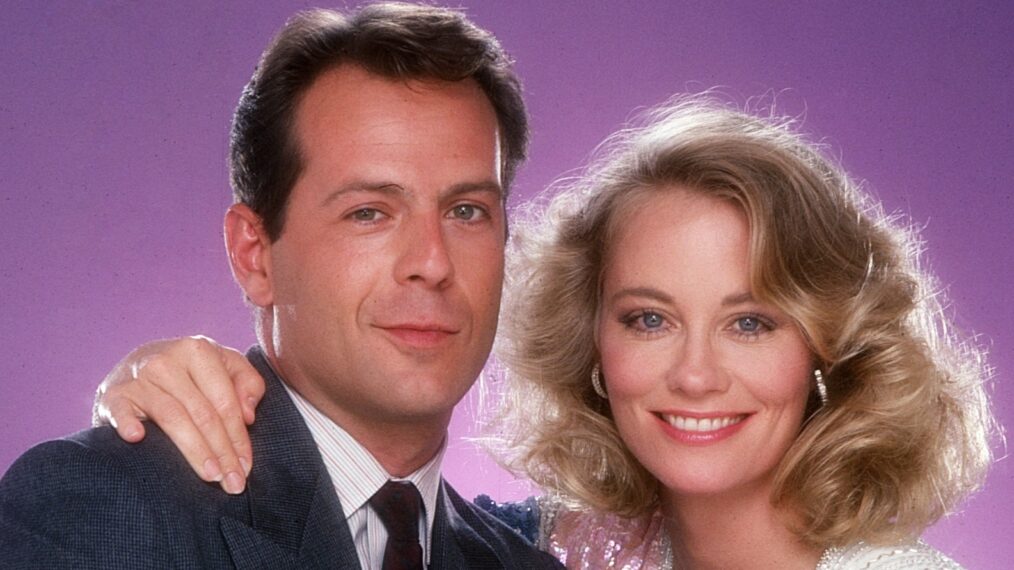
In this movie, a psychologist played by Bruce Willis attempts to help a boy played by Haley Joel Osment who believes he can see ghosts. Most of the movie focuses on Willis’s character as he tries to steer Osment through this bizarre ability of his and lead him to making peace with his strange power in the moments before the final revelation at the end – that Willis himself is a ghost, although he didn’t know it.
It was a great moment, a fantastic surprise that not only made the movie exciting, but made viewers want to go back and watch it again to look for the many clues they missed the first time around. There’s a scene, for instance, where Willis is at dinner with his wife, talking to her as she grows frustrated and walks out on him. On first viewing, it seems as though she’s angry at him and is refusing to have a conversation, but watching it later it becomes clear that she can’t see or hear him, and what the audience thought was anger over his frequent absences is actually grief over his death. Once you realize that, you realize that NOBODY other than Osment’s character ever directly talks to or interacts with Willis in the entire film, a realization that is far more meaningful and rewarding the second time you watch it…IF you didn’t get it the first time.
Although writer/director M. Night Shyamalan has become something of a punchline in later years for an overreliance on twist endings like this one, this is the movie that made his career, and it was a hit for a reason. But if you go into the movie knowing that Willis is a ghost, you lose that shock at the end and, instead, spend the movie picking apart the little clues that are only intended to be significant in retrospect.
Or, to put it more simply, if a writer chooses to use a reveal in a story, they are doing so for a purpose. If that reveal is spoiled, you are both robbing the writer of the right to tell the story as they intend AND robbing the audience of the ability to enjoy the story as the writer wanted them to. Saying that if a spoiler ruins a story then it wasn’t a good story is like saying that if you make a pizza without sauce and it doesn’t taste right that means it wasn’t a good pizza. Maybe not, but if COULD have been if you hadn’t LEFT OUT A VITAL INGREDIENT.
What I’m getting down to is that avoiding spoilers should be a simple matter of common courtesy. If you want to get spoiled, you can. Fine. Go nuts. As I always say, it’s your life and you have the right to enjoy things the way you want, and my feelings about it should have no dominion over your own. However, when you throw around spoilers on social media or in a crowded room, you’re taking that same right away from other people. Not being able to go to the movies very often – especially to see R-rated movies – I knew I would be spoiled on Deadpool and Wolverine long before I actually got to watch it, and I was right. That movie is built on several surprise moments, with cameo appearances by actors and characters who haven’t been seen in Marvel movies in years, or in at least one case, ever. But I didn’t get to see the movie until four months after it hit theaters, and every cameo in the film had been spoiled for me before I got to see it. At this point I don’t even get angry anymore, just frustrated. I still enjoyed the movie, don’t get me wrong. I just know I would have enjoyed it MORE if I DIDN’T know that Lea Thompson was going to show up to reprise her role as Beverly from Howard the Duck.
“Well that’s on you, Blake,” someone says. “You should avoid those parts of social media.” By the way, if anybody ever figures out who this person is who keeps shouting out from the back of the room to interrupt my columns, let me know. He’s a jerk. The thing is, people drop these spoilers EVERYWHERE. It’s not like I’m part of a Deadpool Group on Facebook where I expect to get barraged by this stuff. It shows up in random posts on all social media. And even if I unplugged from social media entirely, that wouldn’t save me from things like the kid who walked into my classroom the day before the second Doctor Strange movie was released and – loudly – announced who one of the unrevealed characters was.
To his credit, when he saw how angry I was, that kid at least had the decency to apologize.
People shouldn’t have to spend their entire lives like Keanu Reeves in bullet time, twisting and contorting in midair to avoid having things ruined for them. Common courtesy should dictate that spoilers be restricted to a time and place where they are expected and welcome.

All that said, there IS a statute of limitations here. People use common experiences – such as stories – as a shared reference point just as a basic element of communication. We aren’t quite as bad as the aliens on that one episode of Star Trek that communicated 100 percent via metaphor (the “Darmok and Jalad at Tanagra” episode – even if you don’t watch Trek, I guarantee you’ve heard the reference online), but we DO use our common experiences, including story, to relate to one another. Eventually, any story that is sufficiently popular enters the sphere of public knowledge, and it’s no longer reasonable to expect to remain spoiler-free. Another example from school – a few days ago my English class was discussing the way artificial intelligence is depicted in the media, and the movie The Matrix came up. I started to hem and haw a little bit, trying to talk about the movie without giving away anything important, until one of my students said, “Mr. Petit, that movie is 25 years old.” I thanked her for making me feel like Methuselah, but her point was well-made, and after that I stopped worrying about ruining the movie and just talked about it. The conversation went much better after that.
But again, this is a movie that was released a quarter of a century ago. (If I have to feel like an old man when I think about The Matrix, so does everybody else.) I would never have done this with a movie that came out last year, let alone last month. And even if the movie WAS old, I wouldn’t do it if somebody had asked me not to.
What I’m calling for, my friends, is simple courtesy. If you don’t mind spoilers, fine. That’s your prerogative. But that doesn’t give you the right to ruin things for people who DO. Think before you spoiler. And the newer a movie or TV show is, think even harder.
And here’s hoping I get around to season two of Squid Game before one of these kids ruins season three for me.
Blake M. Petit is a writer, teacher, and dad from Ama, Louisiana. His most recent writing project is the superhero adventure series Other People’s Heroes: Little Stars, volume one of which is now available on Amazon. You can subscribe to his newsletter by clicking right here. He’s also started putting his LitReel videos on TikTok. In case you didn’t catch the joke, all of the spoilers he dropped in this column (except for the Sixth Sense example) were fake. Lea Thompson wasn’t in Deadpool and Wolverine. It was Lady Gaga.
 Blake M. Petit