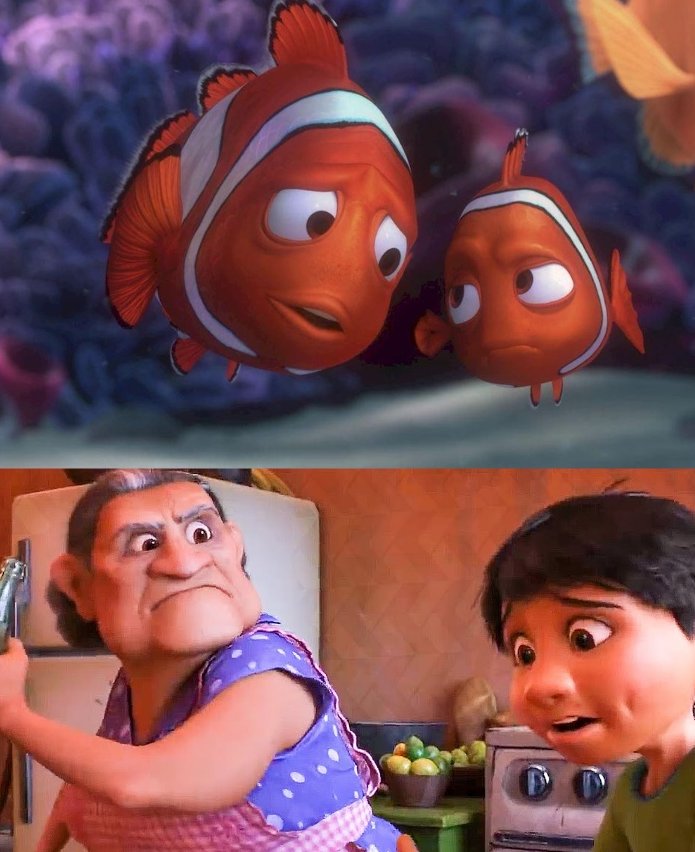
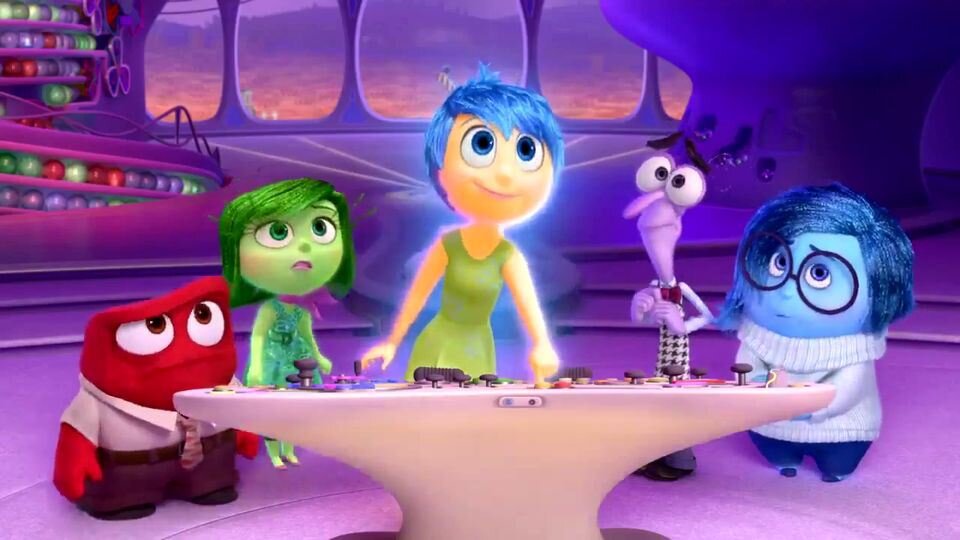
Geek Punditry #78: In the Name of the Faithful

I think the movie Holes is pretty good.

I know, it’s unusual for me to kick off one of these columns with something so overtly political, but bear with me here.

Holes, which came out in 2003, is an adaptation of Louis Sachar’s young adult novel of the same name. The story is about a kid named Stanley Yelnats who is falsely accused of stealing a pair of very expensive celebrity shoes from a charity auction and sentenced to 18 months at a juvenile detention facility called Camp Green Lake. As it turns out there’s nothing green about the camp, nor is there a lake there anymore – just the desert remains of a dried lakebed where the detainees are forced to dig five-foot holes day after day in an effort to “build their character.” The film bounces around three different timelines: Stanley’s story is intercut with that of his great-great-grandfather, who accidentally brought a curse down on five generations of his family, and the origin story of a brutal outlaw named “Kissin’” Kate Barlow, who terrorized the Green Lake community a century ago. 
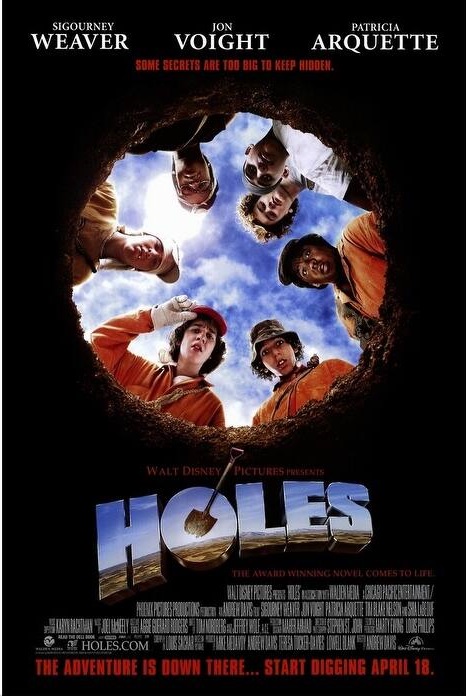
Trigger warning: may offend people with holes.

I remembered enjoying the movie when it first came out, but a few days ago I watched it for the first time in several years and I was really impressed by how tightly plotted the film is. Even with juggling three timelines there is virtually no fat in the plot. Everything in the story turns out to be significant in the end, either to revealing the truth about the two timelines that take place in the past or to bringing the storyline of the present day to a satisfying conclusion. It’s a really good movie, and I’m not even kidding when I say that screenwriters could do worse than to study it when it comes to learning how to put a story together.

Part of the reason for the tightness of the story, I think, is because the screenplay was written by Louis Sachar himself, adapting his own novel. True, sometimes when this happens the original writer can be a tad too precious about keeping their favorite bits or not understand the necessities of adaptation, but Sachar did a stellar job. However, as I often do when I watch a movie I really enjoy, I spent a little time online afterwards looking into the history of the film and learned something I hadn’t known before: Sachar’s script was NOT the first attempt to adapt the book. The first attempt at adapting the story was written by Richard Kelly, who is probably best known as the writer and director of Donnie Darko, which film scholars among you will recognize as being one of the last movies one would think about when drawing comparisons to Holes. Furthermore, that Kelly script – as it turns out – is freely available online, and I clicked on it to take a look.

The beloved children’s classic reimagined by…this guy.

Kelly’s version begins with a narrator described as an “elderly voice” saying – and I swear, I am transcribing this verbatim: “Once…when it was still early in the twenty-first century…there existed a prison in a sea of sand.”

Holy crap.

It continues. 

“All signs of life in this place had been destroyed by something terrible…and that something had dried up into the earth…and the earth was a prison for all mankind.”

HOLY.

CRAP.

Had Kelly even read the book?

Incidentally, the ellipses you’re seeing in these passages were there originally, I didn’t omit anything. This is HOW IT IS WRITTEN.

At this point I saved the link so I could go back and read it later, because something this completely bonkers has to be examined slowly, carefully. When Stanley “Kramer” shows up later on the page, the narrator continues by telling us “He did not feel sorry for what he had done…but feeling sorrow is not adequate punishment for such a crime. Feeling sorrow does not absolve the crime from the memory of the victims…if the victims are still breathing.”

Was Kelly even aware of the fact that there is a book?

Adaptations are not a new art form, guys. The Greeks borrowed from existing myths and legends when they invented modern theater. Virtually all of Shakespeare’s most famous plays are based on history, mythology, or earlier poetry that he expanded in his own way. The Lego Movie was based on the works of Eudora Welty. So it’s not that I have any objection to adapting a work from one medium to another. But at SOME point, it seems like someone has to ask the question: if I’m changing the story this much, is it even still really an adaptation?

Change is inevitable when changing from one medium to another, and for any of a thousand reasons. In The Hunger Games, for instance, the novel is written from the first-person point of view of Katniss Everdeen and is heavily loaded with her internal monologue. This is difficult to do well in a movie, and thus the information we learn in monologue – whether it’s plot-driven or character-driven – has to be imparted to the audience in a different way. Sometimes the changes are pragmatic. Back to Holes for a moment – in the novel, Stanley begins the story as a fat boy who gradually loses weight due to the physical labor he’s forced to undergo. The filmmakers decided to drop this and cast the relatively slim Shia LaBoeuf under the reasoning that it would be too difficult to make a 14-year-old actor gain and lose weight so drastically over the course of filming, not to mention potentially dangerous to his health. That is a 100 percent acceptable change. 

Sometimes changes are just a matter of understanding what the audience can handle. I’ll give you two examples from Stephen King. Cujo is a book about a mother and her child trapped in an increasingly hot car by a violent and rabid St. Bernard. In the book – spoiler alert here for a 43-year-old novel – the child dies of heatstroke. But in the movie, the filmmakers let the kid live, thinking his death would be too much for the audience. There’s a similar change in the film version of Misery, about a writer who gets in a terrible car accident and is rescued by his “biggest fan,” who turns out to be a deranged lunatic. In the book, to prevent Paul Sheldon from escaping, the insane Annie Wilkes cuts off his feet. If that sentence shocked you it’s probably because you are more familiar with the famous scene in the movie, where she “only” hobbles him by breaking his ankles with a sledgehammer. Reportedly, the producers felt like audiences would never forgive the actress, Kathy Bates, if she went so far as to actually cut his feet off. And if you think that audiences are smart enough to know the difference between the actor and the behavior of their character, look up the way “fans” treated Anna Gunn for the things Skyler White did on Breaking Bad.
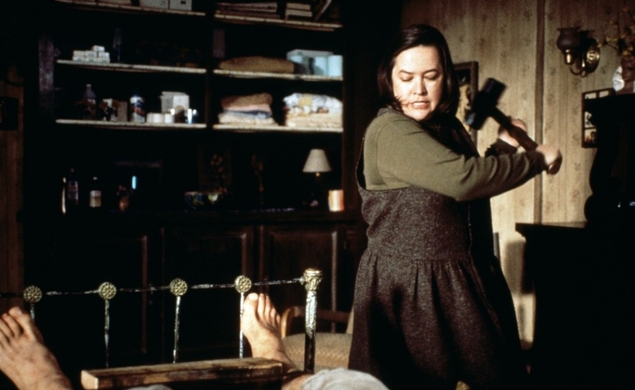
If social media had existed in 1990, Kathy Bates might still be in hiding for this.

When it comes to these changes, the filmmakers chose to lessen the tragedy of the book. I don’t think that we’re saying that book readers are more accepting of gore or death than people who watch movies, though. I think the lesson here is that it is more difficult – more disturbing – to watch certain tragedies than to read about them. On the other hand, there’s the adaptation of King’s novella The Mist, which is a book with an ambiguous ending. The film, however, goes in the OPPOSITE direction, making the ending OVERTLY tragic. In this case, though, making the ending far worse than the original actually works. Stephen King himself has reportedly said he prefers the ending of the movie to the that of the story he wrote. 

Time is also a big factor when it comes to adaptation. If you’re adapting a doorstopper novel, especially into a film intended for theatrical distribution, it’s virtually impossible to squeeze in everything. Lord of the Rings fans have elevated the absence of Tom Bombadil from the film version of the beloved trilogy to meme status. To a lesser degree, the same is true for the Scouring of the Shire. As much as I appreciate those sequences in the book, though, when we’re talking about movies that already have a running time that’s longer than the first marriages of certain people I went to college with, I can forgive Peter Jackson for laying those pieces aside.

Changes from one medium to another are a necessity, because no two types of storytelling have exactly the same requirements or demands. I don’t mind changes, provided that making the change does not alter or pervert the spirit or intent of the original work, and here’s where I’m going to piss some people off, because Starship Troopers. It’s one of those movies that flopped when it came out but has grown a devoted following in recent years. That seems to happen a lot – something people disliked when it came out is rediscovered years later and lauded or, conversely, something that was once popular is hit with backlash and people suddenly declare that they never thought it was that good in the first place and they only saw it in the theaters 27 times “ironically.” I don’t do that a lot, honestly. I’ve certainly reevaluated movies after the fact, sometimes enjoying them more, sometimes less, but I don’t think I’ve ever done a complete 180 on a film. Which brings us back to Starship Troopers. 

My friends, I’m here to tell ya that I thought it sucked then and I think it sucks now. 
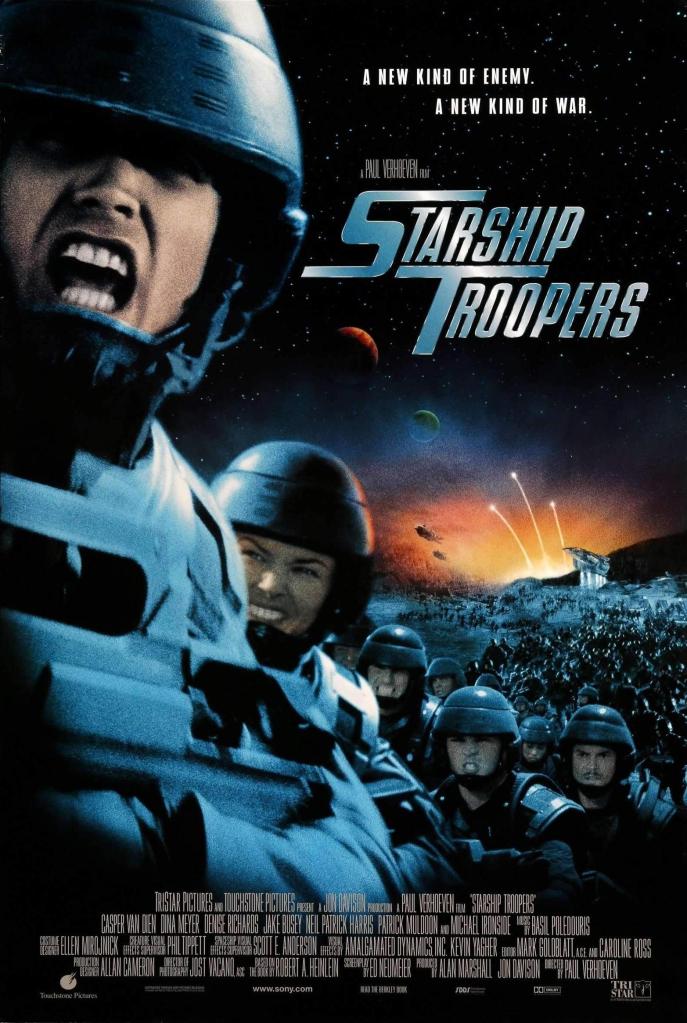
I’m going to pause here so the type of person who writes angry responses without bothering to read my point can write an angry response without bothering to read my point.

Fans of the movie praise Paul Verhoeven for making a witty sci-fi anti-war satire, a movie in which the entire human military is thinly painted as Nazis in training. However, none of this is applicable to the book, which is most certainly not anti-war, nor is it in the practice of making the humans into the bad guys. In fact, the book – which I should admit I was already a fan of before the movie was made – isn’t really plot-driven at all, but is more of an examination of the life of a soldier in a hypothetical science fiction future. The war against the insectoid aliens is there, but it’s more of a backdrop, a way of examining the world that author Robert Heinlein created. It’s no surprise, then, to find out that Verhoeven admittedly never even finished reading the book, finding it too “boring” and “militaristic.” 

Sir, I must say this: if you can’t even finish reading the source material of an adaptation, I submit that you are not the right person to adapt it. 

Here’s the thing, folks: I have no objection to Verhoeven making an anti-war movie, or a satire, or a movie in which humans are thinly-disguised bad guys. This is his right as a filmmaker, and there are plenty of good movies that do just this. I do, however, have a strong objection to him doing so by trading in on a novel by Robert Heinlein which is none of those things. I simply don’t think it’s fair, either to readers of the novel or to Heinlein himself, and in disputes of this nature I’m pretty much always going to side with the original author’s intent. If Verhoven had made a virtually identical movie, changing the names and calling it something like Spaceship Soldiers instead, we would not be having this conversation right now…but it’s also possible that we wouldn’t be talking about the movie AT ALL, that without the connection to Heinlein, the film would have been forgotten entirely.

It’s not a question of which of these men I agree with more, it’s a question of whether it is ethically right of Verhoven to use Heinlein’s story to espouse views that Heinlein’s story clearly disagreed with. Personally, I don’t think it is. I know that this is an area in which a lot of people will disagree with me. Hell, maybe Heinlein himself would disagree with me. But I ask you this: Arlo Guthrie’s 18-minute song “Alice’s Restaurant,” which was essentially a protest against the Vietnam war, was made into a similarly anti-war film. Had Guthrie not been involved in the film, but rather it was made by somebody else who painted Guthrie’s character as a fool and his protest against the war as misguided, would that have been fair to Guthrie?

What I’m getting at, friends, is this: if you’re a fan of Starship Troopers, is your acceptance of the adaptation process based on which political viewpoint you agree with? If that’s the case, I’m afraid that we will not be able to meet halfway on this one, and I hope that we can still be friends and that you’ll still come back next week when I’m writing about how awesome the theme from DuckTales is or something.

Adapting a story from one medium to another should be done for one of two reasons. First, if it is an exceptionally good story and you want to retell it for a different audience. Great! Do it! But if it IS an exceptionally good story, then why do you want to change it?

The second, more cynical reason, is because the story is popular, and you’re hoping to make money by appealing to the pre-existing audience. Okay, I can live with that. But if the story IS already popular and has a pre-existing audience, WHY DO YOU WANT TO CHANGE IT?

The answer, by the way, is because writers can be a vain bunch (yes, I am including myself in that number) and a good number cannot resist the urge to put their own stamp on something. This is what Richard Kelly did (remember him?) in his Holes adaptation. He wasn’t writing an adaptation of Louis Sachar’s novel Holes, he was writing a Richard Kelly movie that was vaguely suggested by a novel by Louis Sachar. And for a fan of Louis Sachar’s novel, that would have been MASSIVELY disappointing. 

But writers do this anyway, because for some people it’s more important that something is “theirs” than it is that they treat the source material faithfully. Sometimes that means they’ve created a brand-new breakout character, like the people who gave us Scrappy Doo. Sometimes that means “updating” a story for a whole new audience, the way the smash hit film Barb Wire “updated” the story of Casablanca to become beloved by the ages. And sometimes it’s because the author is just trying to trade on somebody else’s work to spread their own message to the masses, which makes me wonder how strong a storyteller you actually are if you can’t get your message out without borrowing somebody else’s name.

I’m not saying it’s impossible to do a complete re-imagining of a work and do it well. The Netflix miniseries Fall of the House of Usher is an excellent example. Writer/director Mike Flanagan didn’t even TRY to do a straight adaptation of Edgar Allan Poe’s short story. Instead, what he did was grab bits and pieces of dozens of DIFFERENT Poe stories and reassemble them into something totally original and unique. It was as if he had gotten his hands on ten different Edgar Allan Poe Lego kits, threw away the instructions, and used the bricks to create his own thing. It was fantastic, and is one of the projects I point to when I say that Flanagan is, in fact, the right man to adapt Stephen King’s The Dark Tower if anyone ever has the guts to give him the money to do it. But he didn’t do it by twisting or changing Poe’s work into something unrecognizable. Quite the opposite – he did something that was totally his and slipped in recognizable elements to help us see the larger picture. 
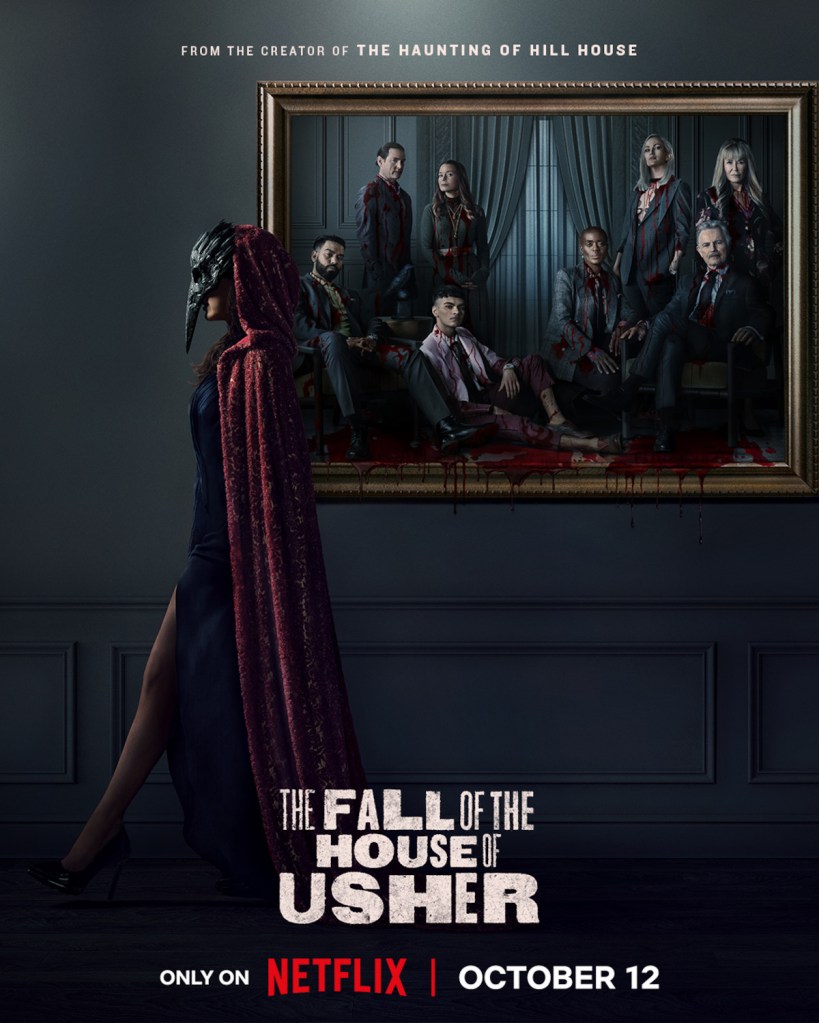
Definitely the weirdest Lego movie.

Then there’s the wild movie that actually gets its name from the process we’re talking about, Adaptation, which is ostensibly an adaptation of Susan Orlean’s nonfiction book The Orchid Thief. The book is a portrait of a horticulturalist who was arrested for poaching flowers, but that’s not the movie screenwriter Charlie Kaufman wrote. Instead, he wrote a movie about how he (Kaufman himself, as a character in the movie) struggled with adapting the book. He fictionalizes Orlean and John Leroche, the subject of the book, and creates a fictional twin brother for himself – both Charlie and “Donald” Kaufman are played by Nicolas Cage in one of those movies that earns him his reputation of doing kind of insane movies. Orlean herself was understandably taken aback when she read the script, but in more recent interviews has said she’s come around and now loves the movie, which was in no way a literal adaptation of her work but still successfully communicated the book’s themes of longing and obsession. Also there’s a car chase.

Most adaptations, I think, usually fall somewhere in-between the highly faithful Holes and the bonkers left turns of Adaptation. I always point to The Wizard of Oz here – most people’s version of Oz is the one we saw in 1939, the Judy Garland movie that has become a legitimate cultural classic. It’s a lovely movie, it’s beautifully filmed, and the music is timeless. As an adaptation, though, it’s mid. The film leaves out lots of sequences from the book, compresses two good witches into one (making Glinda seem like kind of a jerk for not telling Dorothy that the Ruby Slippers could send her home at the beginning, whereas in the original book those are two entirely different witches and the first apparently doesn’t know), and changes a few things – most egregiously the ending, which implies that Dorothy’s journey to Oz was just a dream. This is not at all suggested by the book, but the ending of the film has become so iconic that it’s inspired a thousand other “all just a dream” endings, which – speaking as a writer – is a crime I consider only slightly worse than lighting an orphanage full of puppies on fire and chaining the doors on your way out. But even then, the sense of wonder and awe that the film gives us DOES successfully communicate the wonder and awe of the book, and for that reason I can still love it. 

A good adaptation has the potential to breathe new life into an existing work. A bad one, though, has the power to choke a work to death. If it ever comes down to a choice between one or the other, I know which side I’m going to be on.

Blake M. Petit is a writer, teacher, and dad from Ama, Louisiana. His most recent writing project is the superhero adventure series Other People’s Heroes: Little Stars, volume one of which is now available on Amazon. You can subscribe to his newsletter by clicking right here. He’s not kidding about the theme from DuckTales, you know. As TV themes go, he dares you to name more of a banger.
Geek Punditry #77: Tooning In

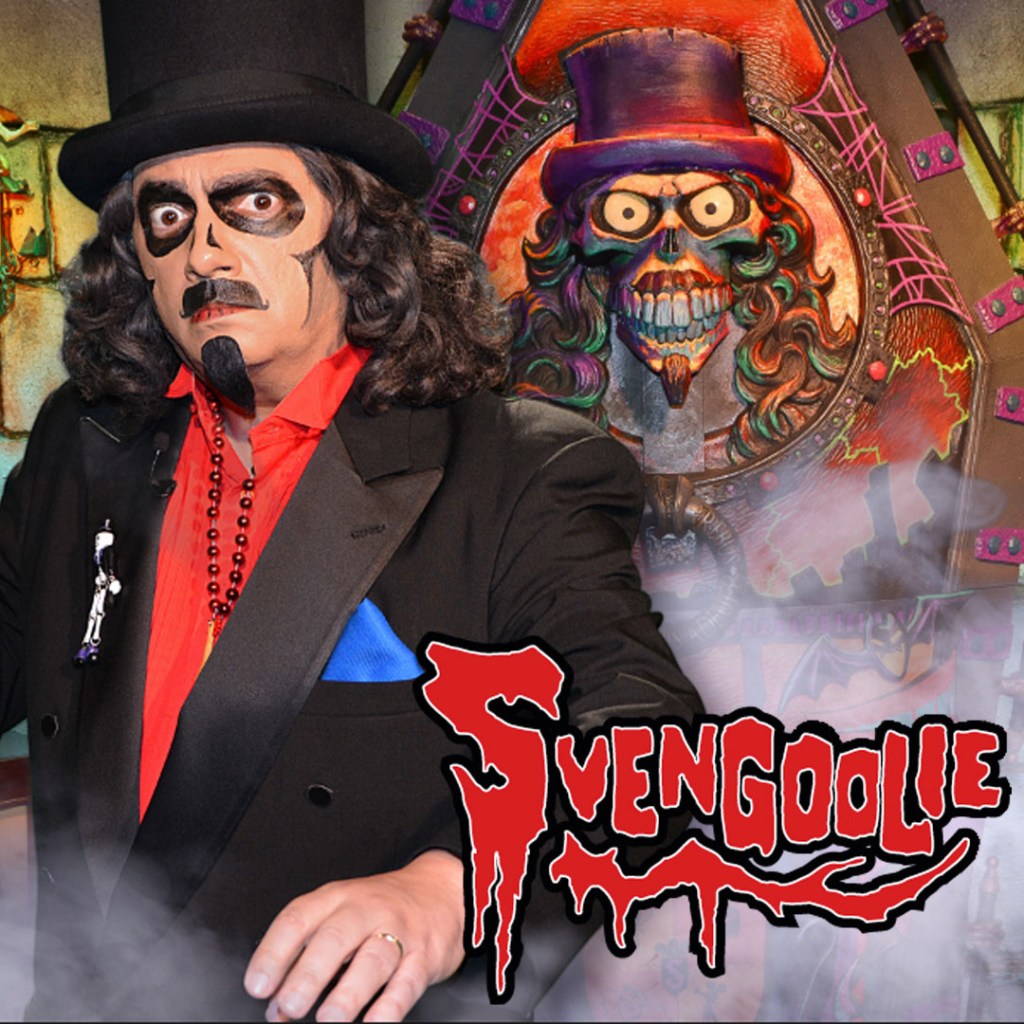
In 2024, there are an awful lot of us who don’t bother with live TV anymore. With the exception of sporting events (and increasingly even those) virtually every new show you could want to watch is available on at least one of the major streaming services, so the days of making sure that you’re home at 8 o’clock on Thursday so you don’t miss the new episode of Friends are long over. In my house, though, there is at least one exception to that rule: Saturday night. On Saturday night, unless there’s some pressing reason for us to be out of the house (or to watch a competing sporting event) the Petit TV is tuned to New Orleans’s WDSU Channel 6.2, the local MeTV affiliate, for the greatest TV event of the week: Svengoolie. Svengoolie is the last of the great horror hosts, the heir to the empires of Elvira, Chilly Billy Cardille, Vampira, and New Orleans’s own Morgus the Magnificent. Every Saturday Sven serves up a classic horror or sci-fi movie replete with his own brand of comedy and information, cracking jokes and telling us about the history of the film in a single breath. 

America’s greatest natural resource.

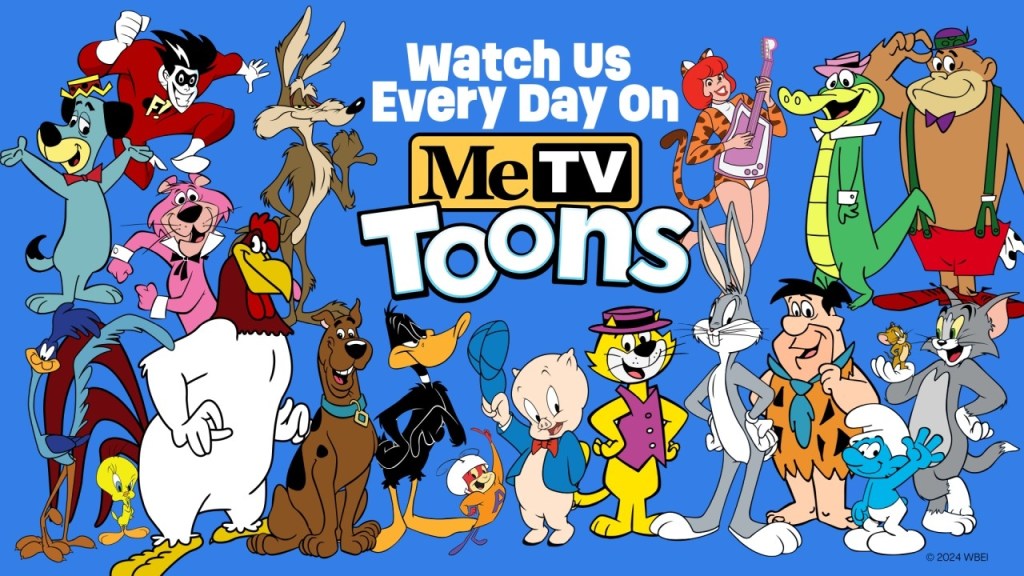
And it is because I watch Sven every time that it’s humanly possible that I knew about the announcement of another new network that hopes to lure viewers away from their streaming services and back to the antenna: MeTV Toons. Whereas the prime MeTV network serves up seven days of reruns of classic TV comedies, dramas, westerns, and the like, MeTV Toons – launching this Tuesday, June 25 – promises to do the same thing with classic animation. At launch, the network will provide a home to such luminaries as Looney Tunes, Rocky and Bullwinkle, The Flintstones, The Jetsons, Scooby-Doo, Popeye and Pals, and even later shows from the 80s and 90s like The Smurfs, The Real Ghostbusters, Beetlejuice, Captain Planet, and many, many more. 

The long nightmare days of a world without Atom Ant will soon be over.

The response was shockingly positive. The network hasn’t even launched yet and there are already at least two Facebook fan groups dedicated to the station, one of which is approaching 5,000 members and the other topping 17,000 as of this writing. There’s a neat little community appearing here, and once you filter out the 14,000 members who have joined to ask if the network will be available in their area because they don’t know what Google is, there’s a lot of conversation ABOUT classic cartoons, the ones that will be on the network at launch, and what other pieces of animation history fans hope to see make an appearance in the future.

Of course, not everyone in the group is positive. That’s nearly impossible. Of all the different Facebook groups I’m a part of, there are only two that I’ve never known to have any sort of toxic presence: the Bandit group for Bluey fans sharing their journey through fatherhood I wrote about a few weeks ago, and fans of the Movie Crypt podcast, proving once again that horror movie fans are some of the kindest and most loving people you could ever meet in the real world. Some of the toxic comments in the MeTV Toons groups are complaining about the lineup, because the fact that they spend a half-hour a week showing Police Academy: The Animated Series is evidently a cardinal sin amongst a certain sect of the populace. Others are complaining because the network is not available in their area – which is a complaint I sympathize with, as for a while it didn’t look like we would get it in New Orleans at launch. I was flailing around the internet like a Dickensian waif until it was announced that it will be on Channel 41.6, which filled me with childlike glee. But even when I thought we weren’t gonna get it, I was smart enough to know that nobody in the Facebook group had any control over that and acting like everybody there broke into my house and crapped in my Cheerios wasn’t going to solve anything. 

But the complaint that really got my attention was the one guy who asked why, in this age where “everything is available streaming,” anybody would care about launching a new pre-programed broadcast network. I’m going to address the two major flaws in his logic, starting with the more obvious and then moving on to the one that has more personal meaning to me. 

First of all, let’s talk about the notion that “everything is available streaming.” The fact is, friends, that’s simply not true. As much as we might like it to be the case, there are large swaths of our television and cinematic history that are not legally available on any streaming service, or even for purchase digitally or physically. Sometimes it’s a rights issue. The original Muppet Babies cartoon from the 80s, for example, cannot legally be found anywhere, and likely never will, because that cartoon made extensive use of movie and TV clips from a half-century of Hollywood output. At the time, there was no thought behind it except for obtaining the rights for broadcast. Nobody was considering the afterlife of these shows. Now, in order to sell or stream an episode of Muppet Babies, the Walt Disney Entertainment Conglomatorium and Tiki Lounge would have to track down the rights holders of each and every movie or television clip ever used on the show to obtain permission to use it again, and in perpetuity. Disney clearly doesn’t think the effort it would take to do such a thing would be worth the likely return on their investment, and as much as I hate to say it, I think they’re probably right.

I dare you to find one historical injustice greater than the fact that this episode is lost to the world.

But Muppet Babies wouldn’t be on MeTV Toons anyway, since Disney has their own deal. What about the shows that will? Well, a quick glance shows that the Police Academy series isn’t available to stream anywhere. Captain Planet is available to PURCHASE from sites like Amazon or AppleTV, but not as part of any streaming subscription. And although there are limited (and often out-of-print) DVDs available for the likes of Underdog, Beetlejuice, and The Adventures of Rocky and Bullwinkle, if you’re hoping to stream them on Netflix or any similar service, I’m afraid it’s a non-starter. And even for things that ARE available to stream – well, as we’ve seen in the last year, something that’s on Paramount+ today is not guaranteed to be there tomorrow. 

Obviously, some things are worth fighting for.

I’m not going to go through the entire MeTV Toons schedule, but you get the point. There are a LOT of things that aren’t available to stream, whether it’s because of rights or because the copyright owner doesn’t think it would be worth the expense to put it out there or for any of a thousand other reasons. A network like MeTV Toons will likely shift their lineup often, especially for shorter-run series (for example, Wacky Races is on the schedule, and that series ran for only 17 episodes), so this will be a chance to give a bit of life to lots of cartoons that otherwise have been forgotten. People love to be dismissive of animation because, historically, Americans have viewed it as something that’s “just for children.” The number of adults eager for MeTV Toons would seem to disagree – and even if it DIDN’T, so what? The Hobbit was written for children. So was The Wizard of Oz. The sublime Paddington movies were made for kids. That doesn’t make a creative endeavor invalid, or mean that it isn’t something worth preservation.

So let’s move on to the second assumption of this question: why a pre-programed broadcast network? Who cares? Why not put all of these shows on a streaming service? Hell, you could even make it an ad-supported service like Tubi, which reported viewer numbers recently in excess of a lot of the premiere, paid streamers like Disney+. That seems doable, doesn’t it?

Well, yeah, kinda. And were such a service to exist, I would be first in line to sign up for it. But don’t discount the allure of a pre-programmed schedule. Apps like PlutoTV and RokuTV have built up a huge following by streaming pre-programmed channels of entertainment, supported by advertising, for free. I’ve written before about how much I love PlutoTV so I won’t get in too deep, but the fact that I can just say, “I wanna watch Star Trek” without having a specific episode in mind, then have TWO PlutoTV channels to sate my hunger…well that’s damned appealing. 

“What do you want to watch? Kirk? Picard? Sisko? Janeway?”
“Yes.”

Pre-programmed TV is easy. Not mindless, mind you, but EASY. We live in a world where SOMETHING is demanding our judgment at every single moment of the day. It starts with something simple, like ordering coffee. But what kind of coffee do you want? What size? Hot or iced? Want a shot of flavoring in that? How about a shot of espresso? Whipped cream? Cherry on top? Paper straw that’s good for the environment but useless for drinking or plastic straw that actually functions as advertised but that will cause the barista to assume you murder turtles in your sleep? What name do you want on the cup? Any snacks? Okay, great, that completes your order, sir. Cash, card, or blood donation? Great. Want to leave a tip?

If we have taken something as simple as buying a cup of coffee and turned it into a process that requires a dozen decisions before the angry barista wearing a “Justice for Donatello” button gives you your order, what happens with something IMPORTANT, like buying a car or choosing a job? I’m a teacher, and there are studies that indicate the average teacher has to make 1,500 individual decisions over the course of an average day. Numerically, this is a higher number than most DOCTORS. (Although admittedly, the decisions doctors have to make are usually more intense than whether or not I’m going to let Jimmy go to the bathroom when I don’t believe he really has to go.) I cite this number any time my wife doesn’t understand why I’m begging HER to pick what we have for dinner, for God’s sake, I don’t care WHAT it is I just DON’T WANT TO DECIDE.

Ahem. Love you, baby.

The point is, apps like PlutoTV offer something that a typical streaming service does not: easy entertainment. If I don’t know exactly what I want to watch, I can spend hours scrolling through the choices on Netflix, Hulu, Disney+, Peacock, Paramount+, Max, Shudder, the Criterion Channel, ESPN+, Screambox, BET+, Prime Video, Shout Factory, Freevee, AMC+, Disney-Minus, Nick at Night Terrors, and Cap’n Willie’s Streaming Emporium-o-rama before finally giving up and putting on a rerun of Gilligan’s Island. Streaming is GREAT if you already KNOW what you want to watch, but sometimes all you really want is to stop thinking and get in some comfort viewing. PlutoTV and RokuTV are built on this premise. It’s worked so well, in fact, that bigger streamers like Shudder, Prime Video, and Freevee have all added “channels” to their streaming model, and rumor has it that Disney+ is considering the same thing. Sure, it’s kind of weird that we abandoned cable for streaming only for us to want to turn streaming back into cable, but sometimes you’ve got to let something go before you realize how much it means to you.

This is what comes on when you activate your Fire stick in Hell.

The point is, MeTV Toons is another outlet for this kind of entertainment, and it’s promising us something that none of the other sources have offered, and by that I am of course referring to Peter Potamus.

“Hello.”

But there are plenty of other things on that network that I would LOVE to see show up in rotation. KNOV 41.6 starts airing on Tuesday, I intend to park my TV on that channel and leave it there.

At least until Saturday night rolls around, anyway. Ain’t nothing gonna take me away from Svengoolie. 

Blake M. Petit is a writer, teacher, and dad from Ama, Louisiana. His most recent writing project is the superhero adventure series Other People’s Heroes: Little Stars, volume one of which is now available on Amazon. You can subscribe to his newsletter by clicking right here. He is hoping against hope that MeTV Toons will find a way to show The Racoons, because he has to find out if that show is as weird as he remembers or if he just had a fever dream that lasted for much of his childhood. 

Geek Punditry #76: Butts in the Seats

My wife and I took our son to the movies this week. You may remember last year, when I wrote about the experience of taking then five-year-old Eddie to the movies for the first time, a wonderful day that, unfortunately, we’ve only been able to duplicate a handful of times since then. I love the movies, I love going to the movies, but we can’t do it as often as I’d like. This week was special, though. Every time my wife and I have taken Eddie to the movies, it’s been our idea. “Want to see Puss in Boots? Want to see Super Mario Brothers?” But not this time. No, for the first time in his life, Eddie asked us, of his own accord, to take him to see a SPECIFIC film, and there’s no way I was going to deny that request when he asked, “Can we go to The Garfield Movie?”

Am I supposed to say “No” to this face?

It was pretty good. It wasn’t great, of course. It wasn’t Up, but it wasn’t The Good Dinosaur either. There were a couple of good chuckles and some nice Easter Eggs as well. Most importantly, Eddie loved it, and that made the whole experience worthwhile. When we left the theater Wednesday, I went to post a picture of him in the theater (like parents are now legally obligated to do) only to see a shocking headline on Facebook: “Sony Pictures Acquires Alamo Drafthouse in Lifeline to Cinema Chain.” The headline stunned me. I knew the Alamo Drafthouse had been struggling – it shockingly shut down several locations just last week – but I didn’t know that it was up for sale. And for it to be sold to Sony was particularly jarring, because it’s not that long ago that this acquisition would have been illegal.

In the 1940s, the government banned movie studios from owning movie theaters on the grounds of preventing the rise of a monopoly. After all, in an era where a town may only have two or three theaters (if that), if those theaters were all owned by Universal Studios, then it would be pretty much impossible for anyone in that town to ever see a movie from Warner Bros., Disney, Paramount, or anybody else. That law was repealed in 2020, and honestly, I get the reasoning. It made sense in the 40s, but the concerns that made it necessary don’t exist anymore. First of all, we no longer live in the era of single- or double-screen moviehouses, and there’s not a studio on the planet turning out movies fast enough to fill up a modern multiplex on its own. Universal was the highest-grossing studio in the world in 2023, and they released only 24 theatrical films. Can you imagine a modern movie theater surviving showing an average of two new movies a month?

Not even Disney could fill this behemoth alone.

The other thing that makes the fears of a monopoly a nonissue is that the greatest competitor of a movie theater is no longer another movie theater: it’s the world of streaming. Streaming was already a thing in 2020, before the Covid pandemic hit, but when movie theaters were forced to close studios and viewers alike turned to streaming as the primary alternative. Now studios are trying to bring people back to the theaters, but a huge percentage of the viewers have settled in on their couches and don’t want to get back up. The Alamo Drafthouse is by no means the only chain suffering. Theaters have been closing all over the place. Last week my family took a trip to Pittsburgh for our niece’s graduation, and my wife Erin noticed a new Busy Beaver hardware store had been built since the last time we were in town. A second later I realized that the Busy Beaver was occupying the former theater where Erin and I saw the last movie we went to before the pandemic on New Year’s Day in 2020. 

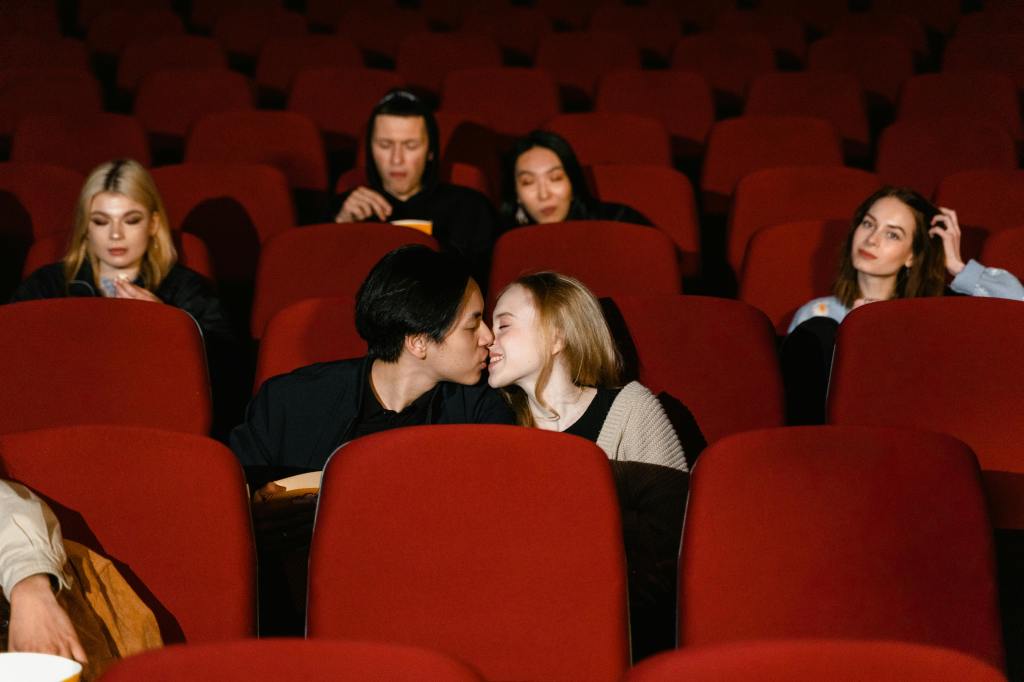
While I understand the convenience and value of the world of streaming, I am firm in my belief that there’s no better way to watch a movie than in a movie theater. I don’t want them to die. But in a world where their biggest threat is a thumb-sized device that everyone can plug into their television at home, how do we convince people to go back into a theater? How do we get them to pay for tickets and concessions and do battle with the jackass in the row in front of you who won’t turn off his phone and the jackass behind you who keeps kicking your chair?

My thoughts on this question have evolved several times, and they continue to do so. At one point, I thought that the best way for theaters to push forward is to make themselves more of an all-in-one destination. Don’t just serve popcorn, but have full menus, drinks, alcoholic beverages…take the old idea of “dinner and a movie” and put it in a single location. And make the films themselves events – don’t just show new movies, but have classics, retrospectives, festivals, host Q&As with actors and directors and writers. Make going to the movies an EVENT. It sounds great! Except that everything I just described is EXACTLY what made the Alamo Drafthouse chain a success in the first place, and clearly, that is no longer enough. Sure, this sort of thing caters to people like ME, people who ALREADY would rather be in a theater than sitting on the couch at home, but it doesn’t really do anything to draw in prospective viewers who are resistant to the idea. Even big chains like AMC have tried similar things, expanding their concessions from just popcorn and nachos to include things like burgers, salads, pizza, and chicken tenders. It hasn’t made enough of a difference. 

I mean…they’re not getting RID of popcorn, though, right?

There’s also the problem that…well…“Dinner and a movie” is the classic date night, but in my professional capacity as a high school English teacher, I can tell you that kids today aren’t doing that. I don’t think they even GO on “dates” anymore. A typical teenage relationship in 2024 follows this outline: first they “talk,” then they “hang out,” then one of them asks the other one to “go out,” and then one of them “cheats on” the other, and then they “break up” and repeat the cycle with somebody else. At no point are they required to actually go on a “date.” In fact, thanks to social media apps, they can go through the entire cycle without ever even being physically in the SAME ROOM, sometimes during the course of a single fourth-period gym class. So how do you convince THESE kids to go to a movie theater? 

“And kids, that’s how I hooked up with your mother.”

The answer – the ONLY answer – is to somehow make going to the movie theaters a positive experience that cannot be duplicated at home. Last summer we got a bright spot when the “Barbenheimer” phenomenon made it cool to go to a double-feature about the creation of the nuclear bomb and the life of a plastic doll. That was GREAT, and it made both movies hits. But we’re in a hitless world at the moment. Even the one-two punch of Furiosa and The Garfield Movie (or as I like to call it “Garfuriosa”) didn’t prevent Memorial Day Weekend 2024 from having the lowest box office in nearly three decades. This past weekend people were THRILLED to see Bad Boys: Ride or Die take in $56 million at the box office, which sounds great, but is it really THAT good, relatively speaking? The previous film in the franchise, which came out in January of 2020, opened with about $68 million. Then last year The Marvels opened with $47 million, only $9 million difference, and yet it was considered a dismal failure. Obviously, it’s relative: one is the latest installment in the multi-katrillion dollar Marvel Cinematic Universe, whereas the other is kind of a redemption project for Will Smith after the Slap Heard Round the World, but STILL. 

So what do we do to entice people to see a movie in a theater? Several things have been tried, to varying degrees of success. Merchandise, for example. After all, it’s what’s keeping touring rock bands alive now that CD sales have died. When we took Eddie to see The Garfield Movie on Wednesday, he IMMEDIATELY gravitated towards a souvenir concession bundle that included a popcorn bucket, collectible cup, and a plush Garfield doll. (Odie was also available, but come on.) Fortunately Eddie’s godmother gave him an AMC gift card a couple of months ago that went toward the bundle, because it cost as much as the two drinks and large popcorn his mom and dad split that same day. Although the price is an obvious concern, I like the idea of movie theater exclusive merchandise in principle. It appeals to the collectors and it gives you a reason to go to the theater. Popcorn buckets seem to currently be the most popular type of merch. The Dune Part 2 bucket was given a rather…suggestive design that turned out to be so infamous you HAVE to believe they did it deliberately. Not to be outdone, the upcoming Deadpool and Wolverine has similarly suggestive buckets that seem to mock the phenomenon, as befitting a Deadpool movie. Of course, you have other collectible buckets as well, such as a ghost trap for a Ghostbusters movie or an Optimus Prime bucket for TransFormers. It’s worth pointing out, of course, that they are severely stretching the definition of “bucket” by featuring full-on toys or models that are buckets only in that have a cavity theoretically large enough to hold a few pieces of popcorn, but the snack is really secondary, isn’t it?

“This is it, folks. This is how we’re gonna save cinema.”

Of course the problem with merch, as with anything else, is that if it proves too successful it will quickly get overdone. By the time the 97th Fast and Furious movie hits, people will be asking if they really WANT to eat popcorn out of Vin Diesel’s head. (Be fair, though, it IS more bucket-shaped than Optimus Prime.) Also, a lot of theaters will allow you to walk in and buy the merch without buying a ticket to see the movie, which satisfies the collector but rather defeats the purpose of using merch as a draw to get butts in the seats. 

At one point, theaters thought that going 3-D was going to be the carrot that lured in audiences. After all, you can’t watch a huge 3-D movie in your HOUSE, can you? Of course, we quickly learned two things. First: 3-D televisions were relatively easy to make so you COULD watch them in your house but, second, nobody actually wanted to watch 3-D at home. From there it didn’t take long to make people realize they didn’t actually want 3-D in theaters either. The studios loved 3-D because it was harder to pirate and created an excuse to charge more for a ticket, and while it hasn’t entirely gone away, the bloom is off the rose. 3-D has never had what I call a Wizard of Oz moment. In 1939, people who had never seen color film before had their minds blown when Judy Garland opened up the door to her farmhouse and bombarded them with the multicolor wonderland of the Munchkin City. If you watched the same movie on a black-and-white TV, you’d never know what the big deal was. The Wizard of Oz proved that color can make a movie better. Nothing, to my experience, has done the same for 3-D. In fact, with the glasses darkening the screen and lots of people suffering from headaches or eyestrain, in many ways 3-D makes going to the movies objectively worse.

Every 3-D movie ever made combined never came close to the impact of this moment.

What about getting rid of the things that make people turn away from movies? Easier said than done. High prices for tickets and concessions are a concern, of course, but when’s the last time you saw the price of ANYTHING actually go DOWN? Then there’s the frequent complaint about the glut of advertising before a movie starts. If you take your seat ten minutes before showtime, you’ll see an ad for Coca-Cola, then for Honda, then for the Fandango at Home service, then Rusty’s All-In-One Tire Salon and U-Pour-It Yogurt Emporium all before the trailers even begin. It absolutely can get annoying, but it’s also helping to pay the bills for the theater and preventing said ticket and concession prices from getting EVEN HIGHER than they already are. 

Okay, so the ads aren’t going anywhere…can something be done about the jerks in the movie theater with you, the ones who won’t shut up or turn off their phone? Several years ago AMC actually flirted with the idea of making some of their theaters “mobile friendly,” allowing texting and the like. Among the people who actually enjoy going to the movie theaters, this went over about as well as suggesting they sprinkle every third popcorn bucket with anthrax powder. Of course, if the idea is to corral everybody who’s going to be an asshole by texting in the theater into a single screen where they won’t bother anybody else, I see the merit in it. On the other hand, that would bring these people into contact with each other and increase the odds that they breed more assholes, assuming the relationship lasts longer than gym class. 

 What if we tried – and this is really going to blow people’s minds – what if we tried just making more movies that people want to watch? Look, I love superhero movies, and I don’t want them to go away, but not EVERYTHING has to be a life-or-death full-blown special effects spectacle set in a 20-film cinematic universe and starring people who make more per minute of screentime than you and your entire family will make in the next 30 years. Mid-level movies used to be a thing. When’s the last time there was a hit romantic comedy? An era-defining western? A non-animated family film that wasn’t made to satisfy the ego of some aging superstar trying to cling to relevance? 

In the 1980s, John Cusack made 472 different classic comedies that nobody would take a chance on in 2024.

People complain that Hollywood doesn’t have any new ideas, but that’s not true. The ideas are out there. The problem is that the studios (in other words, the people with the bank accounts) don’t want to take the risk on something that’s not a proven IP or that doesn’t have a huge built-in audience, so those risky, experimental movies just aren’t being made. We’ve got a sequel to Beetlejuice coming out this year, which is fine, but in the current cinematic environment it seems pretty unlikely that the original would ever be made today. Oddly enough, the only genre that seems immune to this is horror: there are still lots of horror movies made, lots of ORIGINAL horror movies made, and while they aren’t making Star Wars numbers at the box office, they’re doing okay. This is because horror movies are usually relatively cheap to make, but they’ve also got the most dedicated fan base of any specific genre in film. If the romcom fans came out for their movies the way horror fans do, Sandra Bullock could buy her own island by now.

This is one of those times when I’m just talking about a problem while recognizing that I don’t actually know what the solution is. I’ve got suggestions, of course, you just read over 2000 words worth of suggestions, but I don’t know whether any of them will actually WORK. That said, SOMETHING has to be done before the modern movie theater goes the way of the drive-in or vaudeville before it. The experience of sitting in a theater with a crowd of fans and enjoying a movie together is special to me, and I don’t want it to go away. I just want to make it better again. So if you’re one of the people who have given up on theaters, tell me why you quit and tell me what it would take to make you come back. If you’re with me, if you want to help theaters stay alive, then what lifelines would you recommend? How would you do it? Remember guys, there’s no wrong answer and it’s not stupid if it works. This is about ENCOURAGING discussion, not ENDING it. Join me, won’t you?

Blake M. Petit is a writer, teacher, and dad from Ama, Louisiana. His most recent writing project is the superhero adventure series Other People’s Heroes: Little Stars, volume one of which is now available on Amazon. You can subscribe to his newsletter by clicking right here. And he’s not kidding, give him all the suggestions you can think of. It will save him from having to come up with another column idea.

Geek Punditry #75: The Pixar Moment

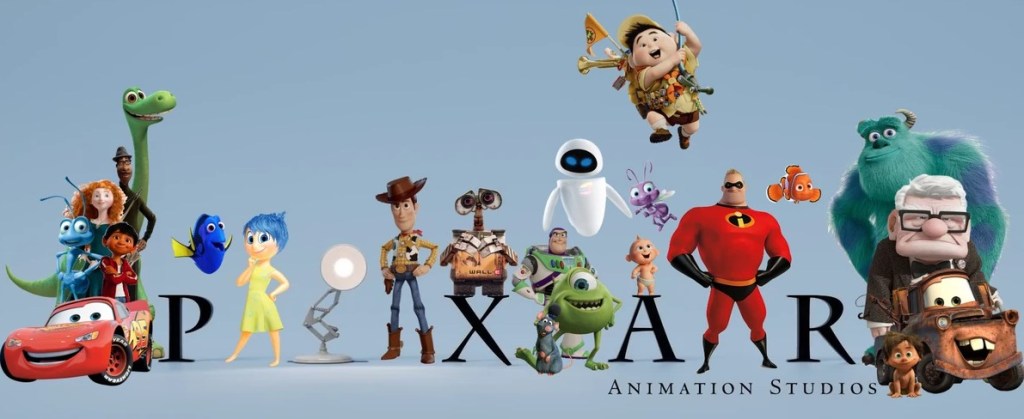
It isn’t that long ago that Pixar was perhaps the single most reliable name in family entertainment. One movie after another was not only a box office smash, but the recipient of nearly universal critical acclaim. The Toy Story films, The Incredibles, Wall-E, Up…there hasn’t been a track record of animated success like this one since the Disney Renaissance days. But over the last few years, these fortunes faltered and the one-time juggernaut has become almost a bit player in the House of Mouse. With Inside Out 2 coming out next week, the sequel to one of Pixar’s last truly great movies, there’s a chance to course correct. I have no idea if they’ll pull it off, but this seems like a good time to look back at the Golden age of Pixar in the hopes that they can find it again.

“Okay, guys, he’s talking about us, everybody line u– oh for…WHO LET THE DINOSAUR IN HERE?”

The best Pixar movies have always been allegories, presenting universal experiences in a way that kids can understand. The Toy Story movies, for instance, form a magnificent triptych about growing up using a cowboy toy as a surrogate for the audience. In the first movie, Cowboy Woody (Tom Hanks) is upset when his owner Andy gets a new, flashy Buzz Lightyear action figure (Tim Allen). Woody is forced to confront the fact that he’s no longer the center of Andy’s universe, a lesson that every child has to learn at some point or another. In Toy Story 2 Woody is shown evidence of his former glory, and ultimately must choose between chasing this sort of false promise of fame and the family he has worked so hard to cultivate. It may not be as universal a situation as the original, but it’s still a good message. The third is an outright masterpiece: Andy is all grown up and about to leave for college, and our old friends are mistakenly tossed into a donation bin. The movie is a beautiful story about growing up and letting go, but done in a way that doesn’t make it frightening for children, not to mention remarkably powerful for the grown-ups who went through it all with Andy in real time.

It’s rare that the third movie in a series is the best one. Pretty much just this and Police Academy, I guess.

Which is why Toy Story 4 was such a damned disappointment. After a crystalline metaphor for childhood, the fourth film loses all of that, having Woody abandon the rest of the toys largely because Bonnie – the child Andy bequeathed him to – doesn’t love him the way Andy did. There’s no true core here, nothing to connect the movie to that extended storyline about life that the first three made up. One could argue that it’s about letting go, except that part 3 already used that as its message, and was infinitely more effective.

Up is perhaps my favorite Pixar film. After the tragic loss of his wife, Carl Fredricksen (Ed Asner) becomes a recluse, holing up in the house he shared with her and refusing to budge. When told he has no choice but to vacate his home by a land developer, he instead hooks up the house to a buttload of helium balloons and takes it with him. The premise is ludicrous, but the movie is sublime: a fable that is ultimately about the need to move forward after a loss. It is a reminder that we will all experience tragedy in our times, but we can’t allow that to stop us from living our lives. Lots of Pixar movies can make you cry at the end. Up is the only movie I’ve ever seen that moves me to tears in the FIRST ten minutes. 

The reason behind it may be tragic, but haven’t we all wished we could do this at some point or another?

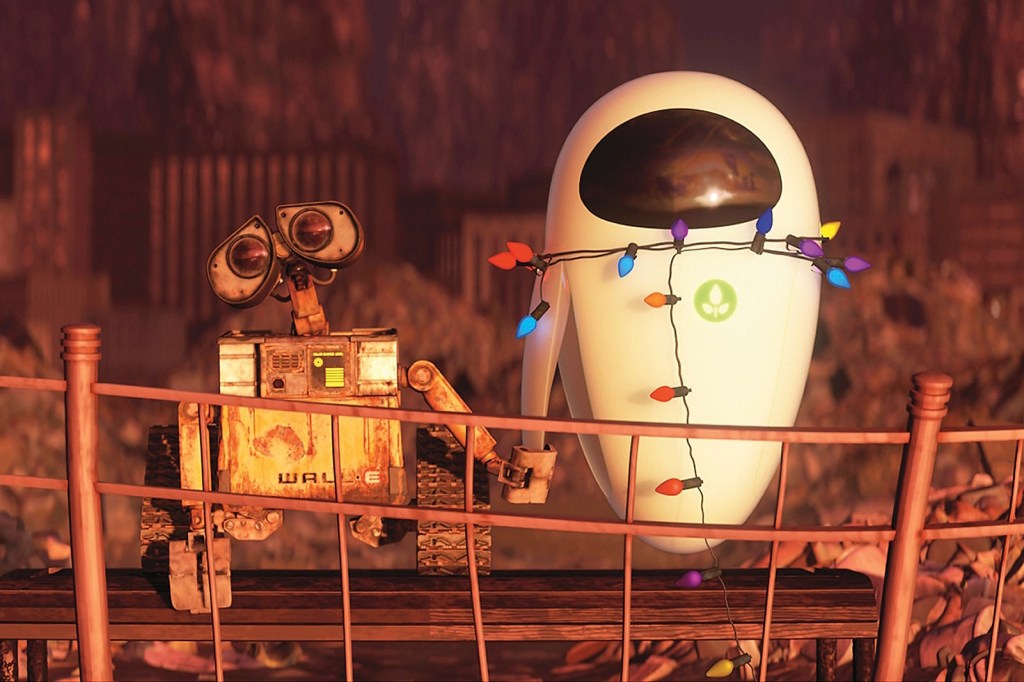
If Up is my favorite Pixar movie, then Wall-E is a very close second. A pure science fiction film, the movie is set in a future in which the Earth became so uninhabitable that humanity was forced to flee into outer space. Over the centuries, one little robot who was tasked with cleaning up the garbage left behind has kept up with his assigned task, even though it seems an exercise in futility until a probe droid from one of the human ships returns to Earth to seek signs of life. Then the remarkable happens: Wall-E falls in love.

A better love story than Twilight, and it’s not even close.

The movie is unbearably sweet, but never in a sickening or saccharine way. When you watch the interaction between Wall-E and EVE (the robot from the human ship Axiom) there is never even a second when you doubt the utter sincerity of emotion put on display. Wall-E is in love. EVE falls in love with him as well. With all the debate surrounding AI at the moment, I find it pretty incredible that 16 years ago Pixar showed us an AI with an actual soul, which is what all of the AI “art” and “writing” being churned out by the likes of ChatGPT completely lacks. Pixar made us believe in Wall-E by making him – a tiny robot with almost no dialogue and a design that (let’s be honest here) was totally ripped off of Johnny 5 from the Short Circuit movies – into a hero that displayed the best parts of humanity. Wall-E is kind, curious, and utterly devoted, not just to EVE but also to his assigned task.

Let’s talk about that task, though, because that’s where the allegory in this film comes to light. Wall-E has spent centuries gathering up garbage, compressing it into cubes, and stacking up those cubes into increasingly elaborate structures. And yet the volume of garbage barely seems to have been dented and the reason for his task (to make the world livable for humans) is long gone, seemingly forever. Why is he doing it? What’s the point? This question is echoed later when we actually arrive on the human ship, the Axiom. On this ship, the surviving humans have their every need catered to by machines, and have turned into fat, sedentary blobs who can barely even walk, let alone show the ability to make a decision on their own. But this is their life, this is all they have ever known, and thus they keep going.

And then there’s the ship itself, controlled by a computer voiced by Sigourney Weaver and cleverly designed to evoke the treacherous HAL 9000 from 2001: A Space Odyssey. (There’s a unit in my 12th grade English class where I show clips of 2001, and I’m always impressed when a student picks up on the fact that Pixar was doing a shout-out here). The Axiom hides the evidence that Earth may again be capable of sustaining life and tries to keep her charges in outer space. Why? Because it doesn’t seem possible. Because her task is to keep the humans alive, and bringing them to Earth poses too great a risk. While the Axiom computer is ostensibly the movie’s villain she, like HAL 9000, isn’t strictly evil in the way that you think of a villain being evil. She is doing what she believes is best, and her actions are only viewed as villainous because we – as the audience – have personally seen the evidence that she is wrong. 

“If you’re gonna steal, steal from the best.” –Pixar’s official motto.

The point is, Wall-E, the Axiom, and the humans on board have all spent their existence in a state of unbroken trajectory, doing the same thing over and over again for no real purpose. Purpose is not found until they all collide and discover that there is a greater potential in the universe than what they have been experiencing. Again, this is the brilliant message of the film: don’t just keep doing something useless because it’s the way that it’s always been done. Find something better. 

And it actually makes you care about a cockroach. Come on, that’s a damned magic trick.

Finding Nemo is probably my son’s favorite Pixar movie, or at least the one he talks about the most, even pointing out fish at the aquarium we took him to last week and indicating which ones were Nemo and Dory. This movie (directed, like Wall-E, by Andrew Stanton) is about a young fish who is taken away from his overprotective father, captured by a scuba diver and brought to a tank in a dentist’s office. The dad, Marlin (Albert Brooks) teams up with a fish who suffers short-term memory loss (Ellen Degeneres) in a desperate chase across the ocean to bring his boy home. Here’s the remarkable thing about this movie: from the description, it sounds like it would be the story of a child learning to obey his parent and not venture out into dangerous territory. If anything, though, it’s the opposite. Nemo is the title character, but the character arc belongs to his father, Marlin, who has been so protective of Nemo since the catastrophe that took his wife and other children that he has not allowed the child to grow. It’s MARLIN who has to learn the lesson in this movie, that a parent has to be willing to let their child swim on their own eventually. (Like so many movies about parents and children, this hits me totally differently today than it did when it was first released in 2003.)

Then there’s Coco from 2017, a movie I will defend as being the last truly great Pixar film (hopefully just “so far”). Coco is about a young man who dreams of being a musician, but is part of a family that hates music because of how his great-grandfather abandoned the family to chase a musical dream. The boy, Miguel (Anthony Gonzales), winds up trapped in the Land of the Dead, and must gain the blessing of his own ancestors to return home…but they want him to give up music. Like many of Pixar’s best films (especially Toy Story 3), Coco features a brilliant twist that turns the movie on its ear, but ultimately, this story is about the toxicity of anger and how holding on to resentment hurts not only you, but everyone you love. And like Nemo, the idea of letting your children find their own way is very present in the film. Was Pixar even TRYING to make these movies for kids?

The two horsemen of “You gotta let your kids make their own choices.”

I’m not saying that everything Pixar has done since 2017 is awful. Onward was pretty good, and had a good message about family, but it wasn’t groundbreaking the way earlier Pixar films have been. Luca was okay…but when you’re the studio that gave us Wall-E, a movie that’s just “okay” is a huge step backwards. I liked both Soul and Elemental much more than Luca, but again, it felt like Pixar was covering a lot of the same ground that they’ve covered in the past. Then there’s stuff like the Toy Story spinoff Lightyear, ostensibly the movie that Toy Story’s Andy loved so much that he needed the action figure. This movie has pretty much NO emotional framework, being a sci-fi movie about alternate timelines and the military. There’s nothing wrong with any of the elements individually, but not only do they never come together, the conceit that this was the favorite film of an 8-year-old boy is patently absurd. 

But let’s get back to Inside Out, since that’s the film that sent me down this train of thought in the first place. Inside Out is about a young girl named Riley whose family moves from Minnesota to San Francisco, and all the accompanying emotional baggage that comes along with that sort of move. However, the majority of the film is actually set inside of Riley’s head, with those emotions themselves – or rather, anthropomorphic personifications of the emotions – being the stars of the film. Joy (Amy Poehler) has been the de facto leader of Riley’s emotions since birth, but when the trauma of the move hits her, Joy and Sadness (Phillis Smith) get jaunted out of their control room on an odyssey across Riley’s mindscape in an attempt to re-establish her core emotions. 

It’s not a coincidence that the face of Toxic Positivity has the voice of Leslie Knope.

It’s a cute film with cute characters. The animation – like even the worst of Pixar’s movies – is fantastic. But what really elevates this film is the way it so perfectly creates a framework for the struggles of a child dealing with a life-changing event. On her first day at a new school Riley seizes up and the “islands” that represent the parts of her personality begin to break down because she doesn’t know how to deal with the way she feels. Memories that previously had been only associated with Joy begin to be touched by Sadness – memories of friends and places that she had to leave behind, once a source of happiness, are now cause for sorrow as she realizes those places and people are lost. 

The incursion of Sadness into Joy’s memories is, at first, treated as a tragic (almost hostile) act, and Joy is willing to do whatever she has to do to make Riley go back to the way she was. The need for growth in this movie, then, is not ONLY something that Riley has to do, but a vital task for Joy herself. In the climax of the film, when Riley is planning to run away in a quest to return to Minnesota (a task that any terrified parent in the audience will recognize as being both hopeless and life-threateningly dangerous), it is not Joy who saves the day, but Sadness. Allowing for sadness to creep into the older emotions is NECESSARY for Riley to really process what has happened to her, something that Joy has to come to accept. In the end, the message of the film is that it’s impossible to be happy all the time, and that true mental health isn’t possible if you ignore your sadness, but only if you learn how to cope with it.

 Hell of a thesis for a “kids’ movie,” right?

How good is this movie? Real mental health professionals have taken to using it to help younger patients learn how to deal with their emotions. And how many times have you used the term “core memory?” Right? It’s part of the lexicon. But it wasn’t before 2015, because as far as anyone can tell, this is the movie that coined what has become a VERY common term. It’s a film that works PERFECTLY because it takes a process that every human being has to go through at some point in their lives and turns it into a fantasy that we can all understand. 

And yet despite all of that, it’s STILL really funny.

Early Pixar understood that great storytelling is great storytelling whether it’s the parents or the kids watching it. Modern Pixar has sort of lost that thread. I’m hoping that Inside Out 2 will help bring it back. The conceit this time is that Riley is getting older and, as such, her emotions are getting more complex, with the likes of Anxiety, Embarrassment, and Ennui showing up in headquarters for Joy and company to deal with. As someone with his own anxiety struggles, I would be THRILLED if there’s a Pixar movie that can help me figure out how to sort them out.

Pixar: Meet Anxiety!
Me: Thanks, but we’ve been living together since 1987.

But I am, I must admit, nervous. Pete Docter, the co-writer and director of the first film, isn’t involved this time around. Kelsey Mann directs this one, making his feature film debut. What’s more, the only member of the original writing team that’s back is Meg LeFauve, whose only non-Inside Out writing credit for Pixar is The Good Dinosaur, which you may recall as the first Pixar movie to actually flop. I am hoping very sincerely that we get Inside Out LeFauve. 

I am bolstered somewhat by the knowledge that, although Pixar’s feature film division has struggled in recent years, the magic HAS still been there in the form of their shorts. People forget about short film and what a difficult type of storytelling that actually is. I mean, it’s never easy to tell a truly great story, but it’s arguably even harder to do it in five minutes rather than an hour and a half. Go to your Disney+ account and look at some of the recent Pixar shorts like Burrow, Bao, or my personal favorite, Float. They’ve got that old Pixar magic. Last year even gave us the delightful Carl’s Date, a short about the grouchy old man from Up trying to enter a new stage of life. It was wonderful and bite-sized enough not to undercut the original film.

The magic is still there. Pixar just has to figure out how to bring it back to the big screen. I hope with all my heart that Inside Out 2 is the movie that pulls it off.

But if it isn’t, here’s hoping that the spark of Joy riding around in my own head is able to take it in stride.

Blake M. Petit is a writer, teacher, and dad from Ama, Louisiana. His most recent writing project is the superhero adventure series Other People’s Heroes: Little Stars, volume one of which is now available on Amazon. You can subscribe to his newsletter by clicking right here. He didn’t even get around to talking about how The Incredibles is actually the best Fantastic Four movie ever made. Ah well, maybe next time.