Geek Punditry #28: Strike Binging

A few weeks ago, when I was writing about the way AI is changing the creative landscape, I mentioned the Writer’s Guild of America strike. The WGA has been on strike, refusing to write or revise any work to be filmed, since early May, which meant that the major film and TV studios could only continue work on the scripts that were already written, nothing new. Well friends, I’m happy to announce that – after furious weeks of negotiating and bargaining – the actors are now on strike as well. The Screen Actors’ Guild this week joined the writers on the picket line, and once again, AI is one of the major concerns.

One such concern that has been talked about a lot is the practice of using AI to digitally create a “performance.” This isn’t the same thing as using CGI to generate a performance like Gollum from Lord of the Rings – in those films and many other films that have used the same technology, Andy Serkis performed the role himself and the digital character was created based on his movements, his voice, his PERFORMANCE. That’s not at issue here.

“Chat GPT? We HATES it, Precious, HATES it!”

This is about the ability to sit at a computer and whip up – for example – a digital simulation of the late Olivia Newton John to drop into the Grease: Rise of the Pink Ladies series, which was fortunately canceled before that could happen. Or – and this is something that SAG claims the studios are actually planning – to pay an actor for one day’s work, scan their likeness and voice, and then use them as a background character in perpetuity. Jobs for extras and small roles, traditionally the best path for someone to break into screen acting if they weren’t lucky enough to be born with industry connections, would be wiped out overnight. What’s more, once that contract is signed there’s nothing to stop a studio from using your likeness in a role that you would never have agreed to perform – a Nazi, a serial killer, an insurance adjuster. The possibilities are chilling. 

Granted, this isn’t going to hurt the likes of Tom Cruise or Jennifer Lawrence, millionaire actors who are firmly entrenched in the system and aren’t going anywhere. But this isn’t about them. It’s about everyone else who works in the movies. Percentage-wise, the Tom Cruises are a tiny fraction of the people who actually appear on screen, and while he’ll be perfectly comfortable filming Mission: Impossible sequels until he finally runs out of places to run, the practice would be devastating for the guy who played “Bartender” in a movie today, has “Cop #2” booked for a TV show tomorrow, and has his fingers crossed that he’ll get the coveted role of “Jury Foreman” next week since that one actually comes with a line and a pay bump.

Even then, there’s no guarantee that this will end there, as this same technology would theoretically make it possible to generate an entire show with no human input at all. A recent episode of the documentary television program Black Mirror titled “Joan is Awful” demonstrated this perfectly. In “Joan is Awful,” Annie Murphy plays a woman who learns that, because she didn’t pay attention to the terms of service when she signed up for a streamer that is MOST DEFINITELY NOT NETFLIX she gave them permission to use AI to generate a melodrama based on her life, with a new episode based on what she was doing every day and painting her in the worst light possible. The show even “casts” Salma Hayek as Joan, and Salma herself is shocked to learn what she agreed to when she signed over her likeness. Black Mirror has always been the sort of show that looked at technology and projected a logical worst-case scenario in the near future, but I bet even showrunner Charlie Brooker is surprised to learn that this particular episode was set in August 2023.

“Charlie, are you sure we’re not being too subtle?”

For most of us, of course, there’s very little we can do at the moment except wait for the networks and streamers to run out of new stuff to dole out and start complaining. But the good news is that the last few years of TV have been so rich in goodness that, odds are, there’s plenty of worthwhile material available that you haven’t watched yet, most of which have – and this is the part that the studio heads will struggle to understand – been made by human beings. So I’m going to share with you today some of the TV shows that I haven’t watched that I plan to take advantage of the strike downtime to binge.

The Marvelous Mrs. Maisel is first on my list. This series, available on Amazon Prime, just recently finished its five-season run, and although I’ve always been interested in it, I haven’t quite found the time to watch it before. I was already planning to move it up on my rotation with the news that the show’s star, Rachel Brosnahan, has been cast as the new Lois Lane in James Gunn’s Superman: Legacy movie, which will commence filming as soon as the strikes are settled, so hopefully sometime before the sun explodes and Kal-El loses another planet.
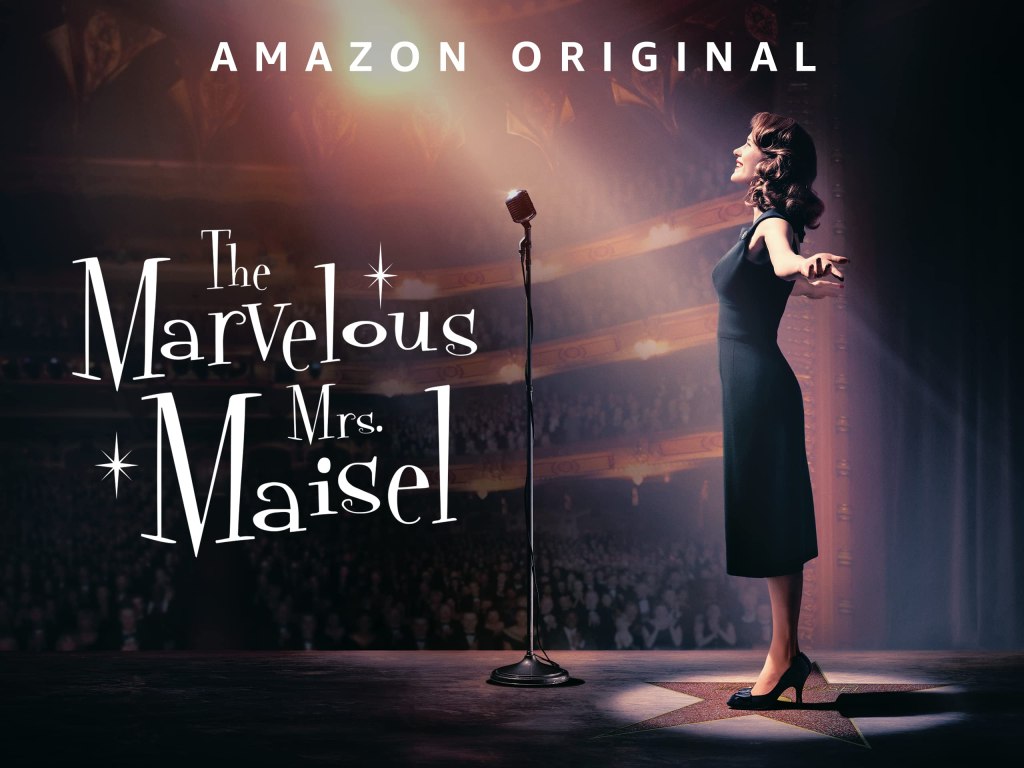
“Don’t you hate it when you’re on a date with a guy but he has to rush off to help an Amazon Princess and a trust fund kid dressed as a bat stop an alien invasion? Am I right, ladies?”

Mrs. Maisel, from what I understand, is about a 50s era housewife who decides to embark on a career as a stand-up comic. I’ve always kinda been fascinated by the world of stand-up, and setting it at that particular time period with a female lead seems like it would create a very unique perspective. The tricky thing about making a show or movie about a comedian, though, has always been to make sure they’re legitimately funny, which sometimes has proven difficult. But no doubt the AI joke generator has nailed Mrs. Maisel’s routines (that or a team of writers led by showrunner Amy Sherman-Palladino, who also created the whip-smart Gilmore Girls), and the performance itself can be landed flawlessly just by dropping Brosnahan’s face into a computer and letting it figure out the delivery on its own.

Wednesday is another show I, shockingly, haven’t watched yet. I’m a fan of The Addams Family, both the original series and the films from the 90s, so it’s weird that I haven’t gotten around to it yet, although in my defense, that last season of Better Call Saul was monopolizing a lot of my time.

I know a little more about Wednesday than Mrs. Maisel, just by virtue of it being a new incarnation of a classic IP created by the Hotspot AI Art Generator cartoonist Charles Addams. I know that, in this version, Wednesday Addams is sent to a boarding school, and I know that Jenna Ortega apparently did a good job portraying the character, by virtue of the fact of her getting an Emmy nomination on the same day she went on strike. Also, there is apparently some big dance number that Ortega herself choreographed on the day they filmed it, although no doubt it could have been done just as efficiently by a computer. 

Oh, also this picture. Everyone on the planet has seen 700 memes with this picture.

Hulu brings us Only Murders in the Building, a comedy starring Steve Martin, Martin Short, and Selena Gomez as a trio of true crime enthusiasts who go over the top trying to solve a real murder that happens in their apartment building. Steve Martin and Martin Short, of course, are comedic legends whose legacy will only be enhanced once their likenesses are inserted into a database so they can continue starring in this show for the next 70 years. Last fall my wife and I attended one of their live shows (which was really weird, since they had to do the entire thing without CGI), in which they praised Selena Gomez as being “such a good actress that she pretended to know who we were.” Why haven’t I watched this show yet? I have no idea. Seems like a terrible oversight on my part.

Two of the greatest comedic minds in the history of the planet, and Martin Short.

Finally, I’m going over to MAX to watch Peacemaker. I know, considering my comic book pedigree it’s got to be a shocker that I haven’t seen it yet. Guys, you would be horrified at how many comic book series I’ve yet to get around to watching. It’s almost as disturbing as the number I started watching but have yet to finish.

Anyway, Peacemaker is a spinoff of James Gunn’s The Suicide Squad, starring John Cena as the titular superhero commando who loves peace so much he’s willing to kill whoever he has to in order to achieve it. It’s a satire, of course, a concept that is probably lost on anybody who has missed the point of the previous three entries I’ve written about and, likely, Mark Zuckerberg. The character, as presented in the movie (which I have seen) is fundamentally absurd, and it’s the absurdity that made him fun to watch. I’m hoping for more of the same in the TV show, which again is written and directed by James Gunn. Gunn was also the writer and director of the three Guardians of the Galaxy movies and one Holiday Special for Marvel, which might trick you into thinking he’s got a pedigree and knows what he’s doing, explaining why Warner Bros. hired him to take command of DC Studios going forward, although they might have thought twice if they realized they clearly could have gotten the same quality of work by using ChatGPT.

Although if you had told me the costume was designed by AI, you might have convinced me.

So there I am – four series, a total of 79 episodes so far. That should keep me busy for a while. But if I run through these series before those pesky writers and actors realize how expendable they are and end the strike, there are plenty more to choose from: Yellowstone, Ted Lasso, Foundation, House of the Dragon, Andor, and all of the thousands of other shows I haven’t seen yet that could just as easily have been made by feeding some data into an AI engine. 

A Golden Age of Television indeed.

Blake M. Petit is a writer, teacher, and dad from Ama, Louisiana. His current writing project is the superhero adventure series Other People’s Heroes: Little Stars, a new episode of which is available every Wednesday on Amazon’s Kindle Vella platform. In case you didn’t get it, the point here is that all of these things were made by actual human writers and directors and actors, and that doing it all by computer would be terrible. In case you didn’t get that. 

Geek Punditry #3: Beware the Binge

“I’m not going to start watching a show on Netflix. They’re just going to cancel it anyway.”

Everyone reading this, I promise, has heard someone on social media (or maybe in real life, if you’re the sort of person who has such a thing) echo that very sentiment recently. Every time a new show hits, someone says it. Every time a show gets canceled, someone says it. Every time I go through the drive-through at Wendy’s someone says it, which is actually kind of weird and makes me wonder if they’re still having staffing issues. But the point is, I get it. In this day and age, when television has become more more serialized and most shows – even half-hour comedies – have ongoing story arcs that play out across a season or even across an entire series, there are few things more frustrating to a television fan than getting invested in a series, watching their way through the end of the first season, feeling their pulse race with the cliffhanger finale, and then learning that there will never be a season two. 

The blame for this is usually placed on Netflix itself (although they’re hardly the only culprit), and while I agree that Netflix deserves a lion’s share of the culpability, I don’t think it’s for the reason most people usually mean. 

The assumption people have is that Netflix is just impatient. They won’t give people a chance to find a show and get to enjoy it. But I don’t think that’s what’s happening, not exactly. Netflix (and most streaming services) rarely release their actual numbers, so it’s hard to say with any degree of certainty how many people are watching any given show or how quickly, but a hypothesis has been making the rounds that I think is worth examining. Some shows are getting the axe despite seemingly large numbers, while others with smaller viewership are being allowed to continue, a practice that doesn’t seem to make any sense if you consider it series-by-series. It makes a lot more sense, though, if you look at it episode-by-episode.

What seems to be happening is that Netflix is basing their decisions not on total numbers of hours watched, as people tend to assume, but by how many people finish a season. If, for example, 20 million people watch the first episode of Mind Your Manners With Simon Cowell, that sounds better than the 15 million who watched the first episode of Toenail Fungus Finds of Eastern Europe, right? 

But keep watching the numbers. How do they trend? What percentage of that original number stuck it out to the end? If, by the end of the season, Toenail Fungus has retained 11 million viewers, but Simon Cowell has dropped down to 4 million, what makes more sense to renew? People who skipped out on Simon after three episodes are far less likely to come back for a theoretical second season than the much larger number of people who stuck around to find out exactly what kind of mold was growing under Slobodan Milosevic’s left pinky toe in the pulse-pounding season finale. 

The practical result of this is that shows that don’t get binged heavily in the first couple of weeks are far less likely to get invited back, and this is where that conventional wisdom comes back into play. Shows are not being given time to find an audience, you’re right. But the solution here is not to require every damn person on the planet to binge every show the second it hits the streamer. Doing things that way makes it far, far harder for a show to get traction unless it’s based on an existing IP like Wednesday. Something like The Midnight Club may be every bit as worthy of getting a new season, but as it doesn’t have that built-in fanbase, the chances of it hitting the same way are much worse. 

There are exceptions, of course. Stranger Things and Squid Game are both shows that seemingly came out of nowhere and had no ties (other than thematic ones) to previous movies, characters or TV shows that could have carried over their audience – but they’re called exceptions for a reason. For each of those, how many series like The October Faction, Cursed or Archive 81 have suffered an ignoble death?

There is a solution to this problem, but Netflix doesn’t want to hear it. In fact, I think a lot of you reading this right now will be horrified at the suggestion. But I’m going to say it anyway.

You know how to deal with the problem of people not binging shows quickly enough to save them?

Stop making shows bingeable. 

Excuse me, I need to go wash the tomatoes people just hurled at me from my hair and clothes.

But I’m serious about this. The problem is that Netflix is basing their decisions on how many people watch an entire season of a series in X amount of days, with X being some magical number they’re not going to tell us but which was clearly too small to save Jupiter’s Legacy. And as it seems these shows are getting cut faster and faster, you cannot blame any viewer for deciding not to invest their time, which means that the new shows won’t have anyone to watch them and then they’ll get cut too, and now we’re just in a never ending loop of cancellation and misery, like being back in high school, but sandwiched between a baking show and a murder documentary. 

But let’s look at other streamers. Netflix isn’t the only game in town anymore, after all, and few of their competitors have suffered from this same cancellation outrage. So what’s the difference?

Part of the problem is that tiny little “X” number – expecting people to find a show, binge a show, talk about a show, and then expand the audience in a remarkably short period of time. It’s really hard, and considering just how many entertainment options now exist, it’s nearly impossible. But look at the Marvel or Star Wars shows on Disney+, or the assorted Star Trek series on Paramount+. Not only are people watching, but people are talking about them. And not just for the days or (in rare cases) weeks of a Netflix hit, but for months. What’s the difference?

Disney and Paramount release their series the old-fashioned way: one episode a week. And that lets the audience find the show in a way that Netflix’s “drop ’em all right now” model never will.

How many Star Wars fans, disgruntled by Disney’s cinematic output, had to be convinced to try the likes of The Mandalorian or Andor? How many Star Trek fans immediately dismissed Prodigy or Lower Decks for being animated series until other fans persuaded them to give them a chance? If they had been released the Netflix way, the conversation would have ended in a few days, and a lot of people would never have given these shows a try.

It’s not a perfect analogy, I admit, because those are shows based on existing – and, let’s be honest, massive IPs, but it still demonstrates something. I hear people talking about these shows not just on the weekend after they’re released, but for months. Love them or hate them, these series have people engaged for a very long time, posting about them on social media, writing thinkpieces, and making memes. And every week, when a new episode comes out, the cycle repeats. This doesn’t happen with a binge show. Even Wednesday, Netflix’s most recent hit, had a quick surge of popularity, a lot of people talking about a dance sequence, and that one meme with Wednesday Addams next to a girl who looks like Luna Lovegood crossed with Phoebe Buffay, and then…it kinda dried up. Sure, people liked the show. Sure, people are looking forward to season two. But nobody is talking about it anymore right now, less than two months after it dropped. 

Compare that to the third season of Star Trek: Picard, which I guarantee will have people on the internet wildly pontificating for the entire ten weeks it’s on the air. And love it or hate it, they’re going to come back every Thursday for the next episode and do it all over again. And while they’re talking, other people will hear them, and the more people who hear them, the more people are likely to watch it, and that’s where the binging comes in. 

I’m not going to pretend I don’t binge watch. Of course I do, it’s 2023, it’s how media is consumed now. But for a new series it’s just not an effective strategy. Pre-streaming shows like Lost or How I Met Your Mother built their audience because fans got invested in the story, the characters, and the mystery, and they came back to talk about them again week after week, season after season. They shared their theories, they wrote fanfiction, they drew pictures of their favorite characters and, most importantly, they told other people how much they loved their favorite shows for a very, very long time. And say what you will about how those respective shows ended, they still have devoted and passionate fan bases that will spend more time talking about them than anyone is spending on Uncoupled. The ability to binge is a great tool for new fans, to get people who are discovering a show later to catch up and to join in on the fun. But as a way of kicking a series off? It’s like Netflix is Lucy holding the football and Inside Job is Charlie Brown, running in for his chance without realizing it’s already a lost cause.

Abandoning the binge-release model won’t save every deserving show, of course. Even in the days before streaming there were lots of great shows that never got past a first season, including some that weren’t even on the Fox Network. And sure, some viewers have no patience for the weekly release anymore, but I sincerely believe that the potential audience that never gets to find these shows under the current system outnumbers the people who will refuse to watch just because they can’t do it all at once.

So there’s my challenge, Netflix. Instead of dropping full seasons in 2023, try doing an episode a week. Then look at how many viewers make it to the end. 

And then maybe give The Joel McHale Show With Joel McHale another chance, would you?

Blake M. Petit is a writer, teacher, and dad from Ama, Louisiana. His current writing project is the superhero adventure series Other People’s Heroes: Little Stars, a new episode of which is available every Wednesday on Amazon’s Kindle Vella platform. He hasn’t actually gotten around to Wednesday season one yet, if we’re being perfectly honest here.