J. Michael Straczynsi is an accomplished storyteller, a phenomenal writer, and a little bit of a troll when it comes to teasing his fans with the promise of upcoming content. Among his other achievements, Straczynski is the creator of Babylon 5, which a lot of people consider one of the finest science fiction shows ever made, and which is in many ways a precursor to the current model of long-form storytelling that we enjoy on television. But while B5 is acclaimed, it’s obviously not as well known as the likes of Star Wars and Star Trek. Aside from the series itself, the universe has only enjoyed a few TV or direct-to-DVD movies, a spinoff series that lasted a single season, and a relative handful of novels, comic books, and short stories which are all long out of print and not even available digitally. Last week I told you guys how fans always want “more.” By that metric, Babylon 5 fans have been starving for a long time.

This week, though, we were finally promised a meal when JMS announced an upcoming Babylon 5 animated movie. Although we don’t yet know the plot, the title, or the release date, Straczynski told us the following: the film includes the voices of most of the surviving members of the original cast, the movie is already finished and will be released “very soon,” and it is – in his opinion – the best thing they’ve done with Babylon 5 since the original series ended. And as with most news announced to a group of starving genre fans, the reaction had two phases:
1: YES! New Babylon 5 content! FINALLY! The prophecy has been fulfilled!
Followed shortly thereafter by…
2: Pfft.
Any time a popular franchise makes an announcement, there is a “Pfft” contingent, and while that contingent is usually small, it is extraordinarily vocal. One “Pfft” is capable of raising his voice on the internet above approximately 5,000 fans who are genuinely happy and excited about the project, and he does so in such a manner to indicate that the news is nothing to get excited about, and anyone who is excited is beneath him. These people have existed since the dawn of civilization, the first recorded practitioner expressing their displeasure with a cave painting of a pack of wildebeest made by Hector “Ugg” Gutierrez, but which was clearly inferior to the one made by his arch-rival, Andy Warhol.
But back to the Babylon 5 announcement, specifically. The “Pfft” people usually latch on to a few key elements to fuel their derision, such as the cast or writing. In this case, though, since it’s almost all the original people involved in the new project, they have focused their spite on the medium: animation.
“Pfft. It’s a cartoon?”
“Pfft. I’ll wait for the real show to come back.”
“Pfft. Look at what happened to Star Wars.”
(That last one is the most perplexing to me, actually, since many of the Star Wars animated projects have been widely acclaimed, but it does demonstrate the phenomenon of cross-fandom “Pffting,” an activity that has always existed but which has become much more prevalent in this age of the internet.)
Look, I’m not here to tell anybody what to like. I’m not telling anyone they have to enjoy something, and I’m not telling anyone their opinions are invalid. I am, however, going to say that if your argument against a project is based solely on the fact that it’s animated, an opinion formed before even a single frame of the project has been seen by the public, then you’re kind of a dink.

The idea that animation is strictly a medium for children is a stupid one, and one that’s never made much sense to me. It certainly wasn’t the intention when it was invented. Early cartoons were made for a mass audience, with references to popular culture that would often go over the heads of children and plenty of double entendre that definitely wasn’t intended for the little’uns. It’s hard to watch classic Looney Tunes shorts with a discerning eye and think that bits like Bugs Bunny’s Clark Gable imitation were intended for kids even in the 1940s, or that the leggy girls the male toons would often chase after weren’t there for a little bit of grown-up fanservice. The people who made those cartoons were really trying to entertain themselves, and the fact that their work also entertained everybody else just showed how talented they were.
After my standard “I am not a historian” disclaimer, I’m going to say that I think the (largely American) perception of animation being strictly a medium for children probably is due to television. Once TV became more prolific and turned into a fixture in most American homes, content for every member of the family became a requirement, and cartoons became the preferred delivery system for the kids. Saturday morning cartoons blossomed, and they were glorious. They eventually migrated to weekday afternoons so kids had something to watch after school. And then, even older works (like the aforementioned Looney Tunes) were repackaged and shown during these children’s blocks, cementing them as kid stuff in the tightly-closed mind of the public. It’s a stigma that was set firmly, and while I think the last few decades have started to chip away at that mindset, things like the reaction to the Babylon 5 announcement prove that it’s still real for a lot of people.
The thing is, none of the arguments for animation being only for kids hold up to even minimal scrutiny. Let’s break them down, shall we?
“Animation is childish.”
Sure, it can be. It can be a realm of crude humor and slapstick comedy and lowbrow jokes and goofy gags, just like the Three Stooges – who (although they did have a cartoon in their later years) were decidedly human. The things that people call “childish” are elements of the way the story is written or presented, not the medium. Animation can be mature and serious, and I’m not just talking about raunchy humor like South Park. I’m talking about things like the razor-sharp satire of early seasons of The Simpsons. I mean experimental films like Batman: Death in the Family. How about Isao Takahata’s Grave of the Fireflies, a story about two Japanese children surviving an American firebombing during World War II? It’s a transcendent film, but most definitely not something that any reasonable parent would show a small child.
To call something “childish” derisively seems to mean that the content is not worthy for consumption by adults. And to be certain, there are kids’ shows that fall under that category. But even shows that are aimed at kids don’t necessarily lock out parents altogether. Bluey is the most current example of this – this Australian show ostensibly for preschoolers is a favorite among kids, but has been embraced by parents all over the world for portraying a loving mother and father (sure, they’re dogs, but so what?) who do their best with their children, fall short sometimes, but keep on going. The characters have become inspirational, role models even. Animated dads have far too often been cast in the mold of Peter Griffin. The truth is, every dad should aim to be a Bandit Heeler.

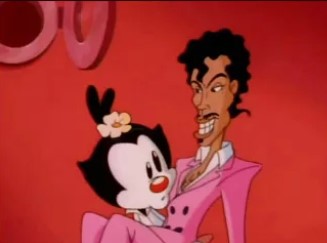
And there are far more examples. The original Animaniacs series came out when I was in middle school, and it was a show my father actually enjoyed as well. It was part of the Fox Kids lineup, but like the Looney Tunes shorts that were their true parents, it had layers of satire and entendre that kids never would have understood. I was in college before I realized the episode “King Yakko” (which you may just know as “the Anvilania episode”) was a full-plot reference to the 1933 Marx Brothers’ movie Duck Soup. Yeah, that was a joke for kids in the 90s.
How you make something does not determine the proper audience. What you make does.
“It’s just a cartoon, I can’t feel anything like I do for human actors.”
That’s a failure of the viewer, not the film. Animation can be deep, powerful, meaningful, and personal, and it all depends on the story you’re telling. If somebody came up to me and said that the saddest 60 seconds of television ever made came at the end of the Futurama episode “Jurassic Bark,” I would be utterly incapable of arguing against it. After a full episode about Fry, trapped 1000 years in the future, coming to terms with losing the dog he left behind but finding comfort in the fact that he had a full life without him, the viewer learns that Seymour, the dog in question, literally spent the rest of his life waiting for his master to return before quietly passing away in front of the pizza parlor where Fry worked. Even somebody who hates dogs has to feel something for that.

“But Futurama is adult animation,” you say. “Not all animation is like that.” I’m going to ignore the fact that you just utterly shattered your own argument that animation is all for kids and move on to examples that are for children, but which are still deeply moving for adults. How about the Pixar film Up? As a teacher, there are occasionally days where we show films because of reasons, such as having a room full of standardized testers who have finished early and I need to kill time before we return to our normal classes. On days like that I have a strict rule to never show the movie Up, because I may have to teach some of these 9th graders when they become seniors and I don’t need them remembering that time I sobbed like an infant in front of them. The beginning of Up tells the story of a boy and girl who grow up, fall in love, marry, discover they cannot have children, and grow old together before the woman, Ellie, leaves her husband Carl as a widower, and utterly alone. It’s a powerful story and it’s told, after their initial meeting as children is over, completely without words. It’s entirely visual, requiring the viewer to infer what has happened to them at each stage, and causing their souls to crumble as the reality sets in. I admit, I’m a softie. I cry at movies. At TV shows. Whenever I heard the John Williams anthem from Superman. But this was the only time in my life a movie made me cry in the first ten minutes.

Emotion is an intended byproduct of art, all art. Whether it’s a film, a poem, a painting, or a concerto, art is created for the express purpose of evoking an emotional response from the audience. And great animation can nail it just as much as live action.
“Animation is just a cheap way to tell the story.”
First off, buy a calculator. The price tag on rendering animation can be pretty staggering. But I’ll give you the benefit of the doubt here – maybe you mean that animation looks cheap. Sure. Sometimes. It’s hard to imagine that anyone involved in the 2012 magnum opus Foodfight! is particularly proud of what they have loosed onto an unsuspecting world. But that’s bad animation. Bad live action sucks too. So does bad writing, bad acting, bad special effects. If your argument is that “animation is bad,” you’re choosing to ignore the mountains of good animation that exist or the mountains of bad everything else you had to wade through to get there.

Let’s go back to Babylon 5 for a second. Although very few details have been released, and everything I am about to say is speculation, the fact that Warner Bros. owns the property makes it reasonable to assume that the animated film is the work of the Warner Bros. Animation studio, the company whose history goes back to those magnificent Looney Tunes I keep bringing up. For a more recent example, and one that is thematically much closer to what the B5 movie will likely be, this is also the studio that has made the collection of DC Comics animated films that have come out over the last several years, movies like All-Star Superman, Batman: Under the Red Hood, Superman Vs. the Elite and Justice League Vs. the Fatal Five. The current unit is also responsible for many films featuring the likes of Scooby Doo and other Hanna-Barbera properties, Tom and Jerry, and…you guessed it! The Looney Tunes. And while people may debate the relative quality of any of those productions – they may dislike the story, the casting, the character design – one thing they rarely complain about is the quality of the animation itself. WBA knows what it’s doing.
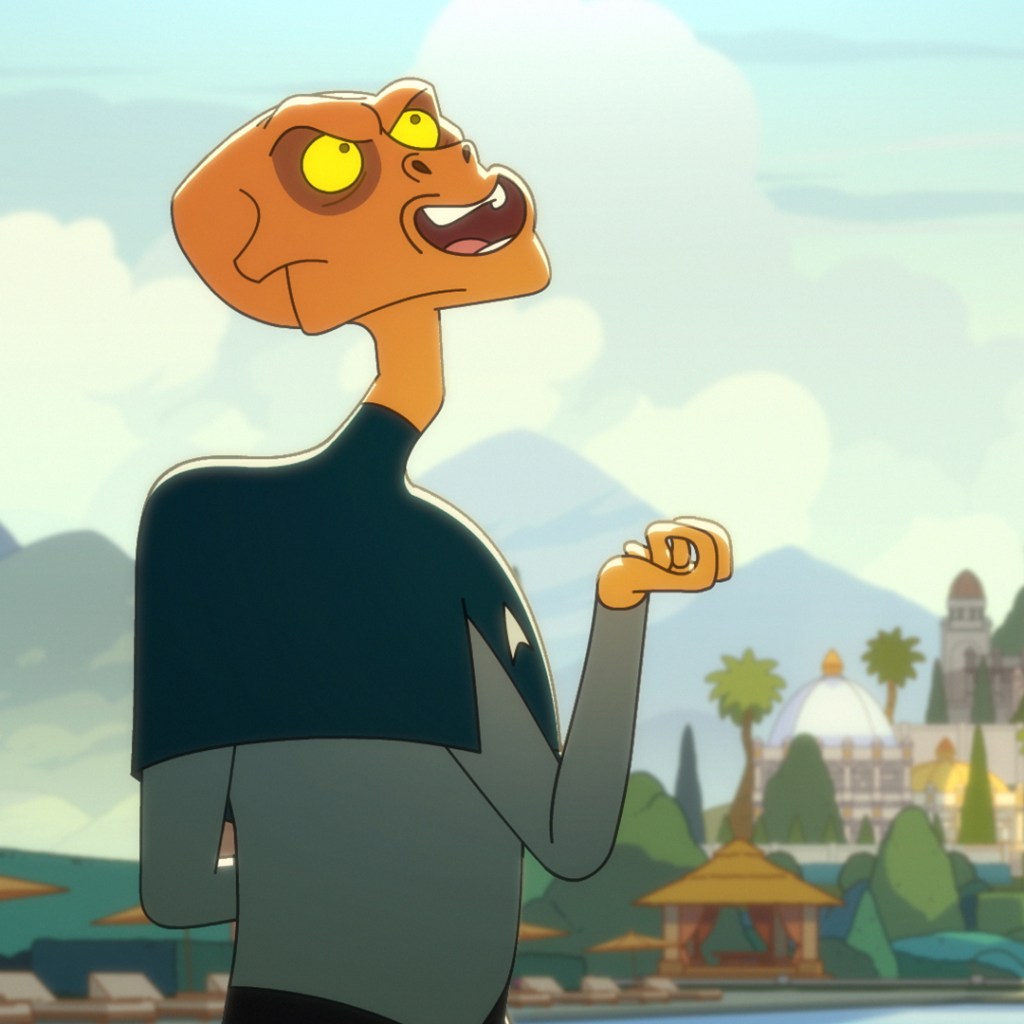
And frankly, the notion of using animation for science fiction just plain makes sense. When you’re telling a story in a world beyond our own – be it sci-fi, fantasy, horror, or superheroes – the special effects are often make-or-break. The filmmakers have to convincingly create something that does not exist in the world and put it in front of an audience in a way that it appears real. Some people are great at this. Some people are not. Animation removes that requirement. Star Trek is often derided for its reliance on “rubber forehead aliens” – in other words, alien species that are created by slapping some prosthetics on human actors. Well what else were you supposed to do, especially with the budget and technological limitations of television in the 1960s? When the Star Trek animated series was created, for the first time, there were recurring alien creatures who were not wholly humanoid, such as the tripedal Edosian officer Arex. Even in modern times, where improved effects make it easier to show things that are less human, we still see a much wider variety of alien species on the animated series Lower Decks and Prodigy than we do on any of the live-action Treks, and you never hear anyone say that they look “fake”.
What about superhero movies? Since Marvel Studios changed the way blockbusters are made, the “Pfft” crowd has come out in force to complain about the overabundance of special effects that are used. “Did you see the new Ant-Man movie?” they say, ignorantly forgetting that the Wasp receives equal billing with her partner. “It’s just a couple of people in CGI suits in front of a green screen for two and a half hours.”
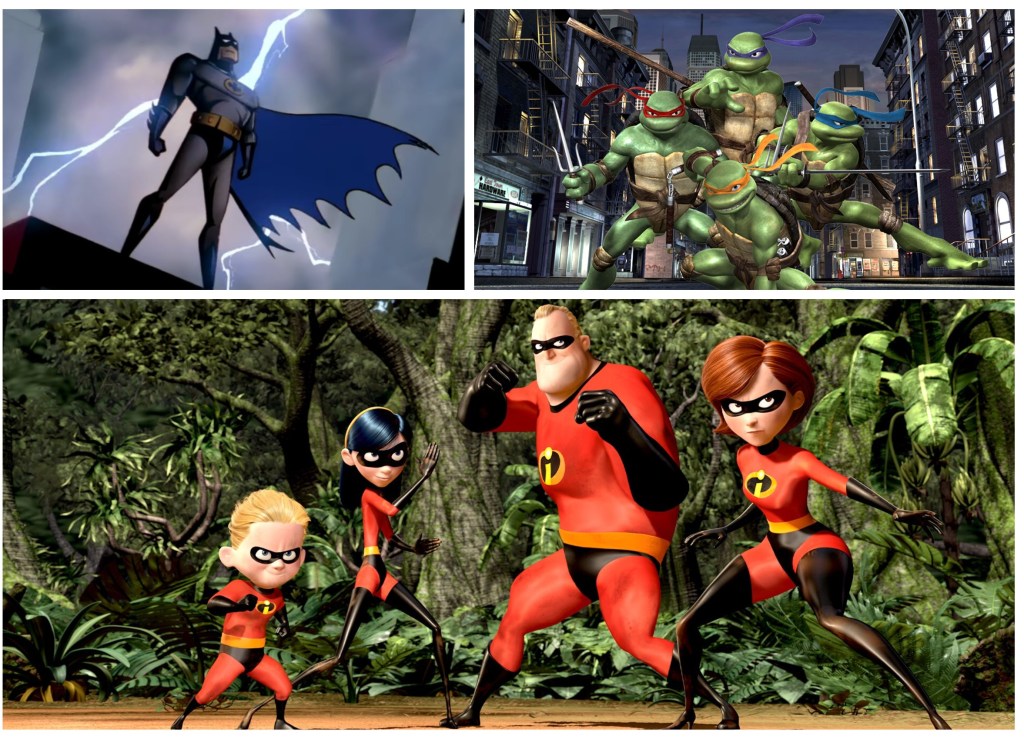
You know what movie they never say that about? The Incredibles.
In fact, after The Incredibles and the largely-forgotten but highly-enjoyable TMNT (an animated feature starring the Teenage Mutant Ninja Turtles that you likely didn’t know existed) I came to the opinion that animation is the perfect medium for superhero movies. I’m not saying that animating a huge action sequence is easy, but when literally the entirety of the universe is created digitally or on a drawing board, there are fewer limitations. The live action Marvel movies recognize this, which is the reason they’re so heavily reliant on CGI these days. And while their live action features have been a mixed bag, DC’s animated superhero projects have been a hallmark of quality ever since Batman: The Animated Series. Even non-superhero, non-science fiction movies do this these days. I’ll never forget the hilarious moment when Disney’s “live action” remake of The Lion King had so little live action that the Golden Globes nominated it for Best Animated Feature. I still laugh about that.
Animation is a medium. It’s a method of telling a story, and dismissing an entire medium because of what you perceive it to be is a kind of ignorance. If the Babylon 5 animated film comes out and underwhelms…well, that would suck. I love B5 and I want more stories in that universe, and I think that the success or failure of this film will impact the odds of that happening in the near future. But if it turns out to be a dud, there’s one thing I’m sure about: it won’t be because it was “just a cartoon.”
Blake M. Petit is a writer, teacher, and dad from Ama, Louisiana. His current writing project is the superhero adventure series Other People’s Heroes: Little Stars, a new episode of which is available every Wednesday on Amazon’s Kindle Vella platform. Thanks to his wife, Erin, for reminding him to include the Futurama example when he told her what this week’s column would be about.






 Blake M. Petit