I’ve never really been a fan of the term “guilty pleasure.” It seems inherently reductive to me. It’s announcing to the world that you’re ashamed of something you like, but I don’t think anyone should have to feel that way. If you’re a grown-up who’s into Squishmallows, so what? Get yourself a Squishmallow. Tell your friends so they’ll load you down with them on your birthday. Why would that be anything to be embarrassed about? Adult Fans of Lego? We’re a thriving community. And if anybody tries to tell me that Bluey is “just a kid’s show,” I will personally offer to help them look for the soul they have obviously misplaced.

That said, I do UNDERSTAND the idea of a guilty pleasure. There are some things that you enjoy that, for one reason or another, you feel like maybe you shouldn’t. It’s not a matter of shame for me, though, it’s more a question of why does this one thing, this piece of pop culture that includes so many elements that I usually find reprehensible, for some reason not only hold my attention, but leaves me thirsting for more? It’s not a guilty pleasure for me, it’s a confusing one. And here, of course, I am referring to the Peacock “reality” competition series, The Traitors.

I’m not a huge fan of reality competition to begin with. I watched the first few seasons of Survivor back in the day, the show that popularized (if not outright invented) this hybrid game show and docudrama, in which people in competition with each other are also forced to live together. The thing that makes this type of show stand out is that we aren’t solely watching the competition, but also the lives of these people in-between the events. The thing that made the format revolutionary, though, is also the thing that turned me off. Those day-to-day moments became much darker. The contestants started to turn into vile, backstabbing jerks to each other, and it became increasingly difficult to pull for anybody. It wasn’t long before the majority of shows in this category were wiped clean from my viewing slate. Most of the reality competitions I watch these days are the ones that focus solely on the “competition” part, like The Great British Baking Show, Masterchef, LEGO Masters, or Crime Scene Kitchen. Without the manufactured drama between games to make people hate each other, these shows are much more pleasant to watch. In fact, there are plenty of times on British Baking Show where one contestant will drop what they’re doing to help out one of their OPPONENTS in a moment of need, an act of kindness and goodwill that on a show like Big Brother would result in somebody’s spleen being removed and served to the group for dinner with a light balsamic glaze.

But back to The Traitors. Based (as so many of these things are) on a British series of the same name, when I heard about the first season a year ago I thought it would be worth a watch. The concept reminded me a little of one of the few reality competitions that I DID enjoy, The Mole. In that show, contestants worked together on a series of missions, with each success adding to the prize pot that would be awarded to the final victor at the end. One of them, however, was a “Mole” working for the producers and actively attempting to sabotage the others. This was a fun show in that the viewer got to play along, analyzing the clues and observing the behavior of the competitors in an attempt to figure out who the Mole was. Netflix brought that show back in 2022 for a reboot which worked well, although a promised second season has not yet materialized.
The Traitors is similar. Again, the competitors are working together to win challenges, and again, the prize money for each challenge goes into a pot to be awarded to the winners at the end. But there are several major differences. First of all, rather than a single Mole, a small group of the competitors are secretly chosen in the first episode to be the Traitors. And their task is NOT to sabotage the missions – in fact, it is in their best interest to see the missions succeed, because at the end of the game the prize will be split among the winners. If the non-traitors, or “Faithful,” manage to eliminate all of the Traitors by the end of the game, they win and those that lasted to the end share the pot. However, if even ONE Traitor remains at the end, then the Faithful get nothing and the money is divided among the remaining Traitors. Like most shows, each night the Faithful vote someone out, hoping like hell that they get one of the Traitors and not one of their own. But afterwards, the Traitors are allowed to choose a Faithful to “murder” and eliminate from the game.
Unlike The Mole, the audience is aware of who the Traitors are from the very beginning. We watch as they are chosen and we watch as they plan and scheme against the Faithful. We also watch the Faithful’s attempts to weed them out, which feel increasingly bizarre and nonsensical to those of us on the outside who already know the solution to the puzzle and can’t figure out how they could be so egregiously wrong.
The big thing about The Traitors, though, is that when I tuned in to season one last year, about half of the contestants turned out to be veterans from various other reality competition series like Big Brother. They hadn’t played THIS game before, but they played similar ones, and they think they’re savvy enough to carry through to the end. Not being a fan of those shows, the personalities were blanks to me, but they were frequently shown acting as though they were experts or major stars. I was even more alarmed in season two when it turned out virtually EVERY competitor was a reality show vet, including some dude who unironically calls himself “Johnny Bananas.” These were people who had actually turned appearing on these shows into a career. Would I be able to handle this level of ego on my television?
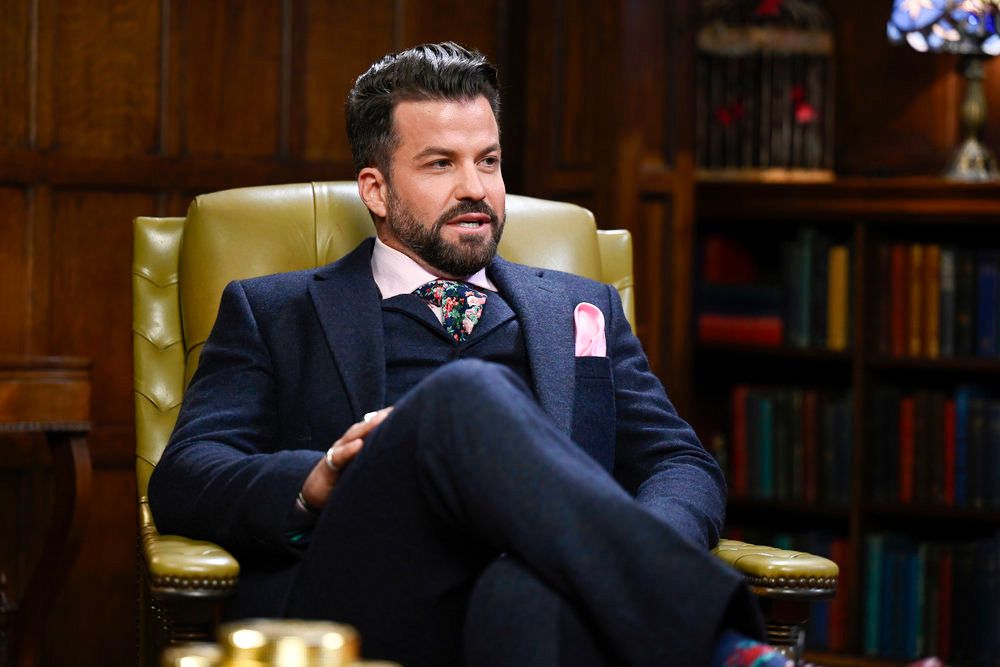
To my shock and confusion, the answer seems to be yes.
The show is incredibly backstabby, and the competitors take it super personally. I get that there’s a lot of money on the line, but to hear them talk about the Traitors as if they were Nazi war criminals instead of people trying to win a game show seems a bit much. Are they lying? Sure – but in the context of the game I don’t really see that as any more unethical than bluffing at poker. Are they kicking out innocent people? Absolutely – because they have to do that in order to win the game. It’s in the DNA of the thing. And yet the Faithful seem to talk as though they were literal thieves and murderers. I want to go up to some of these competitors and ask them what they think THEY would be doing had they been chosen to be Traitors, and wait to hear them try to do ethical backflips to try to avoid conceding that they would behave precisely the same way. In both seasons so far (season two is only six episodes in, as I write this), I have found myself surprisingly rooting for the Traitors to win, because the level of rage and invective that comes from the Faithful actually makes the Traitors seem like far more agreeable people. Also because the Faithful are unbearably stupid.
I need to correct that. It’s not really fair to call them unbearably stupid. It’s the way these shows are made. The producers prod the contestants to say certain things and act certain ways, and then they take their performances and edit them down, taking whatever reality exists on the set and shaving it away to sculpt them into characters: this is the arrogant guy, this is the ditzy girl, this is the narcissist, this is the bitch. Actually, on The Traitors, they seem to sculpt multiple bitches. But the point is, I am aware that the figures I see on the screen are not the people that they really are, but rather who the producers of the show want me to THINK they are. So the accurate thing to say is that the producers want me to THINK the Faithful are unbearably stupid.
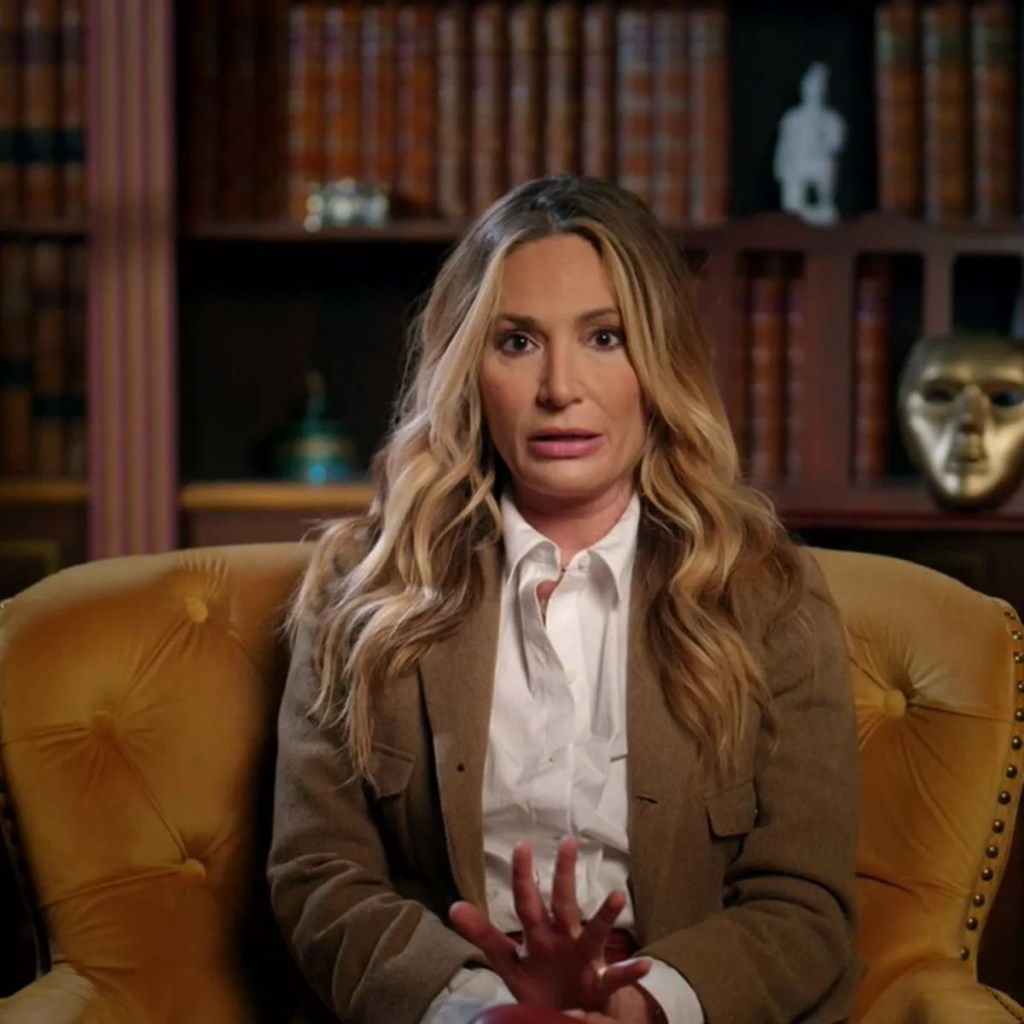
I know it’s easy for me, from my perch on the couch knowing exactly who the “bad guys” are, to laugh at the wrong avenues the Faithful follow to try to capture them, but even without that filter, I just don’t see how a lot of their tactics make sense. In the first episode, the Traitors are selected duck-duck-goose style, blindfolded, as the host of the show walks around the room and taps the chosen on the shoulder. As soon as the blindfolds come off, before even the Traitors have a chance to find out who the other Traitors are, the accusations begin. “This guy breathed funny.” “I’m getting Traitor vibes from her.” “I’ve been suspicious of him since DAY ONE.” Dude, it’s Day Two. Stop acting like that’s impressive.
Another contestant gets confused by one of the Traitor’s “victims” and, unable to figure out why they killed that person, declares that the Traitors must be really stupid. This person who has utterly failed to track down a single one of the Traitors and has voted out several innocent people in the effort, helping their cause all along, is calling THEM stupid. I wanted to throw something at the TV.
One contestant is determined that “The Traitor HAS to be an Alpha Male.” Why? Because other Alpha Males are among his “victims.” This is ludicrous for various reasons. First of all, the Faithful are aware that there are, in fact, multiple Traitors. Second, the whole “Alpha Male” concept in and of itself is a myth. Even the biologists who first coined the term among wolves later dismissed it, saying they had misinterpreted the data, but the idea lingers. I’ve always thought that anyone who refers to himself as an “Alpha Male” as some sort of badge of honor is someone not worth paying attention to, but I suppose I need to extend that policy to include anyone who uses the term “Alpha Male” in an attempt to identify a fake murder suspect on reality television.
So I watch each episode, worried that the Faithful will get dumber and dumber and hoping that the Traitors – who damn it all, I actually like – can pull it off. I watch as the strategies learned from being on Survivor and Big Brother and The Challenge and The Bachelor inevitably fail, I watch as assorted Real Housewives decide which clique they’re going to be in, I watch as the only people with common sense are targeted by the rest of the Faithful and voted off the show, and I ask myself why the hell I keep watching this?
Gotta be because Alan Cumming is the host.
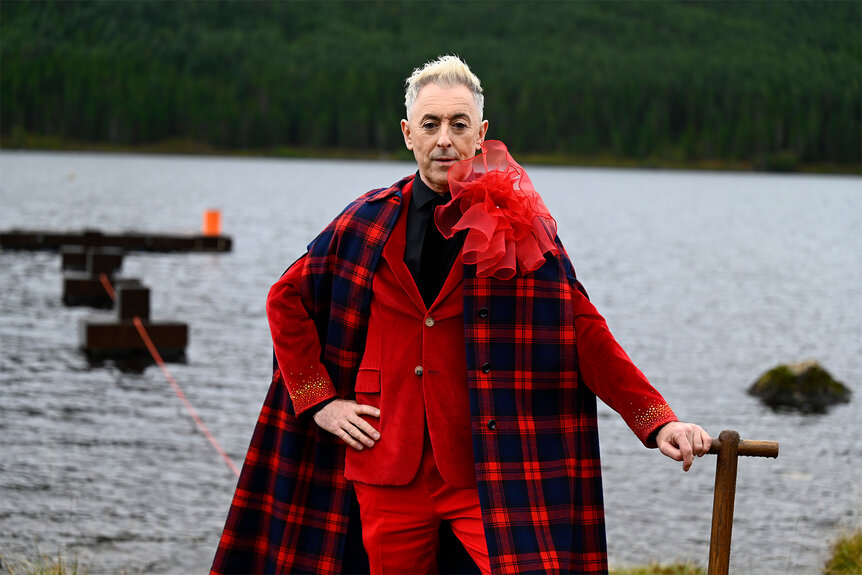
As another great fictional detective, Benoit Blanc, once observed, “It makes no damn sense. Compels me, though.”
There’s nothing else I can say to explain why I keep watching The Traitors.
Or why I can’t wait for season three.
Blake M. Petit is a writer, teacher, and dad from Ama, Louisiana. His most recent writing project is the superhero adventure series Other People’s Heroes: Little Stars, now complete on Amazon’s Kindle Vella platform. He’s about to start Tweeting at Netflix to find out when the hell The Mole is coming back.
 Blake M. Petit