Tomorrow, September 6, is National Read a Book Day. This holiday, designated by the American Institute to Come Up With Holidays Until We’ve Filled Every Day of the Calendar Year Twice Over, is legally and trademarkably different from National Book Lover’s Day, which happened on August 9. You see, Book Lover’s Day was a celebration of the people in your life who love books, which is why I received so many boxes of candy and bouquets of flowers that day. National Read a Book Day is the day in which you are to pick up a book and read it whether you like it or not, or else hamsters will crawl out of your closet at night and nibble your earlobes off.
Or something like that, I admit, I didn’t read too deeply into the website where I saw this holiday listed. But a day dedicated to books is a good thing, regardless of any rodentia-based nocturnal terrors that may or may not exist but definitely do. As a teacher, I spend my day with teenagers and, perhaps more tellingly, with samples of their writing. And I’ve got to tell you, ANYTHING that exposes our young people to more competent volumes of prose is not only a good thing, but necessary for my personal mental health. When I assign essays, I constantly get back papers without indentations, without punctuation, with words like “because” and “you” shortened to the totally efficient and time-saving “bc” and “u.” I know the reason is that a lot of these kids don’t spend any time at all reading things longer than a text message, the majority of which are composed by OTHER kids that don’t spend any time reading anything longer than a text message. That’s not just a shame, but it’s DANGEROUS for their cognitive capabilities.
Not long ago, one of my students attempted to debate me on the necessity of punctuation. As in, she didn’t think we needed any punctuation at all. Her argument, which I swear upon the ghosts of Merriam AND Webster, was that “we shouldn’t have punctuation because people should just be smart enough to know what everyone is saying.”
I want all of you to remember that next time your local government calls for any sort of vote that would give teachers a raise.
My reply, and I paraphrase, was twofold. First of all, if your argument is contingent upon everyone in the world suddenly becoming much more intelligent than they currently are, it’s time to change your argument, because you’re failing as badly as someone with a business plan that includes “after I win the lottery.” Second, punctuation exists in order to make writing more understandable. That is literally its function. To prove my point, I found an image online of some old text before punctuation was invented.
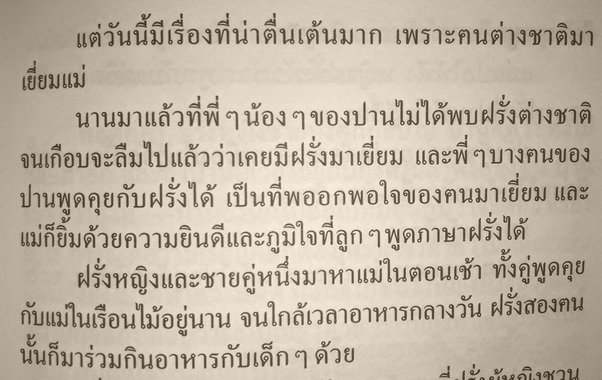
“It wouldn’t look like THAT!” the student wailed.
“Well of course not, this is calligraphy from nearly thousand years ago, because that’s how long it’s been since we realized that punctuation is necessary.”
The thing is, arguments like this would typically be avoided if the person who institutes them simply had an appreciation for the written word. And I know it makes me sound like an old crank (which I am), but there isn’t enough of that these days. Recreational reading – after several years of increasing – seems to be on the decline again. Even short-form reading is under attack. People turn to videos on YouTube or TikTok instead of written analyses of anything. And I don’t mean to criticize people for having personal tastes on anything – if you would rather watch a video essay than read a written essay, that’s certainly your prerogative – but if I’m trying to find instructions for home repair that would take about 30 seconds, I don’t want to have to watch a four-minute video begging me to subscribe to somebody’s channel before I get to it.

If you’re the sort of person who reads my little Geek Punditry columns, you’re probably NOT the sort of person who needs anyone to convince you that reading books is a good thing. I imagine the Venn Diagram of people who appreciate books and people who like reading to me ramble on about Star Trek has an awful lot of overlap. But maybe tomorrow you can do a little something to try to recruit somebody else. Suggest a book to a friend. Take your kids to the library. Do a post on social media about the last book you read and enjoyed. Anything that makes reading a little bit more visible and reminds people that – hey – it’s cool, too.
And a few things to remember:
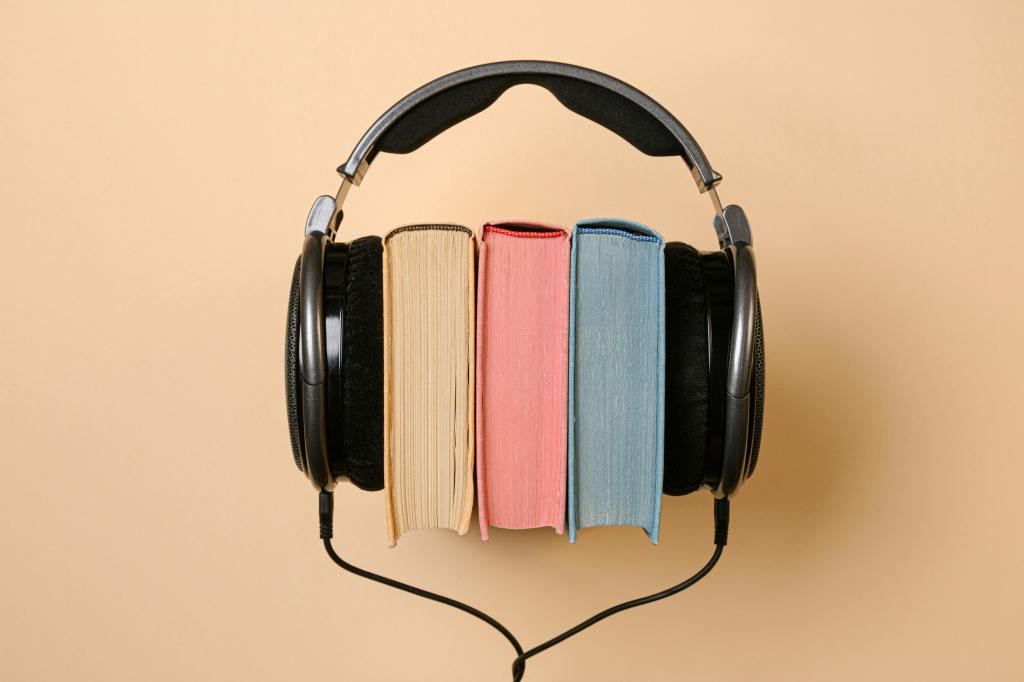
Reading is inclusive. And I don’t just mean in subject matter (although I do mean that), but also in format. It drives me crazy when I hear someone say that audiobooks aren’t “real books.” Just because you’re not looking at a page doesn’t mean you aren’t processing the information in the book, and the actual mental process is the most important part of the whole thing. People forget how relatively recent it is, in the history of the human race, that literacy has been considered NORMAL. Only a couple of hundred years ago the percent of people who even COULD read, let alone DID read, was only a fraction of what it is today. And yet these people still knew stories from history, from folklore, from the Bible, from classical mythology. How? Because other people TOLD them these stories, and they listened. And that makes audiobooks as valid as any other form of reading.
Graphic novels and comic books, similarly, are “real” books. And while I don’t ONLY mean the American superhero comic book, I don’t EXCLUDE them either. Comic books, in general, have a higher percentage of unique words per hundred than most prose novels aimed at a similar reading level. They activate all the same mental processes as a book that’s only words. And most importantly, they give the reader things to delve into that may lead them to other books. I started reading comics at a young age. It was the stuff I read in comics that led me to other writers like Isaac Asimov and Ray Bradbury. From there I moved on to Mark Twain, Ursula Le Guin, Daphne du Maurier, Dave Barry, Orson Scott Card, L. Frank Baum, Edgar Allan Poe, Judith and Garfield Reeves-Stevens, Stephen King, and pretty much every other author I have ever read in my entire life. I started with Stan Lee, now I teach Shakespeare. It all helps.
And finally, nonfiction also counts. While, to be fair, I certainly PREFER reading fiction when I’m reading for pleasure, that doesn’t mean that someone who’d rather read a book about World War II military campaigns, the lives of the greatest players of Major League Baseball, or migratory patterns of Canadian geese isn’t still reading. It’s all reading. It’s all good.
In fact, it’s all great.
So tomorrow, grab a book, grab somebody to read with you, and join the celebration. National Read a Book Day may only come once a year, but books are forever.
Blake M. Petit is a writer, teacher, and dad from Ama, Louisiana. His most recent writing project is the superhero adventure series Other People’s Heroes: Little Stars, volume one of which is now available on Amazon. You can subscribe to his newsletter by clicking right here. He’s also started putting his LitReel videos on TikTok. If you happened to want to read one of HIS books tomorrow, that would be nice, but it’s not a requirement.
 Blake M. Petit