During the school year, I spend most of my time around teenagers. I teach high school English, and as such I am constantly exposed to the youth of today, with their thoughts and their ideas and their imaginations and occasionally their aromas, because some of these kids pay as much attention to the personal hygiene lessons in health class as they do when I’m trying to get them to understand 1984. But it’s July and school is not currently in session, and the only teenager in my usual orbit is my 13-year-old niece, Maggie, so the only teen ideas I am exposed to are mostly about something called Five Nights at Freddy’s.
When I AM surrounded by the kids, though, one of the battles I fight a lot is attempting to convince them that just because something is old doesn’t mean it has no value. Shakespeare is the most frequently-cited example of this: yes, the language is old-fashioned and frequently archaic, but once you get past that the stories are pretty darn timeless. Romeo and Juliet is about a couple of kids YOUR AGE (or often younger, as I teach 11th and 12th graders) who want to date but their parents hate each other. Othello is the story of a man driven to homicidal envy because the girl he likes married someone of a different ethnicity. Hamlet is about a college kid whose father is murdered and then his mom marries his uncle, which everybody can agree is pretty messed up and will make Thanksgiving very awkward. When you boil it down, the greatest works of the past are just as relevant today, except that they’re too deep to discuss in-depth in a 15-second TikTok video.
Helping kids to see this, to understand the value in works of the past, is part of my job. In fact, in many ways, it’s my favorite part of my job. Don’t get me wrong, reading a well-written essay from a kid who struggled to put a sentence together at the beginning of the year is a badge of honor, but if that essay is explaining what they think the whole Green Light thing from The Great Gatsby is about in a way that makes sense…well, that’s like winning an Olympic medal. And most kids, I find, are pretty open to this, once you can find the right path in. It may take some trial and error, but I sincerely believe that any young scholar can find the value in the classics if you try hard enough.
I wish the opposite was true of their grandparents.
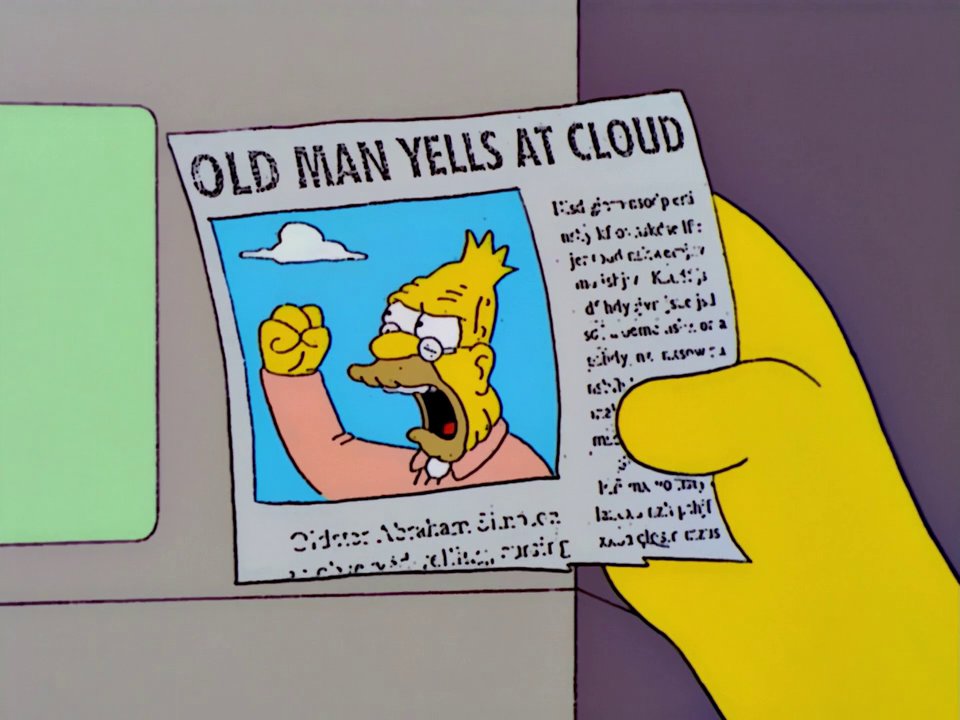
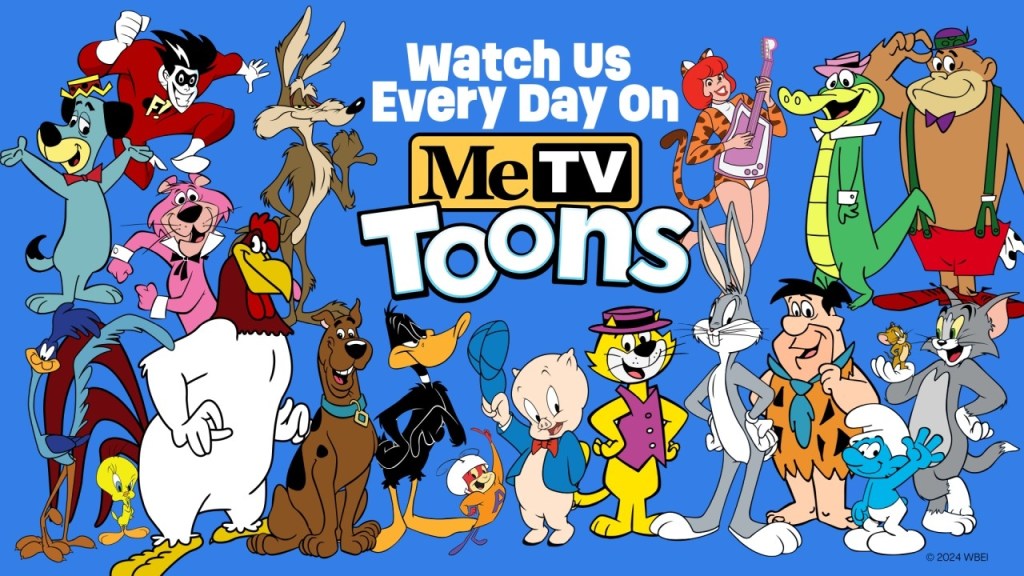
A few weeks ago, I wrote about the creation of a new over-the-air broadcast network, MeTV Toons, dedicated to showcasing classic animation 24 hours a day. It’s a great idea and one that I truly hope to be able to watch if the New Orleans affiliate – which finally launched just TODAY – would boost their damn signal a little bit so I could pick it up from my house. But that’s not the point. In that previous column, I also talked about a few online communities that have sprung up around this new network. The communities are thriving now. The largest of them, which was at 17,000 members when I wrote the previous column a month ago, has ballooned up to almost 65,000 people. And as is expected, there’s a lot of talk about the cartoons and what people’s favorites are and how much they’re enjoying the network, which I love. There are also a minimum of 750 posts a day from somebody who doesn’t understand how to watch the network, because apparently many of these people, who I would estimate are largely in their 50s and 60s, have completely forgotten how antenna television works. But the worst part of this community are the entirely-too-frequent posts that exist not to talk about the classic cartoons, but to complain about modern ones.
“I hope they don’t start making NEW shows. That’s what ruined Cartoon Network.”
“They shouldn’t show anything from later than the 70s. All of that stuff sucks.”
“You know who’s a fan of Powerpuff Girls? Hitler.”
And so forth.
I find it incredibly frustrating to read through this stuff, for a few reasons. First of all, and most importantly, is the sheer negativity of it. The world has enough negativity in it, and I hate the fact that Social Media – an invention that SHOULD have been used to bring all the people in the world together – has instead merely given us different ways to tribalize ourselves and spit venom at anybody who’s not part of Our Group. And second, it’s just not true. I can’t fathom the mindset of somebody who can turn on an episode of Help!… It’s the Hair Bear Bunch! and then claim with a straight face that this is the apex of animated entertainment.

The thing is, guys, both my Bard-averse teens and their Cartoon Network-hating parents and grandparents are suffering from the same problem, and it’s a problem that most of us have to overcome in some form or another. We are exposed to certain media when we grow up, and that media fundamentally contributes to the structure of our preferences in our brains. In other words, the stuff that we like when we’re young is the blueprint for the kind of stuff we like throughout our entire lives. If one of my 11th grade students tells me how much their mom hates the music she listens to, I suggest she ask her mom what HER parents thought of New Kids on the Block, and what THEIR parents thought of the Beatles, and so forth. Every generation firmly, steadfastly, believes that music reached its absolute pinnacle during their own formative years, even though it’s obvious that the best decade for music was the 1980s.
The same is true for everything: movies, TV shows, books, fashions, food, sports, and of course, cartoons. The big difference between my kids and their parents is that by and large, I find the kids FAR more likely to expand their horizons and look at work from another time. My students were in diapers when The Office was popular or not even born when Friends was a hit, but they’ll binge those shows and come to school talking about them. But trying to get one of these Toon-haters to give a chance to a modern cartoon like Bob’s Burgers, Star Trek: Lower Decks, Gravity Falls, or the finest cartoon of them all, Bluey, is a challenge that would make Sisyphus ask if he can just go back to pushing that rock up the hill.

I know I’m generalizing here, and that’s not really fair. There are most certainly older people willing to give more recent works a chance. I know, I’m one of ‘em. And there are a lot of people like that. My uncle Wally, who happens to be an animator, would frequently talk to me about Animaniacs in the heyday of that particular cartoon – which was after his time, obviously, but one of the favorites of my time. He obviously PREFERRED the classics of his youth like the Looney Tunes and the Hanna-Barbera all-stars, but he was (and still is) always willing to give the new stuff a CHANCE.
The problem with the MeTV Toons group – like any other group – is that the most obnoxious people also tend to be the loudest. They’re the ones that complain, the ones that whine, the ones that come in with a sense of entitlement because the network has the TEMERITY to show Captain Planet instead of a 23rd rerun of The Flintstones for half an hour.
Is it true that there are a lot of bad cartoons these days? Sure. But that’s true of ANY field of creative endeavor in ANY era. As sci-fi author Theodore Sturgeon once observed, “Ninety percent of everything is crap.” For every Scooby-Doo that was turned out, there are a dozen Hanna-Barbera cartoons that died after one season. Looney Tunes gave us the work of Bugs Bunny, Daffy Duck, and the Road Runner and Coyote…but it also gave us Merlin Mouse and Cool Cat.

Hell, even my beloved Willie Shakes is considered the greatest writer in the history of the world…but name five other writers from the late 16th century. Unless you’ve got an English degree, chances are you can’t. There’s just as much good stuff being produced now as there ever was. The reason the past seems “better” is because it’s only the good stuff that gets REMEMBERED. If you lock yourself in to the work of your own formative years, you will miss out on a wealth of great storytelling, great music, great ART. And if you’re okay with that, I can’t change your mind, but at the very least you need to RECOGNIZE that bias and not make blanket statements about everything that’s from outside of your time period, because that’s not fair to anybody.
I have a challenge for you, my friends. Right now, I want you to identify your formative decade. Are you an 80s kid? 90s? What was the time period in which you did the majority of your growing, say from first grade through twelfth? For most of us, that is the period where these preferences and feelings are most firmly established.
Okay, have you got your decade identified? GREAT. Here’s the challenge then: this week, I want you to go out and find something from OUTSIDE that decade that you think is worth watching, reading, or listening to. I don’t care if it’s from before your time or after, but I want you to find something from a different time period that you think is worthwhile, something that you can get excited about, something you want to tell people to check out. And then I want you to come back here – or hit me on Facebook, Twitter, or Threads – and tell me WHAT you read or watched and WHY you like it.
There’s plenty of great stuff out there, guys – from any era. The trick is just to figure out where to look.
Blake M. Petit is a writer, teacher, and dad from Ama, Louisiana. His most recent writing project is the superhero adventure series Other People’s Heroes: Little Stars, volume one of which is now available on Amazon. You can subscribe to his newsletter by clicking right here. He considers himself an 80s kid, but he has just as much love for The Honeymooners and The Good Place as he does for Mama’s Family. Wow, that’s a weird list.



 Blake M. Petit