A preorder! A newsletter! Two, two, TWO announcements!

Hey, everyone. It’s time for two – count ‘em – TWO announcements that anyone who cares to keep up with what I’m working on will want to know about! First of all, as you know if you keep up with me on social media, January finally brought us to the end of the long-running Kindle Vella serial, Other People’s Heroes: Little Stars. I loved writing that project, spooling out the adventures of Andi, Keriyon, Tony, Vic, and the others for over two and a half years. But so many people couldn’t get Vella or DIDN’T get Vella (it’s still not available outside of the US for some crazy reason), so now it’s time to take the story of Andi Vargas to its permanent home.

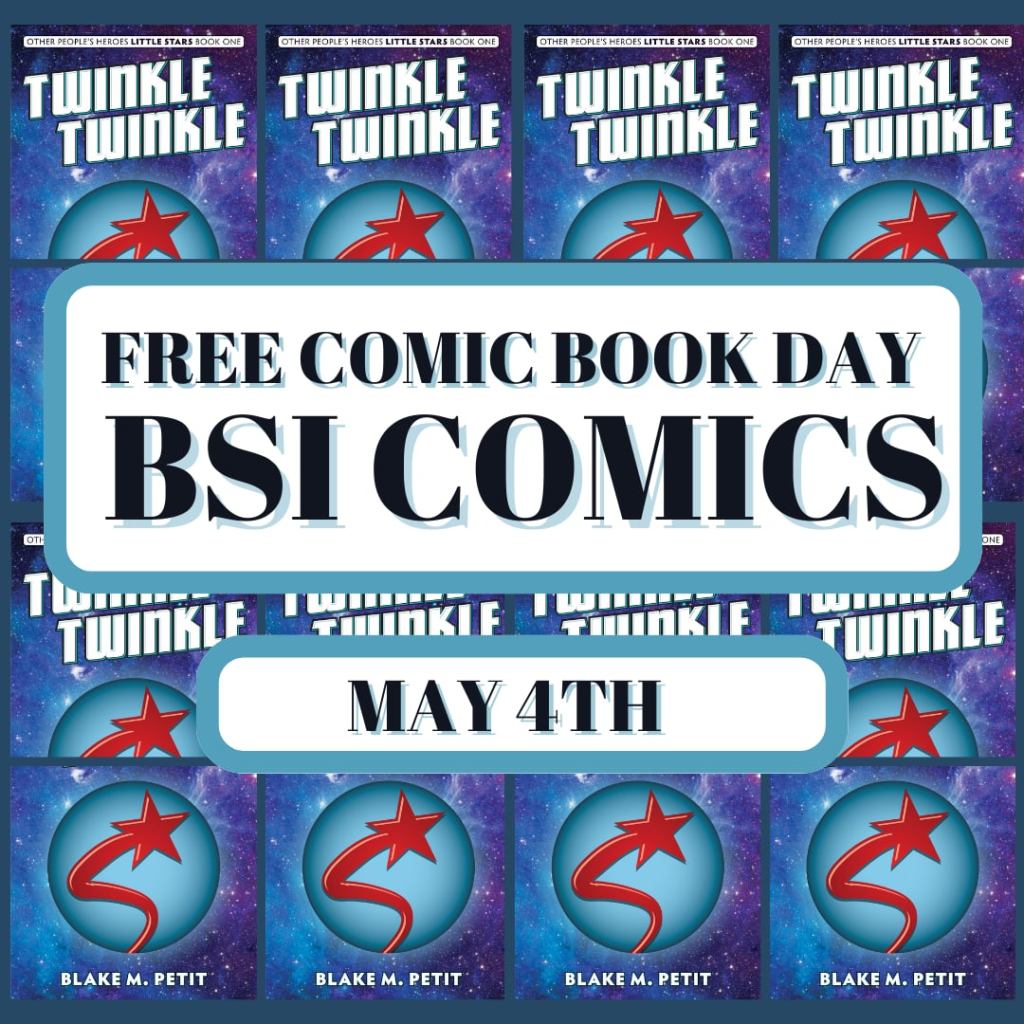
Twinkle Twinkle, the first volume in the Little Stars Trilogy, is coming out on May 4! This is an edited version of the Vella serial, with the text cleaned up and some tweaks to fix continuity errors. For the most part, though, it’s the same story you read the first time. The book will be available in both print and eBook, and unlike Vella, it should be available in every market that Amazon covers. And if you’re worried that you’ll forget before May 4th, have no fear! If you want an eBook, you can CLICK THIS LINK to go to Amazon and preorder it RIGHT NOW! 

Now if print is your thing, if you prefer to feel the heft of a ream of paper in your hands, don’t worry. I’ve got you covered. For Amazony reasons I don’t quite comprehend, I can’t set up a preorder of the print edition, but the print book WILL be available on May 4th, same as the ebook edition. And if you’re in the New Orleans area, you can get your eager hands on a signed copy! Join me at BSI Comics on May 4th, which also happens to be Free Comic Book Day! I’ll be there with several other local writers and artists sharing our work. I’m planning to have copies of the new book too (as well as all of the old books) to sell and sign and chat with anyone who wants to say hello.

Funny how that timing worked out, huh?

“But Blake,” you’re saying, “You said TWO announcements. What’s the other one?” Geez what are you, an accountant?

But since you asked…I said you would have heard the first announcement already “if you keep up with me on social media,” but that may not be entirely true. Social media, as we have learned, isn’t quite the reliable democratizer of communication that we all thought it was going to be. Social media is owned by tech companies and tech companies have bills to pay and somehow they think they can pay those bills more efficiently by subjecting us all to algorithms which believe I’m more interested in using Meta AI to search for ski resorts (I am not) than I am in the fact that someone I went to college with is getting married for the fifth time (I am vaguely interested in this one, because somebody is running a betting pool). 

So the solution to this social problem is to go old-school. That’s right, folks, I’m starting an electronic newsletter! 

Yeah, I know it’s 2024. Shut up.

I’m new at this, so consider it a work in progress. I can promise that I won’t spam you with daily emails, though. I hate that too. When you see my name in your inbox I want you to think, “Oh cool, what’s Blake up to?” instead of “Ugh, Blake AGAIN?” As of right now, I’m planning to send no more than one newsletter a week to update you on all things…well…me. I’ll let you know about new stories when they drop, my weekly “Geek Punditry” columns, tell you what I’m working on writing (the current project, I think, is pretty cool), share witty anecdotes and bon mots, and perhaps re-share classic pieces of writing. At least, that’s the current plan. Like I said, I’m trying to figure it all out.

But, BUT, as a special thank you just for signing up, how about an all-new bonus story? When you subscribe to my newsletter, you’ll get a special welcome email that includes an EXCLUSIVE SIEGEL CITY SHORT STORY! A brand-new short story set in the world of Other People’s Heroes that I’ve never published or shared online! How’s that for incentive? 

So CLICK HERE TO SUBSCRIBE and be sure to whitelist the email so I don’t go to your spam folder.

Thanks, everyone. I’ll be back Friday with your usual dose of Geek Punditry, then probably on Saturday, check your email for the first regular newsletter. And thanks so much for following along.

A little star falling to Earth…

I woke up to a strange world this morning. Strange to me at least. It’s a world that hasn’t existed since June of 2021. It’s a world where I did not get up and start thinking about what was going to happen next in Other People’s Heroes: Little Stars.

I guess I should back up a little bit. Several years ago, I had an idea. In and of itself, there is nothing special or unusual about this. This is what people who want to use AI to write or make art will never understand. This is what you simply can’t explain to someone who finds out you’re a writer and says, “Oh yeah? I got an idea. How about I tell it to you and you write it and we’ll split a bazillion dollars?” It doesn’t work that way. The ideas are the easy part. It’s doing something with them that counts.

And the period in which this idea came to me was, frankly, the most fallow period of my life in terms of productivity. For reasons I have gone into multiple times and don’t feel like rehashing now, I had an extended period where nothing was working, from a writing standpoint. Even in that barren era, the ideas were there. I had dozens of them that I started working on and simply abandoned because I couldn’t find any traction. Many of them clung to the themes of parents and their children – sometimes from the parents’ perspective, sometimes from that of the child, sometimes from someone in the middle generation dealing with both at the same time. I liked a lot of the ideas. It was the doing something at which I was failing.

Then an idea came to me for a new story in my Siegel City series. This one would not feature Copycat or any of the previous heroes as main characters (although Copycat would grow to more prominence in the story than I originally intended, it is still not HIS story) but a whole new generation of young heroes…plus one young woman who was desperately trying NOT to be a hero. The trouble with this particular idea was that…well…the Siegel City yarns were all novels and short stories, but this was neither. This was a longer tale, something that would be comprised of multiple mini story arcs that would build together into a larger tapestry before finally colliding in a grand finale. It was less like a novel and more like seasons of a television series or a longform comic book. I would have loved to turn it into a comic book, honestly. That’s my most fervent dream.. I even wrote most of the first issue for such an enterprise. But then it died off, as I am largely a one-man operation. It is possible, if not profitable, to write and publish novels and short stories on your own. But it is far more difficult to do so with comic books. I don’t have a publisher and I can’t draw anything so much as a stick figure, and even those look hideously malformed, so producing a comic book as a solo endeavor was out of the question. (Whenever I tell people this, someone inevitably points out how many friends I have who ARE professional comic book artists, and I reply that yes, they are PROFESSIONALS, and as such deserve to be paid for their work, which isn’t really possible for a guy on a public school teacher’s salary.) 

And so I pushed the story aside, thinking it would join a dozen others in this fallow period as a “nice idea, but didn’t go anywhere.”

In spring of 2021, though, the evil empire called Amazon actually kind of saved me. Amazon was launching a new platform called Kindle Vella, in which writers could serialize stories a chapter (or “episode,” as they called it) at a time. That…actually sounded pretty good. I would have the ability to do a longform story without having to pace it like a novel. I could do my arcs. I could take breaks in between, if necessary. And the chapters, as a constraint of the platform, could be no longer than 5000 words. Even in this awful, rudderless time, I thought, I could do 5000 words a week.

And so I did. In June of 2021, I dropped the first three episodes of what had become Other People’s Heroes: Little Stars. It was the story of Andeana Vargas, a high school senior whose mother, Carmelita, was secretly the world-famous and universally-beloved superhero called Shooting Star. Everyone who knew her mom’s secret also knew Andi, and expected her to grow up to be a hero herself, even though Andi had no intention of doing so. Then, at the end of that third chapter (this was important, because on Vella the first three chapters are free, so ya gotta have a hook), a video is leaked to the press that shows Andi’s mother removing her mask and revealing her true name to the world. Where did the video come from? Who made it? And what were they going to do now that their greatest secret was no secret at all?

This past Sunday afternoon, while the Detroit Lions were winning their way to their first NFC Championship game in three decades, I was doing something that was, frankly, much more remarkable: I finished writing Little Stars. The final two installments will both drop on Wednesday, because the final episode isn’t really a chapter in and of itself but more of an epilogue, and I didn’t think it would be fair to make people wait a week for it after the climax of the story. When I began, I thought the story would take maybe a year to get out of me. Of course, when I started writing the original Other People’s Heroes, I thought it would be a short story, too.

Shows what I know.

Two and a half years of my creative life went into this story, and while the journey isn’t quite over for me (more on that in a minute), I think this is a milestone worth sitting back and appreciating. I never thought it would take this long. I never thought it would be this long. But the final word count for all 119 episodes is a little over 400,000 words. That’s more than most people read in two and a half years, let alone write. For you non-writers who may be asking how many pages that is, it doesn’t matter. Page count is a little useless for a writer. It can change from one edition to the next, change because of page size or font size, and it’s impossible to keep track that way. It’s the number of words that matter to us, because word count is constant unless you revise. For comparison, for my own edification, I looked up the word counts of some of the most famous doorstoppers of literary history.

WAR AND PEACE: 587,287 
LORD OF THE RINGS (All three volumes combined): 579,459
LES MISERABLES: 545,925 
THE STAND (Uncut): 467,812
GONE WITH THE WIND: 418,053 
OTHER PEOPLE’S HEROES: LITTLE STARS: 409,206

I didn’t set out to write my Lord of the Rings, and of course I have no intention of comparing myself to Professor Tolkien (Little Stars, for instance, has considerably less food blogging), but just in terms of how much crap we’ve dumped on the page, I’ve actually chiseled out a spot among the giants here. And I feel like I’ve come out revitalized. I’ve done several short stories in the time since I started Little Stars. I started my weekly Geek Punditry columns right here. I feel like I can create again, and the memory of that time in which I couldn’t chases me like a wild bear I need to escape. I don’t want to go there again.

So the question is…what now?

Well, first I drop the end of the story on Wednesday, and I really hope you’ll all be there for it. This is something that clearly means a lot to me, and I hope I stick the landing. But after that, maybe a little break, and then the revision work will begin for the next iteration of Little Stars.

The thing is, guys, as grateful as I am that the Kindle Vella platform exists and allowed me to crawl out of that nonproductive pit of despair I was trapped in, it didn’t work out that well. Amazon was trying to capture the periodical audience that enjoys apps like Wattpad, but I don’t think it’s carried over like they hoped. Part of that is my own pitiful efforts at self-promotion, of course. I am the worst person on the planet in terms of promoting myself because my paralytic imposter syndrome makes me feel like a snake oil salesman if I try to tell anybody I’ve done something good. But another part is that I don’t think Amazon has done a good enough job selling people on the platform. The “token” system seems to confuse a lot of people, and for some inexplicable reason, when Vella launched it was only available on iOS devices – you couldn’t even read Amazon Kindle Vella stories on an Amazon Kindle. Thankfully they’ve fixed that problem and branched out to Kindle and Android, but the stories on Vella are STILL, last time I checked, unavailable outside of the United States. I didn’t know how many international readers I actually HAD until I started posting about Little Stars and got messages from people asking when it would be available in Australia or the UK. The answer to that, by the way, is, “Soon, I hope.”

So while I like the creative challenge of Vella, I don’t think I would do it again, at least not without some major changes to the platform. What does that mean for Little Stars? It means it’s time for me to revise and reformat. Even though the story wasn’t planned as novels, I’ve figured out what I think are the best places to break it down into three acts, three installments…a trilogy, in other words. I thought briefly about just putting out one ginormous mama-jama book with the entire thing in it, but some wise friends convinced me that the trilogy route was much better. Alexis Braud, if you’re reading this, thank you for pointing out that a 400,000 word book just doesn’t fit comfortably in a purse or bookbag. (There is, however, still just enough of a narcissist in me that I may do a custom printing of that mama-jama edition just so I can put it on my own bookshelf and admire the chunkiness of it all.) 

With this new version, there will have to be some changes to make it fit. So after a little bit of a break I’m going to start revising. I don’t intend to make any massive changes to the story itself, but I will probably tweak the details, fix any continuity snarls that I can find, tighten the story up, and hopefully improve the characters and themes that evolved as I went along. When it’s over, while the Vella version will remain, the novel version will be the “official” history of Andeana Vargas as far as Siegel City canon is concerned, and in any discrepancies between the two, the books will be triumphant.

And then?

I have other ideas, of course. I think I made it abundantly clear that ideas are easy. And two of them are fighting it out right now, both of which are stories I worked on in the past and can’t quite get rid of, which I think is a good sign that they deserve revisiting. One of them is a science fiction epic, a story about two sisters trying to hunt down an inheritance left for them on a distant planet known as Earth. This would technically be a YA novel (or series, if I’m being honest), although I currently have no plans for a love triangle involving a bland, Mary Sue protagonist and a pair of bland, interchangeable heartthrobs. No, this is a story about sisters. And their parents, to some small degree, because I really can’t escape that. But mostly the sisters.

The other story I’m considering would bring me back to Siegel City right away. It’s the story of the oft-discussed but mysteriously missing STAT. I mentioned a few weeks ago that I based STAT on an old City of Heroes character of mine and that I had a whole backstory of his that I wanted to put in a book some day. This is the book I’m talking about. I even found myself working in more frequent references to STAT and dropping some Easter Eggs in the final act of Little Stars, little story seeds that would grow in this hypothetical novel. And yes, once again, this would be a story about parents and children. It’s just THERE.

Or maybe I’ll wake up tomorrow with a totally different idea that I can’t help but get started on. I really don’t know.

But the gap between my last novel, The Pyrite War, and the beginning of Little Stars was nine years. Sure, in that time I kept producing my Christmas stories, a couple of novellas, and my humor book Everything You Need to Know to Survive English Class, but the narrative gap was simply too long. I don’t want that to ever happen again.

So on Wednesday, please enjoy the grand finale of Other People’s Heroes: Little Stars. And then keep coming back to see what I’m working on next. Hopefully you’ll be as surprised by it as I will.

One last note – a special and very sincere thank you to Lew Beitz. Lew and I are moderators on the Comic Book Collecting page on Facebook, and over the last couple of years he’s become not only a friend, but the best darn Beta reader I could ask for. And he may be the only person on Earth who loves Keriyon Hall more than I do. That’s saying something. 

Ghosts of Christmas Stories Past 2021: Vic Saves Christmas

As I’ve said before, my writing drought came to an end in 2021 when Amazon announced its Kindle Vella platform, a way for writers to serialize stories one chapter at a time. I had been contemplating a new Siegel City story for quite some time, but I knew it didn’t really fit as a novel – it was more of an episodic series of adventures that all tied together…less like a novel and more like a run of a comic book. But as I’m pretty much a one-man operation that can’t draw and working with the salary of a public school teacher, actually producing a comic book was out of the question. But as a prose installment, serialized a piece at a time…Dickens did it. Stephen King did it. Dang it, there’s no reason I couldn’t do it too. That story began to take shape, eventually becoming my series Other People’s Heroes: Little Stars

I never would have suspected how long that particular road would be, as I’m sitting here two and a half years later and just now, finally, getting to the end. (People who’ve been reading along, I love you. Please write a review on Amazon. We’re almost there.) And as so often happens, when Christmas rolled around that year I didn’t want to leave the heroes of that story. And so the three young stars of Little Stars became the heroes of that year’s Christmas story as well. If you haven’t read Little Stars…well, I can’t really be angry at you, because you’re part of a vast majority. But don’t worry, I think this story works just fine on its own. For those of you who are familiar with the exploits of Andi Vargas, Tony Gardner, and Vic Teague, I hope this little bonus glimpse into their lives during the Christmas that follows the beginning of the serial is fun for you.

And once more for the road: how ‘bout that logo? The great Jacob Bascle again! Check him out on Facebook or visit his online portfolio!

Christmas 2021: Vic Saves Christmas

Geek Punditry #11: Write What You Know

“Write what you know.”

It’s the first piece of advice anyone gives someone who is trying to write, and like so many pieces of common homespun wisdom, it’s kinda useless when you really start to think about it. The intent behind this, of course, is to urge writers to focus their energy on topics or stories with which they have a personal connection, which makes sense because that’s always the writing you’re going to be the most passionate about. But far too many people take the phrase literally, which is the reason as soon as someone says, “so the book is about a writer from Maine,” you don’t need to hear anything else to know that they’re talking about Stephen King.

The main character of 97 novels published since breakfast.

The thing that makes King popular, though, is not that so many of his protagonists share his profession and home turf, but that so many of his protagonists ring true as characters, as real people, and smart-ass critics like the guy who wrote the preceding paragraph miss that all the time. King himself may never have been a prison guard like Paul Edgecomb (The Green Mile), a prison inmate like Andy Dufresne (Rita Hayworth and the Shawshank Redemption), or a retired Army special forces operative like Dale Barbara (Under the Dome), but the feelings and emotions that drive those characters are all things that anyone can relate to. Edgecomb is a guy who is forced to confront the fact that the job he’s about to do may not be right, Dufresne is an innocent man trapped in a system that doesn’t believe in him, Barbara is someone who just wants to leave his violent life in the past but is not allowed to do so. The core of his characters is realistic, and that’s what makes his work resonate with people.

If everyone took “write what you know” literally, there would be no science fiction in the world, no fantasy, and all the horror would be of the gruesome true crime subset. Other fiction, “literary” fiction (a term I’ve always found distasteful, as the intent seems to be to divide fiction into “the real stuff” and “everything else”) would still exist, but much of it would be unfathomably boring, because while it’s true that everyone is the hero of their own story, a large number of those stories left unadorned would be of little interest to anyone else. As much as all writers like to believe they’re Hemingway, basing their fiction on their two-fisted, hard-drinkin’ lifestyle, writing is often a very solitary craft, where you sit in a room with your instrument of choice (a computer, a typewriter, a hammer and chisel) and metaphorically slash your wrists and let it flow on to the page. If the only things that came out in my writing were from my actual life, there would be an awful lot of chapters of a character watching Star Trek and wondering if that new marshmallow Peep flavored Pepsi is any good, which is something my wife Erin assures me nobody wants to read about.

“He popped the tab and lifted the can to his mouth, nostrils tantalized by the lotus-like aroma of gelatinous sucrose.”

When someone is “writing what they know,” what they should be doing is mining their own experience to figure out what they have to say, then determining the most interesting way to say it. I’ll use myself as an example because I know how it works for me and because it gives me an excuse to plug my ongoing serial novel Other People’s Heroes: Little Stars, a new chapter of which appears every Wednesday on Amazon’s Kindle Vella platform. (See, that’s literally writing what I know. Dull, isn’t it?) Little Stars is about a young woman whose mother is the world’s most beloved superhero, and about how her life gets turned upside-down when Mom’s secret identity is revealed to the world. Believe it or not, none of these are things that have ever happened to me. However, the core of the story is about a relationship between a mother and her child.

This is where the “true” comes from.

In 2017, two things happened to my family in a matter of ten days. First, my mother unexpectedly passed away, then my wife found out she was pregnant. This caused what I called at the time a tornado of emotion. Either one of these events is a cause for complete upheaval in a person’s life. Dealing with them both at once was a maelstrom that nobody could have prepared for, and my creative output was throttled as a result. It took some time before I could figure out how to write again, and even longer (summer of 2021) before anything I began writing gained any traction and grew into something lasting, specifically Little Stars. That said, once I started to get ideas again, I began to unintentionally follow a pattern. I’ve got two other partially-formed ideas that I intend to get around to when Little Stars is over: one is about a father whose children are taken by a mysterious force, and the other is about a pair of sisters who run away from their parents when they discover a secret about their late, beloved grandmother. (There’s a lot more going on in these stories, of course, I’m not just ripping off Taken, but these are the relevant parts.) I also wrote my annual Christmas stories, including a novella with a major subplot about a divorced dad reconnecting with his son and another Christmas short about a vampire hanging out with Santa Claus in an effort to get back to his daughter. I didn’t mean to do it, and I did it several times before I realized the pattern, but my work these days is very heavily focused on stories about parents and their children. And it would be pretty damn disingenuous if I didn’t admit that this is probably because I’m still trying to work through the emotion of losing a parent and becoming a parent almost at the same time.

But that’s okay, because that’s what “writing what you know” – if done correctly – is really good for. For the audience, art is entertainment or education. If you’re really good, like Jim Henson and Joan Ganz Cooney, it can be both. But for the artist, art is therapy. It’s how we choose to understand ourselves and try to make sense of a world that seems dead-set against making any sense on its own. The joke about Stephen King is that his stories are all about writers from Maine, but people forget about how many stories connect to other parts of his life: outcast children (It), issues from fatherhood (The Shining), or substance abuse problems (line up any of his books from the 80s and throw a dart). This is what great writers do. F. Scott Fitzgerald was writing about the world around him when he created The Great Gatsby. Mark Twain based the hometown of Tom Sawyer and Huck Finn on his own childhood. Stan Lee really got bitten by that radioactive spider that one time.

100 percent historically accurate.

We’re so used to “write what you know” as a metaphor that when someone does it literally but does it really well, it’s a gut punch. For example, the movie The Big Sick was written by married couple Emily V. Gordon and Kumail Nanjiani, and it’s about a real-life incident in which Emily — very early in their relationship — fell into a coma due to a mysterious illness, creating an unexpected bond between Kumail and her family. It’s funny, deeply emotional, and a great showcase for Nanjiani as an actor. More importantly, though, it hit every nerve in my brain in a way I never could have anticipated.

I know you’re expecting a joke here, but I deeply loved this movie and you should watch it twice.

As with any movie “based on a true story” there are elements added for drama or comedy or to make a more coherent story (real life is rarely that coherent), but you could tell while watching it how true and real the heart of that film is. It also happened to come out in the aforementioned 2017, a few months after my personal turmoil began, and I found myself sitting in a movie theater next to my pregnant wife weeping like a starving infant. Not because the movie was tragic (when the coma victim is one of the co-writers of the movie, you can’t go in expecting a Nicholas Sparks ending), but because at that moment it was delivering the message I needed: that the world is hard and chaotic and awful sometimes, but it’s still possible for things to turn out okay in the end. A movie that’s 100 percent fictional could have delivered the same message, of course, but knowing that much of it was true made it hit much, much harder.

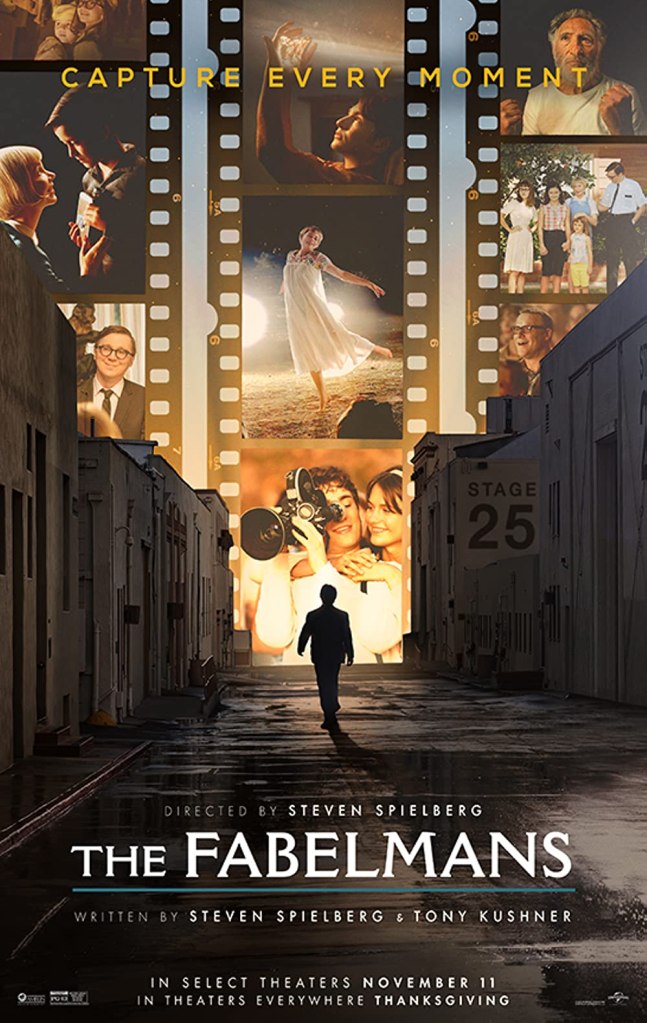
The other film I want to talk about here, a more recent one, is The Fabelmans. Steven Spielberg is a polarizing figure – movie fans often consider him one of the greatest filmmakers who ever lived, whereas movie snobs dismiss his work because it’s popular, as though that somehow disqualifies it from being good. The Fabelmans is clearly his most personal story, a movie about a young man who uncovers a family secret that rips him apart, and how he uses movies and filmmaking to cope.

A love story about a boy and his camera.

This one feels more “fictionalized” than The Big Sick, of course. Spielberg directs the film, but Nanjiani actually played himself, Spielberg didn’t use real names, and the decades of distance from the real events no doubt necessitated him conjuring up much of it out of whole cloth, but again, it’s a film with a real emotion in its soul. Reportedly, the relationship between Sam Fabelman’s parents is a reflection of Spielberg’s own, and if that’s true I have to applaud the man for his willingness to bleed on screen. The story that’s told is somewhat raw and heartbreaking, not the sort of family secret that many people could ever bring themselves to talk about, and yet he put it on a thousand movie screens and got a Best Picture nomination. Is it my favorite Spielberg movie? No. But I think it’s his most authentic, his most emotionally honest, and I truly love it for that. Plus the final scene of the film – based on a story that Spielberg has talked about in interviews in the past – is a lovely little way to cap off the story of a boy who had a rough time of it, winking just a little at the camera to assure the audience that he turned out okay in the end.

So for the writers out here, my message is not to write what you know. Write what’s real inside, what you’re really feeling, put it on the page. Dress it up however you want, of course, whether that means an alien or an undead slasher or a superhero or just a kid in Arizona, but figure out what’s real in that story. That’s what you share with us. That’s how you get to be great.

It’s easier to recognize greatness than achieve it, naturally, but I really am trying.

Blake M. Petit is a writer, teacher, and dad from Ama, Louisiana. His current writing project is the superhero adventure series Other People’s Heroes: Little Stars, a new episode of which is available every Wednesday on Amazon’s Kindle Vella platform. How many times can he post that link before it’s considered gauche? Ah, who cares?

Happy Anniversary, Little Stars!

July 15, 2021. It is a date destined to go down as one of the most incredible days in the history of world literature. It is the day I first unveiled OTHER PEOPLE’S HEROES: LITTLE STARS to the world. That’s right – one year of Andi Vargas, Tony Gardner, and Shooting Star. A year of reconnecting with old friends from Siegel City and meeting many new ones. A year of adventure, surprises, mysteries, questions answered, and still more questions raised. A whole-ass year of fun. And with this anniversary, I’m here to ask you guys for a little bit of help.

Bear with me, I’ll get to it.

OTHER PEOPLE’S HEROES: LITTLE STARS is a serial adventure, with a new chapter appearing every Wednesday. It is set in the world of my novels OTHER PEOPLE’S HEROES and THE PYRITE WAR (as well as numerous short stories), and it incorporates characters and elements from those earlier works, but it stands alone for people who haven’t read the other stuff as well. It is, of course, still a work in progress, but it’s been a remarkable year in the lives of Andi Vargas and her friends. A year ago, Andi was a normal girl whose mother happened to be one of the most beloved superheroes in Siegel City. A year ago, nobody KNEW her mother was one of those heroes, but as readers know, that’s what kicked off the story. A year ago, she could still pretend to be “normal.” A year ago, she didn’t know that she would travel through time. A year ago, she had never been to outer space. A year ago, none of our heroes knew that ghosts were real.

Interestingly, these elements of the story are all things that were planned from the very beginning. But other things – things that may shock you – were not. Keriyon Hall didn’t exist a year ago, not even in my imagination, and if I’m going to be honest with you, he’s become my favorite character in the story. (The same thing happened with Sheila Reynolds in the original OPH – she makes a cameo in LITTLE STARS, and it was fun to see her again.) The Rubies of Byrel didn’t exit either. Nor did Daystalker. But these were characters and elements I discovered along the way and, as is always the case when you’re writing a good story, you learn that these things were really there all along, but the silly writer just hadn’t unearthed them yet. Other things have not gone the way I expected – Blip, for instance, was originally expected to play a much bigger role in the story than he has turned out to have – but that’s okay too. You need to follow the story the way it unfolds.

So here, on what is kind of the birthday for Andi and Tony and Lita and Draugr, I’m going to ask you guys to give them a present. Y’see, I’ve still got a ways to go before this story reaches its conclusion, and I’ve always believed the more the merrier. I would like to have more people following along with this story – but that’s not going to happen if they don’t know about it. So first of all, if you know people who like superheroes or coming-of-age stories or long, sprawling epics, tell them about it! 

But that’s not all. LITTLE STARS is (currently at least) exclusive to Kindle Vella, which means that the Amazon Algorithm gets to decide how many people can stumble across it. And for that to happen, it needs reviews on Amazon. Even a quick one, even one sentence would be ENORMOUSLY helpful and boost the story’s profile. And while you’re at it, go back and make sure you’ve hit the “thumbs-up” button at the end of each chapter you’ve read. (Honestly, I’m not sure how those work with Amazon’s algorithm, but they sure as hell can’t hurt.)

And if you happen to be someone with a blog or a podcast or one of those Ticky Tocky things the kids like so much and wouldn’t mind giving a review to a larger audience, that would be pretty swell. Please, let me know about it if you do.

Finally, if you have absolutely NO idea what I’m talking about…well, you’re in the majority. If you haven’t read any of OTHER PEOPLE’S HEROES: LITTLE STARS, head over to Amazon and check it out. The first three chapters are always free, and each subsequent chapter costs literally pennies (between 30 and 40, depending on how long that particular chapter is). Then once you’ve met Andi and her friends, hopefully you’ll want to stick around and see where they wind up.

Shoot, I’M still anxious to see where they wind up.

Blake M. Petit is a writer, teacher, and dad from Ama, Louisiana. His current writing project is the superhero adventure series Other People’s Heroes: Little Stars, a new episode of which is available every Wednesday on Amazon’s Kindle Vella platform. You know. In case he hadn’t made that abundantly clear.

Screw It, Let’s See What Happens

There is a school of thought that says writers (fiction writers, at least) fall into two categories: the architects and the gardeners. The architects must plan everything meticulously. Every plot point, every character beat, every theme and turn must be prepared and calculated ahead of time, and when the actual writing starts all that’s left to do is the installation. The gardeners, on the other hand, don’t plan much more than where they’re planting the seeds and what they hope to reap from the crop in the end. Gardeners tend to the ideas like flowers or vegetables, nurturing them, coaxing them out of the ground, but often not actually knowing exactly what the final garden will look like. Plants are alive, you see, and difficult to conquer. It’s better to simply help them find their most beautiful form.

I’m a gardener. I tend to start with a concept (what if a reporter found out that the superheroes he wrote about were frauds?) or an idea that won’t get out of my head (there’s a little bald guy in my closet holding an ice pick and I don’t know who he is but he is FREAKING ME OUT). I’ll add in some characters I find interesting, and I’ll think about where the characters and the concept might end up if I put them together. And then I start. 

Now to be fair, very often the answer to where they might end up is “nowhere.” Sometimes the combination doesn’t work, the marriage doesn’t last, and I end up with yet another orphaned story opening. (So many orphans. I’m really quite ashamed of myself. Lucien from Neil Gaiman’s Sandman could have an entire damn wing of his library devoted to me.) But when it DOES work, and it DOES come together, this storytelling alchemy frequently brings me to a place that leaves me unable to imagine it any other way.

This feeling is at its most powerful when I hit a point I refer to as “Screw it, let’s see what happens.” You see, sometimes it feels like something in a story is not right, like a character is fighting against your plan, like you’re trying to find flimsy justifications to make them do something (or stop them from doing something) that they don’t want. And often, it turns out the reason for this is because the characters are smarter than you are and realize that your plan is actually wrong, and you should just let them do what they so clearly want to do, and figure out how it’s all supposed to fit together later. That’s when, as a writer, you should say, “Screw it, let’s see what happens.” And damn if that can’t be great.

I’m going to give an example that spoils several of the more recent chapters of Other People’s Heroes: Little Stars, so if you’re not up to date, you may want to go catch up and come back. (I mean, you should do that anyway. It’s a good time.) 

When I started the Meta-Crisis arc, you may notice that Keriyon Hall does not appear at first. In fact, he hadn’t appeared for quite some time, which was making me sad because he’s become one of my favorite characters in the story (even though he wasn’t in the original outline – he’s that flower that you didn’t actually plant in your garden but that turns out to be the loveliest one). So I thought, “Well, the crisis is affecting the entire city. I should just check in on him and see how he’s dealing with it.”

As it turned out, the way he was dealing with it was trying to figure out what Andi and Tony would do in his situation, and do that same thing. Which was perfect, it’s exactly the way Keriyon thinks, but that led me to a problem. He was SO good at predicting what Andi and Tony would do that he wound up arriving at the same hideout as they did, even though he wasn’t supposed to be there.

Well, screw it. Let’s see what happens.

And as he’s there and starts to meet some of the other characters in the story, I realize that Andi is having a very difficult time talking to Keriyon, because she’s dancing around the fact that Keriyon didn’t know about Tony and Vic’s powers. And while they were dancing, Andi kind of informed me that she likes Keriyon, she trusts Keriyon, and considering all the crazy shit that was happening all around them, keeping her friends’ powers a secret wasn’t even ON her list of priorities, let alone at the top.

Screw it. Let’s see what happens.

So she told him the truth and Keriyon, being the unshakably loyal and positive person that he is, not only took it in stride, but decided to gear up and join them on the quest. And when we got to the end of the arc, and the “Young LightCorps” was revealed to the world, all of a sudden Keriyon Hall was in the picture with them. A character who was never supposed to be th– no, wait, that’s not right. He was never intended to be there. But he was most certainly supposed to be there.The stuff I’ve written since then (that you haven’t read yet) has convinced me of that. 

“Screw it, let’s see what happens” is recommended by eight out of nine muses. Ask Oneiros if “Screw it, let’s see what happens” is right for you. 

Blake M. Petit is a writer, teacher, and dad from Ama, Louisiana. His current writing project is the superhero adventure series Other People’s Heroes: Little Stars, a new episode of which is available every Wednesday on Amazon’s Kindle Vella platform. If you haven’t read it yet… well, you’ve got no one to blame but yourself for the spoilers. 

80,000 and counting…

Can I just, though, for a minute?

A couple of years ago I had an idea for a story. And I took some notes and I puttered around on it a little, but ultimately it went nowhere. The thing is, it wasn’t an idea for a novel. It was… bigger than that. It was a very longform yarn (I hesitate to use the word “epic” because it kind of sounds pretentious, but in terms of length I can’t think of a better word to describe it), one larger in scope than a single novel. It wouldn’t really work as a SERIES of novels either, though, because the story contains dozens of arcs and episodes: some long, some short, some standalone, some interconnected. It includes a large cast of characters that would grow and develop and learn and change over time. If anything it felt like this was a project best suited either to the kind of storytelling we see in television or comic books — connected episodes, each a part of a whole, but with flexibility and a rhythm that novels don’t really have.

Now I don’t know anyone who owns a TV studio, and even if I did, I know enough about the industry to know that even if there WERE somebody interested in my story, I’d lose control over it almost immediately.

Comic books would have been perfect — this WAS the next installment in my superhero universe that began in the novel Other People’s Heroes, after all — but I don’t have a publisher, nor do I have the money to hire an artist to work with me. And I especially don’t have the skill to draw it myself.

So for these reasons (plus, if I’m being entirely honest, I don’t think I was in the proper mental state to really devote to this story at the time), it was put on the back burner. Now guys, my back burner is CROWDED. There are a LOT of stories there — books, short stories, scripts, comic book ideas — all sitting and spilling into each other and getting moldy. And I feel guilty every time I put something else there, because I fear in my heart it will never leave.

Then this spring, Amazon announced its Kindle Vella platform — a service via which writers could publish a story one. Short. Episode. At. A. Time.

For the first time in ages, I went to the back burner and took something off, bringing it back to the front.

I’ve been working on OTHER PEOPLE’S HEROES: LITTLE STARS since then. It launched in July, and except for a Hurricane Ida-caused blackout in September, I’ve posted a new episode every Wednesday.

As of today, I’m about 80,000 words into the story, and I’m not close to finished. For comparison, the original OPH novel clocks in around 90,000 words. This is the point where a novel is ramping up to the conclusion. In LITTLE STARS, today my main characters have just discovered their FIRST clue as to what is REALLY going on.

And my goodness, it feels phenomenal.

I’m not saying this just because I hope you’re reading it (although I very much DO hope you’re reading it). I’m saying it because it’s been a long time since I had a fire under me when it came to writing. And for that long time it was like there was a hole in my life. There was something missing, something I had lost. I feel like I’ve got my hooks in it again. I feel like I’m reeling in something special.

Everyone ought to feel that way, don’t you think?

Other People’s Heroes: Little Stars in the Amazon Kindle Vella Store