Once August hits every year, I ramp up my viewing of scary movies in preparation for the Halloween season. The name for this event changes annually: sometimes I call it “Shocktober,” sometimes “Scream-A-Thon,” sometimes simply “Extended Spooky Season.” This time I’ve elected to call it “Toddoween,” in celebration of the late, great horror actor Tony Todd, who passed away earlier this year. I’m making a special point to watch as many of his movies as I can in the 2025 season, and as such, throughout August I’ve been sneaking in the various Final Destination movies whenever possible. The only one I’ve got left is the newest film, Final Destination: Bloodlines, which came out earlier this year and which turned out to be Todd’s last film.

If you’re not familiar, Final Destination is kind of a unique horror franchise. Rather than having a psychotic killer chasing after the victims with a machete or something, the series has a very different formula. Each movie begins with the protagonist (a different one each time) having some sort of a psychic flash about an impending disaster, which they react to in such a way that saves them and a group of other people from whatever cataclysm is fated to occur. In the first one it’s a plane crash, the second is a huge traffic pileup caused by logs falling off a truck, in the third it’s a roller coaster disaster, and so forth. Rather than having escaped their fates safe and sound, though, the survivors inevitably start to get picked off one by one by bizarre and increasingly improbable “accidents.” The idea behind the series is that Death itself isn’t happy that they escaped its plan, and it’s coming to take what belongs to it.
The series, interestingly enough, started off as a pitch for an episode of The X-Files that didn’t get used, so writer Jeffrey Reddick spun it out into its own thing, and it’s fairly popular among horror movie fans despite the fact that it lacks a single unifying figure like Michael Myers, Jason Voorhees, or Freddy Krueger. In fact, the closest thing the franchise has to an “icon” is Tony Todd’s character of Bludworth the mortician, and even he has only appeared in four of the six films, usually in just a single scene. This makes Final Destination an extremely rare horror example of one of my favorite subcategories of film: stories without a traditional antagonist.

Quick English Teacher moment: at some point you may have been taught – probably by a well-meaning middle school teacher who was trying to keep things simple – that a “protagonist” is the “good guy” in a story, whereas the “antagonist” is the “bad guy.” This is not true. I mean, USUALLY if the story has a traditional “good guy” and “bad guy,” the protagonist and antagonist fill those respective roles, but that’s not what those words MEAN. The protagonist is the character or group of characters whose actions drive the story, or simply the “main character.” They CAN be good, but they don’t have to be. Look at Breaking Bad, for example, an amazing show where Bryan Cranston shows us Walter White’s slow descent into becoming a villain protagonist.
Antagonists, on the other hand, are the people or forces who work in opposition to the protagonist. Again, this doesn’t necessarily make them BAD. My Cousin Vinnie is a good example. The closest thing the movie has to an antagonist is the prosecuting attorney (played by Lane Smith) that Joe Pesci’s Vinnie is trying to defeat in court, but he’s a warm, friendly person who genuinely likes Vinnie and has no ill will or animosity towards him; he’s simply doing his job and attempting to prosecute two men he sincerely believes to be murderers. And when he’s confronted with evidence that proves the defendants are innocent, he IMMEDIATELY drops the charges. Not a bad guy at all.

We’re so used to the protagonist/antagonist dichotomy in fiction that when we get a story that legitimately has no antagonist, it’s often a breath of fresh air. One of my favorites in this category is Andy Weir’s novel The Martian, and the Matt Damon movie based on that book. Mark Watney, astronaut, is stranded alone on Mars after a storm makes the rest of his crew mistakenly believe him to be dead. Once Mission Control back on Earth discovers that he’s alive, they do everything in their power to bring him home. By the end of the story, the entire planet is watching and rooting for him. Even traditional rivals like the Chinese space agency are cooperating in the hopes of saving one man. If there’s any antagonist in this book it’s science itself, because that’s what causes every danger to Watney’s life. It’s an incredibly uplifting, optimistic story, so hopeful and positive that even Sean Bean fails to die. I’m really looking forward to Project Hail Mary, also based on a Weir novel, and also utterly lacking in a traditional antagonist.
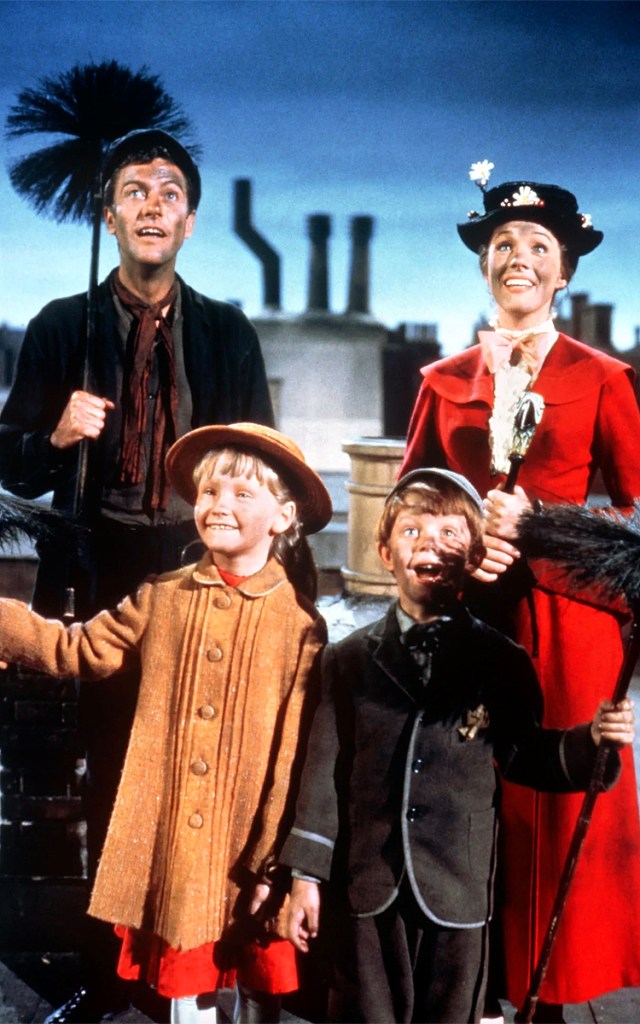
It’s a little more common to see stories like this in fiction aimed at younger audiences. The Winnie the Pooh stories, for instance, are utterly bereft of danger. In both the original books and the Disney cartoons everybody is friends with everybody else, and the conflicts usually arrive from misunderstanding or happenstance, at least until the character went into public domain and the sort of chuckleheads who think it’s funny to turn beloved icons of childhood into serial killers did their thing. Mary Poppins is another good example. Mary Poppins swirls into the lives of the Banks family ostensibly to act as their nanny, and although their father initially disapproves of her methods, that doesn’t really make him an antagonist. In fact, by the end of the film it has become clear that Mary Poppins didn’t really show up for the kids at all, but rather to help teach George Banks to express the love and devotion he’s always had for his children, which has been previously locked behind a facade of British propriety.
Non-antagonist stories are frequently highly positive and optimistic. Those that aren’t usually fall into the category of “Man Vs. Nature,” stories where the heroes struggle against something that has no consciousness and therefore isn’t INTENTIONALLY working against them: The Perfect Storm, 127 Hours, or the Twister movies fall into this category. But Final Destination is kind of unique in this way. The question I’m asking right now is this: IS there an antagonist in Final Destination?
First of all, I have to remind myself that I haven’t seen Bloodlines yet, so I suppose it’s entirely possible that the new film has already answered my question, rendering this entire train of thought moot. If so, don’t tell me. I’m going to try to squeeze the movie in during the Labor Day weekend. But the obvious answer is no. Death is not, strictly speaking, a “character.” Nobody shows up in a hood and cowl waving a scythe through the air, nor is there some peaceful angel who arrives to usher people off to their reward or punishment as the case may be. In some of the films (but not all of them) we may see one of the survivors who breaks under the realization that Death is coming for them and turns on the others, but that’s an aberration. At most, those characters are minor antagonists, supporting the main force.
But that main force, Death itself…does it count? Is it active, is it aware? The films seem to imply that it is. Hell, even the fact that I’ve insisted on capitalizing “Death” in this column implies that it is. Not only is Death an intelligent force in this universe, but it’s a nasty and sadistic one that enjoys playing with its victims. If taken in and of itself, you could clip out any death scene from the franchise and view it simply as a dramatization of an accident. (The fact that those accidents vary wildly in tone – some of them come across as tragedy, others as comedy, some as almost insultingly absurd – is irrelevant.) But pieced together, it really does feel as though Death, despite lacking a face, is in fact a character. It’s actually kind of impressive. Not all of the Final Destination movies are great (a couple of them are downright lousy), but even the bad ones help contribute to the storytelling magic trick of making a malevolent force that has no tangible representation in the entire franchise feel very real, and even imbue it with a personality. That’s actually kind of cool.

So I’m going to keep that in mind when I sit down to watch Bloodlines, and I’ll be curious to see if the most recent movie in the franchise continues this particular magic trick or if they give into temptation and make Death more of a “thing.”
In either case, I’m curious as to your thoughts on the subject. If you’ve seen these movies, do you think Death counts as an antagonist?
And I’m open to suggestions for other films to fill Toddoween. I’ve already got the Candyman and Hatchet franchises queued up, as well as the Night of the Living Dead remake, but I’ve got two more months to fill. Help me have fun with the best of one of the greats of modern horror, and join me in raising a glass to the magnificent Tony Todd.
Blake M. Petit is a writer, teacher, and dad from Ama, Louisiana. His most recent writing project is the superhero adventure series Other People’s Heroes: Little Stars, volume one of which is now available on Amazon. You can subscribe to his newsletter by clicking right here. He’s also started putting his LitReel videos on TikTok. He’s also gonna try to squeeze in Tony Todd’s episode of Holliston, if he can remember how a Blu-Ray player works.

 Blake M. Petit