I think one of the hallmarks of a great character, the ones that have real staying power for generation after generation, is adaptability. Look at classical mythology: how many different iterations have there been of the likes of Odysseus, Heracles, and Jason, or the gods Zeus, Thor, and Ra? Fables and fairy tales bring up the same question – compare all the different versions of Cinderella, Snow White, or Little Red Riding Hood, and you’ll find a panoply of options to choose from. Even more modern characters with a definitive starting point change and evolve – let’s contrast either Benedict Cumberbatch or Robert Downey Jr.’s Sherlock Holmes to that of Basil Rathbone or the original Arthur Conan Doyle stories, and you’ll find what makes each version distinct from all the others. And of course, the role of Batman has been reshaped at least twice since you started reading this paragraph, even though the late Kevin Conroy absolutely nailed it. This malleability is one of the things that gives long life to a character, and I think that it’s not only a positive trait, but in many cases a necessary one. All that said, it does bring me to the question I want to address this week: which one is the real Santa Claus?

Santa, St. Nicholas, Kris Kringle, Father Christmas, whatever you call him, I’m talkin’ about the fat guy who comes to your house on Christmas Eve, eats your cookies, and leaves you toys. He is without a doubt one of the most singularly beloved characters in all of storytelling, as the hundreds of books, movies, and other assorted media that have detailed his adventures certainly prove. But unlike many of his Yuletide contemporaries like Rudolph and Frosty, there’s not exactly a single definitive version of the character, there is NOT – as John Payne tried to prove in Miracle on 34th Street – any “one and only Santa Claus.” Oh sure, there are some elements that are common to most modern versions of the character: red suit, home at the North Pole, a contingent of elves to help make toys, flying reindeer. But I think a lot of people would be surprised to learn how relatively recent many of those elements are. For instance, the notion of the reindeer flying wasn’t really codified until Clement Clark Moore’s “A Visit From St. Nicholas” in 1823, which also named them and set the number at eight, but even THAT wasn’t widely accepted as THE version of Santa until the early 20th century. Similarly, the red suit as his primary outfit is often traced to Coca-Cola ads from the 1920s, although there is some dispute about that.

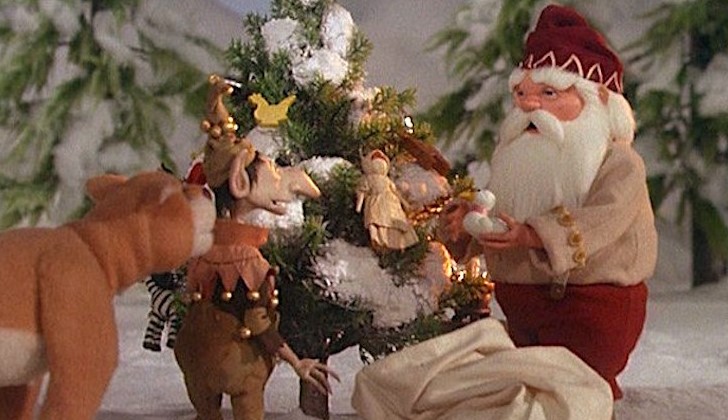
With my formative years in the 1980s, I grew up on a steady diet of Christmas specials that each offered their own take on the legend, many of which I enjoy despite the way they contradict each other. In Santa Claus is Comin’ to Town, Rankin and Bass’s (first) attempt at Santa’s life story, we see a baby that’s lost in the woods, adopted by elves, and eventually grows into a great toymaker. It’s a classic special, but several of the elements seem similar to those in L. Frank Baum’s novel The Life and Adventures of Santa Claus, in which the baby is found by a fairy instead, but similarly raises him as her own. Baum’s version of Santa works with Nooks and other fantasy creatures rather than elves, and he’s got a complement of ten reindeer to pull his sleigh, but the heart at the core of the character maintains. This version of Santa feels a bit more “high fantasy” than most, perhaps fitting in more with Tolkien, C.S. Lewis, or Baum’s own Oz books than with the character that pals around with Rudolph. (Rankin and Bass would eventually animate a version of the Baum novel in 1985, with Universal releasing a direct-to-video adaptation of their own in 2000.)
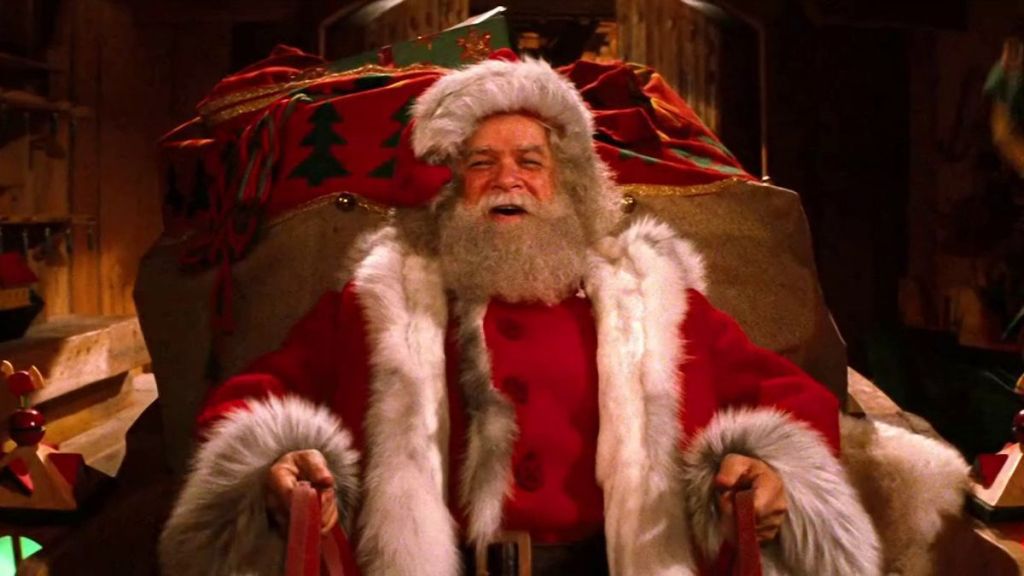
The “foundling” Santa Claus is a popular version of the character, but it’s by no means the only one. David Huddleston showed us another version in 1985, with Santa Claus: The Movie, in which the titular hero is an adult toymaker recruited by elves to carry out their eternal mission of gift-giving. This is one of my favorite versions of the story for several reasons. First and foremost is Huddleston himself. His depiction of Santa Claus is spry and energetic, jolly and compassionate, and it’s still the live-action version of the character that lives in my dreams. Second, I also like the idea of Santa as a normal human who transcends and becomes something greater. Foundling Claus has some of that, but it’s somehow a little less magical to me if he’s taken in by the immortals as a baby as opposed to earning his stripes before he even meets them. And third, the movie is produced by Alexander and Ilya Salkind, who also produced one of my favorite movies of all time, the 1978 version of Superman, and they TOTALLY RIPPED OFF THEIR OWN PLOT STRUCTURE. Just like with Superman, we begin with an origin story that takes up nearly half of the film’s running time, showing the character grow and develop, and not even introducing the film’s primary antagonist until the second half, which is a story almost entirely divorced from the first half origin. I’ve always appreciated the fact that not only did they pull the same trick twice, but that it worked oh so well.
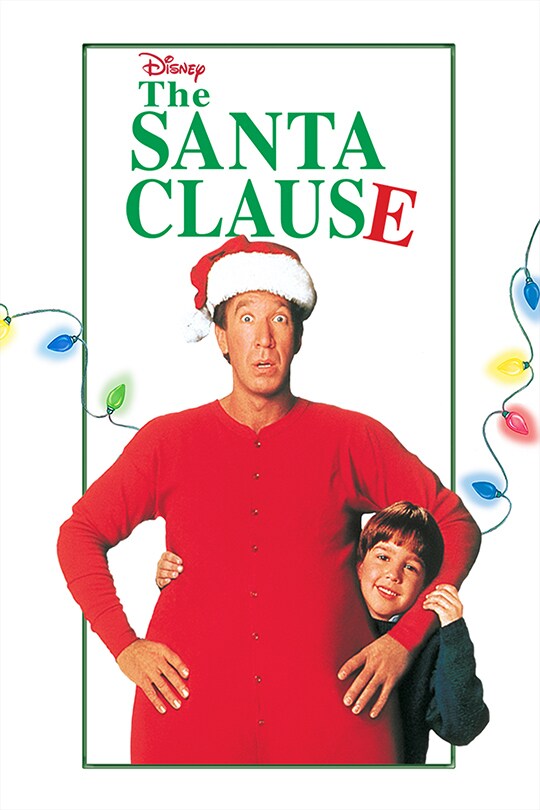
Another version of Santa that you see often is the Torcherbearer, the idea that Santa is a title passed down from one generation to another. Sometimes it’s a literal father-son (or father-child) transfer, such as in Arthur Christmas or Noelle. Other times the new Santa is a sort of “chosen one,” as in Ernest Saves Christmas. And sometimes the new Santa gets the job due to a combination of calamity and dumb luck, like Tim Allen in The Santa Clause. (Side note: this is the ONLY time when it is permissible to write “Clause” with an “E” at the end of the word. The title of the movie is not referring to the character himself, but to the legal “clause” in the contract that makes Tim Allen the new Santa CLAUS. The popularity of this series, however, has caused an entire generation to consistently misspell the word, and if they don’t knock it the hell off I’m going to eventually lose it and say something that gets me banned from Facebook.)
I’ve honestly never been fond of the Torchbearer version of Santa as a trope, even though there are admittedly a lot of good stories told with that concept. Even more so than the “foundling,” it lessens him, makes it just a title rather than an enduring, immortal spirit, and that’s part of the magic of the character. The notion that Santa can retire, be fired, or just be replaced like the guy who makes my sandwich at Subway trivializes the entire concept to me, even if the new Santa doesn’t need to be reminded that I like extra pickles.
Then there’s the historical Santa, the one that at least tries to tie the concept to the real man who inspired the legend, St. Nicholas of Myra. Maybe it’s the Catholic in me, but I absolutely love when this is done well, and nothing has done it better than the Christmas Chronicles, a series of three novels by Jeff Guinn (not related to the two similarly-titled Netflix movies starring Kurt Russell as the kind of Santa that makes your mom want a little something extra in her stocking this year). The first book in this trilogy, The Autobiography of Santa Claus, puts Saint Nick in the driver’s seat to tell us his own life story, beginning as a child from a (relatively, for the time) wealthy family who desires to use his good fortune to help those who are not as fortunate. The book traces his entire life, including deeds both historical and apocryphal that have been attributed to Nicholas, then moving on to the point where he discovers that he appears to be immortal. (Don’t ask him why it happens: this Santa Claus firmly believes that true magic is not a trick that can be revealed, and he neither has nor desires any explanation for his powers.)

The book follows Nicholas through the centuries on a kind of Forrest Gump trip through history, meeting many well-known historical figures and even recruiting several of them into his band of helpers, including the original “King” Arthur, Leonardo Da Vinci, Teddy Roosevelt, and Attila the Hun. In the first follow-up, How Mrs. Claus Saved Christmas, Guinn again ties the legend to history, showing us how Santa’s wife kept Christmas alive during a (real) Protestant attempt to stamp out the holiday in the 1640s. The final book (so far – I keep hoping Guinn writes another) brings the characters to modern times, in which Santa learns of a reality TV show that is purporting to choose the “real” Santa Claus and he decides the only way to prevent a disaster is to enter and win it himself. I really love this series and I read it again every few years. The best part is that each of the novels has 24 chapters, structured so that you can read it to your kids one chapter a night beginning on Dec. 1 and ending on Christmas Eve.
There is, of course, no one “true” version of Santa Claus. I haven’t even brushed on the version in Bill Willingham’s Fables, in which characters from folklore are kept alive by the belief that “mundane” humans have in them (so that should tell you something about how powerful this Santa is). I haven’t talked about Grant Morrison and Dan Mora’s excellent Klaus graphic novels, which bear no relation to the also excellent animated film Klaus that Netflix released a few years ago. I haven’t looked at North from the Guardians of Childhood books (adapted for the screen as Rise of the Guardians). And this is, of course, to say nothing of the countless Santa Claus stories that offer no origin for the character at all, but just have him appear fully-formed as if sprung from the head of Zeus. But like Zeus, or Sherlock Holmes, or Batman, the great thing about Santa Claus is that there’s no requirement that you choose any one version as “THE” Santa Claus. There’s virtue and merit to every version I’ve mentioned today and to thousands that I haven’t gotten around to. The most important thing, I think, is that a depiction of Santa Claus maintains the spirit of the character – that he be a good, decent man of such overwhelming love that he spreads it to all the world’s children. If you can give me that, everything else is negotiable.
The “real” Santa Claus is whichever one you want him to be.
Man, it’s too bad Kevin Conroy never played him.
Blake M. Petit is a writer, teacher, and dad from Ama, Louisiana. His current writing project is the superhero adventure series Other People’s Heroes: Little Stars, a new episode of which is available every Wednesday on Amazon’s Kindle Vella platform. He just started rereading The Christmas Chronicles again, and dang if they’re not just as good as they were the first time he found them.
BONUS ANNOUNCEMENT!
In October I introduced a new feature to Geek Punditry, Playing Favorites, in which I give you a topic and ask you for suggestions of categories to share some of my favorite things. For example, the category for Halloween was “Horror Movies,” and suggestions included things like sci-fi/horror movies, comedy/horror hybrids, horror movie performances that I felt deserved Oscar recognition, and lots of other cool choices. It wound up filling up two full columns! (Part One, Part Two)
Well, never let it be said that I don’t know how to milk an idea to death use a good idea when it’s available. With Christmas coming up, I’m announcing the next round of Playing Favorites, in which I’m asking you guys for categories of Christmas content! Movies, books, TV shows, comics – what are the categories I can play favorites with this time? Give me your suggestions in the comments below or on whatever social media you used to find this link!
 Blake M. Petit