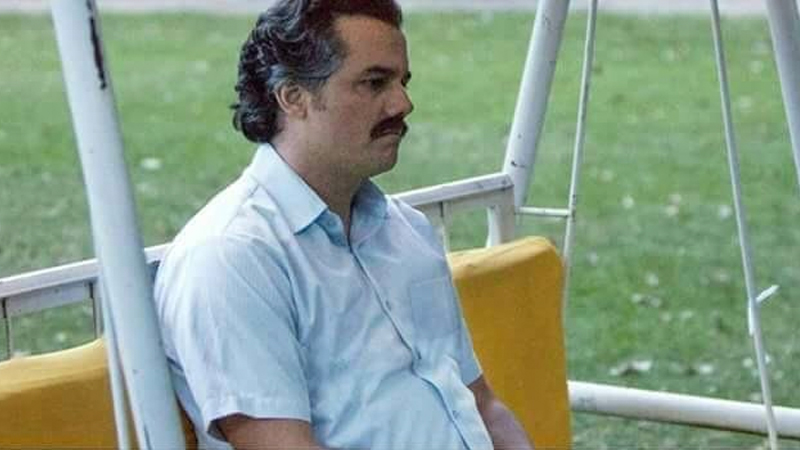
Last week was the season finale of Star Trek: Strange New Worlds, so when Thursday rolled around and I didn’t have a new installment of my favorite franchise waiting for me, I was not unlike that meme where the guy sits on a swing and pines away for something, probably football season. It was kind of pathetic to watch, actually. Just ask my wife.
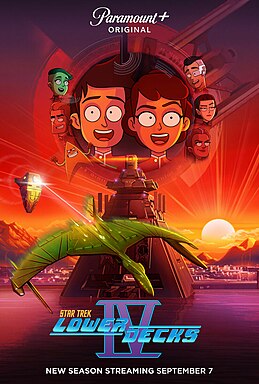
But that sadness was mitigated by the fact that in just a few short weeks, on Sept. 7, the new season of Star Trek: Lower Decks is dropping. There was a time when Star Trek went off the air and we had no idea how long it would be before it returned to television (that time was called 2005 and the answer turned out to be 12 years, by the way), but in this day and age we’ve got more to work with. There’s been a semi-regular flow of Star Trek since Discovery first hit screens six years ago, and some of it has been magnificent: Prodigy, Strange New Worlds, season three of Picard…but the truth is, of all the “NuTrek” shows, none of them have made me as consistently joyful as Lower Decks.
A lot of fans were dismissive when Lower Decks was announced. An animated Star Trek? A comedy? A comedy produced by someone who worked on Rick and Morty? If you’re the kind of Trekkie who wants the show to lean more on the dramatic side, it kind of sounded like a recipe for disaster. But every Trek series has had plenty of lighthearted moments, and even the occasional full-blown comedic episode (unless you’re trying to tell me we were supposed to take “Spock’s Brain” seriously), so I was happy to give it a chance.
I couldn’t be more satisfied with the results. I went in expecting to see a parody of Star Trek, but the truth is that isn’t really what Lower Decks is. It’s funny, absolutely. The characters are hilarious and the performances by the main cast are magnificent. But it’s not the comedy alone that makes Lower Decks work – what really makes it land is the fact that if you take away the jokes, you’re still left with plots that would work solidly on a more mainstream science fiction series. The season 2 finale is a great example: when a more “important” ship than the USS Cerritos is endangered on a first contact mission, our crew has to step up and save the day. Ultimately, they discover the only way to traverse a dangerous asteroid field is to strip off the outer hull of their ship and pilot through manually. (Trust me, it makes sense in context.) The scenes of the crew coming together to dismantle their own vessel and then maneuver through the field are as tense and action-packed as Trek at its best, and still funny to boot.
Many fans were won over by the first season. Not everyone, of course. There are still some who argue that Lower Decks lacks in actual comedy, and is just a rapid-fire recitation of references to other Trek series. While it’s true that the show is very reference-heavy, to say that this is the only source of comedy is untrue and reductive. So much of what makes it funny it comes from the characters, and it is the characters that make the show worth watching. The references are fun, however, and I think it’s the references that prove something that I sincerely believe to be true: the best parodies are made by people who honestly and sincerely love the thing they’re making fun of.
Mike McMahan, the creator and showrunner of Lower Decks, was a writer on several animated shows, but he came onto the radar of the Trek producers via – of all things – a Twitter account in which he posted synopses for episodes of a fictional eighth season of Star Trek: The Next Generation. The account became a hit and he eventually rolled that into writing an officially-licensed book. Warped: An Engaging Guide to the Never-Aired 8th Season was a hilarious look at what might have been but, more importantly, the writing showed that McMahan truly understood the show, the characters, and their universe, and that was what he built the comedy on. When he got the chance to do the same with Lower Decks, it was as engaging and funny as anyone could have hoped for.
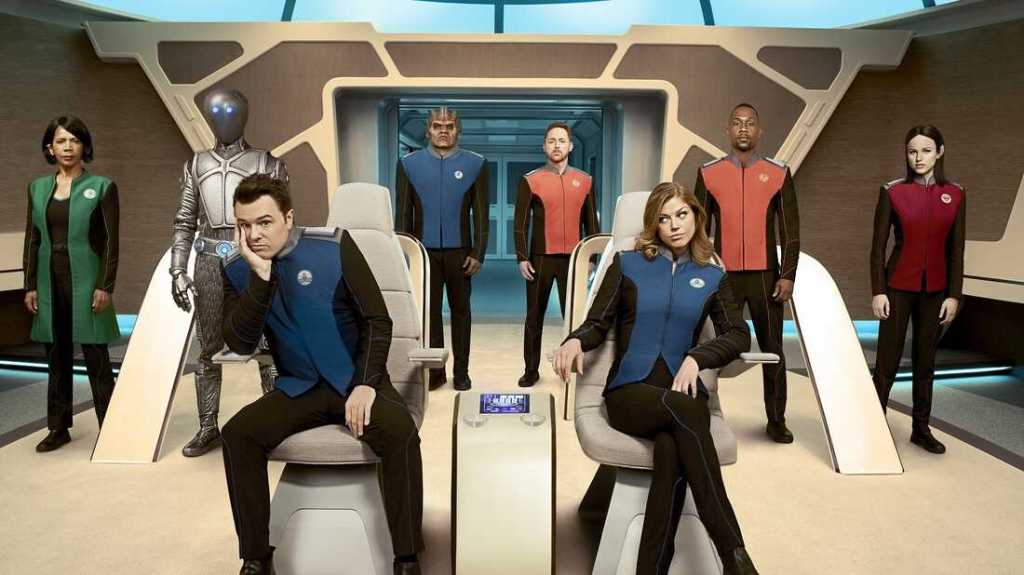
It should be noted that McMahan wasn’t the first writer to do that with Star Trek. By my count, he was at least the fourth. There are two previous projects that also take loving jabs at Trek while still working as science fiction in their own right. David Howard and Robert Gordon’s script for Galaxy Quest transports a bunch of Trek-esque actors into a Trek-stye adventure, and Seth MacFarlane’s The Orville started out as a comedic take on Trek tropes and quickly evolved into a sci-fi series as deep and powerful as Trek at its best, albeit with a few more jokes. In both cases, these were projects envisioned by creators who had a deep love of the franchise and wanted to pay tribute to it in their own way.
This is the thing that needs to be understood: something can be a great comedy and still be a great example of the kind of story that’s being told. It’s always frustrated me how the Academy Awards typically ignores comedy in most of the major categories, as if it is somehow less artful than drama. It’s only slightly better with awards shows like the Golden Globes or the Emmys, which separate comedies into their own category, with a subtle implication that they don’t deserve to compete against the “real” movies. There’s a sort of snobbish attitude that thinks of comedy as “lower” art. That’s ridiculous, of course. Comedy has existed since the birth of drama. Shakespeare’s tragedies may get more play in schools, but I’ll argue that Much Ado About Nothing is a vastly superior play to Romeo and Juliet any day of the week. And as far as the acting part goes, giving a great comedic performance is a skill set that not everyone has. All acting is about building and releasing tension, but the demands of comedy require you to land the release in a way that often far more difficult than drama. Think about how many great comedic performers have gone on to give great dramatic performances. Off the top of my head there was Jim Carrey in Man on the Moon, Robin Williams in Dead Poet’s Society, and Carol Burnett put forth a fantastic performance in the final season of Better Call Saul. Speaking of which, the “Gilliamverse” duo of Bob Odenkirk in Saul and Bryan Cranston in Breaking Bad pretty much embody this concept. On the converse, how many actors who became known as great dramatists then went on to give fantastic comedic performances? I’m sure the list exists, but the flip side is much more extensive. Go ahead, tell me Orson Welles’s best-known comedic performance. I’ll wait.
Great comedies are often great examples of the stories that they are supposedly parodying. Two of the most formative movies of my childhood, two of the movies that are probably responsible for shaping my sense of storytelling into what it is today, fall into this category. Ghostbusters began with Dan Aykroyd’s personal desire to tell a story about the paranormal. Although the script evolved and changed considerably from his original vision by the time it was on the screen, it was a fantastic story with some genuinely creepy moments buoyed up by some of the greatest comedic performances ever put to screen. The next year, Bob Gale and Robert Zemeckis gave us Back to the Future, a movie that’s effective as a science fiction film, but even more impressive as a relationship comedy about teenagers in love and a son rediscovering his parents. These movies are classics and are pretty much universally recognized as such. (Heck, as of this writing, Back to the Future still sits atop my personal “Perfect Movies” poll and has done so for over a year.)
Nor is this only true in film and television. Look at Douglas Adams The Hitchhiker’s Guide to the Galaxy and its assorted sequels. Begun as a radio drama before becoming part of the modern literary canon, Adams uses science fiction and humor hand-in-hand to satirize any number of targets. Terry Pratchett did the same thing with the fantasy genre in his Discworld novels – parodies of fantasy tropes, to be certain, but at the same time marvelous examples of a fully-realized fantasy world that had a lot of interesting things to say about the actual world we all live in most of the time.
Recently I found a new member for this club of parodies that also perfectly encapsulate the thing that they’re parodying: the Hulu series Only Murders in the Building. I mentioned this show a few weeks ago when discussing shows I haven’t watched yet that I would try to get through during the (still ongoing) writer’s and actor’s strikes in Hollywood. Since then, I’ve made it through the first two seasons and begun the third, and I’m frankly angry at myself for not having watched it before. If you’re unfamiliar, the show stars Steve Martin, Martin Short, and Selena Gomez as neighbors in an enormous Manhattan apartment building. Initially strangers to one another, they bond over their mutual love of a true crime podcast. When a murder takes place in their own building, they decide to launch a podcast of their own while they try to solve it.

The show is a deft send-up of podcasts like Serial, with Tina Fey appearing in several episodes as an obvious stand-in for Serial’s host, Sarah Koenig. While gently mocking the format, it also occasionally says some serious things about the nature of an audience that draws entertainment from the death and suffering of real people (which, let’s face it, is what we all do when we “enjoy” the true crime genre). There are dark moments as well, as the pasts of each character are slowly opened up and revealed to the viewer throughout the course of the investigation. What’s more, the show isn’t afraid to get experimental, as we see in the format-breaking episode seven, which tells the story in a way few shows would have the guts to do. It’s also not afraid to tug at the heartstrings, as we see in season two when several episodes revolve around the concept of fatherhood and what it means, which is something that cuts into me personally pretty deeply.
In the midst of all this, though, there are two things that absolutely have to be said:
- The show is outrageously funny.
- Each season so far has been a fantastically-structured mystery in its own right.
In their mocking of the true crime culture, show creators Steve Martin and John Hoffman have managed to make one of the most engaging TV mysteries I’ve ever watched, laying out clues, unraveling threads, and sending us chasing after red herrings with the aplomb of Arthur Conan Doyle or Alfred Hitchcock. Even if it wasn’t funny, it would still be a good mystery, and that’s what really matters in regards to my grander point.
Good comedy is damned hard to do, and it deserves respect. And when that comedy lands, it’s not just funny, it’s transformative. It’s not fair to say Only Murders is a great mystery “for a comedy,” to call Lower Decks a good Trek show “for a comedy,” to say that Terry Pratchett’s Discworld novels are solid fantasy “for a comedy.” They just are. They’re great examples of their genres that also happen to be comedies.
When we can get everybody to wrap their brains around the premise, maybe the people who make us laugh will finally be able to get their due.
Blake M. Petit is a writer, teacher, and dad from Ama, Louisiana. His current writing project is the superhero adventure series Other People’s Heroes: Little Stars, a new episode of which is available every Wednesday on Amazon’s Kindle Vella platform. Hey, he hasn’t used Star Trek as a main topic in this column for six weeks now, he deserved this one.
 Blake M. Petit